

.webp?language=en-US)


Bridging the Gap: How Growers Can Elevate Design Integrity in Built Landscapes
by Matt Dingeldein, Affiliate ASLA, and Christa Orum-Keller, ASLA
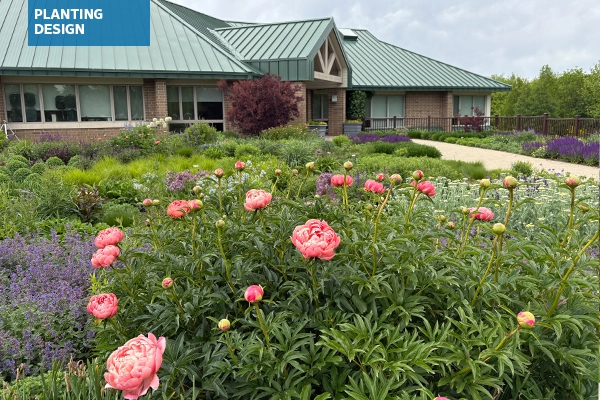
When landscape architects and designers sit down to imagine a space—whether public plaza, healing garden, streetscape, or backyard sanctuary—their visions are rich with form, function, and purpose. Yet between concept and completion lies a complex supply chain, where plants move from drawing to ground, often with minimal involvement from the very people who know them best: the growers.
As a horticulturist and nursery grower, we’ve seen too many projects where planting intent is diluted under the pressures of time, availability, or miscommunication. But what if the grower was part of the design conversation from the start? What if plant professionals weren't just vendors at the end of the process, but collaborators shaping the palette, guiding feasibility, and helping ensure long-term success?
This article invites both landscape architects and landscape contractors to reconsider how, when, and why they engage with growers—and what’s possible when they do.
The Current Landscape Design Process: Where Roles Meet and Often Miss
In most projects, the timeline unfolds something like this:
- Client defines goals and budget.
- Landscape architect interprets the vision and produces the design.
- General contractor (for large projects) manages construction.
- Landscape contractor installs hardscape and plants.
- Grower fulfills plant order based on the contractor’s request.
This system works—but only to a point. It often fails to protect the integrity of the design, especially under tight timelines. Late-stage plant substitutions, misaligned expectations, and unavailable plants can erode both the beauty and function of the intended landscape.
Designs are not just drawings; they are dynamic systems that rely on correct sourcing, seasonal availability, and realistic installation conditions. When the grower is present during the early stages of the design process, their ability to safeguard and support the original vision is drastically increased.
Design Intent Under Pressure: Where It Breaks Down
When time is short, the weakest link in the chain is often the planting design. Without early communication between the grower and the designer, several things can happen:
- Unrealistic selections: Designers may specify species that are out of season, difficult to establish, or commercially unavailable in the quantity or sizes specified.
- Late substitutions: Contractors are then forced to make last-minute substitutions, often with little guidance from the original design team.
- Compromised execution: Rushed sourcing leads to smaller sizes, mismatched aesthetics, or plants not suited to the site conditions.
The result? The garden—or public space—feels incomplete. The design intent is compromised. And the contractor is left scrambling to make it all work.
A New Model: Early Involvement, Shared Success
The solution isn’t complex for the designer. It’s collaborative.
If the grower is invited in during the plant selection phase—even informally—it can radically improve project outcomes. Early grower involvement offers:
- Real-time knowledge of availability and lead times
- Recommendations for resilient species and cultivars
- Support with administrative needs such as substitutions and compliance
- Forecasting for pre-grow opportunities, if necessary
Better yet, it can reduce time pressure on contractors and increase design fidelity for designers.
Think of the project as a triangle with the grower, the designer, and the contractor at each vertex: when all three share in shaping the final palette and sequence, the landscape is more likely to reflect the original goals, perform better, and last longer.
Aligning Around Intent: Beauty, Function, and Ecology
We recognize three distinct types of design approaches when selecting plants:
- Aesthetic: Prioritizing color, texture, form, seasonality, and the experience of place.
- Functional: Supporting uses such as food production, defining spaces, or healing gardens.
- Regenerative: Enhancing ecosystem services, biodiversity, and green infrastructure.
When growers understand which focus drives a planting plan, we can offer more targeted support—whether it’s identifying a native grass with the right movement and availability or suggesting drought-tolerant alternatives that align with the intended color palette.
This doesn’t require contracts, pre-grows, or complicated systems. It requires conversation.
Questions Worth Asking—Together
To landscape architects and designers:
- How often do you share design intent directly with your plant supplier?
- Could plant availability or lead times lead to more realistically shaped concepts?
- Are you open to letting a grower influence or guide your planting design process?
To contractors:
- What delays or substitutions could be avoided with earlier grower engagement?
- Would a shared understanding of plant palettes reduce the time on site during construction?
To all three:
- What would it take to start each project as a team, not a chain of command?
From Project to Partnership
Not every project allows for early collaboration. But many do—and more should. When growers are seen as partners, not just suppliers, the entire process becomes smoother, smarter, and more successful.
Let’s move toward a design culture where the grower’s voice is welcomed early, where the contractor’s pressures are understood, and where the landscape architect has allies at every step. By engaging with the growers, you can gradually inject better practices for your firm into design and implementation.
Our mutual goal is simple: build better, greener, more enduring places.
And it all starts with a conversation.
Matt Dingeldein, Affiliate ASLA, is a Horticulturist & Midwest Groundcovers’ Sales Representative with special focus on the Landscape Architecture market. Christa Orum-Keller, ASLA, is a landscape architect and Owner of Midwest Groundcovers. Combined they have over 50 years’ experience in the nursery and landscape industry. Midwest Groundcovers is an industry-leading grower of ornamental plants that has been dedicated to serving the landscape contractor since its founding in 1969.
If you're heading to ASLA 2025 in New Orleans next month, be sure to check out the conference's Planting Design Professional Practice Network (PPN) Meeting and all the planting-focused education sessions, including:
- FRI-B07: Feral: Making Wild Landscapes
- FRI-D02: Beyond Planting Plans: Seeing, Communicating, and Constructing with Plants
- SAT-C11: When Specs Meet Reality: Partnering with Nursery Growers for Successful Planting Design
- SUN-A05: Living Landscapes: Managing Design Legacies Through Time and Change
- SUN-A10: Trees of the Future City: Selecting Urban Tree Species for Climate Adaptation
- SUN-B03: Future Trees: Strategies for Designing and Managing Canopies for Institutional Landscapes
- MON-A05: Mastering Plant Procurement: Bridging Gaps from Design to Delivery