

.webp?language=en-US)

The Poetics of Remediation: Impressions from the 12th Barcelona Landscape Biennial
by Jordi Barri, International ASLA
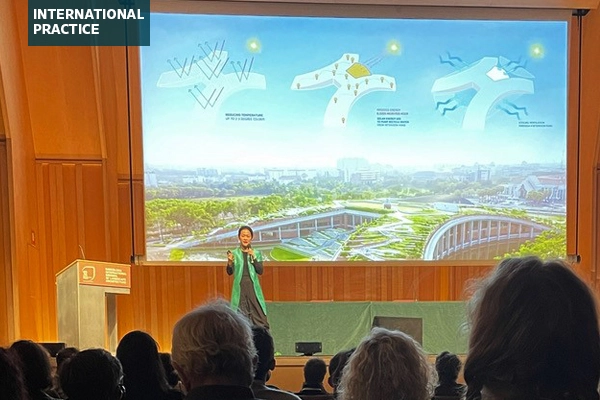
Every year I attend the ASLA Conference on Landscape Architecture, wherever it is in the United States. I find it interesting to know what is happening on the other side of the ocean, and what are the trends, novelties, techniques and approaches to landscape projects, through an event full of people and lectures with a didactic focus. But in this article, I will talk about a landscape event that takes place in my city, Barcelona, that has a radically different approach.
The “Barcelona International Landscape Biennial is a bi-annual umbrella complex project, integrating both Professional and School prizes, topic-based Symposium, Catalogues and Exhibitions as a creative medium where practitioners, academics and students interested in Landscape Architecture would network, learn and debate”—this is how the Biennial defines itself.
"The Poetics of Remediation" served as the captivating motto for the 12th edition of the Barcelona International Biennial of Landscape Architecture, which took place last November, and invited landscape professionals for a showcase of awards, lectures, and exhibitions. With this edition, it's already been 25 years since it was created.
As explained by Marina Cervera, the Executive Director of the Barcelona International Biennial of Landscape Architecture, landscape remediation entails a profound reflection on our connection with the Earth and our ethical commitment to the vision of Earth as a self-regulating and complex system, as proposed by James Lovelock and Lynn Margulis—the concept of Gaia. While restoration aims to return a degraded ecosystem to its original or similar state, remediation seeks to manage externalities in order to attain an acceptable new state. Beyond the mere act of restoring landscapes, we are not simply revitalizing soil, water, and vegetation; instead, we are meticulously crafting a narrative of renewal. While the motto holds profound significance, most participants approached the topic with caution. Tim Waterman, however, stood out by delving more thoughtfully into the discussion, contributing valuable insights that others seemed to tiptoe around.
Out of the five days of programs, two were entirely dedicated to a wide variety of technical visits, conferences, screenings (for example a documentary about the great French landscape architect Michel Corajoud), and exhibitions. Among these more technical visits are outings to built projects presented by their designers, such as the Plaça de les Glòries by Agence Ter + Ana Coello, as well as to a site representing one of the main trends in Barcelona: the conversion of an urban artery such as the Meridiana into a more peaceful walk with more biodiversity, a Batlleiroig project. The other days are dedicated to the presentation of nominated projects and the awards ceremony.
By awarding two prizes, the Symposium has played a pivotal role since its inception by giving equal consideration to schools and academic courses, as well as to active professionals. This is achieved through the esteemed Rosa Barba Casanovas International Landscape Prize for professionals and the Ribas Piera International School Prize, which is dedicated to academics and students, and considered a future bet for the biennial.
The Rosa Barba Prize aims to recognize the "best and most innovative practices in landscape architecture." This prestigious award was bestowed upon Z+T Studio for their outstanding work on the Tangshan Quarry Park in China. Their achievement lies in the transformation of an abandoned quarry into a thriving biodiversity environment, coupled with the revitalization of the space into a dynamic public sphere. Z+T Studio's project stands out for its thoughtful approach, seamlessly integrating the needs of both human and non-human users.
The Ribas Piera Prize went to UiT The Arctic University of Norway. In this edition, the International Landscape Architecture School Prize showcased some of the most cutting-edge academic practices in landscape design in a contemporary, global context. UiT The Arctic University of Norway stood out for its exceptional studio work, delving into landscapes, seascapes, and cityscapes through meticulous site-based research, transects, and walking. Their curriculum is deeply grounded in ecological, cultural, and economic perspectives.
Having attended the biennial, I find it compelling to highlight the unmistakably international character of the event. One of the finalists was by the California-based landscape firm Surfacedesign, Inc., a remarkable project with earthforms designed to be seen from above as much as from on the ground, when moving at different speeds entering or exiting the country. The project celebrates the volcanic heritage of the site. [This project was also a 2021 ASLA Professional General Design Honor Award winner.]
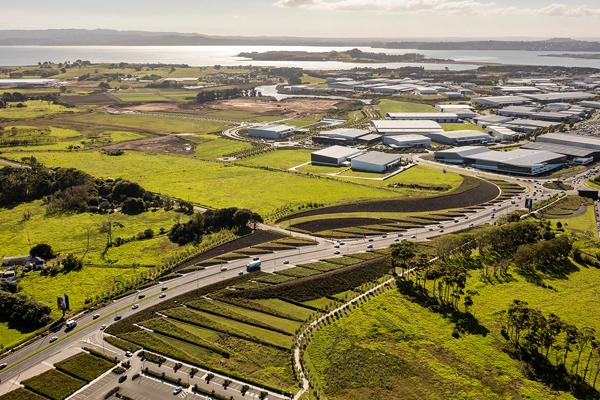
While the symposium takes place in Barcelona, a European city renowned for its rich history and dedication to urban design, participants and honorees hail from diverse corners of the globe. The event highlighted both local and global perspectives within the thematic framework of "The Poetics of Remediation." This approach aligns with the idea that landscapes themselves can be powerful symbols, encapsulating the narratives of our time and guiding us toward a sustainable future that we must collectively build.
Born and raised among plants in his family nursery in Catalunya, Jordi Barri Segon, International ASLA, is an architect who initially studied Agricultural Engineering (UPC - Universitat Politècnica de Catalunya, Barcelona) and Forestry (UdL - University of Lleida), followed by a Master’s degree in Landscape Architecture (UPC - Universitat Politècnica de Catalunya, Barcelona) and a Master’s degree in Design Studies from Harvard University (Graduate School of Design, Harvard). In the following years he worked in California, Dallas and New York, and taught 3 years in the Master of Landscape Design at the Universidad Politécnica de Puerto Rico. Consequently, the practice of Barri Studio merges landscape design, ecological fundamentals and architecture knowledge.