

.webp?language=en-US)

.webp?language=en-US)

Auckland International Airport
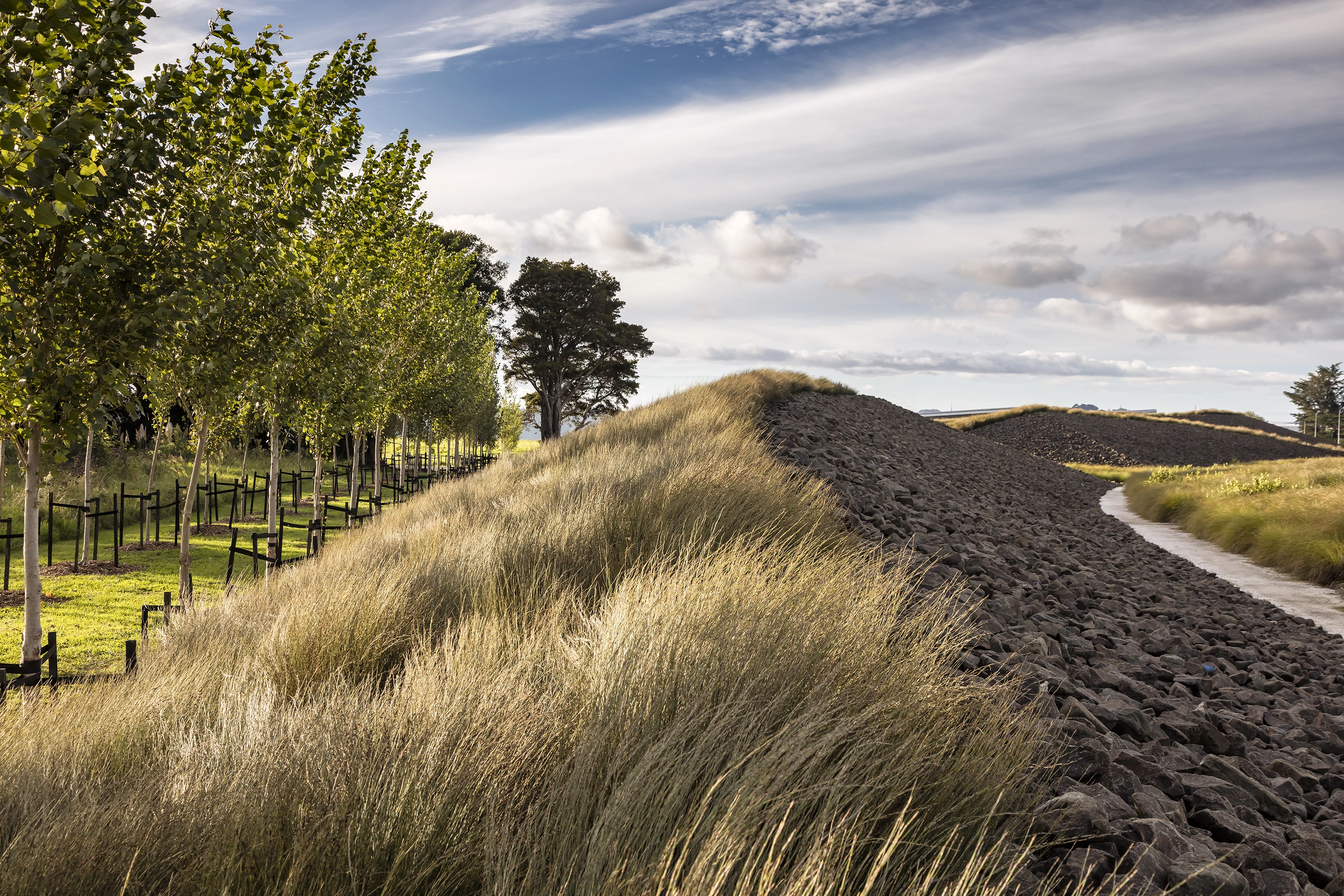
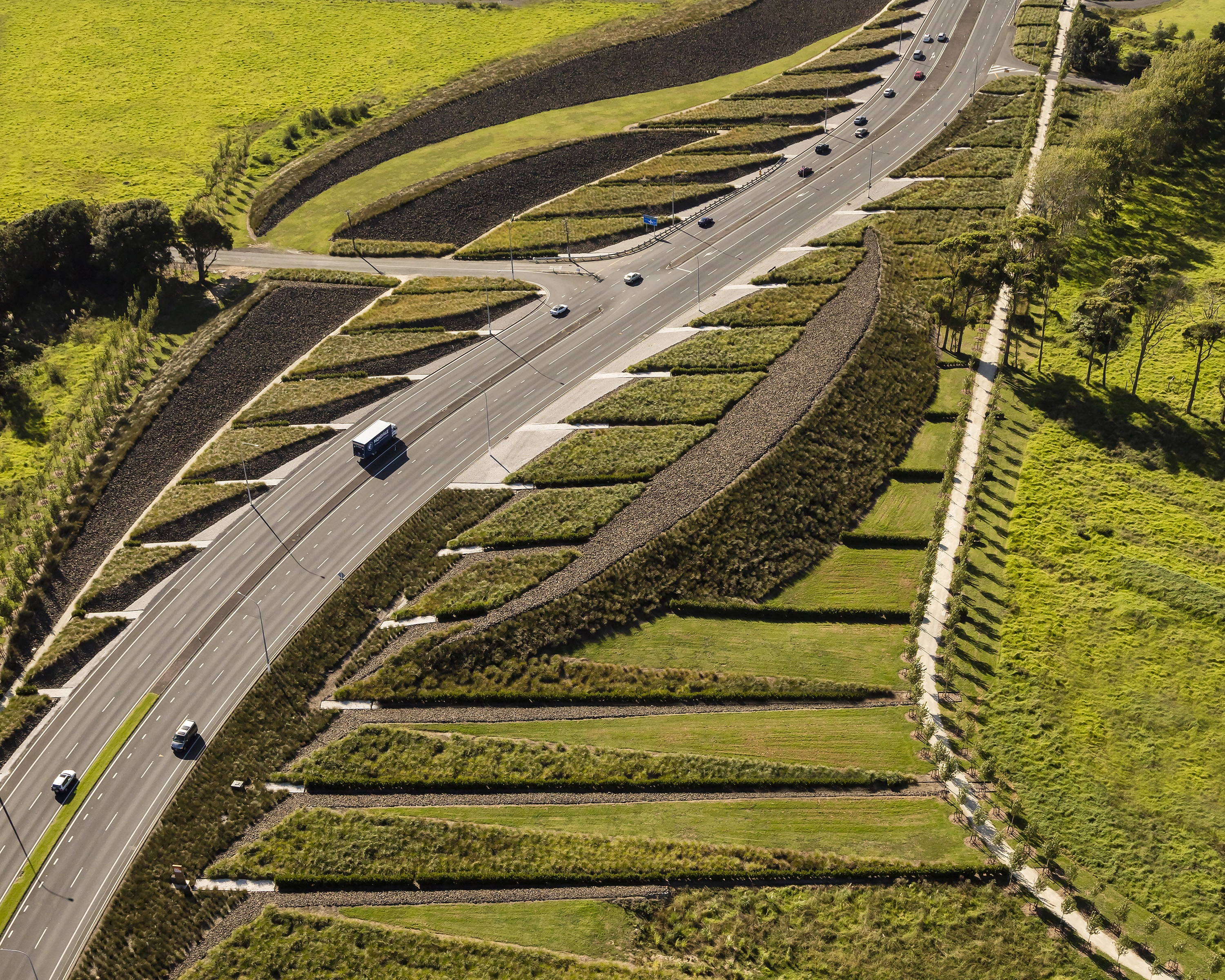
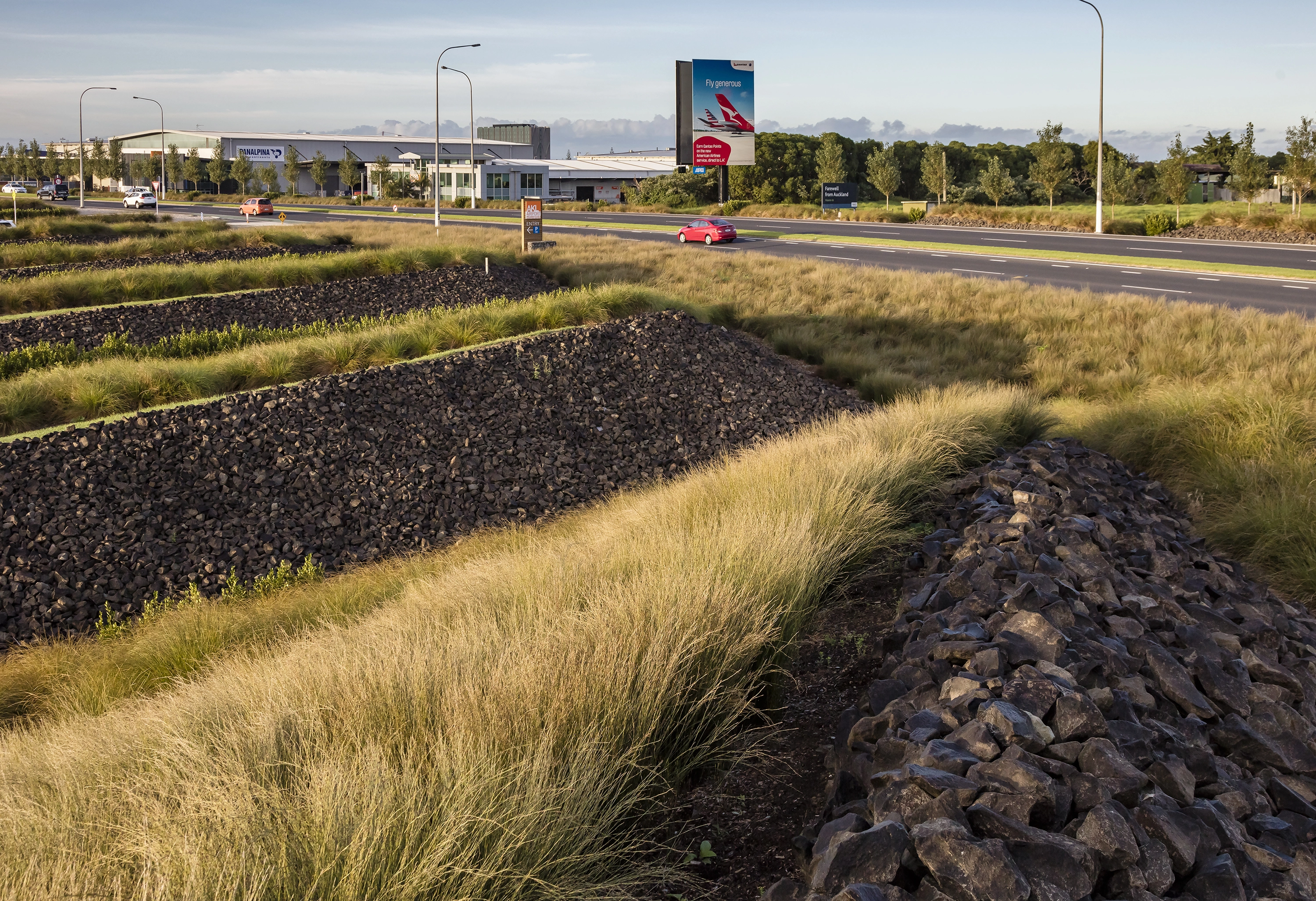
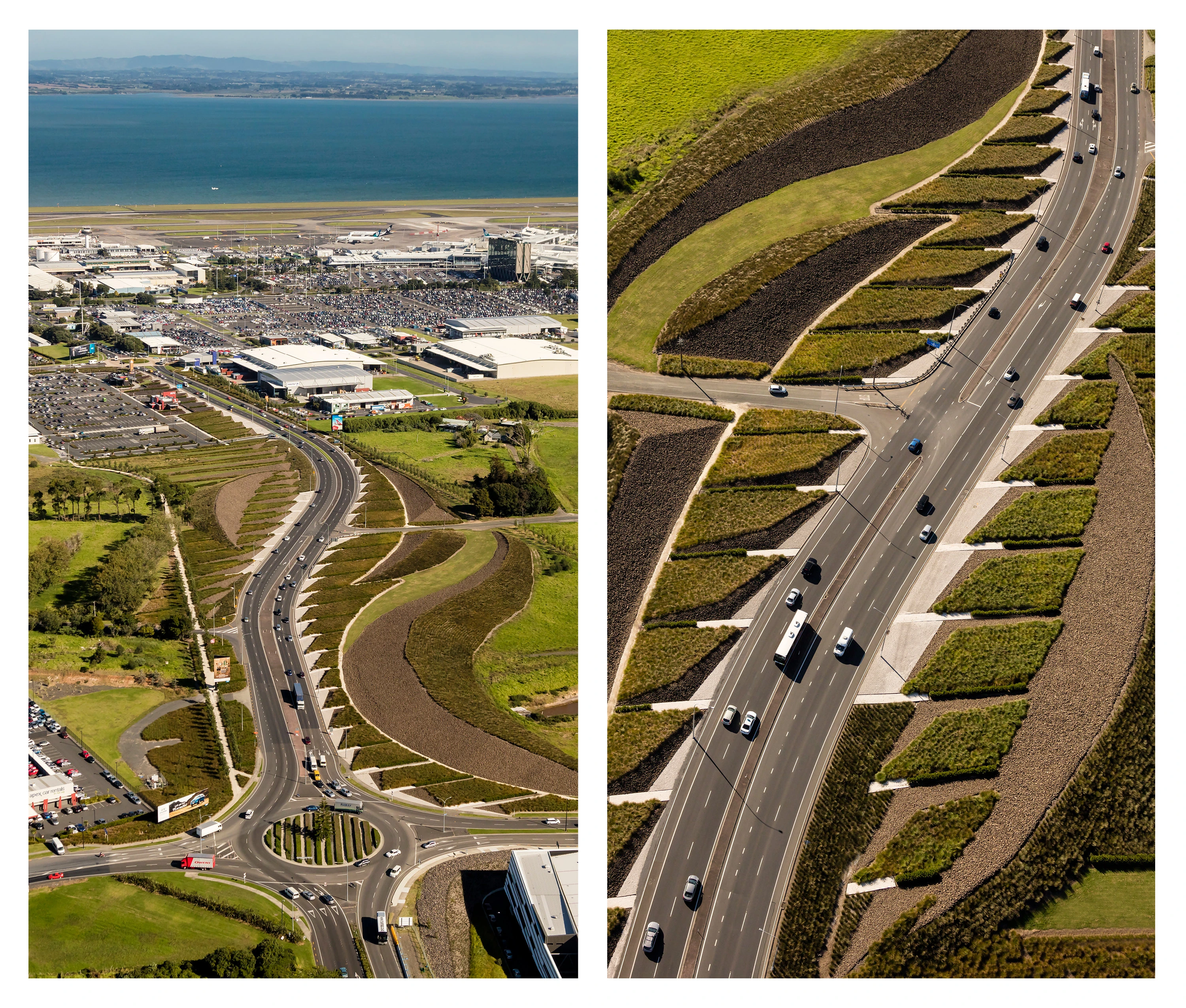
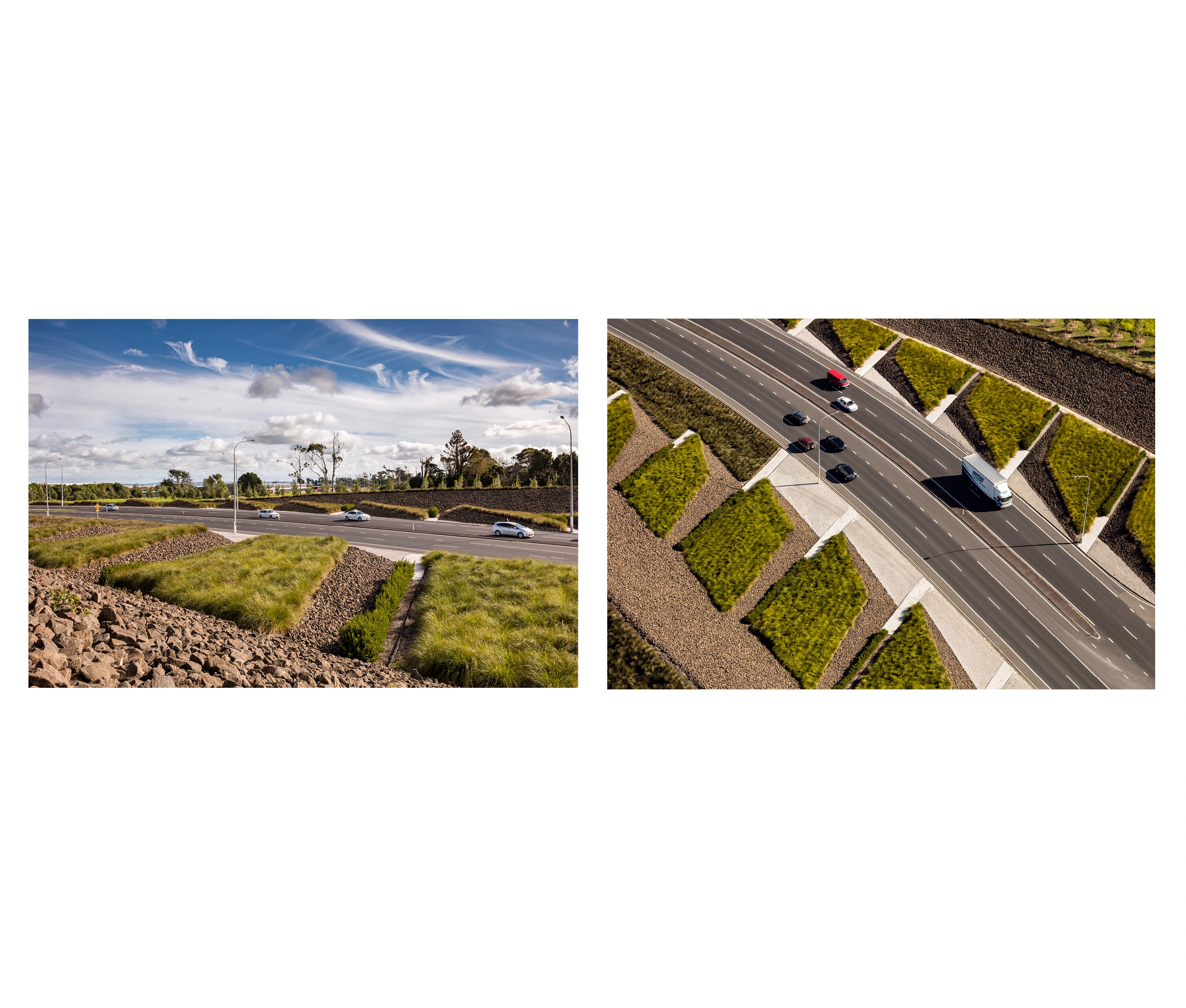
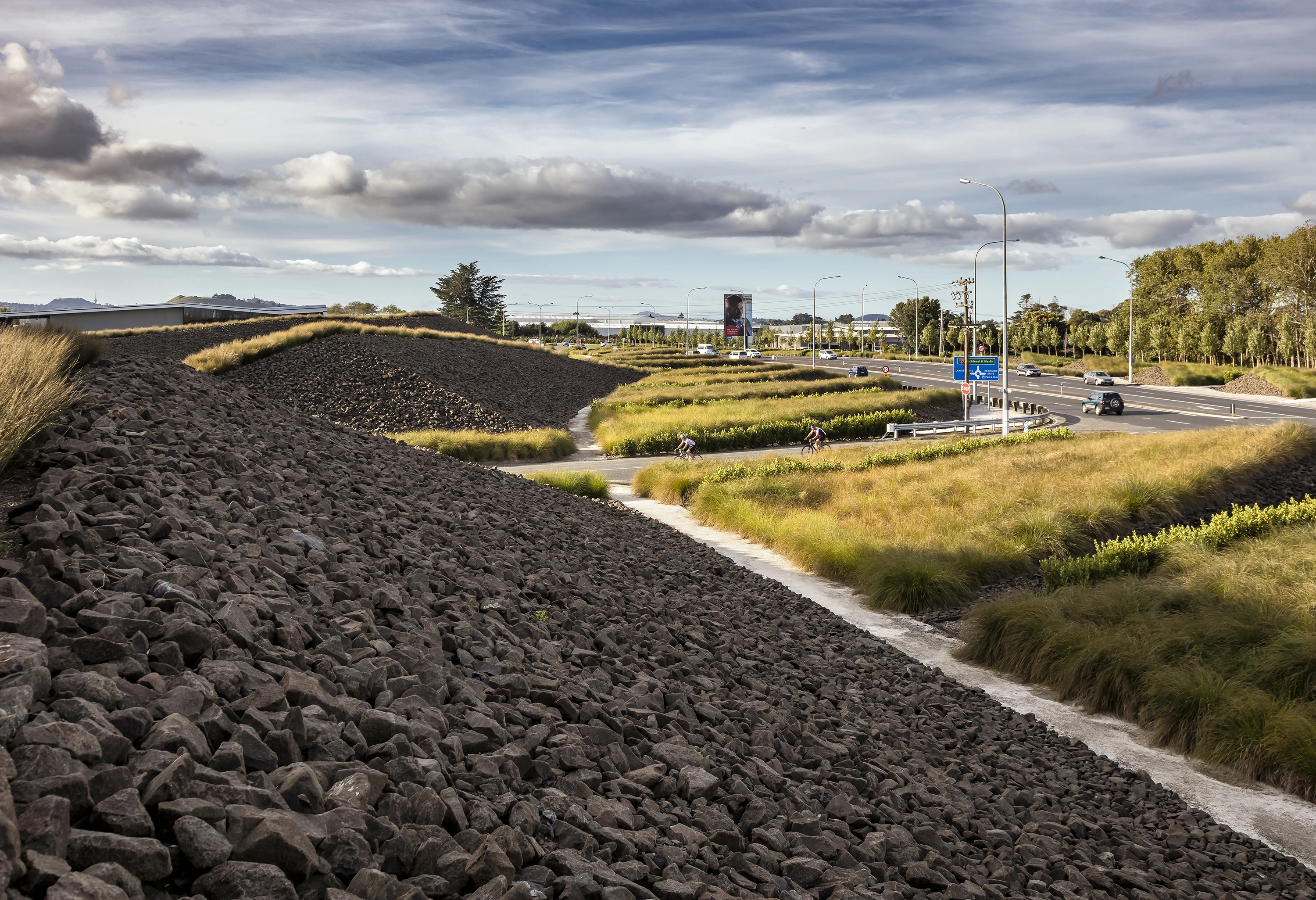
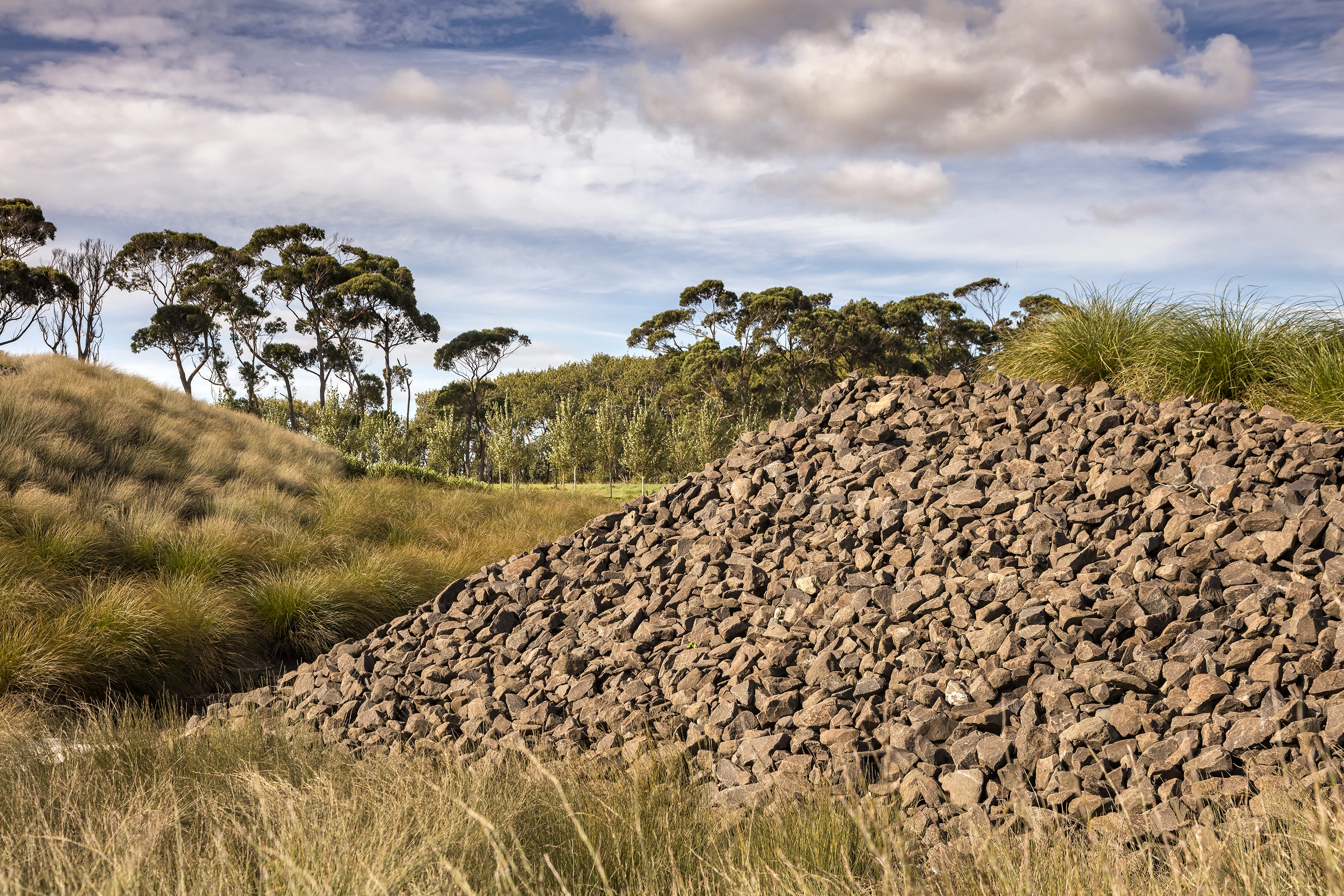
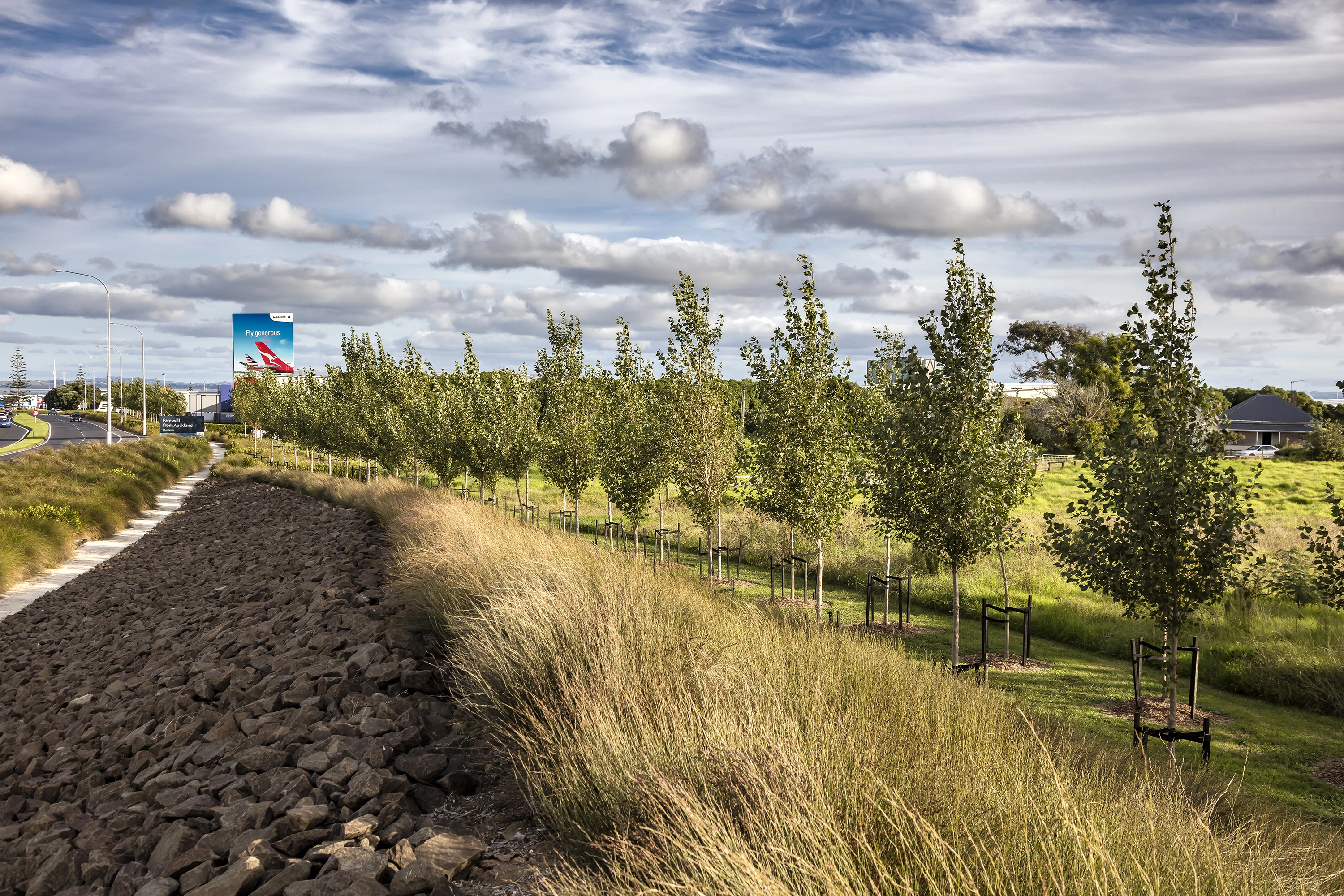
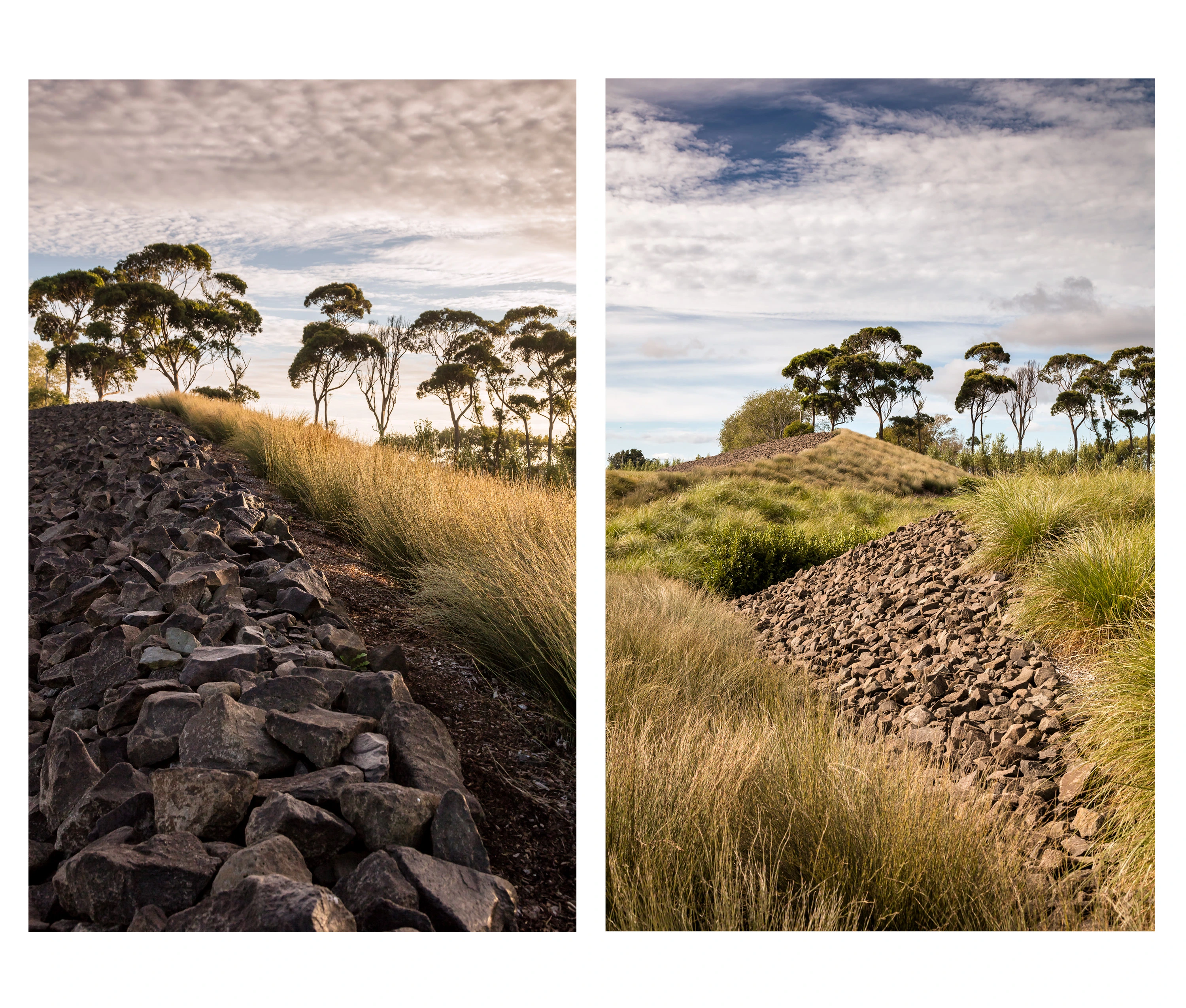
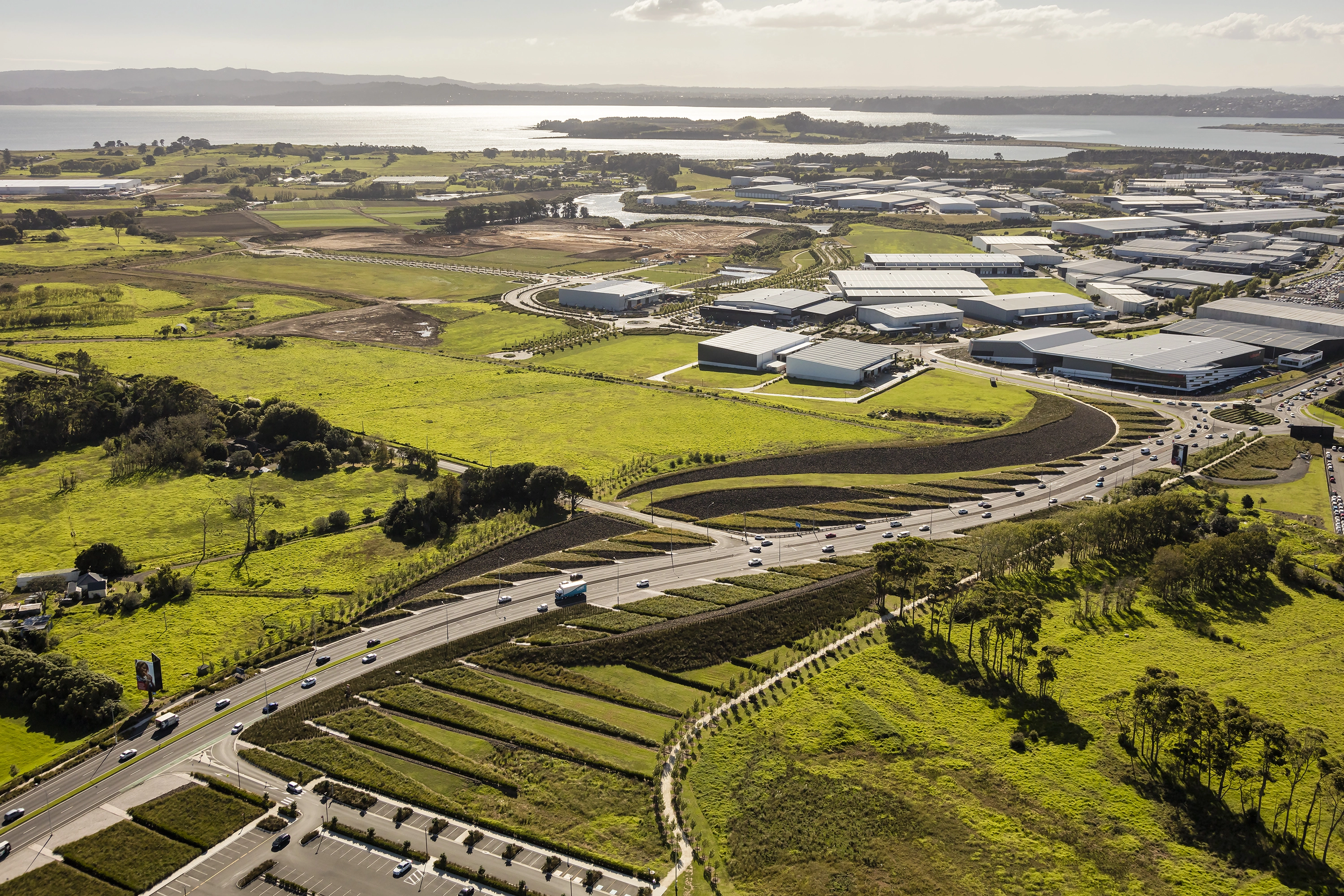
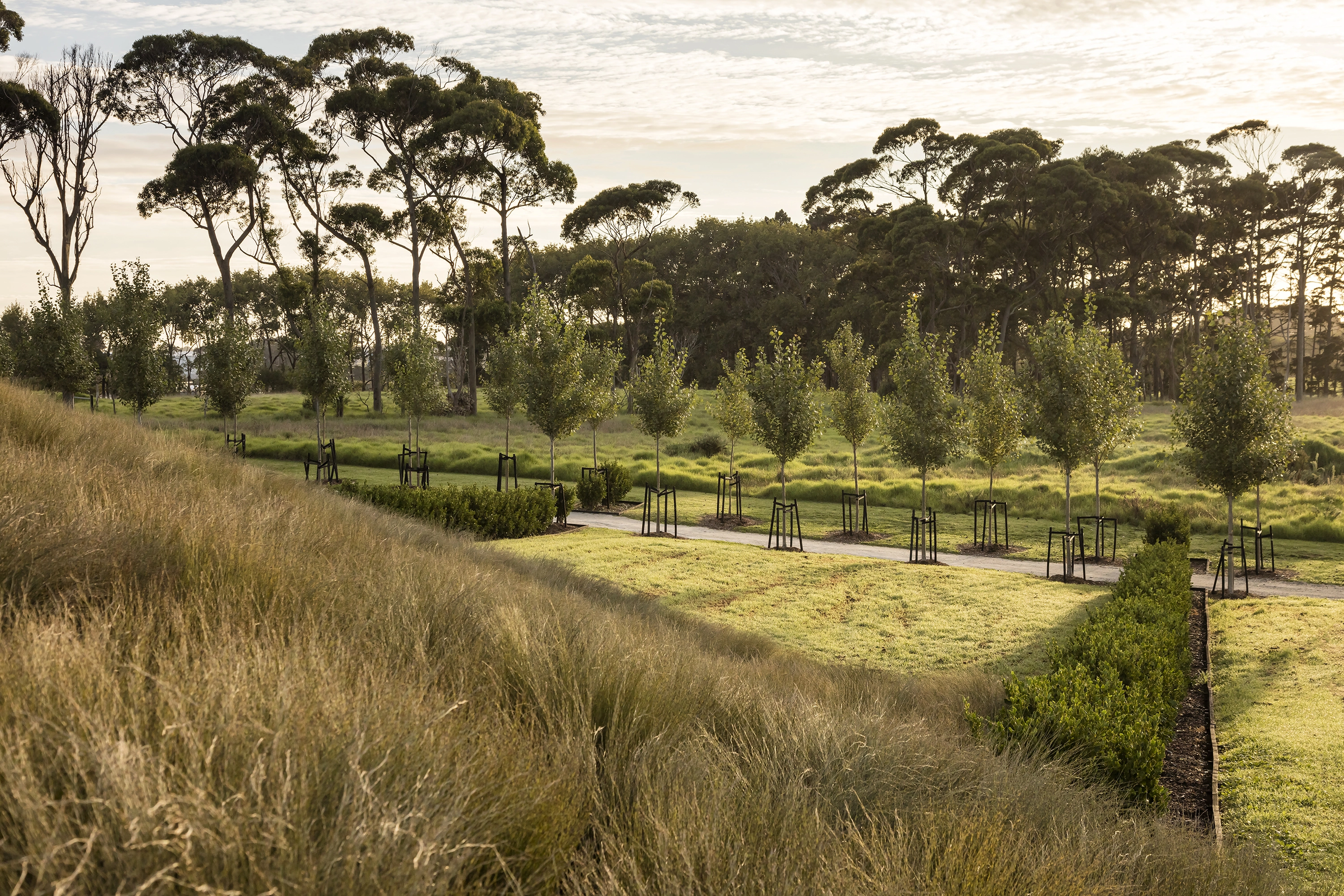

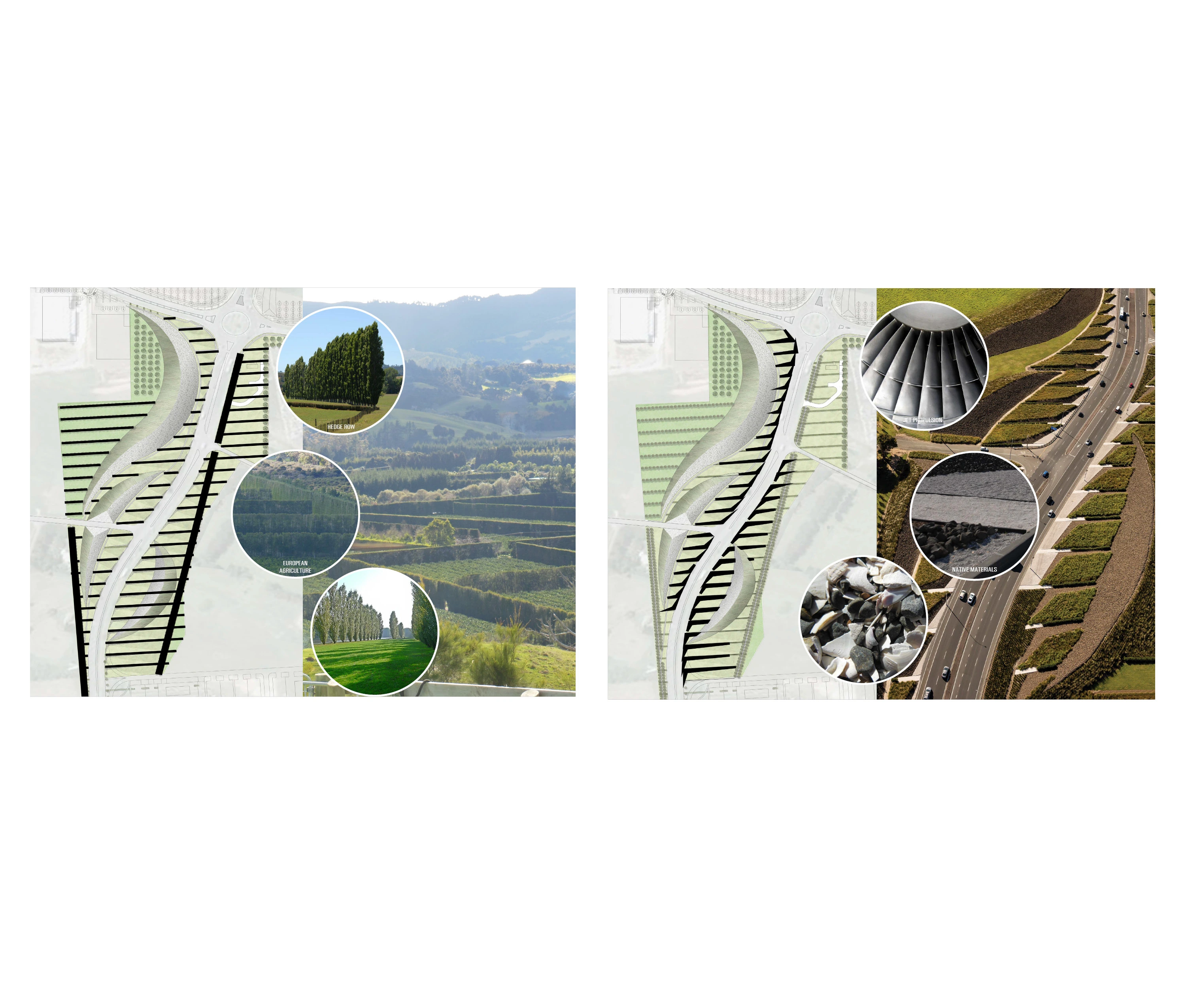
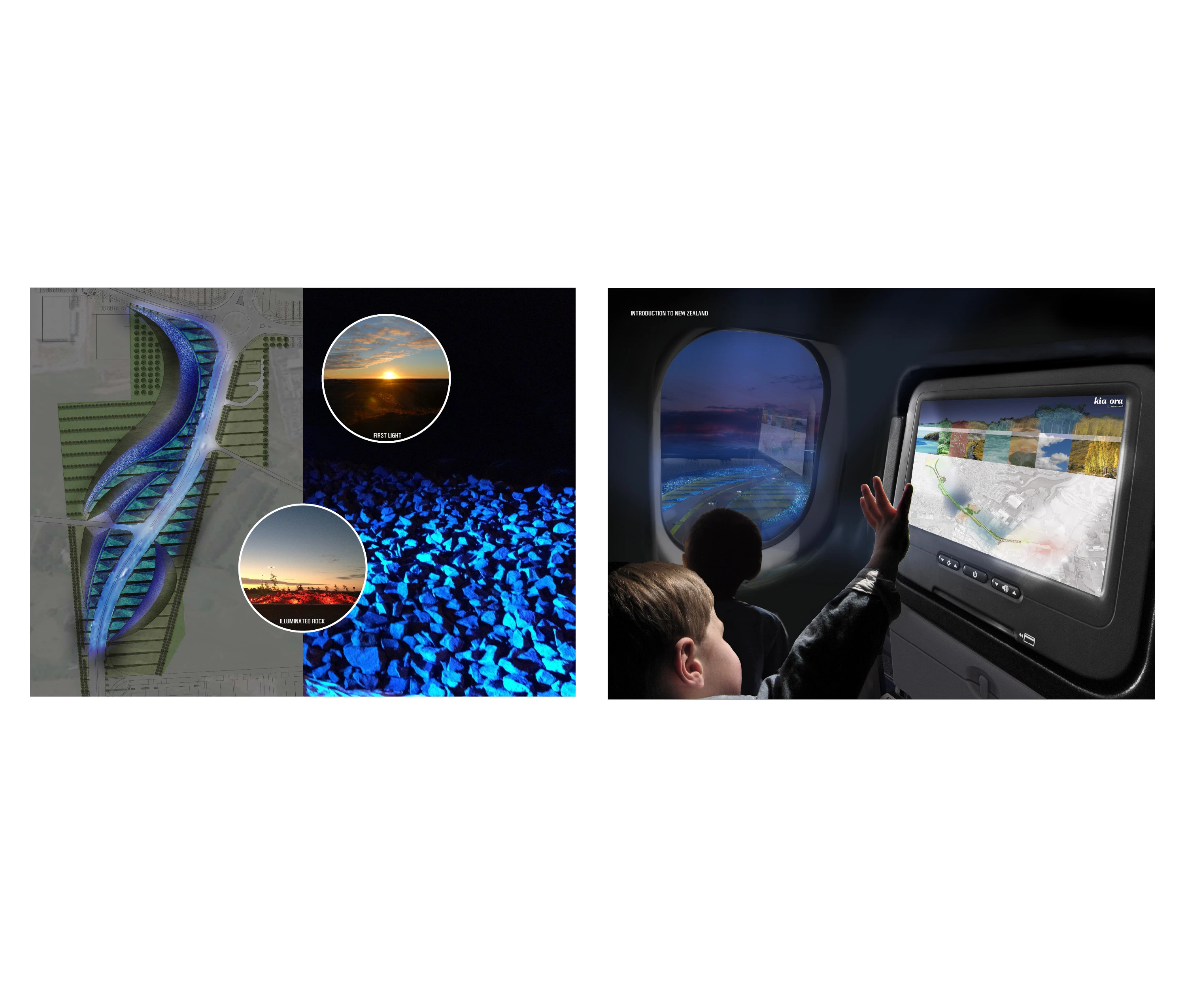
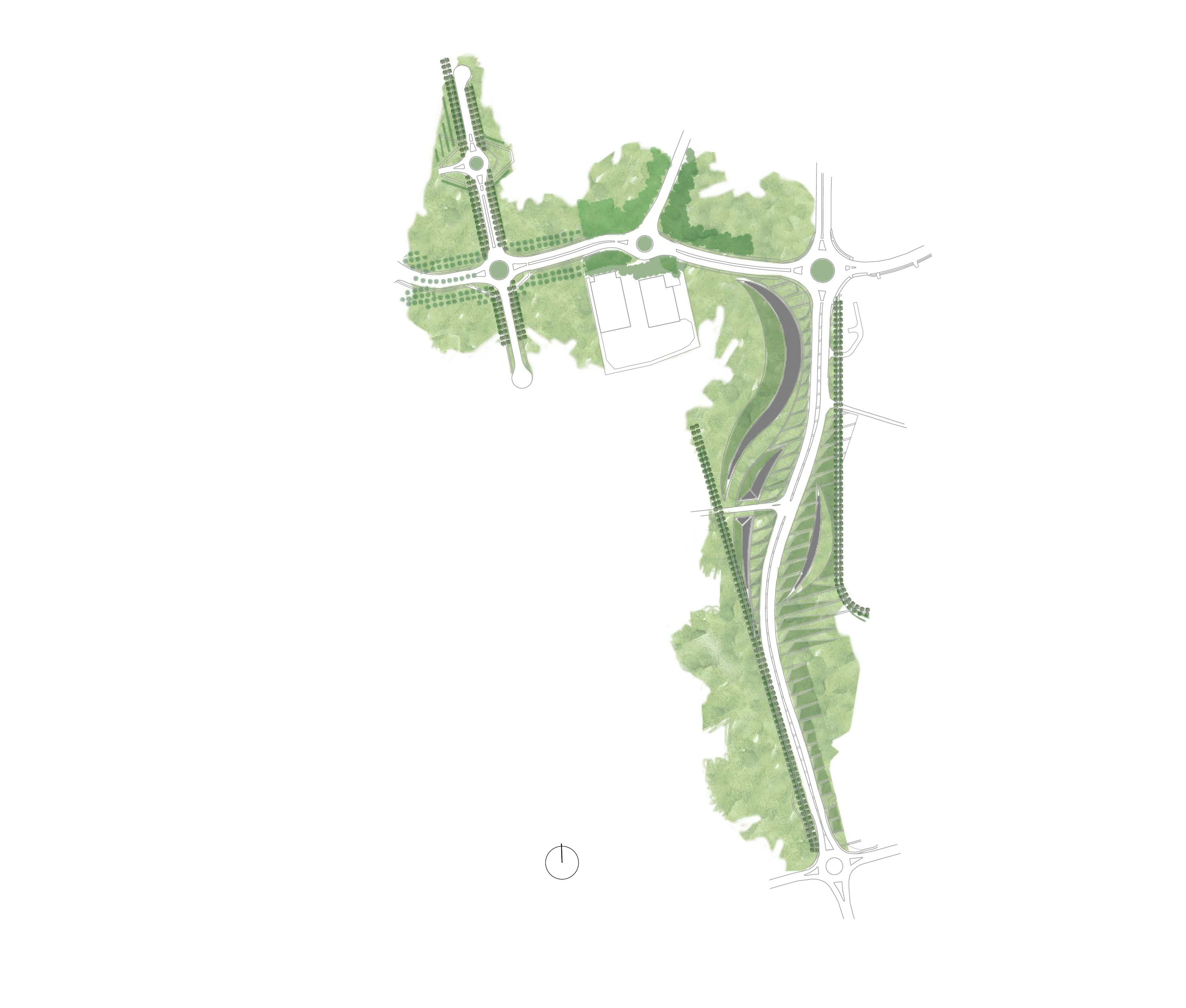
Visible from the air or from the ground, the rhythmic forms around Auckland International Airport, which reference both traditional Maori stone mounds and Paleolithic constructions, read differently based on the speed with which one passes them, with the condition of movement written into the land itself. Alternating between organized and natural, with constructed berms and native plantings, the ground leading to the airport employs patterned dynamism to become emotive, using a palette of native plants alongside volcanic stone to introduce visitors to New Zealand’s environment even before they touch down.
Awards Jury
-
The Auckland International Airport has a dramatic geographical context, sited on an isthmus of the northern island of New Zealand. The seasons change in dramatic shifts— the east coast of New Zealand receives the first light of day in terms of global time. 70% of visitors to New Zealand arrive through the portal of the Auckland Airport, which has, over time, lost a unique national identity. The Auckland Airport landscape is a welcome to visitors, a recognition of the site’s location on the globe, and a celebration of how man has engaged with the uniquely dramatic New Zealand landscape.
-
Auckland International Airport is strategically located on the eastern edge of an isthmus of the North Island of New Zealand, where the topography unfolds into the rugged coastline. This is the region where the Maori first arrived in waka canoes from Polynesia, transforming the landscape through the cultivation of tropical plants in stone-lined excavations that became a sacred typology. Centuries later, European immigrants further modified the landscape with the cultivation of orchards and timber trees. They, too, protected the crops from the harsh climate with layered plantings of strict hedgerows. Both the Maori and European settlers dramatically shaped the Auckland and broader New Zealand landscape.
The airport landscape is an expression of this engagement of people and land, and it celebrates the multiple histories of New Zealand’s vernacular landscapes. Stone mounds that reference Maori stonesfields rise from the ground; a datum of hedgerows overlays these mounds, creating a simplified groundplane from which the greater Auckland landscape—both urban and volcanic—can be read with a newfound clarity. The earthforms serve a dual purpose as they address on-site soils remediation and stormwater treatment, part of a larger ecological mission of the airport.
Smaller, stone ‘blades’ reference the motion of a jet engine, and emphasize the excitement of arrival, travel, and cinematic choreography—of planes, cars, bicycles—through the airport landscape. Native New Zealand grasses soften the blades and connect them to the regional landscape. International travelers to and from Auckland generally arrive in the dark. Leveraging the importance of light as part of the airport travel experience in Auckland, the airport celebrates the New Zealand landscape in light. A spectrum of colors are pulled from the dramatic New Zealand landscape, from Hukafalls to the volcanoes in Auckland, and projected on the stone blades—welcoming travelers to the landscape of the country as they arrive. -
- Harrison Grierson - Engineers
- Dempsey Wood - Contractor
-
- Carex secta
- Populus nigra italica
- Metrosideros excelsa
- Griselinia littoralis
Advertisement
Related Awards
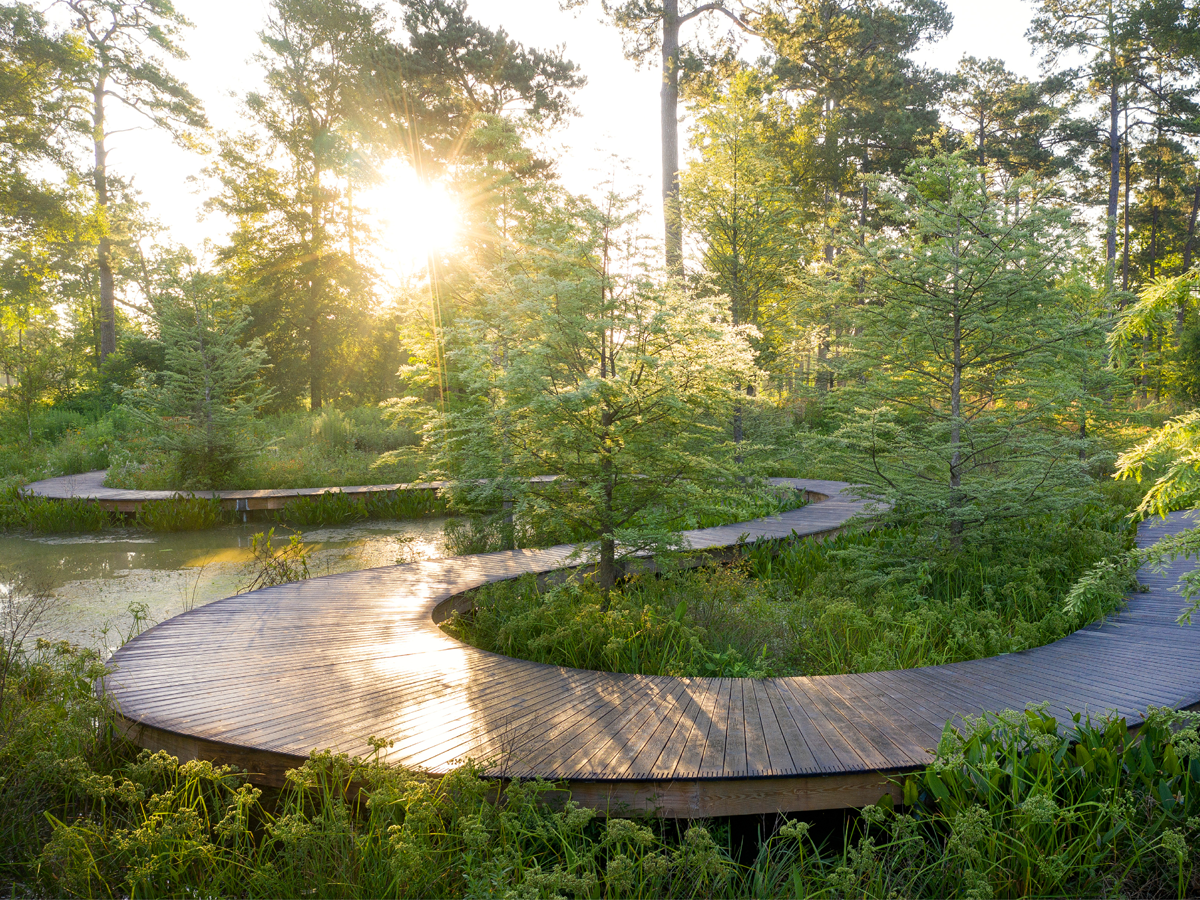
Honor Award, General Design
Houston Arboretum & Nature Center
The Houston Arboretum & Nature Center sits within Memorial Park, one of the largest urban parks in the United States, in one of the nation's fastest growing and most climate-challenged cities. The site's story is one of repeated loss and deliberate reinvention. Hurricane Ike in 2008 and a severe drought in 2011 destroyed much of the Arboretum's tree canopy, exposing the limits of conventional reforestation in a city defined by flooding, heat, and ecological volatility.
Related Articles

ASLA Fund
American Society of Landscape Architects Announces its 2026 Student Awards
39 Student Award winners elevate the future of the landscape architecture profession
Aug 24 2026