

.webp?language=en-US)


Landscape Architects Can Become Changemakers, But First We Need to Change How They Are Taught

By Jeffrey Hou, ASLA
To address climate change, environmental degradation, and social inequalities, we need coordinated political action and systemic change on a global scale. With a mission to safeguard the health, safety, and welfare of the public, landscape architects can become important agents of that change.
Given our ability to work with social and ecological systems at multiple scales, landscape architects are uniquely positioned to bring about positive systemic change locally, regionally, and across temporal and territorial borders. But to become true changemakers, landscape architects also need to take a more proactive approach beyond the current business as usual. We need to work with a greater network of partners and allies. We need to approach design as a form of activism and a vehicle for change.
For landscape architects to become changemakers, we must change how they are taught. In a new report titled Design As Activism, we propose a framework that design schools can adopt to create opportunities within their programs for both immediate and enduring change:
- Politicize – Develop the ability and capacity in students to engage in the political process to create change; understand better the language and systems of power; accept the responsibility of professionals as engaged citizens and as members of a democracy.
- Hybridize – Build knowledge and capacity beyond the traditional core of the profession; engage in collaboration on research, teaching, and service with other disciplines; learn from how other fields generate, disseminate, and apply knowledge, and how they engage the public and advance their agenda.
- Glocalize – Think and act both locally and globally; build connections with stakeholders, including communities, public agencies, civic organizations, and the professional community locally and across borders; examine the intersections between local and global challenges.
- Improvise – Make use of what already exists, including courses, curriculum, programs, and other resources; utilize strengths and assets already in place in a program or a community, including existing connections and relationships; be tactical and creative with opportunities and circumstances.
- Problematize – Question assumptions and challenges facing an institution or a community; develop a deeper understanding of issues and take a critical stance; make issues of equity, justice, and resilience in a current program, curriculum, institution, or community the focus of education and actions.
- Authenticize – Create opportunities for self-discoveries through experiential learning; develop and support long-lasting relationships for collaboration with community stakeholders; work with communities and stakeholders in the actual context with real issues.
- Entrepreneurize — Provide students not only with technical skills but also entrepreneurial knowledge; develop partnerships with programs on campuses and organizations in the profession to offer courses and workshops; provide students with skills and opportunities to pursue alternative practices.
- (Re)organize – Examine critically how education and professional practices in landscape architecture are organized; collaborate with the movement organizations and find critical intersections of our work; identify allies and build coalitions and greater capacity for the profession
- Democratize – Begin by reexamining the power structure within our educational institutions; fully engage students, faculty, and the professional community in program decision and implementation; ensure that all voices are included in courses, projects, and initiatives; build capacity in the community we work with.
This framework and additional recommendations in the report drew from discussions at national conferences, an online survey, and interviews with practitioners and program leaders in the U.S. We explored the skills and knowledge required for design activists and the challenges and opportunities facing the integration of design activism into landscape architecture education. To learn from the existing efforts in the field, we further examined the current models of engaged learning that included community design centers, community-university partnerships, and service-learning programs.
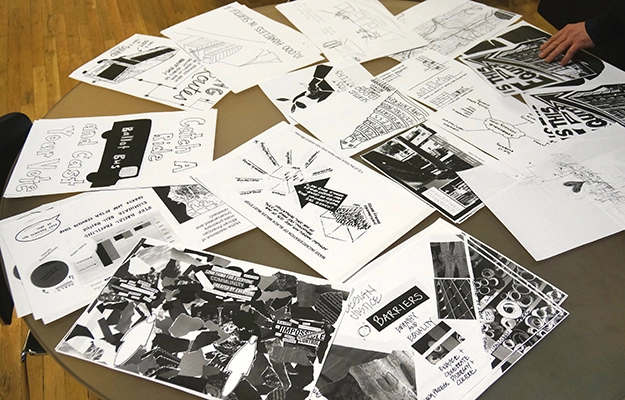
As educational programs in landscape architecture vary in their focus, size, and organization, and as they respond often to different contexts and constituents, the proposals here are not meant to be one-size-fits-all, nor are they exhaustive. Instead, we ask each program and school to assess its own mission and goals and develop appropriate strategies and actions together with students, faculty, and the professional community.
While the framework and suggested actions are specific to education, we firmly believe integrating this mission in the professional world of landscape architecture is also essential. A broader transformation can only occur through collaboration between education, practice, and social engagement.
Learn more about the project.The report was the outcome of a Landscape Architecture Foundation Fellowship for Innovation and Leadership awarded to Jeffrey Hou, ASLA, a professor of landscape architecture at the University of Washington, Seattle, with the support of a working group whose members include: Kofi Boone, FASLA, North Carolina State University; Mallika Bose Pennsylvania State University; Chingwen Cheng, ASLA, Arizona State University; David de la Peña, University of California, Davis; Joern Langhorst, University of Colorado, Denver; Laura Lawson, ASLA, Rutgers University; Michael Rios, University of California, Davis; Deni Ruggeri, Norwegian University of Life Sciences; and Julie Stevens, ASLA, Iowa State University.