

.webp?language=en-US)

.webp?language=en-US)
Advertisement
Fire
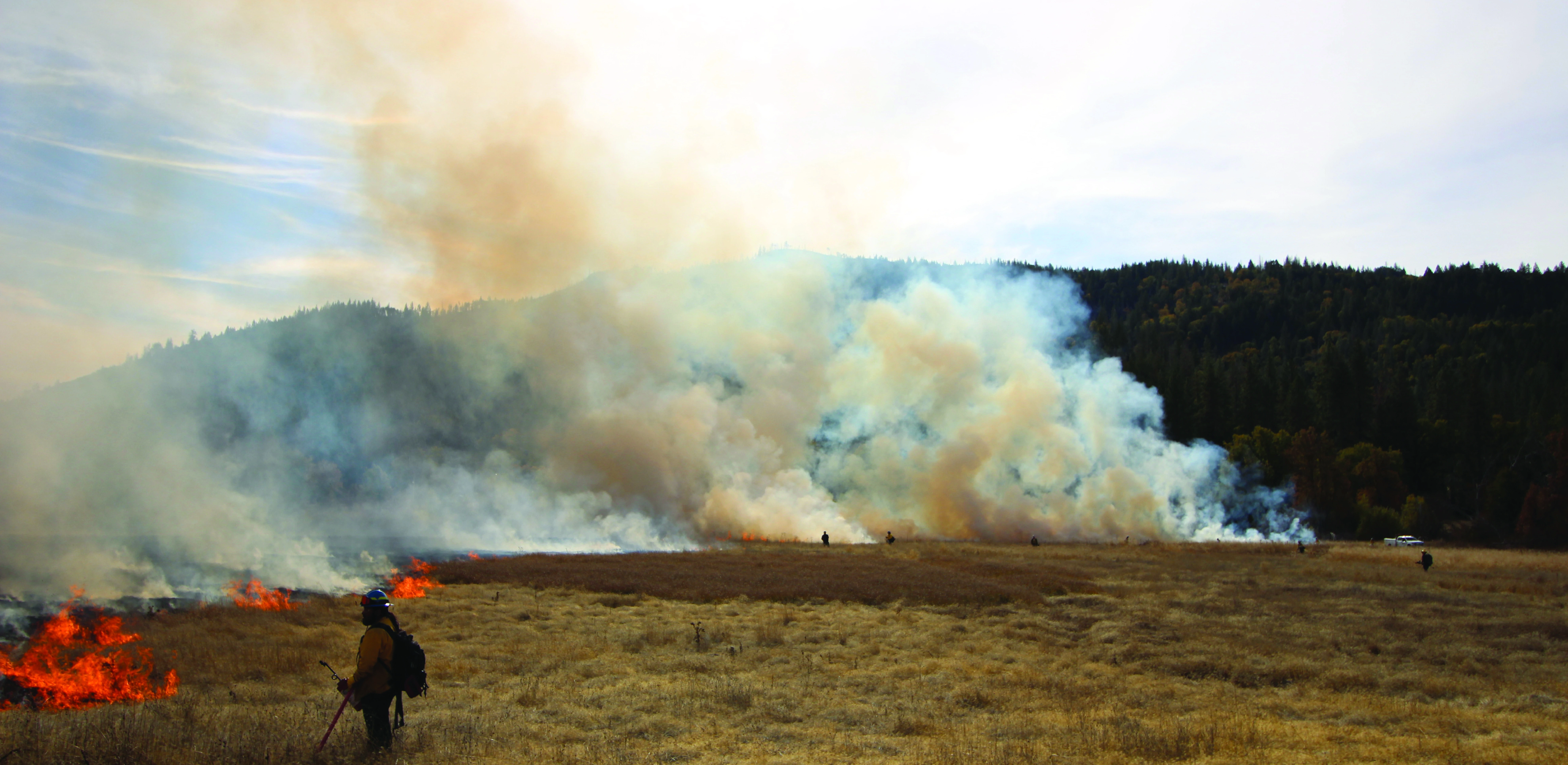
ASLA 2024 Professional Communications Honor Award. Design By Fire. Brett Milligan, ASLA Emily Schlickman, ASLA.
Wildfire protection and suppression costs in the United States have more than tripled since the 1990s, surpassing $3 billion annually. The rise in cost is indicative of bigger fires and the greater threat posed by fires to communities.
Several factors have caused wildfires to grow and their threat to increase. Climate change, which has caused rising temperatures and drier conditions, and drought reduce moisture in the air and water in the soil. Higher temperatures and less precipitation make it much easier for fires to start. Also, many developments have been built in the wildland-urban interface (WUI), areas where wildfires are a natural part of the ecosystem. A proliferation of homes in these areas has therefore led to an increase in wildfire risk. Greater numbers of dead trees in the WUI means more fuel for wildfires. In these communities, there has also been the purposeful suppression of small fires, which then greatly increases the amount of understory fuel that wildfires can feed on.
How Resilient Planning and Design Helps
Smarter land planning and management is key. Some areas may simply be too high risk to live in. However, established communities already at high risk can embed remote sensors in areas prone to fire to track humidity, wind, temperature, vegetation density, and water availability, receiving alerts during highest risk periods. Communities can also create a comprehensive landscape-based wildfire protection strategies, such as “defensible spaces,” which have been successful in limiting the damage of spreading wildfires. Firewise landscape strategies involves planting fire-resistant trees and plants farther away from residential, commercial, and public properties. And in some communities, prescribed burns can alleviate some of the threat that larger, uncontrolled fires pose. They remove some of the fuel that larger fires feed on.
Co-benefits
In many ecosystems, wildfire is integral to their function, so re-establishing the use of controlled burns can help restore the ecosystem. In these ecosystems, controlled burns induce vegetative succession, which is necessary for system health. Native plants are fire-resistant, so they support both the reduction of wildfire risk as well as increased biodiversity. And ecosystem restoration and prescribed burn projects can serve as great community-building projects.
Role of the Landscape Architect
Landscape architects work with planners, foresters, and arborists to design defensible spaces and firewise landscape that protect individual homes or communities. Landscape architects create master plans that lay out communities, so they can integrate landscape plans that improve safety.
Advertisement
Landscape Architecture 2040: Climate & Biodiversity Action Plan
Empowers landscape architects with bold targets—advancing biodiversity, reducing emissions, increasing sequestration, and delivering climate and biodiversity justice through every project.
Relevant Projects
Fire Management in National Parks
Greater Bend Wildfire Protection Plan
Lincoln Marsh Conservation, Lincoln Marsh Natural Area
Prescribed Burns, High Park, Toronto, Ontario
Affecting Change to Avoid Disaster: Communicating Effective Wildfire Planning Strategies, Aspen, Colorado
Firescape Demonstration Garden, Santa Barbara, California
Resources
The Science of Firescapes: Achieving Fire-Resilient Communities, BioScience
A Landscape Architecture of Fire, Current Anthropology
Sustainable and Fire-safe Landscapes, California Native Plant Society
Landscape Design for Fire Safety, Pacific Horticulture Magazine
Wildfires Are a Land Use Problem, The Dirt, ASLA
Interactive Maps Track Western Wildfires, The Dirt, ASLA
Wildfires and Climate Change, Center for Climate and Energy Solutions
Defensible Space Landscapist in the Urban/Wild Interface, University of California Cooperative Extension
A Synopsis of Prescribed Fire in New England, Ecological Landscape Alliance
Prescribed Fire, U.S. Forest Service
Protecting Residences from Wildfire, U.S. Forest Service