

.webp?language=en-US)


Uliveto
-
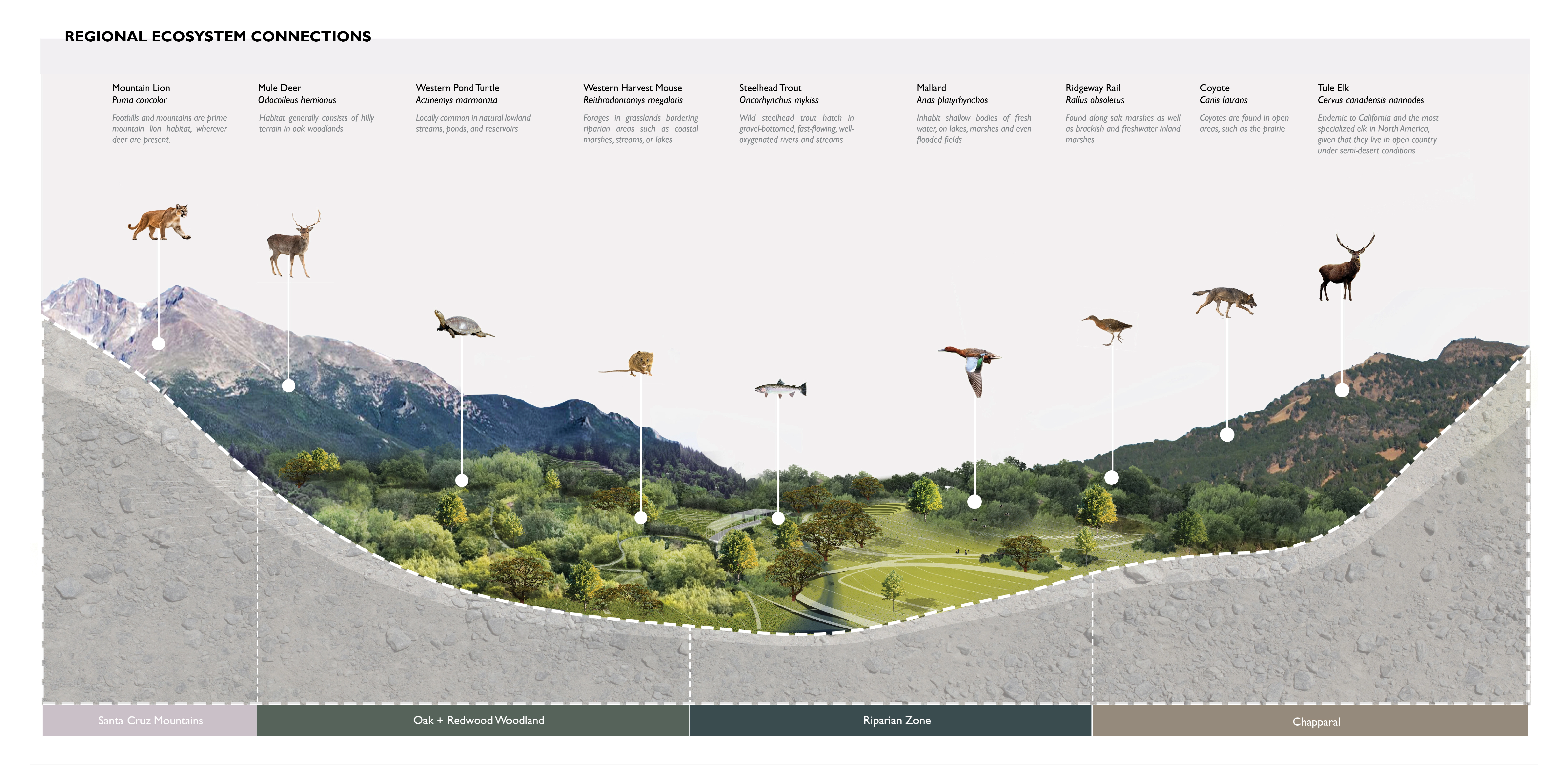
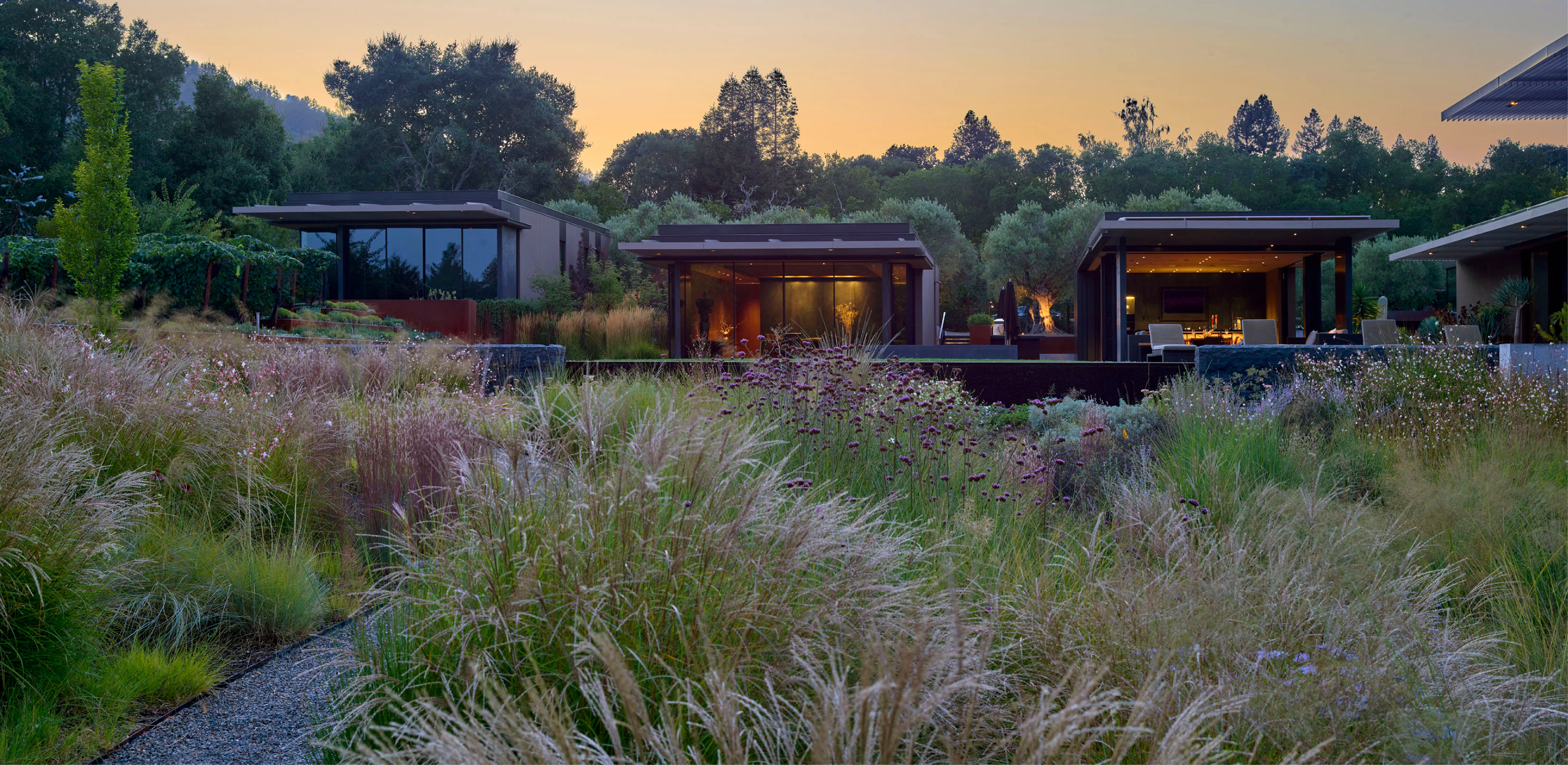
Located on the vegetative gradient between the oak savannah of the Santa Clara Valley and the redwood forests of the Santa Cruz mountains, the Uliveto residence seamlessly nestles into its three-acre site. From its conception, the design aimed to blend into its natural surroundings and borrow the vistas of the adjacent mountains. Thus, the architecture developed as a low volume extending towards the distant summits, articulated as a main house along a main axis and a series of pavilions that nestle into the landscape.
-
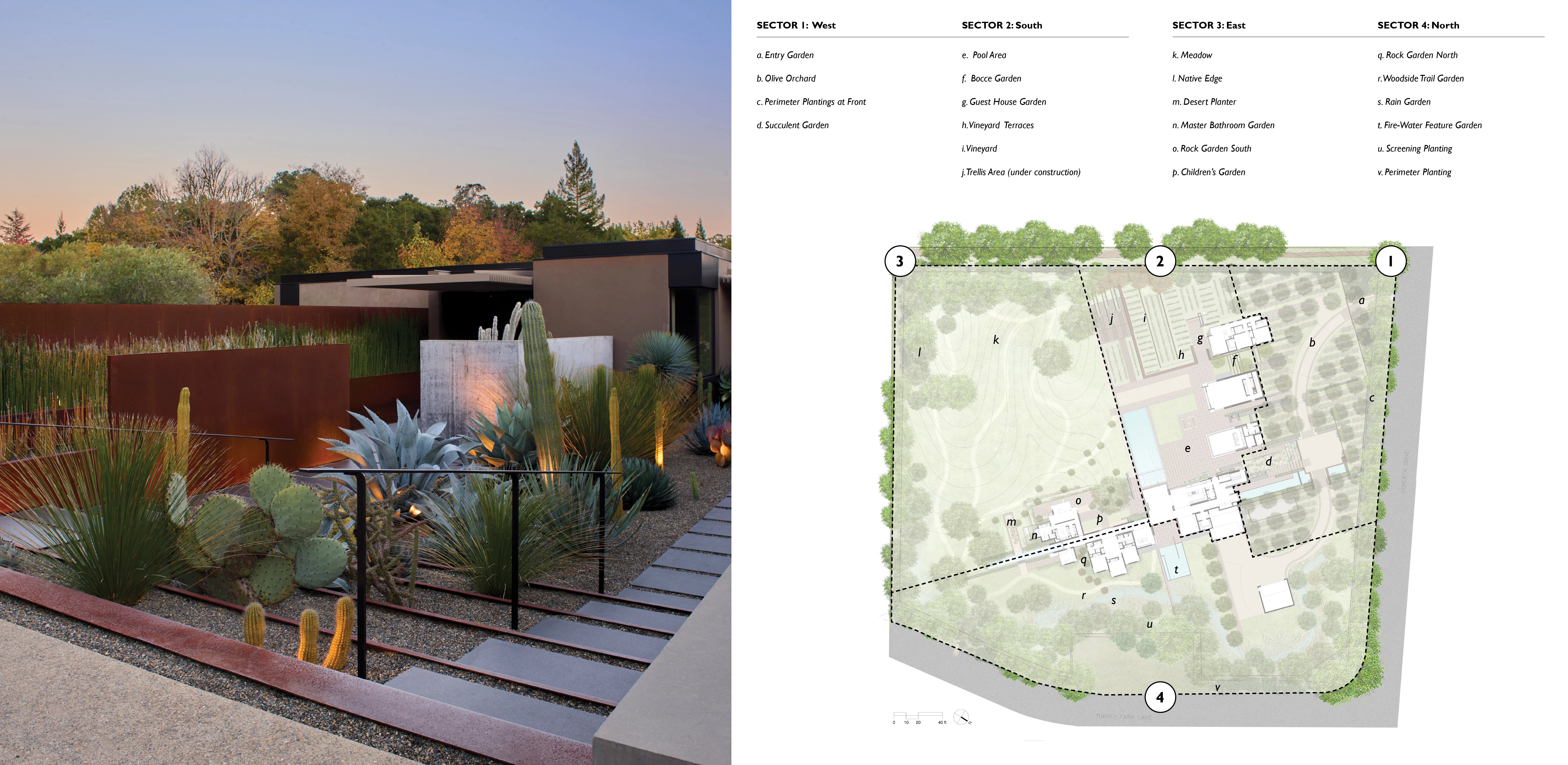
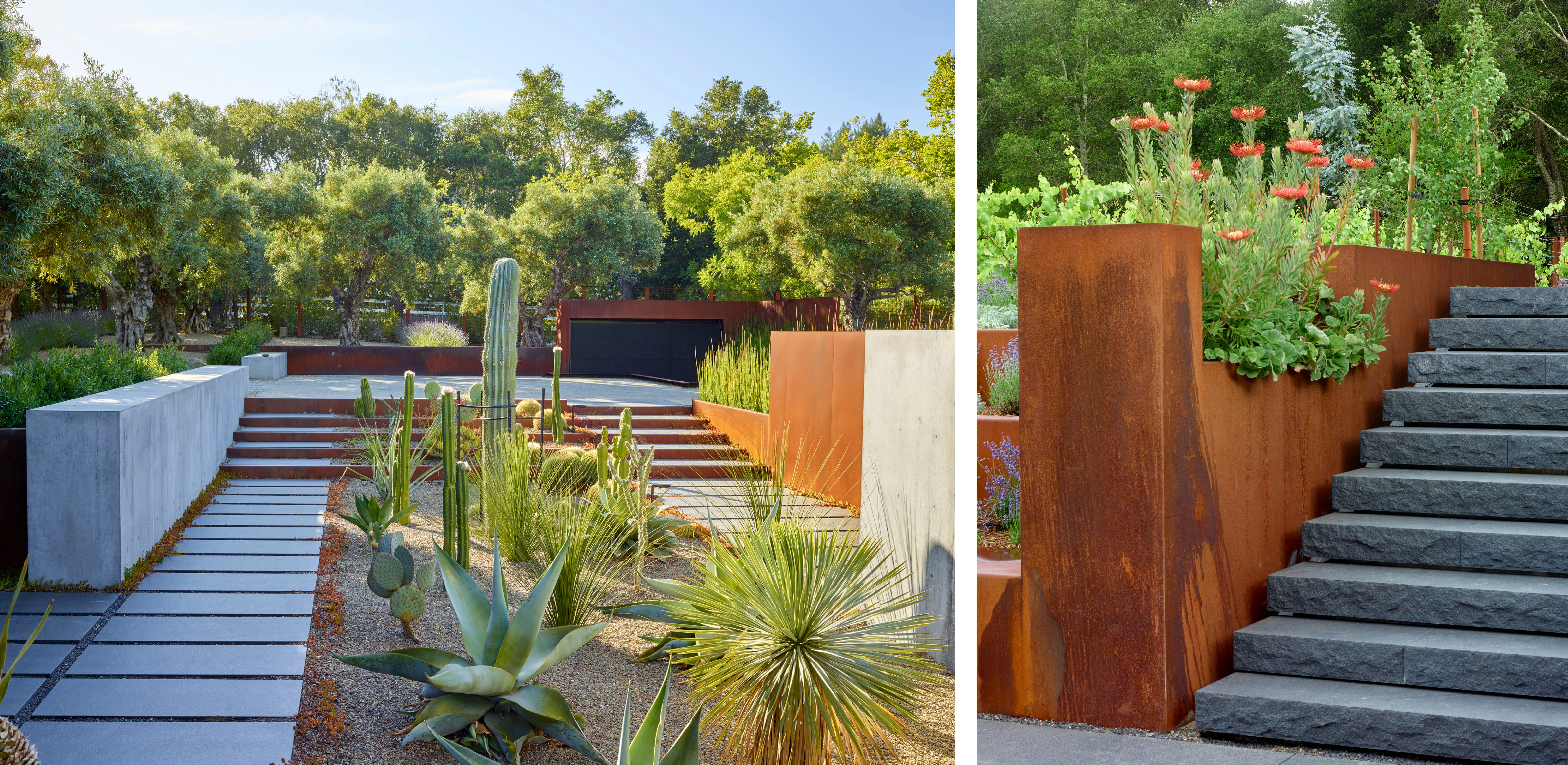
Located in the foothills of the Santa Cruz mountains, the Woodside residence nestles seamlessly its three-acre site. From conception, the design aimed to blur the line with the surrounding landscape and borrow vistas of the adjacent mountains. The architecture unfolds as a series of low volumes extending towards the distant summits; the main house is organized along a main axis and a series of pavilions recede into the landscape. Mitigating the site’s naturally rolling topography, a series of carefully inserted stairs, terraces, and walls negotiate the grades and create a canvas for a series of garden rooms.
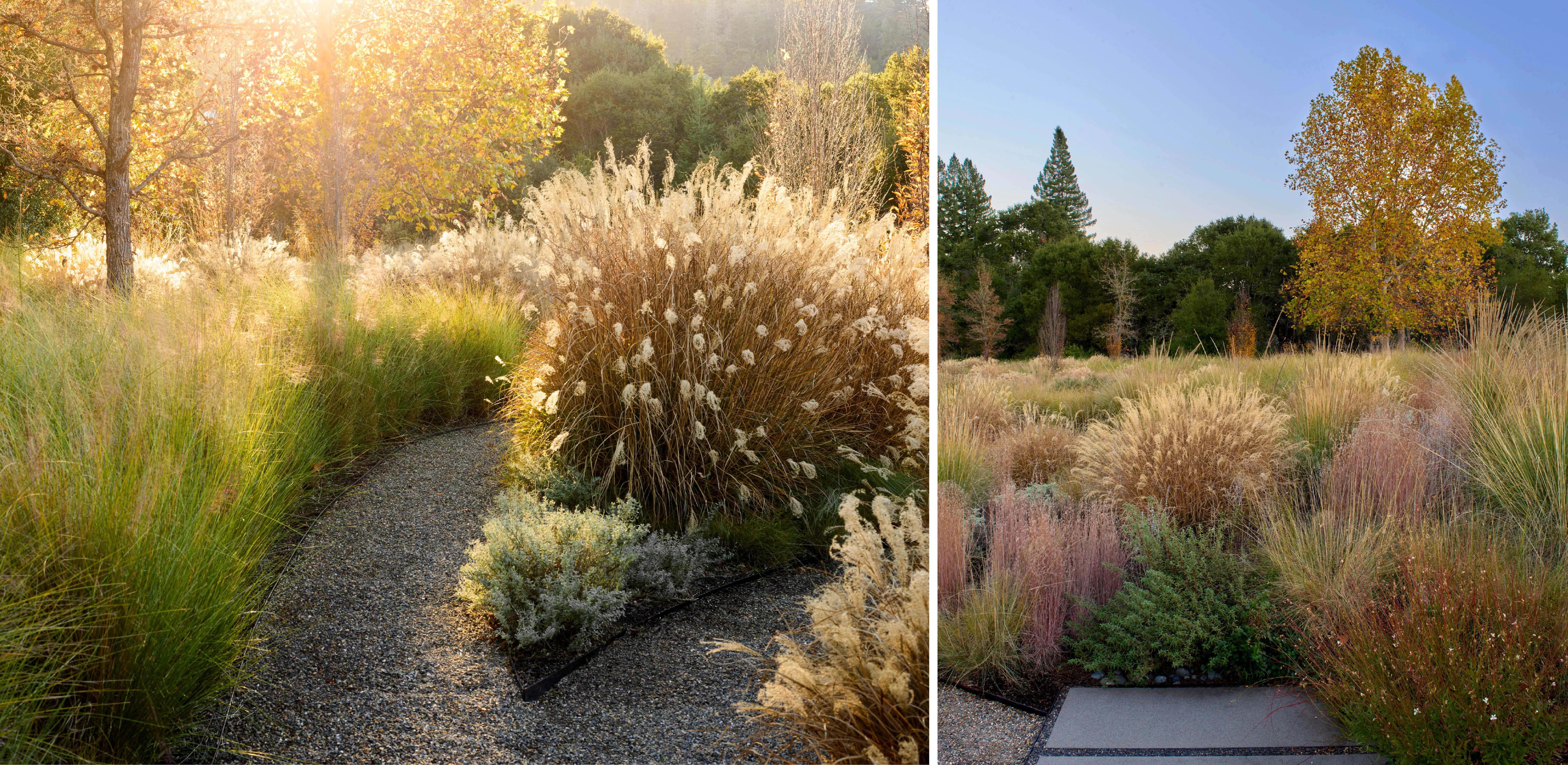
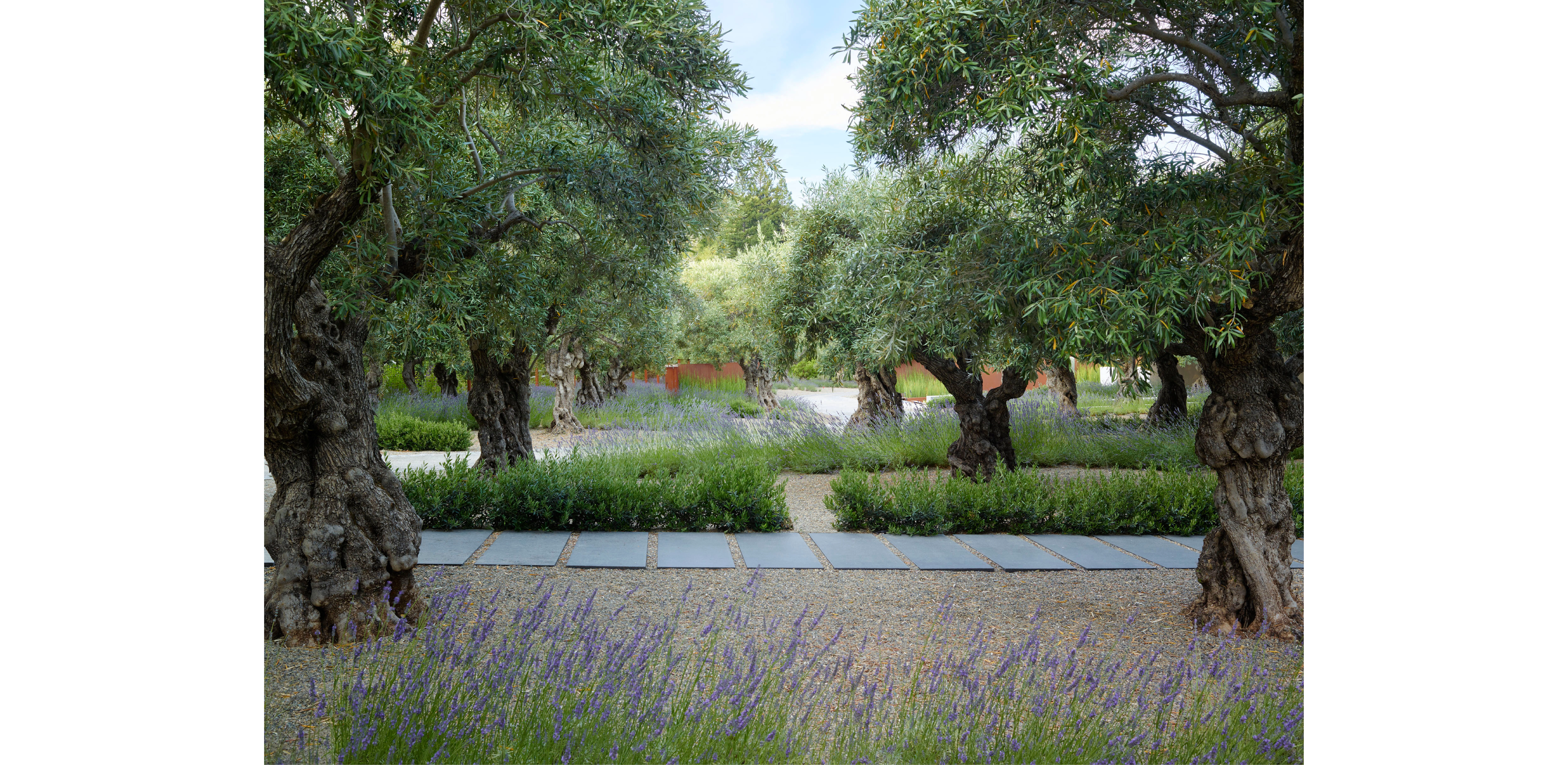
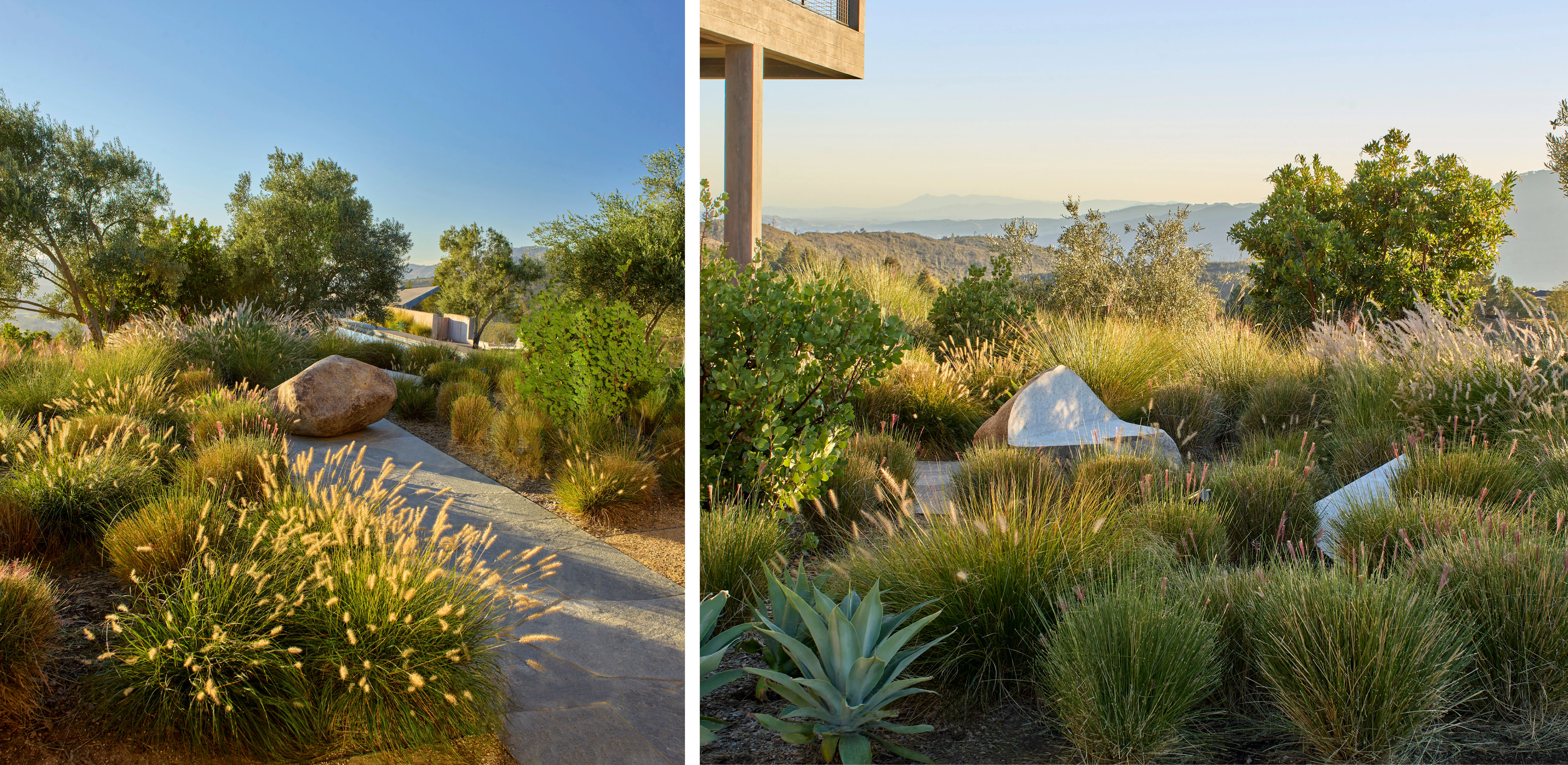
The site had a long history of use as horse paddocks, so a primary consideration was how to address and mitigate the heavily degraded and compacted soil. This was done through extensive soil building through seasonal cover-cropping and amendments as well as a palette of native and adapted plants to address compaction and increase the fertility of the soil. The property is screened from the adjacent streets and bridle trails by a California native palette of woodland trees and shrubs that transition at the main gate to a contemporary Mediterranean planting palette. The entry experience winds through an orchard of ancient olive trees accented with dwarf olives and lavender. Upon arrival, the entry drive opens into a court of sculptural succulents that frame the main entry to the house.
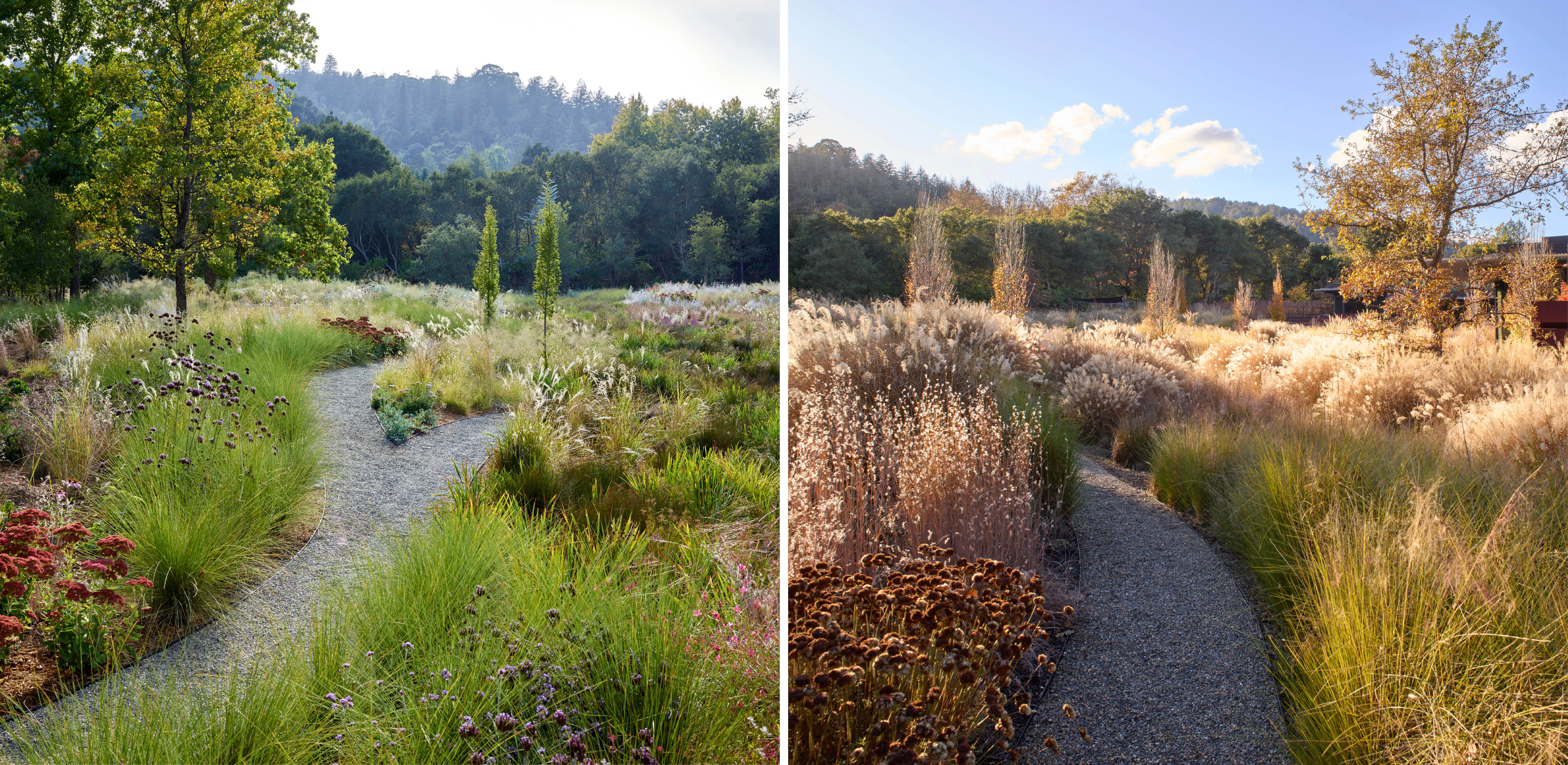
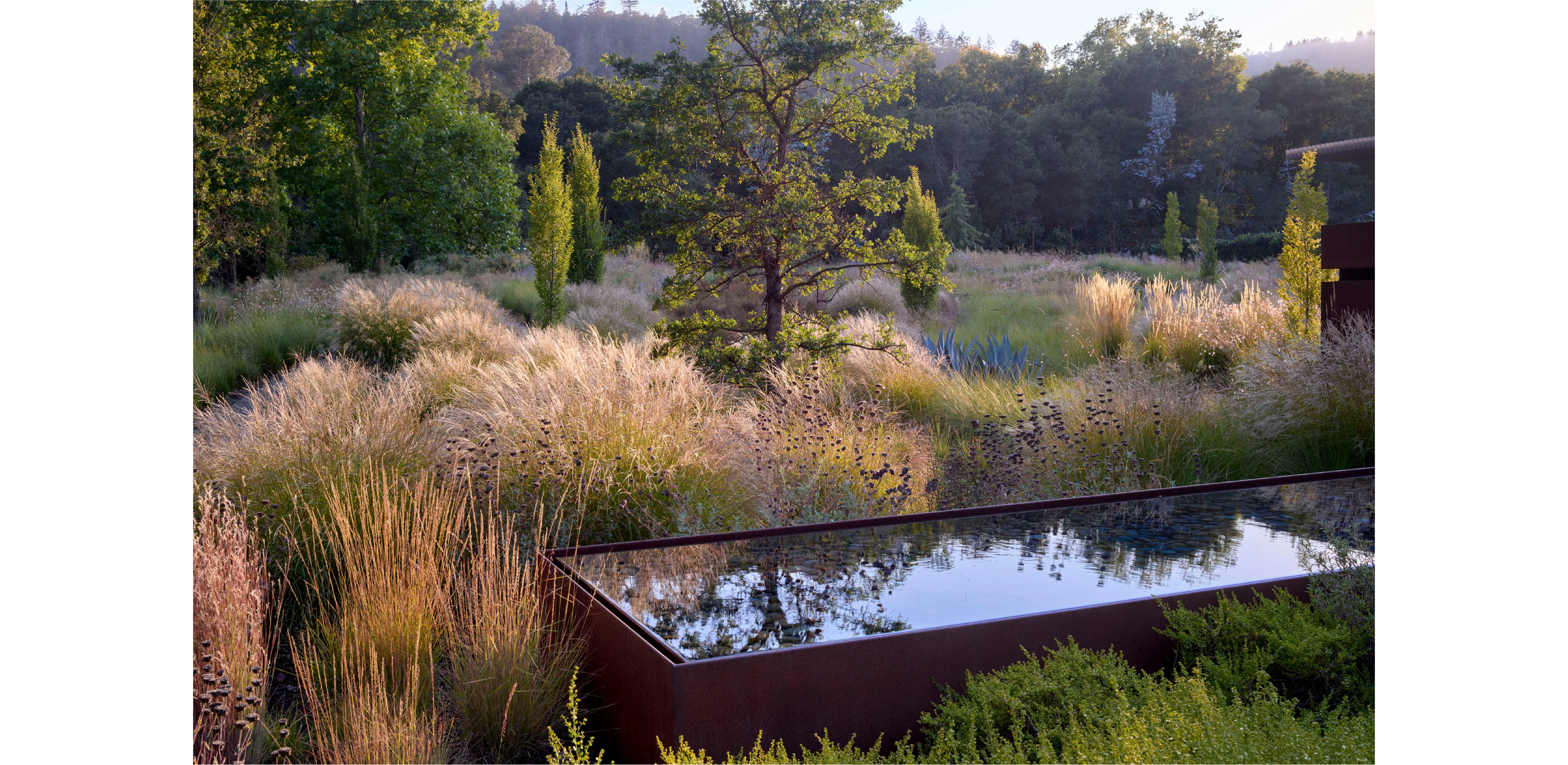
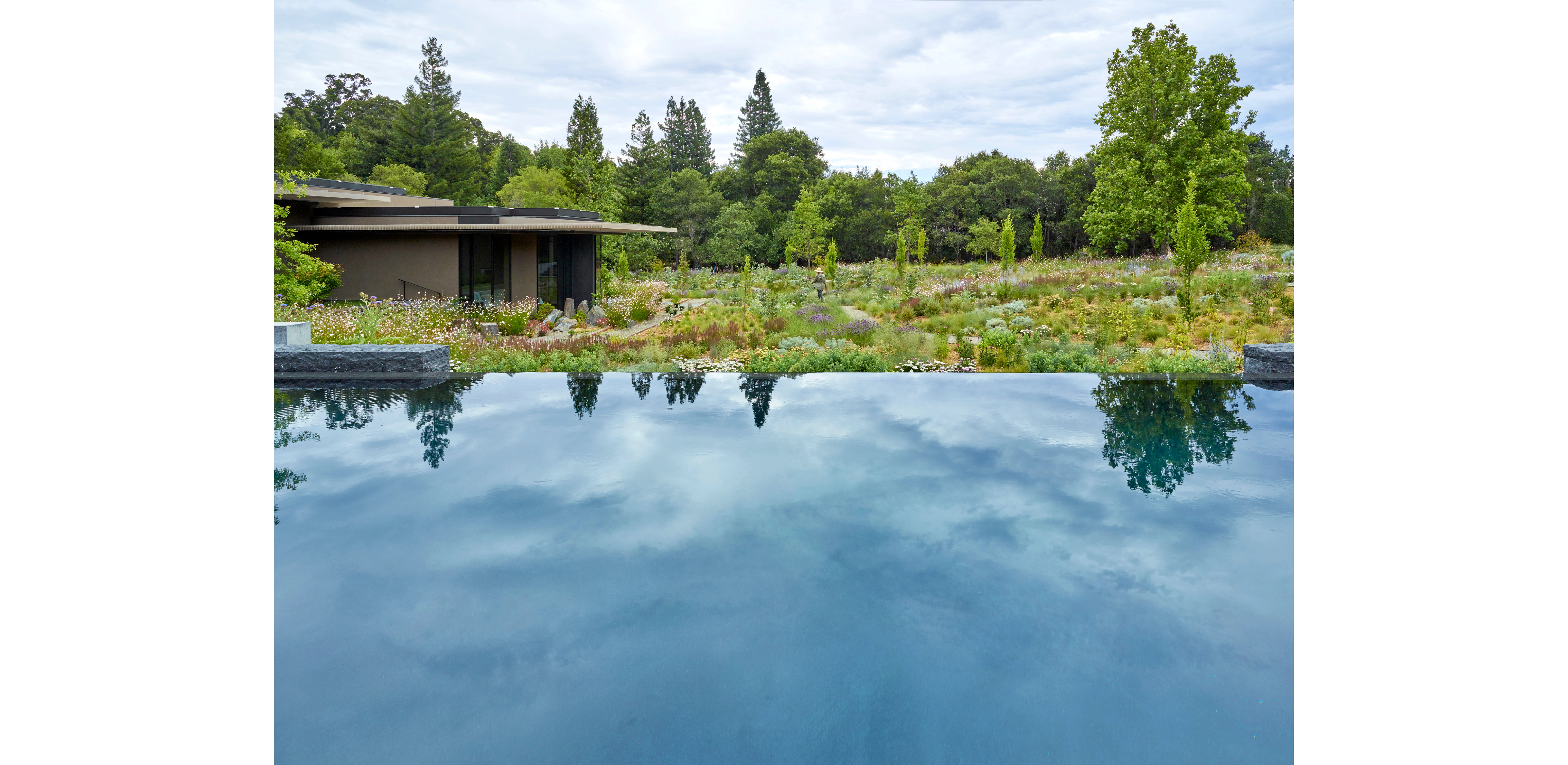
In the upper court of the rear landscape, a fire pit and mirror-like infinity pool foreground the terrace vineyard and define the central gathering area. Aligned to transition into the infinity pool edge, a subtle retaining wall negotiates a change in grade while simultaneously demarcating a change in planting character zones. Beyond this linear threshold—an extension of the interior architecture that divides private space from communal space—a perennial meadow with meandering paths unfolds.
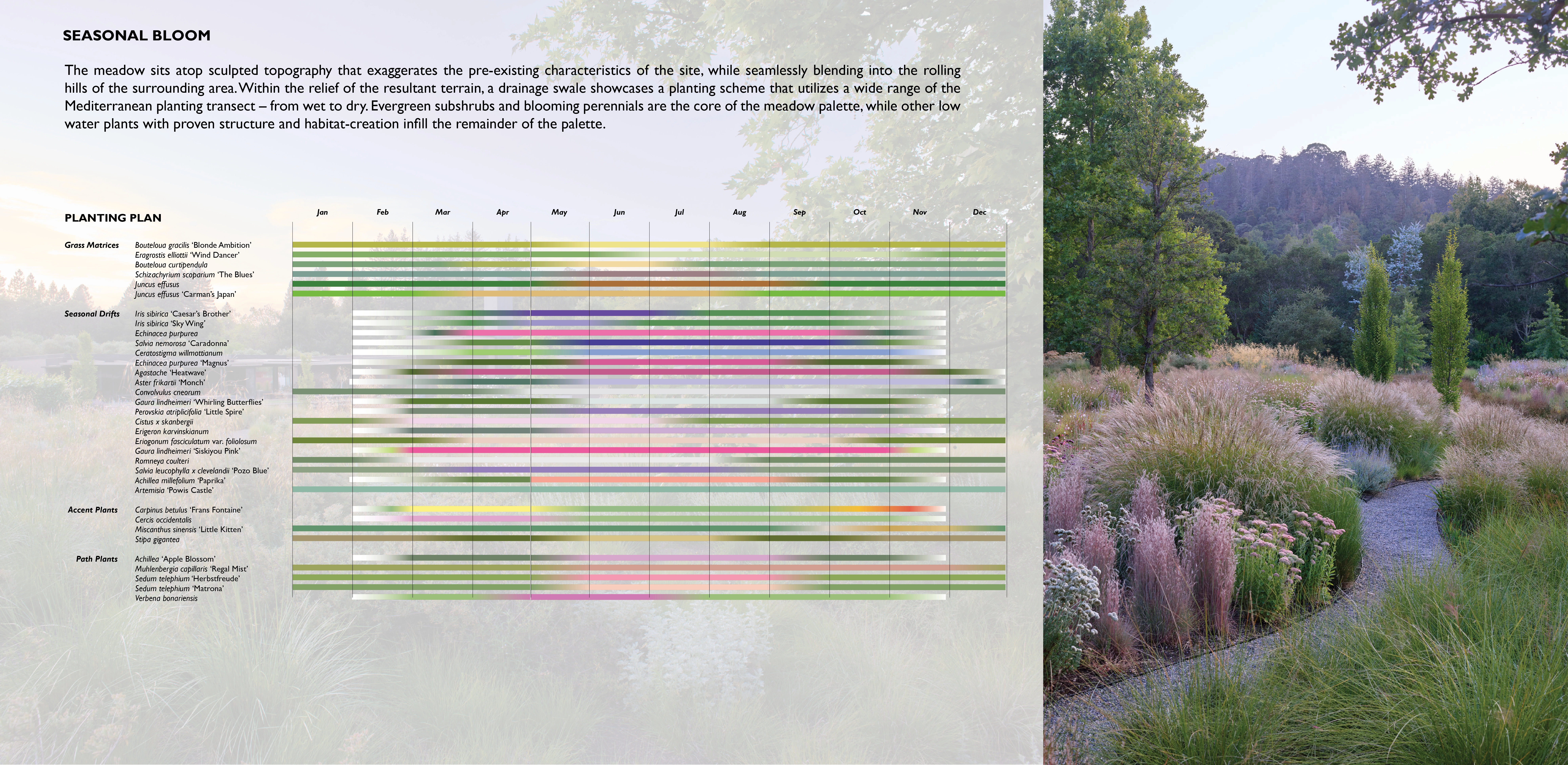
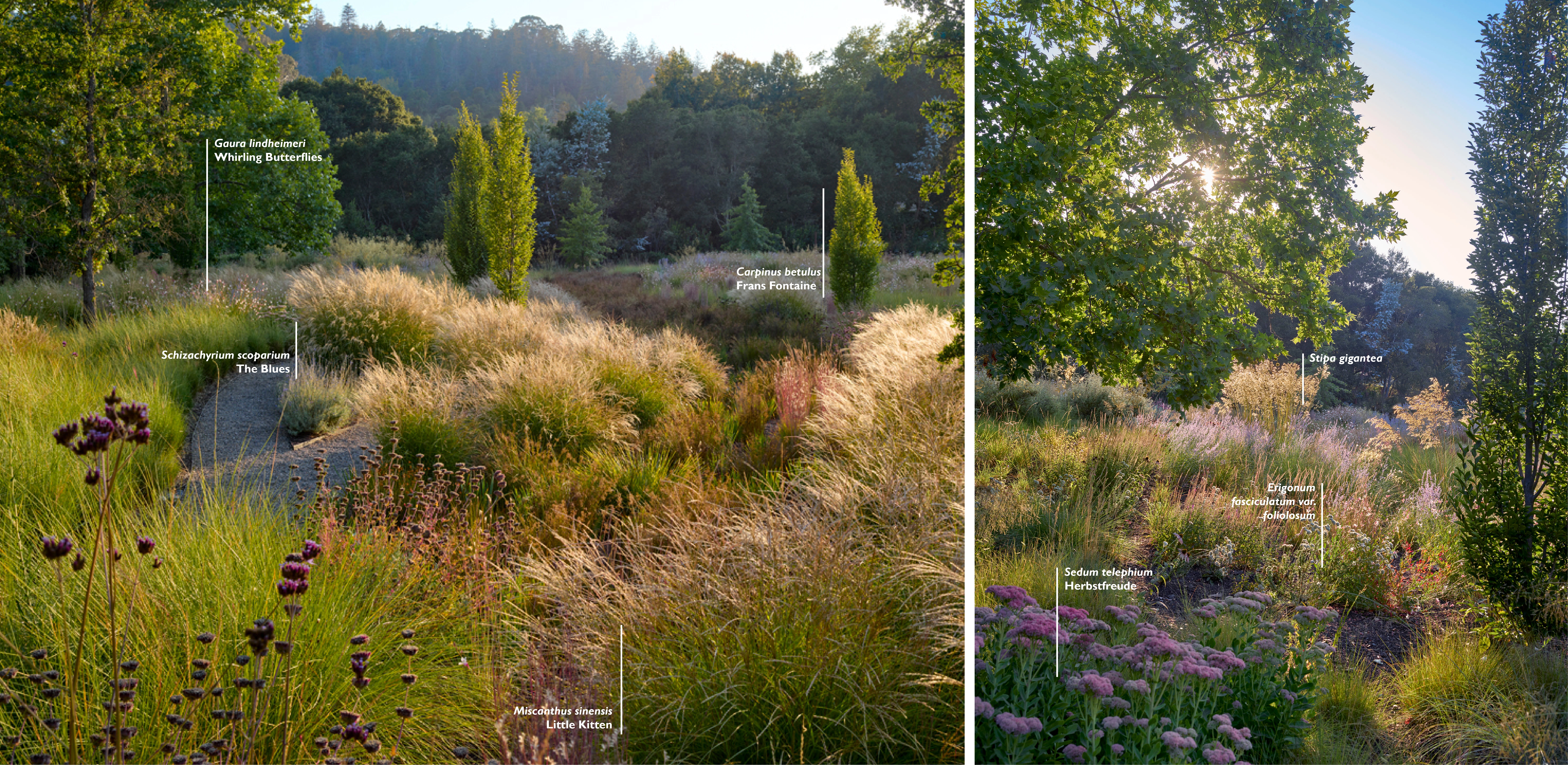
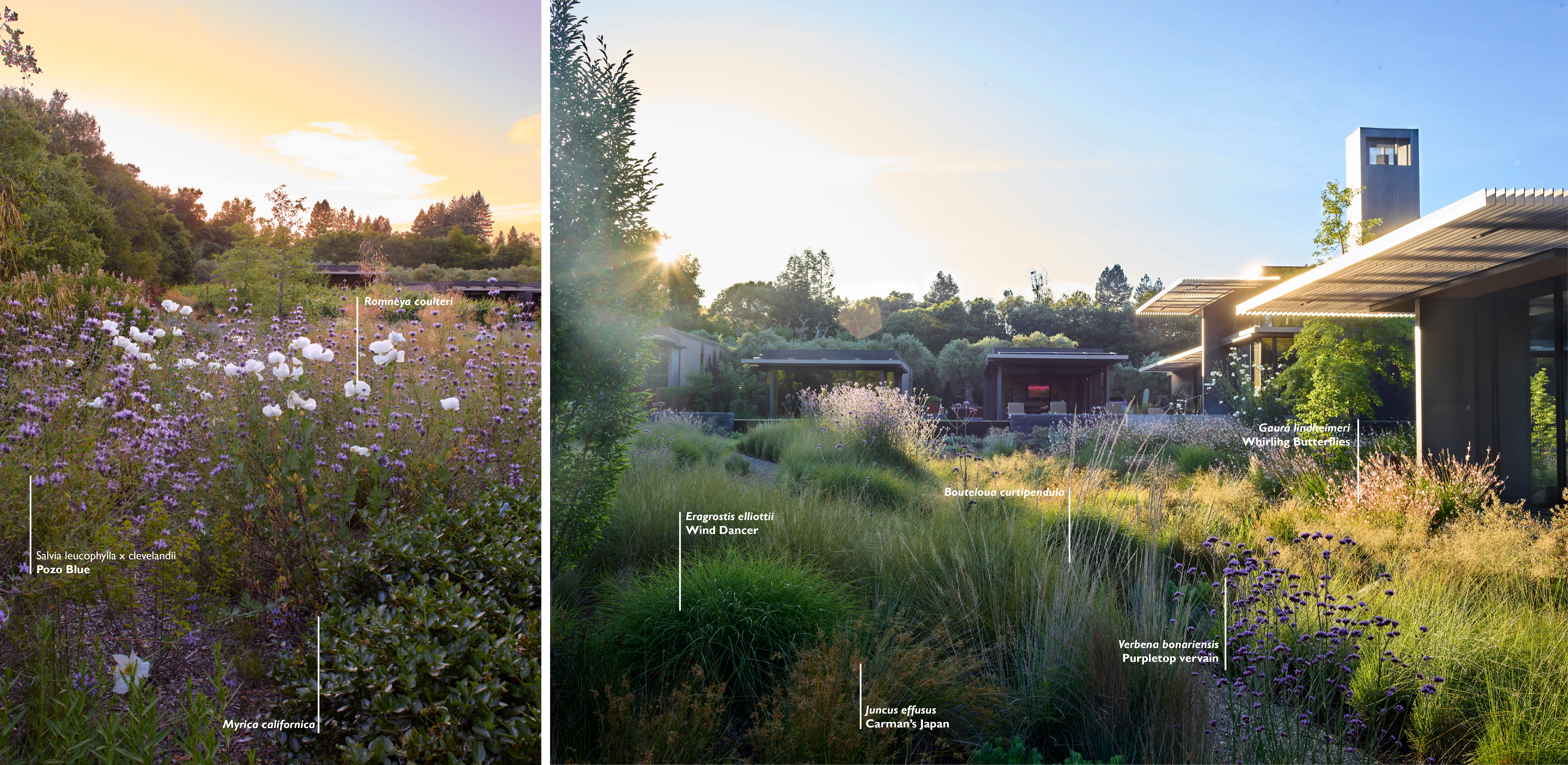
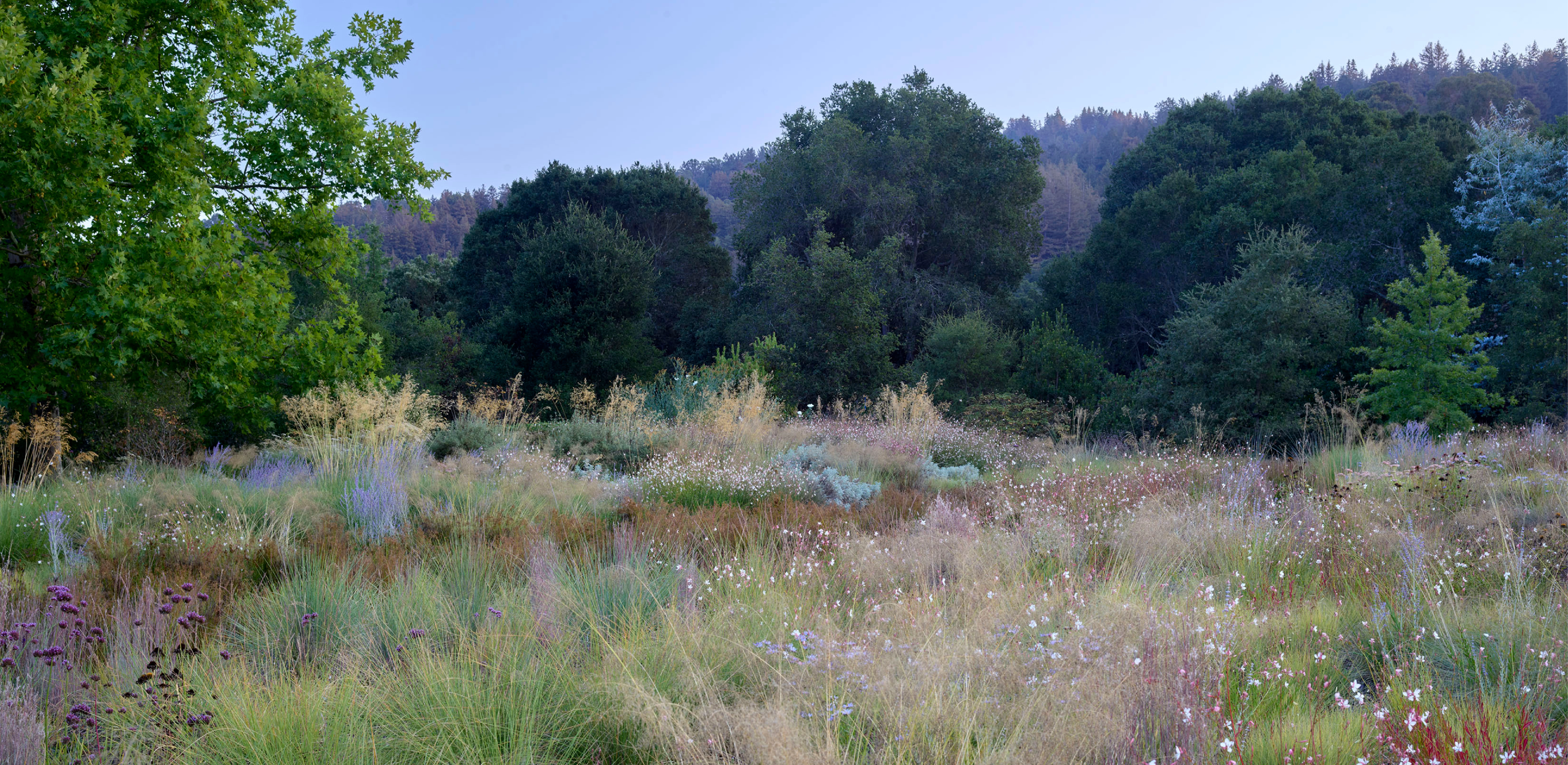
The meadow sits atop sculpted topography that exaggerates the pre-existing characteristics of the site, while seamlessly blending into the rolling hills of the surrounding landscape. Within the relief of the resultant terrain, a drainage swale showcases a planting scheme that uses a wide range of the Mediterranean planting transect – from wet to dry. Evergreen subshrubs and blooming perennials are the core of the meadow palette, while other low water plants with proven structure and habitat-creation infill the remainder of the palette. The planting is arranged in drifts that meander down from the top of the “hills”, where the most xeric plants reside, into the “valleys”, where the water runoff promotes a greener, lusher landscape. A path with a range of vantage points is woven into the diversely-planted meadow, ensuring a unique and varied seasonal experience. A belt of native perennials and evergreen shrubs create a buffer around the site and stitch into the surrounding rural landscape. These layered veils of planting also create a series of fire breaks throughout the property.
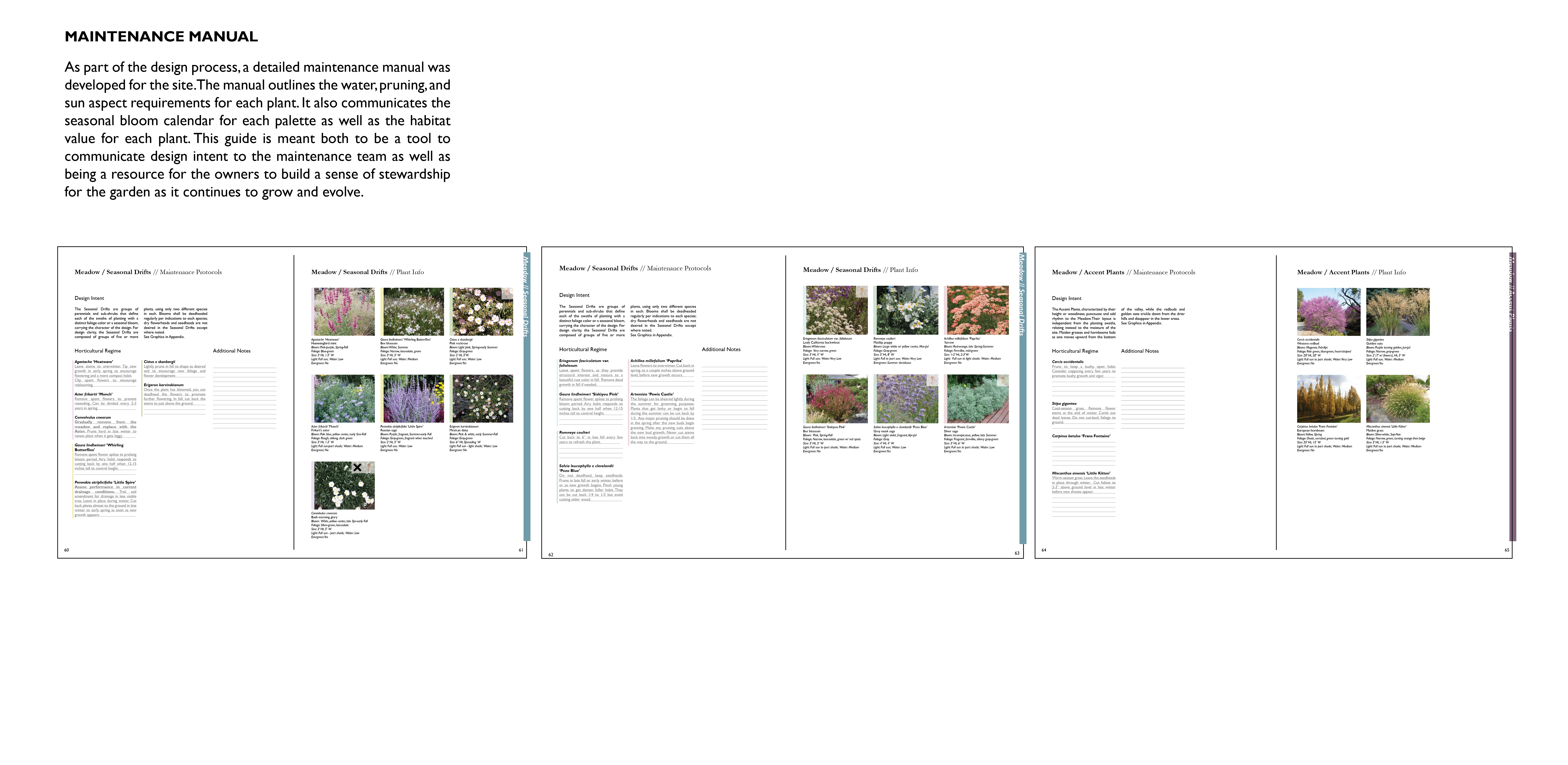
As part of the design process, a detailed maintenance manual was developed for the site. The manual outlines the water, pruning, and sun aspect requirements for each plant. It also displays the seasonal bloom calendar for each palette as well as the habitat value for each plant. This guide is meant both to be a tool to communicate design intent to the maintenance team as well as being a resource for the owners to build a sense of stewardship for the garden as it continues to grow and evolve.
-
- James Lord, FASLA - Founding Partner
- Andrés Pérez Rodriguez - Senior Associate
- Kika Probst - Senior Associate
- Lauren Stahl - Associate
- Olson Kundig - Architect
- Siteworks Landscape - Landscape Contractor
-
- Stipa gigantea
- Cynara cardunculus
- Achillea “Apple Blossom”
- Sedum telephium “Matrona” and “Autumn Joy”
- Juncus effusus “Quartz Creek”
- Iris sibirica “Sky Wing”
- Iris sibirica “Caesar’s Brother”
- Salvia nemorosa “Caradonna”
- Echinacea purpurea “Magnus”
- Ceratostigma willmottianum
- Aster frikartii “Mönch”
- Agastache “Heatwave”
- Convolvulus cneorum
- Gaura lindheimeri
- Perovskia atriplicifolia “Little Spire”
- Erigeron karvinskianum
- Cistus x skanbergii
- Muhlenbergia capillaris “Regal Mist”
- Verbena bonariensis
- Eriogonum fasciculatum var. Foliolosum
- Gaura lindheimeri “Siskiyou Pink”
- Salvia leucophylla x clevelandii “Pozo Blue”
- Romneya coulteri
- Achillea millefolium “Paprika”
- Artemisia “Powis Castle”
- Bouteloua gracilis “Blonde Ambition”
- Eragrostis elliottii “Wind Dancer”
- Bouteloua curtipendula
- Schizachyrium scoparium “The Blues”
- Eriogonum giganteum
- Eriogonum grande var. rubescens
- Eriogonum fasciculatum “Warriner Lytle”
- Ceanothus “Yankee Point”
- Salvia “Pozo Blue”
- Ribes sanguineum var. glutinosum
- Romneya coulteri
Related Awards
Honor Award, Residential Design
Trinity Road
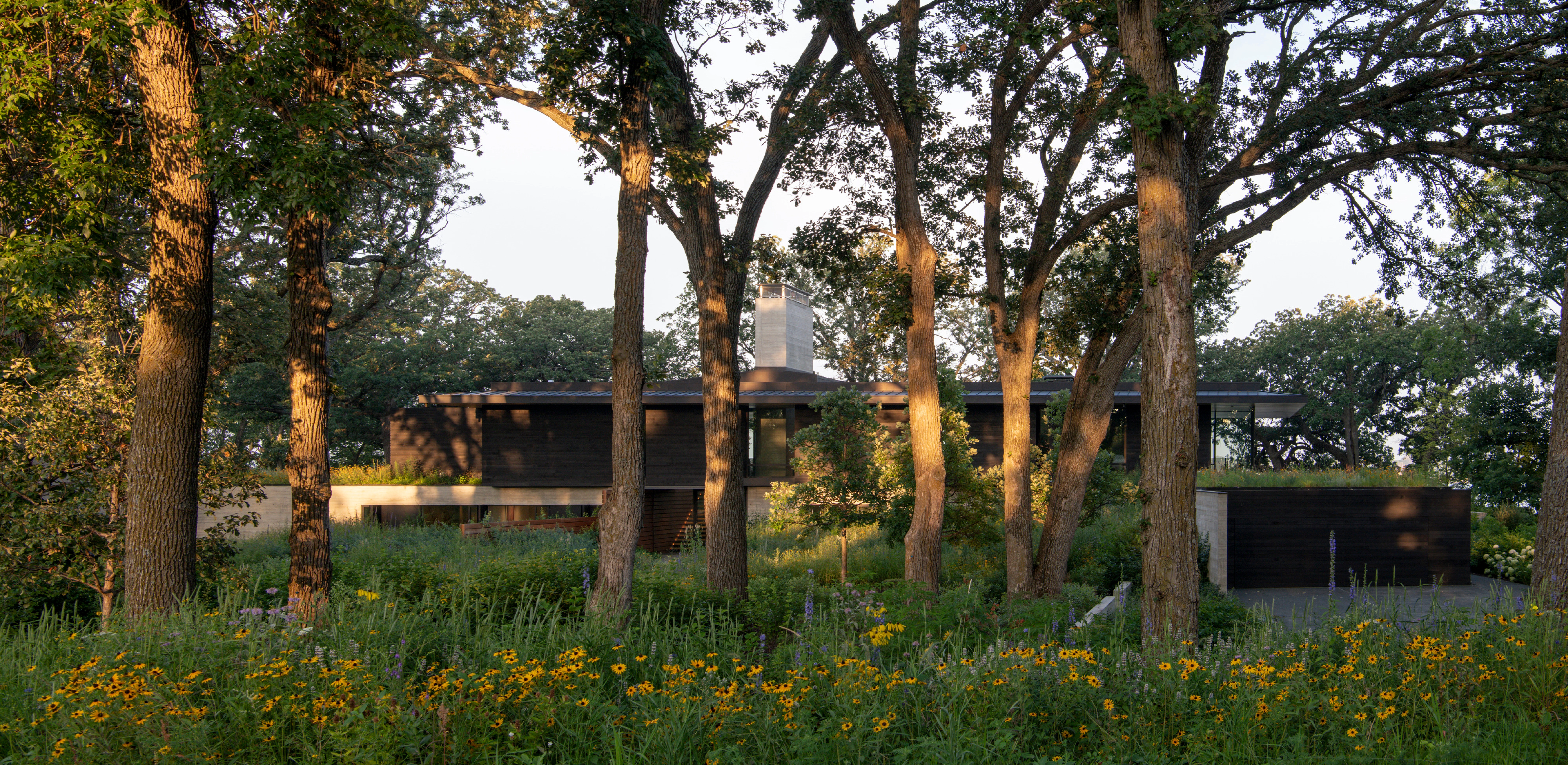
The story of Trinity Road unfolded over the past five years and is fundamentally a story of fire resilience and succession of the surrounding forest. The garden was designed and the project considered completed when two wildfires ravaged the hills immediately surrounding the site. After the fires the landscape design team was brought in to create a new vision for the site that knit together the original planting and a new series of paths and gardens.
Related Articles

Awards
ASLA 2026 Professional Awards: Early Bird Deadline Approaching January 9
Submit your best work by the January 9 Early Bird deadline to save. Get insider tips at the January 7 Professional Awards Webinar. Student and other professional deadlines follow in February.
Dec 16 2025