

.webp?language=en-US)


Highbank: The Restoration of a Lost Prairie
-
The holistic rehabilitation of an ecologically sensitive landscape, including protecting a unique shoreline along a midwestern glacial lake, ensures the enduring legacy of a family retreat. Brokering a potent solution for a majestic but highly degraded property, the landscape architect created a vision that incorporates the subtleties of the landscape to reflect the sincerity of the locale and serve as a model for design with an action plan based on conservation, stewardship, and sustainable ecological adaptation. Incorporating cues from the rich geologic subtext, the plan reflects the application of vigorous ecological restorative techniques with crafted outdoor spaces resulting in a layered landscape that builds upon its environment.
-
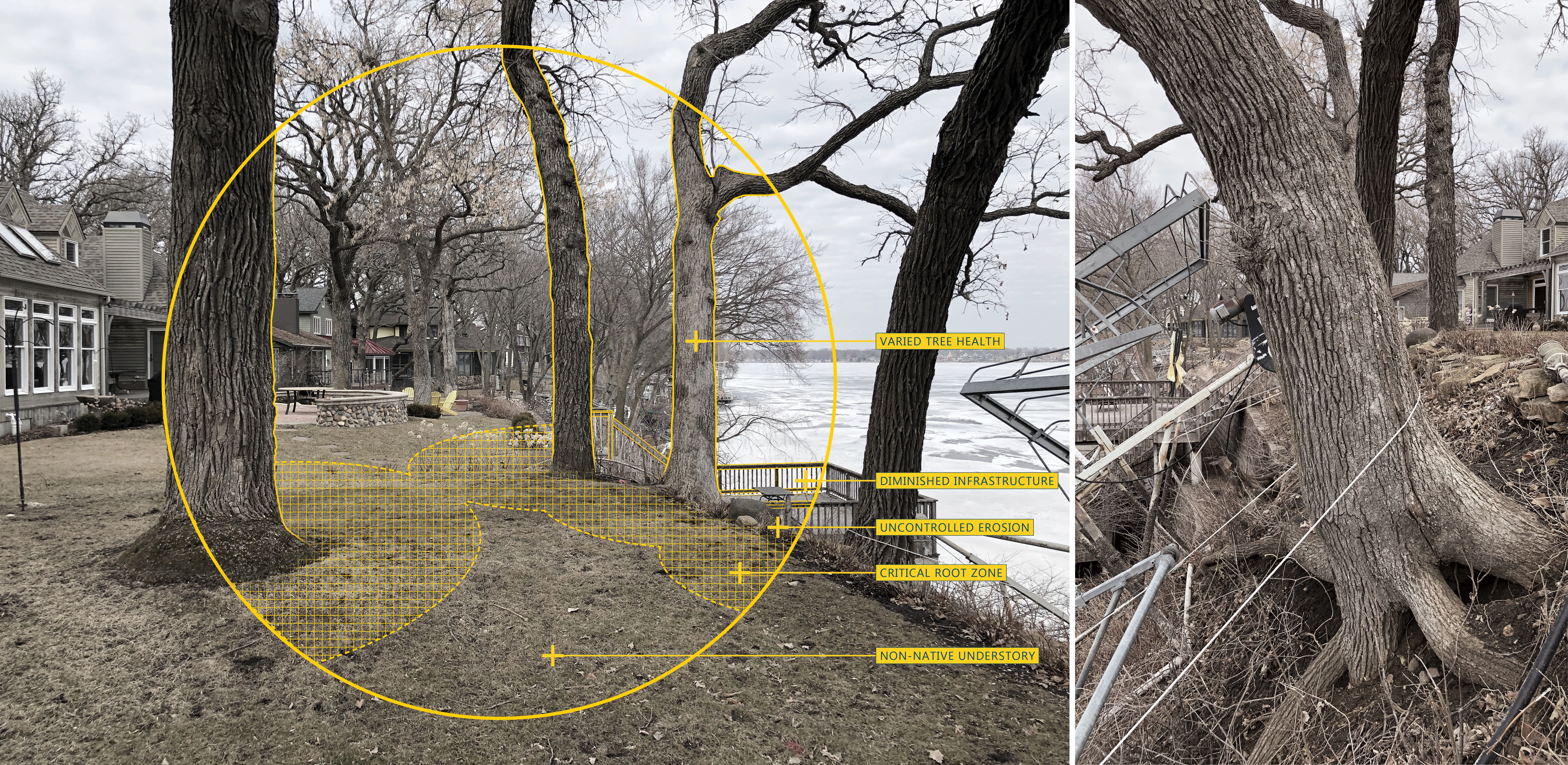
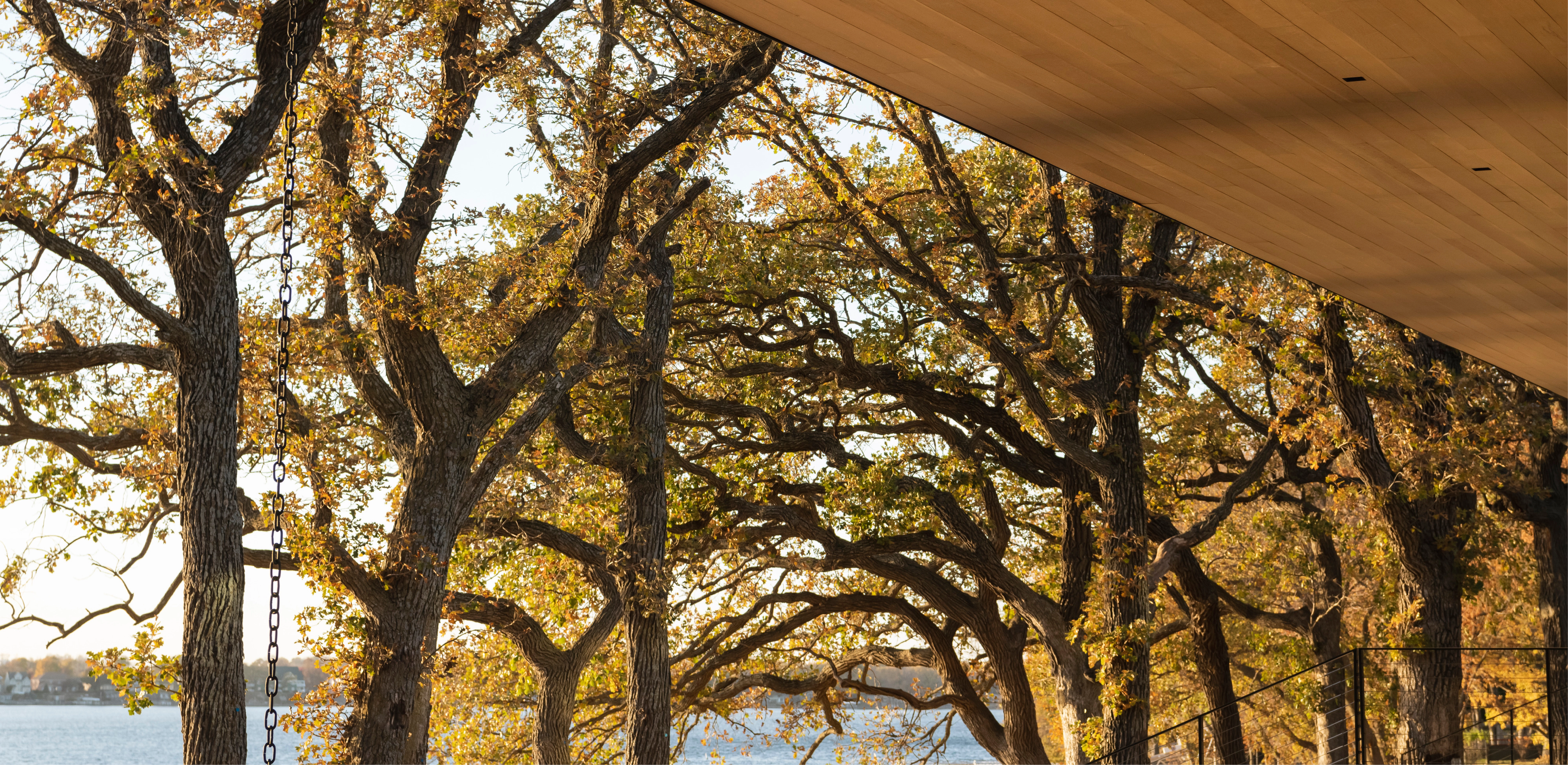
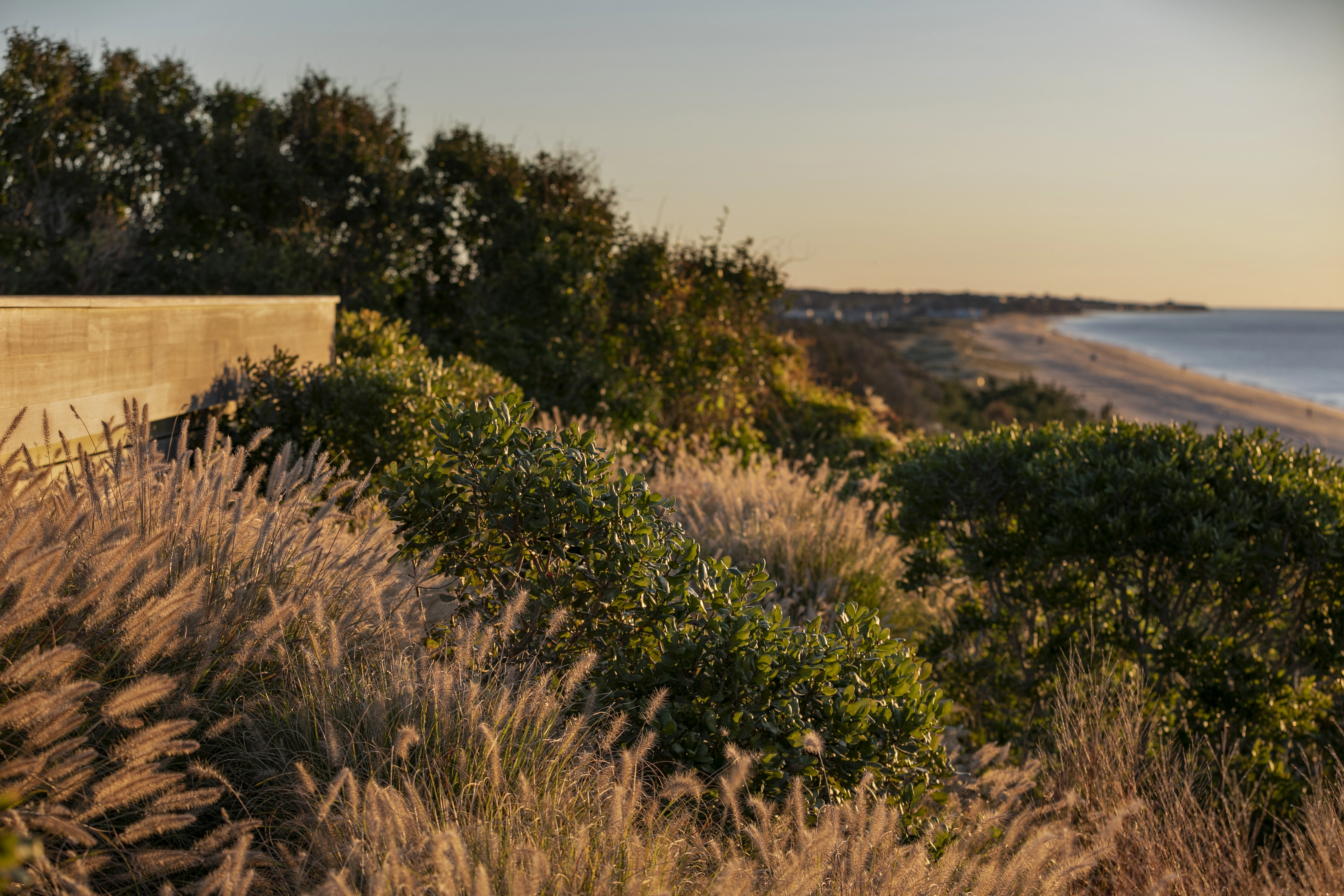
CONTEXT Overlooking pristine waters of a glacially-formed lake, the 1.7-acre property sustained decades of intense human intervention, diminishing its ecological value and denuding the native landscape. Multiple structures, large expanses of lawn, and tree-girdling asphalt extents combined with unstable and eroded shoreline comprised of non-native species, demonstrated the need for a renewed commitment to proper land management. A dense and competing canopy of non-native trees overwhelmed visible signs of understory growth, allowing sediment and chemicals from adjacent properties to drain into the lake. Degraded conditions aside, stands of burr oaks punctuate the land, recalling the once dominant oak savannas that proliferated across the region, but are rarely seen today.
VISION With a desire to recreate a summer lakehouse tradition, our clients sought to create a transferable model for stewardship through restoration and environmentally progressive practices.
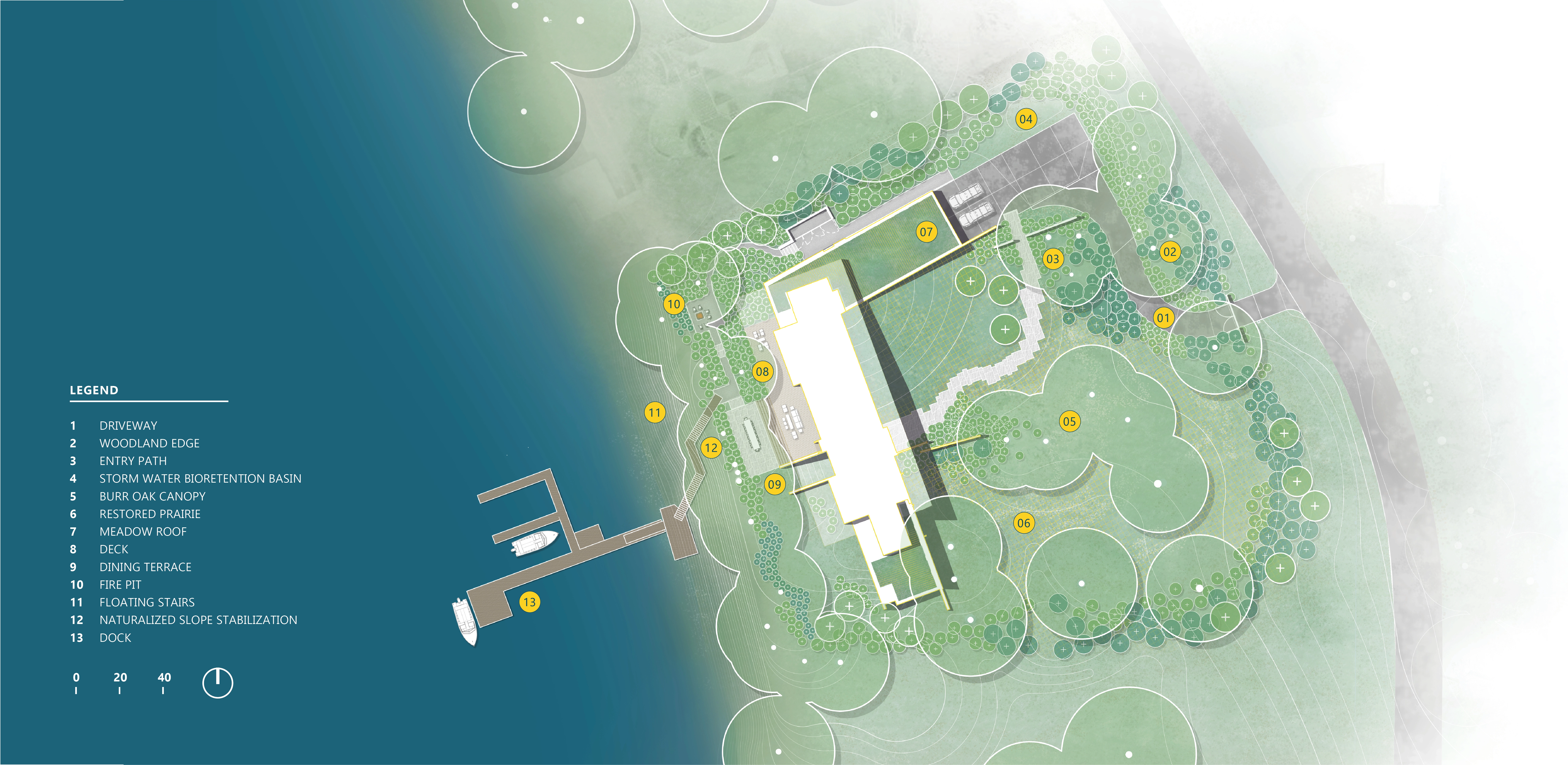
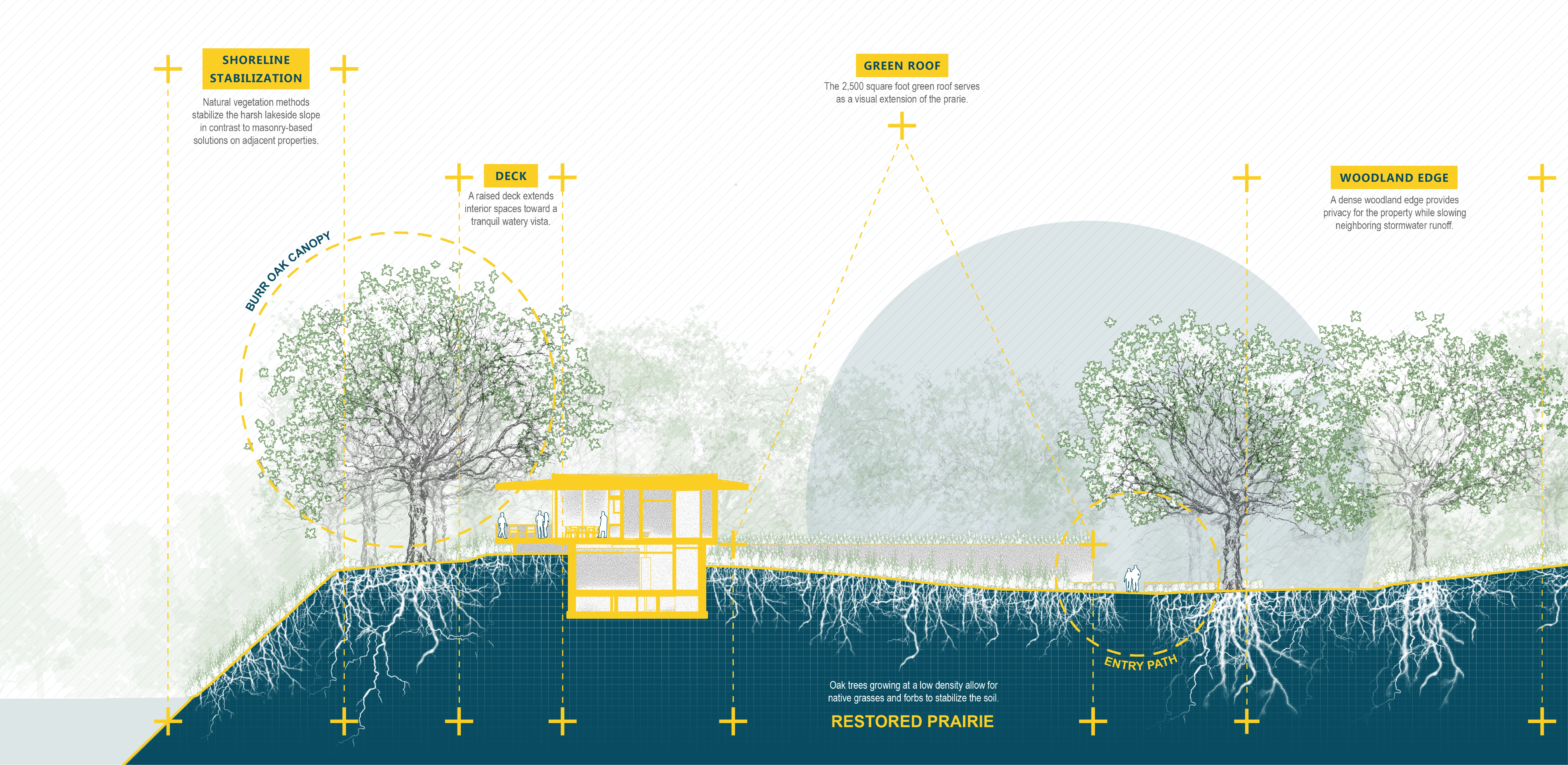
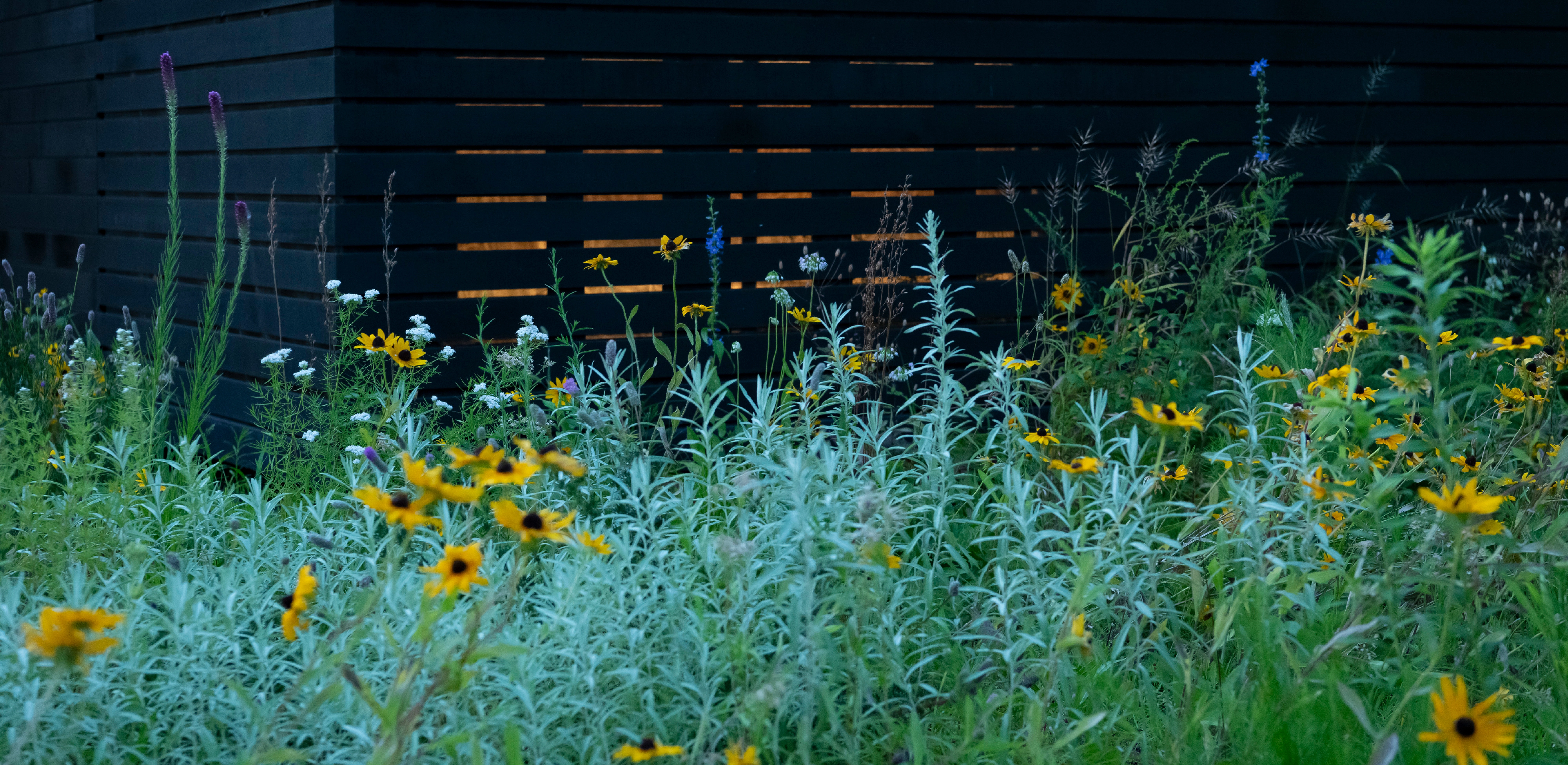
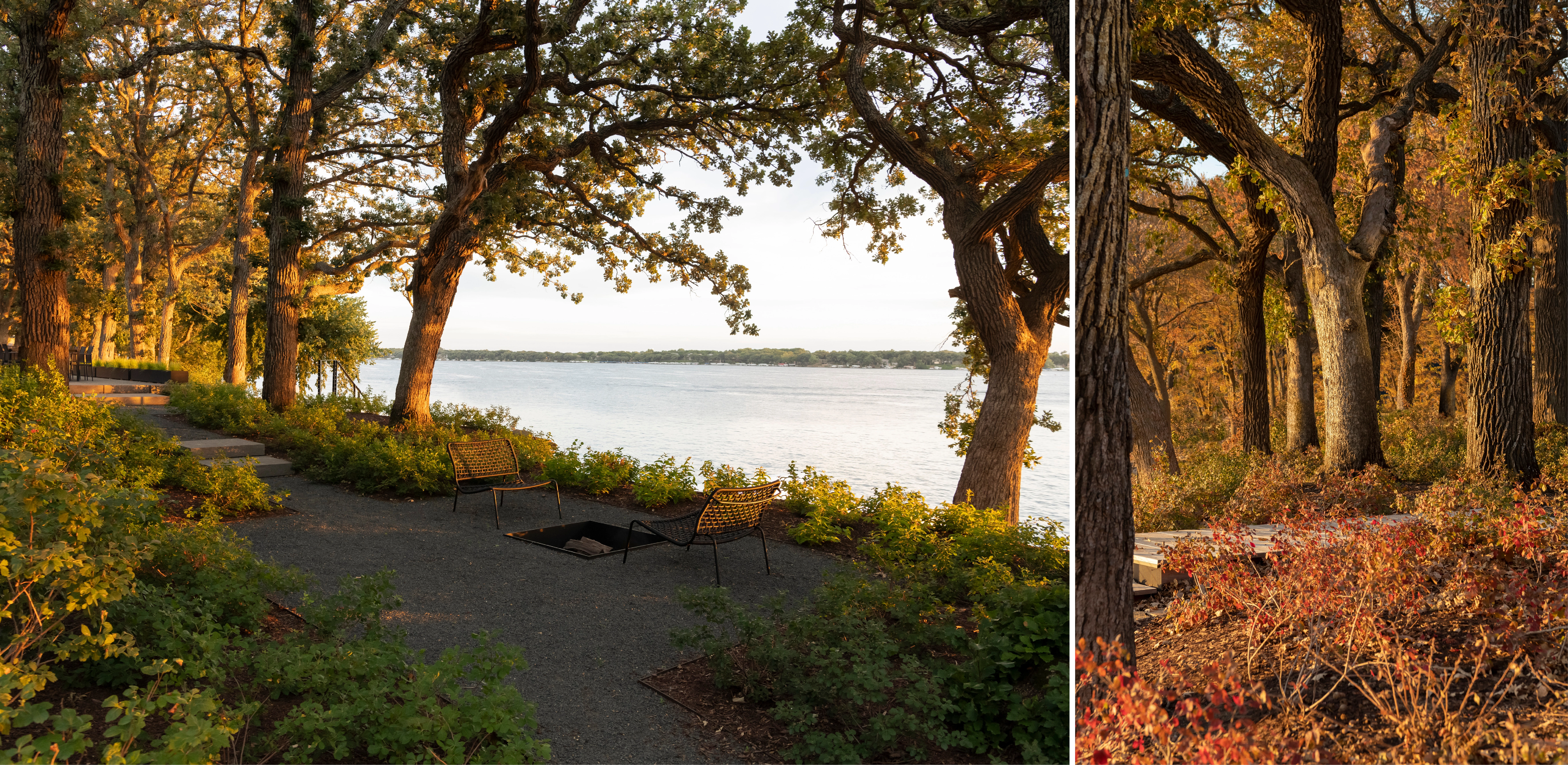
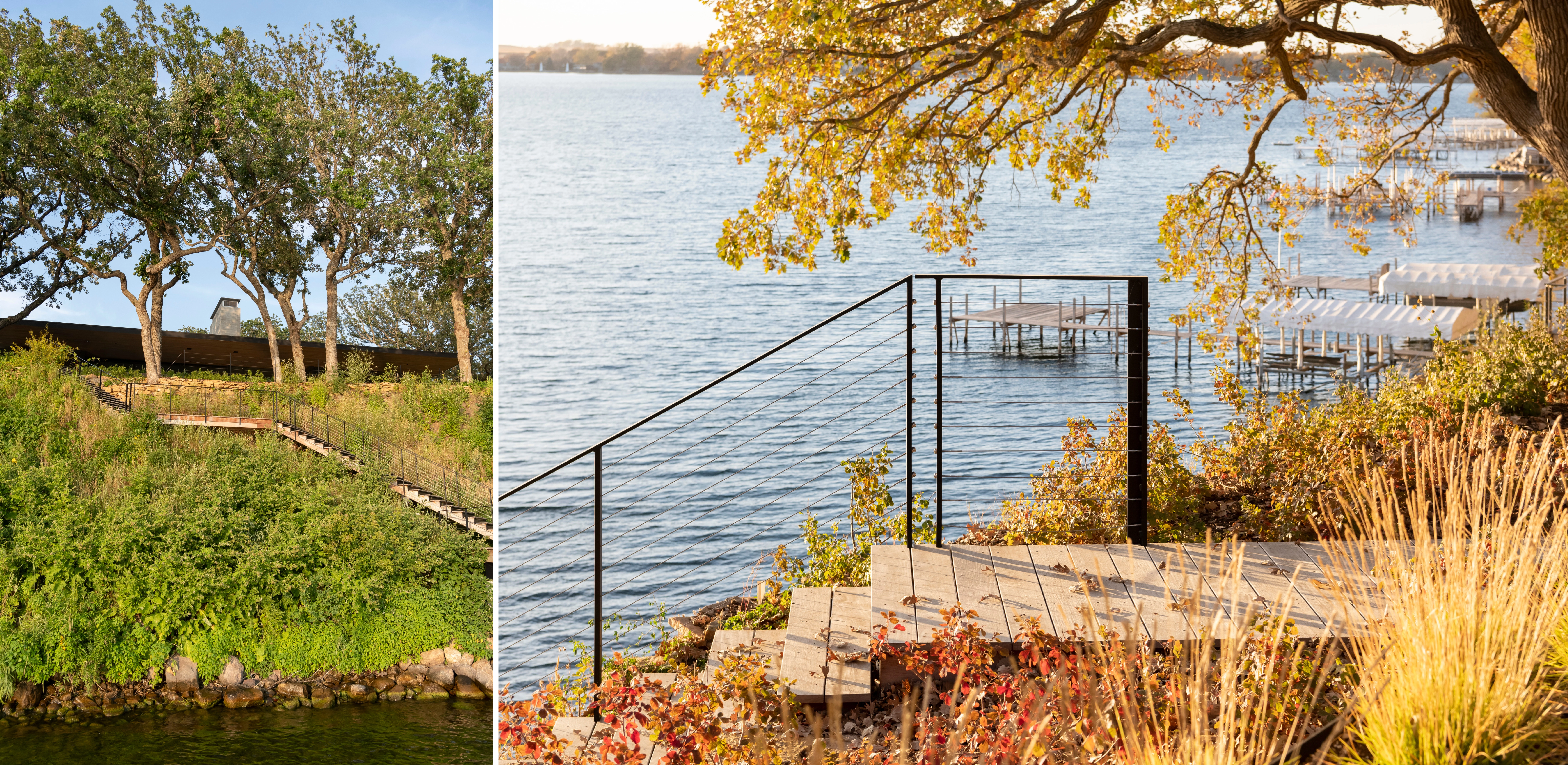
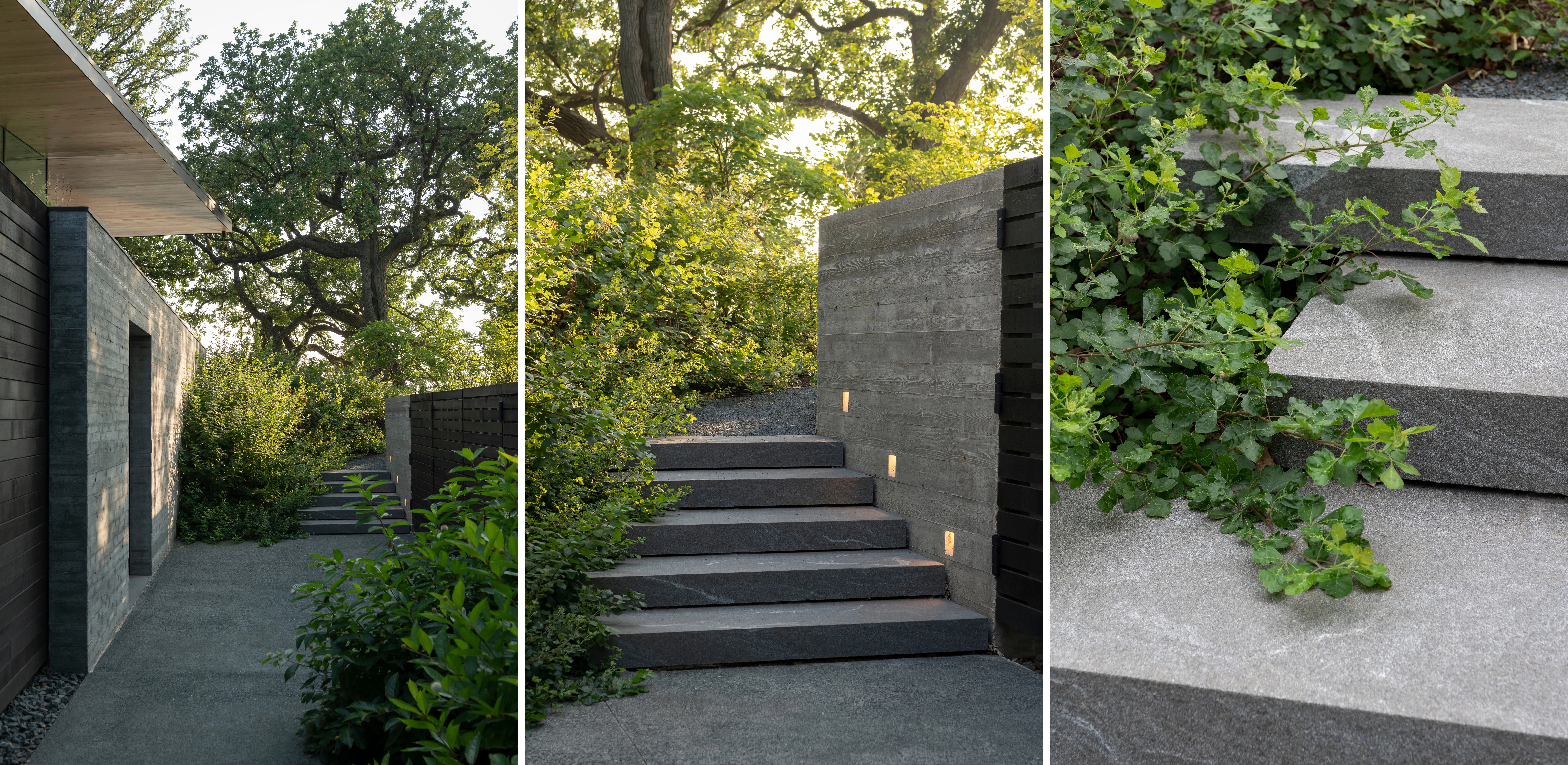
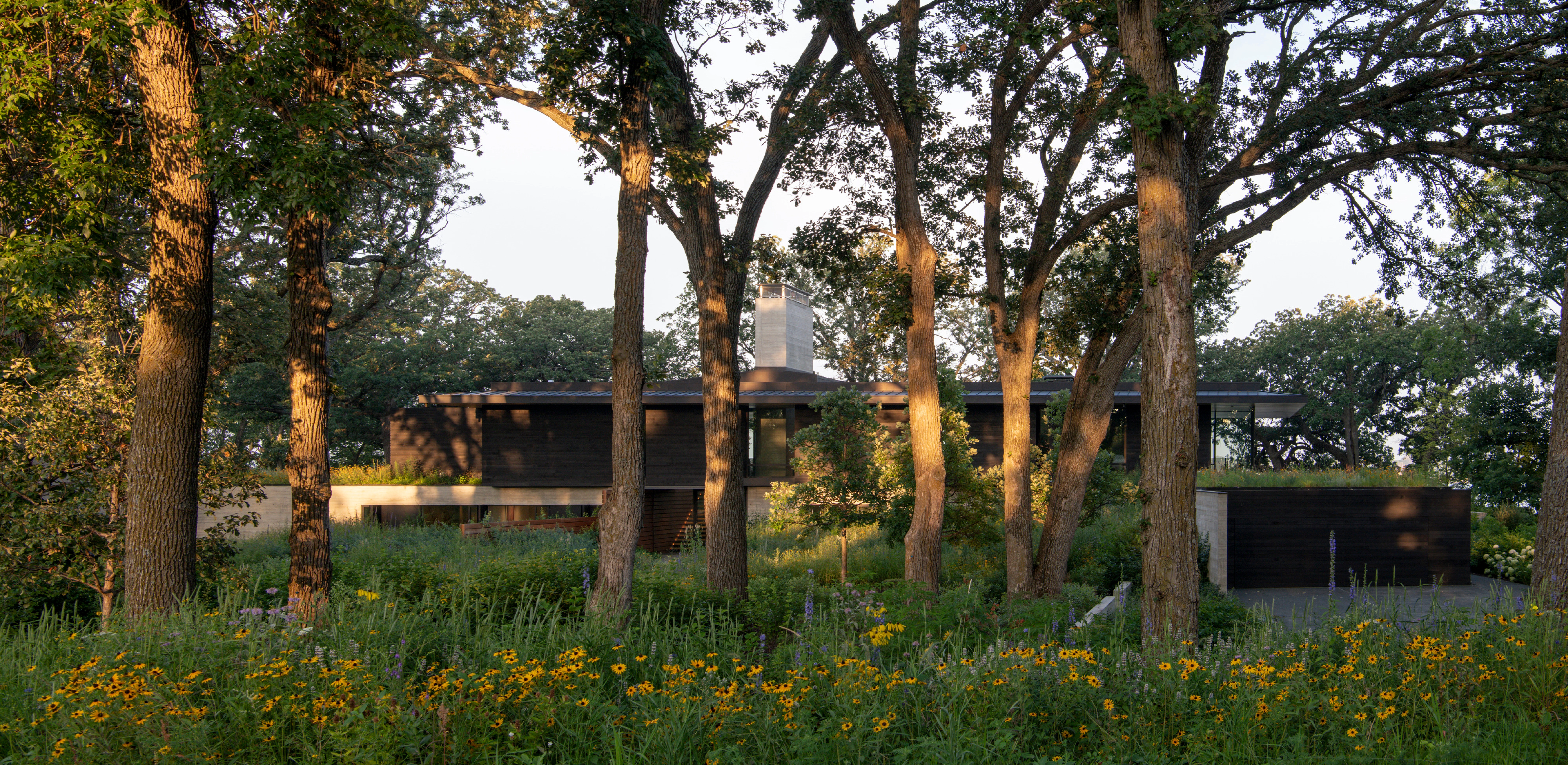
PROCESS Understanding that a savanna possesses a wide range of habitats and canopy coverage, the team created a transect of the property, analyzing canopy closure and drainage patterns to define three distinct landscapes: prairie, open woodland, and woodland. Next, the design removed all non-native species, reduced vehicular paved areas by 40%, and replaced 35,000 square feet of lawn with over twenty varieties of grasses and sedges, and ninety species of wildflowers. Lakeside, native plants with root systems predisposed to providing natural erosion control stabilized the extreme 1.5:1 slope while wetland plugs offer a riparian buffer, improving water quality and biodiversity. This approach challenged existing regulations that proposed masonry-based solutions – a common approach that had armored and individualized the once-natural bank.
COMBATTING EFFECTS OF CLIMATE CHANGE In a region where climate change and human land use has been at the center of shifting forest compositions, temperature swings, lake level fluctuations, and other habitat irregularities, the decline and fragmentation of native plant communities and protective growth habits is obvious, particularly in the deterioration of habitat. To prevent further homogeneity in tree species composition, the team implemented a succession plan with a diversity of species that protects the existing forest and counteracts the susceptibilities introduced by insects, disease, soil compaction, drought, and flooding. Native prairie species help buffer soil and nutrient loss, absorb rainwater while filtering toxins, and attract a wide variety of pollinators, birds, and other wildlife.
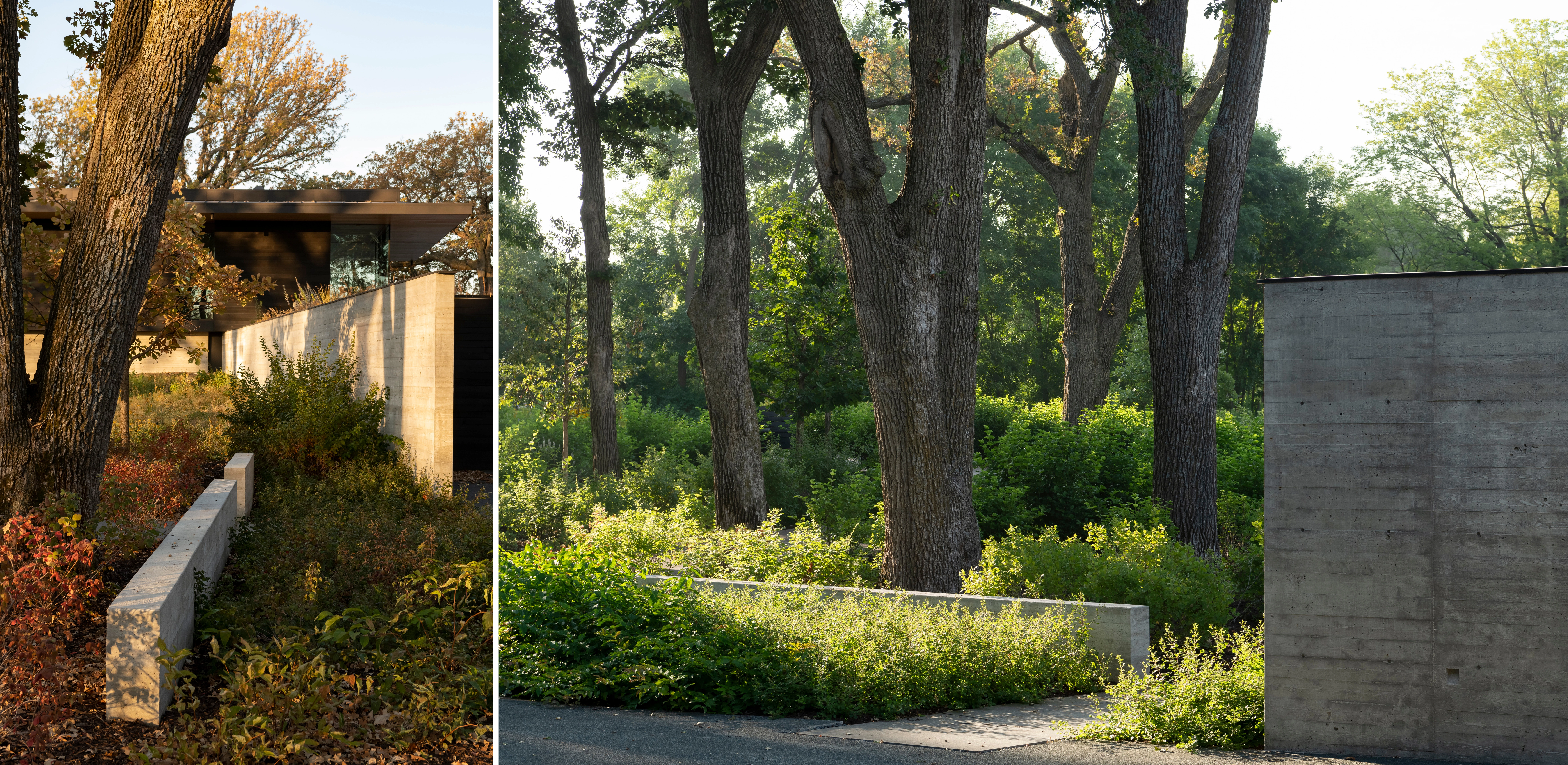
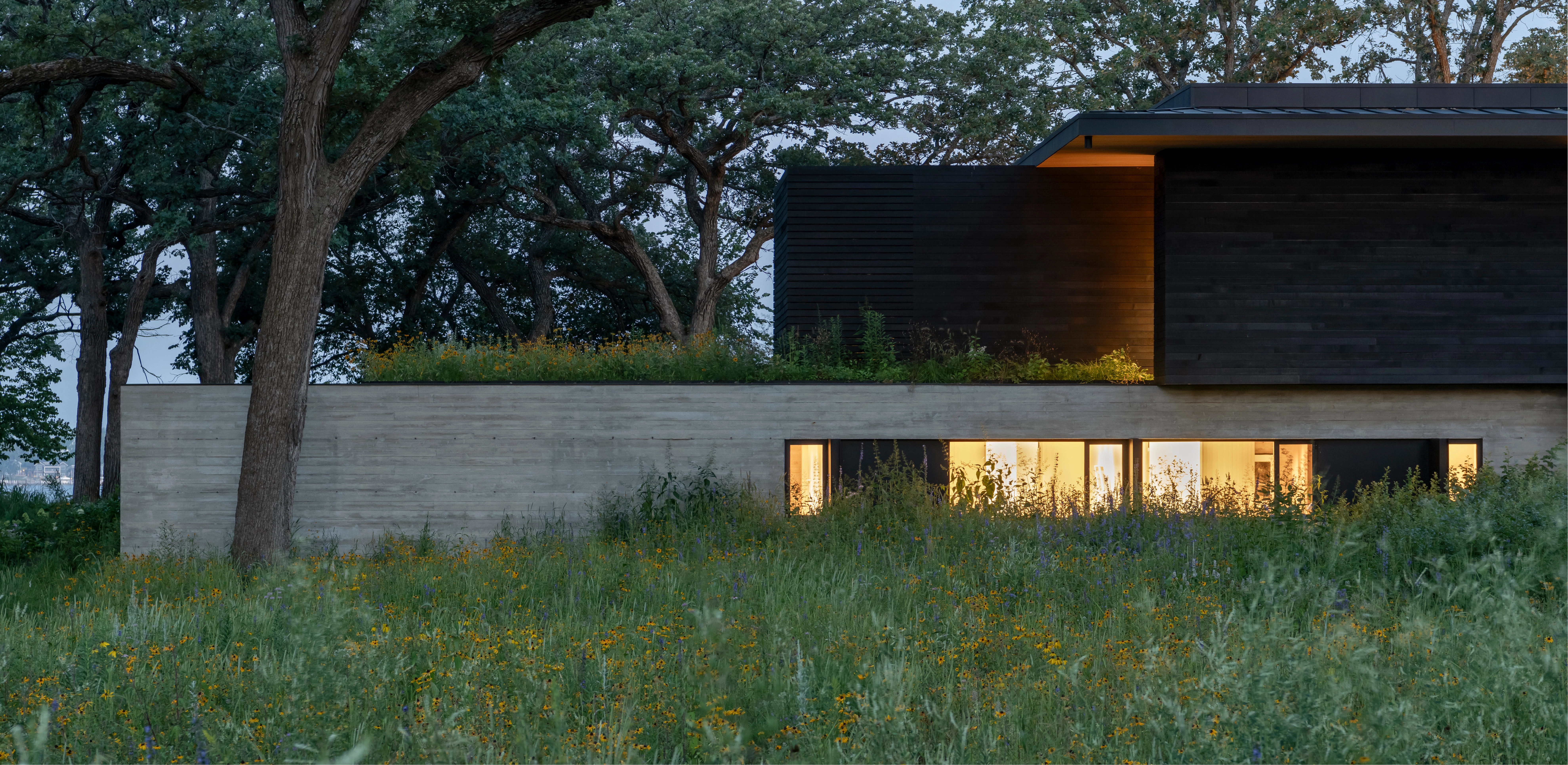
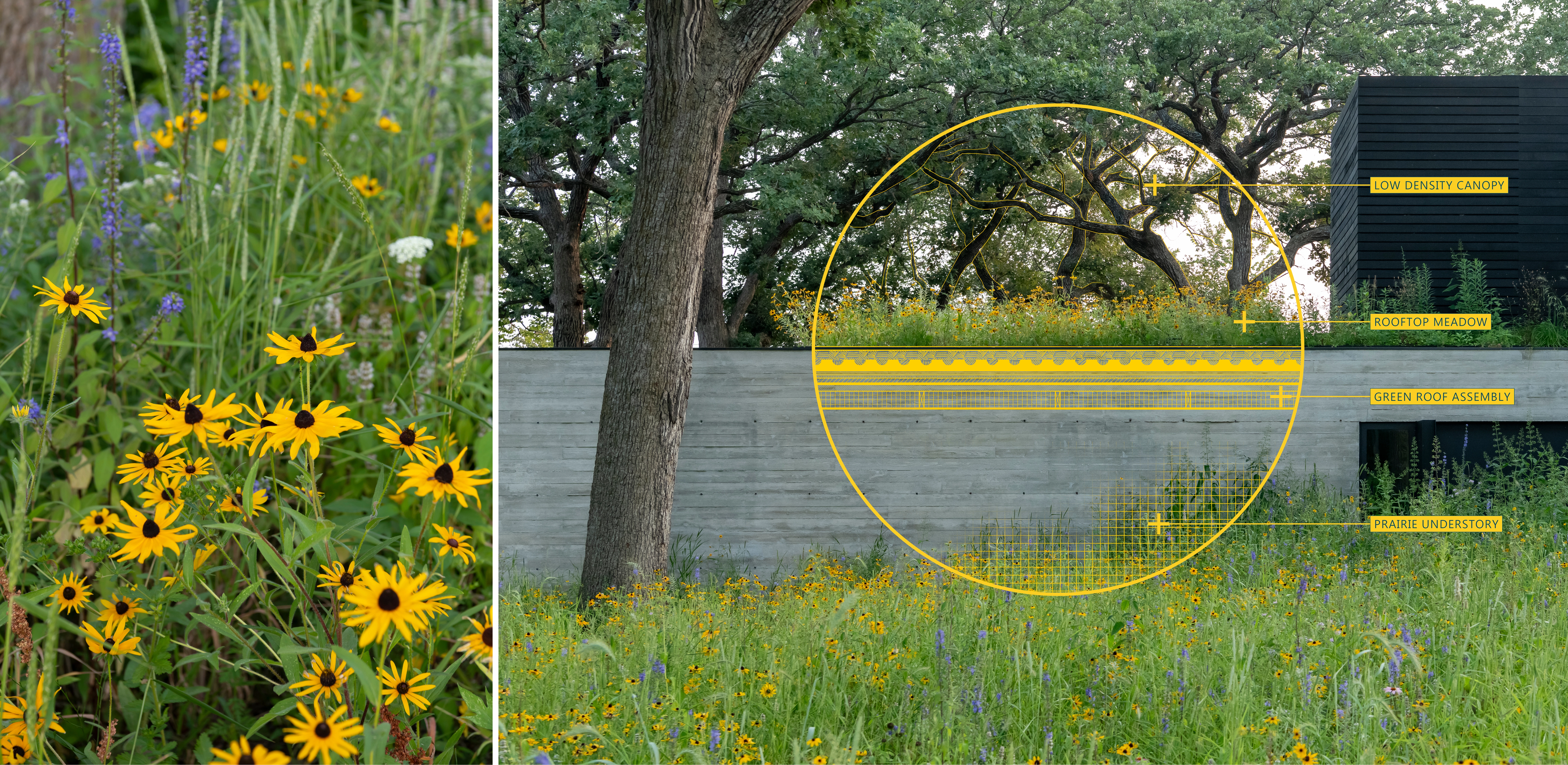
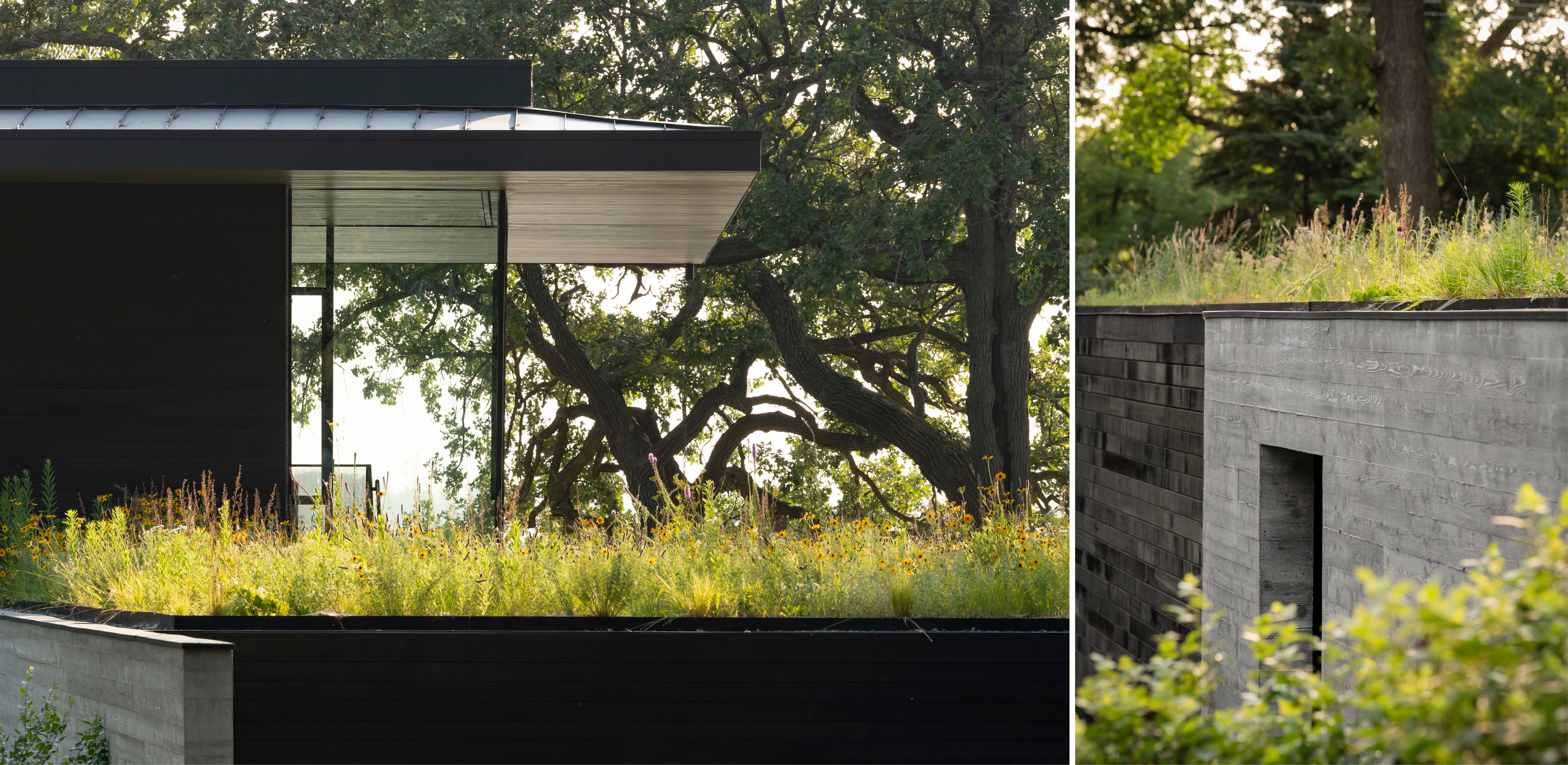
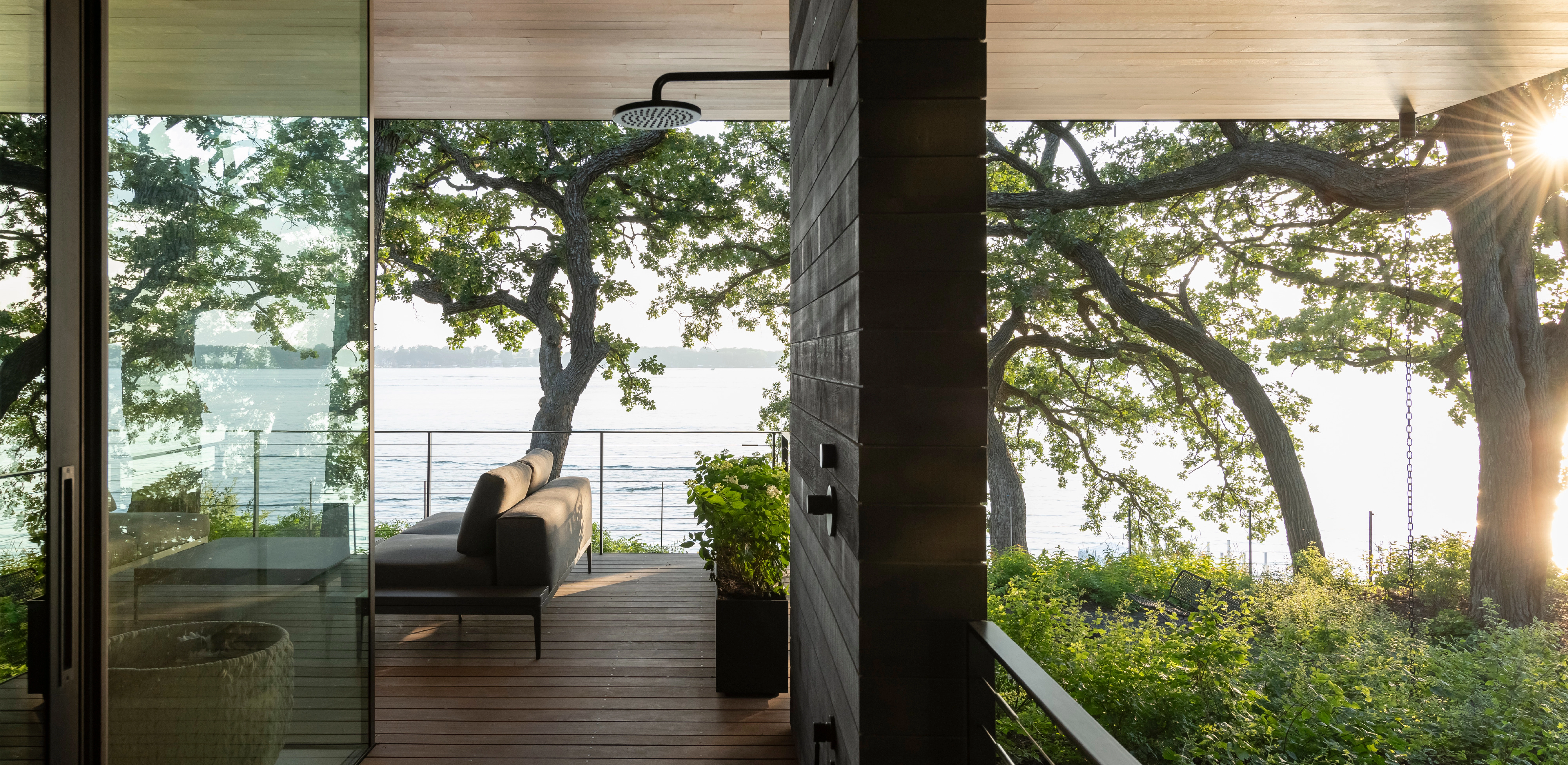
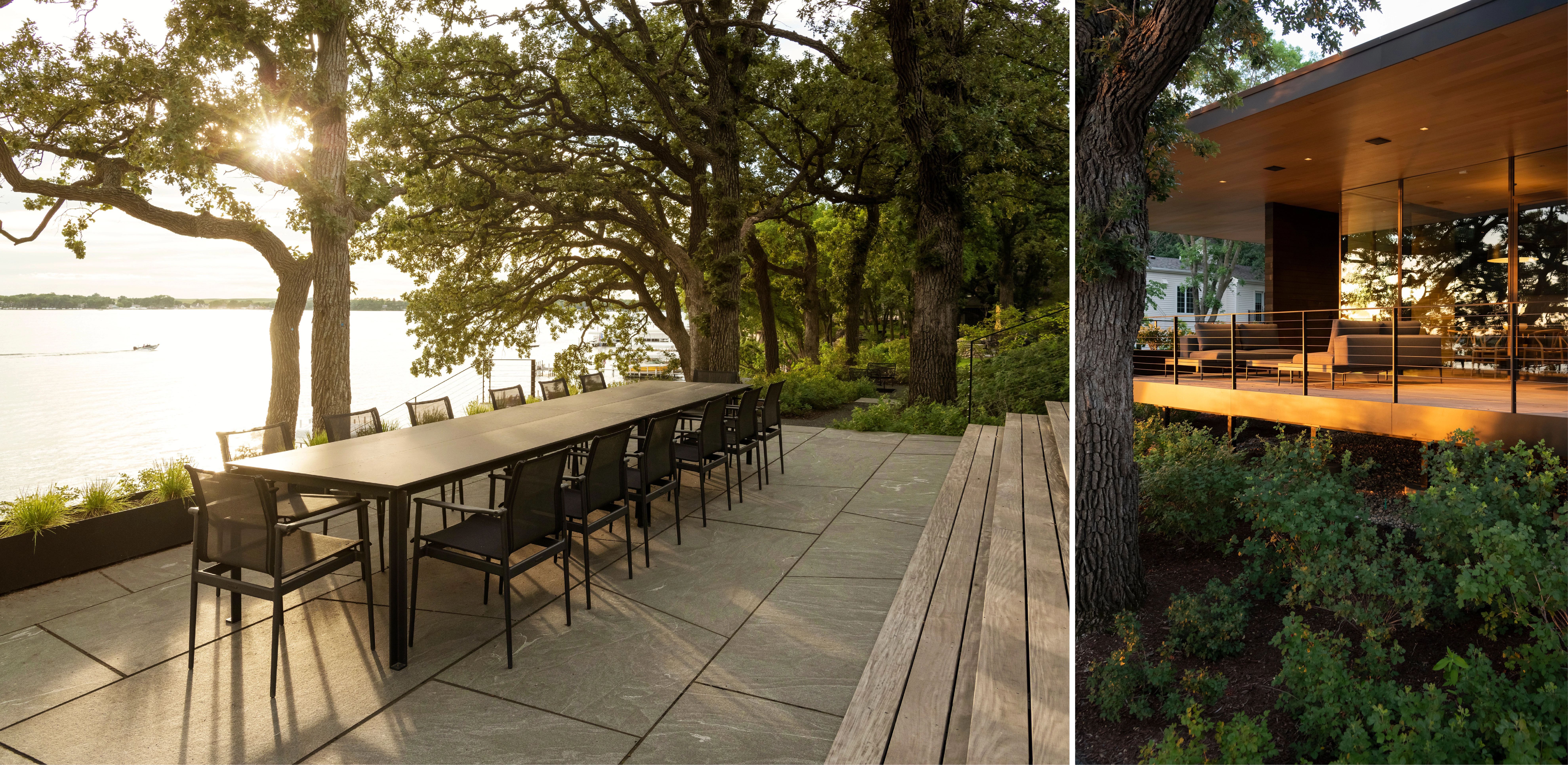
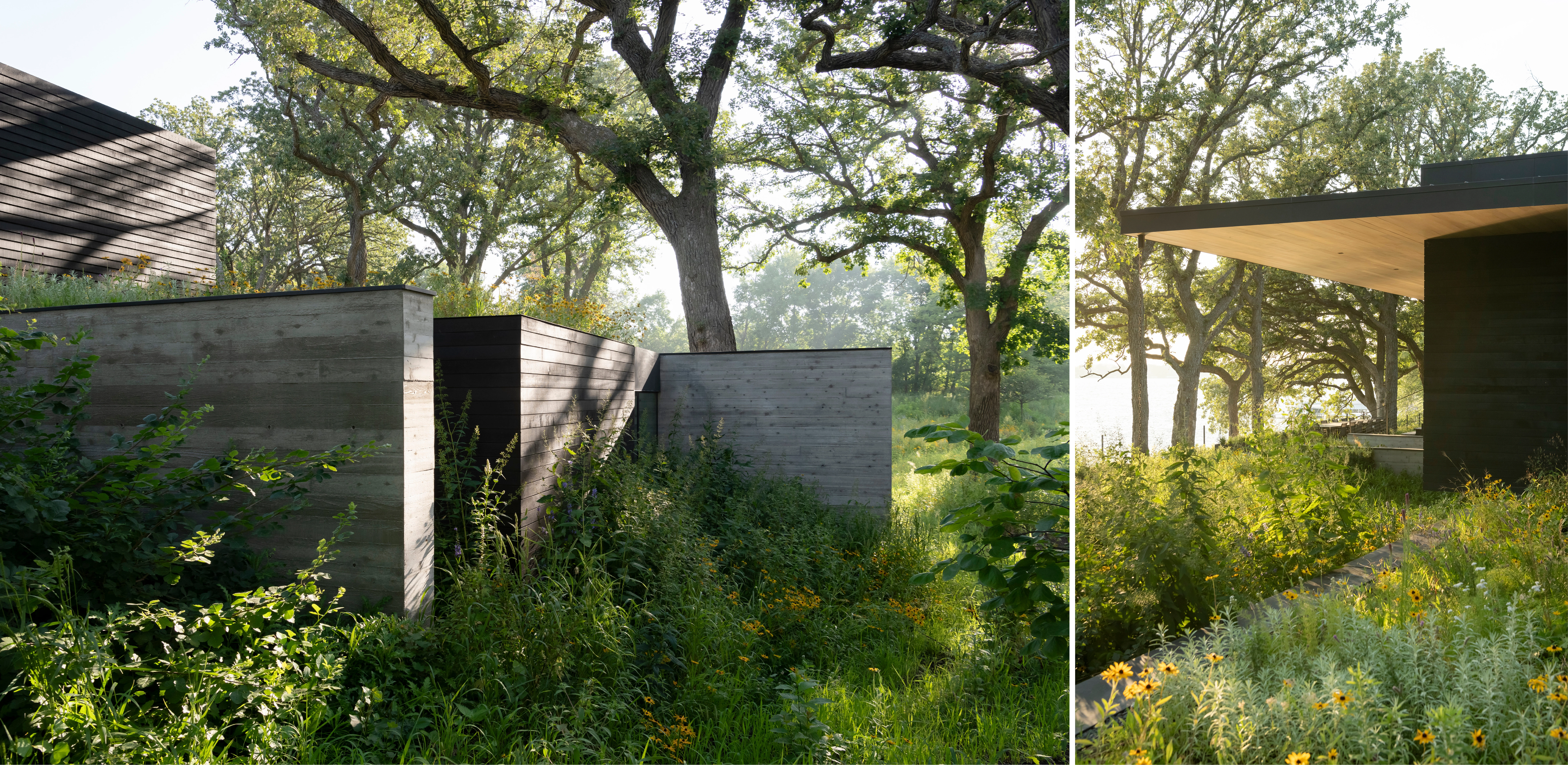
COMMUNE WITH NATURE The splayed, L-shaped footprint of the home parallels the lake and northern boundary, while a reconfigured driveway skirts the property’s eastern edge. By gravitating the program to the perimeter, the plan reestablishes an expansive prairie landscape and its historic drainage-ways, elevating scenic quality from public rights-of-way and creating an immersive entry experience. Nestled within sculptural oaks, the home emerges from a gently sloping landform when viewed from the road, while reading as a single-story structure from the lake. A 2,500 square foot green roof appears as a lifted extension of the prairie. Shared outdoor spaces unite generations for recreation and communion with nature. Low, freestanding walls denote thresholds while permeable pathways sinuously link amenities and emphasize the dynamism of the landscape.
-
- Mike Albert, FASLA - Principal - Design Workshop, Inc.
- Ben Roush, ASLA - Project Manager - Design Workshop, Inc.
- Max Guzzetta, ASLA - Designer - Design Workshop, Inc.
- Bohlin Cywinski Jackson - Architecture
- Biota - Ecologist
- Diversity Farms - Native Prairie Specialist
- ISG - Civil Engineering
- Niteo - Lighting Designer
- EC Design - Irrigation Designer
- Ryan Companies - General Contractor
- Del’s Garden Center - Landscape Contractor
-
Products
- Green Roofs/Living Walls
- Hardscape
-
- White Oak
- Cockspur-Thorn
- Redbud
- Bailey Gray Dogwood
- Elderberry
- Buttonbush
- Arrowwood
- Missouri Gooseberry
- Fragrant Sumac
- Round-Headed Anemone
- Wild Geranium
- Goat’s Beard
- Jack-in-the-Pulpit
- Shooting Star
- Wild Columbine
- Bloodroot
- Solomon Seal
- Grasses/Sedges: prairie dropseed, side-oats gramma, little bluestem, big bluestem, Indiangrass, beakgrass, bottlebrush grass, silky wild rye, Virginia wild rye, riverbank wild rye, upland timothy, wood reed grass, nodding fescue, fowl manna grass, leafy satin grass, Carex annectans, Carex bicknellii, Carex blanda, Carex molesta, Carex sprengelli, Carex grayi, Carex grisea
- Wildflowers: golden alexander, prairie spiderwort, Ohio spiderwort, spiked lobelia, cream indigo, purple prairie clover, white prairie clover, black-eyed susan, lead plant, prairie phlox, woodland phlox, pale purple coneflower, narrow-leaved coneflower, downey gentian, partridge pea, slender mountain mint, prairie cinquefoil, flowering spurge, rough blazingstar, thimbleweed, alumroot, hoary vervain, sky blue aster, field goldenrod, prairie coreopsis, white sage, large-flowered beardstongue, prairie violet, silky aster, false gromwell, butterfly milkweed, showy goldenrod, round-headed bushclover, yellow coneflower, rigid goldenrod, rattlesnake master, prairie sunflower, white indigo, early wild rose, wild garlic, columbine, hairy wood mint, wild hyacinth, tall bellflower, midland shooting star, purple coneflower, grass-leaved goldenrod, bottle gentian, cream gentian, Solomon’s plume, calico beardstongue, foxglove beardstongue, Solomon’s seal, brown-eyed susan, calico aster, crooked-stem aster, yellow pimpernel. Early meadow rue, meadow parsnip, late horse gentian, purple giant hyssop, sweet joe pye weed, red baneberry, white snakeroot, roadside agrimony, wild leek, tall thimbleweed, wild ginger, blue cohosh, honewort, pointed-leaved tick trefoil, Dutchman’s breeches, big-leaved aster, shining bedstraw, bishops cap, sweet cicely, wood betony, woodland knotweed, lopseed, lion’s foot, wild golden glow, bloodroot, late figwort, common carrion flower, zig zag goldenrod, elm-leaved goldenrod, heart-leaved aster, Drummond’s aster, Short’s aster, germander, bellwort
Related Awards
Honor Award, Residential Design
Trinity Road
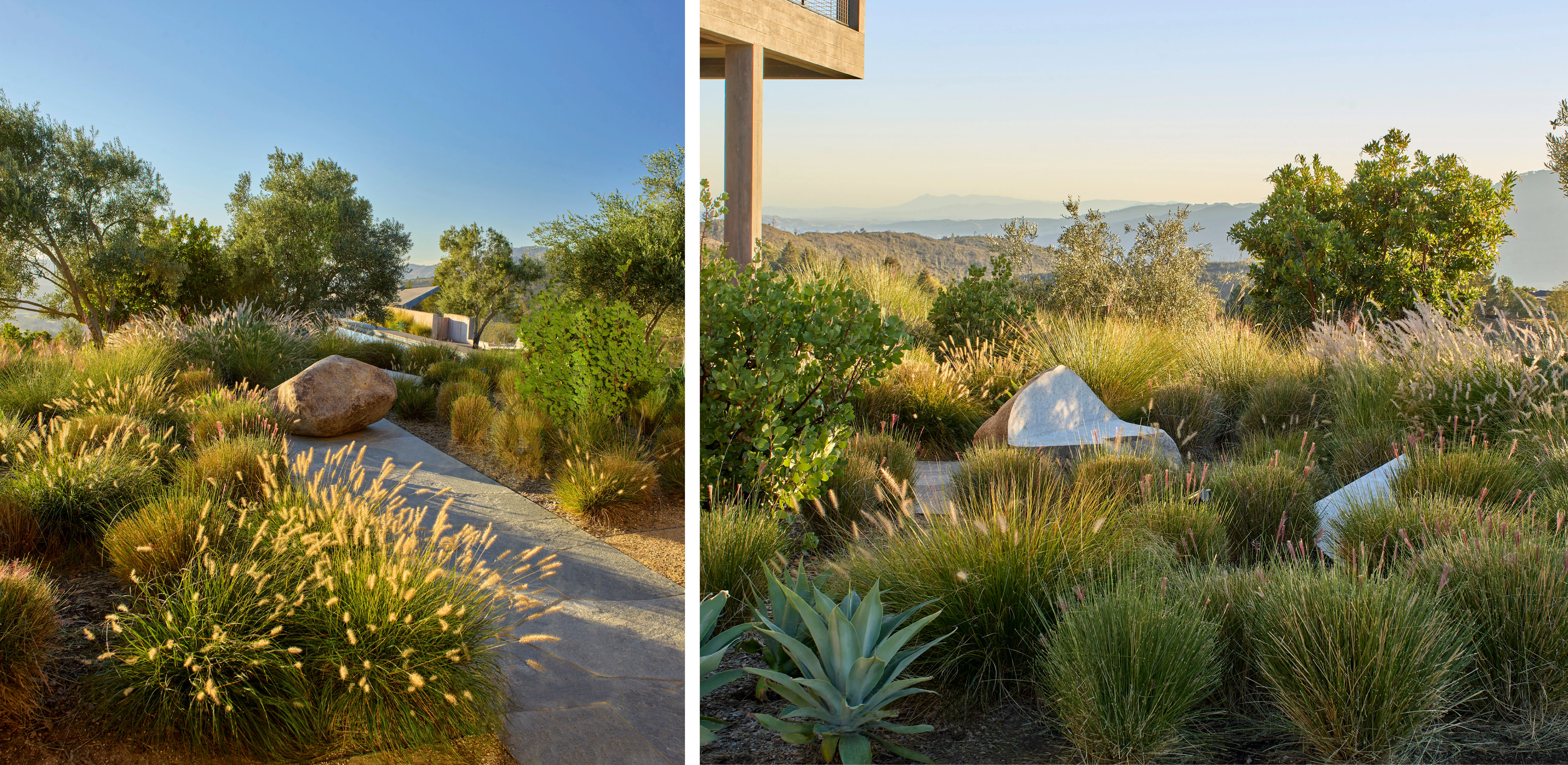
The story of Trinity Road unfolded over the past five years and is fundamentally a story of fire resilience and succession of the surrounding forest. The garden was designed and the project considered completed when two wildfires ravaged the hills immediately surrounding the site. After the fires the landscape design team was brought in to create a new vision for the site that knit together the original planting and a new series of paths and gardens.
Related Articles

Awards
ASLA 2026 Professional Awards: Early Bird Deadline Approaching January 9
Submit your best work by the January 9 Early Bird deadline to save. Get insider tips at the January 7 Professional Awards Webinar. Student and other professional deadlines follow in February.
Dec 16 2025