
.webp?language=en-US)

Walk to Learn: Exploratory Children's Field Journal for Epping Way
Nicole Columbus Norman, Associate ASLA
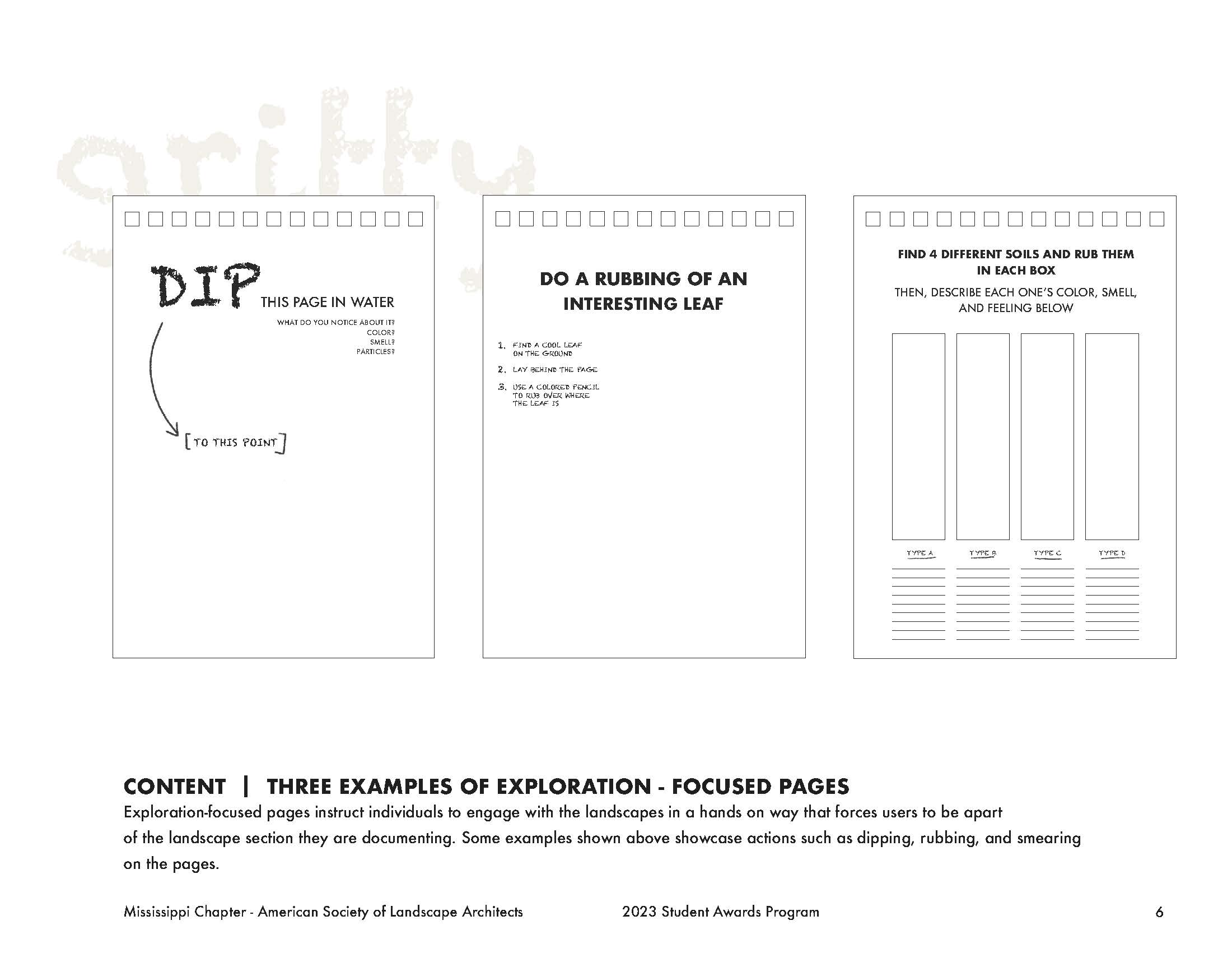
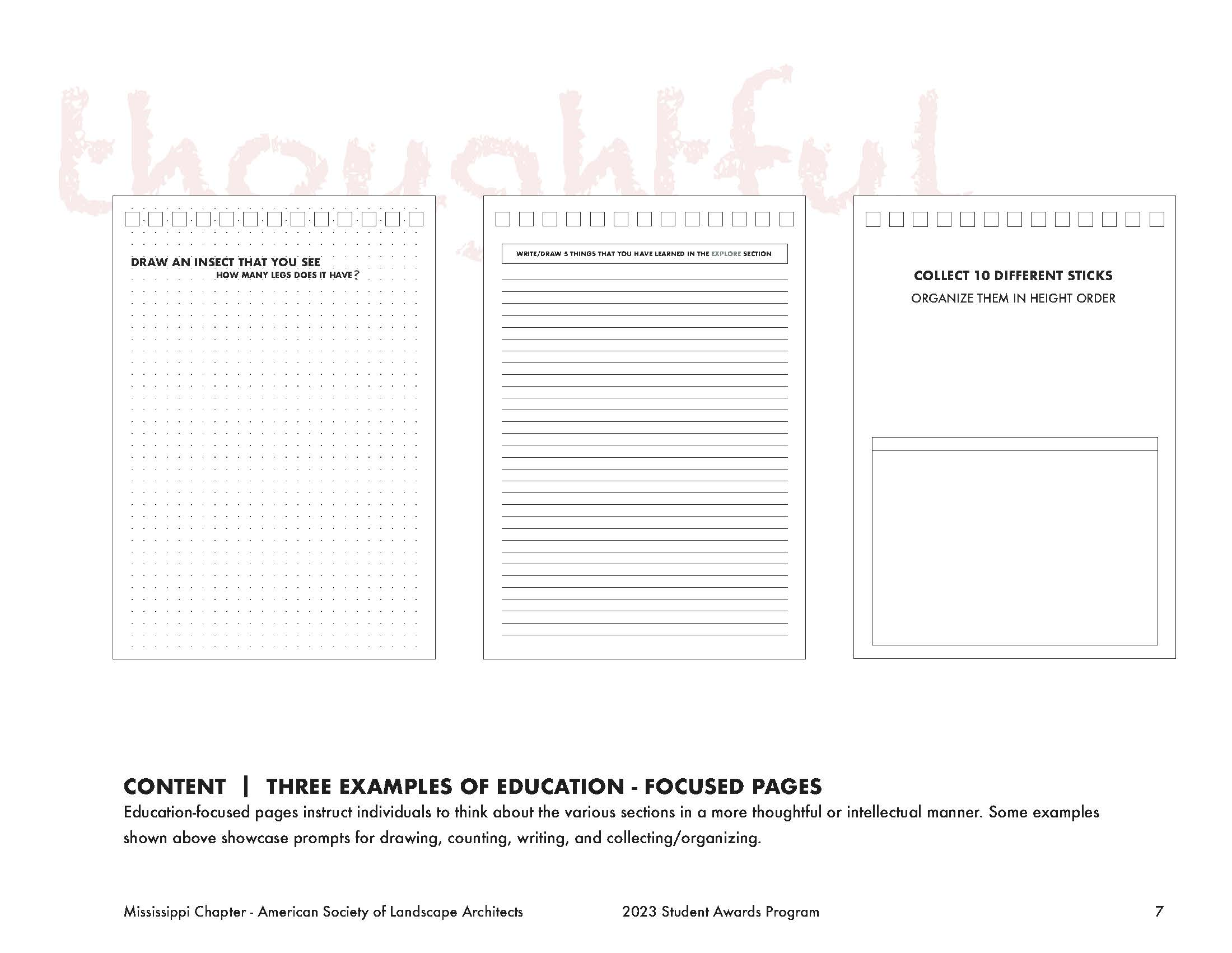
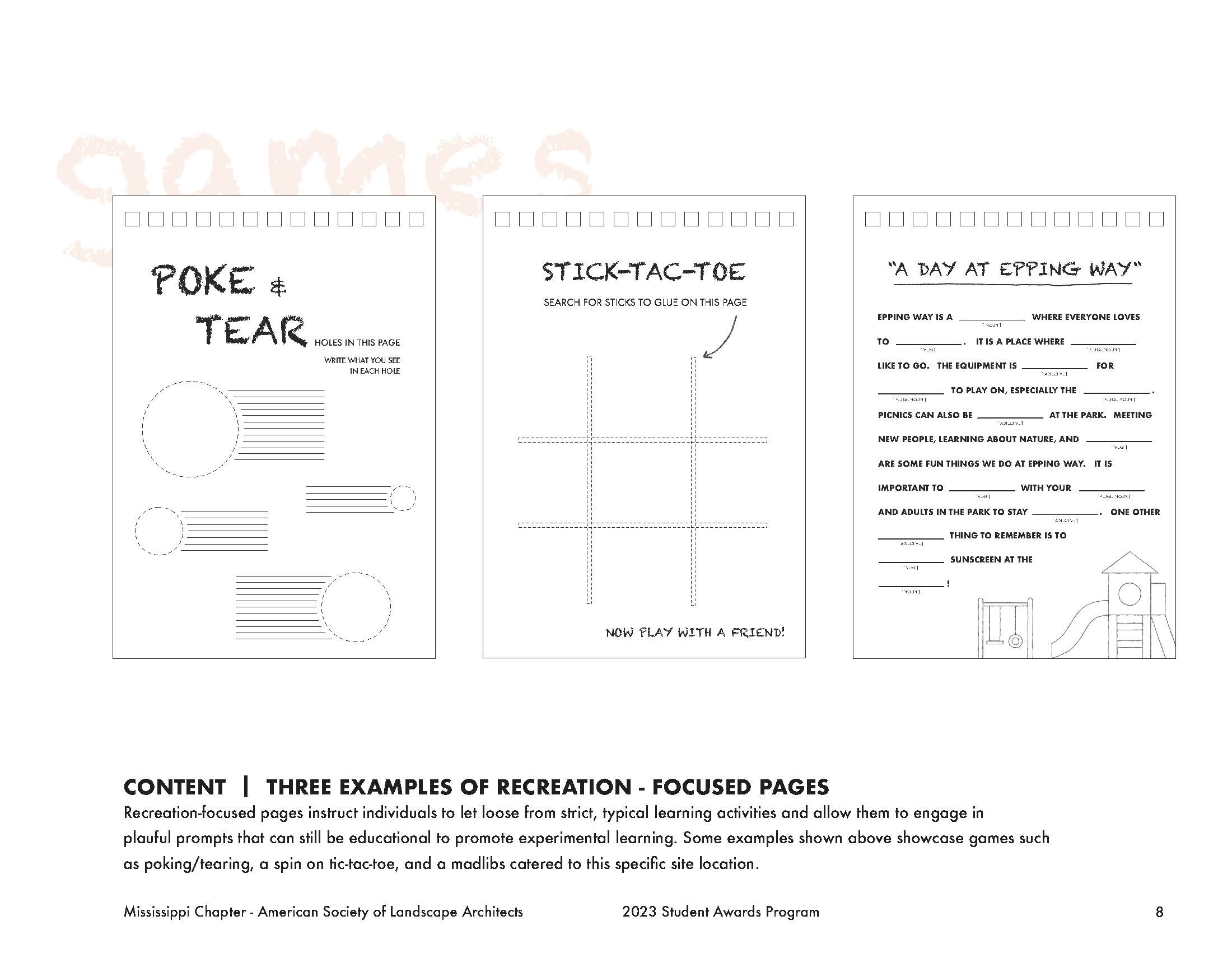
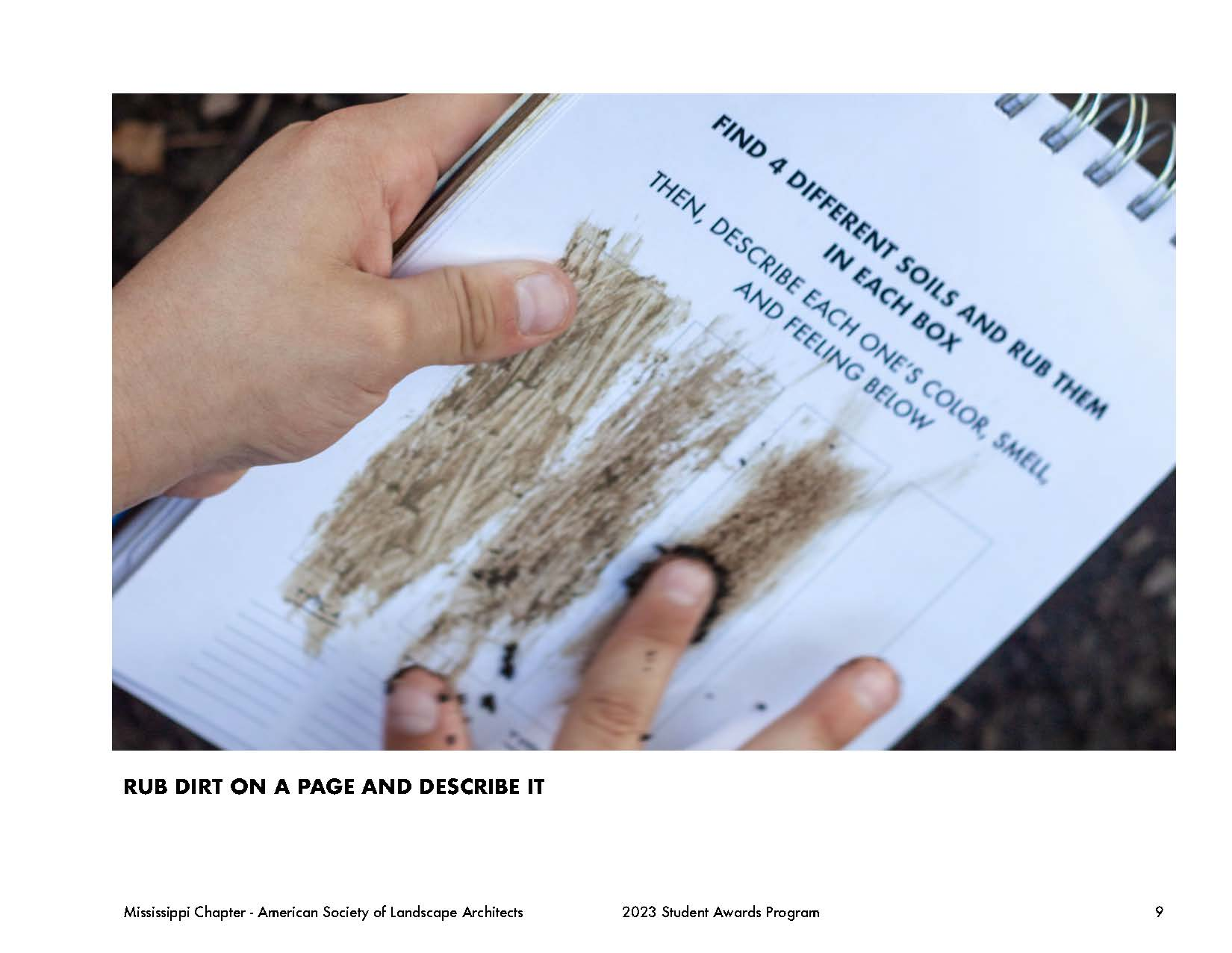
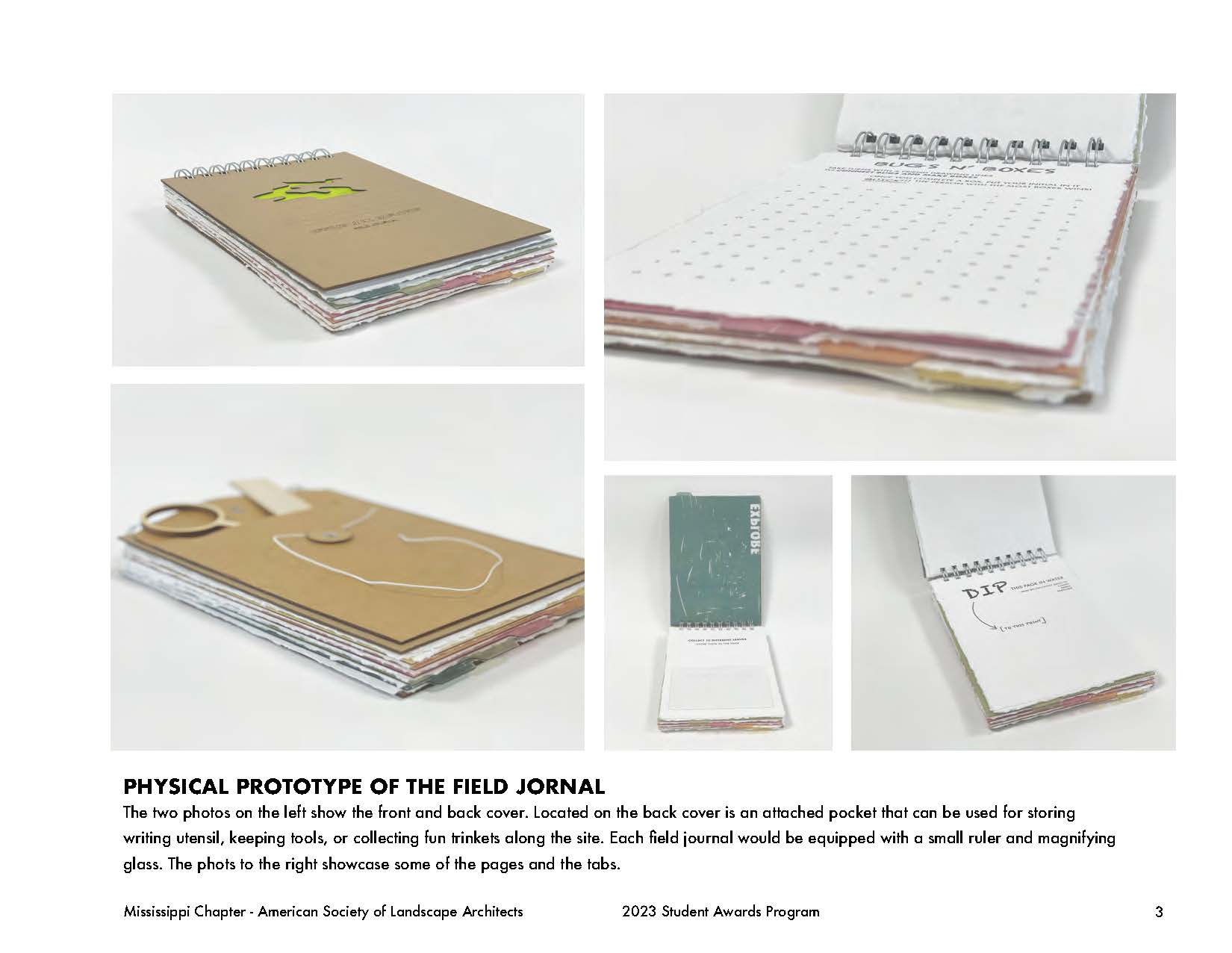
Thoughtful inclusion of experiential qualities of landscape that could make it more accessible to young people. This is just beautiful. Other books have been seen before, but nothing as beautifully and lovingly crafted. Even if this is mass-produced for a larger audience, I think the craftsmanship will still shine through and engage users in a unique and meaningful way.
Awards Jury
-
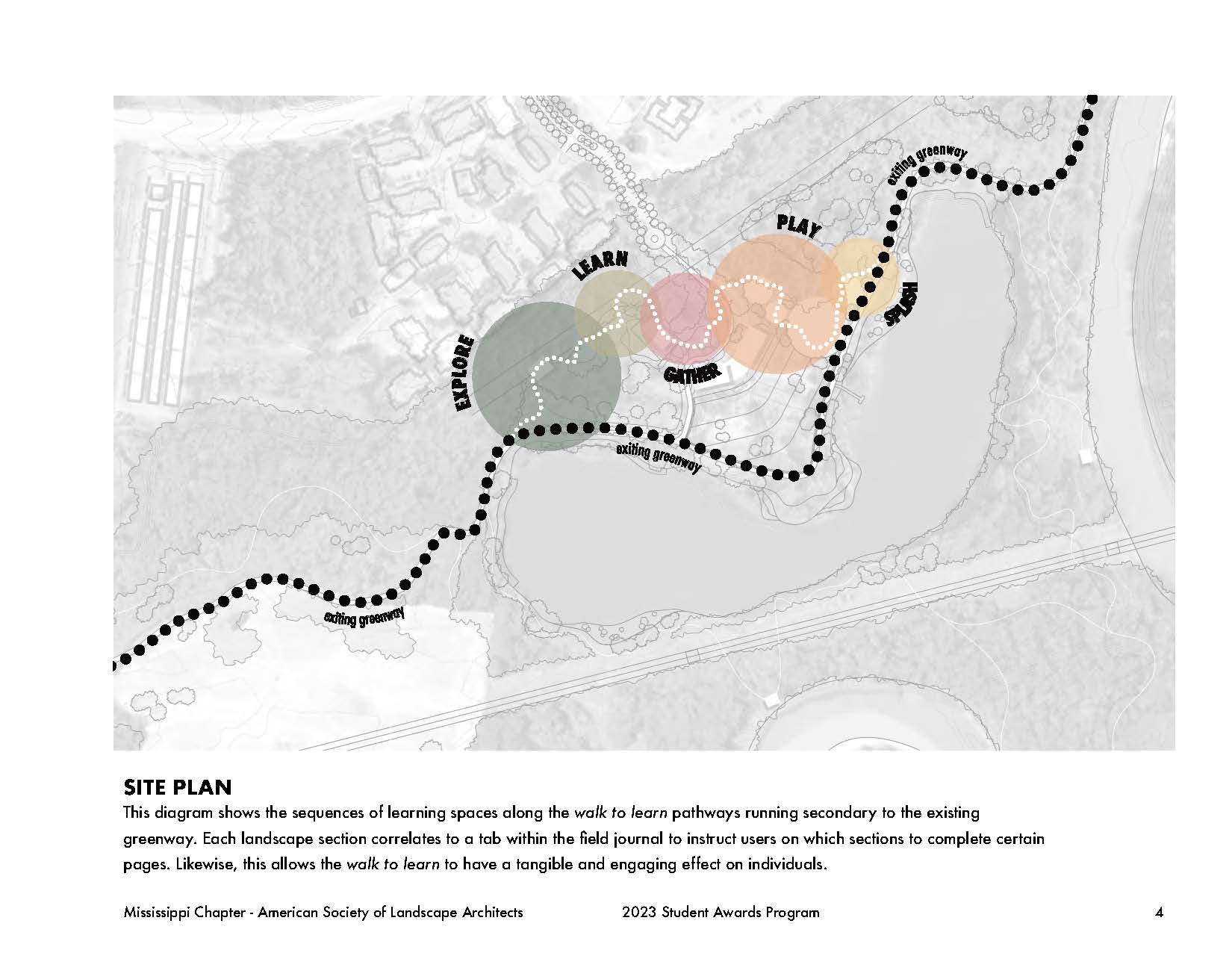
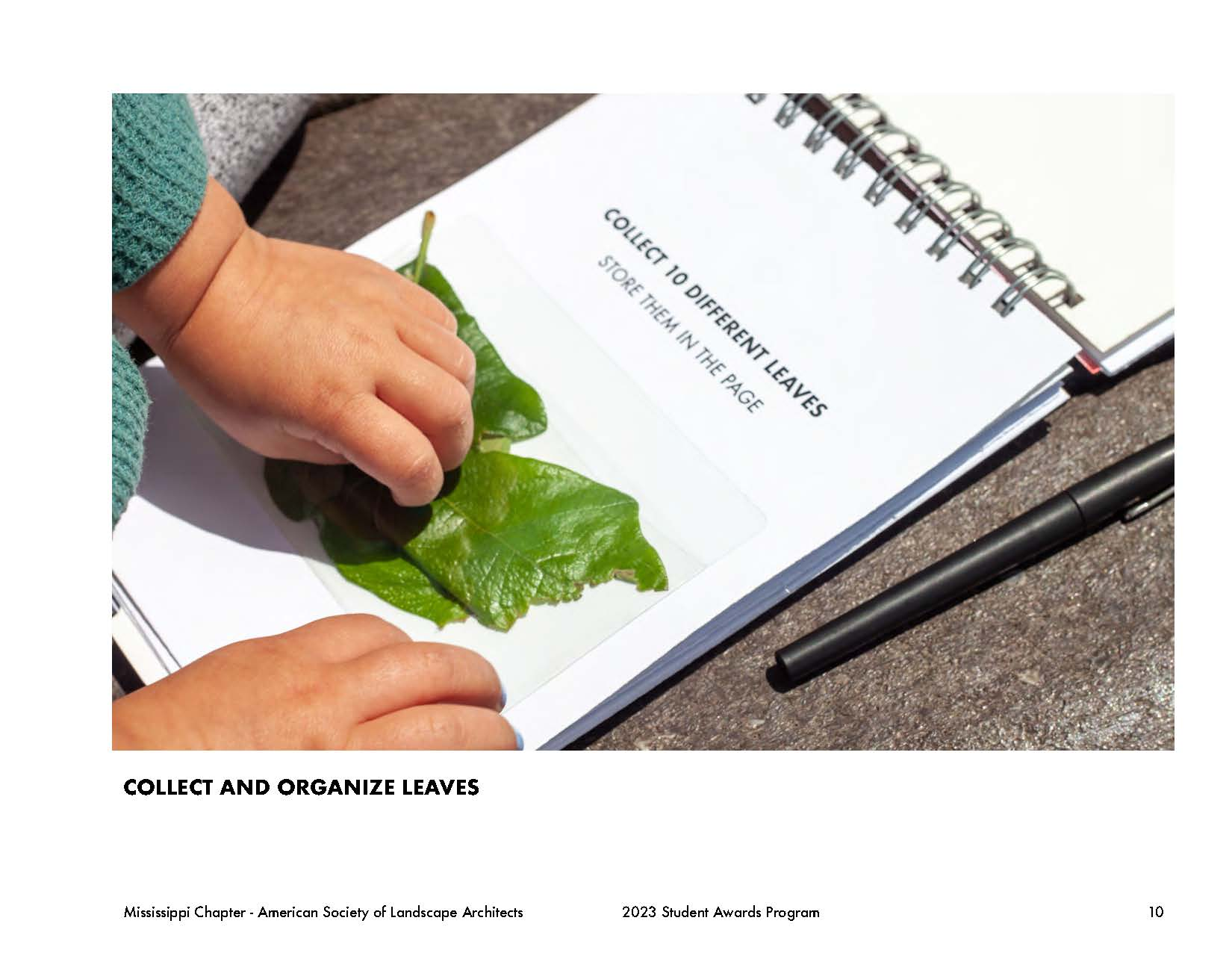
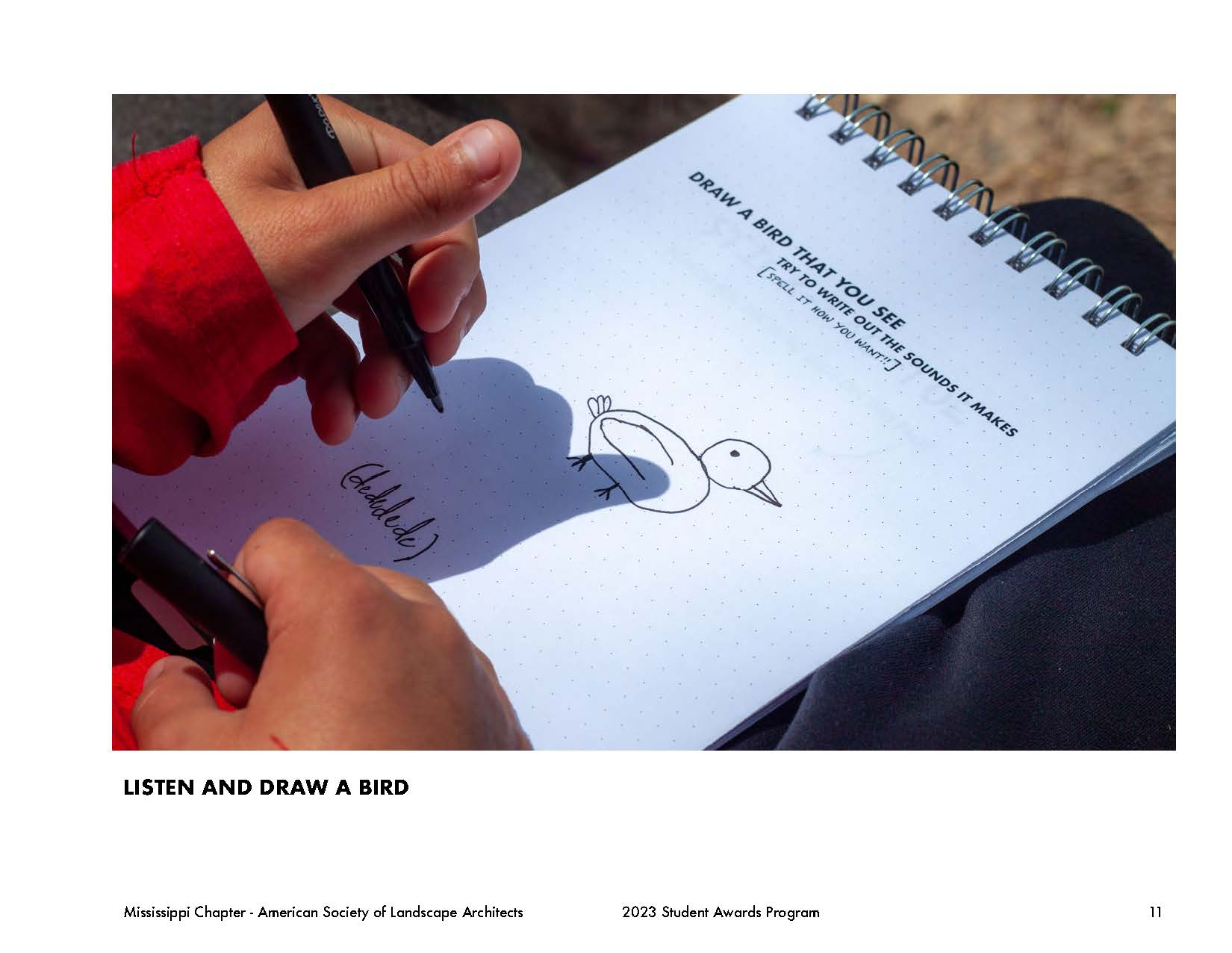
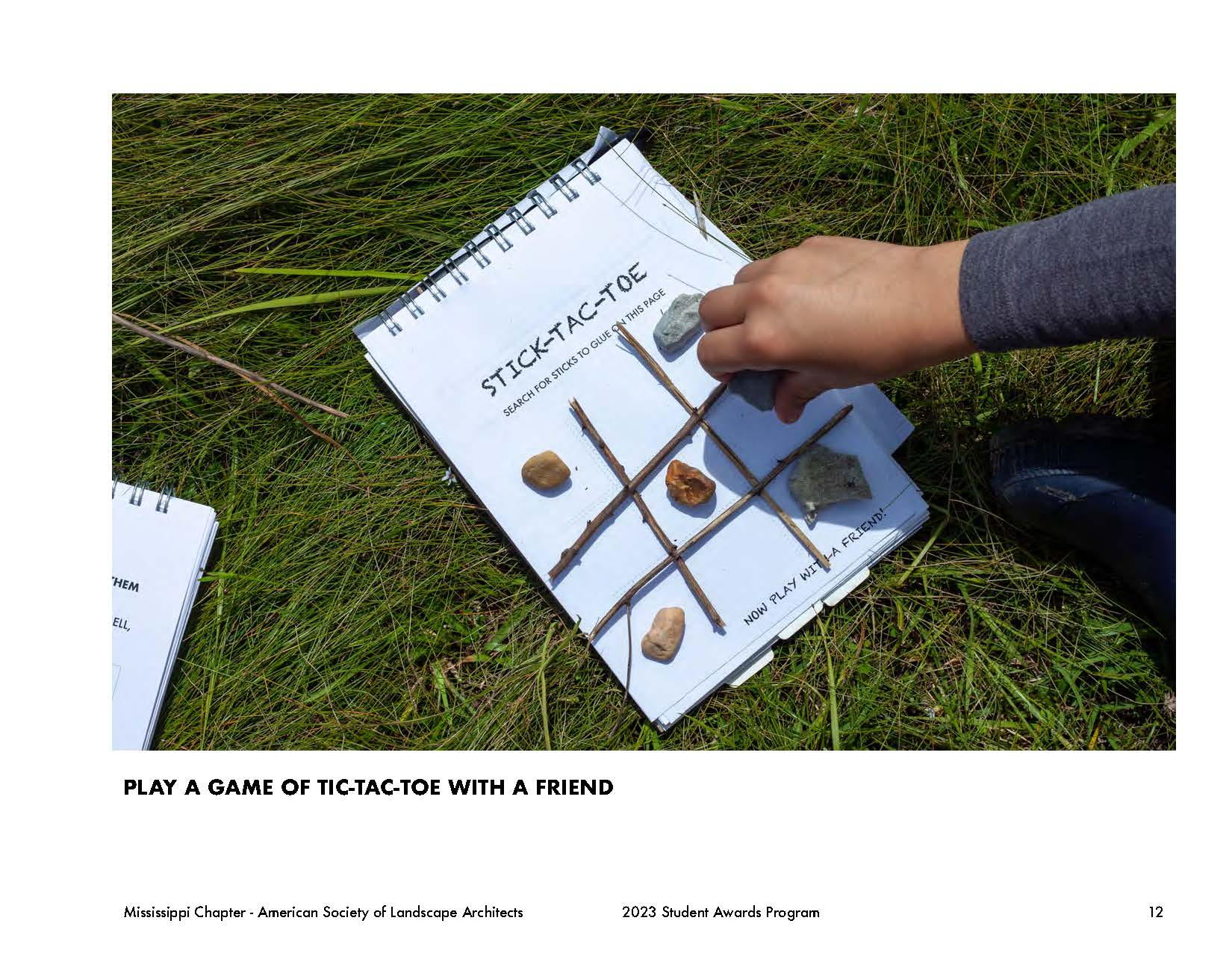
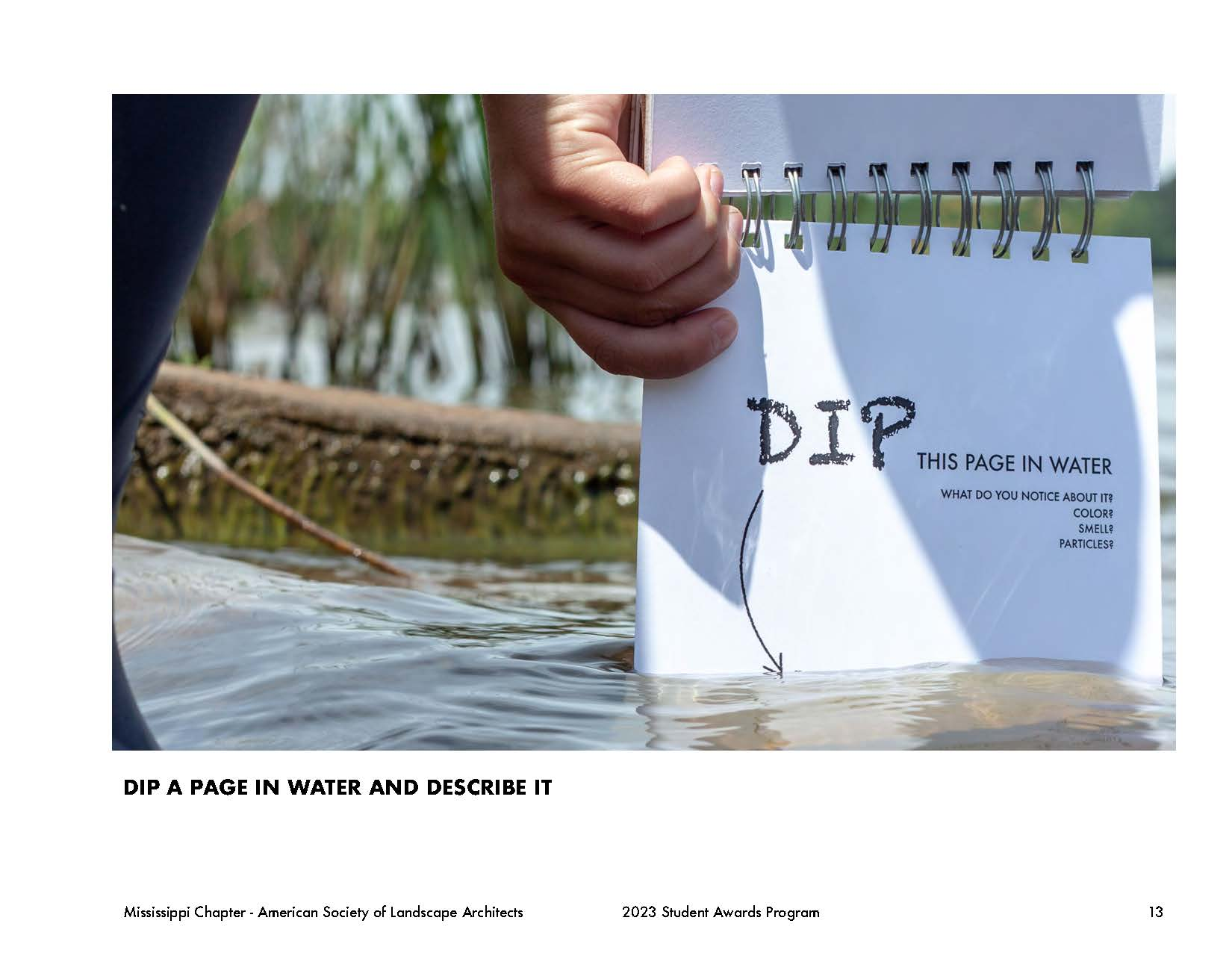
This project site is used as a pass through for the Wolf River Greenway trail as well as a nature teaching site for local schools to mesh education, recreation, and exploration for individuals. Once the masterplan was completed, I designed a field journal for people of all ages to engage and teach them about the natural world they live in. The journal follows the “walk to learn” colored pathway which runs secondary to the existing greenway and provides a prompt for students and adults alike to engage, admire, and explore the landscape. The field journal provides a tangible element that people can interact with, learn from, play with friends in, and bring home after their trip to show others what they experienced at Epping Way.
-
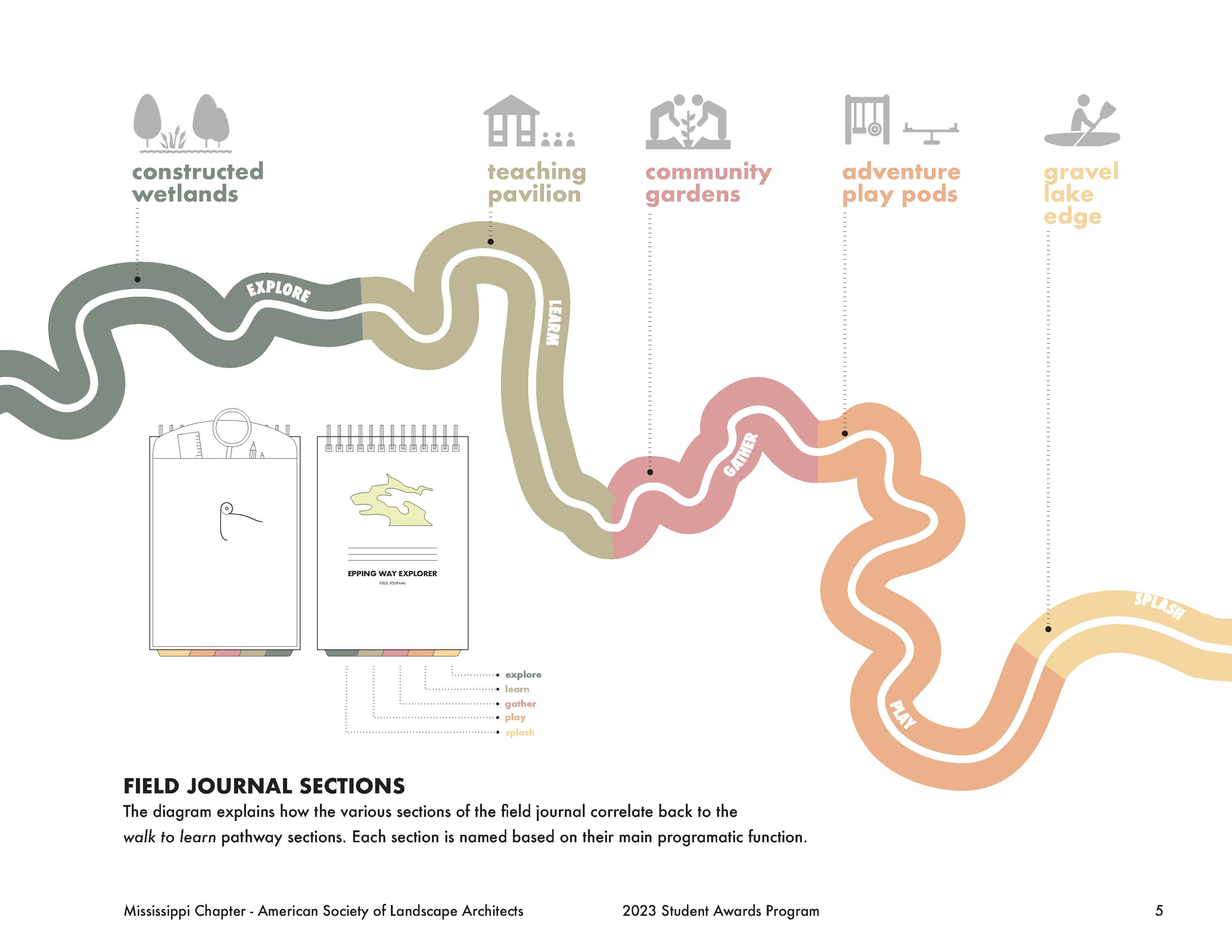
Throughout this design problem, the same question was posed: how can a designer provide the space for children and adults alike to explore new landscape typologies and understand their value? This design proposal leverages the existing site features and introduces new amenities and connections to become an artful, ecological, and interactive environment for its local community, the Wolf River Greenway system, and the greater Memphis area. The proposal integrates three unique programmatic changes to achieve this goal: experiential learning and a play pathway called the walk to learn. Playing off the walk to learn, the project showed that there was even more that could be done for community educational outreach for natural and curated landscapes within the urban context. This led to creating a field journal filled with prompts and guidelines to direct children (and adults) along the site to engage and explore the landscape. The walk to learn consists of five sections based on their programmatic functions in the masterplan: explore, learn, gather, play, and splash. The explore section encompasses the constructed wetlands and promotes people interacting with and becoming comfortable in natural landscapes and exploring the plant life and habitats that it inhabits. The learn section is a designated area for a teaching pavilion with worktables to create a space for field trip groups to convene or rest along the pathway. The gather section covers the community gardens which allow for exploration of a more manicured landscape maintained by surrounding residents. The play section caters to the more typical play. Lastly, the splash section covers the reconstructed lake edge with a low-slope gravel edge to allow for easy water access. Each section is specific to a different landscape typology to promote various learning potentials. The field journal pages in each section correlate to its section on the site plan by steering the prompts to engage users in both tactile and intellectual ways.
Related Awards
Honor Award, Communications
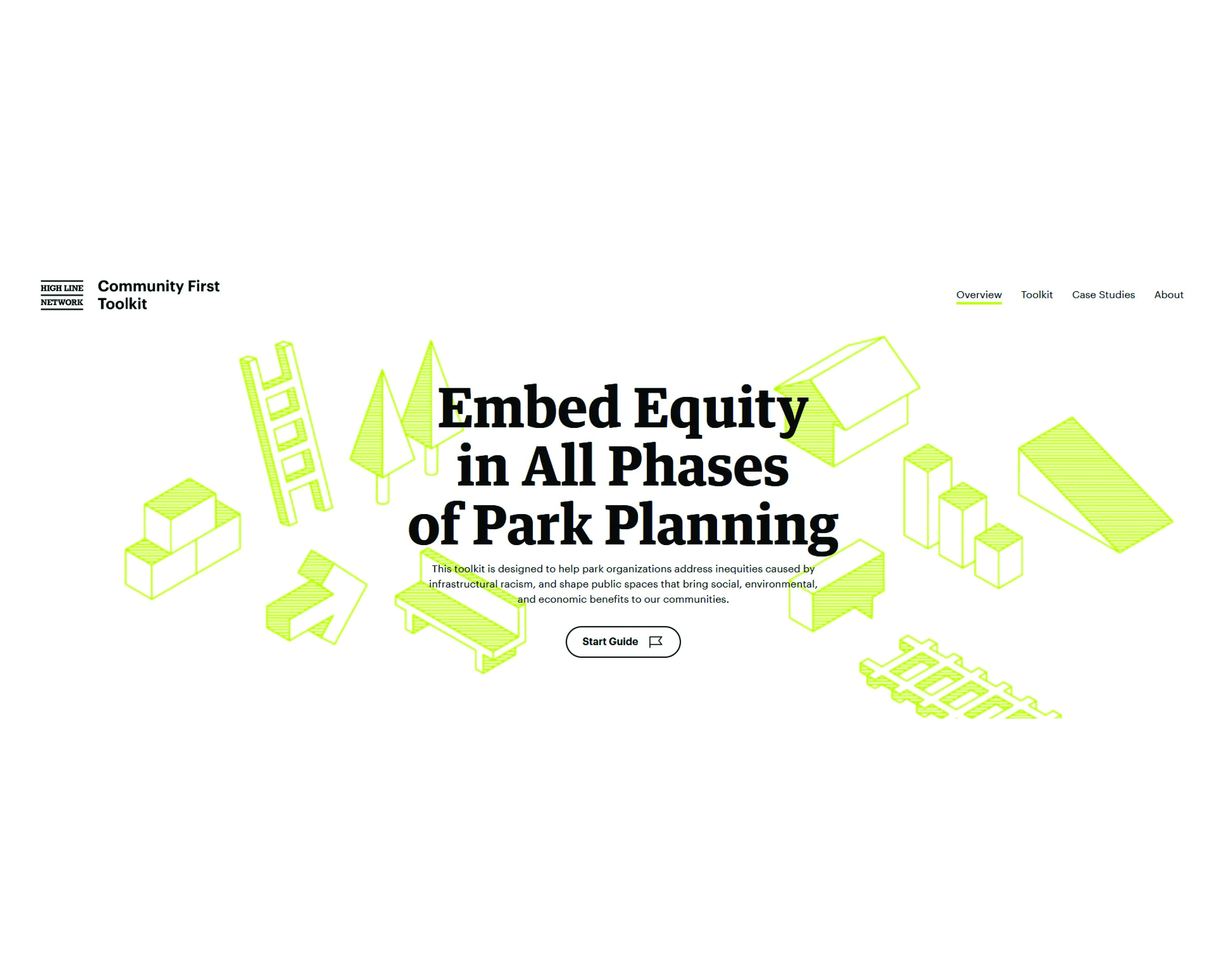
The Community First Toolkit: A Framework for Equitable Public Spaces
Communities across North America have faced uneven development for decades. The Community First Toolkit (CFT) provides a visionary, adaptable framework for public realm advocates to directly tackle infrastructural racism and embed equity at all stages of the design process.