

.webp?language=en-US)

.webp?language=en-US)
Advertisement
Become a Fellow
Fellowship honors exceptional leadership, professional excellence, and service to the landscape architecture community. Candidates and nominators can review eligibility, categories, guidelines, key schedules and deadlines, nomination templates, sample nominations, and practical tips to prepare a clear and compelling submission.
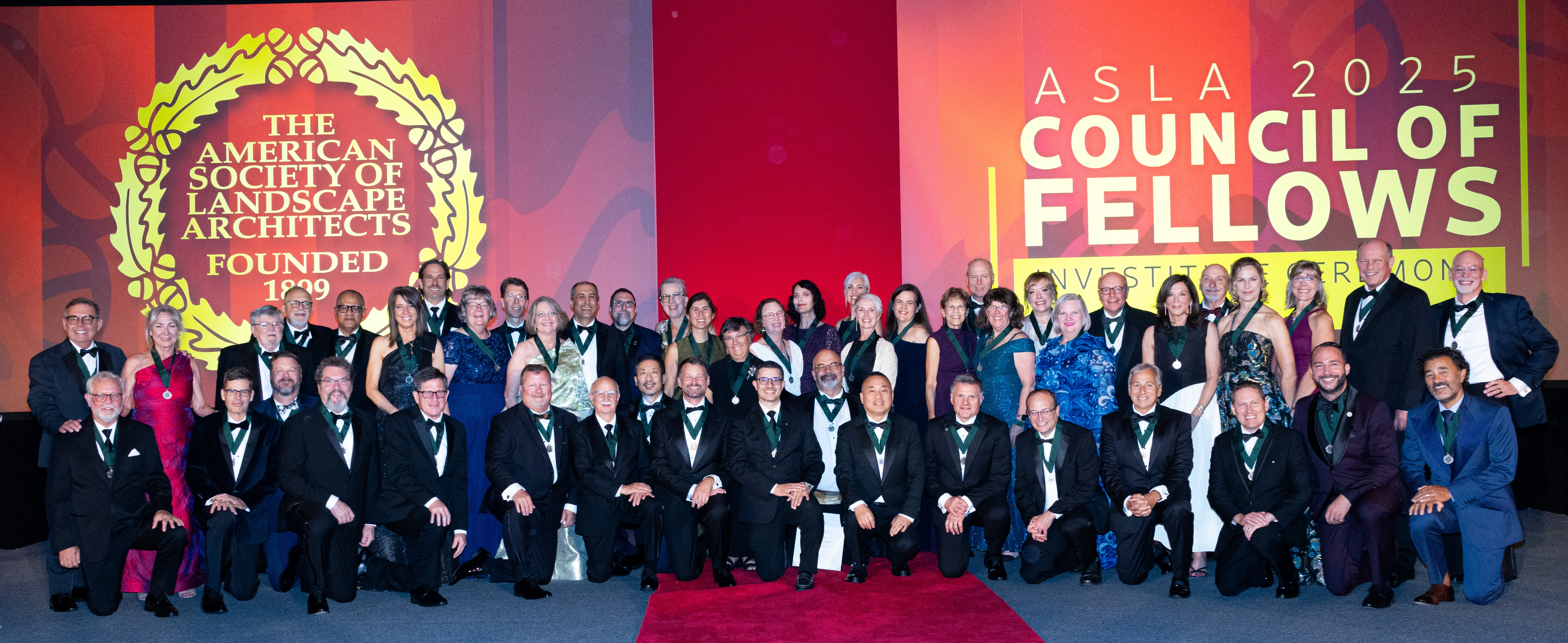
nobilephphoto
-
To be considered for nomination for elevation to the ASLA Council of Fellows, an individual must:
- Be a current ASLA Full Member or International Member in good standing
- Have achieved at least 10 continuous years of FULL membership at the time of nomination.
- Have demonstrated exceptional contributions over an extended period of time.
- Have made a significant positive impact on the public and the profession.
- Have received recognition for those contributions from multiple sources.
Nominations may be made by the executive committee of a chapter, the executive committee of ASLA, or the executive committee of the Council of Fellows in one of four categories: Works, Leadership/Management, Knowledge, or Service. (Click on the Categories tab for details on each one.)
Any member of ASLA may recommend another eligible ASLA member for consideration as a nominee to the three groups mentioned above via written documentation highlighting the member’s accomplishments.
-
The online portal for 2027 nominations will open in October 2026 and the final submission deadline is Monday, February 1, 2027 at midnight PT.
Address any correspondence to:
ASLA Council of Fellows Nominations
Attn: Curt Millay, Corporate Secretary
636 Eye St. NW
Washington, DC 20001
[email protected]
- There is no minimum or maximum number of individuals who may be selected by the jury for elevation to the Council of Fellows each year.
- There is no limit to the number of individuals a chapter, the Council of Fellows executive committee, or the ASLA executive committee may nominate each year and nominating more or fewer individuals does not affect the outcome.
- Nominees do not compete with each other for selection. Selection is based solely on professional excellence and outstanding accomplishments as presented in the nominations.
- An individual may be nominated in up to two categories, but two separate nominations must be submitted, one for each category.
- Chapters must adhere to the national eligibility requirements when selecting individuals to nominate and may not impose additional requirements upon potential nominees, such as requiring they be licensed or currently active in the chapter.
- A member may only be nominated for three consecutive years. If not selected during that period, a two-year break is required before the member may be nominated again.
- An initial screening of nomination materials is performed to ensure that all eligibility criteria had been followed and all submission requirements have been met. The submitting body will be asked to revise the materials to meet the criteria before the nomination will be considered by the jury.
- When a nominee is selected, ASLA retains possession of all nomination materials and rights to their usage in conjunction with the Council of Fellows program.
The online portal for 2027 nominations will open in October 2026 and the final submission deadline is Monday, February 1, 2027 at midnight PT.
- New is the ability to submit images with the Knowledge, Leadership/Management, and Service categories. For those categories, a nominee should submit up to 10 images relevant to their nomination category.
- The Works category still requires a 20-image presentation.
- In addition, the category descriptions, criteria for jury review, and submission requirements have been edited for clarity.
- The templates for submission have not changed.
Each nomination must be uploaded through the online submission system. The nomination form (nominee and chapter president contact information) will be entered directly into the system and the five-page nomination template will need to be uploaded as a PDF.* If you use the Word or InDesign form, please save to and submit a PDF. Nominees will also be asked to upload a headshot separately from the five-page statement. Contact Curt Millay or 202-216-2340 with any questions.
A note on recognition: each category suggests that the candidate show evidence of recognition as being outstanding in their field. Recognition may include publications, and/or awards from ASLA and/or allied international, national, regional, state, and/or local organizations, institutions or agencies. Recognition could also be other evidence that the candidate is considered outstanding in the field such as a history of speaking engagements, invitations to sit on juries and panels, etc.
The requirements and templates for each category are listed below.
-
Recognizes: Mastery of design in significant works of landscape architecture, in its varied applications, which have advanced the art, stewardship, science, and social responsibility of landscape architecture. Works may include small or large, public or private, local, regional, national, or international landscapes and range from conception (represented by reports, plans, or illustrations) to works which have been built or adopted.
Criteria - Key issues that the jury will look for include:
- Exceptional and/or innovative accomplishments in landscape architecture such as planning, design (including residential), conservation, preservation, rural, urban and regional design and planning (including infrastructure), graphic communication, and other work which the nominee has sustained over an extended period of time.
- Works which demonstrate mastery of the art, stewardship, science, and social responsibility of landscape architecture. Certain specific projects may choose to demonstrate social responsibility through sustainable development and other practices which contribute to societal health and wellbeing.
- Projects that demonstrate outstanding quality and significant impact on the profession and the public, as evidenced through recognition. Recognition may include publications, and/or awards from ASLA and/or allied international, national, regional, state, and/or local organizations, institutions or agencies.
- Projects which increase the visibility and recognition that landscape architecture is addressing critical environmental, social and cultural issues.
Guidance in Preparing the Nomination Package
- The central focus of the nomination package is to demonstrate how the nominee’s accomplishments have advanced the art, stewardship, science, and social responsibility of landscape architecture; accomplishments which the nominee has sustained over an extended period of time.
- Summarize the significance of the nominee’s career and body of work in relation to the category criteria.
- Describe four or five completed projects that demonstrate the nominee’s achievements in relation to the criteria.
- While they may not reflect the most recent updates to the categories and requirements, reviewing the sample nominations is encouraged.
Submission Requirements:
Each nomination must be uploaded through the online submission system on the ASLA Council of Fellows Nomination Submission Site, which includes additional instructions. Submission materials include:- The completed online submission form which must be approved by the chapter president, COF ExCom Chair, or ASLA President.
- The Nomination Statement (see required template, Word, InDesign*, and Sample Nominations). The Nomination Statement may be no more than five pages in length, portrait orientation, and must be in an easily readable typeface, such as Times Roman, Garamond, or Arial, no smaller than 10-point size, for all text.
- A headshot at least 300 dpi at 5x7” (equivalent to 1500x2100 pixels).
- A slide presentation in PDF form (required template) which may include up to 20 total images of the four or five completed projects included in the Nomination Statement.
- Label each image with the nominee’s last name, the image number, the title of the project, and a descriptive caption of no more than 50 words. Only 20 images are allowed (20 images not 20 pages of images).
- If an image is digitally enhanced, label it as such. Do not submit project photos with added or subtracted elements.
- If an image is a digital 3D model or rendering, label it as such.
-
Recognizes: Exemplary leadership, administration, and management of people, projects, policies, and/or programs that have significantly advanced the art, stewardship, science, and social responsibility of the profession of landscape architecture and its practice, and/or the public recognition of issues regarding the design, planning, or management of projects, people and/or places. Exemplary leadership promoting landscape architecture or its values may be demonstrated in public, private, non-profit, and academic practice settings or, for example, by landscape architects holding elected or appointed offices.
Criteria - Key issues that the jury will look for include:
- Exceptional and/or innovative, accomplishments which the nominee has sustained over an extended period of time.
- The influence and impact of the nominee’s accomplishments on the profession of landscape architecture and contribution to public recognition of the profession.
- Personal leadership, administrative and management ability demonstrated through the accomplishment of projects, (planning, design, development, implementation, performance evaluation, management/maintenance, etc.); programs, policies, procedures, and/or other initiatives which embody landscape architecture or its values.
- Notable activities that demonstrate courage and bravery that resulted in heightened recognition of the values and the legacy of the profession.
- Exemplary contributions which increase the visibility and recognition that landscape architecture is addressing critical environmental, social and cultural issues.
Guidance in Preparing the Nomination Package
- The central focus of the nomination package is to demonstrate how the nominee’s accomplishments have advanced the art, stewardship, science, and social responsibility of landscape architecture; accomplishments which would not have advanced without the nominee’s sustained efforts, undertaken over an extended period of time.
- Summarize the significance of the nominee’s career and body of work in relation to the category criteria.
- List specific activities in administration, management and leadership roles in organizations, agencies, and elected or appointed offices promoting landscape architecture or its values.
- Clearly identify the nominee’s role and impact in each activity and project cited.
- Explain the significance of the nominee’s accomplishments and their impact on the profession and the public.
- Summarize the nominee’s activities or leadership positions in organizations pertaining to this category.
- List all awards which the nominee has received from ASLA, allied organizations, and/or from other entities that align with the nomination criteria in the Leadership/Administration/Management category.
- Include up to four brief testimonial statements from individuals who can attest to the nominee’s achievements (testimonials might be sought from clients, peers, public officials, and/or allied professionals, for example).
- While they may not reflect the most recent updates to the categories and requirements, reviewing the sample nominations is encouraged.
Submission Requirements:
Each nomination must be uploaded through the online submission system on the ASLA Council of Fellows Nomination Submission Site, which includes additional instructions. Submission materials include:
- The completed online submission form which must be approved by the chapter president, COF ExCom Chair, or ASLA President.
- The Nomination Statement (see required template, Word document, InDesign*, and Sample Nominations). The Nomination Statement may be no more than five pages in length, portrait orientation, and must be in an easily readable typeface, such as Times Roman, Garamond, or Arial, no smaller than 10-point size, for all text.
- A headshot at least 300 dpi at 5x7” (equivalent to 1500x2100 pixels).
- An optional slide presentation in PDF form (see required template) which may include up to 10 total images that illustrate the nominee’s expertise, skills, experience and/or documents as described in the Nomination Statement.
- Label each image with the nominee’s last name, the image number, the title of the project, and a descriptive caption of no more than 50 words.
- Only 10 images are allowed (10 images not 10 pages of images).
- If an image is digitally enhanced, label it as such. Do not submit project photos with added or subtracted elements.
- If an image is a digital 3D model or rendering, label it as such.
-
Recognizes: The creation of significant new knowledge that demonstrates expansion of existing knowledge, the communication of knowledge to others with exceptional effect: knowledge which has advanced the art, stewardship, science, and social responsibility of landscape architecture. Creation of new knowledge may be in the form of research or scholarly inquiry that has been recognized by peers as worthy of publication. Communication of knowledge may be in the form of teaching or mentoring in either the university or workplace that has been recognized as outstanding by students, graduates, and peers. Communication of knowledge may also be in the form of published works or other media (video, software, etc.) that convey important ideas about landscape architecture with appropriate critical acclaim. This category is not specifically designated for educators but includes the broader vision of knowledge and how it may be disseminated.
Criteria - Key issues that the jury will look for include:
- Exceptional and/or innovative accomplishments which would not have been advanced without the nominee’s sustained efforts, undertaken over an extended period of time.
- Specific influence of the nominee’s accomplishments on the profession’s and the public’s knowledge base of landscape architecture.
- The nominee’s personal role in advancing education, knowledge and/or the practice of the profession.
- Recognition may include research, grants, fellowships, publications, and/or awards from ASLA and/or allied international, national, regional, state, and/or local organizations, institutions or agencies, and/or from other entities.
- Exemplary contributions which increase the visibility and recognition that landscape architecture is addressing critical environmental, social and cultural issues.
Guidance in Preparing the Nomination Package
- The central focus of the nomination package is to demonstrate how the nominee’s accomplishments have advanced the art, stewardship, science, and social responsibility of landscape architecture; accomplishments which the nominee has sustained over an extended period of time.
- Summarize the significance of the nominee’s career and body of work in relation to the category criteria.
- Explain the significance of the research or scholarship on which new or expanded knowledge is based. Communication of knowledge may be in the form of presenting, teaching and mentoring, published works, or other media (video, software, etc.) List all significant published material or other original work.
- Summarize the nominee’s activities or leadership positions in organizations pertaining to this category.
- List all awards the nominee has received from ASLA, allied organizations and/or from other entities that align with the nomination criteria in the Knowledge category.
- Include up to four brief testimonial statements from individuals who can attest to the nominee’s achievements (testimonials might be sought from clients, peers, public officials, and/or allied professionals, for example).
- While they may not reflect the most recent updates to the categories and requirements, reviewing the sample nominations is encouraged.
Submission Requirements:
Each nomination must be uploaded through the online submission system on the Council of Fellows Nomination Submission Site, which includes additional instructions. Submission materials include:
- The completed online submission form which must be approved by the chapter president, COF ExCom Chair, or ASLA President.
- The Nomination Statement (see required template, Word document, InDesign*, and Sample Nominations). The Nomination Statement may be no more than five pages in length, portrait orientation, and must be in an easily readable typeface, such as Times Roman, Garamond, or Arial, no smaller than 10-point size, for all text.
- A headshot at least 300 dpi at 5x7” (equivalent to 1500x2100 pixels).
- An optional slide presentation in PDF form (see required template) which may include up to 10 total individual images that reflect the nominee’s expertise, skills, experience and/or documents as described in the Nomination Statement.
- Labeled each image with the nominee’s last name, the image number, the title of the project or activity, and a descriptive caption of no more than 50 words.
- Only 10 images are allowed (10 images not 10 pages of images).
- If an image is digitally enhanced, label it as such. Do not submit project photos with added or subtracted elements.
- If an image is a digital 3D model or rendering, label it as such.
-
Recognizes: Pro bono volunteer service activities and accomplishments sustained over an extended period of time that have significantly advanced the art, stewardship, science, and social responsibility of the profession of landscape architecture, promoted landscape architecture in the eyes of the public, and that serve as examples for other local, regional, national, or international efforts.
Criteria - Key issues that the jury will look for include:
- Exceptional, and/or innovative, accomplishments which would not have advanced without the nominee’s sustained efforts undertaken over an extended period of time.
- Sustained, pro bono volunteer efforts at local, state, national, and/or international levels that are truly inspiring and serve as an example to others. Accomplishments for which the nominee received compensation do not qualify as pro bono volunteer service.
- Notable activities and achievements that contribute to the advancement and public recognition of the profession of landscape architecture.
- Exemplary activities which contribute to increasing the visibility and recognition that landscape architecture is addressing critical environmental, social and cultural issues.
Guidance in Preparing the Nomination Package
- The central focus of the nomination package is to demonstrate how the nominee’s accomplishments have advanced the art, stewardship, science, and social responsibility of landscape architecture; accomplishments which would not have occurred without the nominee’s sustained efforts, undertaken over an extended period of time.
- Summarize the significance of the nominee’s achievements as a professional and public volunteer in relation to the category criteria.
- List and explain nominee’s activities in promoting the profession and the value of landscape architecture to the public.
- Explain the significance of the nominee’s accomplishments and their impact on the profession and the public.
- Identify the nominee’s role in and impact on each activity or project cited; indicate if projects were done for compensation or pro bono.
- Summarize the nominee’s activities and leadership positions in organizations pertaining to this category.
- List all awards which the nominee has received from ASLA, allied organizations, community organizations and/or from other entities that align with the nomination criteria in the Service category.
- Include up to four brief testimonial statements from individuals who can attest to the nominee’s achievements (testimonials might be sought from clients, peers, public officials, and/or allied professionals, for example).
- While they may not reflect the most recent updates to the categories and requirements, reviewing the sample nominations is encouraged.
Submission Requirements:
- Each nomination must be uploaded through the online submission system on the Council of Fellows Nomination Submission Site, which includes additional instructions. Submission materials include:
- The completed online submission form which must be approved by the chapter president, COF ExCom Chair, or ASLA President;
- The Nomination Statement (see required template, Word document, InDesign*, Sample Nominations). The Nomination Statement may be no more than five pages in length, portrait orientation, and must be in an easily readable typeface, such as Times Roman, Garamond, or Arial, no smaller than 10-point size, for all text.
- A headshot at least 300 dpi at 5x7” (equivalent to 1500x2100 pixels).
- An optional slide presentation in PDF form (see required template) which may include up to 10 total images that illustrate the nominee’s expertise, skills, experience and/or documents as described in the Nomination Statement.
- Label each image with the nominee’s last name, the image number, the title of the project or activity, and a descriptive caption of no more than 50 words.
- Only 10 images are allowed (10 images not 10 pages of images).
- If an image is digitally enhanced, label it as such. Do not submit project photos with added or subtracted elements.
- If an image is a digital 3D model or rendering, label it as such.
-
Works:
Leadership/Management:
Knowledge:
Service:
Optional slide presentation in PDF form required template - Works
Optional slide presentation in PDF form required template - Leadership/Management, Knowledge, Service
Over the years, members of the Council of Fellows jury have shared their insights into what leads to successful nominations. Here are some tips for preparing the best nominations possible:
Keep it simple and follow the directions.
Don’t be afraid—you can do this. The nominations process has been simplified and streamlined. There are templates and sample nominations. Staff is available to answer questions and give advice.
Focus on the category criteria.
The best way to draw the jury's attention is by providing a clear look at the nominee’s best, most significant achievements in relation to the category in which he/she has been nominated. Highlight up front in the first and second paragraphs what makes the candidate unique and outstanding in the category and make the case throughout the narrative. Include national and regional/local awards from ASLA but also from relevant, allied organizations (e.g. AIA, APA, ULI). Awards from other organizations show the nominee's role in advancement and public recognition of the profession. Recognition does not have to be awards, it could be evidence that nominee is viewed as an expert in the field—speaking engagements, invitations to sit on juries, etc.
Resist the temptation to include things that don’t apply to the category criteria. As Mies said, less is more.
Be enthusiastic.
Use action verbs that show the nominee’s leadership: directed, organized, led, advocated, managed, accomplished, achieved, succeeded, attained, mentored, investigated, demonstrated, and so on. Becoming a Fellow is one of the highest honors a landscape architecture professional may achieve; use adjectives that communicate how special the nominee is.
Testimonials matter.
Use brief testimonial statements to underscore recognition of the nominee’s achievements. The testimonials should refer to knowledge of specific achievements and abilities in the narrative, avoid using generally-worded references. Do not limit testimonials to ASLA members; seek statements from clients, allied professionals, and public officials for diversity and to demonstrate the nominee’s influence beyond the profession. ASLA past presidents and officers should use their business affiliation not their ASLA affiliation in the testimonials.
Use the required templates.
A required template is provided for each category based on jury recommendations for nomination presentations. Write the body of the nomination, starting with a strong opening statement or executive summary that summarizes the accomplishments of the individual in relation to the category of nomination and immediately identifies why the candidate is exceptional. Compile the lists (honors and awards, professional leadership activities, publications/research, etc.) on the left hand column and place them in order of importance according to the nomination category, (e.g. for the works category, place honors/awards towards the beginning of the form). Within each list, organize each event (e.g., awards, experience) in chronological order from most recent to oldest and always include the year associated with the event. Fit the content into the form after all the parts are assembled.
- Neatness counts. And so does grammar.
Run spell-check and grammar-check, because typos reflect poorly on the nominee and distract the jury. Have a third party read the nomination (and photo captions for Works nominations) before it’s submitted, just in case. - In general, do not capitalize the words “landscape architect” or “landscape architecture” unless they are in a headline.
- Refrain from including overused words such as "tirelessly" and "relentlessly."
- Follow the guidelines for typeface: use an easily readable typeface, such as Times Roman, Garamond, or Arial, no smaller than 10-point size, for all text. Do not use a smaller font to fit in more material. The jurors read over 90 nominations and notice when a smaller font is used. Make your submission as clear to read as possible.
Works category: images are key.
The best narrative in the world can't make up for poor photography/images in the Works category. All images should reflect design excellence. Make sure the images are clear and well organized and identified to support the nomination. Do not include images in the PowerPoint that are not discussed in the narrative statement. Consider updating old photography if possible--it makes a difference. If an image is a photoshopped construction, label it as such. Do not make the jury wonder if they are looking at a built project or not.
If at first you don’t succeed, try, try again.
If the nomination isn't successful this year, don't give up—review the jury comments, make the suggested revisions, and resubmit it next year. Many Fellows will tell you that they weren’t selected on their first or even second nomination. Keep a copy of the nomination so that you don't have to re-create work you have already produced.
Advertisement
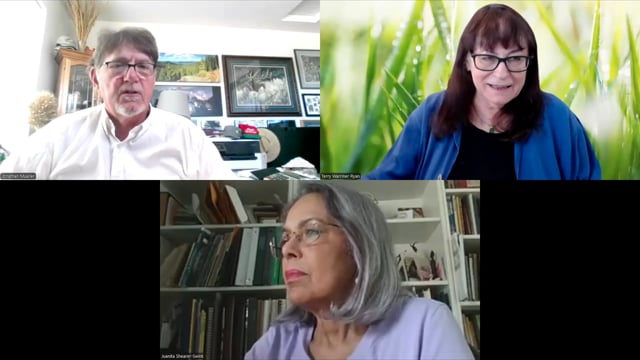
Enhancing Fellows Nominations
Insights for the Fellows Nomination Process with Jonathan Mueller, FASLA, Terry Ryan, FASLA, and Juanita Shearer-Swink, FASLA.
Learn about:
- Eligibility and process
- Juror's suggestions and scoring criteria
- Using the template and images

Demystifying the Fellows Nomination Process
With Juanita Shearer-Swink, FASLA, Marion Pressley, FASLA, Mark Focht, FASLA, Kris Floor, FASLA, Marsha Lea, FASLA, and Gretchen Rabinkin, Affil. ASLA.
Learn what you need to know if you are interested in being nominated and best practices on preparing nominations.
- Eligibility
- Choosing a category
- Preparing a nomination (narrative, testimonials, awards/recognition, deadlines and submitting)
- Juror's perspective
- Chapter best practices