

.webp?language=en-US)


Revamped Guide for Landscape Architects Offers New Ways to Achieve Zero Emissions by 2040
ASLA releases an updated version of its popular resource – Decarbonizing Specifications: A Guide for Landscape Architects, Specifiers, and Industry Partners – with ten new and revised sections.
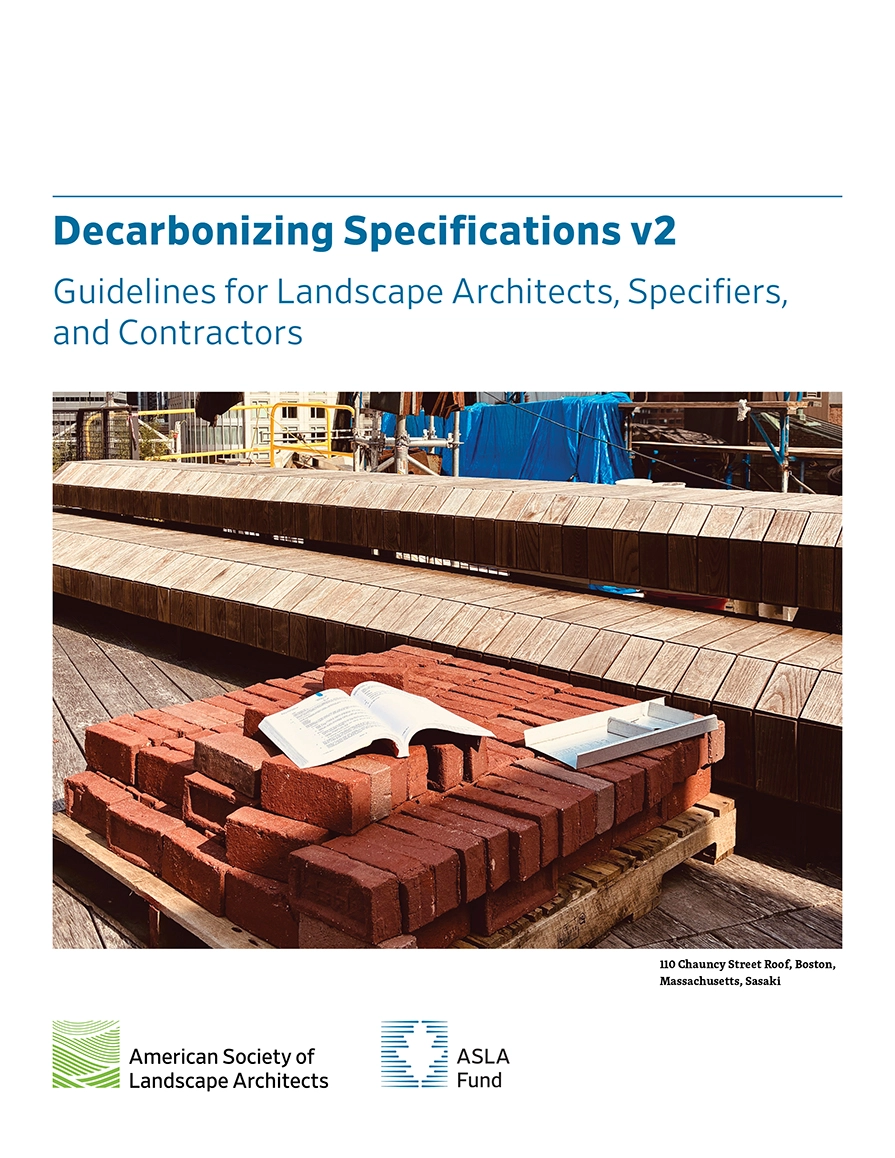
Decarbonizing Specifications, v2: A Guide for Landscape Architects, Specifiers, and Industry Partners / ASLA
By Jared Green
ASLA has released an updated version of Decarbonizing Specifications: A Guide for Landscape Architects, Specifiers, and Industry Partners. The guide helps landscape architects achieve the goals of the ASLA Climate & Biodiversity Action Plan, which includes making projects zero-emission by 2040.
The updated guidelines were developed by the ASLA Climate & Biodiversity Action Committee, a group of landscape architects charged with implementing key aspects of the plan, including how to decarbonize projects while enhancing biodiversity. Landscape architects play an important role in designing nature-based solutions to climate change that also help communities become more resilient.
“Decarbonizing Specifications is already one of the most-accessed climate resources our members have ever produced,” said ASLA CEO Torey Carter-Conneen, Hon. ASLA. “It now has even more useful information, with ten new and revised sections — ranging from playground and sports equipment to site furnishings — that enable landscape architects to make smarter, lower-emission construction decisions.”
“These new guidelines will help us use our purchasing power wisely and decarbonize more aspects of our projects,” said Aida Curtis, FASLA, PLA, Chair of the ASLA Climate & Biodiversity Action Committee. “This go-to resource provides clear guidance any landscape architect can put into practice with any project, large or small.”
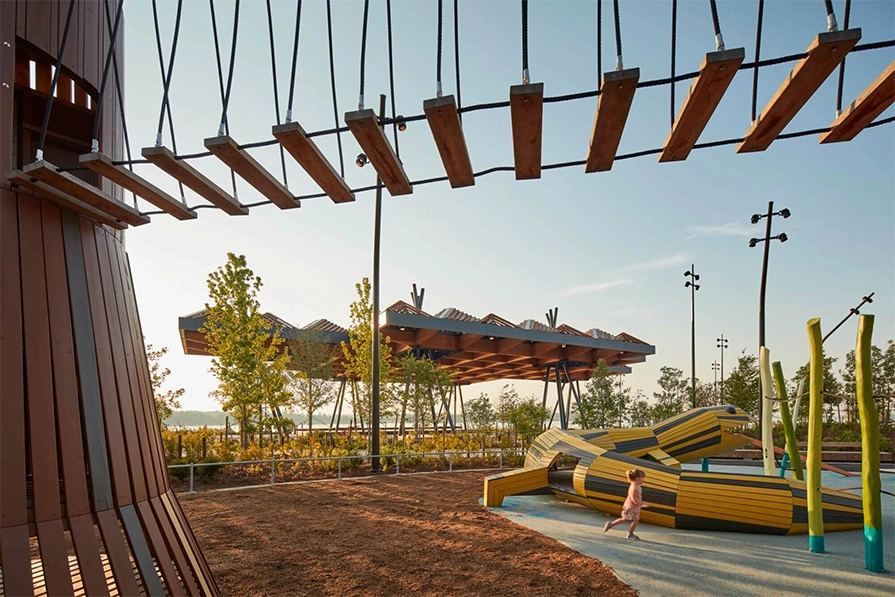
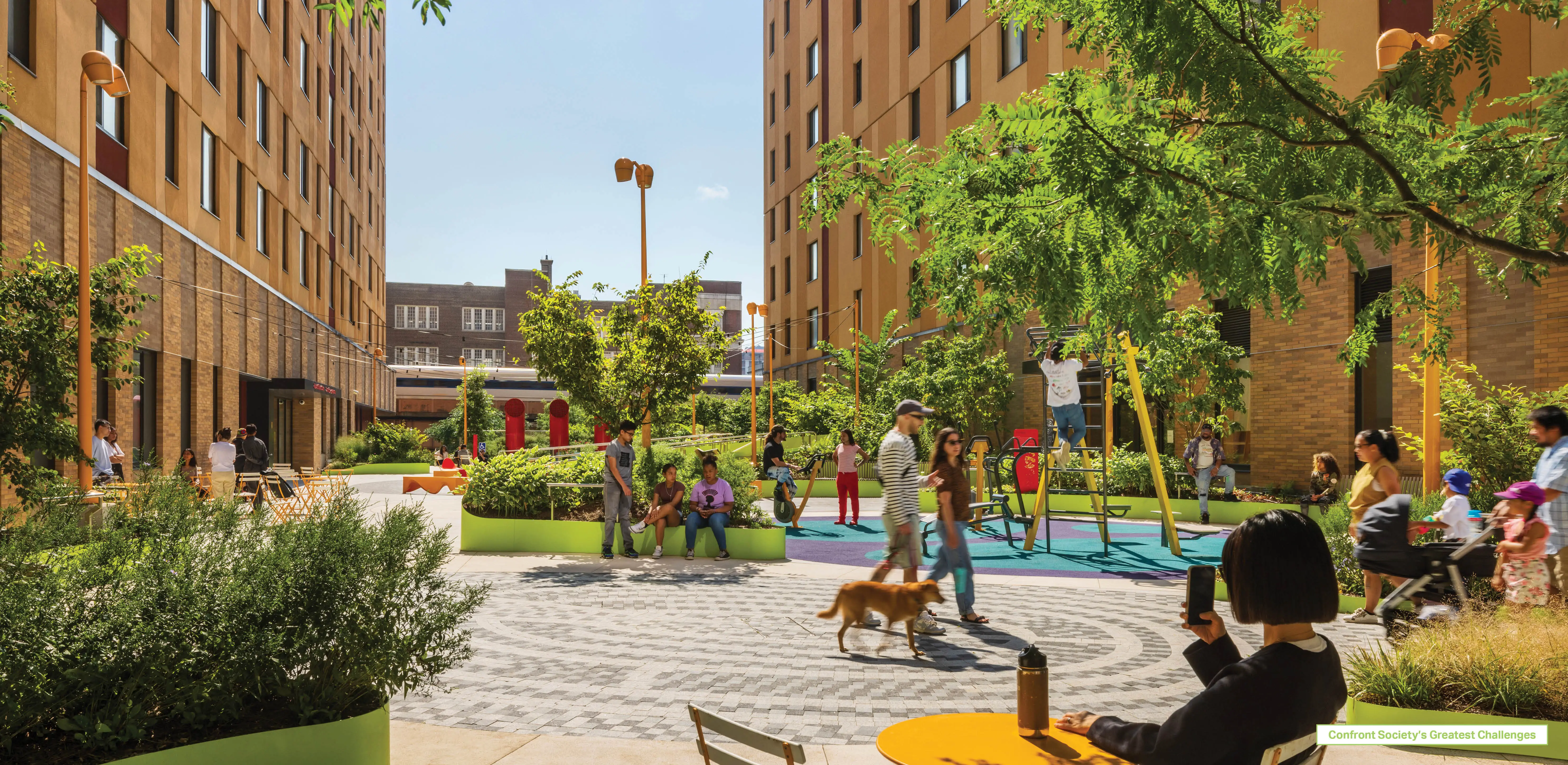
Careful selection of safety surface types can have significant embodied carbon savings. ASLA 2024 Professional General Design Honor Award. Tom Lee Park, Memphis, Tennessee / Tom Harris, courtesy of SCAPE
The guidelines were first released in September 2024. The revamped guidelines include new sections, covering:
- Playground and Sports Equipment
- Operation and Maintenance of Exterior Improvements
- Synthetic Resilient Surfacing
- Site Furnishings, including Fences and Gates
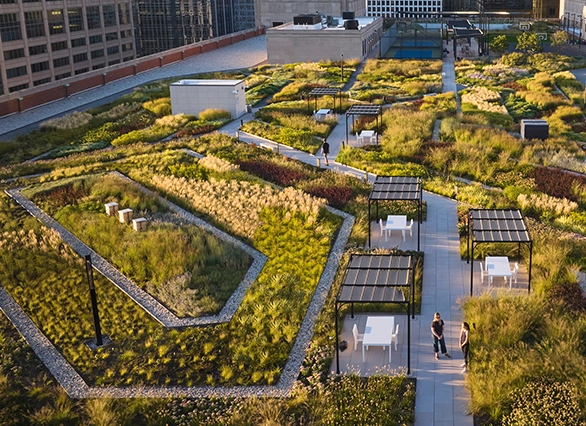
- Vegetated Roof Systems
And the guidelines include significantly revised sections on:
- Division 1: Key Sections
- Flexible (Bituminous) Paving
- Soils, including Earthworks
- Trees and Plants
- Turf, including Synthetic Grass Surfacing
The guidelines were developed by:
- Chris Hardy, ASLA, PLA, Sasaki
- Alejandra Hinojosa, Affil. ASLA, LPA Design Studios
- Elizabeth Moskalenko, ASLA, PLA, ASLA NY Chapter
- Bryce Carnehl, Corporate ASLA, Hunter Industries
These guidelines make it easier for landscape architects to reduce greenhouse gas emissions more effectively during project design and construction. Sections cover seven key design principles and 24 areas of specification.
They are for landscape architects and designers, specifiers, contractors, and manufacturers who want to cut emissions and increase carbon storage and sequestration faster.
The Committee has also released a new complementary email template landscape architects can use when communicating with suppliers about specifying low-carbon concrete options.
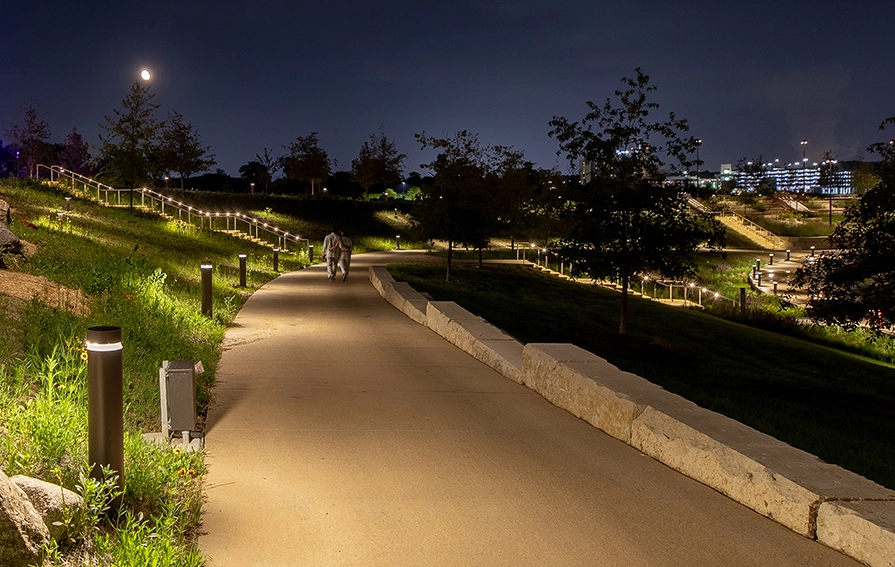
Lighting is one of the few landscape systems where the embodied carbon and operational emissions of the products must both be evaluated to understand the majority of the net impacts of the design. Heartland of America Park, Omaha, Nebraska. OJB Landscape Architecture / Josh Spitzig
The ASLA Climate & Biodiversity Action Plan calls for all landscape architecture projects to achieve these goals by 2040:
- Achieve zero greenhouse gas emissions and double carbon sequestration from business as usual.
- Protect, conserve, restore, enhance, and manage biodiversity.
- Provide significant economic benefits in the form of measurable ecosystem services, co-benefits, and livelihoods.
- Address climate and biodiversity injustices, amplify the power of communities, and increase the equitable distribution of climate and biodiversity investments.