

.webp?language=en-US)

Advertisement
2022 ASLA Student Awards
Explore:
General Design Category
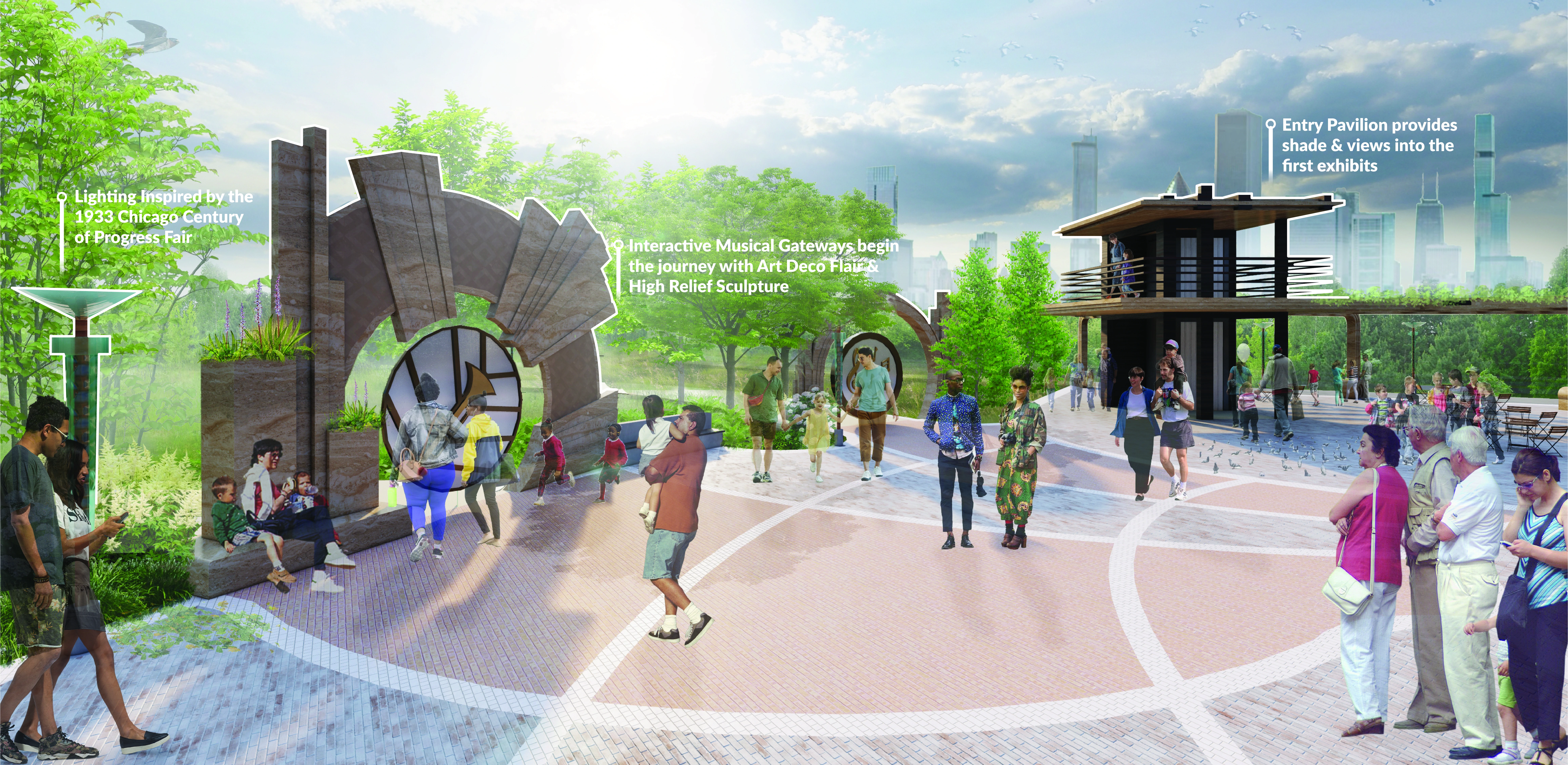
Nature’s Song - An Interactive Outdoor Music and Sound Museum
Nature's Song is the proposal of an outdoor music and sound museum at Northerly Island Park in Chicago, Illinois. Utilizing three pillars for exemplar exhibit design, tactile, visual, and entertainment, each of the interactive and immersive exhibits is designed to highlight music, sound, and the vibrations they make. The museum is divided into three overarching exhibit themes, each spotlighting one of the soundscape typologies. The first exhibit is Chicago Style – a discovery of the anthrophonic and cultural music phenomena of the early 20th century, Chicago style jazz. The second is The Natural Symphony, a showcase of the music our Earth provides us daily, as well as how the natural processes of the Earth can be harnessed into more traditional music using sound sculptures. Lastly is the largest exhibit, The Soundscape, a collection of four microhabitat environments each highlighting an Illinois native species and the unique tonal composition of their environments.
Gain a new appreciation for the world we live in by discovering the confluence of environment and culture: Nature and Song.
General Design
Honor Awards
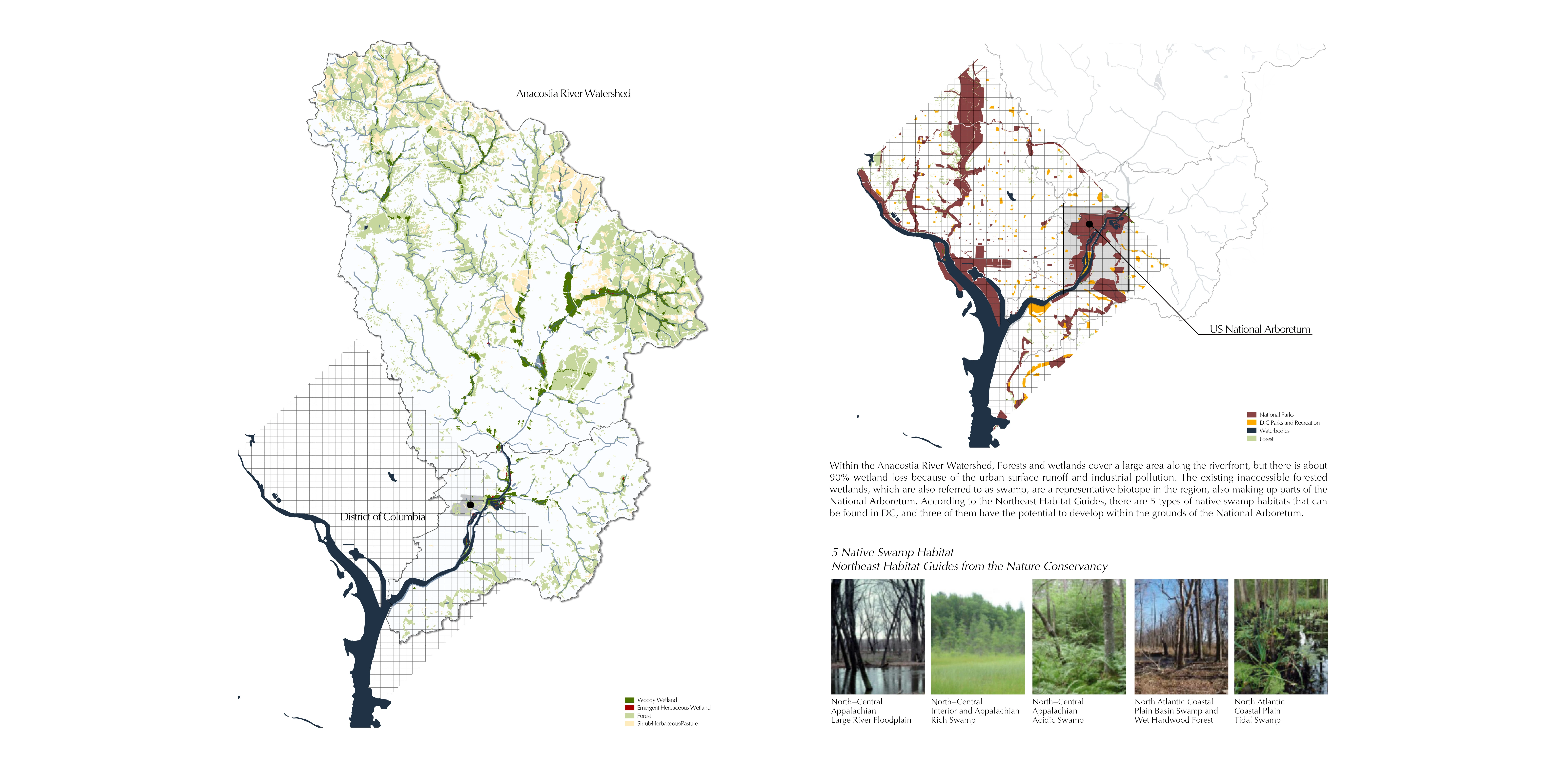
Arboretum Within Wetland
One crucial role that botanic gardens play is to collect species that naturally grow together and constitute the identity of a certain environment. It portrays a particular biotope through the display of particular plant species and encourages visitors to observe the various plant communities.
The National Arboretum is located on the west side of the Anacostia River, surrounded by natural wetlands. However, these areas are isolated and not easily accessible to locals and
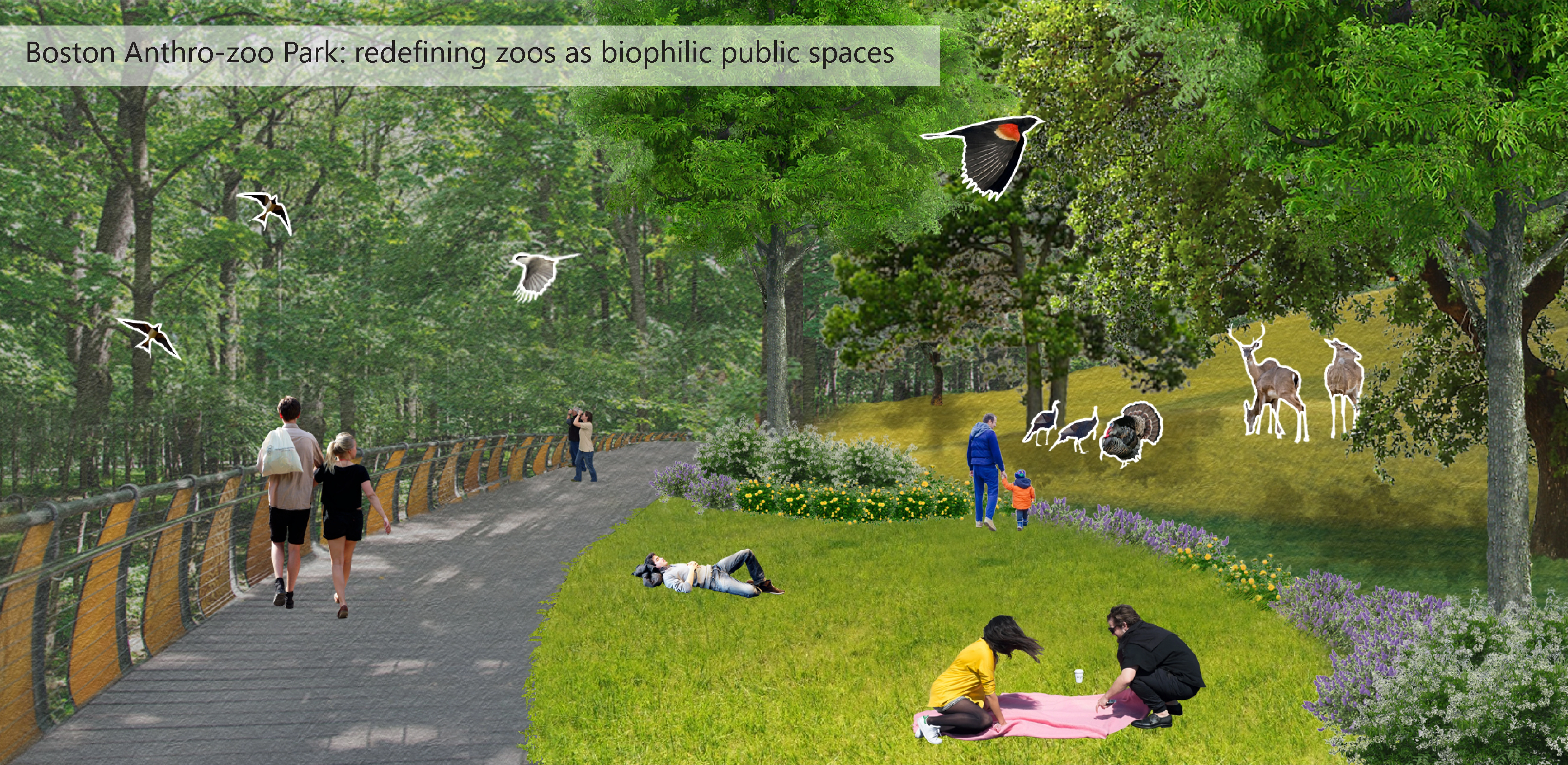
Boston Anthro-zoo Park: Redefining Zoos as Biophilic Public Spaces
Urbanization has resulted in vast alteration of Earth’s ecosystems and in the exclusion of nature from the human experience. As we expand our cities and build new ones, people are further immersed in the built environment and detached from the lives of wildlife that once inhabited the lands that we have developed. Boston Anthro-zoo Park (BAZP) is a new model of zoo that is meant to enhance the native wildlife diversity of Boston and reconnect urban people with nature through storytelling and
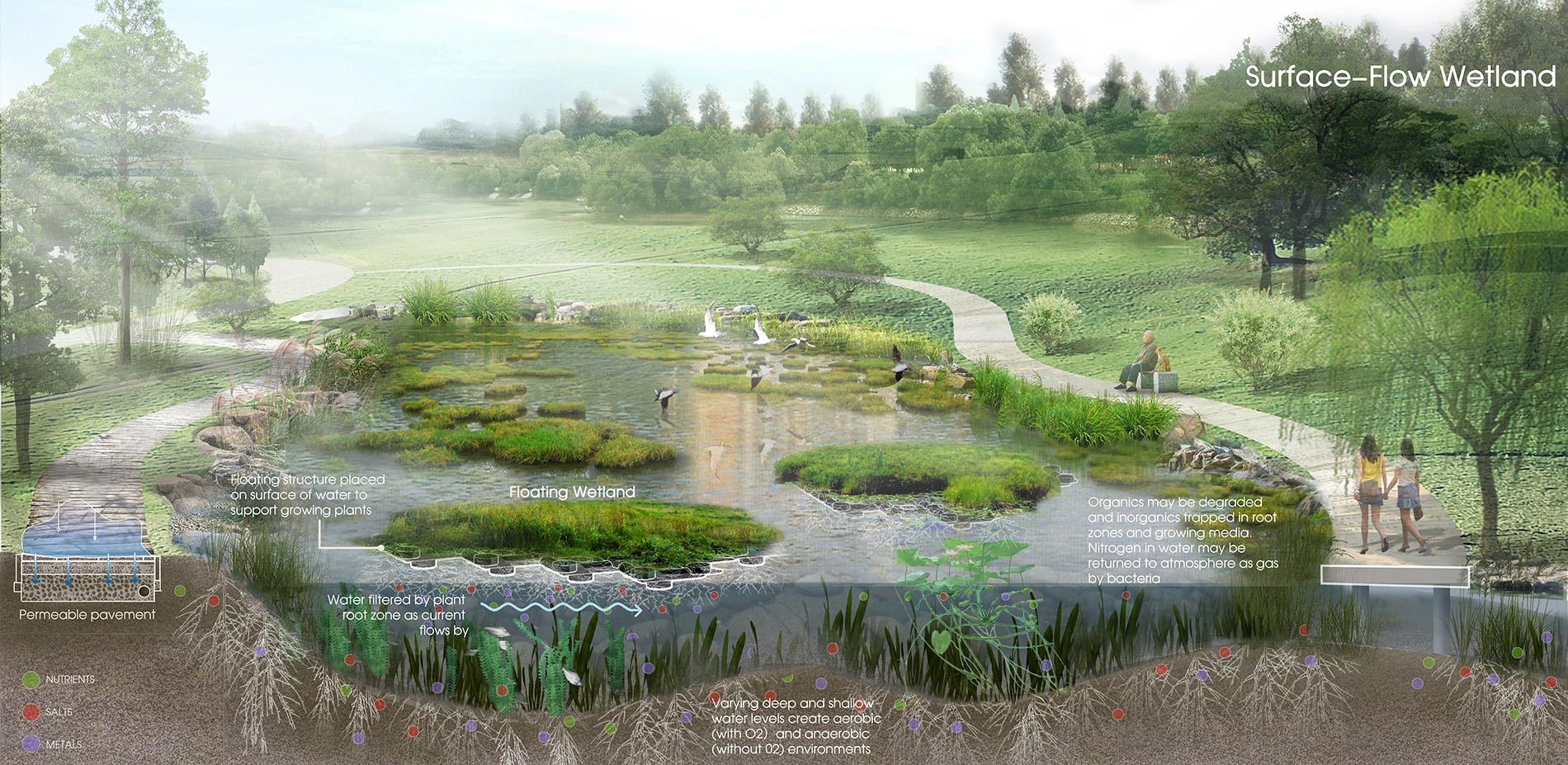
Cell Growth Dish – Brownfield Landscape Ecological Restoration Design
The port of Tianjin, once the fifth largest port in the world, carried a huge volume of trade traffic. In 2015, a sudden explosion of hazardous chemicals in a warehouse shattered all prosperity. A large amount of brownfield soil from the explosion site needed to be contaminated. The loss of chemical components in the environment caused varying degrees of contamination and caused intense unease among the surrounding population. The hard-hit Tianjin citizens and firefighters desperately longed
Advertisement
Residential Design Category
Honor Awards

A New Central District and Balanced Community
In 2017, Hurricane Maria brought enormous damage and losses to most urban areas of Puerto Rico. Houses in the Candelaria, neighborhoods of Toa Baja, and part of the San Juan Metropolitan Area, were heavily affected by landslides. The lowest income and self-constructed dwellings located on steep terrain became extremely vulnerable to future natural disasters since then, most of which lack maintenance after emergent repairs. Candelaria is currently facing inefficient industrial single land use,
Urban Design Category
Honor Awards
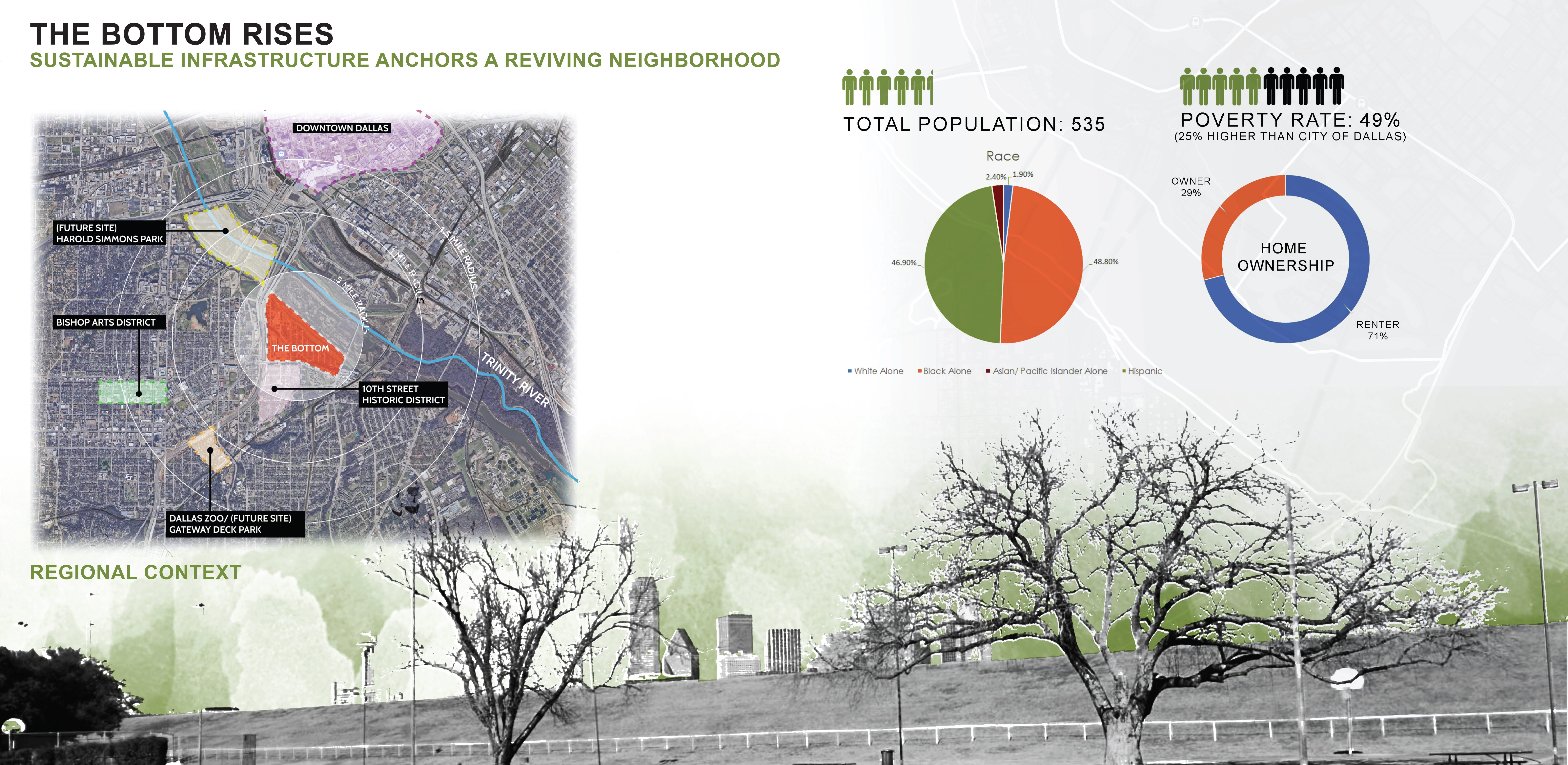
The Bottom Rises: Sustainable Infrastructure Anchors a Reviving Neighborhood
The pillars of environmental, social, and economic sustainability provide an infallible framework for a master plan designed to celebrate the cultural and historical significance of The Bottom, a historic Freedmen’s Town adjacent to the Trinity River just over a mile south of Downtown Dallas. The community’s unique bowl-shaped topography, resulting from natural elevation changes combined with a man-made levy and a barrier created by the I-35 highway corridor, provides for site-specific stormw

A Vision for Reparations: Reimagining the Eco Industrial Park for South LA
How can landscape architecture play a role in repairing the impacts of structural racism in post-industrial landscapes? This project imagines how the Infrastructure Investment and Jobs Act could fund an eco-industrial park in South LA , thus providing economic opportunity while addressing the need for ecological and social well-being where the consequences of industry on race and poverty are most profound.
The project site is a former brownfield in South LA in two neig
Analysis and Planning Category
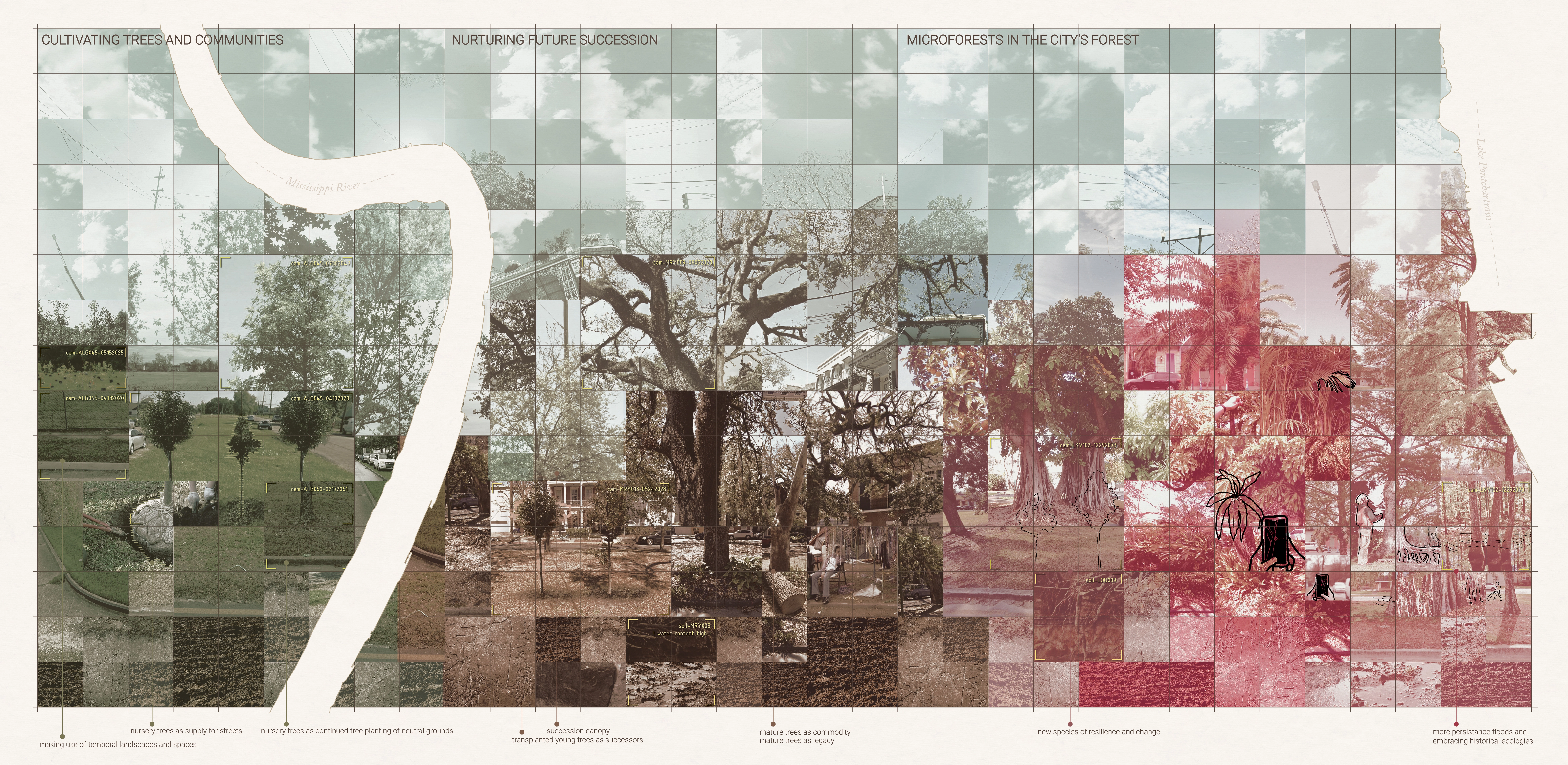
Street Trees of New Orleans - Rethinking Tree Practices for a Fluctuating City
Despite the importance of street trees as ecological infrastructure, their effectiveness is hampered by a patchwork system for implementation and care. This problem is particularly acute in New Orleans, where an ad hoc network of nursery practices, local planting practices, different governmental departments, and private developers combines to produce inequitable, reactive, and ineffective provision of tree infrastructure. The care of street trees needs to expand from individual trees, or even the scale of streets and neighborhoods, to robust city-wide systems. The well-established system of medians in New Orleans offers great opportunities for redesigning a new tree care system that is city-wide, but still has the capacity to be highly nuanced and engaging for local needs.
In a city that is already facing intense impacts from climate change due to sea level rise, subsidence, and hurricanes, a systematic and geodata-based approach to street trees is proposed to allow urban tree planning to become responsive to nuanced and complex situations of the city, as well as anticipatory towards future projections of the city and environment.
Analysis and Planning
Honor Awards
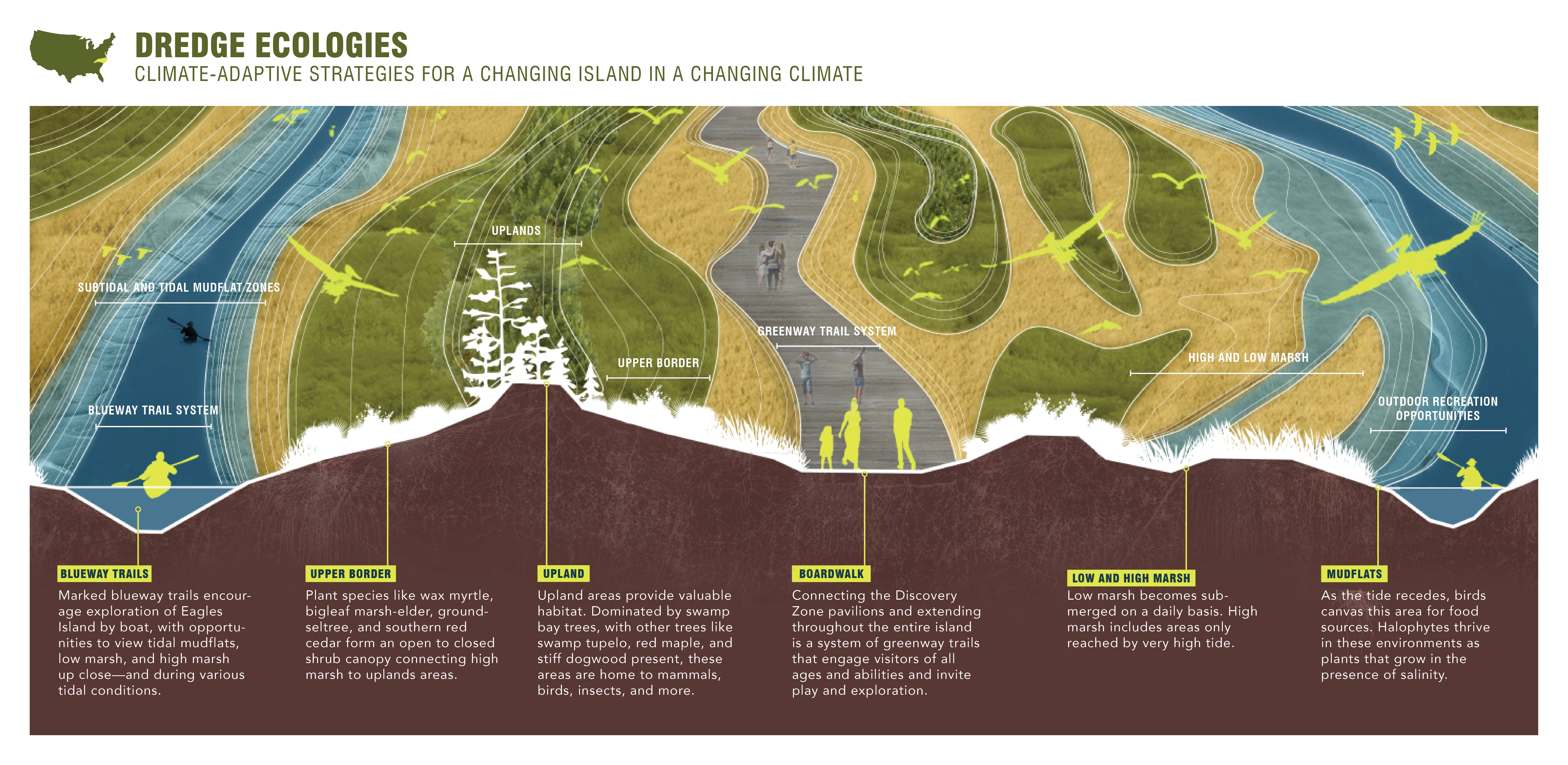
Dredge Ecologies: Climate-Adaptive Strategies for a Changing Island in a Changing Climate
For the past decade, a community coalition has fought to protect Eagles Island, the largest island in a deltaic archipelago at the confluence of the Cape Fear and Northeast Cape Fear Rivers, as a recreational amenity. Located 20 miles from the
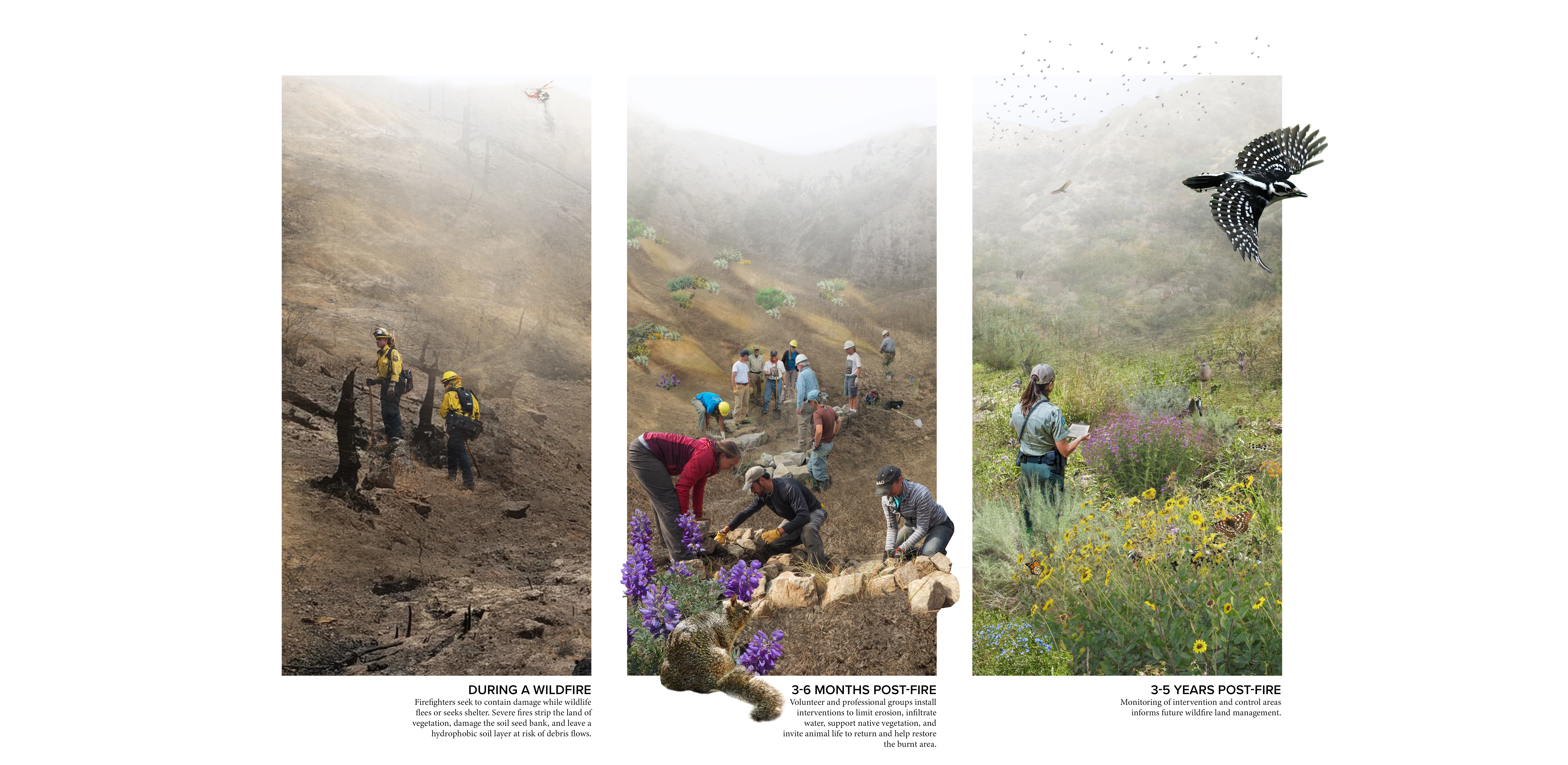
Learning from Animal Adaptations to Wildfire
As wildfires in the San Gabriel Mountains become more frequent and severe, we need to expand our suite of management tools beyond firefighting and fuel clearance by seeking new inspiration. Around the world, wildlife have complex relationships and strategies for coexisting with wildfire. In this research project, animal adaptations to wildfire inform a land management framework designed to catalyze regeneration of habitat niches in post-fire landscapes to support ecological resilien
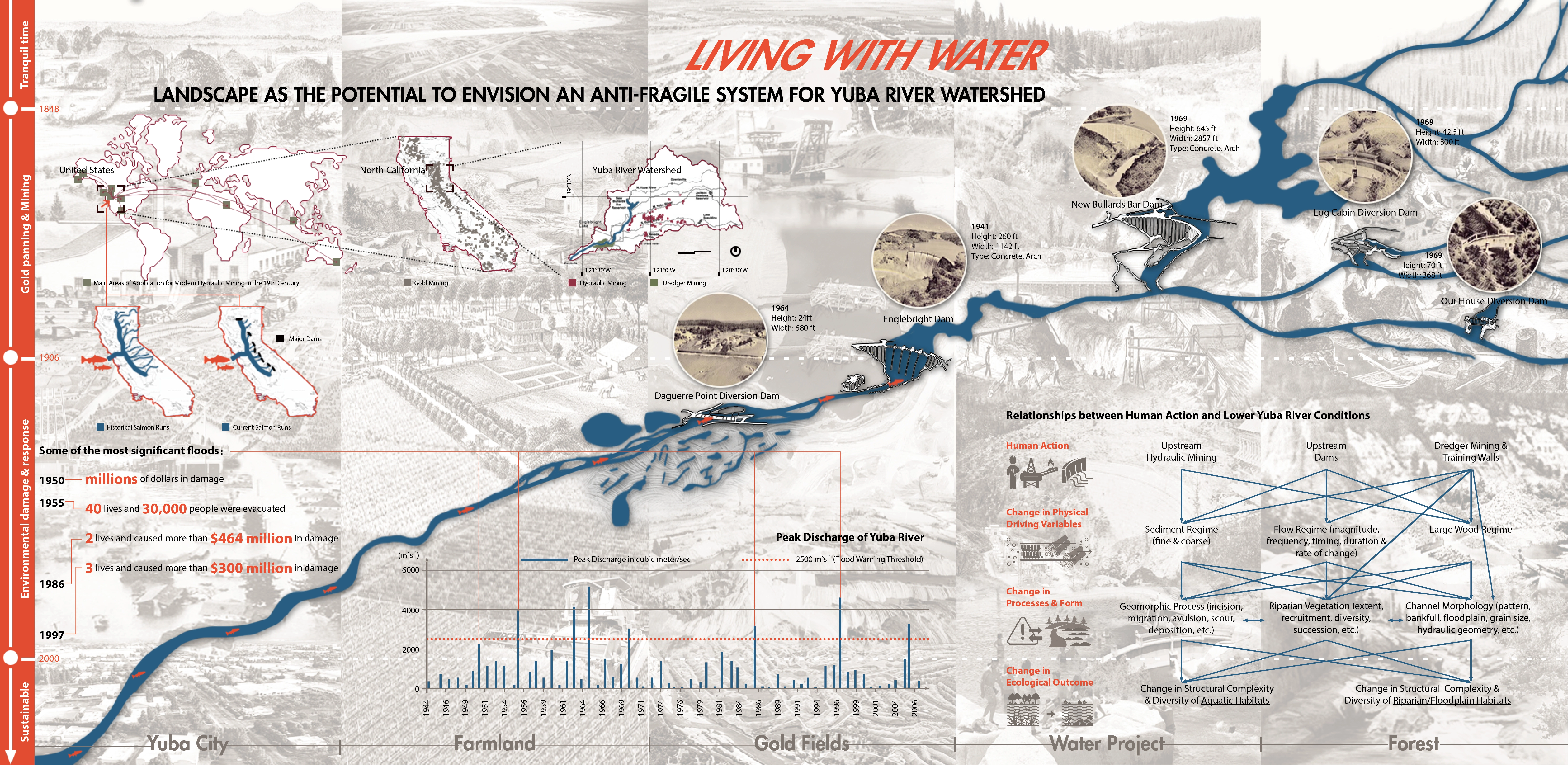
Living with Water: Landscape as the Potential to Envision an Anti-Fragile System for Yuba River Wate
Our main design site is the lower Yuba River between Yuba City and the Englebright Dam.The basin has brought a series problems of ecological, economic and social chain problems of flooding, sedimentation, pollution and habitat destruction due to hydraulic mining, which are difficult to solve. The construction of existing dams can effectively reduce the risk of flooding, but the size of impact about dams on fish habitat destruction or flood without dams on downstream socioeconomics is difficul
Research Category
Honor Awards
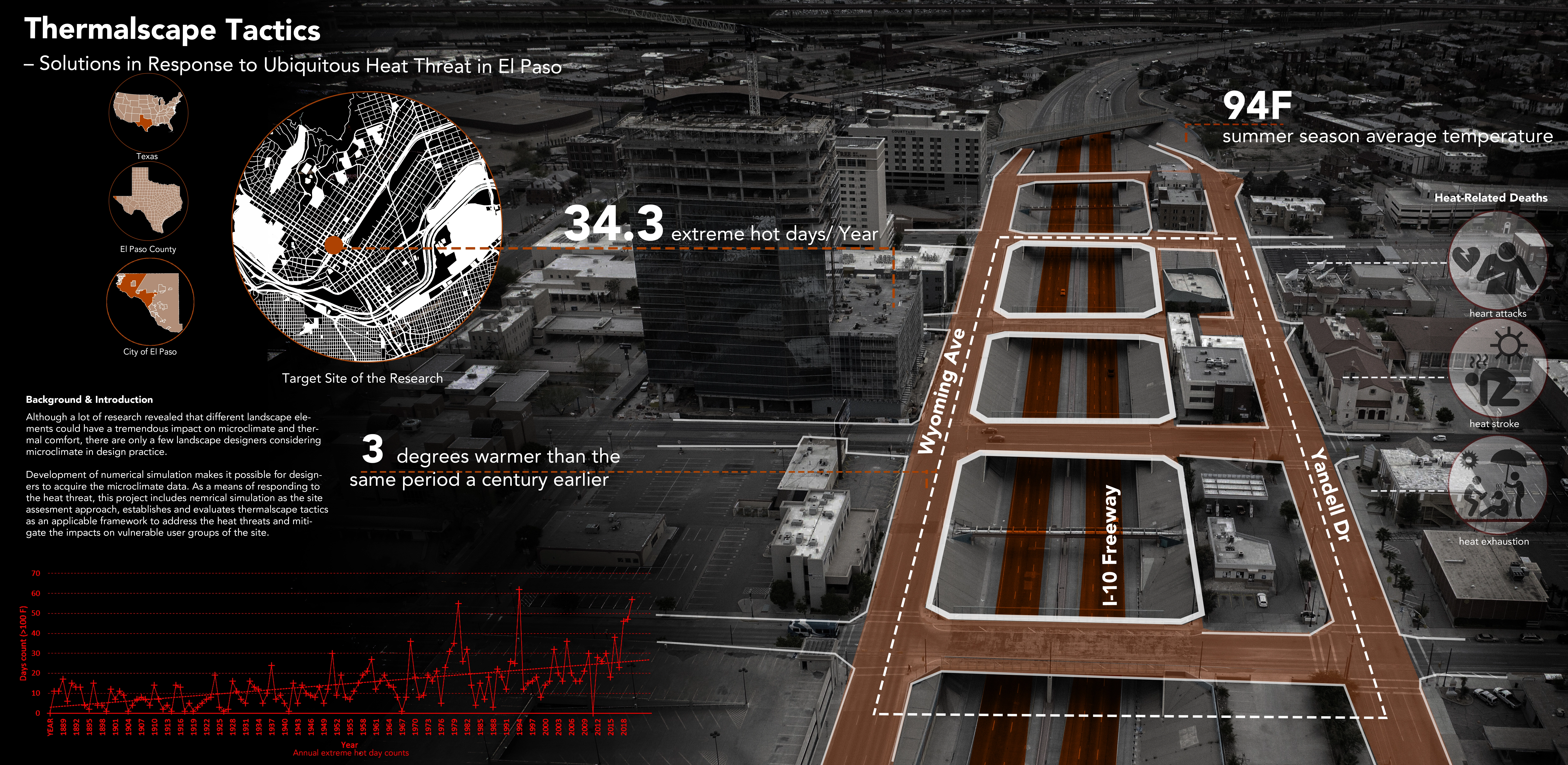
Thermalscape Tactics – Solutions in Response to Ubiquitous Heat Threat in El Paso
Global climate change affects different geographies and populations disproportionately. El Paso, a Hispanic majority city located in the hot desert climate zone, experiences increasing frequencies of extreme heat. Annual temperatures is 3 degrees warmer than the same period a century earlier, and the hottest monthly average temperature could reach 98 F, indicating the severe heat threat.
Despite the recognition of climate change adaptation in the design di
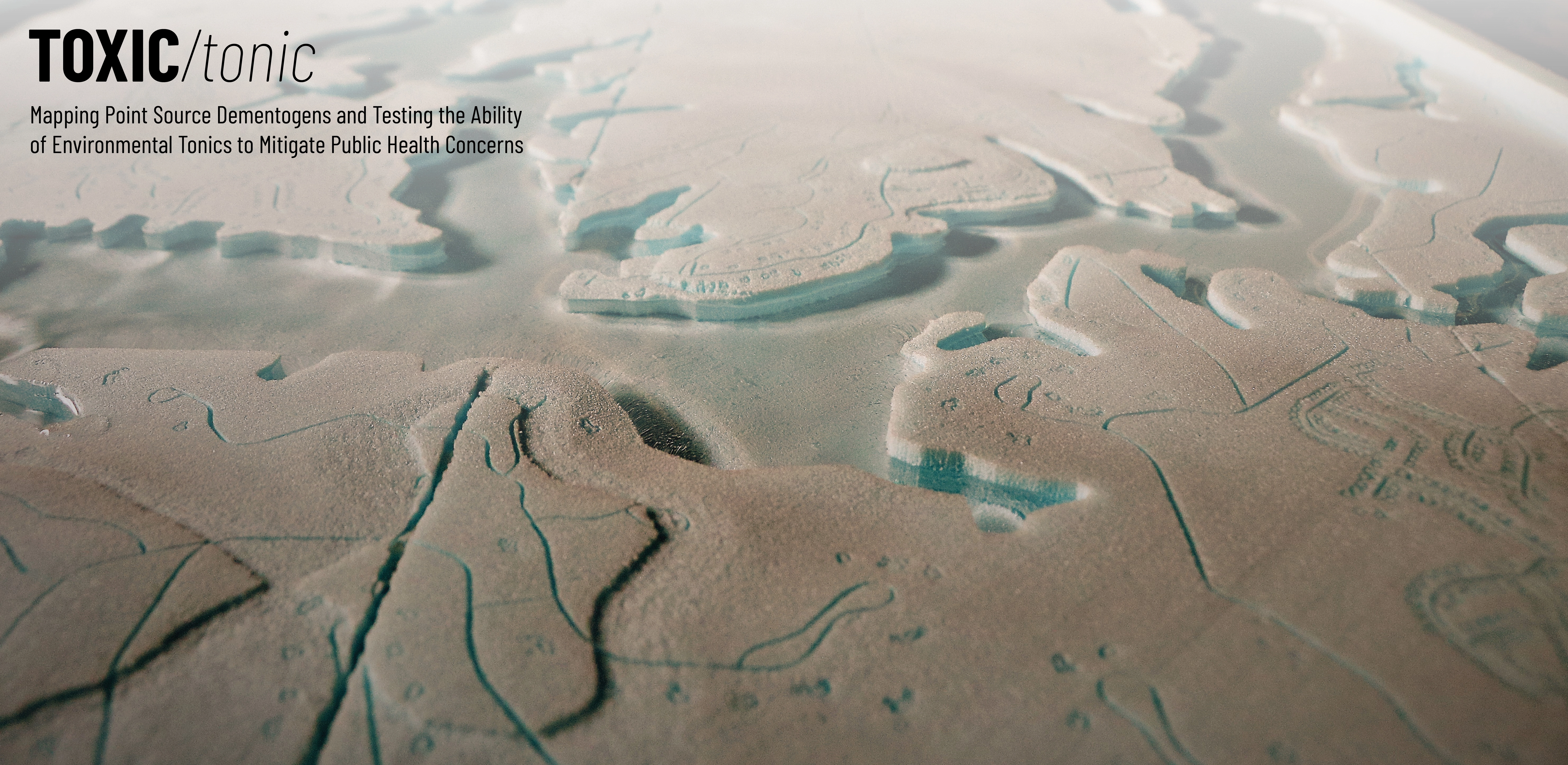
TOXIC/Tonic: Mapping Point Source Dementogens and Testing the Ability of Environmental Tonics to Mit
The number of Americans with Alzheimer’s is expected to increase to 14 million by 2060. Furthermore, by 2034 the number of adults will exceed children in the United States for the first time. Alzheimer’s and related Dementias bear a disproportionate burden on women and people of color. There is an imperative and urgent need to search for the point source of “Dementogens,” or categories of toxins that can lead to Dementia. However, little research exists on mitigating environmental pollutants
Communications Category
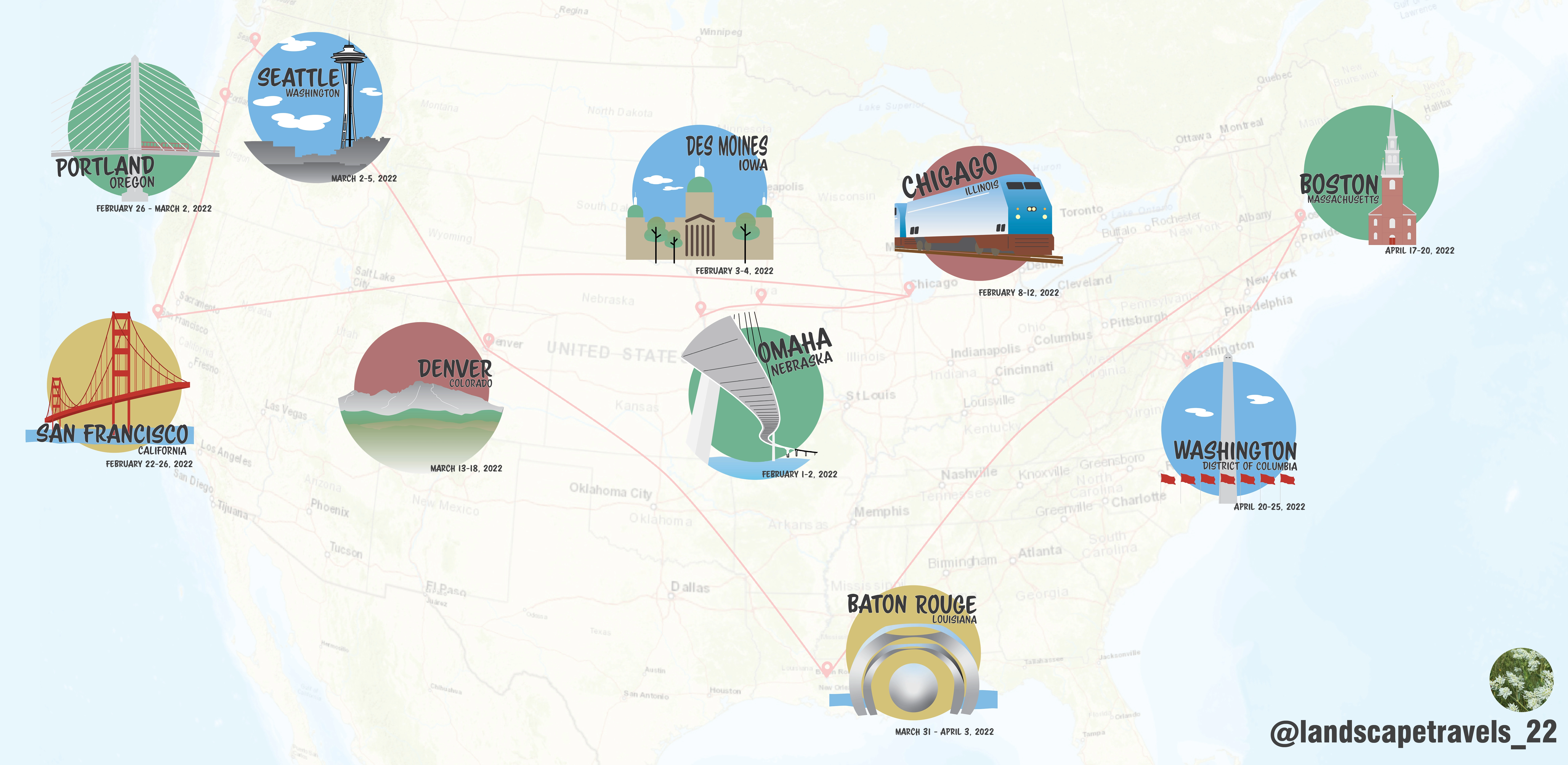
Landscape Travels
This project began as an opportunity to travel the country to learn more about the landscape architecture profession and became a journey of bringing awareness to the importance of landscape architecture. Through vertical short-form videos specifically curated for social media, Landscape Travels brings viewers along on my journey across the country, introducing them to 22 people engaged in the profession highlighting projects in ten different cities. As of May 27th, 2022, after four months of posting, @landscapetravels_22 has a following of 580 users, with a reach of over 120,000 through Instagram and TikTok.
@landscapetravels_22 continues to reach new people every day, through tri-weekly posts, highlighting unique aspects of landscape architecture. Each video is under 60 seconds giving viewers a quick glimpse into projects in cities they live in or visit. Every video highlights a different aspect of landscape architecture, while following a similar story pattern, broadening the public’s understanding of the breadth of landscape architecture.
Communications
Honor Awards
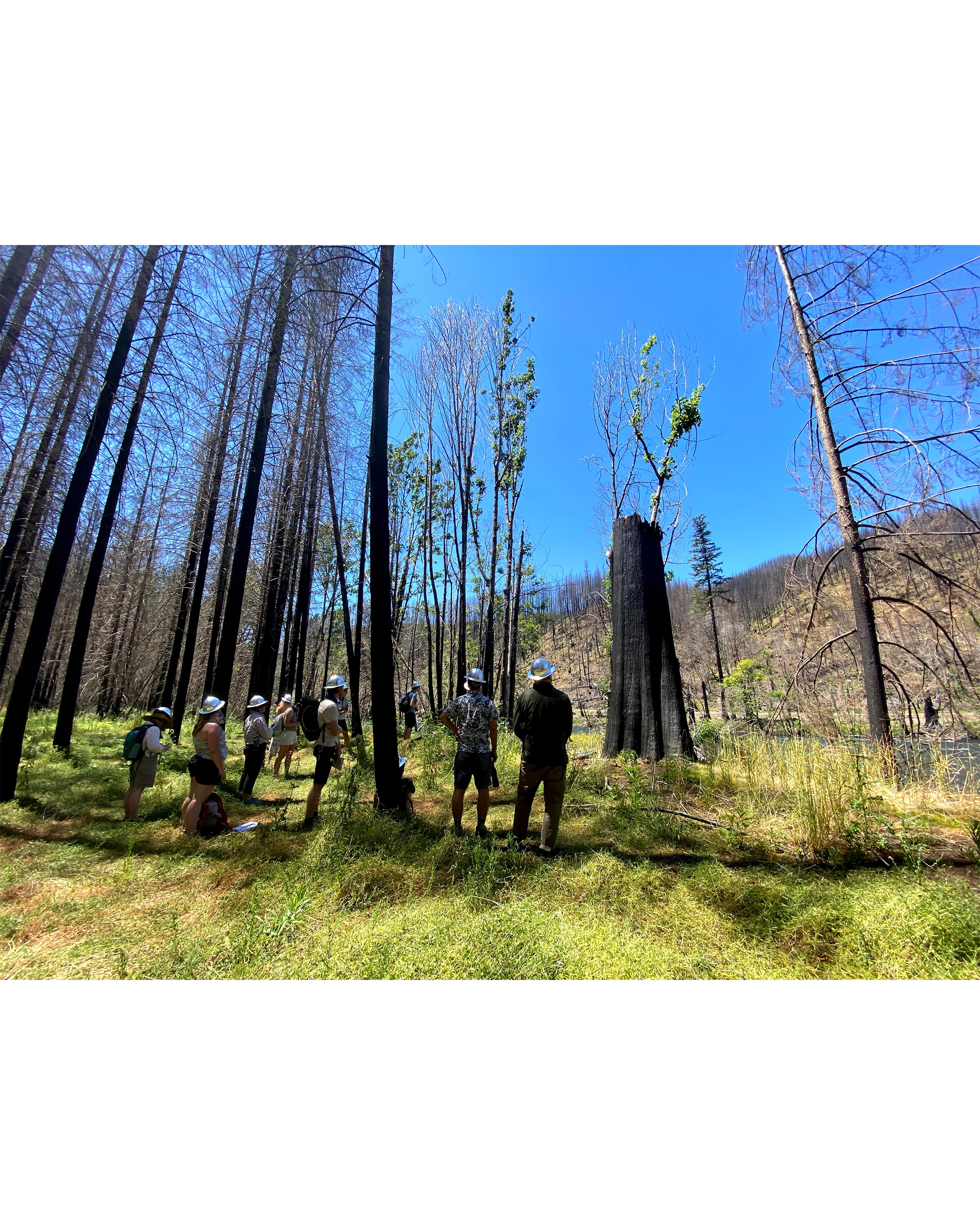
Overlook Field School: Wildfire Recovery
In the western United States, wildfires are becoming bigger, hotter, and more frequent due to the effects of climate change. During the summer of 2021, as smoke from western fires stretched across the country, the first and only Oregon-based session of the Overlook Field School explored the theme of “Recovery” as it relates to wildfire burns. Over the course of five weeks, we visited post-fire sites, most of which occurred within the last 30 years. The projects shared here are the outcome of these forest explorations and creative interactions led by artist-in-residence, David Buckley Borden. The Field School culminated in a public exhibition centered around communicating the dynamism of post-fire landscapes and what they can teach us about resiliency.
Student Collaboration Category
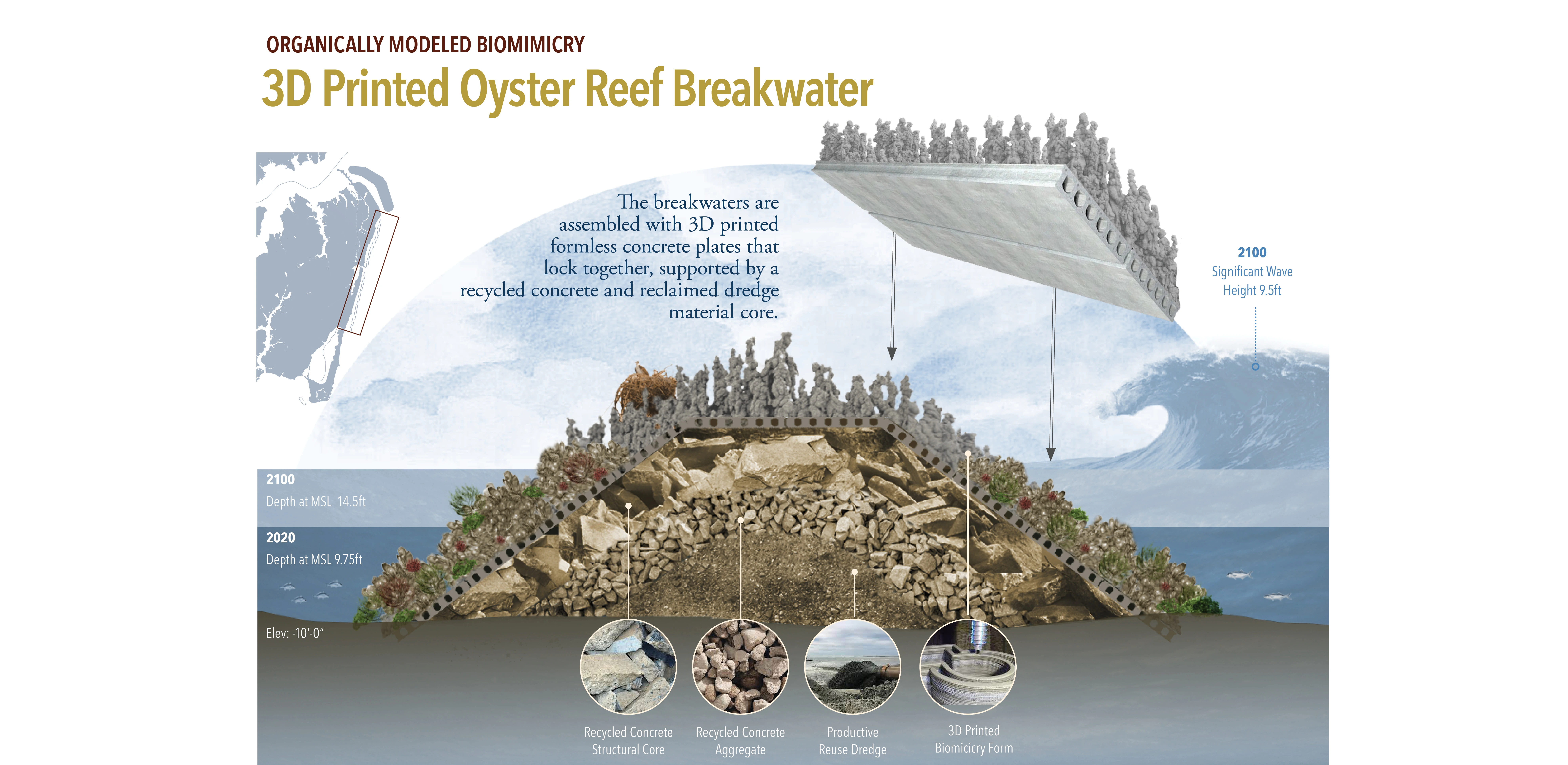
Carbon in the Tidewater
The City of Hampton, Virginia is on the front line of climate change with low elevation, high rate of land subsidence, and intense storm surge risk from direct exposure to the Atlantic Ocean. This project uses the Global Carbon Market to catalyze nature-based coastal infrastructure that is self-regenerating and captures carbon from the atmosphere while offering structural protection for both at-risk coastal wetlands, human life, and property.
Student Collaboration
Honor Awards
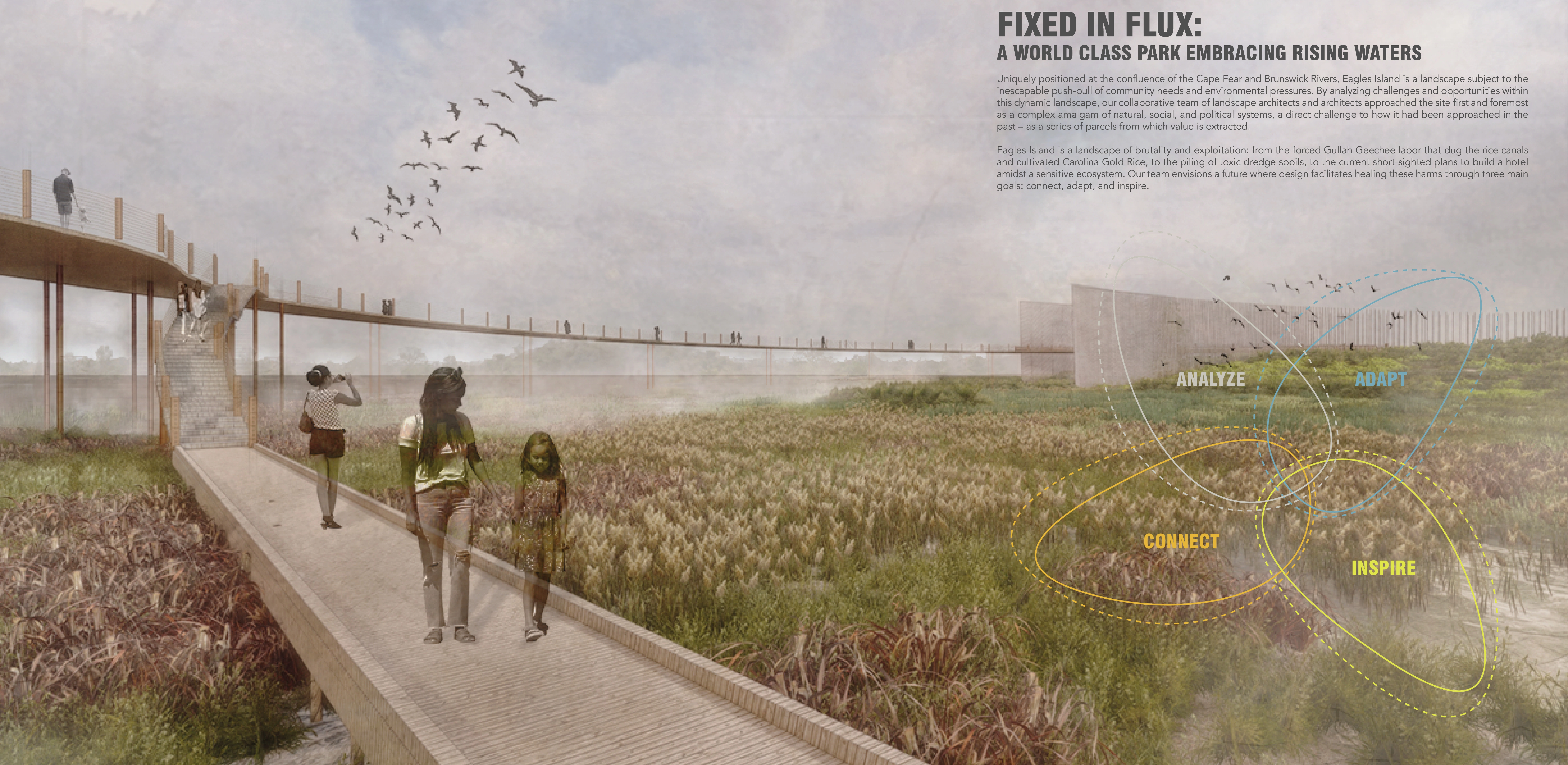
Fixed In Flux: A World Class Park Embracing Rising Waters
Eagles Island, an ecologically vital freshwater marsh, has been continually altered through processes of extraction and deposit. This landscape, directly adjacent to Wilmington, North Carolina and between two of the state’s fastest growing counties, presents a generational opportunity for community stakeholders. Developed through informed and multiscalar analysis, Fixed in Flux proposes a ecologically distinct and regionally significant park that anticipates adaptation to dynamic na
Student Community Service Category
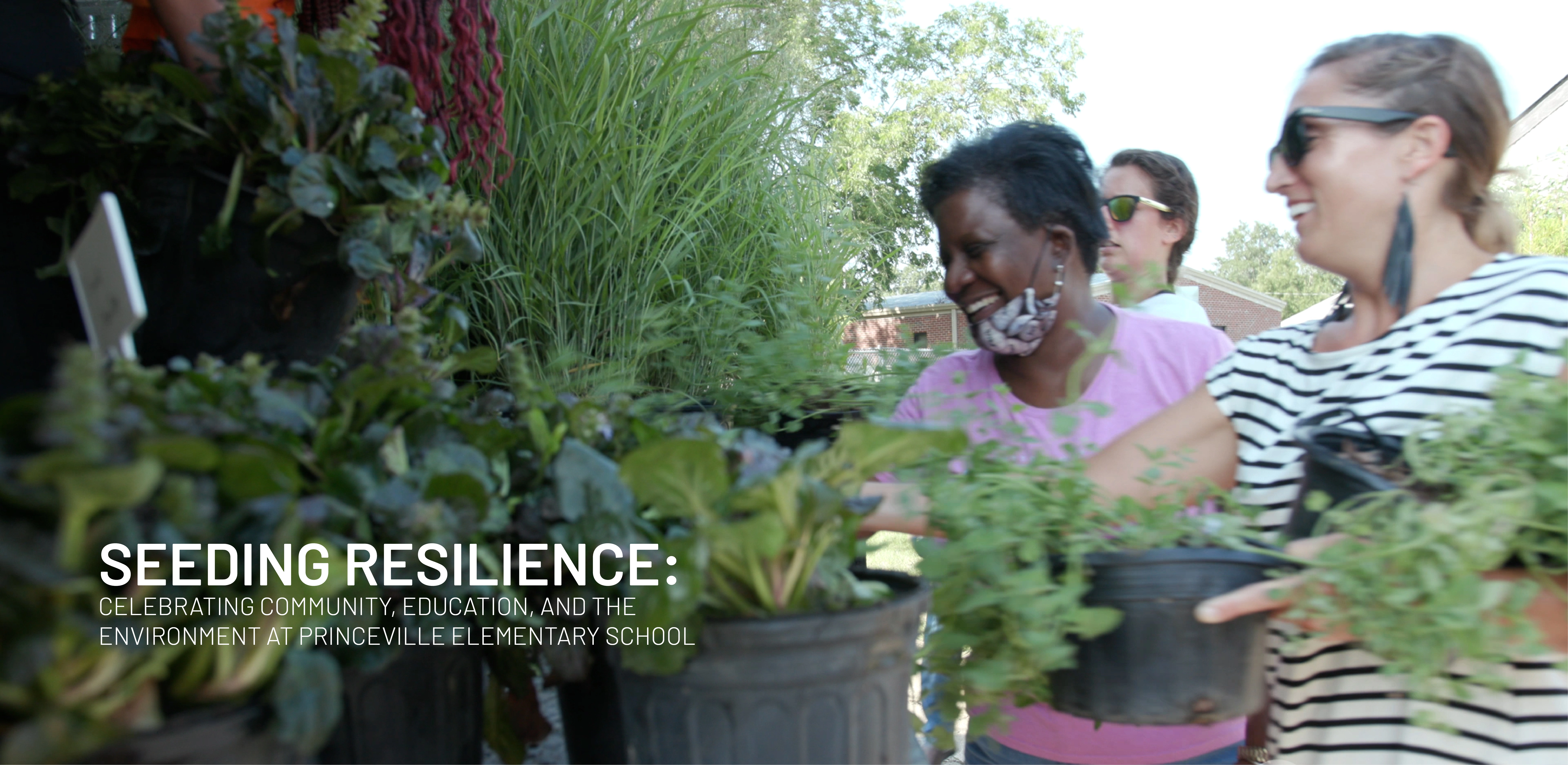
Seeding Resilience: Celebrating Community, Education, and the Environment at Princeville Elementary
Founded in 1865 as Freedom Hill and later chartered in 1885 as the Town of Princeville (NC), “The Oldest Town Chartered by Blacks in America'' has demonstrated a legacy of resilience by recovering and rebuilding after multiple devastating floods. One example of resilience and a symbol of hope is Princeville Elementary School. After significant flooding from Hurricane Matthew (2016) damaged the school, students living in Princeville were forced to relocate to schools in nearby towns. After renovations and floodproofing, Princeville Elementary School reopened in January 2020.
Through an ongoing partnership with the town, landscape architecture students designed and implemented numerous on-site educational features, including rain gardens, multifunctional outdoor furnishings, artwork scrims featuring school artwork, educational and interpretive signage, and an integrated outdoor learning curriculum guide. These components sustainably manage stormwater, support the teachers’ and students’ curricular needs, and beautify this long-serving communal hub. Project outcomes are shaping a sustainable vision for the school, and the town more broadly, by investing in and connecting local youth to the community’s rich environmental and cultural context.
Student Community Service
Honor Awards
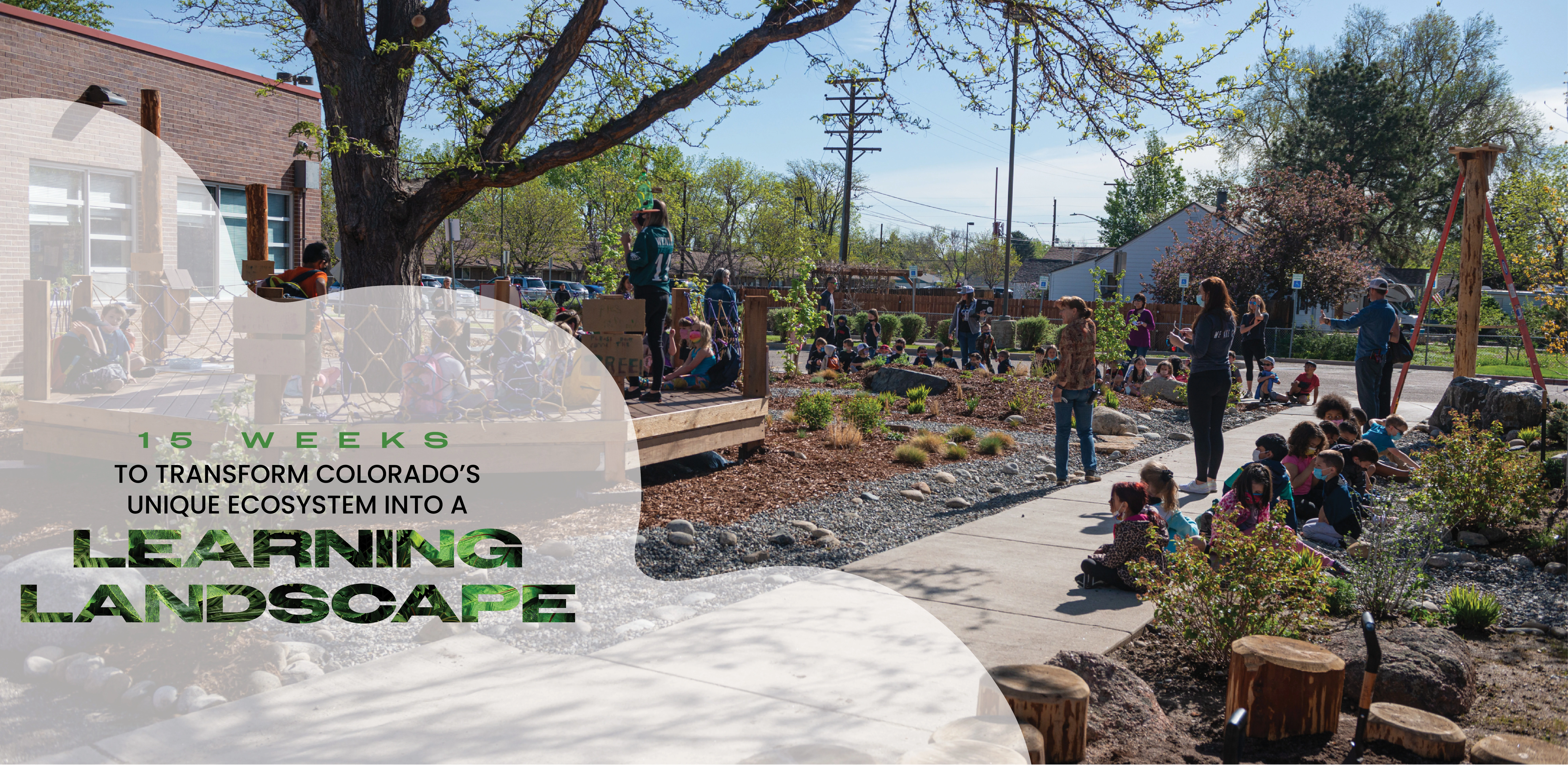
15 Weeks to Transform Colorado's Unique Ecosystem into a Learning Landscape
Peak Expeditionary is a public elementary school serving a diverse community of learners - over 50% of whom qualify for free or reduced lunch. The school employs an Expeditionary Learning (EL) model that offers hands-on education connected to the curriculum. Learning happens outside their classrooms, from their local community to the far reaches of the state. Despite an expeditionary curriculum, the existing schoolyard was devoid of educational opportunities. This project addressed