.webp?language=en-US)
Migrating Beyond Boundaries
Caitlin Squier-Roper, Student ASLA; Chunlan Zeng, Student ASLA

-
Operating at multiple scales, “Migrating Beyond Boundaries” seeks to use the existing ecological rhythm of bird migration through the Great Rift Valley as a catalyst for the construction of a new shared ground within the deeply divided geopolitical landscape of Israel’s Kidron Valley. The creation of ecological infrastructure for migrating birds, protects and improves the lives of all. The intersection of the natural and cultural are amplified to open previously inaccessible parts of the valley, creating place where Israelis and Palestinians can connect with each other through an appreciation of their shared landscape and ecology.
-
Site
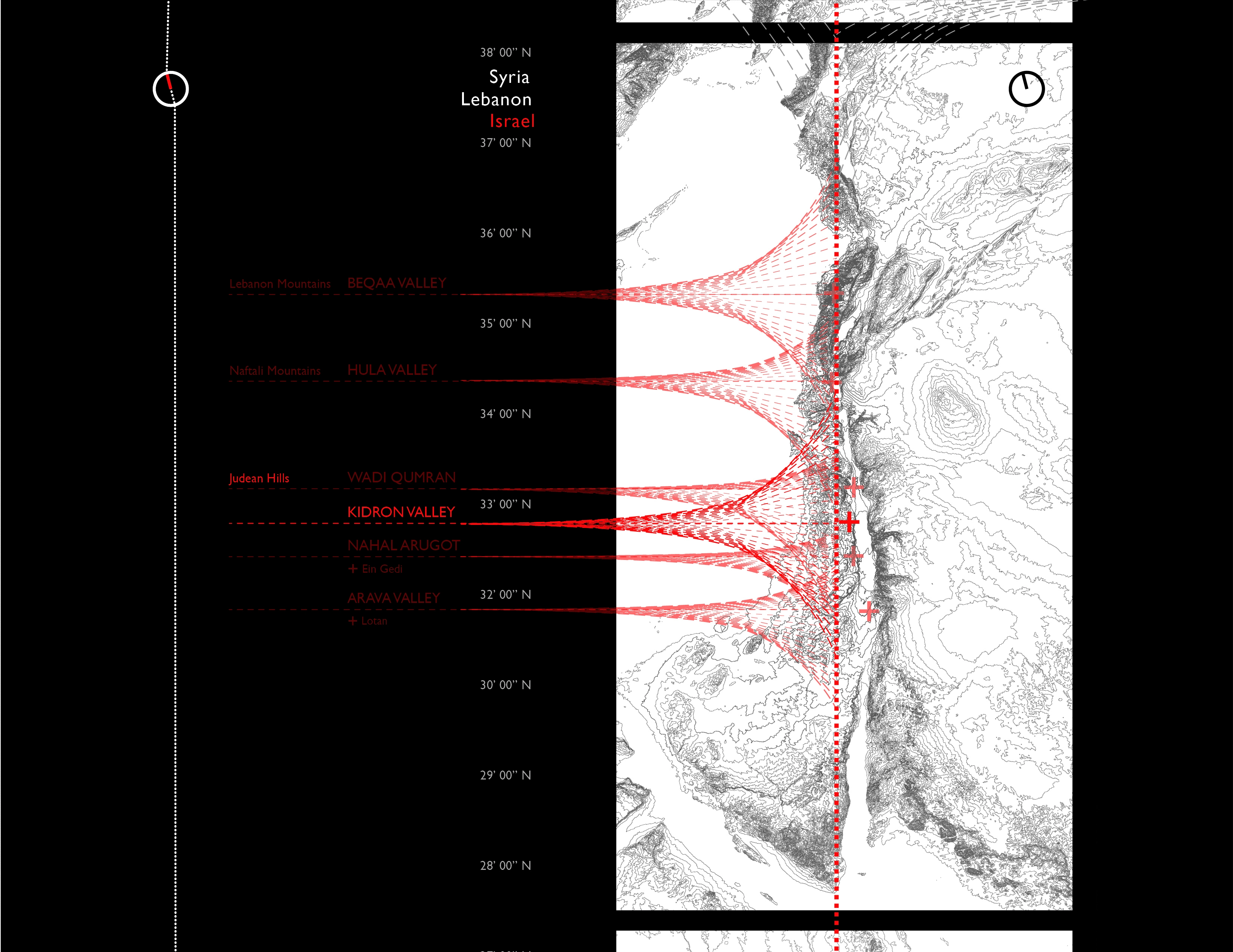
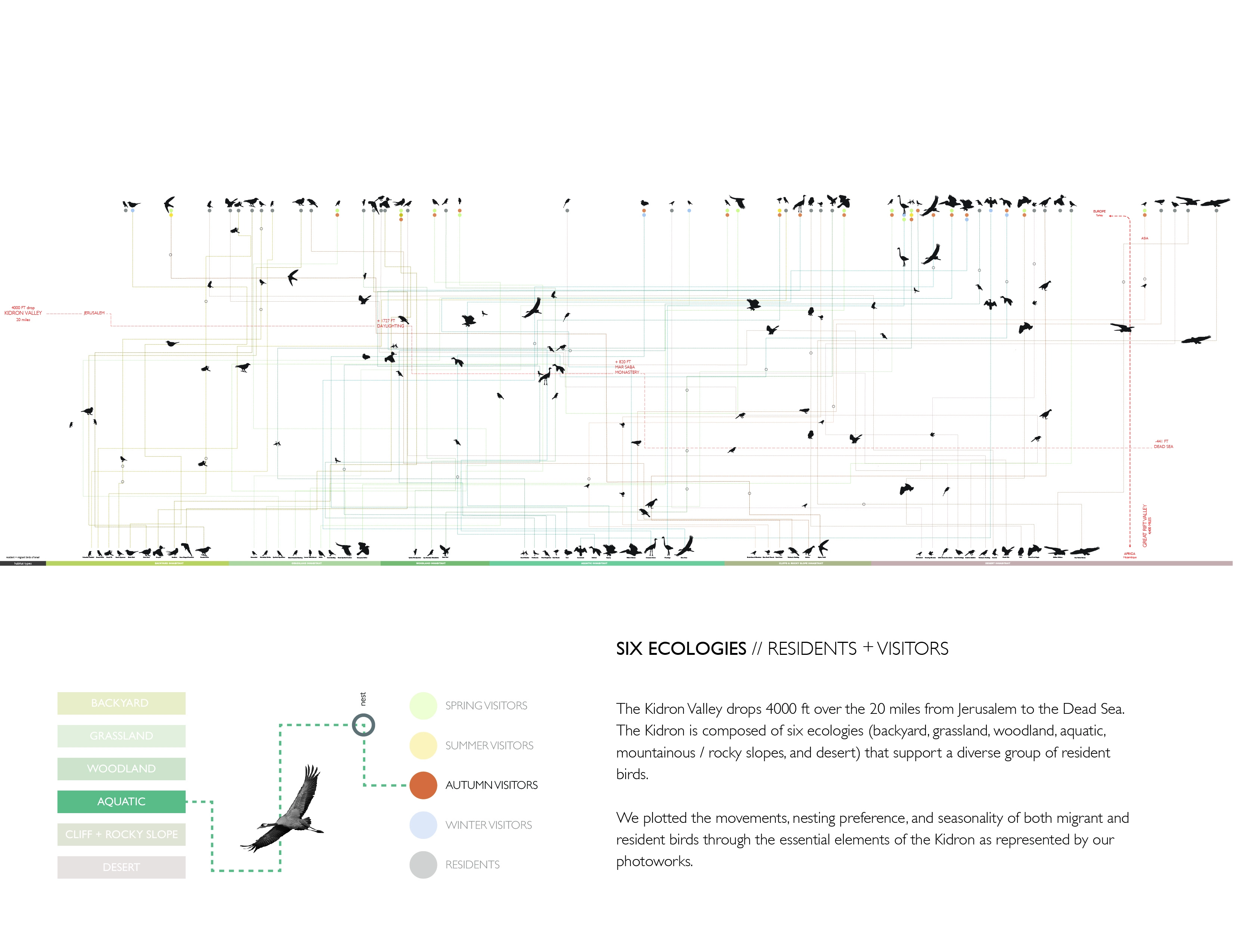
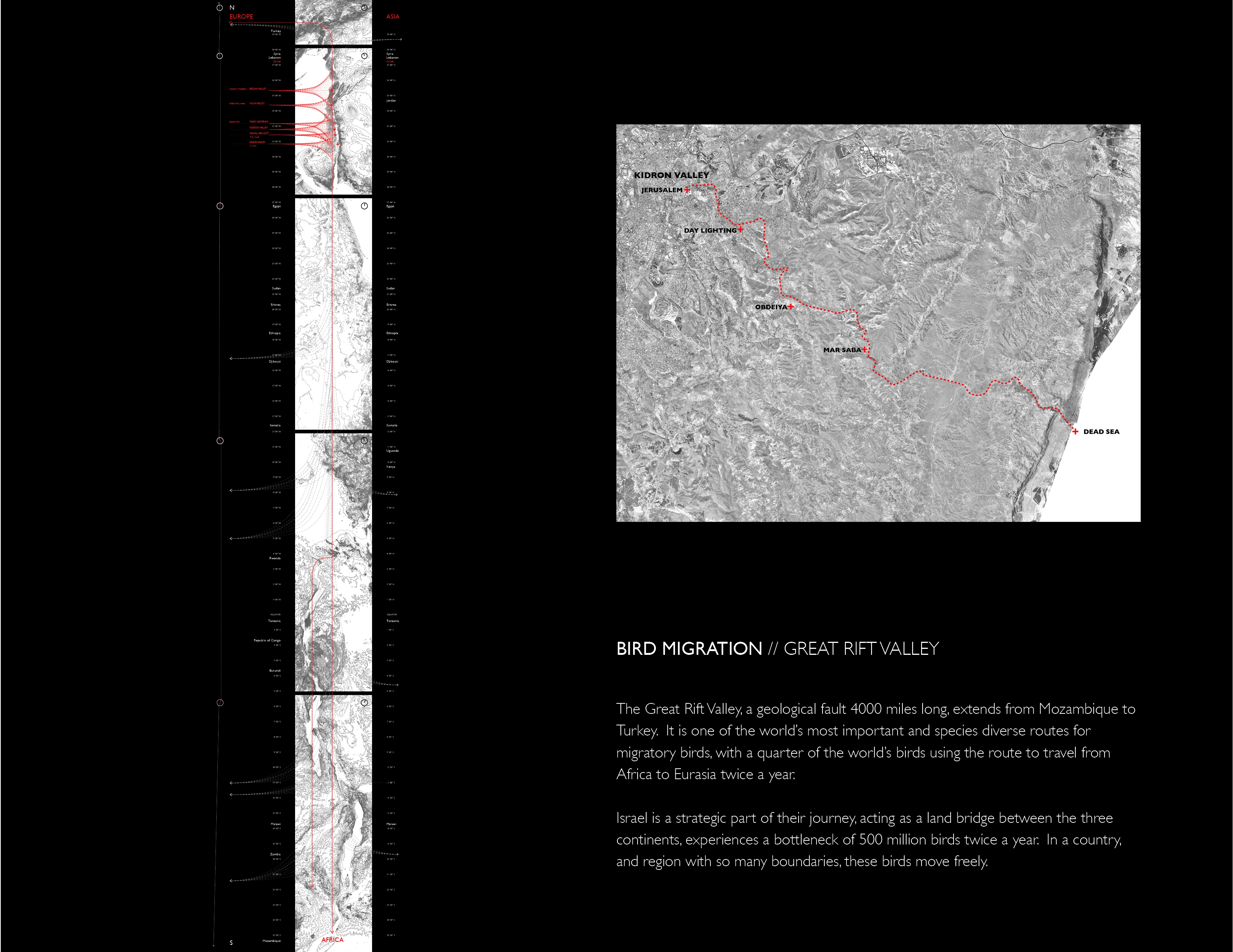
The project territory is the Kidron Valley, which stretches from the eastern side of Jerusalem’s Old City to the Dead Sea and the Great Rift Valley. The valley drops 4000 feet, through both Israeli and Palestinian territories, along its 20 mile course. Through it, runs the once seasonal Kidron River; now running year-round due to the daily flow of untreated sewage it collects. The valley’s water and land is further poisoned by garbage and runoff from agricultural pesticides.
Greater Ecological Rhythms + Opportunities
We recognized the Kidron as one of a larger rhythm of valleys that extend off the massive Great Rift Valley. Approximately 4000 miles in length, this massive geological fault connects central Mozambique to Turkey. It is recognized as one of the world’s most important and species diverse routes for migratory birds. A quarter of the world’s birds travel through the Great Rift Valley to from Africa to Eurasia twice a year.
IIsrael’s position as a land bridge between the three continents makes the country a crucial and hazardous part of their journey. The convergence of 500 million birds through a country slightly smaller than New Jersey (twice a year), greatly amplifies the threats they face throughout their migration: poisoning from polluted water, loss of habitat, and desertification.
And yet, their movements seem miraculous, moving freely through a country with so many boundaries. Understanding the threats are shared with the people of the Kidron, we recognized their potential as catalysts for the interventions that would benefit all: birds and people, both Israeli and Palestinian.
Design Process / Construction of a New Ground
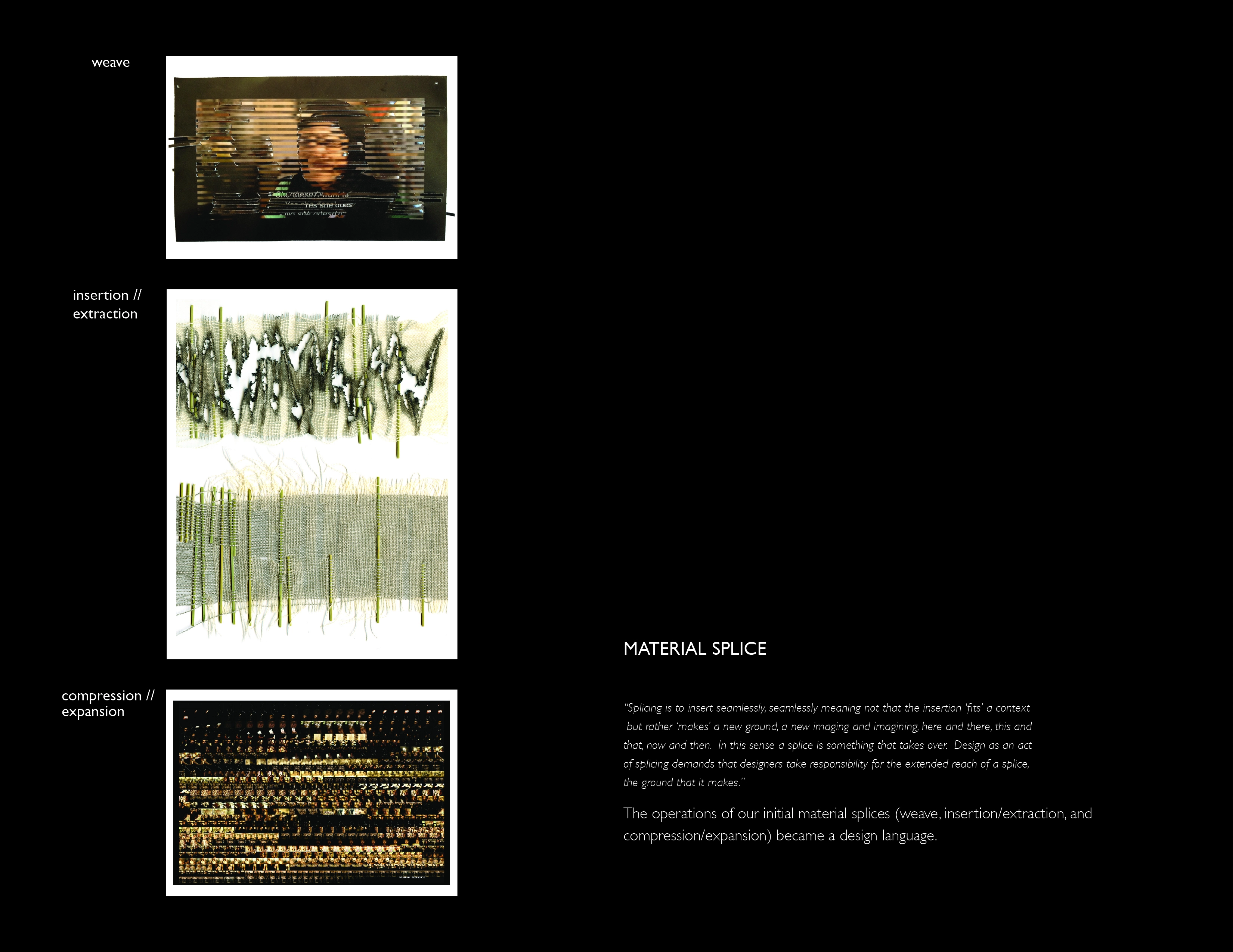
Working first through models, or material splices, a design language was created to allow for a new reading of the Kidron. With the movements of the birds in mind, our splice operations were deployed to create new interactions between birds and people.
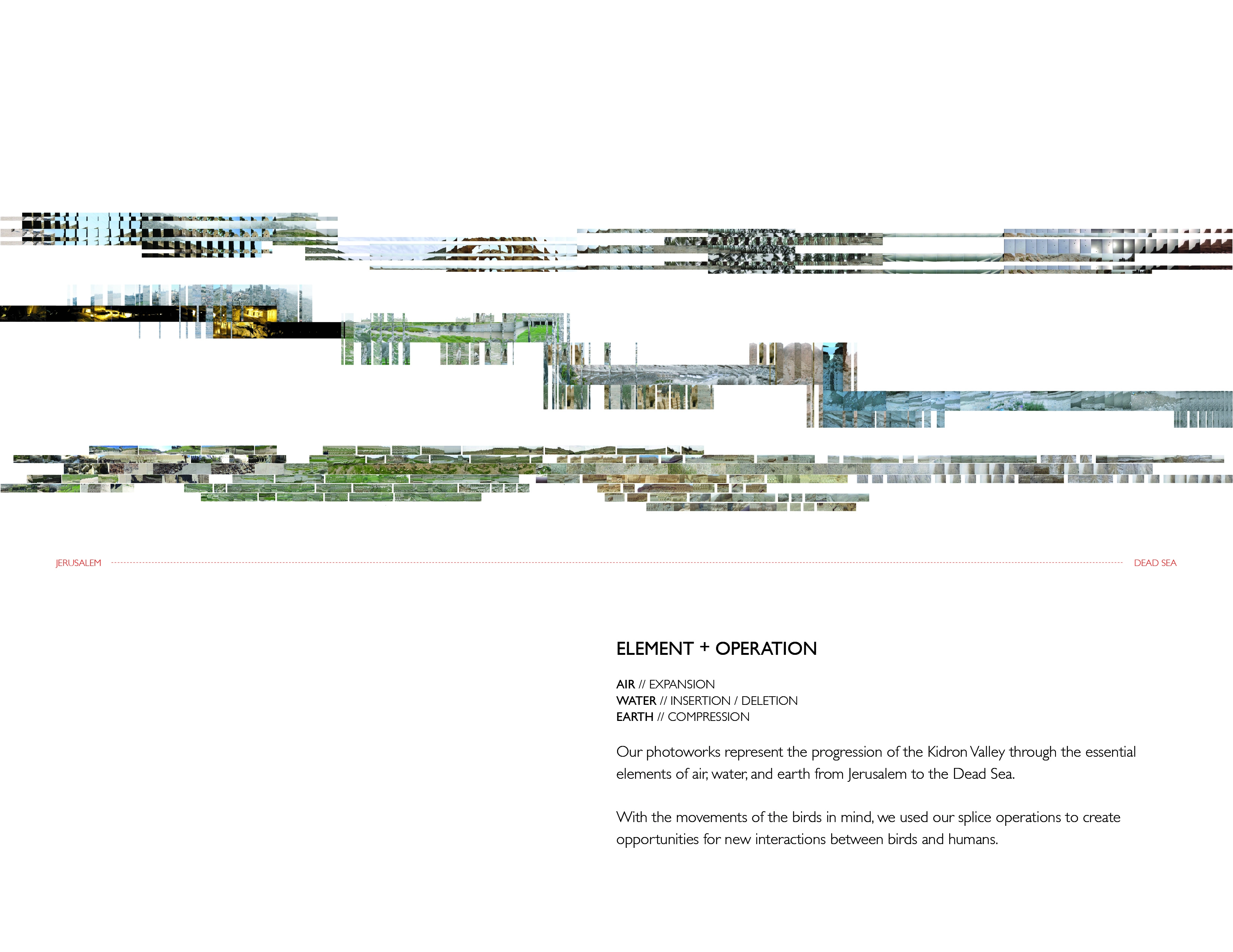
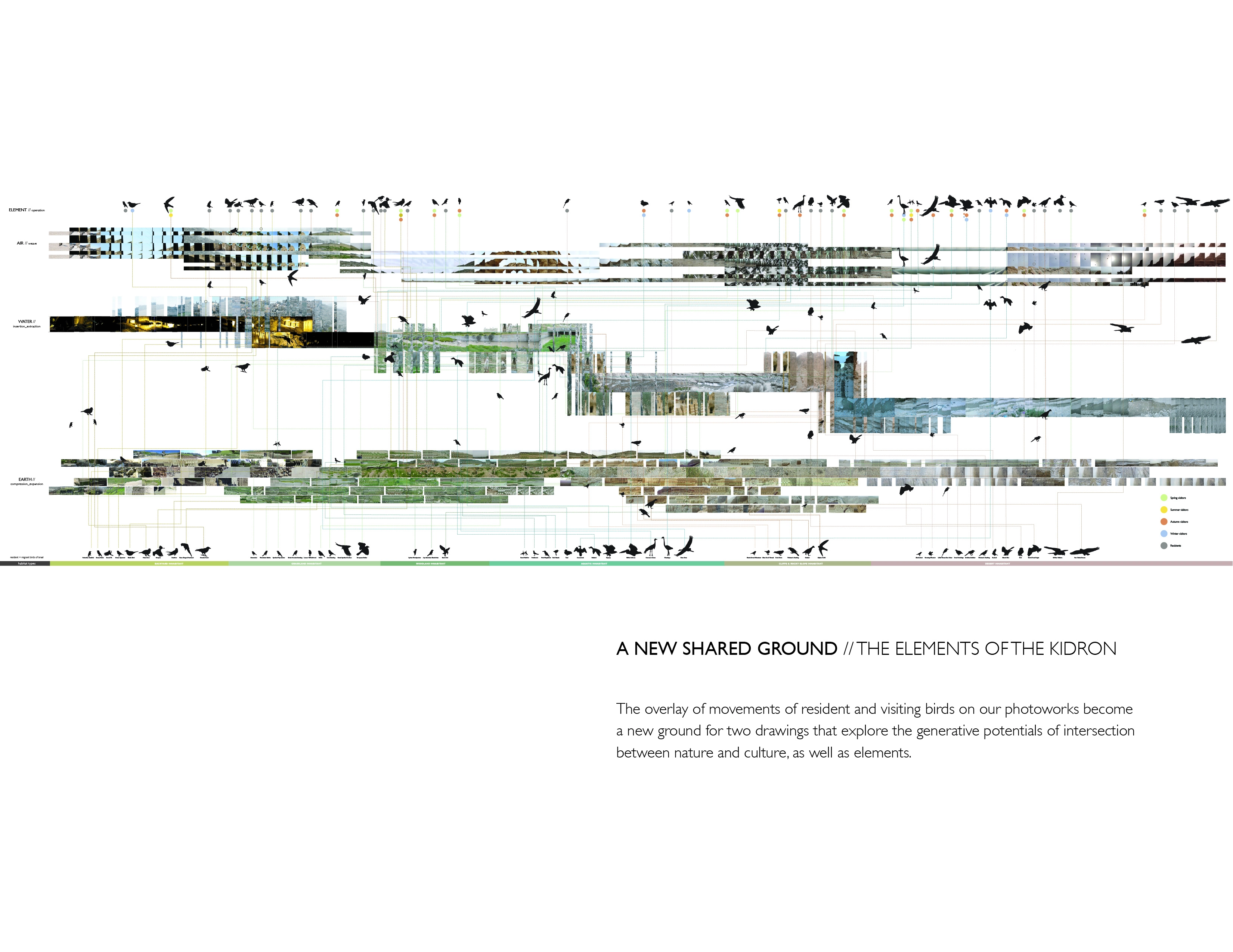
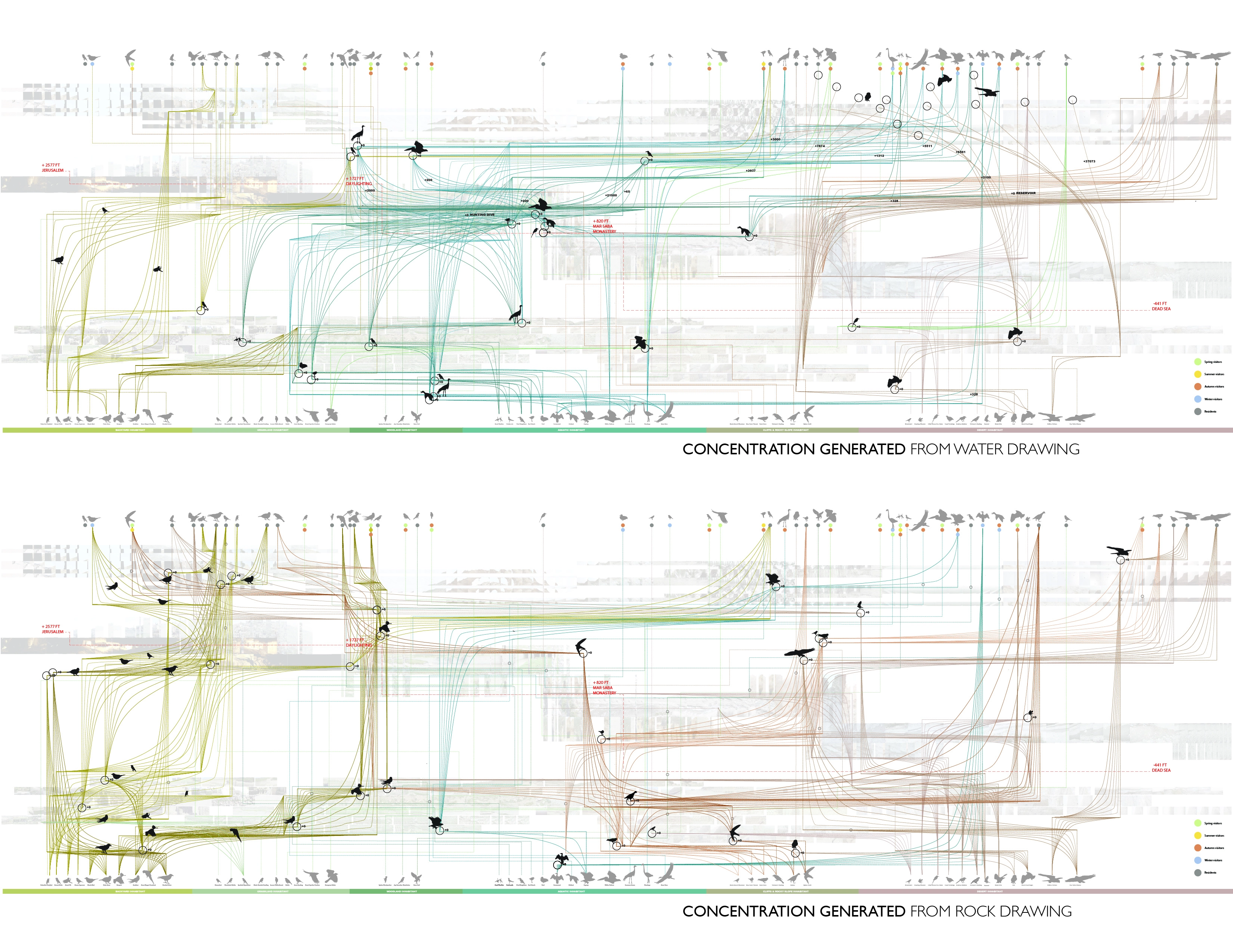
A photowork represents the resulting rereading of the Kidron as a progression of the valley through the essential elements of air, water, and earth from Jerusalem to the Dead Sea. The movements, nesting preferences, and seasonality of birds, both migrant and resident, are woven through the essential elements of the Kidron, as represented by our photoworks.
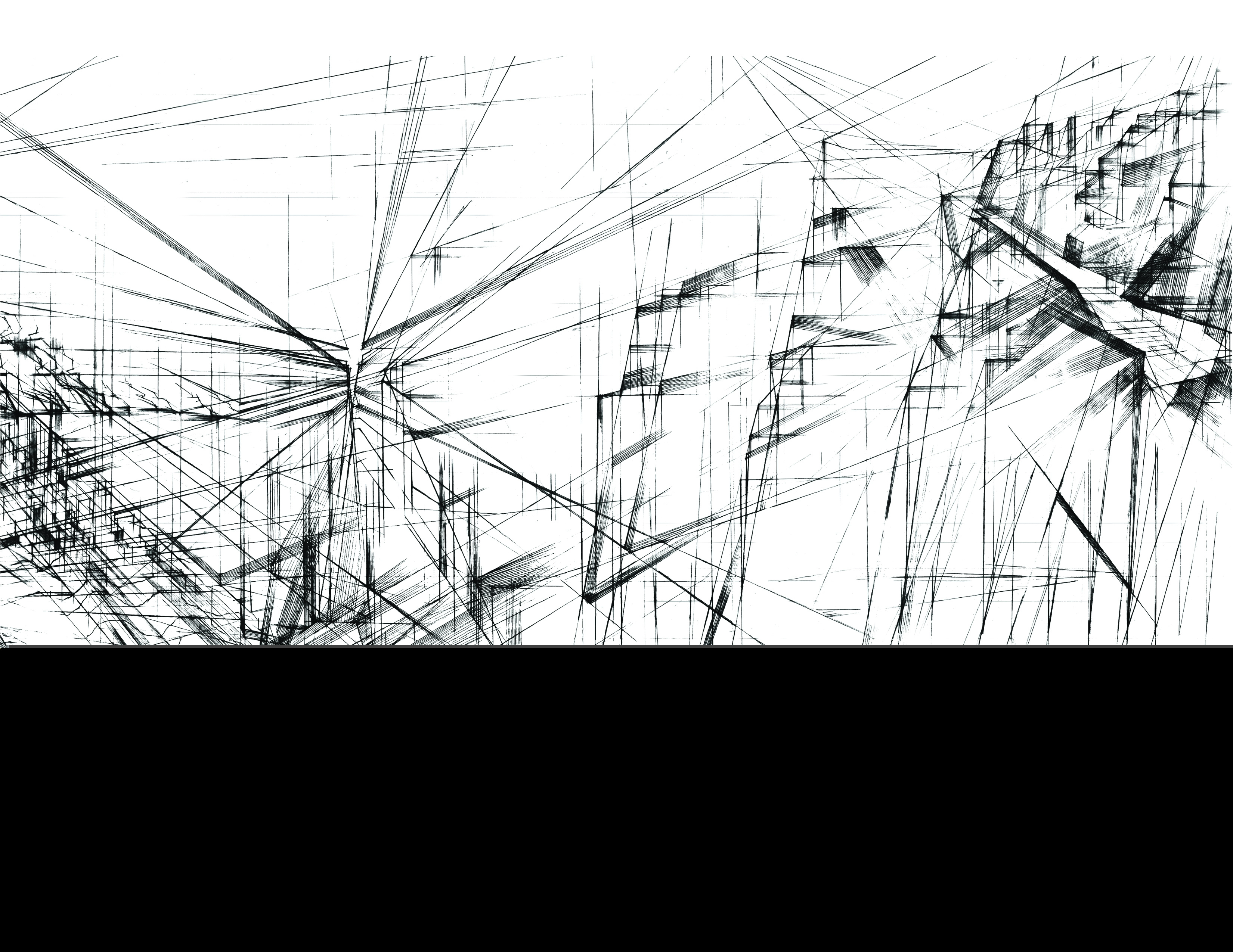
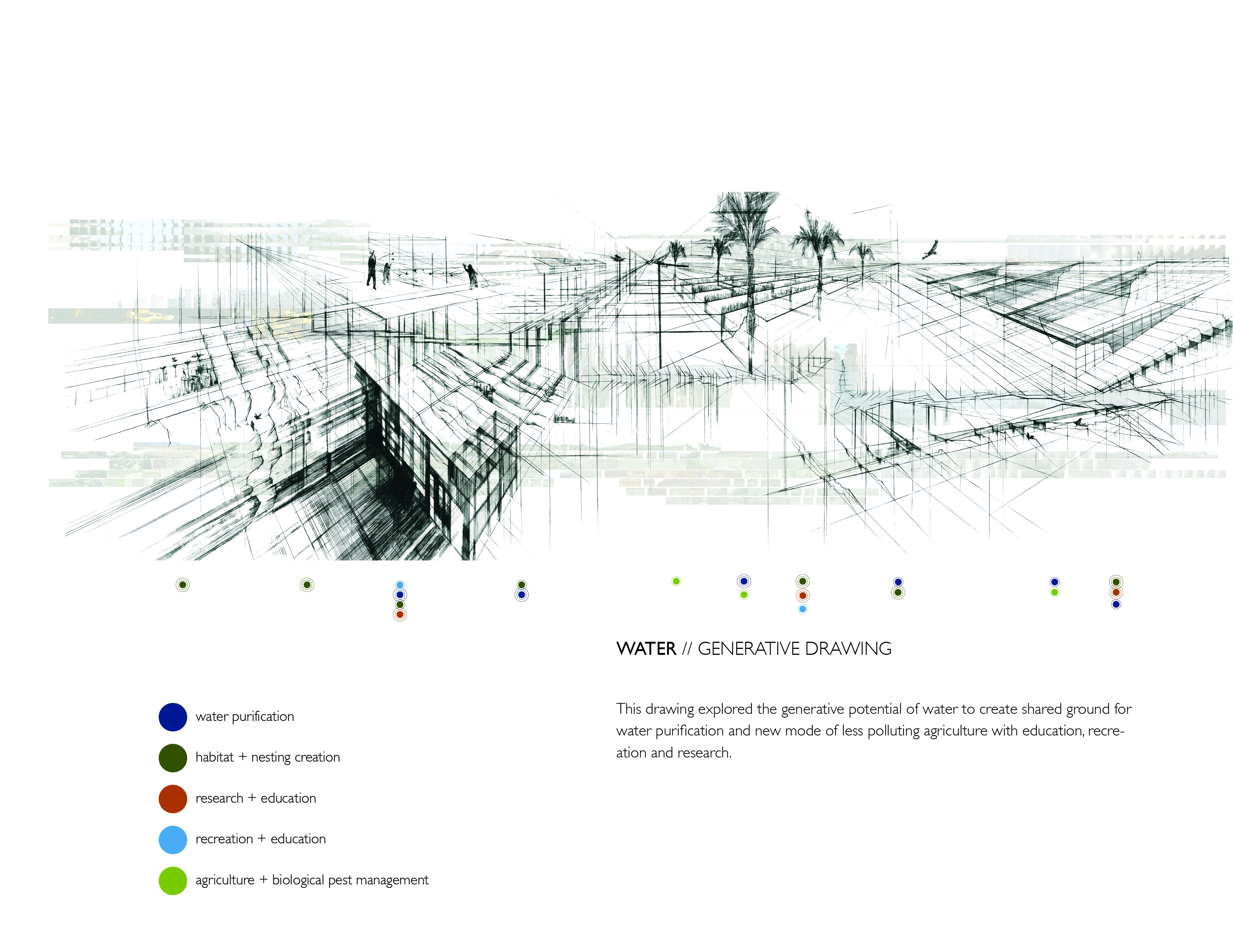
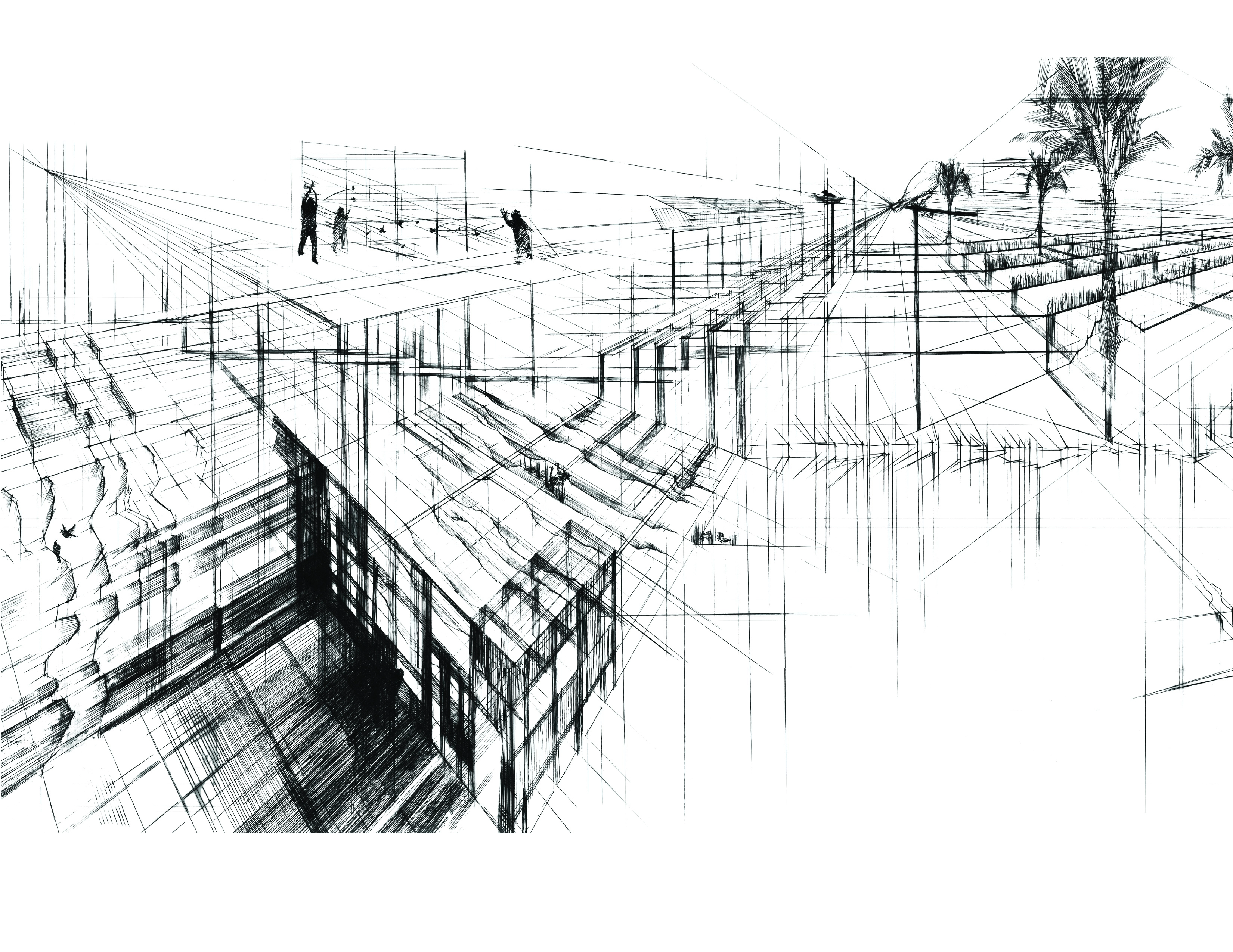
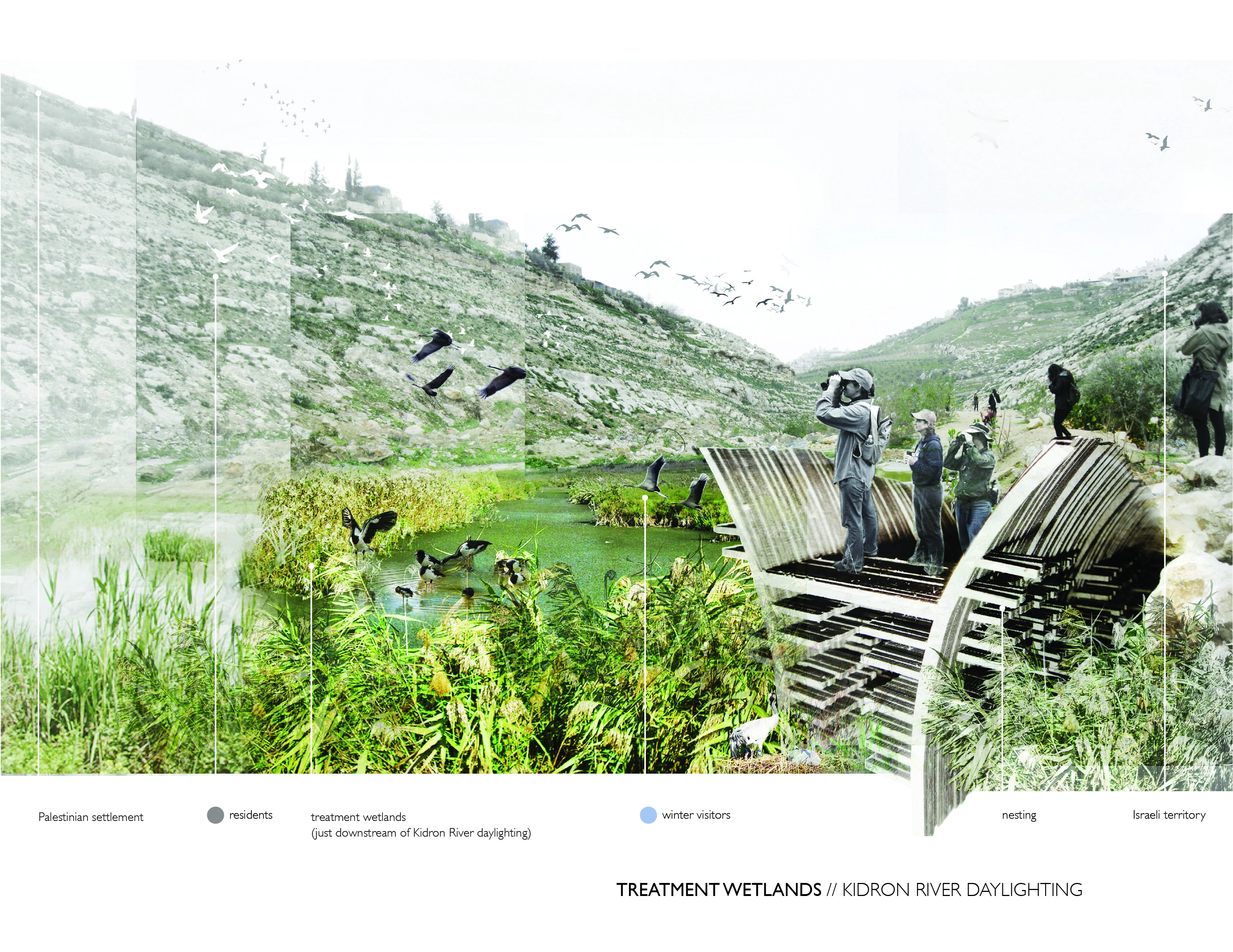
These drawings combine to create new shared ground for birds and people. Areas of concentration are revealed as the greatest opportunities for change and becomes the ground for two handdrawings that explore the generative potentials of each element and their programmatic opportunities. From the intersection of air and earth, we projected opportunities for education, research, recreation, and a less toxic form of agriculture for the region. Responding to specific sites along the Kidron, such as its daylighting and use for agricultural around the Dead Sea, drawings projected moments for water purification through treatment wetlands, designed to maximize education and research opportunities as well as habitat and nesting for birds.
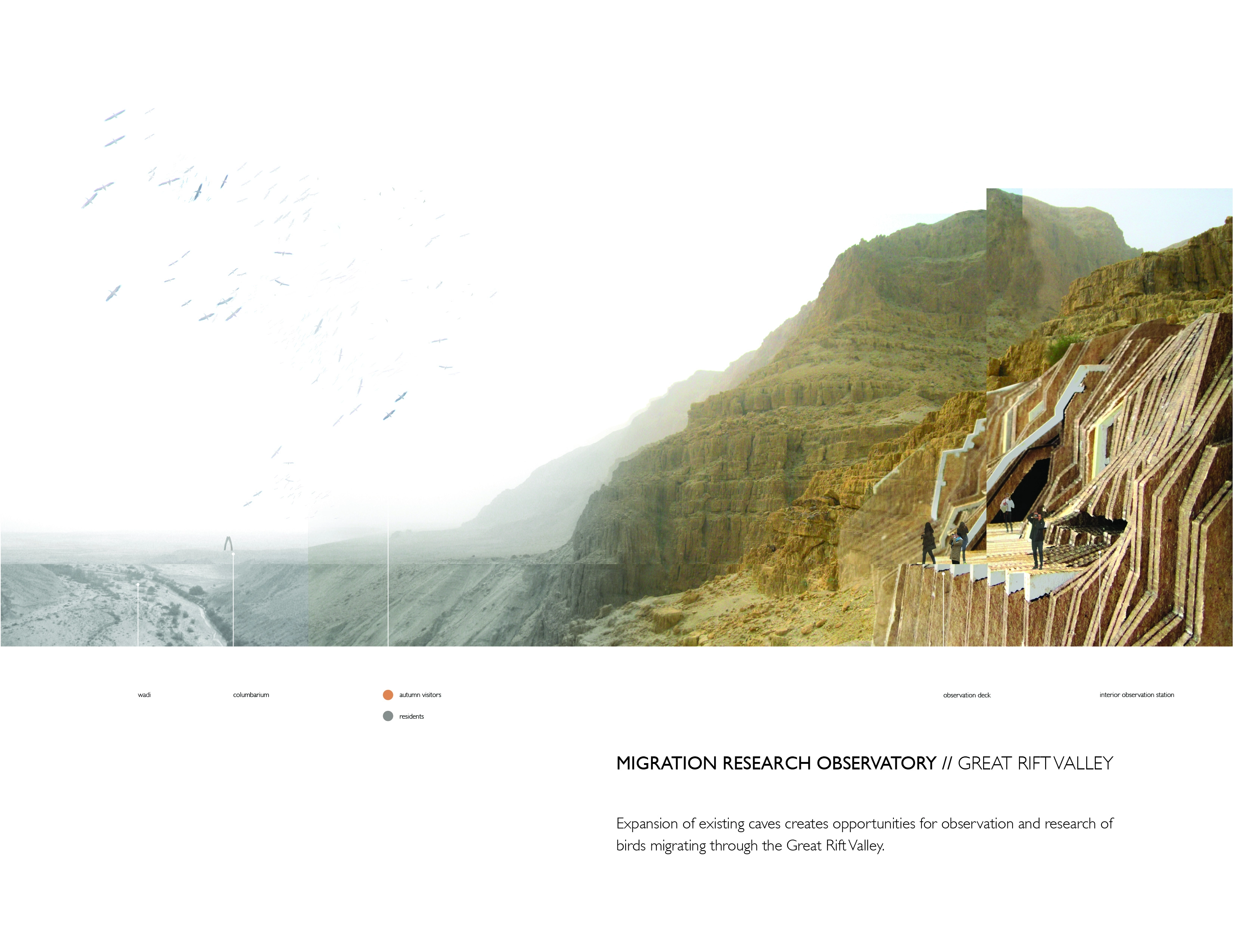
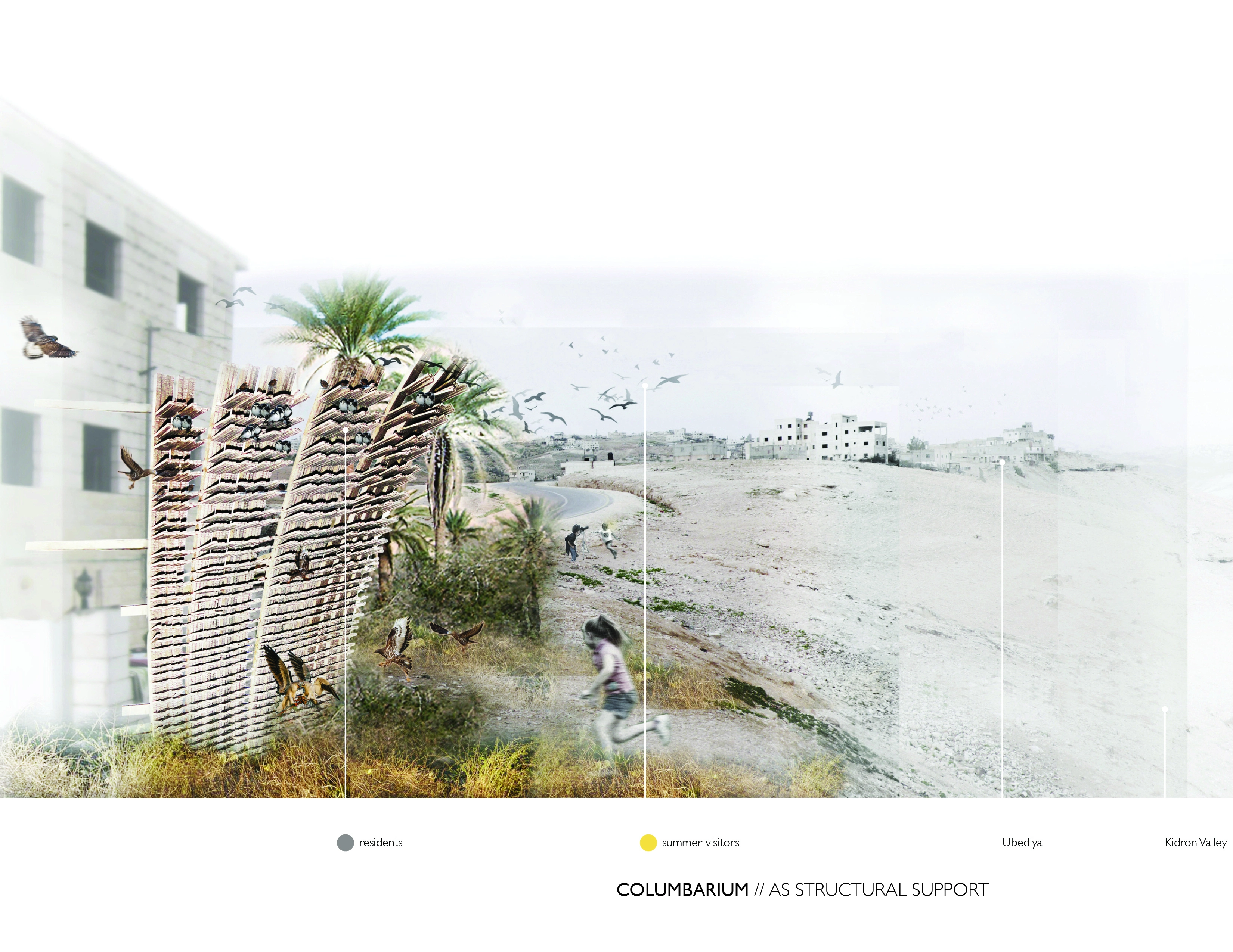
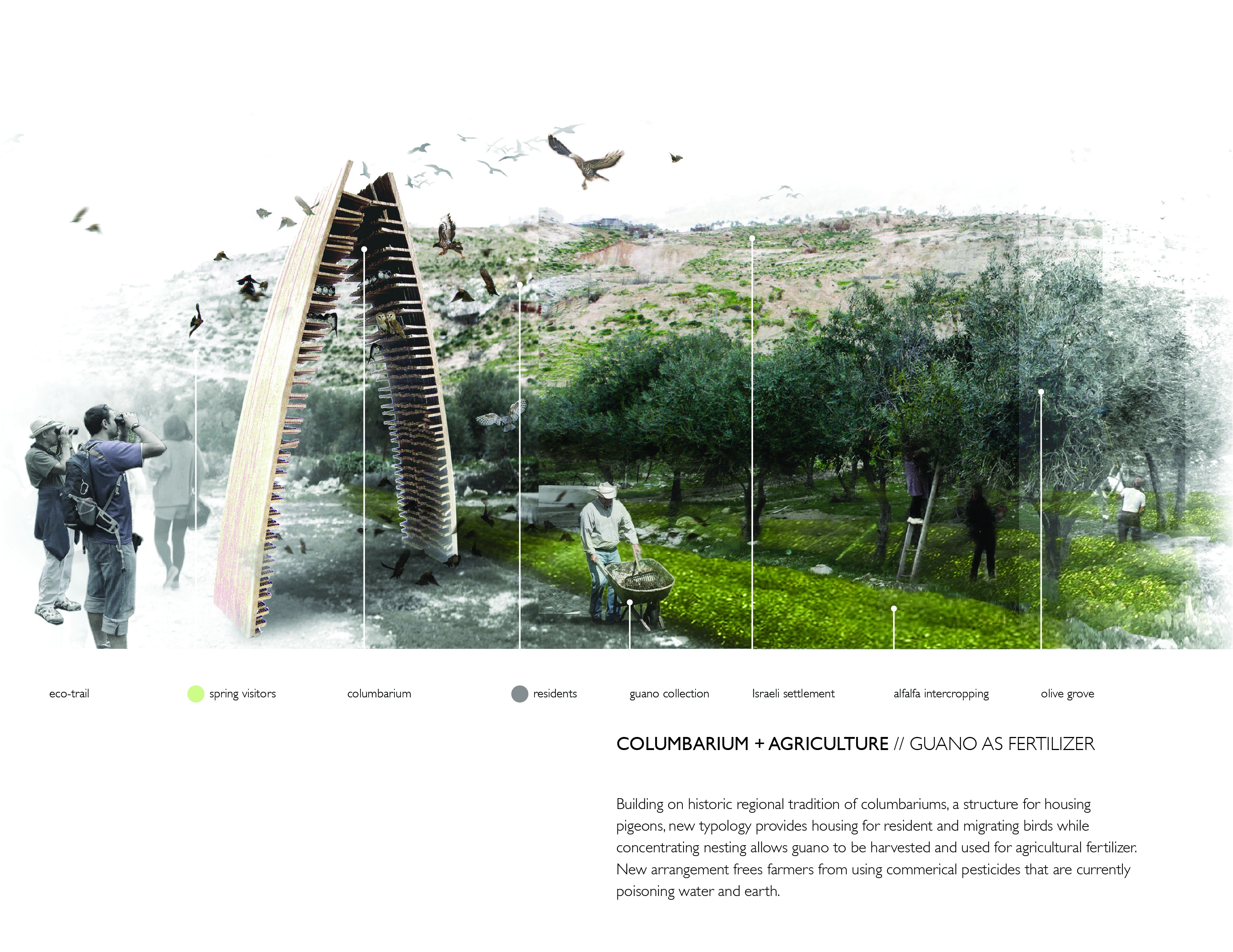
These drawings became the blueprints for an iteration models based on different intersections of human program and bird movement: cave, columbarium and bridge. The expansion of existing caves creates opportunities for observation and research of birds migrating through the Great Rift Valley. Building on historic regional tradition of columbariums, structures that provide nesting for large numbers of birds, a new typology provides nesting while also functioning as structural support for roadways, bridges and buildings. A free standing columbarium concentrates nesting so that bird guano can be collected and used as agricultural fertilizer. This new arrangement frees farmers from using chemical pesticides that currently poison water and earth.
Impact / Influence
“Migrating Beyond Boundaries” is meant to operate as an alternative vision for catalyzing the necessary changes in the tense and divided Kidron Valley. Through the construction of ecological infrastructure for migrating birds, the lives of all is improved. The project is an example of how an ecological rhythm, such as bird migration, can be used to connect people to each other and to their shared landscape and ecology.
Advertisement
Related Awards
Award of Excellence, General Design
A Floating Forest: Fish Tail Park in Nanchang City
In Nanchang, within the Yangtze River floodplain, we revitalized a heavily degraded 126-acre landscape into a floating forest that manages stormwater, restores habitats, and provides diverse recreational spaces—all within a limited budget and a short timeline. This innovative urban nature model strengthens the district’s identity and spurs surrounding development. Fish Tail Park offers a scalable solution for flood-prone regions, seamlessly integrating flood resilience, ecological restoration