
.webp?language=en-US)
-
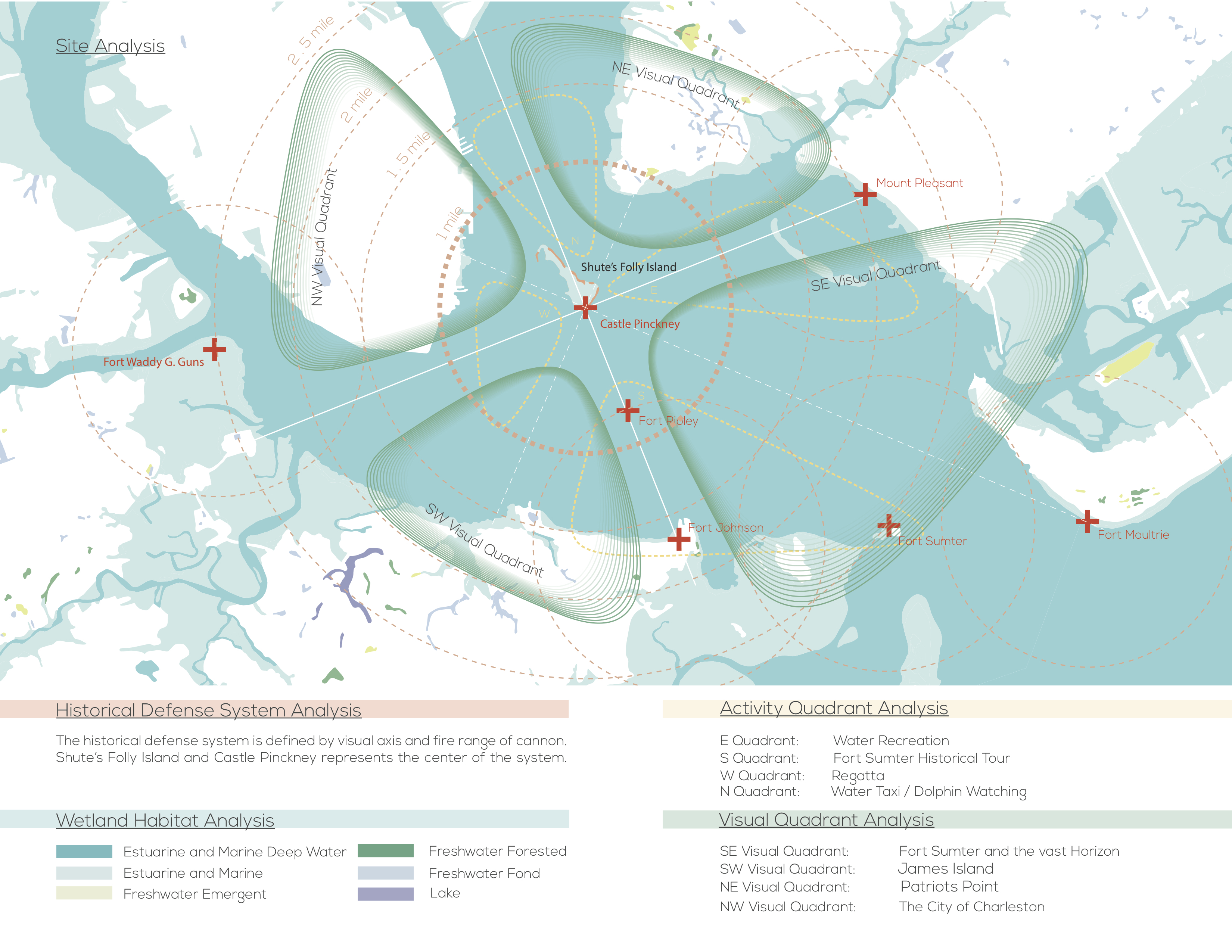
This projects seeks to redefine traditional cultural heritage tourism by providing an individualized tourist experience through architectural and environmental preservation.
-
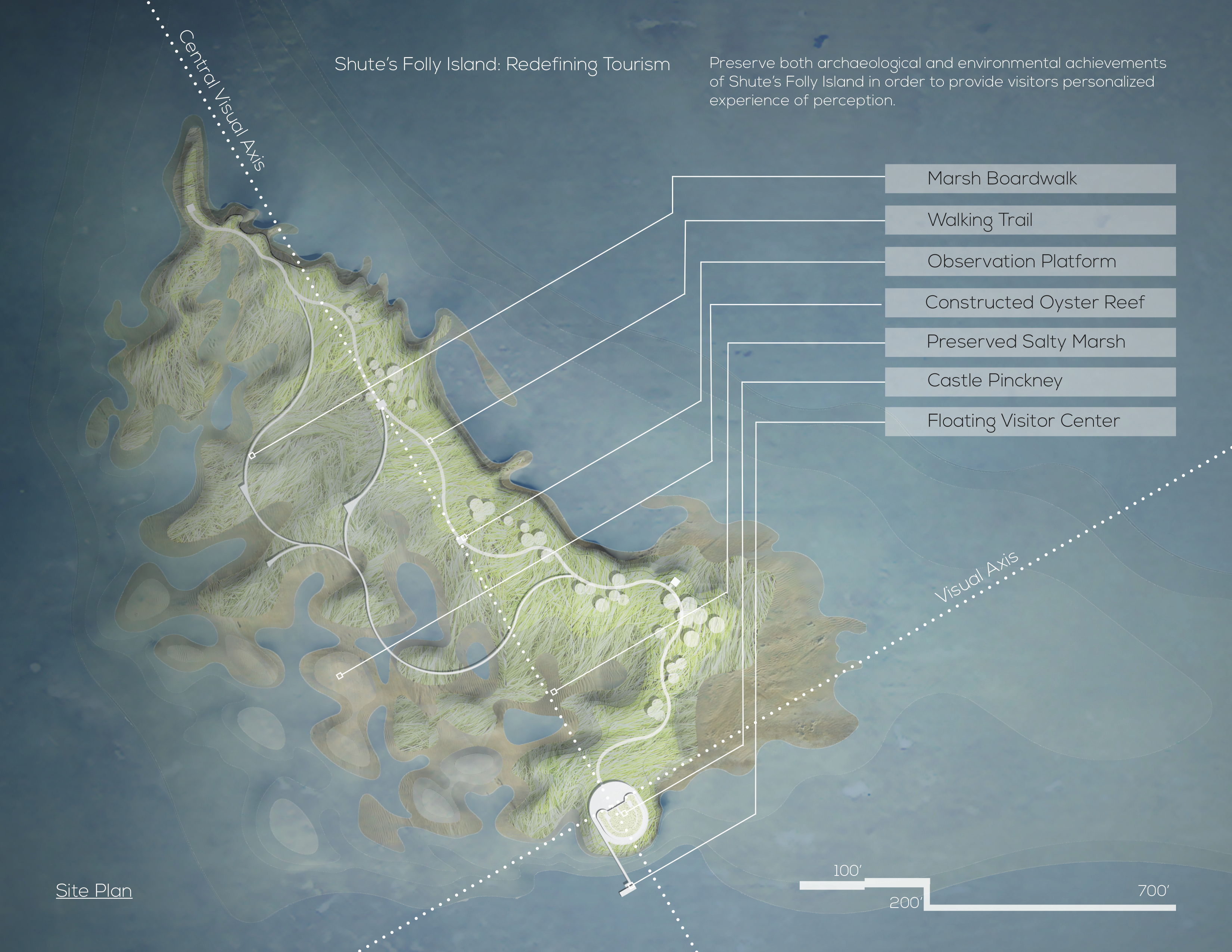
Traditional cultural heritage tours tend to focus only on the architectural and archaeological achievements, and as a result, the tourist experience is often thematic with limited personal attachment. What’s the next step for designing cultural heritage tourism? What design could make visitors’ experiences memorable? This project attempts to answer this question by designing and planning for Shute’s Folly Island in Charleston Harbor, South Carolina.
The History
Castle Pinckney, one of the oldest surviving fortification in Charleston, South Carolina, was built in 1809 on a small island called Shute’s Folly Island. Due to a lack of funding, the castle and surrounding island have been abandoned since the Civil War. Along with the island’s salty marsh landscape, it is unknown to the public at large. Additionally, the island is facing serious erosion issues from human activities such as nearby cruise ship and ferry lanes through the harbor.
Design Initiative
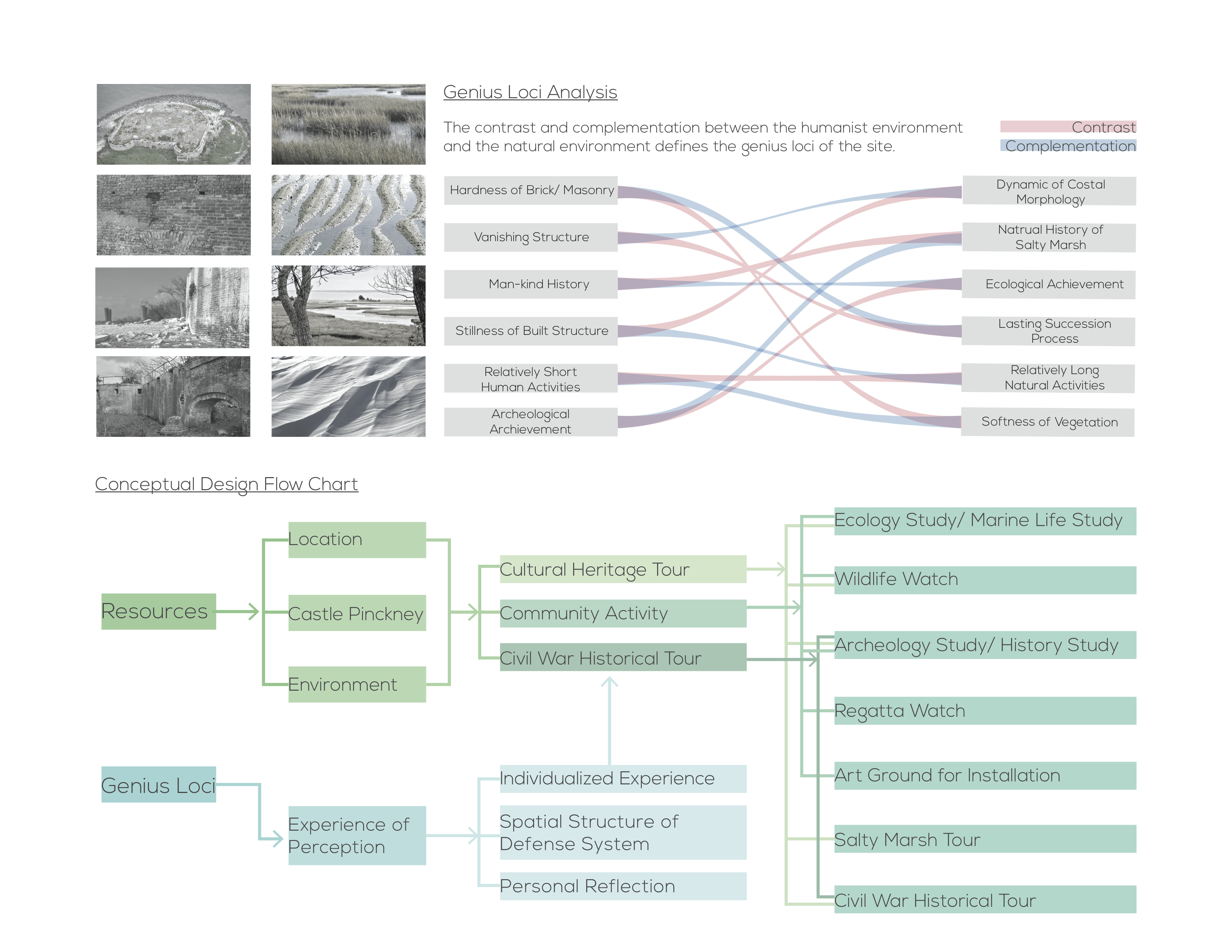
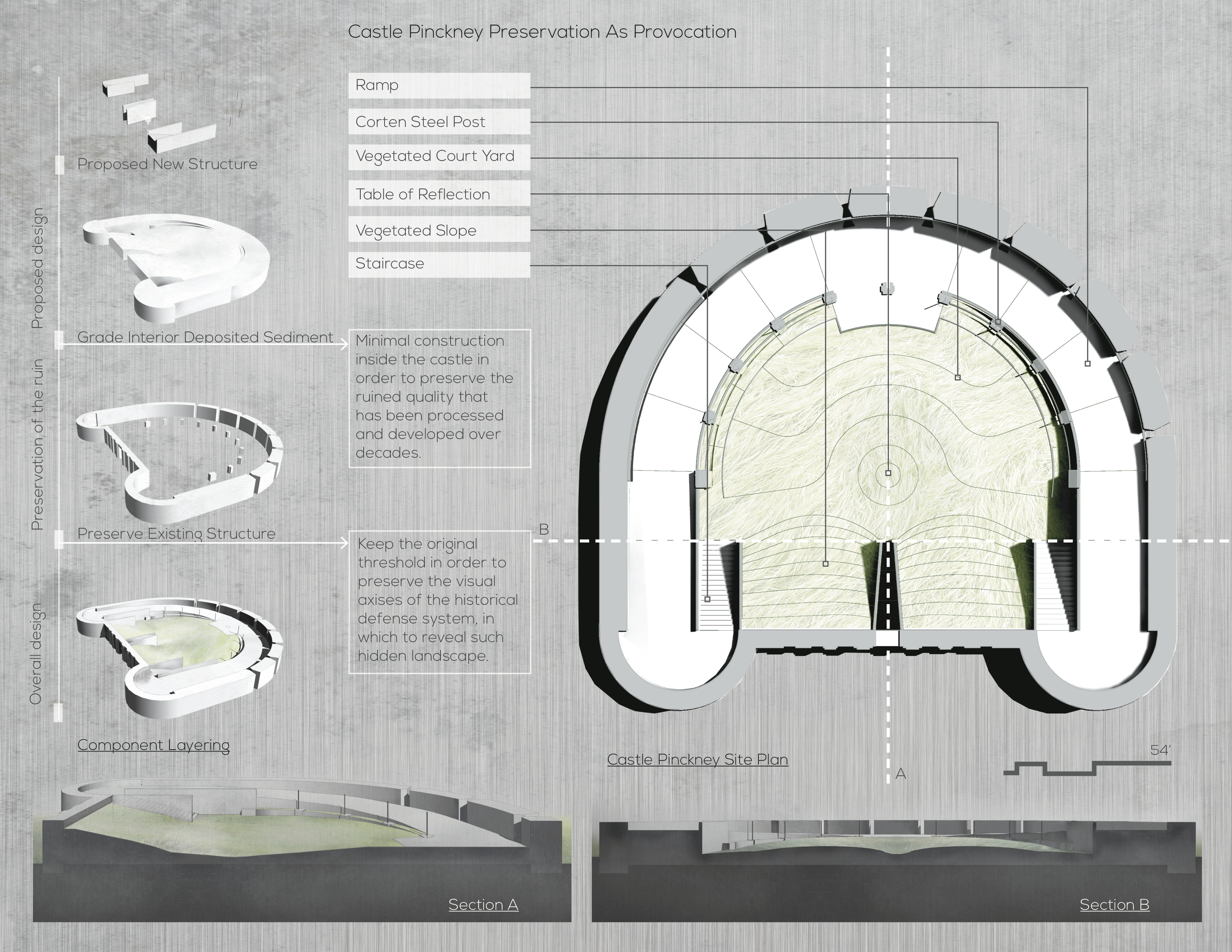
I was first drawn to Shute’s Folly Island by its distinctive character. Castle Pinckney is one of the three remaining fortifications in its unique “castle” form. Located at the heart of Charleston Harbor and the center of the historical defense system, it also addresses an important connection where history, landscape and community activities can overlap. As a significant archaeological relic and maker in local history,the castle can act as a catalyst to link the community and the natural landscape together, with the rest of the island supporting both ecological and humanist activities. Nevertheless, Castle Pinckney adds another layer of meaning to the landscape that makes it unique. The overall environment has a traditional picturesque quality of stillness and quietness, yet one would observe and agree that contrast is the key character of the site: the hardness of the fortification versus the softness of the vegetation; the stillness of the built structure versus the unsteadiness of coastal morphology; the constructed history versus the history of the ecosystem and the vanishing architectural structure versus the continuous ecological significance. The richness of resources and contrast in both culture and environment make the genius loci of the place.
The Design
In order to emphasize the character of Shute’s Folly Island, the genius loci of the place must be perceived and transcended to a new identity.
- Preserve Castle Pinckney
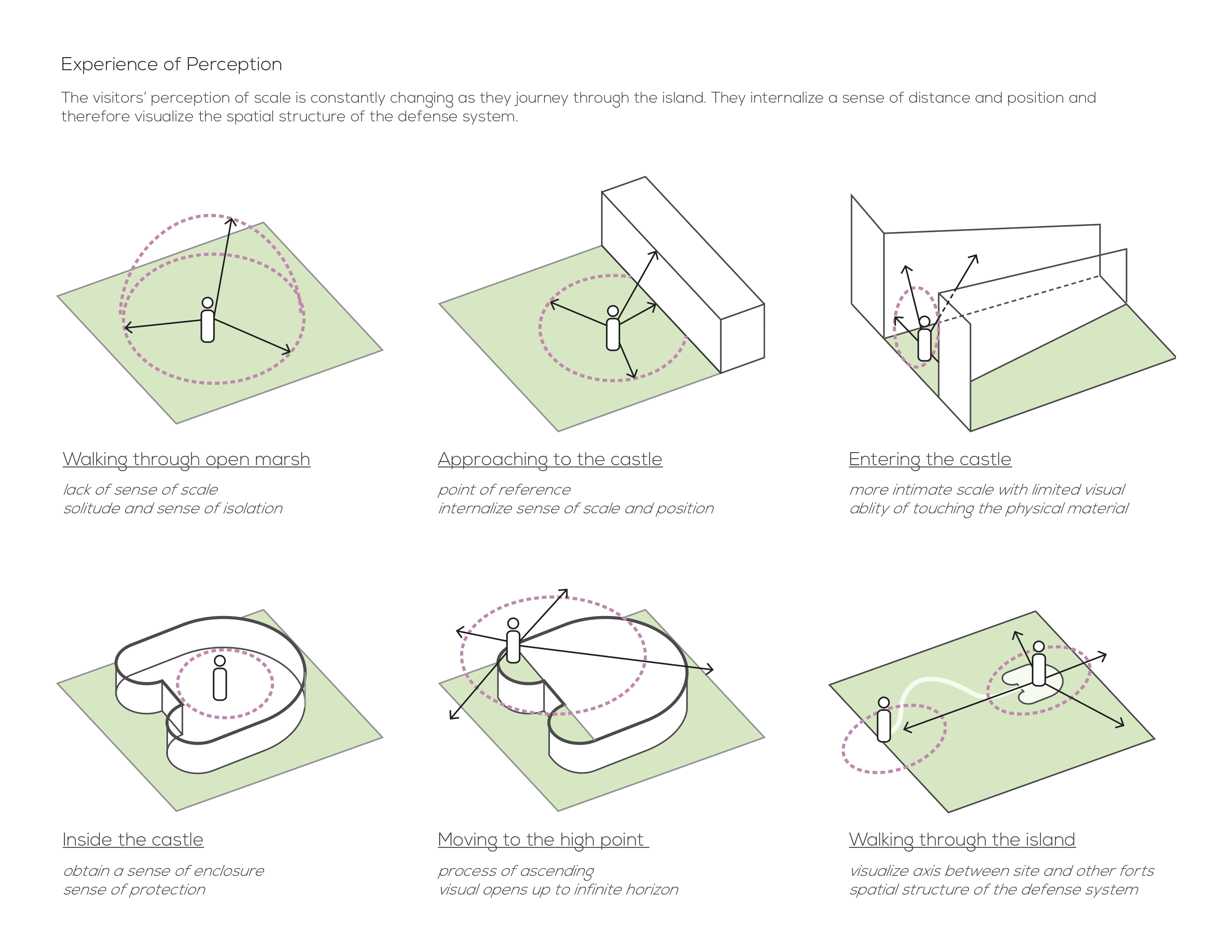
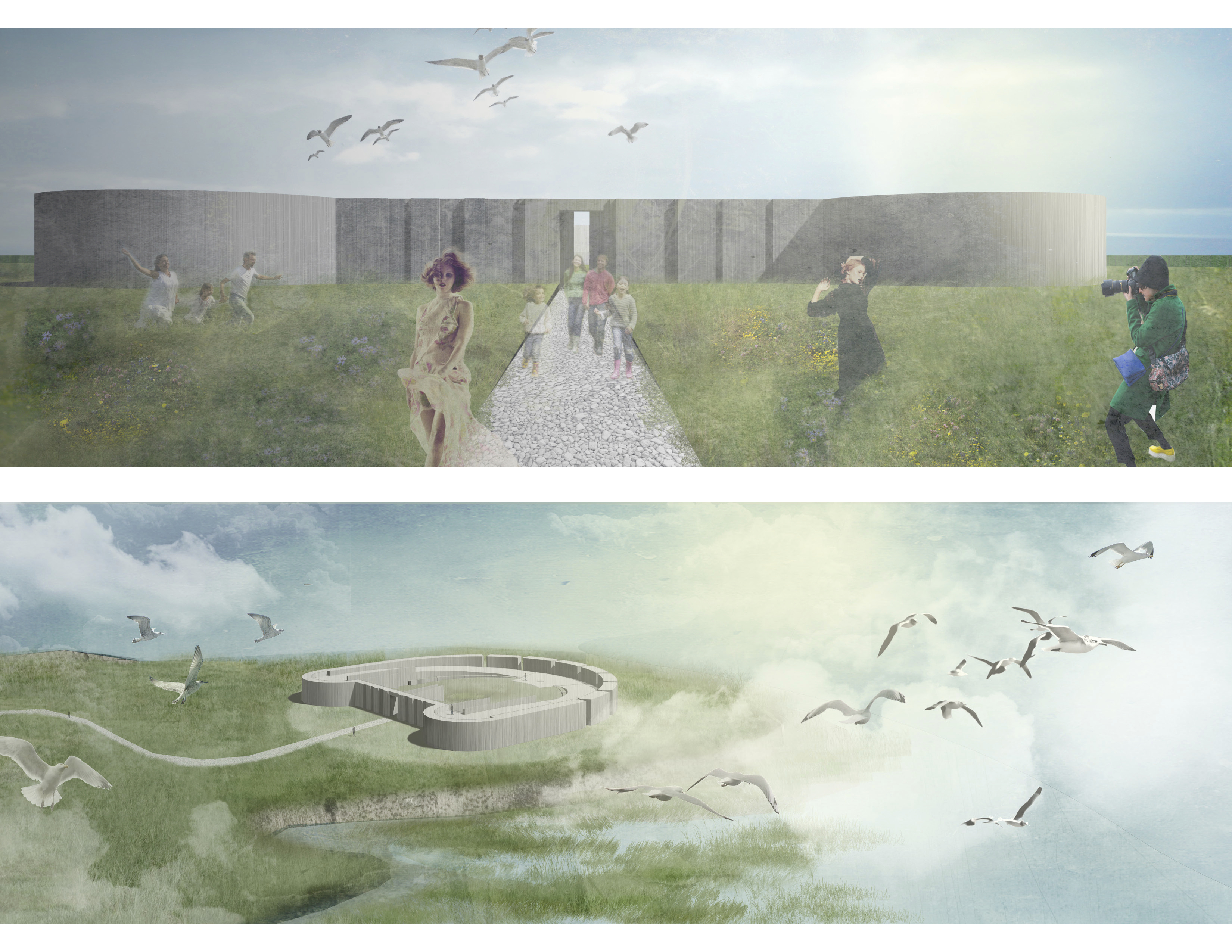
Modern maps are filled with excessive information and symbols that dis-enable people to recognize spatial relationships and structures in a given environment. Castle Pinckney is preserved and exposed to reveal the hidden landscape of the historical defense system through articulations of threshold. As people walk through the castle, they internalize a sense of distance and position within the environment, and therefore visualize the spatial structure of the defense system. - Preserve Salty Marsh Landscape
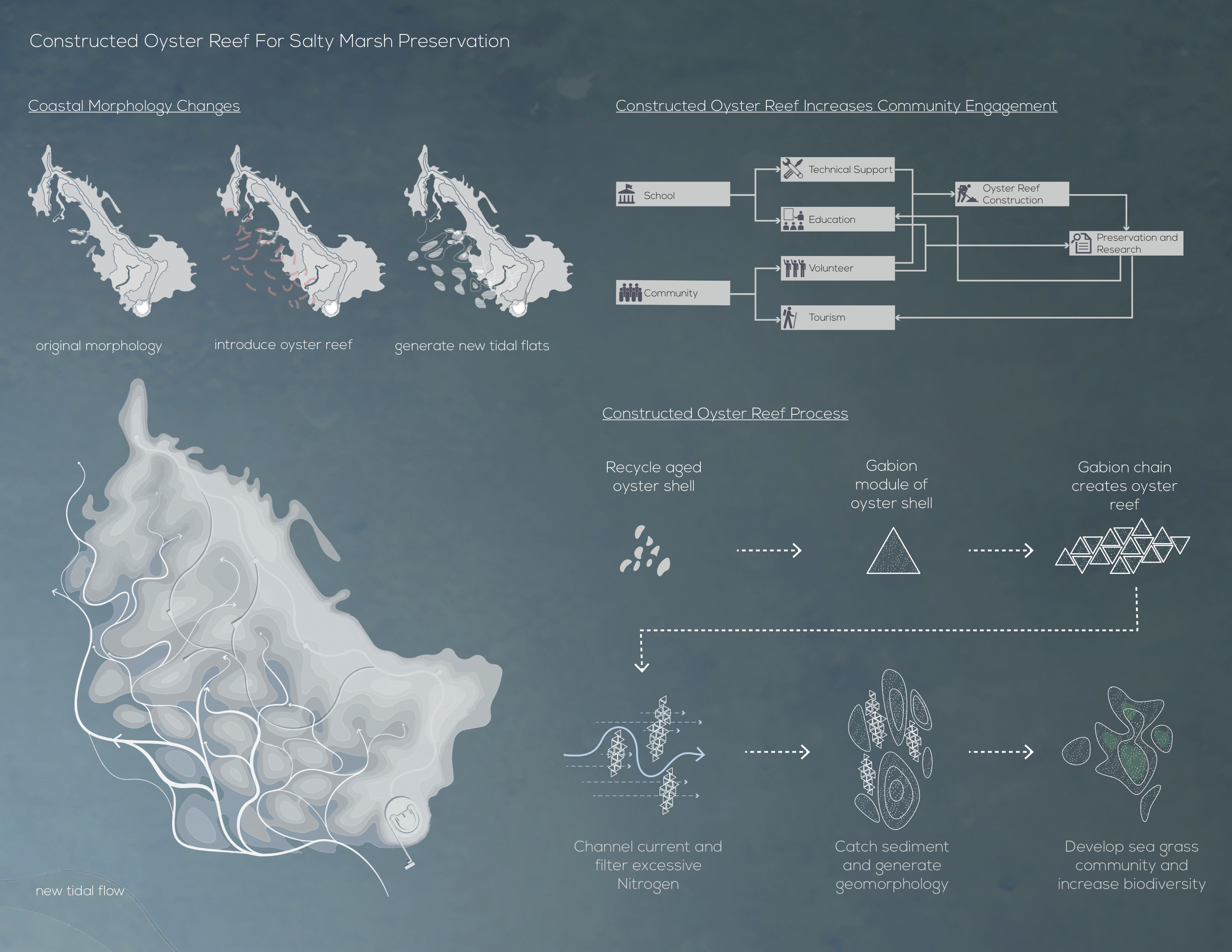
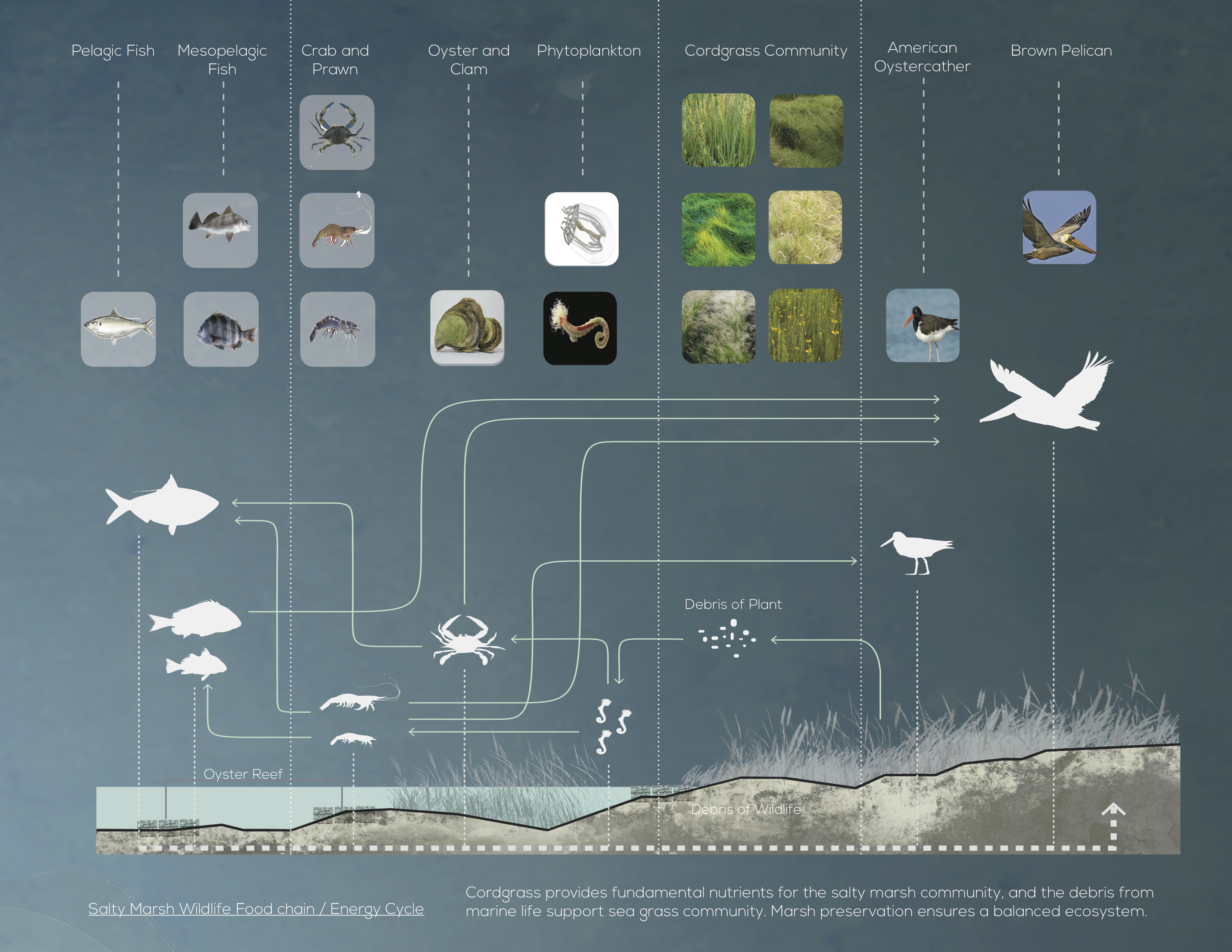
Considering natural landscape as part of cultural heritage. In order to preserve the native landscape from tourism driven disturbance, oyster reefs are constructed along the west shore to stabilize and enhance the existing ecosystem, preventing erosion and allowing vegetation and wildlife to nourish. The integrated system of human culture and native landscape is considered a cultural heritage, providing diverse programs that appeal to a wide range of people. The design enables visitors to participate and engage in a program where humanist culture and environmental culture merges. - Experience of Perception
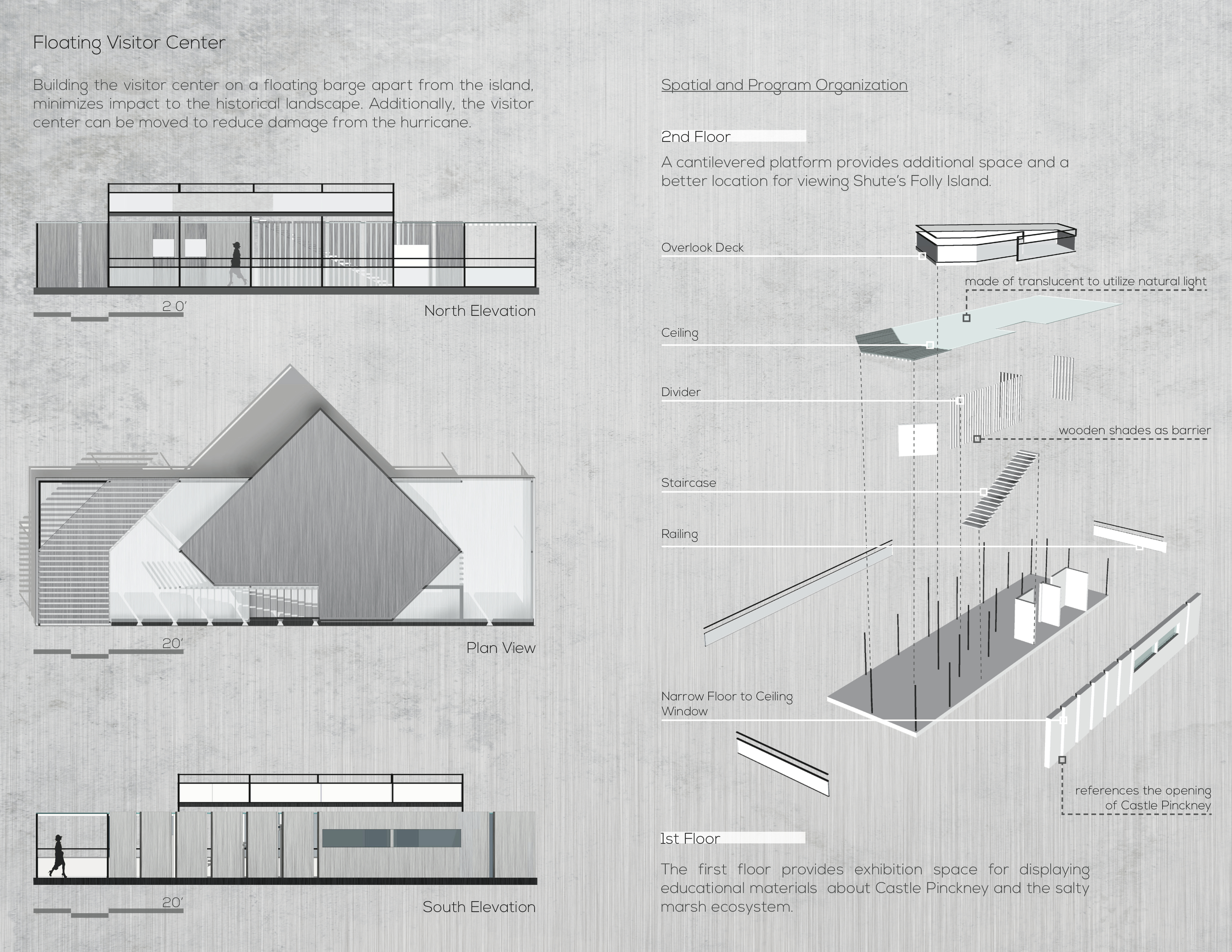
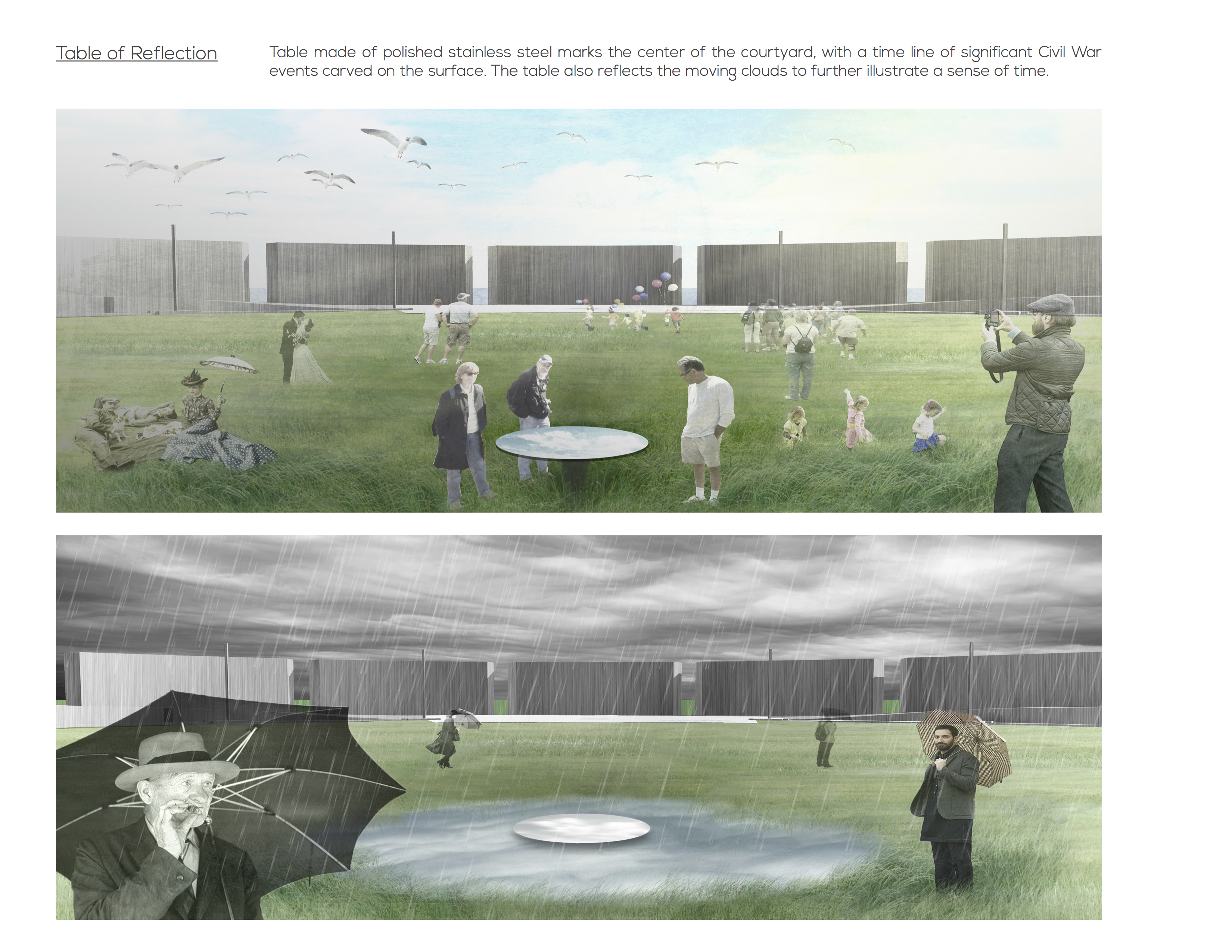
The visitors’ journey through the island is an experience of perception: they acknowledge the history of the site; they learn the system of a native salty marsh; they recognize the contrast between different elements that yet all together remain in harmony; they constantly feel the changes in scale, position and a sense of time; they are connected and attached to the place based upon personal background and life experience that generate individualized experiences to be evoke and create new memories.
Beyond tourism, the design appeals to the local community on a daily basis. Recreational and educational programs bring the community activities to Shute’s Folly Island that may engage with the tourist as expression of contemporary culture that is unique to Charleston.
- Preserve Castle Pinckney
Advertisement
Related Awards
Award of Excellence, General Design
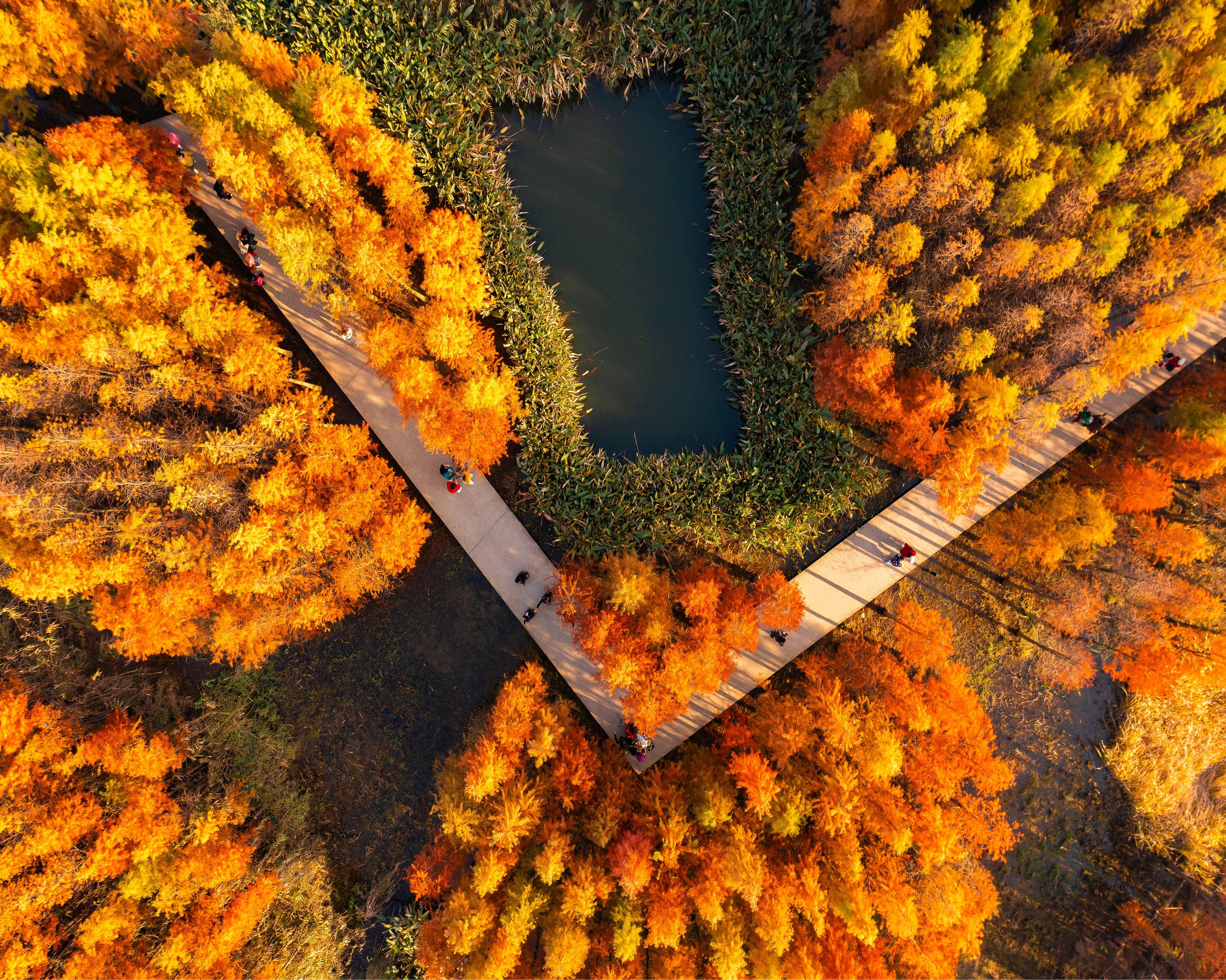
A Floating Forest: Fish Tail Park in Nanchang City
In Nanchang, within the Yangtze River floodplain, we revitalized a heavily degraded 126-acre landscape into a floating forest that manages stormwater, restores habitats, and provides diverse recreational spaces—all within a limited budget and a short timeline. This innovative urban nature model strengthens the district’s identity and spurs surrounding development. Fish Tail Park offers a scalable solution for flood-prone regions, seamlessly integrating flood resilience, ecological restoration