
.webp?language=en-US)
Novartis Headquarters
Refreshing. It functions in a way that isn’t necessarily part of our vocabulary. There are different moments in the design.
Awards Jury
-
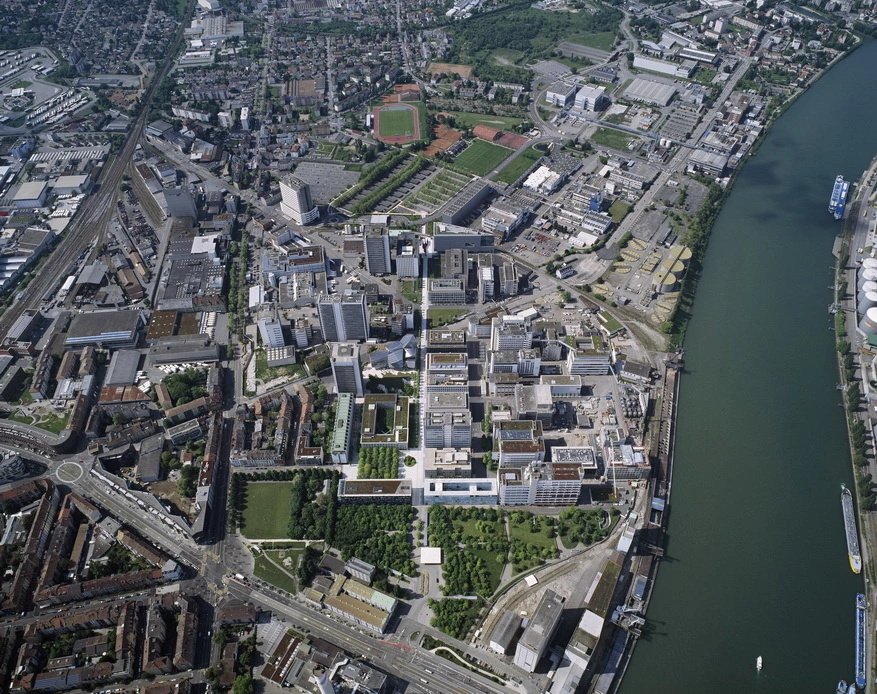
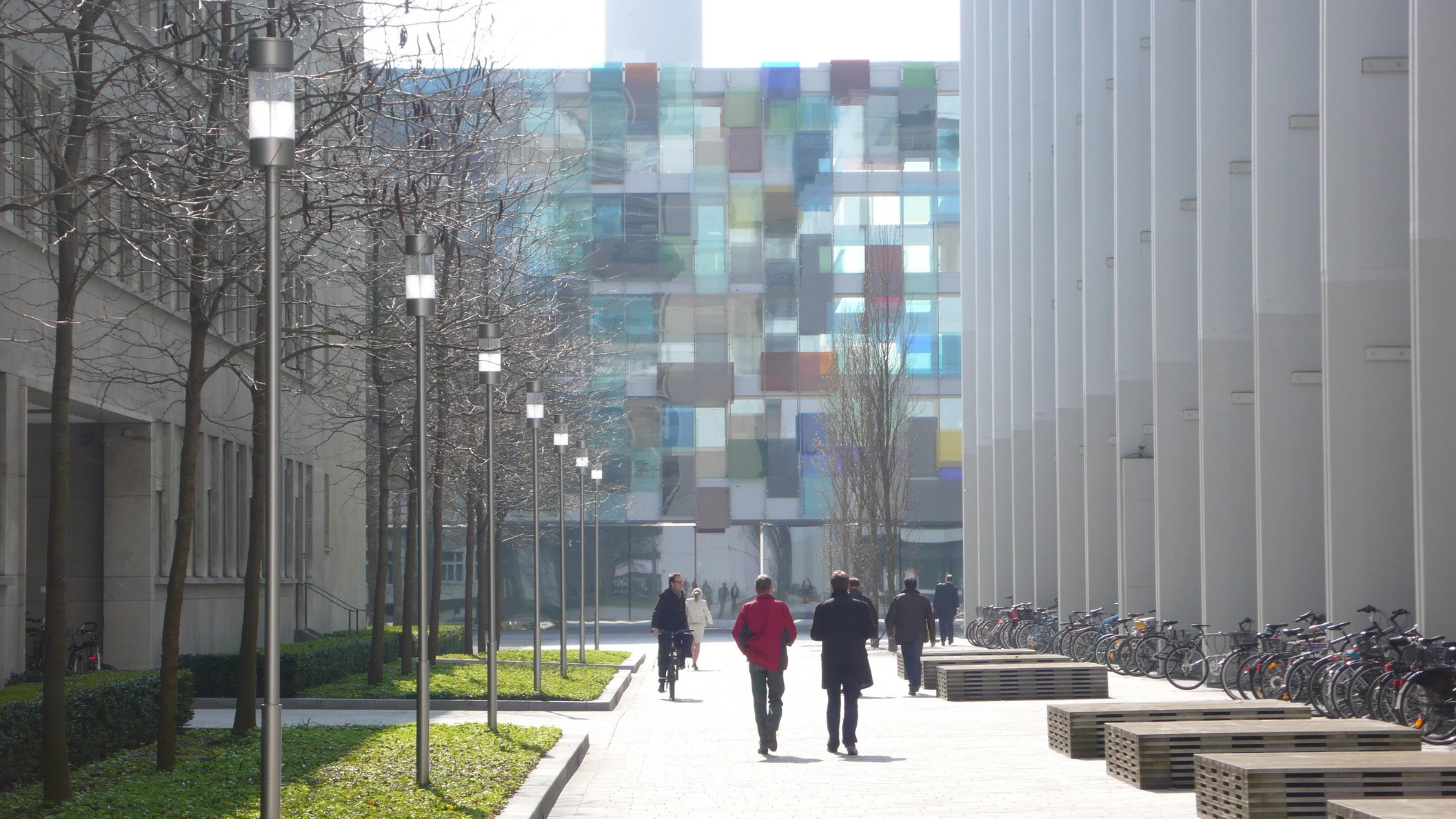
The new Novartis Campus transformed a 51-acre site beside the Rhine River from an industrial landscape flanked with old train tracks into a modern and largely pedestrian research and administrative campus filled with outdoor parks, greens, and large-scale art. It offers sanctuary for Novartis’ nearly 5,500 employees. The design and execution of the buildings and open spaces were developed through high standards of environmental guidelines, including low-energy use, native planting, storm run-off, and green roof planting.
-
Design Context
The project is located in Basel, Switzerland on the Rhine River, adjacent to the international borders of France and Germany. It is the original 100-year-old urban site of the company, which had been developed over the years as a substantial industrial manufacturing site. The landscape had been severely degraded with polluted soils; subterranean infrastructure nearly filled the open areas between all buildings. The landscape architect led a team of international designers and curators from all disciplines to transform the entire campus into a dynamic community and environmentally sustainable site. An early part of the process was to remove all of the toxic soil, and replace with native soil from nearby sources.
Design and Execution
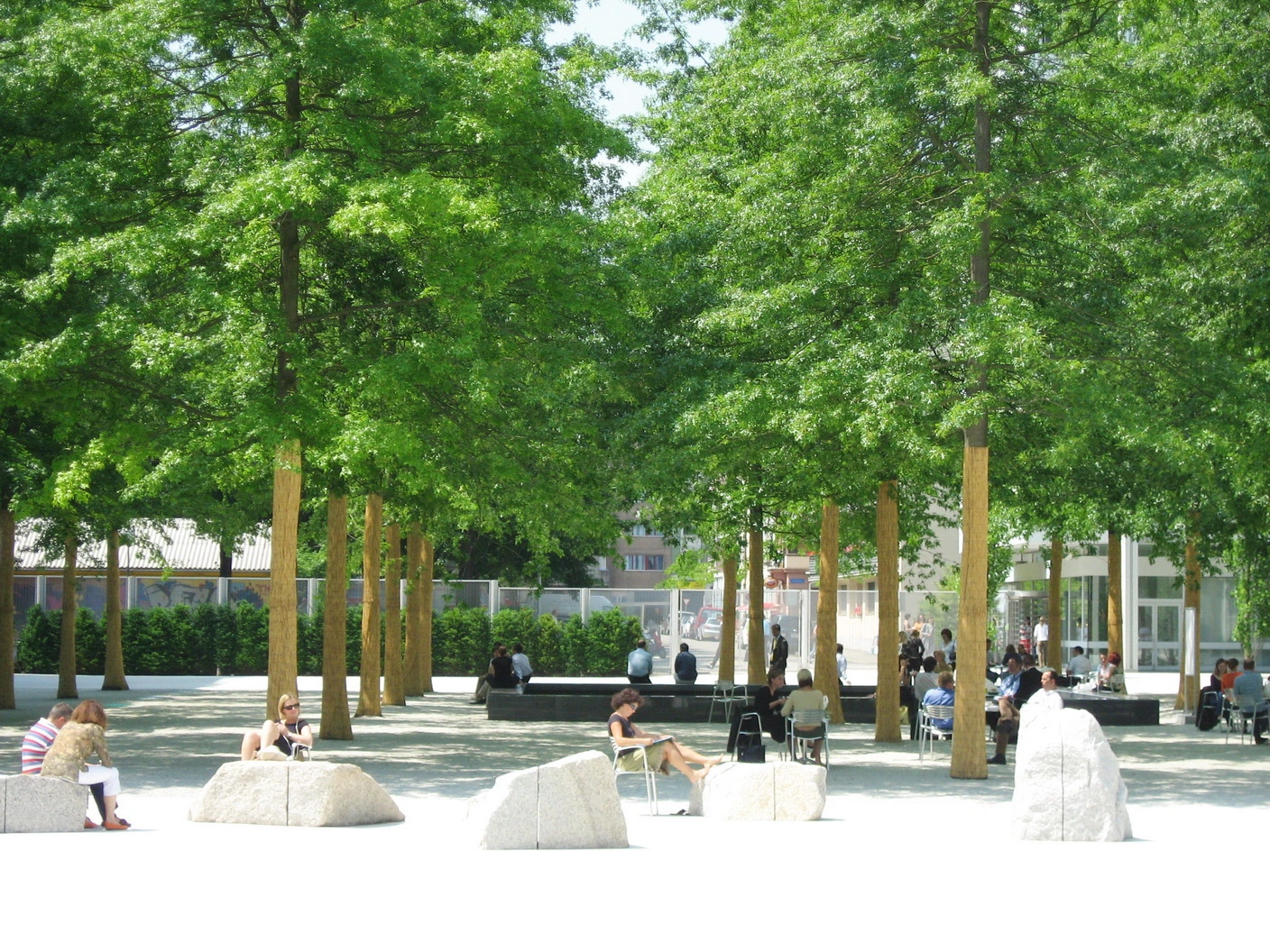
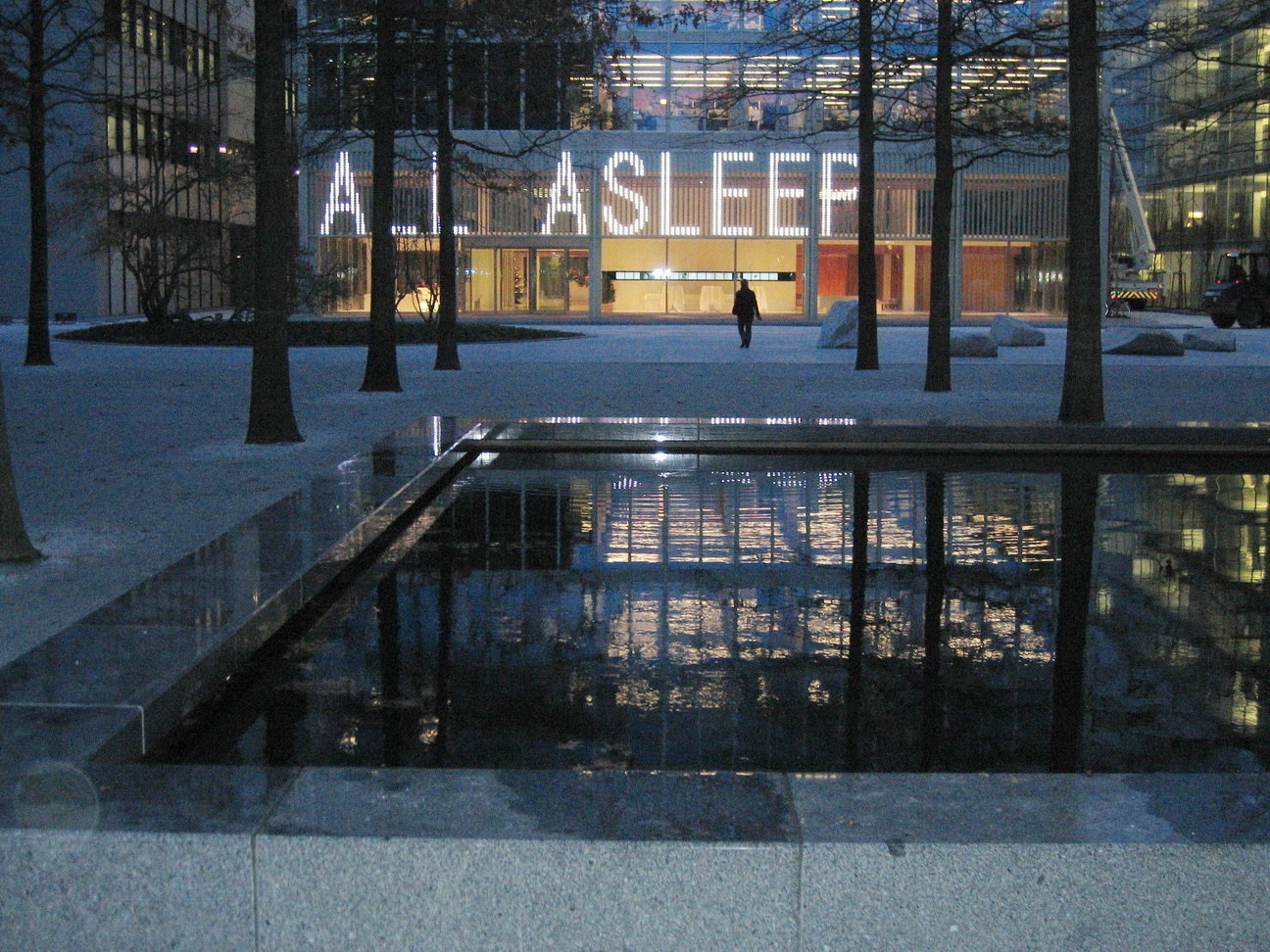
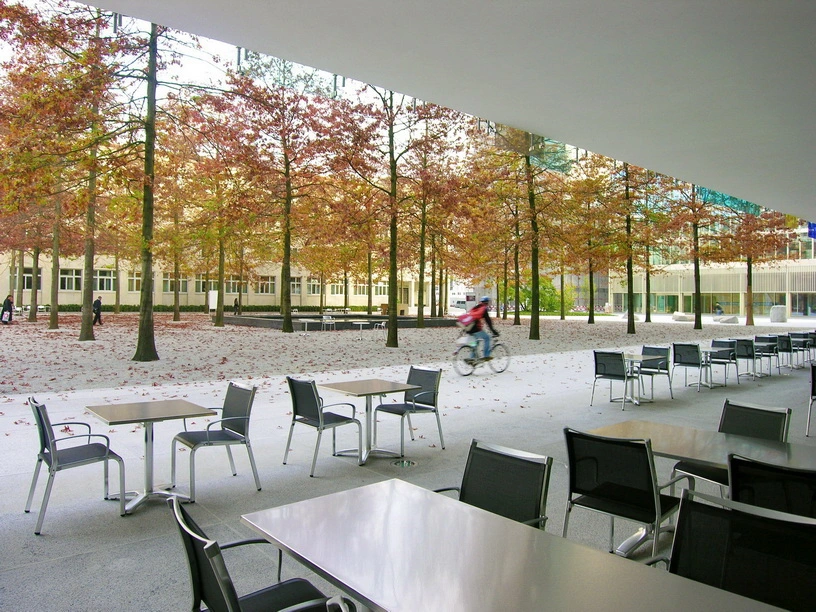
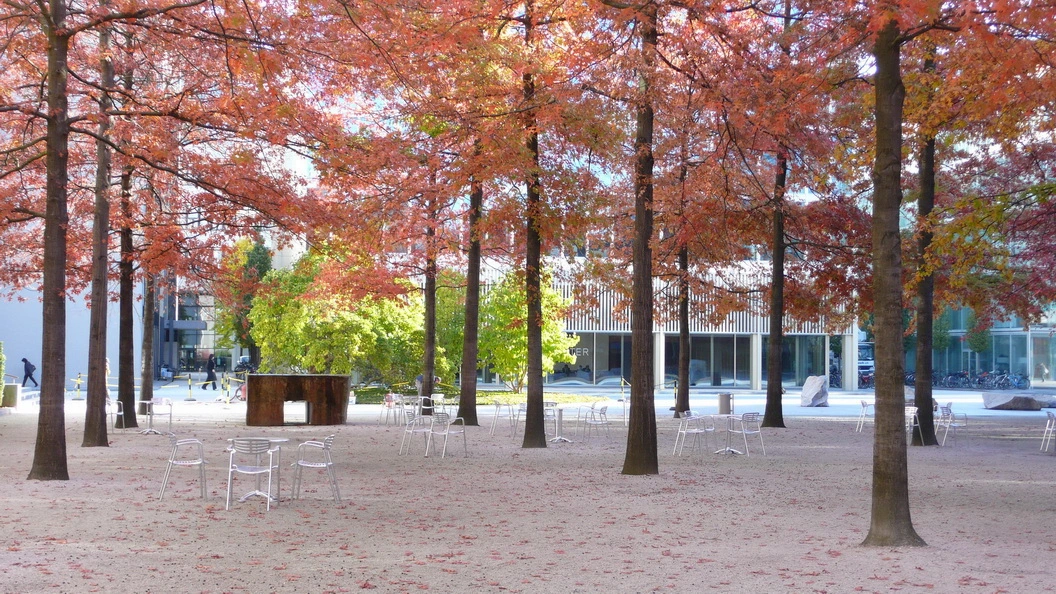
The outdoor space amidst the Novartis Headquarters, embodies the spirit of successful campus design in which employees go to gather for lunch, rest, pass through, and attend events. It acts as canvases for endless types of activities, and is inviting throughout the entire year, changing moods with each season. Further, as a result of being in one of the premier art capitals of the world, users find themselves strolling through an outdoor gallery of art installation and architecture. Featured artists include Jenny Holzer, Ulrich Ruckriem, Alicia Panalba, Richard Serra and Alan Fletcher among others. Surrounding buildings have been built by some of today’s well known architects such as Raphael Moneo, Renzo Piano, Frank Gehry, and Tadao Ando.
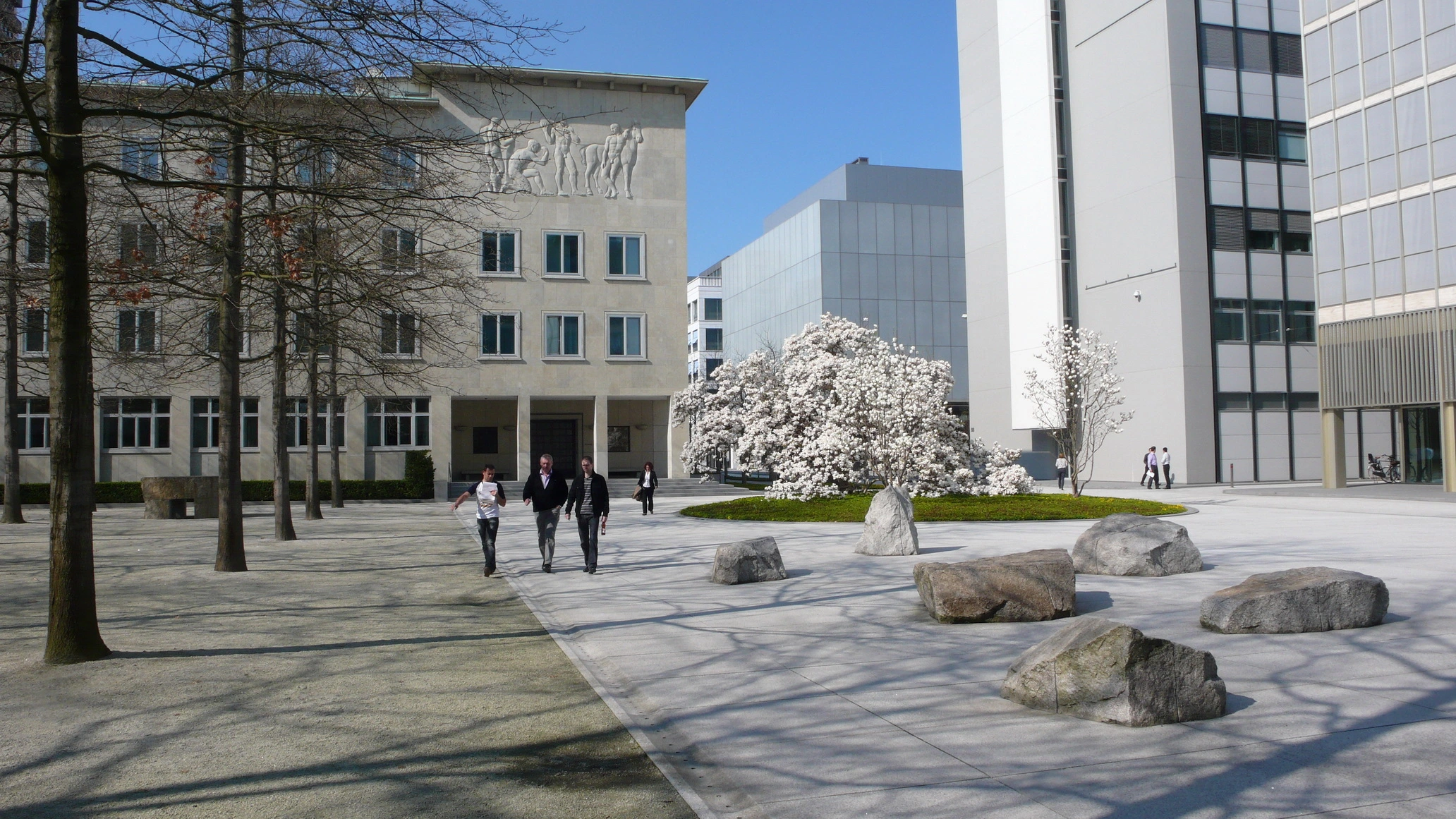
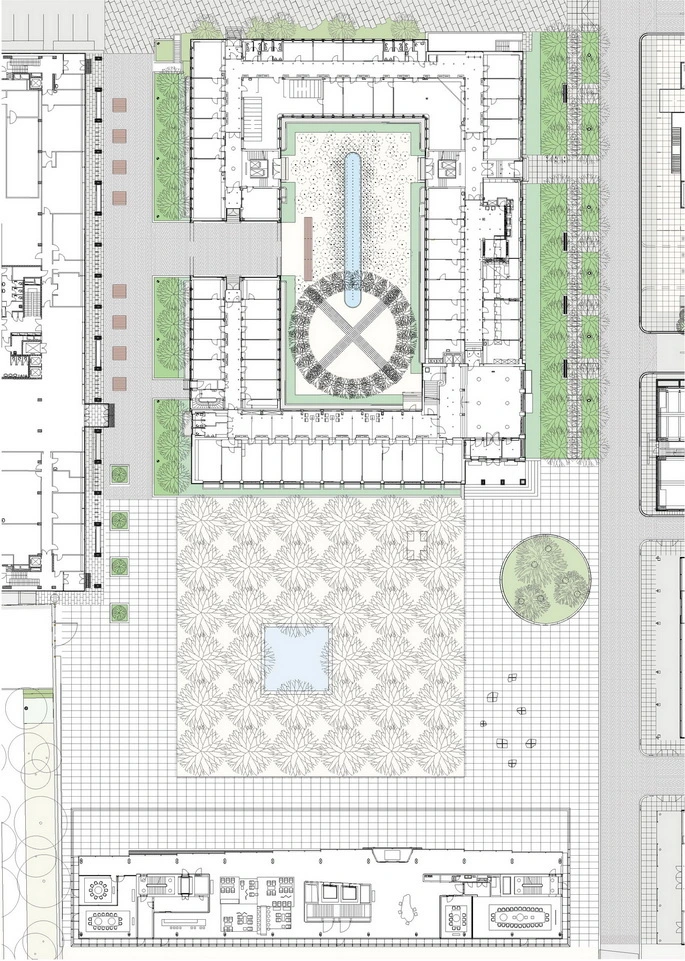
The landscape architect designed the principal outdoor spaces surrounding the headquarters including the Forum square, the Courtyard, and the streetscape along Fabrikstrasse. The entry component of the Forum square is modeled after a historic town square to honor Basel’s history. Located just beyond the main gate off Fabrikstrasse, it is a simple, elegantly proportioned stone plaza centered on a bosque of thirty-five grandly scaled Pin oaks. Historically a symbolic species to Basel’s former Celtic population, Pin oaks were used to define communal and sacred spaces. Native to the region, the mature oaks were carefully placed adjacent to the buildings in a pattern extending the architectural grid of the surrounding buildings. The trees unify the vibrant architecture at its perimeter, and brilliantly change colors from summer to fall.
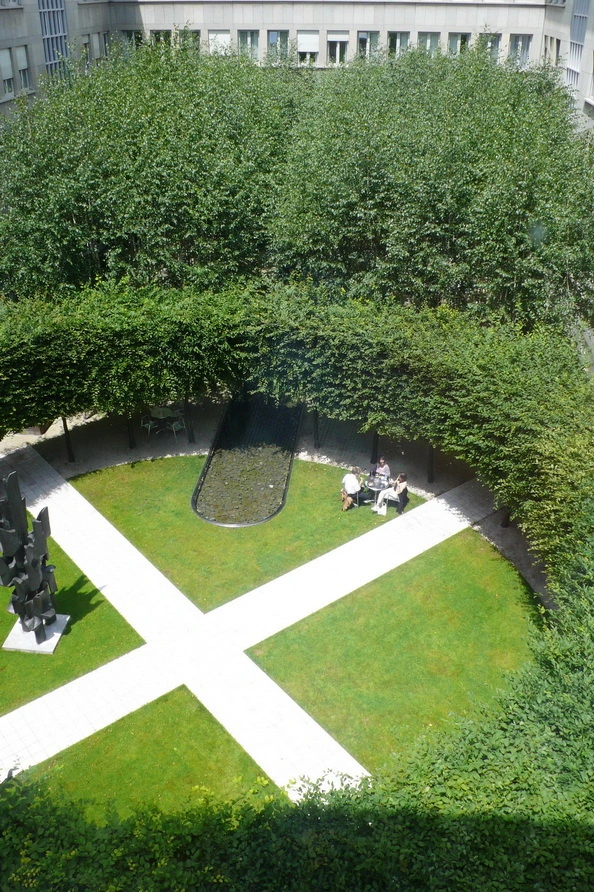
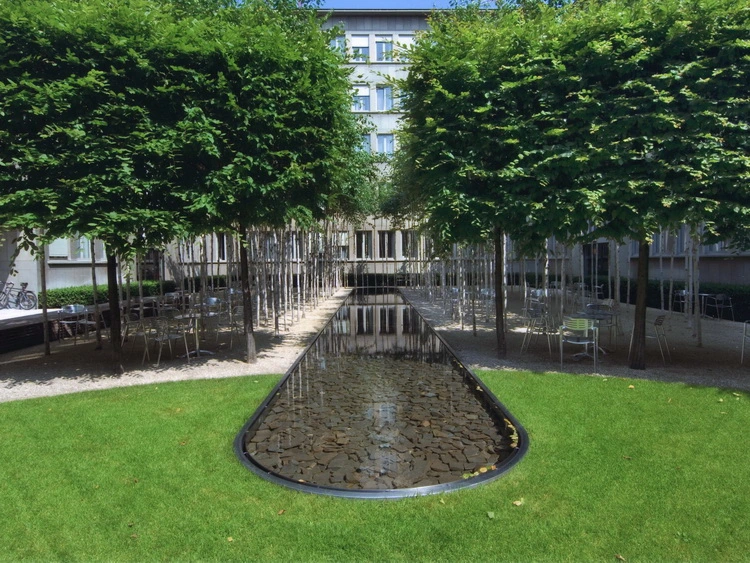
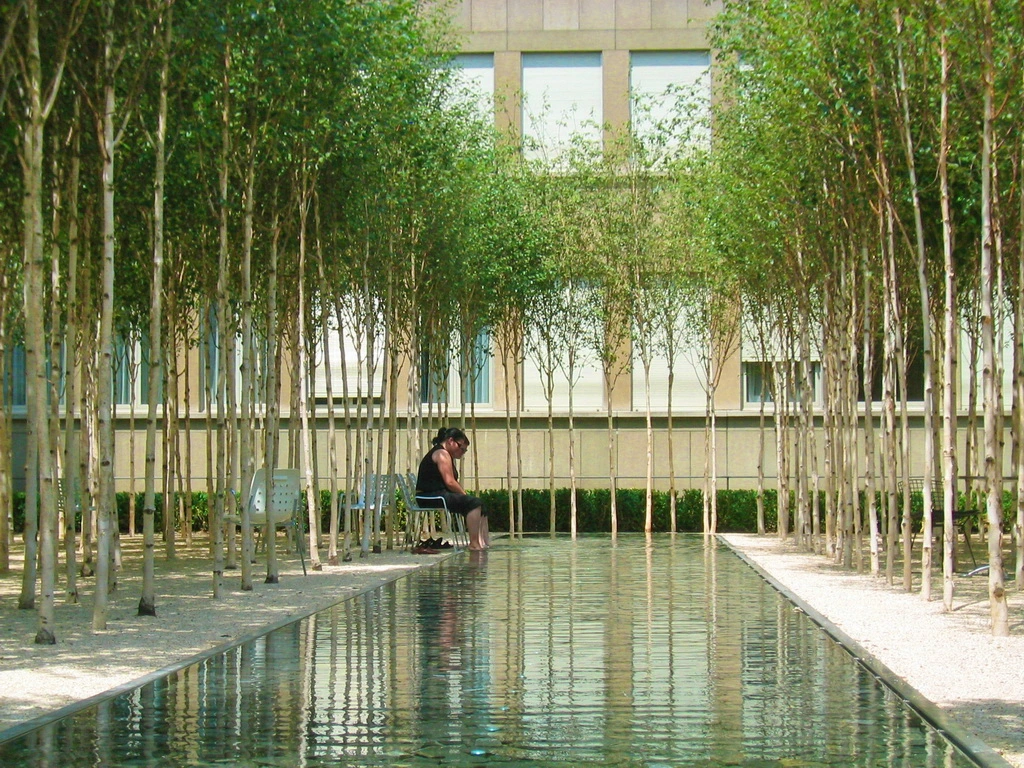
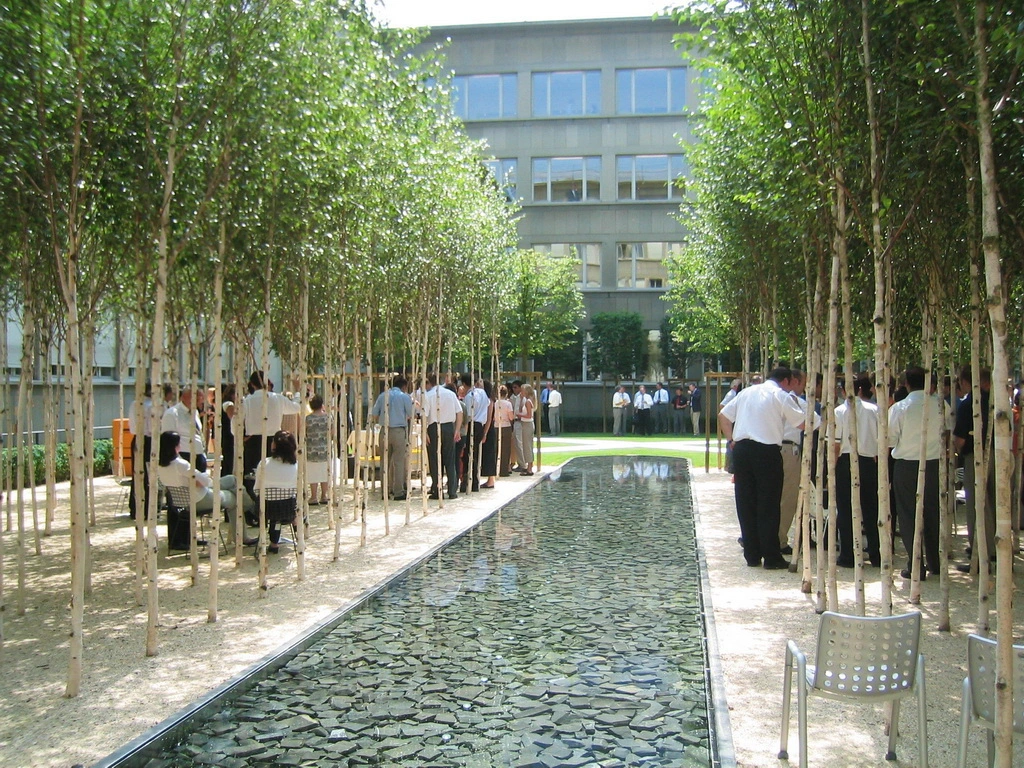
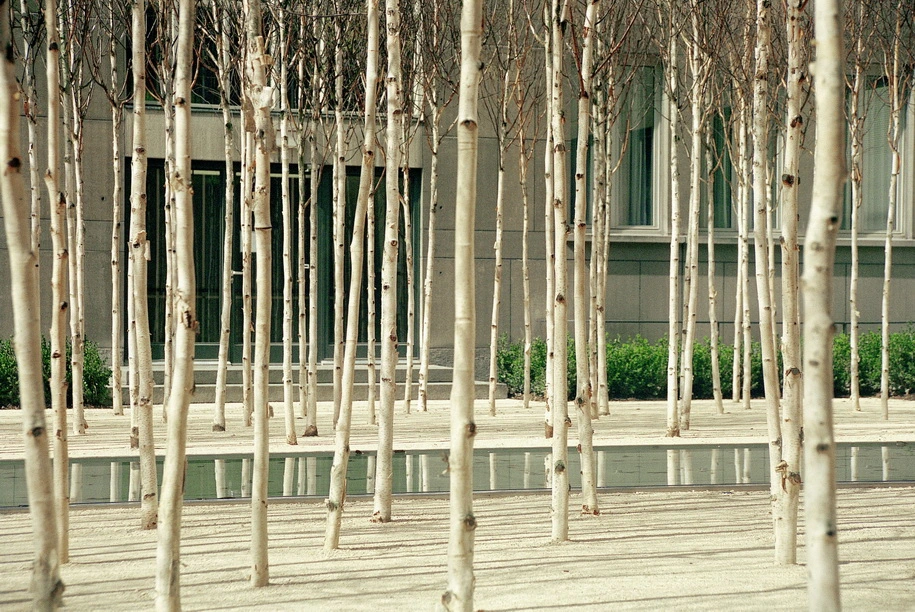
The Courtyard component of the Headquarters building was designed as a venue for casual meetings, group lunches, and company events. A long, shallow reflection pool is surrounded by 235 Himalayan birch trees planted in increasing density from the building walls toward the pool. The birch grove is paved with crushed, decomposed granite and furnished with moveable stainless steel café furniture. The crushed stone, processed from native Rhine riverstone, filters the rain water before it recharges the water table of the Rhine River. Within the courtyard, a circle of clipped European hornbeam forms a lawn space that looks down the birch-lined pool. A crossed white marble path joins the door of the executive wing of the headquarters building to the courtyard and the underpass leading to the surrounding campus. A bronze sculpture by Alicia Penalba stands off-center from the path.
Sustainability and Design Value
Specific design elements were employed to reduce overall campus energy use, reduce and reuse storm water run-off, and incorporate locally produced materials. Native Pin oaks were used to minimize irrigation requirements; green roof plantings acted as building insulators and storm water reducers; native river rock was used to filter particulates out of all of the storm water; and the existing building materials were recycled and used as a component of the structural soil, below the stone paving in the Forum.
Social and economic sustainability were key factors in Novartis’ decision to remain in Basel. Novartis is one of the city’s largest and oldest employers, so relocating the campus outside of the city would have been economically detrimental to Basel. The design of the campus recalls and celebrates historic attributes of the city, which provide an inviting work environment for the nearly 5,500 employees.
The outdoor space amidst the Headquarters buildings is a keystone landscape project setting the bar of high standards for the future development of the campus, and the surrounding streetscapes.
-
Lead Designer
PWP Landscape Architecture
Peter Walker, FASLA
David Walker, ASLA
Paul Sieron
Conny Roppel
Matthias Wehrle
Kendra TaylorLandscape Architect of Record
Salathé LandschaftsarchitekturEngineer
Rapp Infra AGLighting Design
Licht Knust Licht AGLighting
Selux
Advertisement
Related Awards
Award of Excellence, General Design
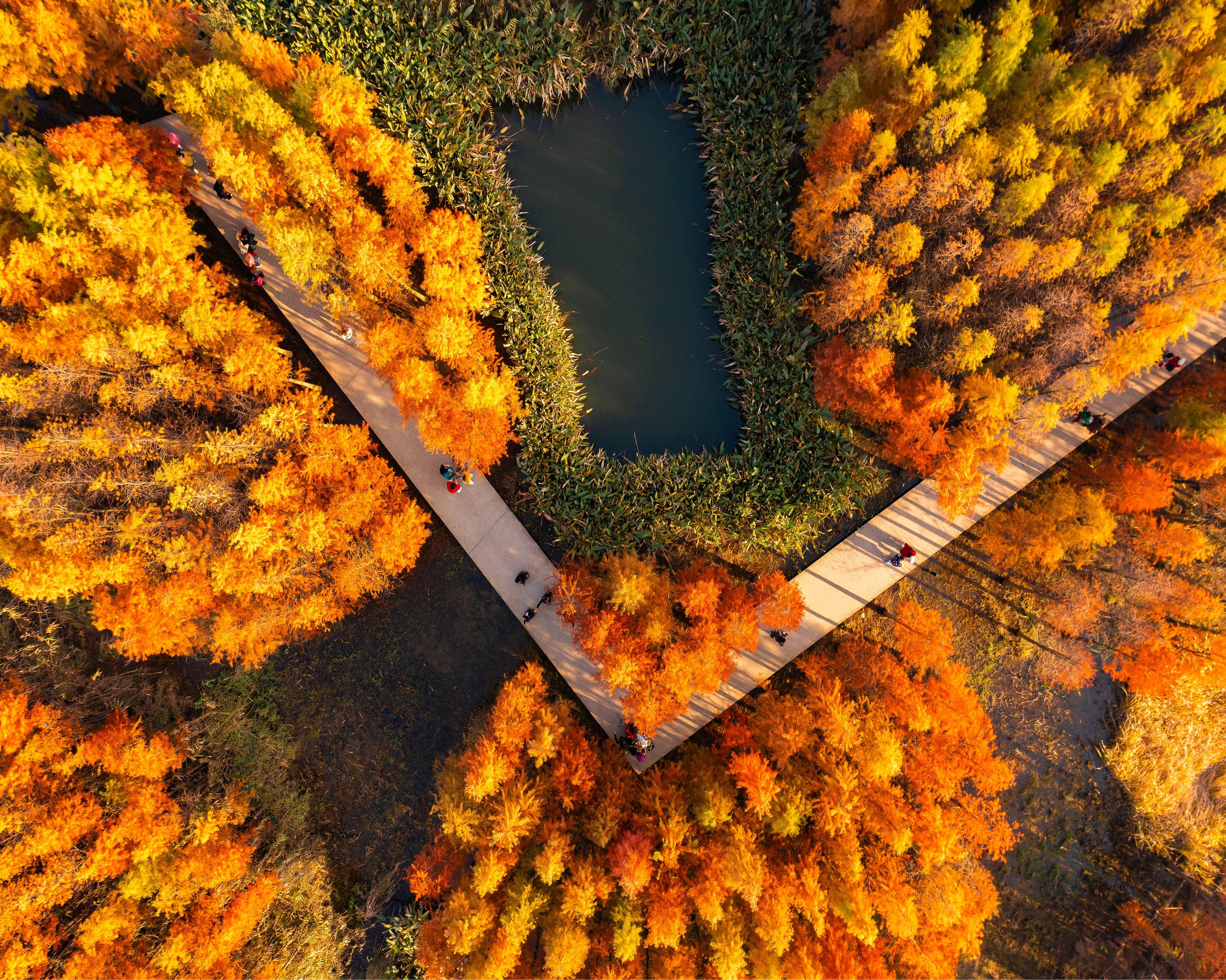
A Floating Forest: Fish Tail Park in Nanchang City
In Nanchang, within the Yangtze River floodplain, we revitalized a heavily degraded 126-acre landscape into a floating forest that manages stormwater, restores habitats, and provides diverse recreational spaces—all within a limited budget and a short timeline. This innovative urban nature model strengthens the district’s identity and spurs surrounding development. Fish Tail Park offers a scalable solution for flood-prone regions, seamlessly integrating flood resilience, ecological restoration