
.webp?language=en-US)


Medlock Ames Tasting Room and Alexander Valley Bar
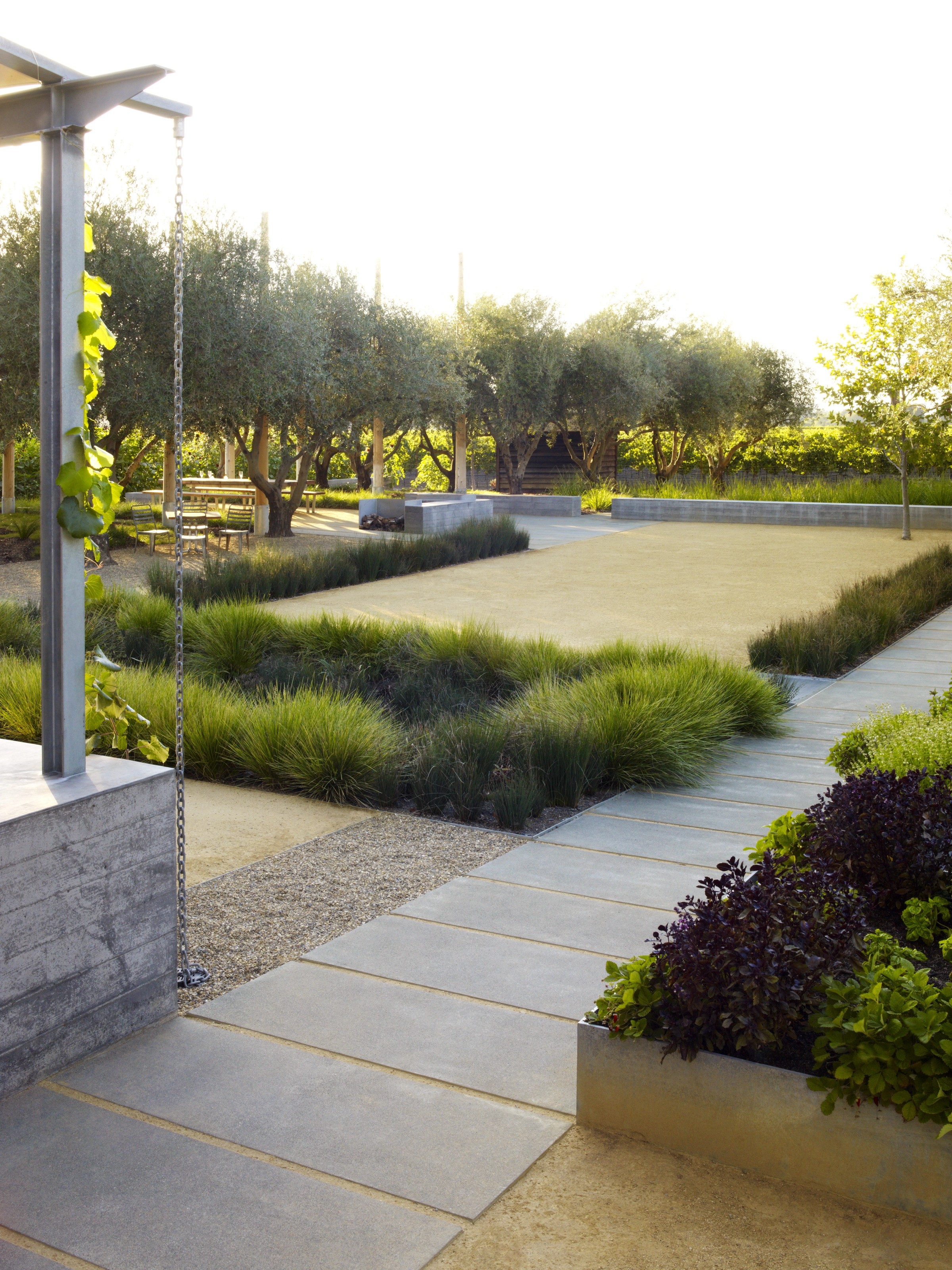
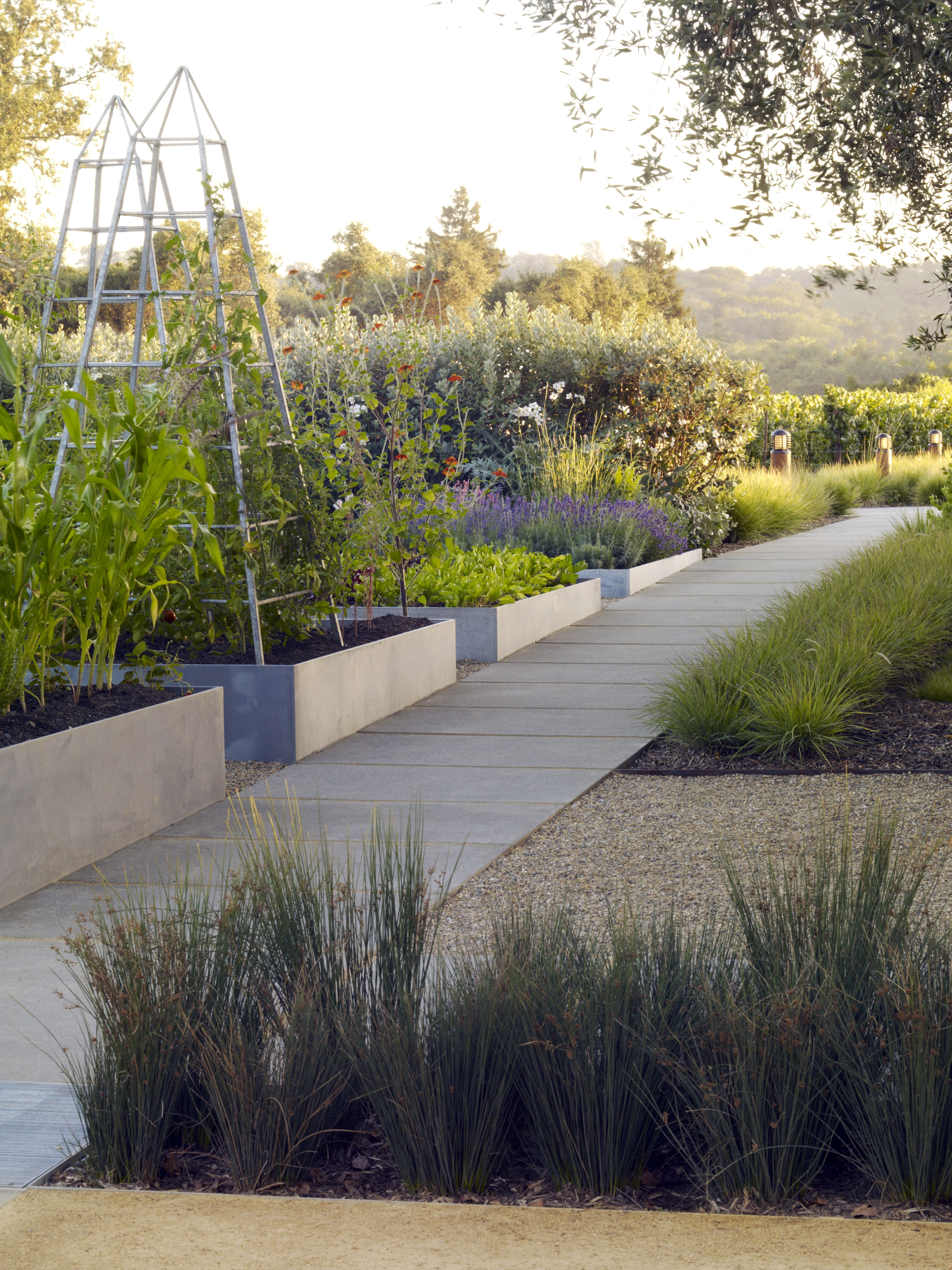
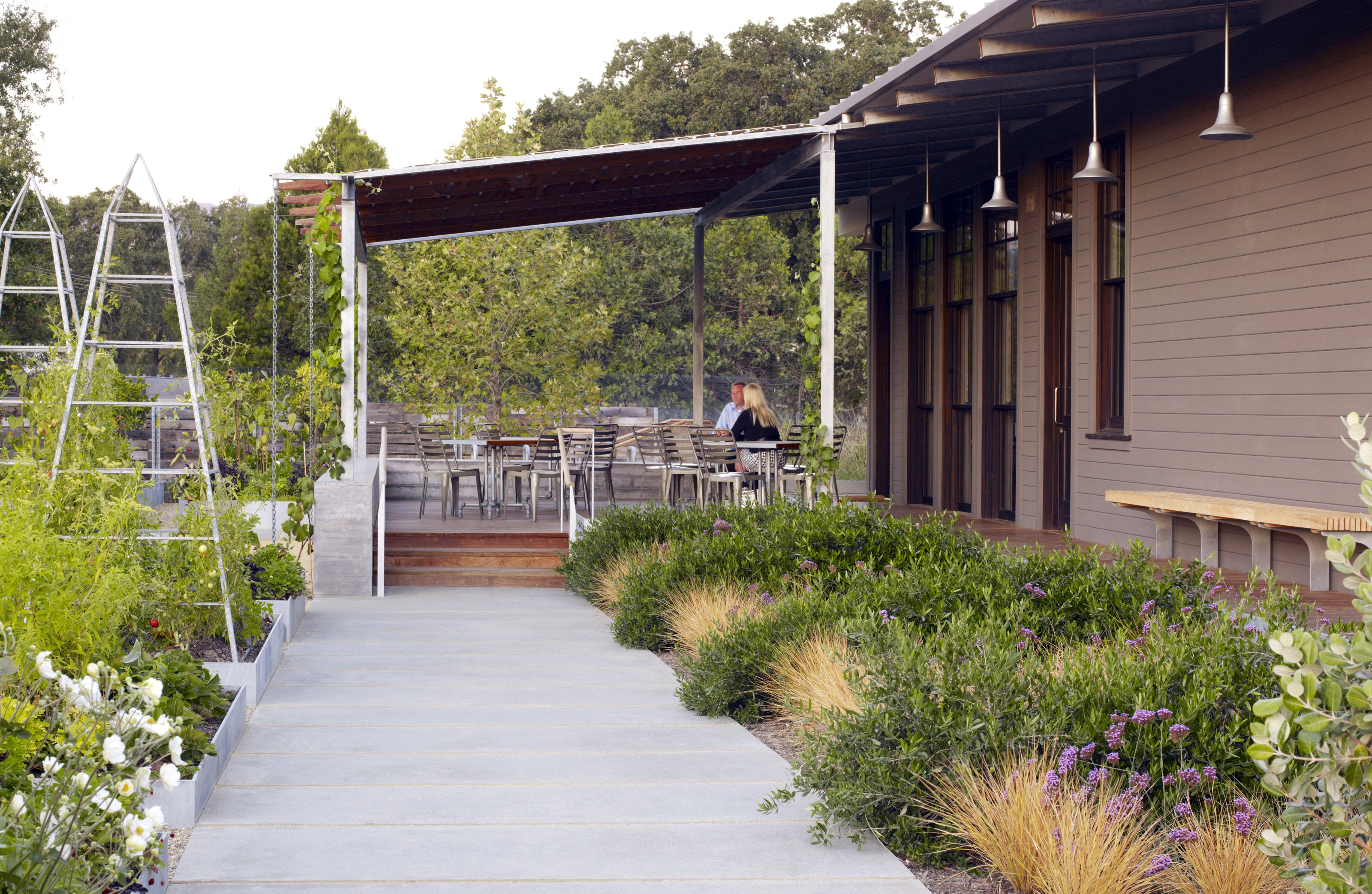
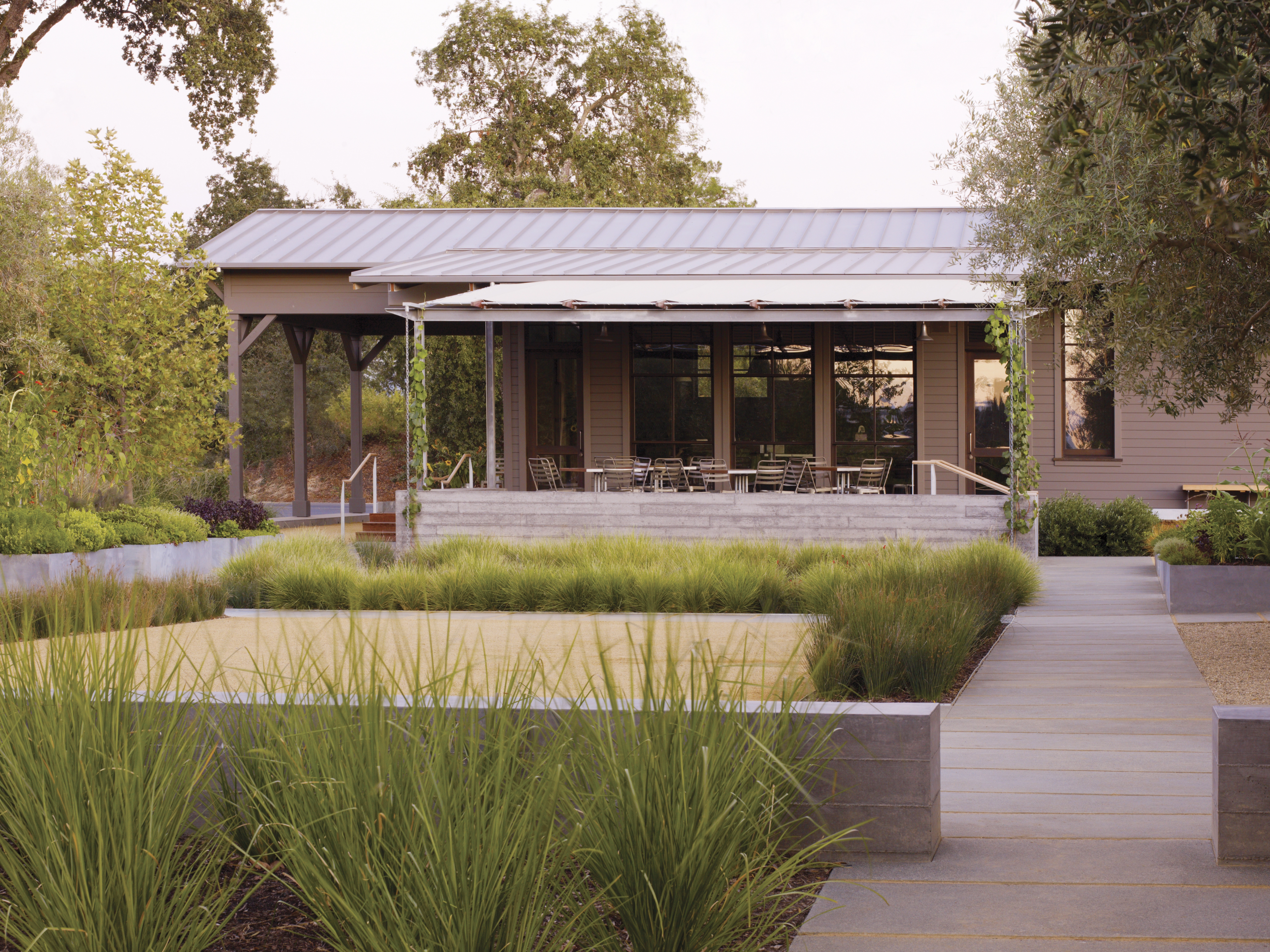

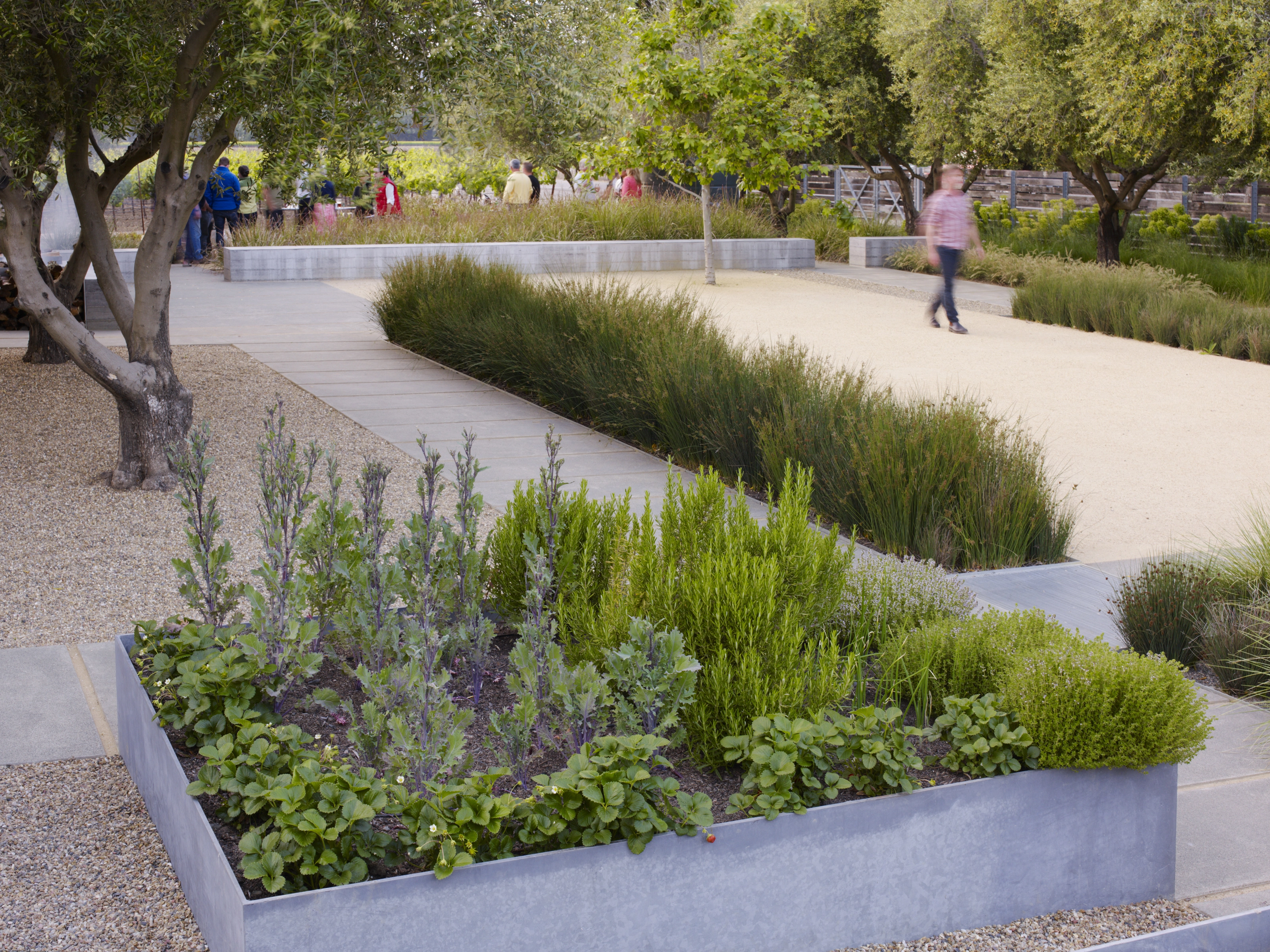
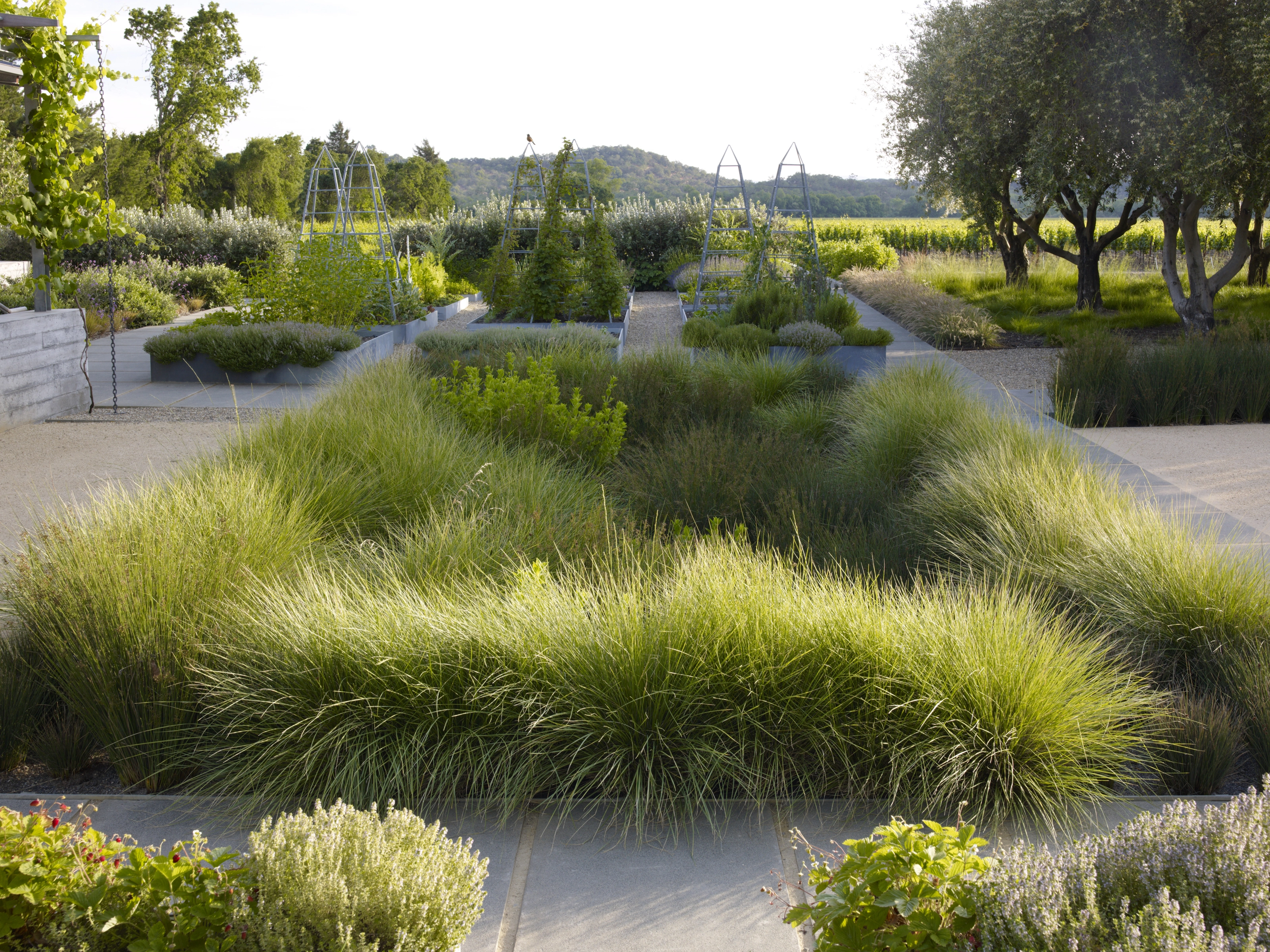
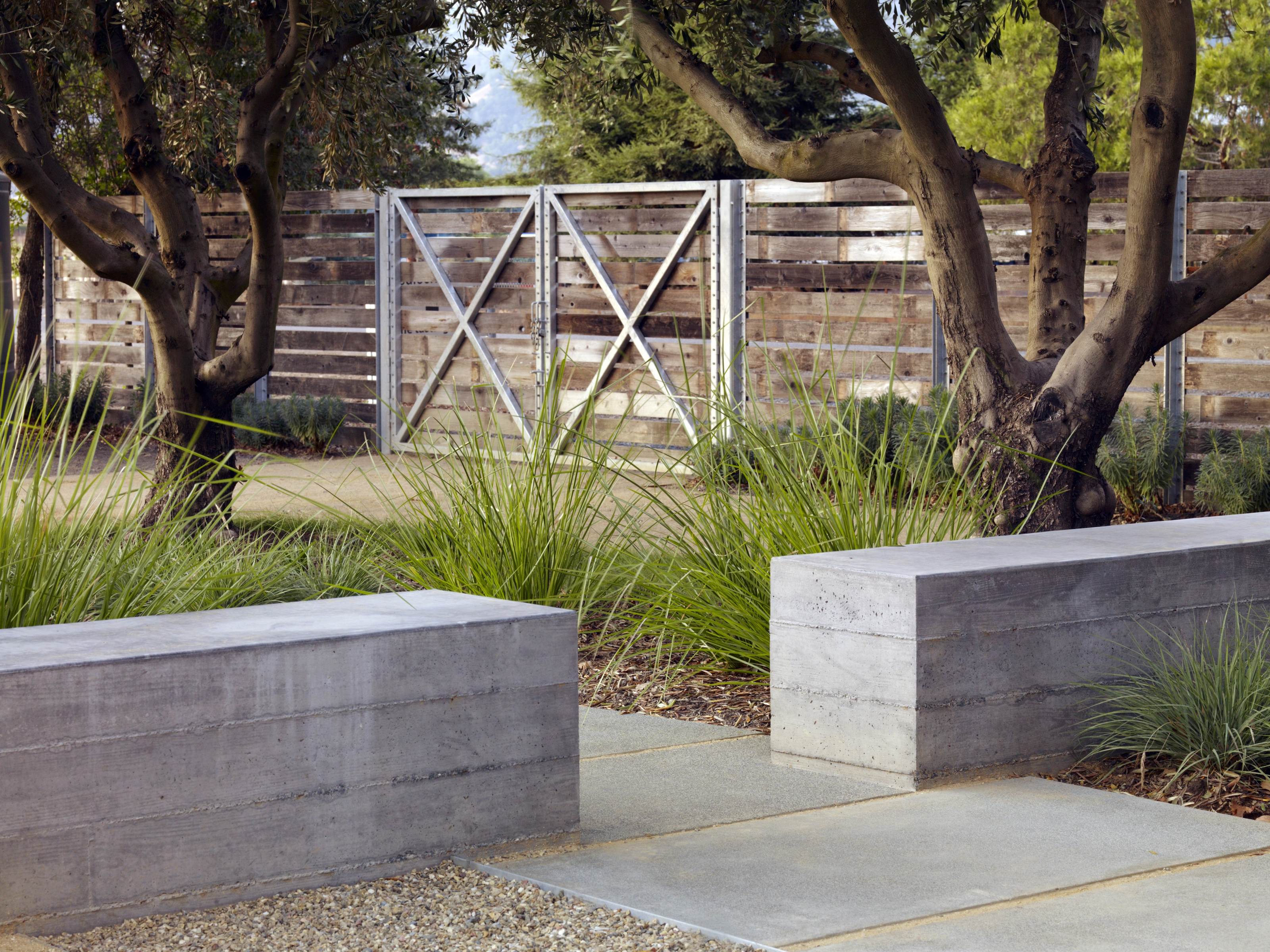
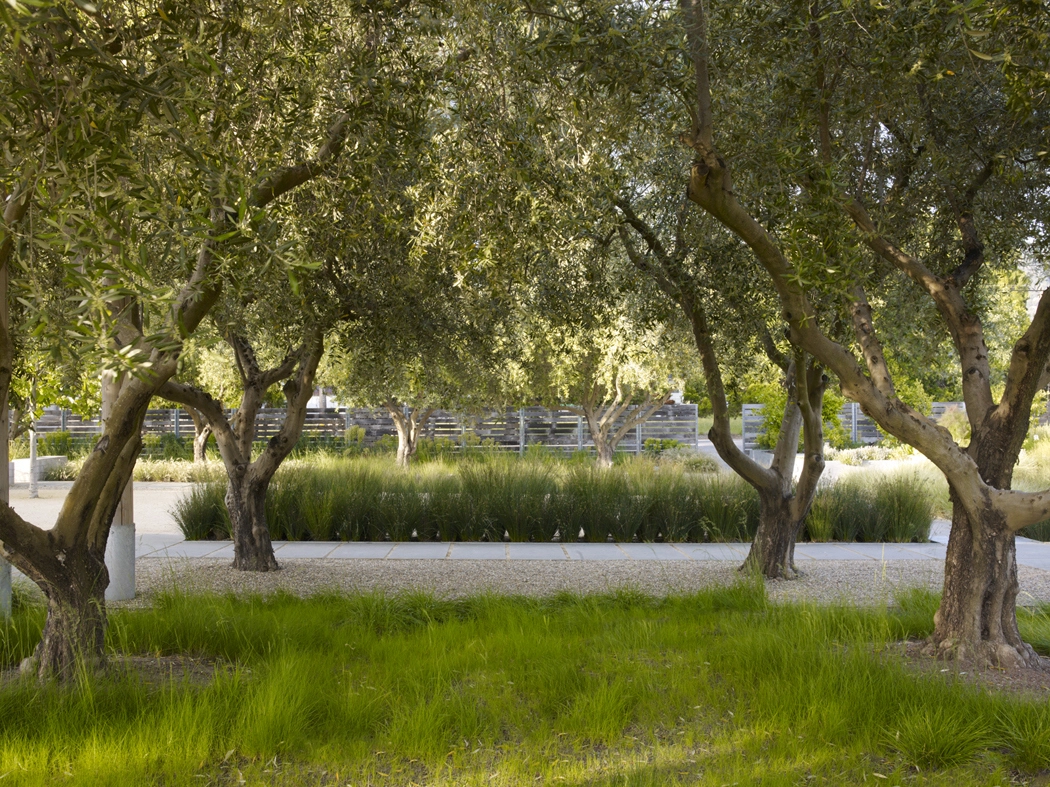
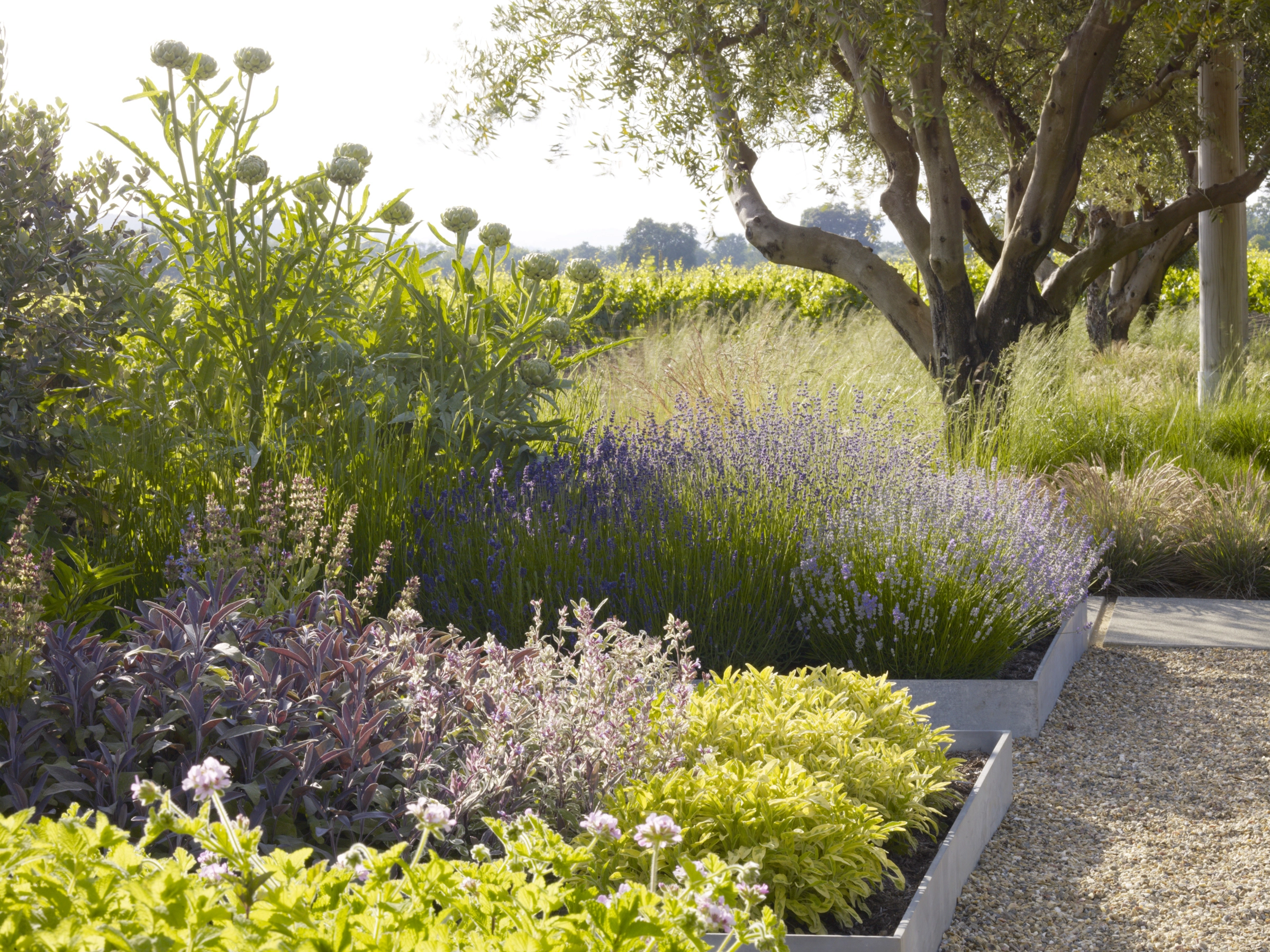
Rustic modern. This is amazingly detailed, both quiet and painterly. The materiality of the project is authentic, beautiful, and calm.
Awards Jury
-
This project is a model of the potential of landscape architecture to reflect and encourage stewardship and conservation practices. The client's commitment to preserving native habitat, regional plant ecology, and water resources is salient throughout. The design transforms a historical, defunct 1920's gas station and impermeable lot into an example of hydrologically focused, ecologically reflective design which accommodates a tasting room, an organic garden, and a farm stand for an organic winery and vegetable farm.
-
The design applies the language of contemporary landscape architecture to make evident the client's deeply held commitment to land stewardship and protection of biodiversity at this one-acre tasting room. The design team worked closely with the owner and architect to create visual, material, and spatial continuity between the interior of the tasting room, the garden, and the landscape beyond. This was achieved through careful selection of regional native and utilitarian plants, through the repurposing of existing materials discovered on site during demolition, by giving stormwater management a central role in organizing the site, and by providing opportunities for spontaneity and play.
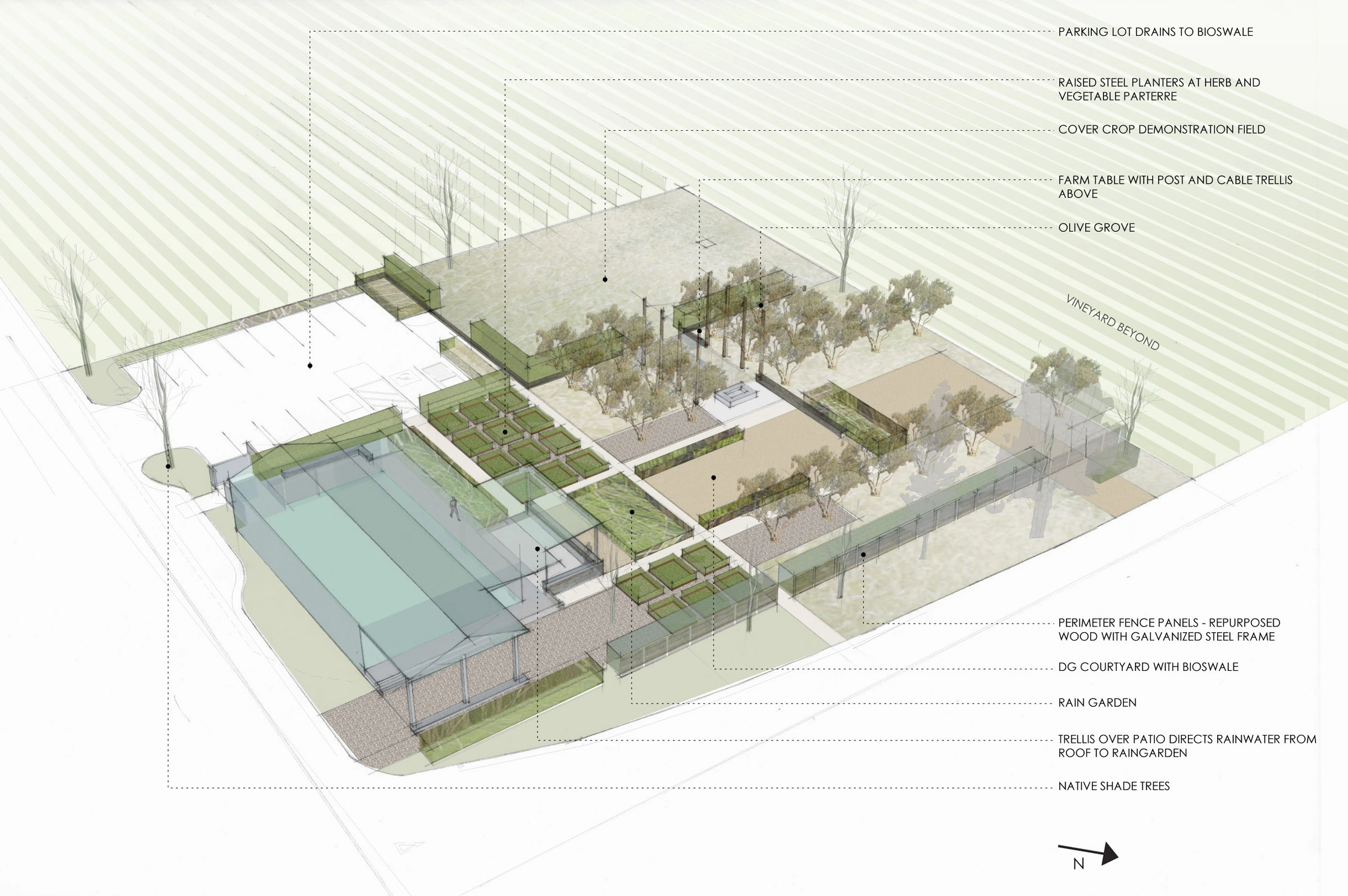
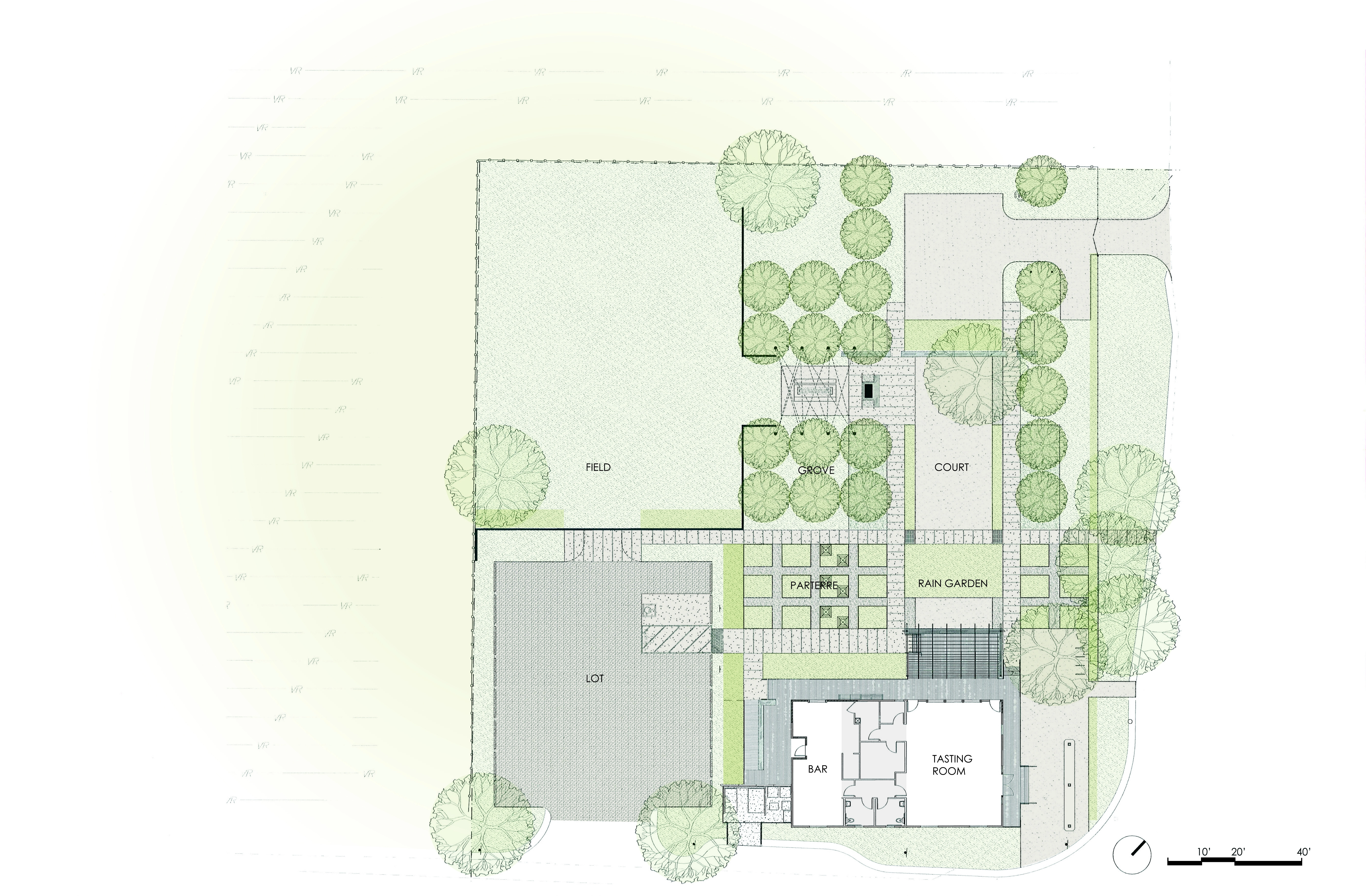
Throughout the site, the design celebrates the productive landscape of seasonal organic edibles, and references the 375-acre organic vineyard and winery where the grapes are grown and the wine is produced. Each planting is meant to provide the public with direct contact to organic farming practices in the context of regional native ecology. A productive olive grove salvages twenty veteran trees from a former olive orchard. The ancient olive trees scale the various court spaces and frame views to the vineyards beyond. The herb and vegetable parterre is composed of a grid of galvanized steel raised beds that grow organic seasonal edibles for wine pairings, and fruits and herbs for use in crafting cocktails at the Tasting Room's bar. A small field in the western corner of the site, accessible by mown paths, is a seasonal demonstration garden of cover crops such as Queen Anne's lace, buckwheat, mustard and sunflowers—plants that are utilized at the Medlock Ames vineyards to attract pollinators and other beneficial insects. Framing the one-acre site, grasses, Manzanita, and native oak trees recall the primary vegetation communities present at the client's farm and preserve.
A carefully considered site drainage strategy heightens the experience of stormwater infrastructure and is responsive to seasonal inundations typical of the region. Subtle manipulation of grades directs rainwater along vegetated swales and into a rain garden that is on-center with the main tasting room space. Native wetland plants naturally filter and absorb rainwater captured from the site and slow its return to the water table and ultimately the fragile Russian River. Roof water is conveyed over the trellis at the deck, down rain chains and into the rain garden. Permeable ground plane surfaces such as gravel allow for filtration and groundwater recharge, and relieve the burden on the maximized municipal stormwater system.
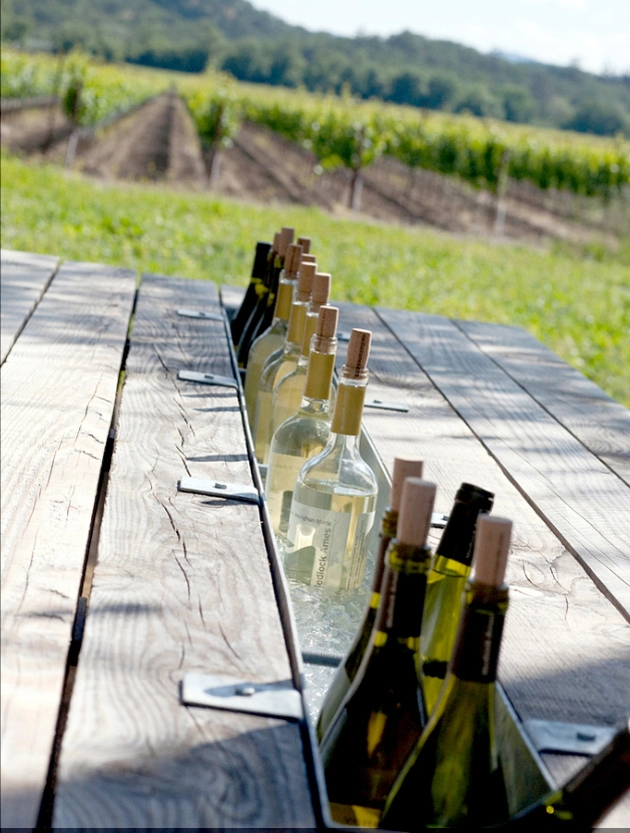
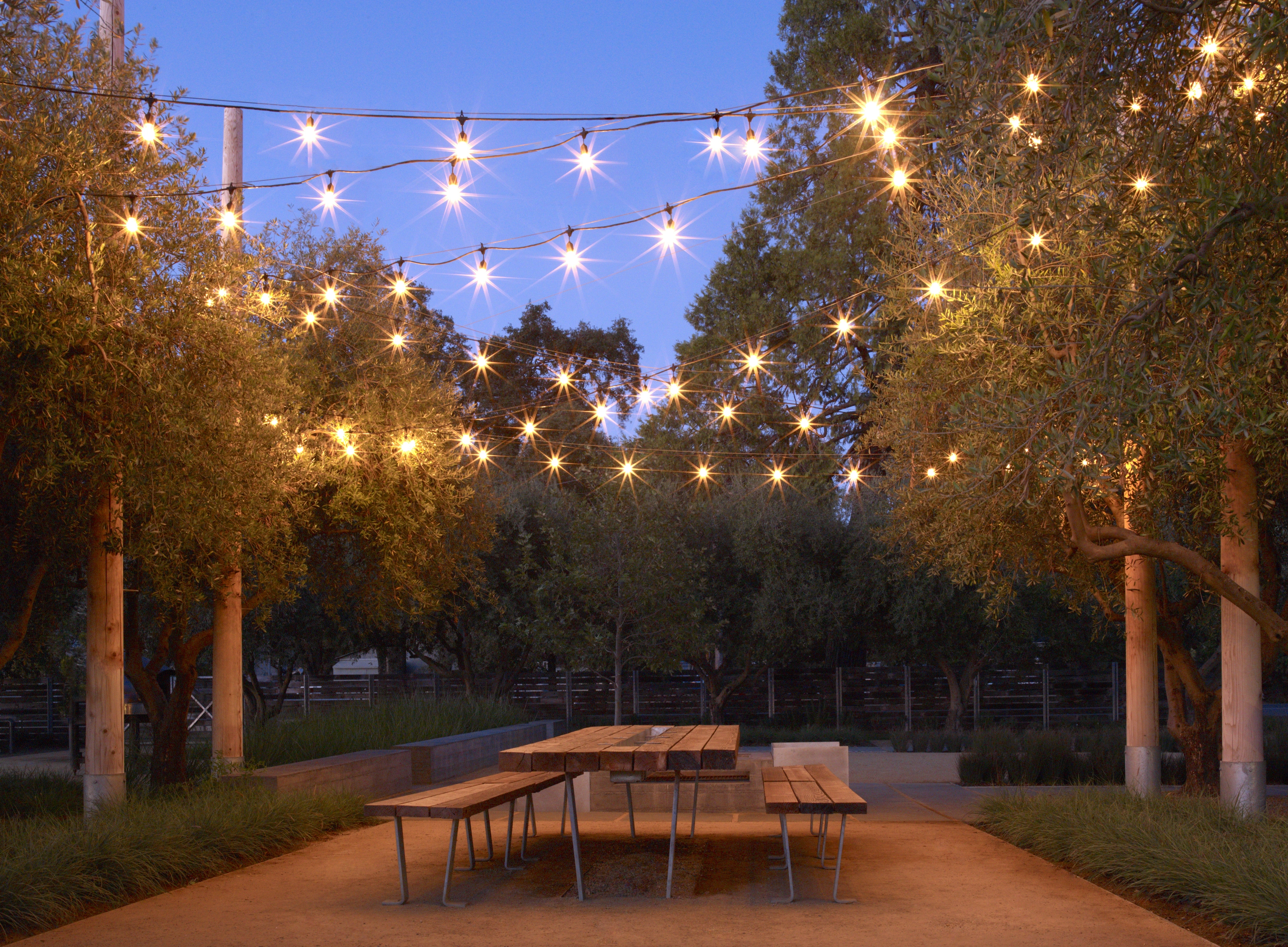
Site-specific installations amplify and playfully reinterpret the vineyard vernacular. An over-sized post and cable trellis structure is nestled into the olive grove and conjures the geometry of vineyard trellis infrastructure—the cables and posts that blanket the local landscape. Beneath the posts and cables, a custom 12' long wood farm table references Villa Lante with a long galvanized steel trough down the middle for icing bottles of white wine in summer.
The materials used in the Tasting Room landscape are equally expressive of the client's attention to local natural systems and resource conservation; discreet material choices reference qualities of the farm property: galvanized steel, weathered repurposed wood, board-formed concrete, gravel and decomposed granite. Concrete and gravel paths provide a datum against which to measure the seasonal variations that occur within the sustainably managed landscape. An existing redwood fence intentionally salvaged during demolition, was repurposed to lend a complex weathered finish citing the history of this iconic site.
-
Design & Construction Team
Lead Designer
Nelson Byrd Woltz Landscape ArchitectsProject Team
Principal in Charge
Thomas Woltz, ASLA, RLASenior Project Manager
Jeffrey Longhenry, ASLASenior Designer
Dorothy BothwellStaff Designer
Jennifer Brooks, ASLAArchitect of Record
Tierney / Figueiredo ArchitectsInterior Architect
Wade Design ArchitectsInterior Designer
Wick Design GroupLocal Landscape Architect
Alexis Woods Landscape DesignMeadow Consultant
Greenlee and AssociatesGeneral Contractor
EarthTone ConstructionLandscape Contractor
Creative EnvironmentsFeatured Products
Plants
Ancient Olive Trees
Greenlee NurseryHardscape
Wheeler Zamaroni (DG)Lighting
Hunza Bollard 300, Hunza step light, Targetti Poulson LED planter lightingFurniture
CustomFences/Gates/Walls
Custom, repurposedLumber/Decking/Edging
IpeDepot.comWater Management/Amenities
McNichols steel bar grate (over swale)
Advertisement
Related Awards
Award of Excellence, General Design
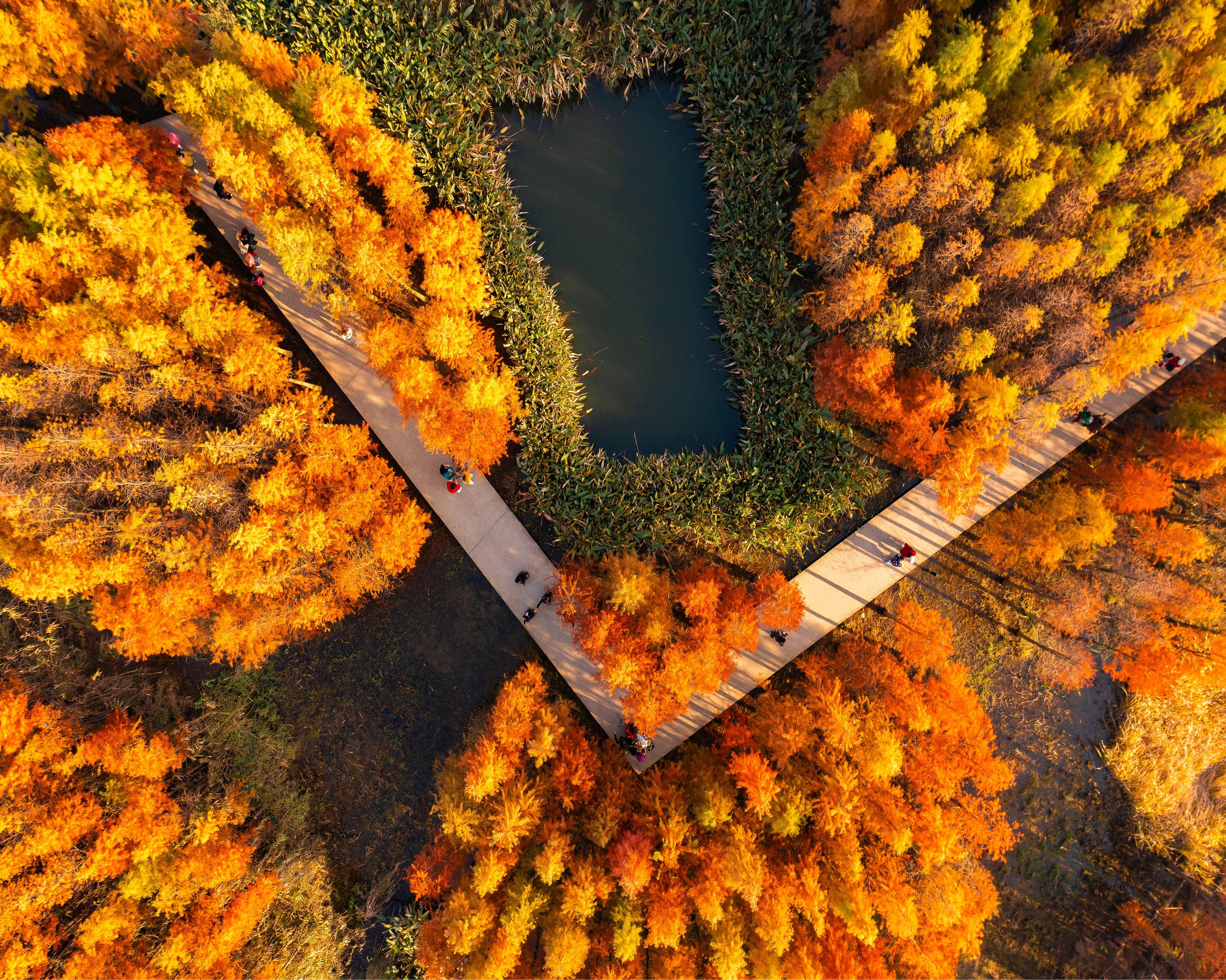
A Floating Forest: Fish Tail Park in Nanchang City
In Nanchang, within the Yangtze River floodplain, we revitalized a heavily degraded 126-acre landscape into a floating forest that manages stormwater, restores habitats, and provides diverse recreational spaces—all within a limited budget and a short timeline. This innovative urban nature model strengthens the district’s identity and spurs surrounding development. Fish Tail Park offers a scalable solution for flood-prone regions, seamlessly integrating flood resilience, ecological restoration