
.webp?language=en-US)


Lakewood Garden Mausoleum @ Lakewood Cemetery
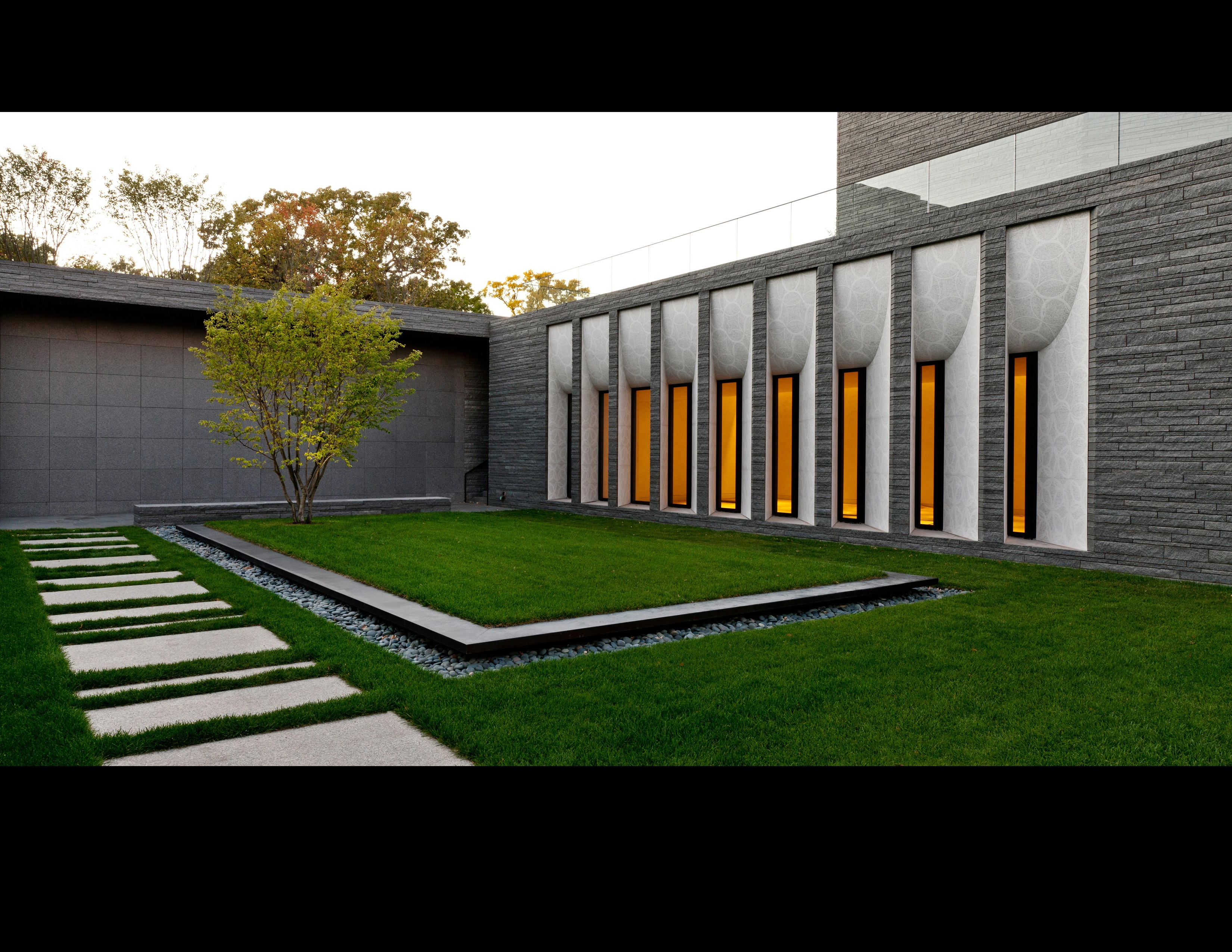
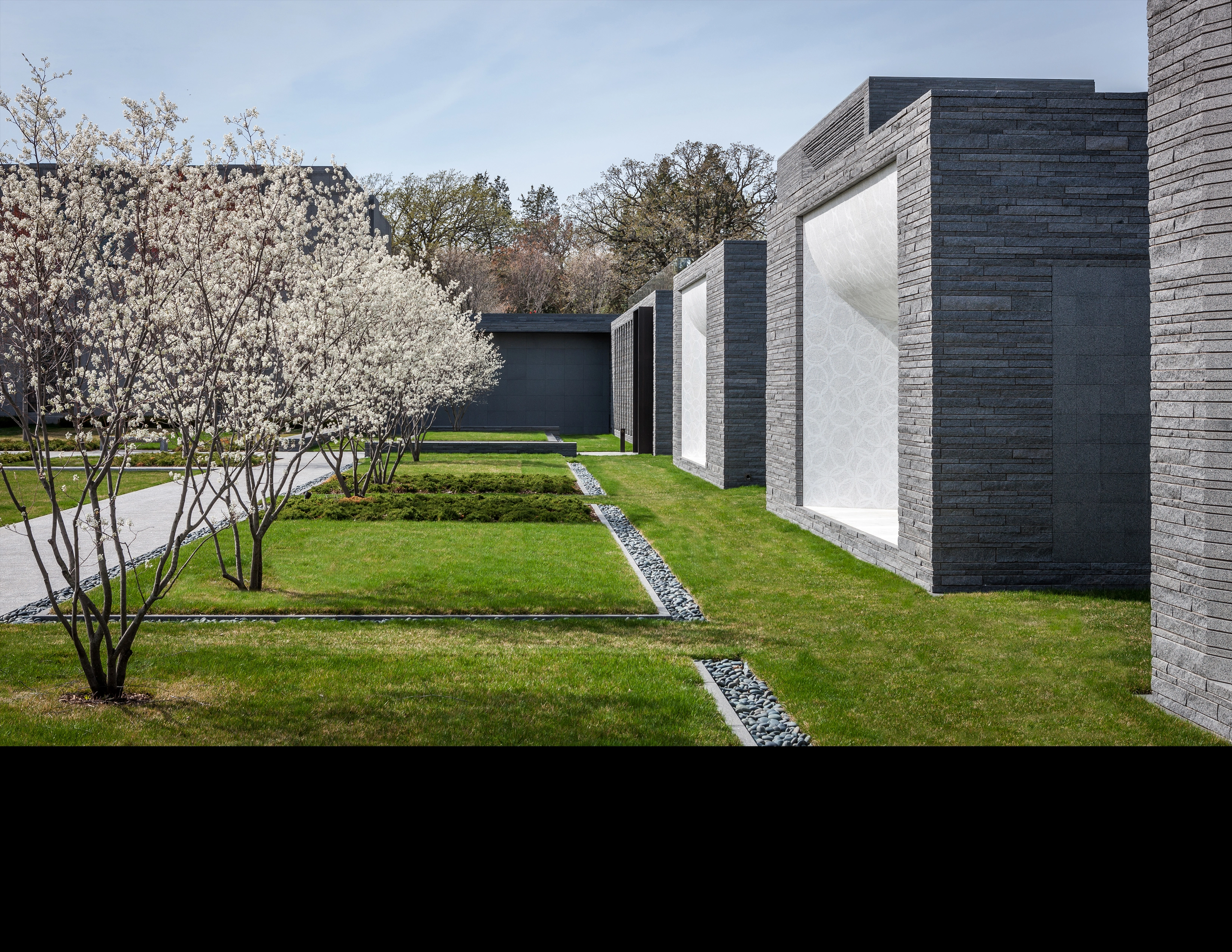
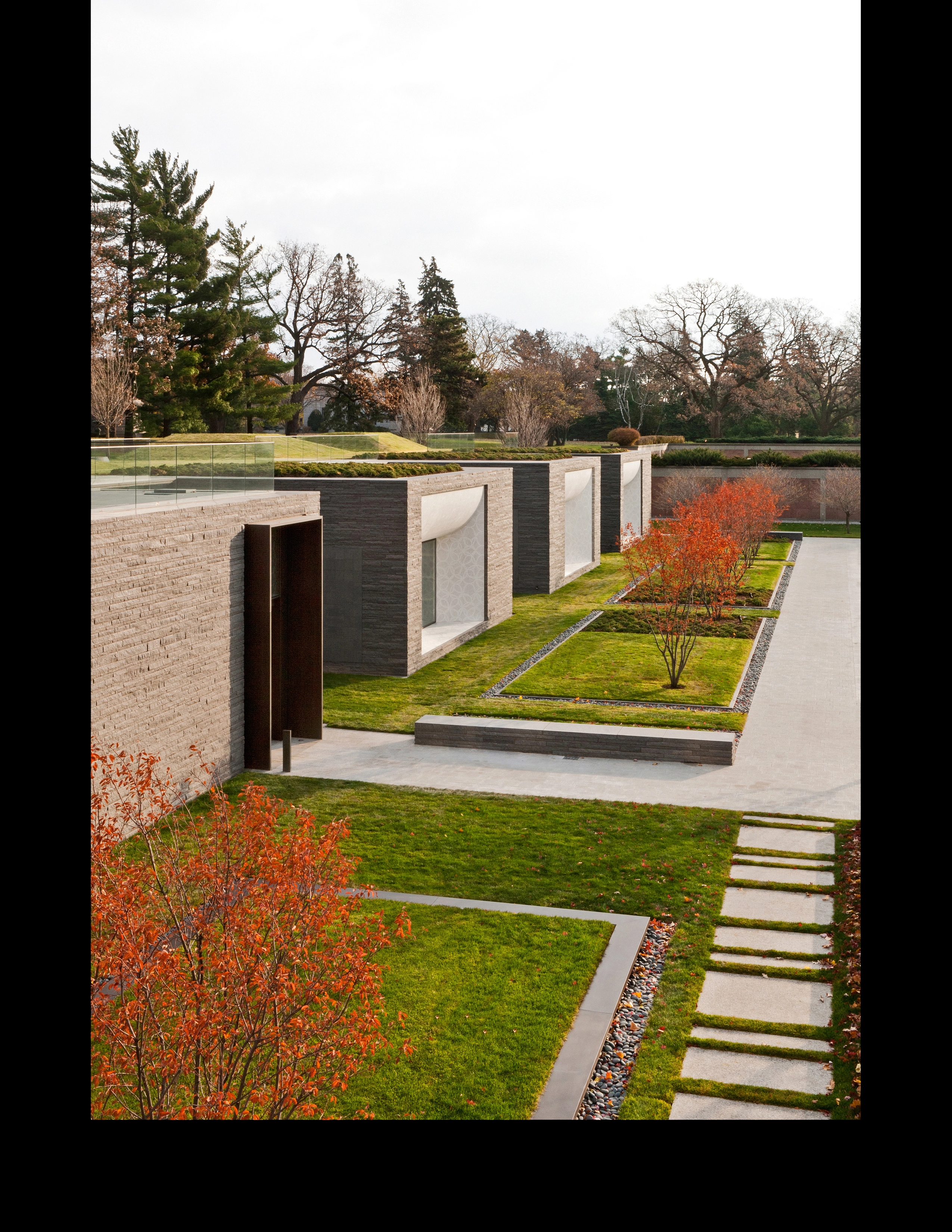
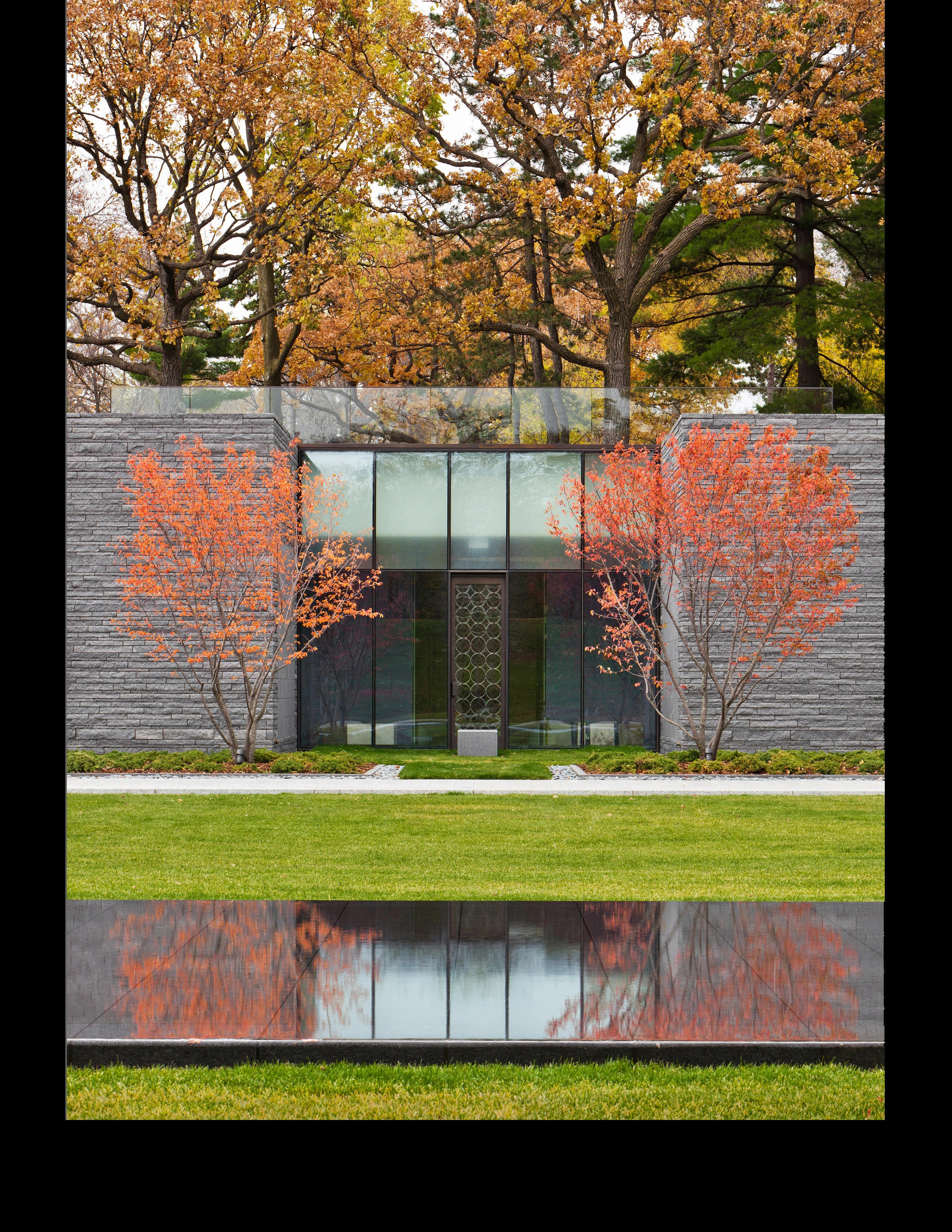
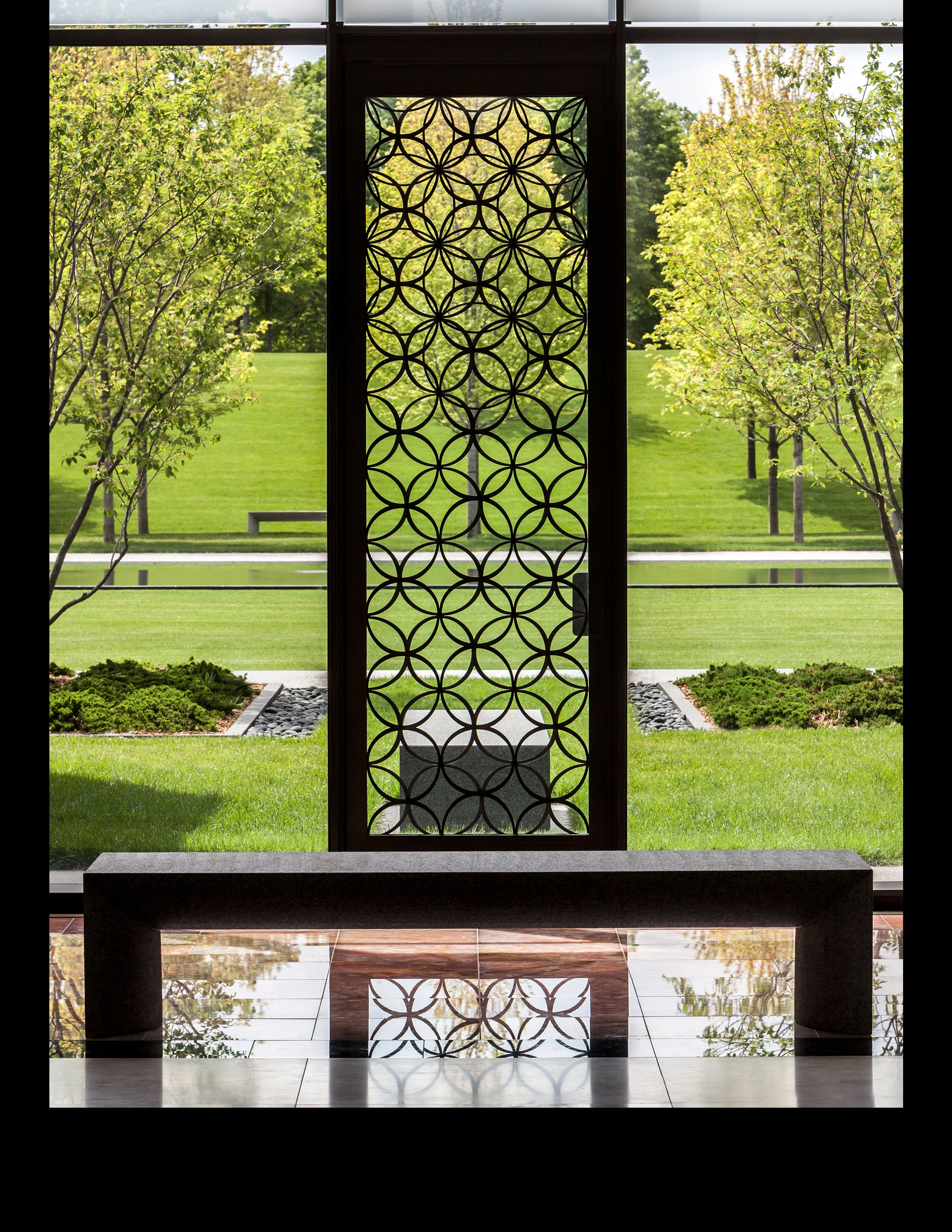


Refreshing. It functions in a way that isn’t necessarily part of our vocabulary. There are different moments in the design.
Awards Jury
-
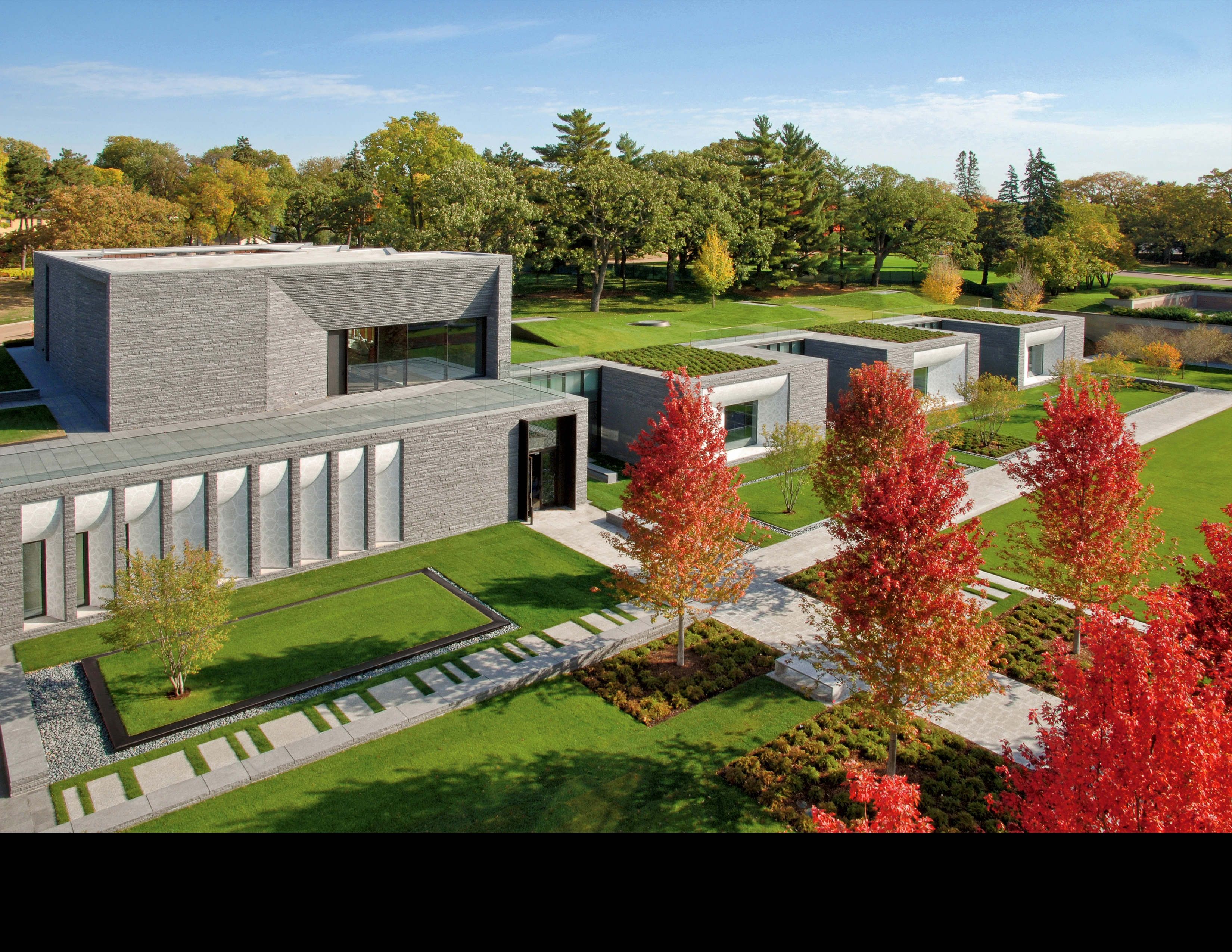
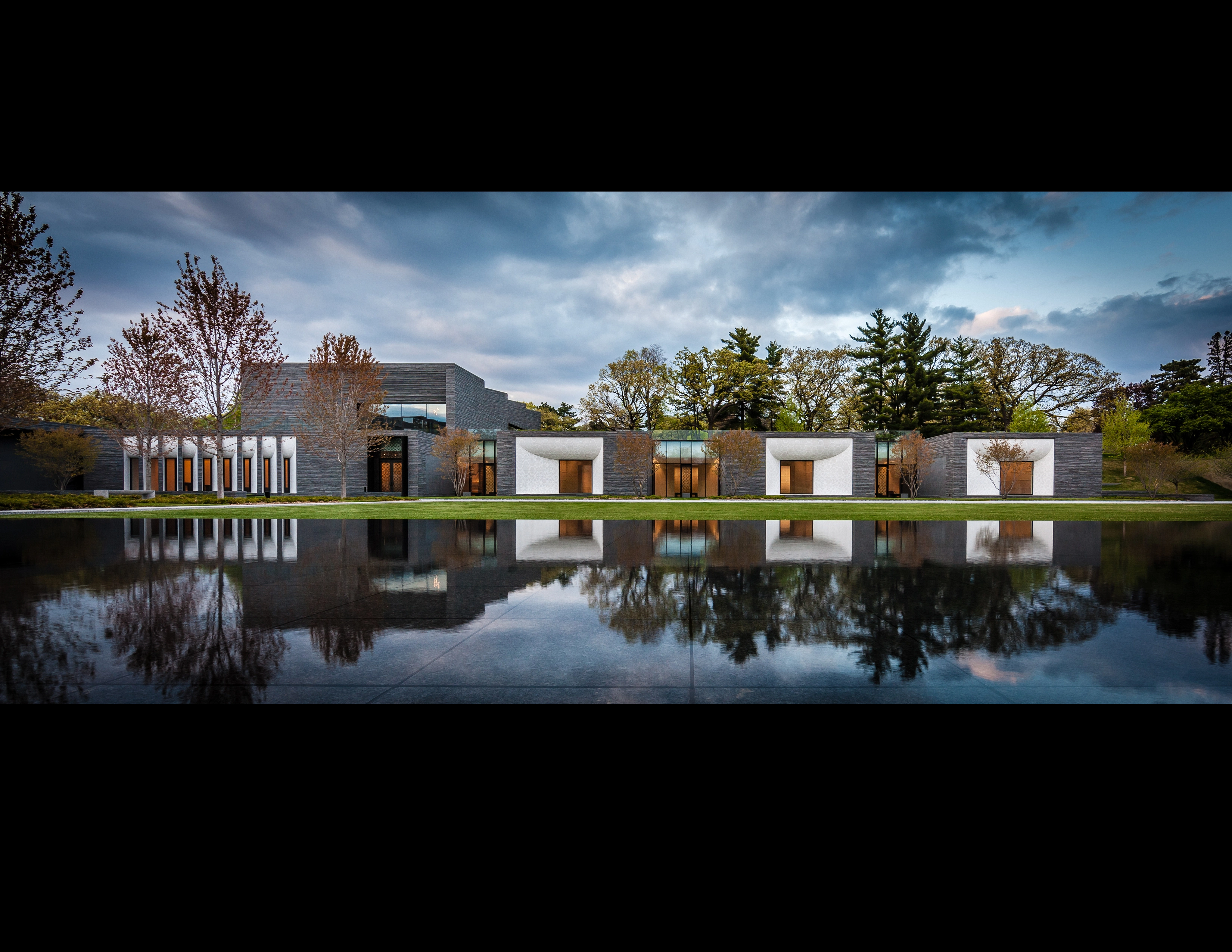
The 142-year-old Lakewood Cemetery faced a challenge: how to create a commemorative 21st century space within a revered, landmark setting. The Garden Mausoleum project meets this challenge adroitly, sustainably and gracefully. With the landscape enveloping two thirds of the building within a south-facing slope, architecture opens out onto an expansive, peaceful landscape with a quiet reflecting pool, groves of native trees and contemplative alcoves—a distinctly contemporary design in harmony with its historic environment.
-
Lakewood Cemetery, established in 1871, is a quintessential American “Lawn Plan” cemetery, wherein broad sweeps of lawn are punctuated by a few fine stone monuments framed by trees and large serene lakes. This style was pioneered by Cincinnati’s Spring Grove Cemetery in the 1850s and Lakewood is the purest surviving example of this classic cemetery type.
Recognizing the value and importance of their landscape, in 2002, the Trustees of Lakewood commissioned a team led by landscape architects to produce a Historic Landscape Report and comprehensive Landscape Master Plan. Their goal was to define the most important features of the cemetery and to guide future management and development. The problem confronting historic cemeteries nation-wide: how to generate continued revenue without impairing the values of their beloved landscapes.
This planning effort grew into a on-going relationship with the Garden Mausoleum, the largest of several implementation projects undertaken to date.
Working closely with the client, the landscape architect advised on the selection process for the architect and participated as a design team member from pre-design through completion. The result of this process is a profoundly integrated building and landscape design solution that transformed a deteriorated, “sunken” space, creating a poetic modern landscape offering solace and beauty in a setting rich with meaning.
Site + Context
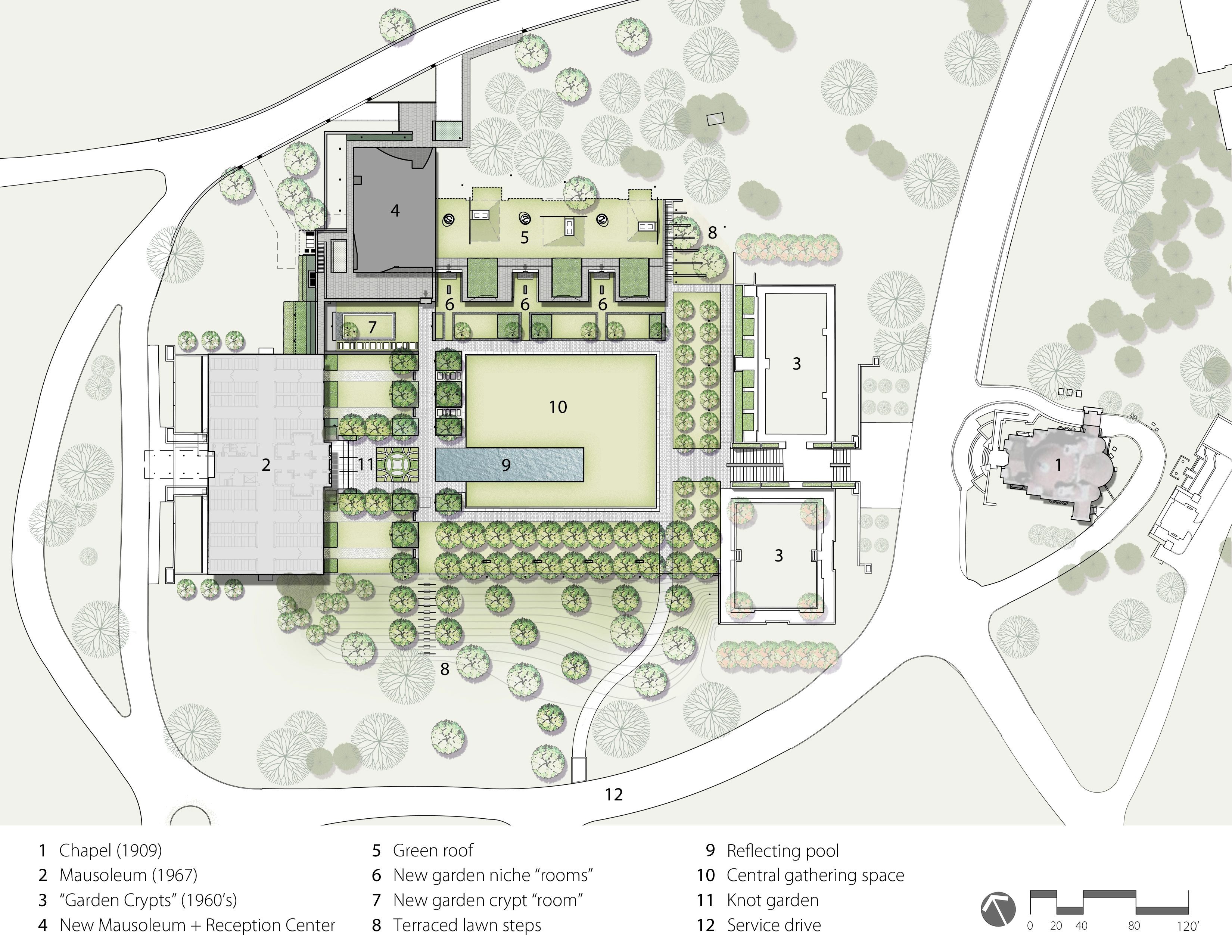
The site chosen for the new mausoleum was one of the few incongruous features in the Cemetery’s landscape. Near the cemetery’s entrance, surrounded by groves of majestic mature trees, the site consisted of a large sunken area, which served as the forecourt for a four-story-high mausoleum/columbarium building from 1967. A massive green space flanked by grassy inclines it was divided down the middle by rows of tall evergreen trees on the axis between the large mausoleum and Lakewood’s jewel like Byzantine-style Chapel (1909) at the opposite end. High, monolithic walls made up of “garden crypts” stood on either side of a monumental stairway leading up from the space to the chapel. The area as a whole had limited walking paths and no seating. It did include a “Pool of Reflections,” a long rectangular water feature revered by cemetery visitors, but plagued with maintenance issues and when drained for the long Minnesota winters, a less than attractive landscape element.
Program
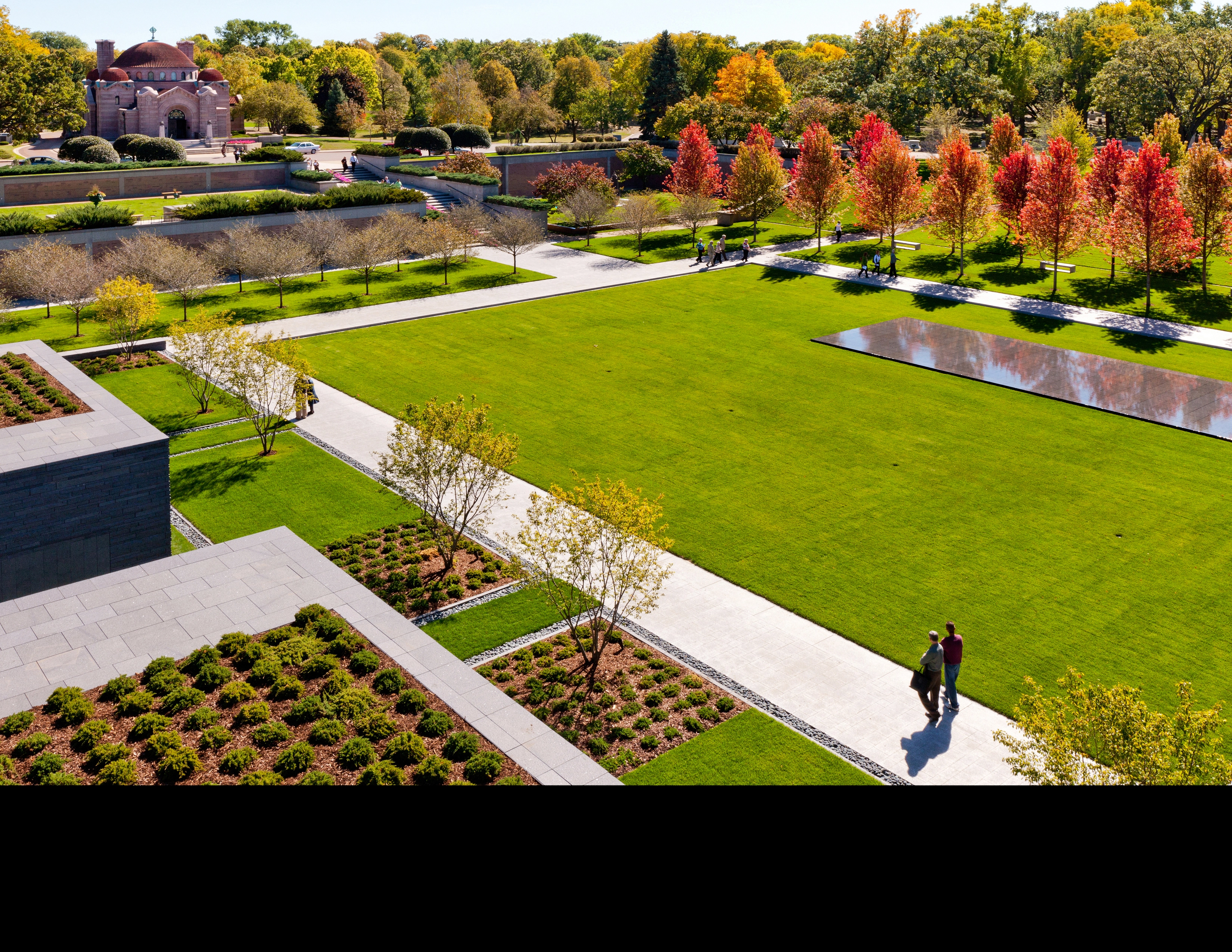
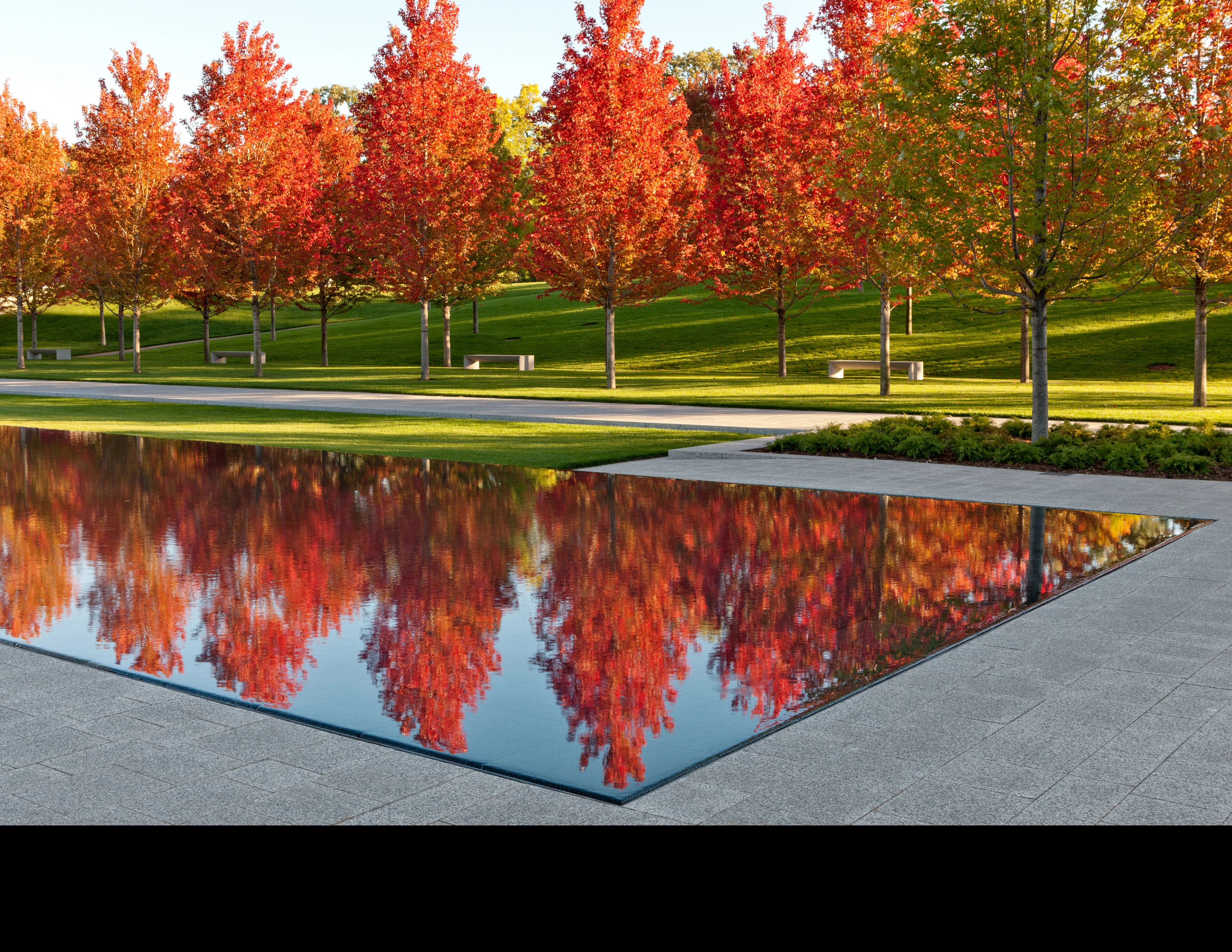
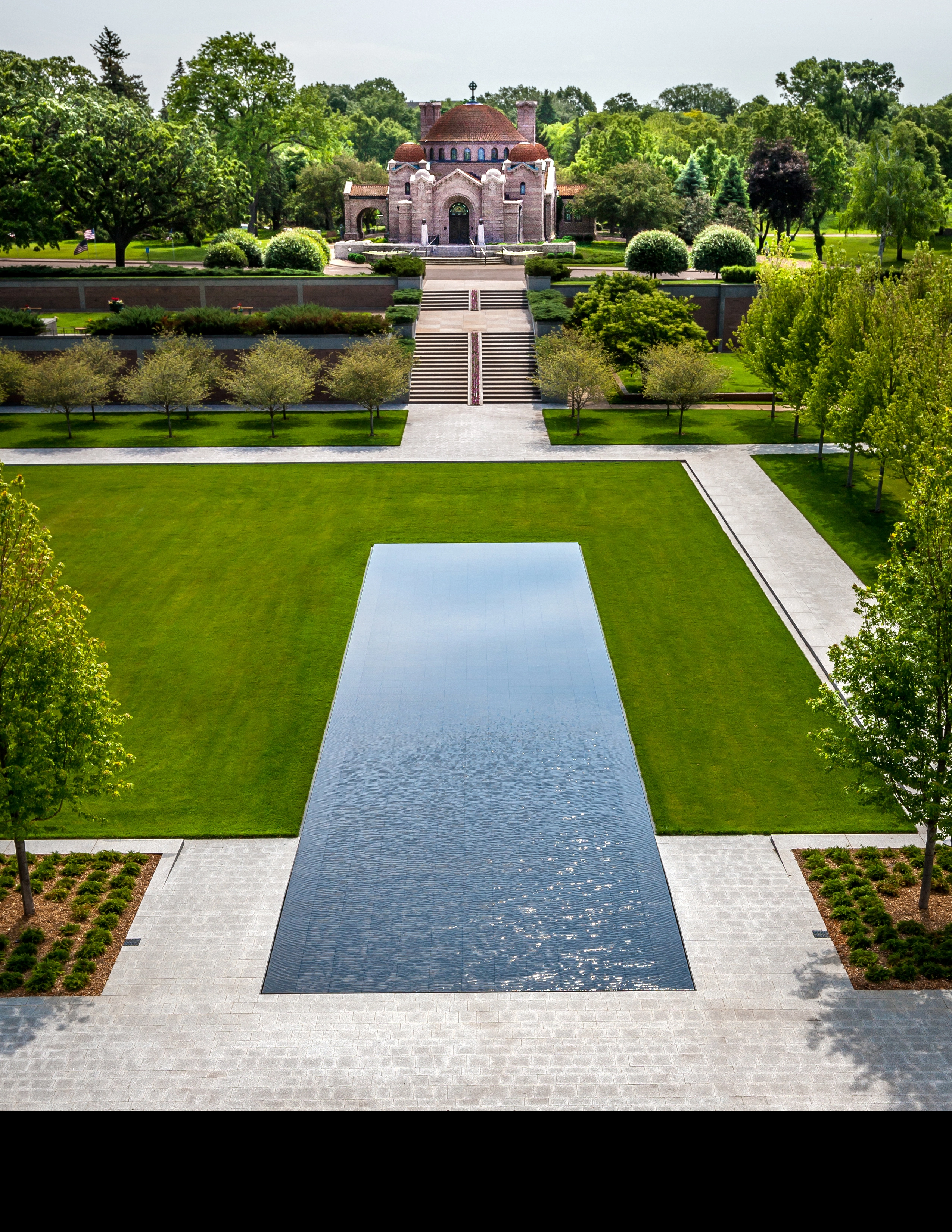
The master plan called for the siting of a new mausoleum and reception facility (to meet growing demand for cremation and above ground burial services) with minimal impact on the larger historic cemetery landscape. By creating a new central landscape space that is the unifying feature for the new & existing mausoleums as well as the iconic chapel, the landscape architect solved the problem of incorporating new program space in a seamless manner. Providing an outdoor gathering/event space for large groups on Memorial Day, the new garden landscape—bordered by benches, solemn bosques of maples and hawthorns, and a redesigned, zero edge reflecting pool—also offers a space conducive to quiet contemplation, solace and healing. The principals of sustainable design were employed throughout the project from green roofs, to innovative storm water strategies, to diverted construction waste and extensive native tree plantings. The designers strove to create a project that minimizes its impact on the environment both visually and functionally.
Design Intent
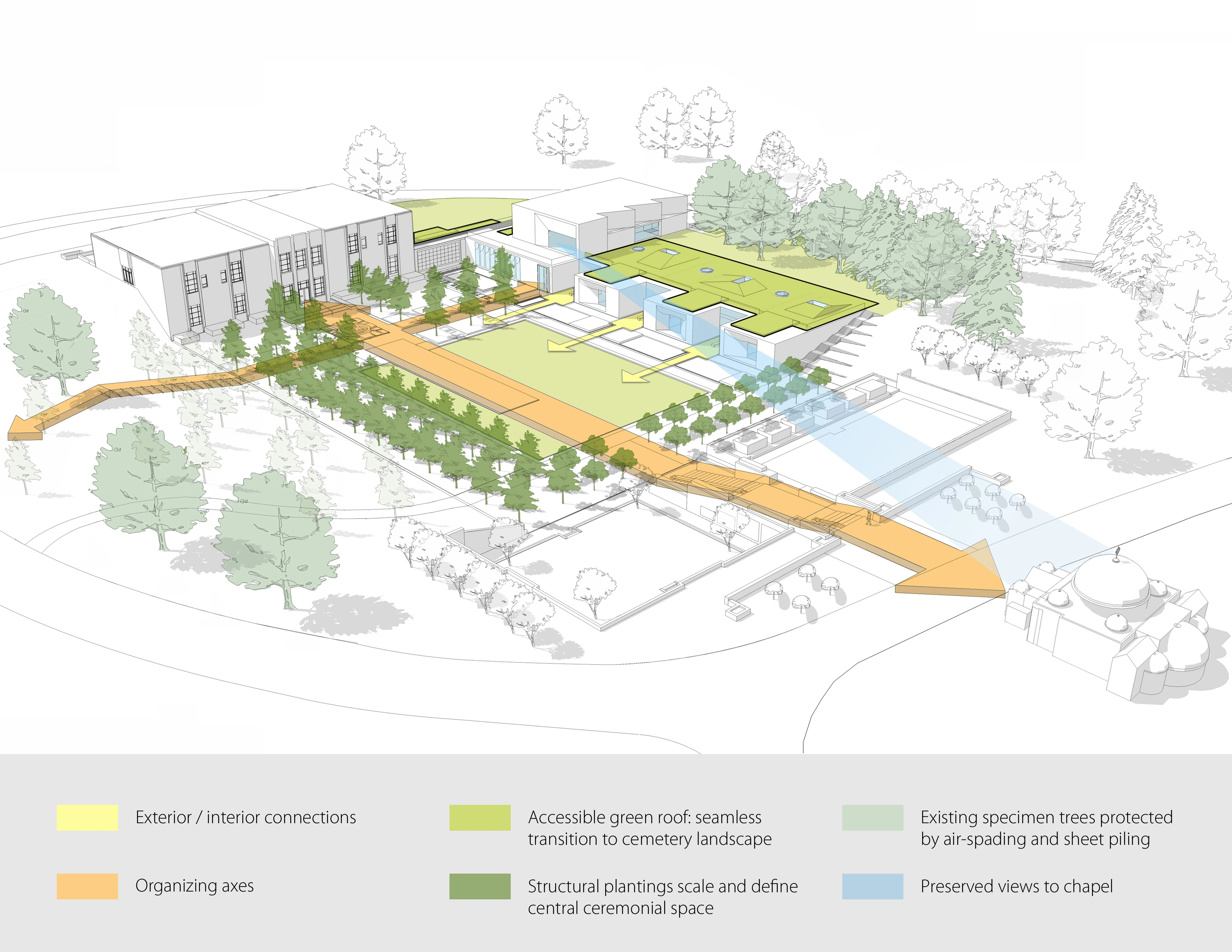
The design seeks to reuse existing cemetery space in a lyrical and compelling manner integrating program with a contemporary aesthetic harmoniously into an important historic landscape. It accomplishes this by carefully defining building development to minimize impact on the larger Cemetery landscape and taking full advantage of a gently sloping portion of the site. The strong geometry of the lower ground plane transitions gradually up the side slopes to the pastoral character of the “Lawn Plan” landscape above. The design establishes a unified relationship between interior and exterior space, heightening the experience of each. A clear hierarchy of spaces was provided, highlighting a large central gathering space while offering secondary spaces for contemplation. Asymmetrically placed, the zero edge reflection pool responds to import axial relationships among the built elements of this landscape while creating a dynamic visual center to the space. Strengthening the edges, groves of shade trees partially screen views of the 1967 Mausoleum façade. Low ornamental flowering trees preserve views to the iconic Chapel, while at the same time create a beautiful, soft edge that ameliorates the impact of the eastern garden crypt walls.
Sustainability
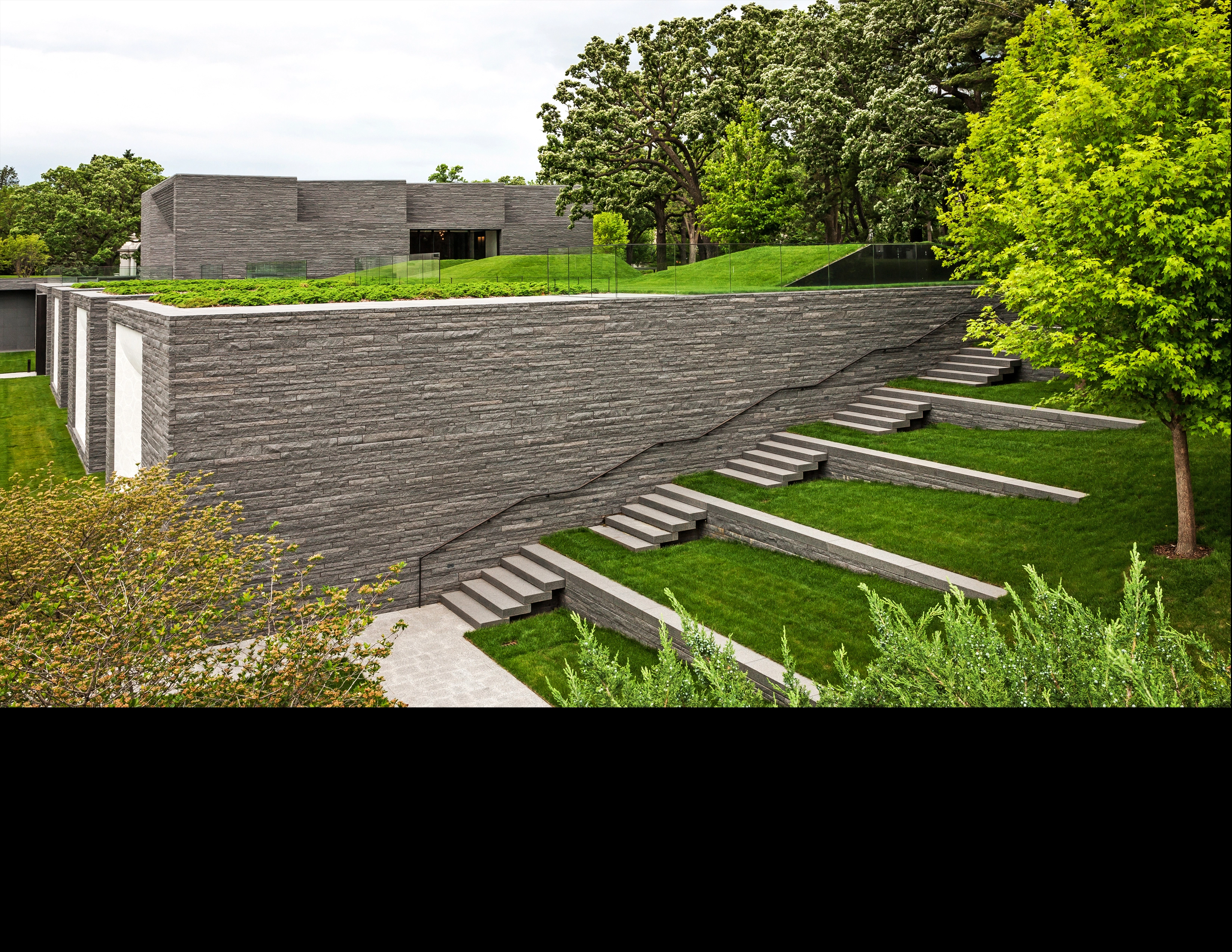
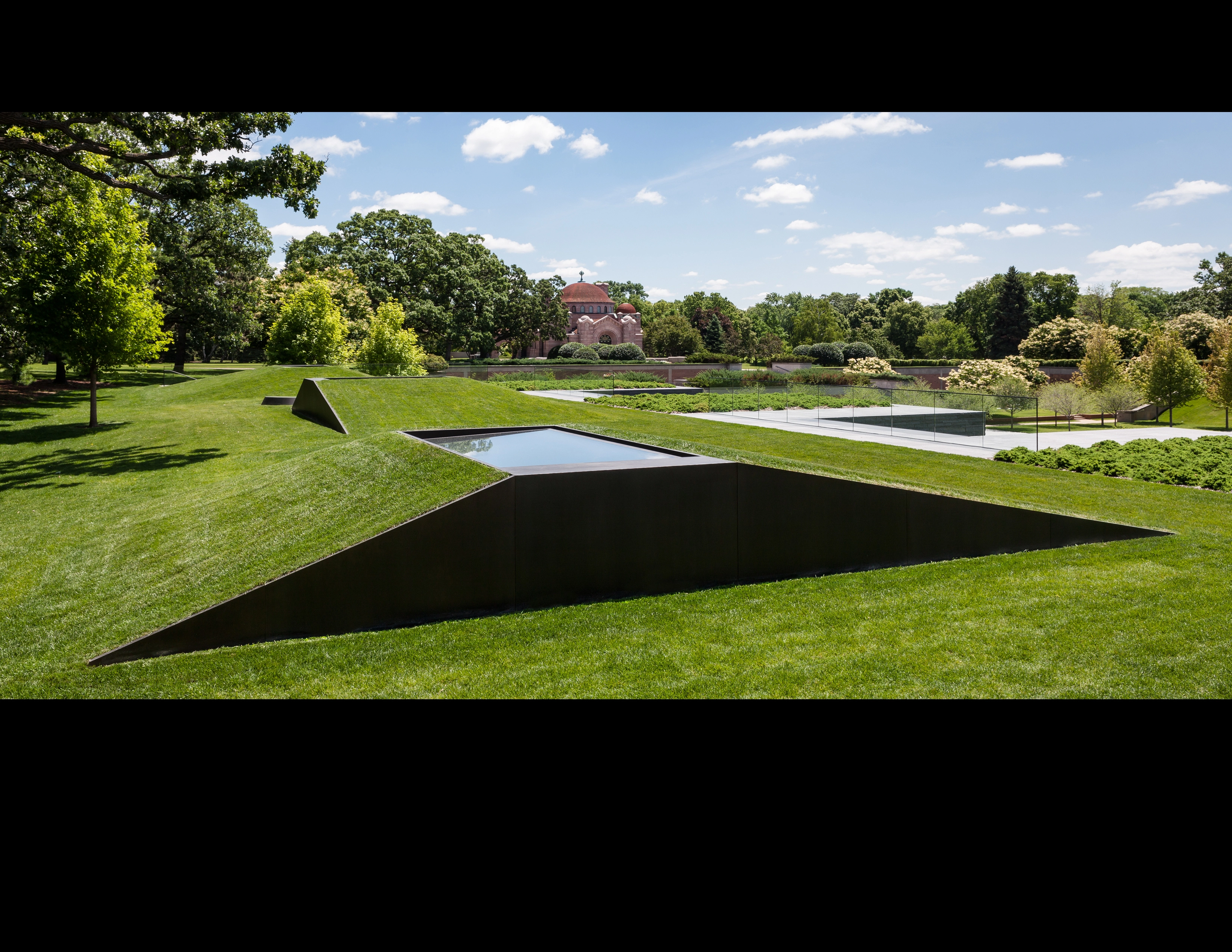
Lakewood Garden Mausoleum seeks to preserve the character of the historic landscape while creating dignified burial and commemoration space for as many as 10,000 people. With so much of the building program tucked into the hillside, considerable open space is conserved and visual impacts on the natural beauty of the surroundings were mitigated. Mature tree cover was preserved through air spading, root pruning and shoring with sheet piling. A new accessible green roof extends the open lawn of the surrounding cemetery with traditional benefits of carbon reduction, reduced cooling loads, generation of oxygen, heat-island reduction, and maximizing runoff infiltration. The building is oriented east-west to maximize solar exposure.
Innovative storm water strategies were implemented maximizing on-site infiltration. No impermeable parking areas were created as a result of this development reducing storm runoff volume and rates. All parking is accommodated on existing surrounding cemetery roads. An on-site well was preserved reducing potable water use for irrigation. Numerous large trees and shrub/groundcover areas were planted to increase shade thereby reducing loss of water due to transpiration and evapotranspiration, improving water use efficiency.
Locally-sourced granite with high albedo properties was used for the majority of landscape uses and on all paths in the lower garden. Site lighting was minimized to reduce light pollution.
Significance
The Lakewood Garden Mausoleum landscape is significant as a contemporary design expression in a historic setting conducive to quiet, respectful reflection providing for fundamental human need with dignity and grace.
The combined building and landscape has already been recognized by the Boston chapter of the ASLA and has received numerous architectural awards.
-
Design & Construction Team
Lead Designer
Craig C. Halvorson, FASLALandscape Architect of Record
Bryan JerebArchitect
HGACivil & Structural Engineer
HGAOwner’s Representative
Nelson, Tietz & HoyeMausoleum Consultant
Carrier Mausoleums ConstructionLandscape Contractors
Aloha Landscaping
Sterling ArborFountain Designer
Commercial Aquatic EngineeringCemetery Planning Consultant
Elizabeth Vizza ConsultingSoil Scientist
Pine & Swallow EnvironmentalGeneral Contractor
M.A. Mortenson Co.Featured Products
Bronze
MG McGrath
Livers Bronze Co.Granite
Cold Spring GraniteIrrigation
Green Acres Sprinkler Co.Cast Bronze Drainage Gates
Iron Age DesignsTrees
Kaneville Tree FarmPre-assembled Columbaria
Eickhof Columbaria
Advertisement
Related Awards

Award of Excellence, General Design
A Floating Forest: Fish Tail Park in Nanchang City
In Nanchang, within the Yangtze River floodplain, we revitalized a heavily degraded 126-acre landscape into a floating forest that manages stormwater, restores habitats, and provides diverse recreational spaces—all within a limited budget and a short timeline. This innovative urban nature model strengthens the district’s identity and spurs surrounding development. Fish Tail Park offers a scalable solution for flood-prone regions, seamlessly integrating flood resilience, ecological restoration