
.webp?language=en-US)

Citygarden
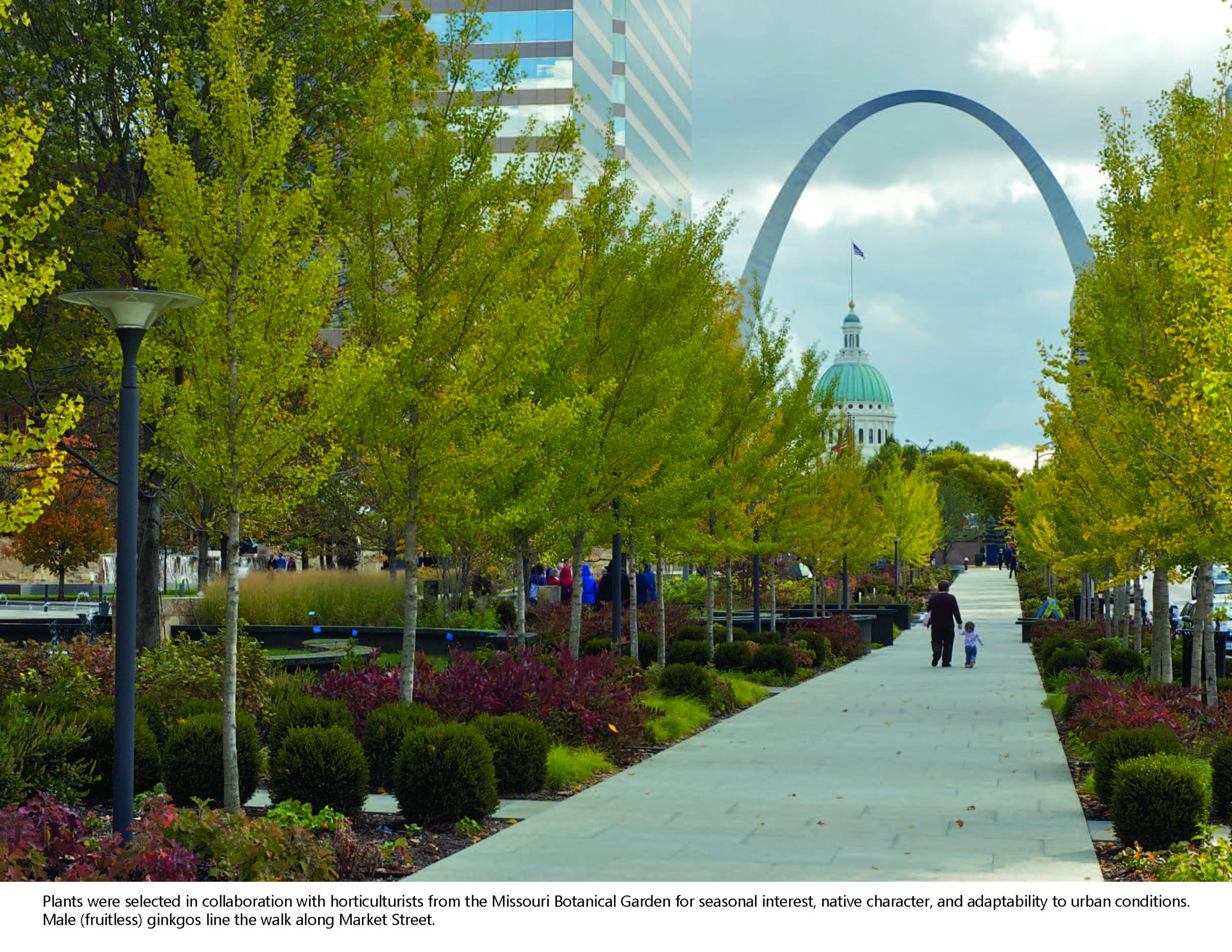
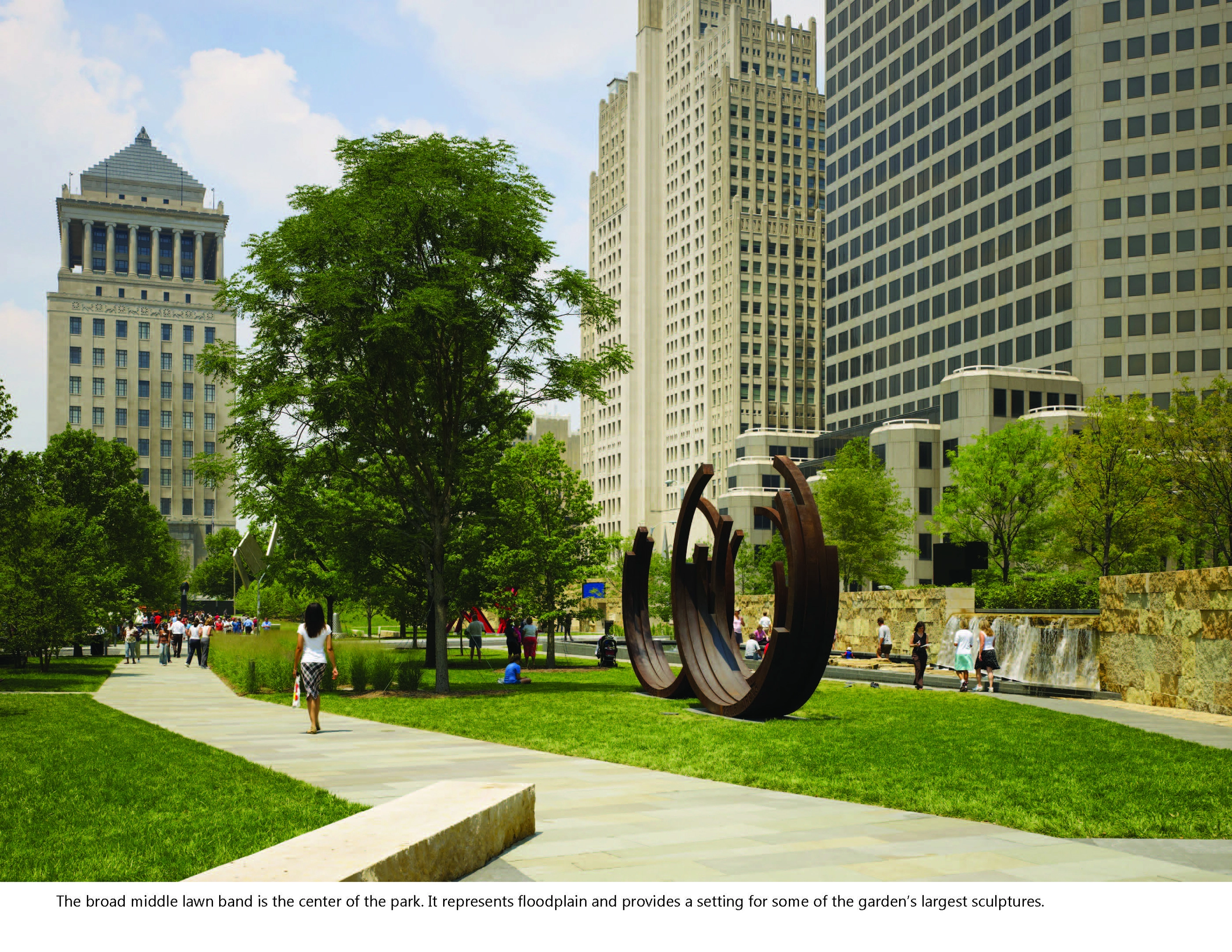
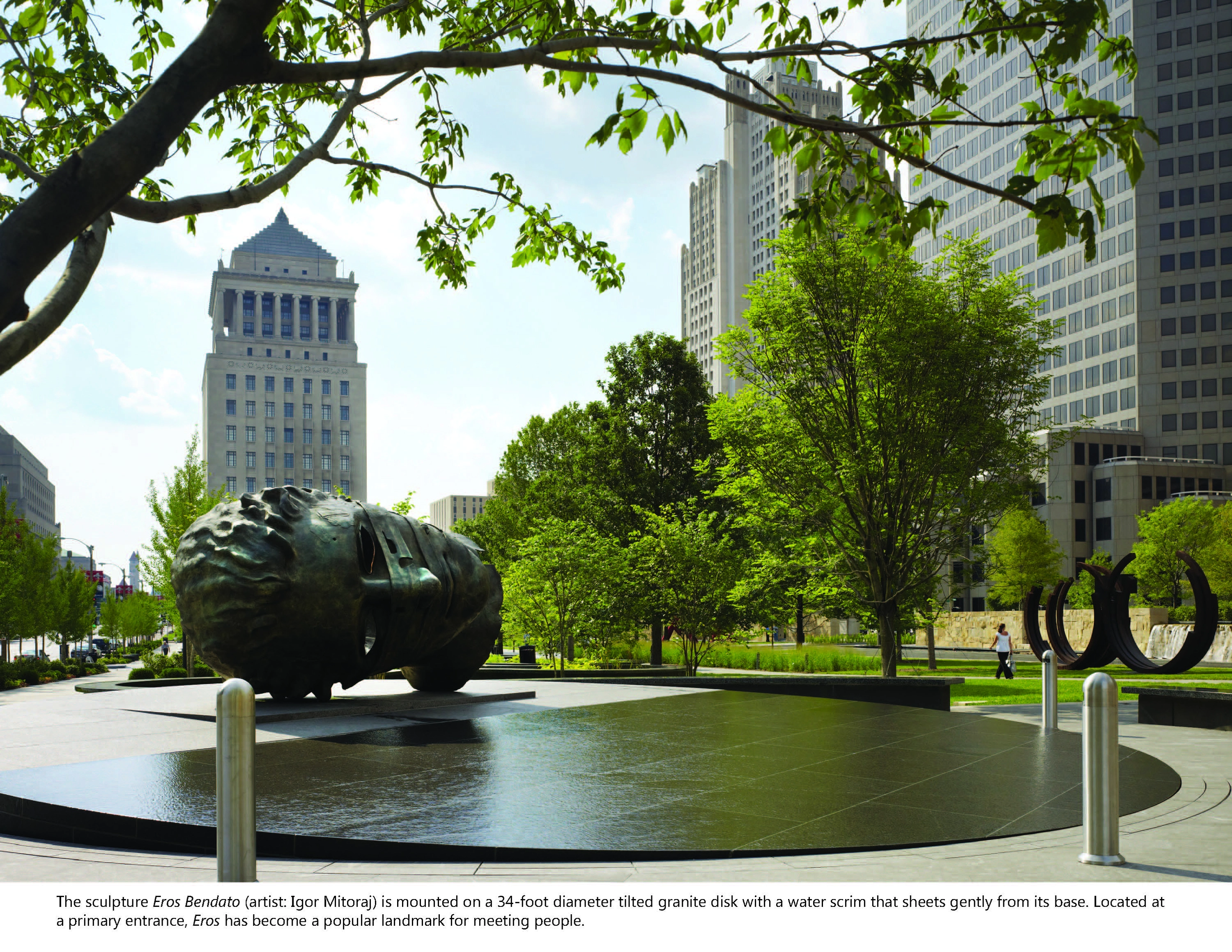
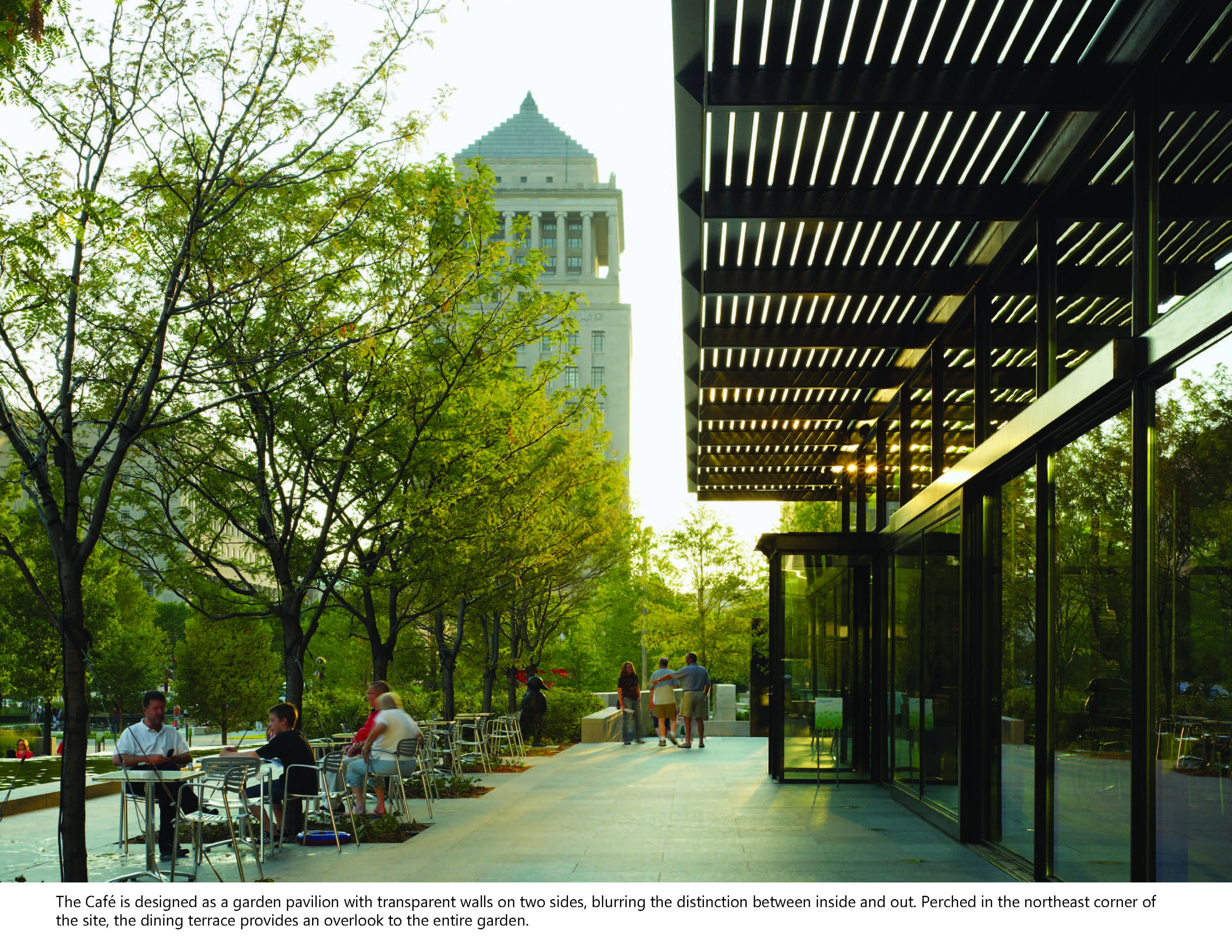
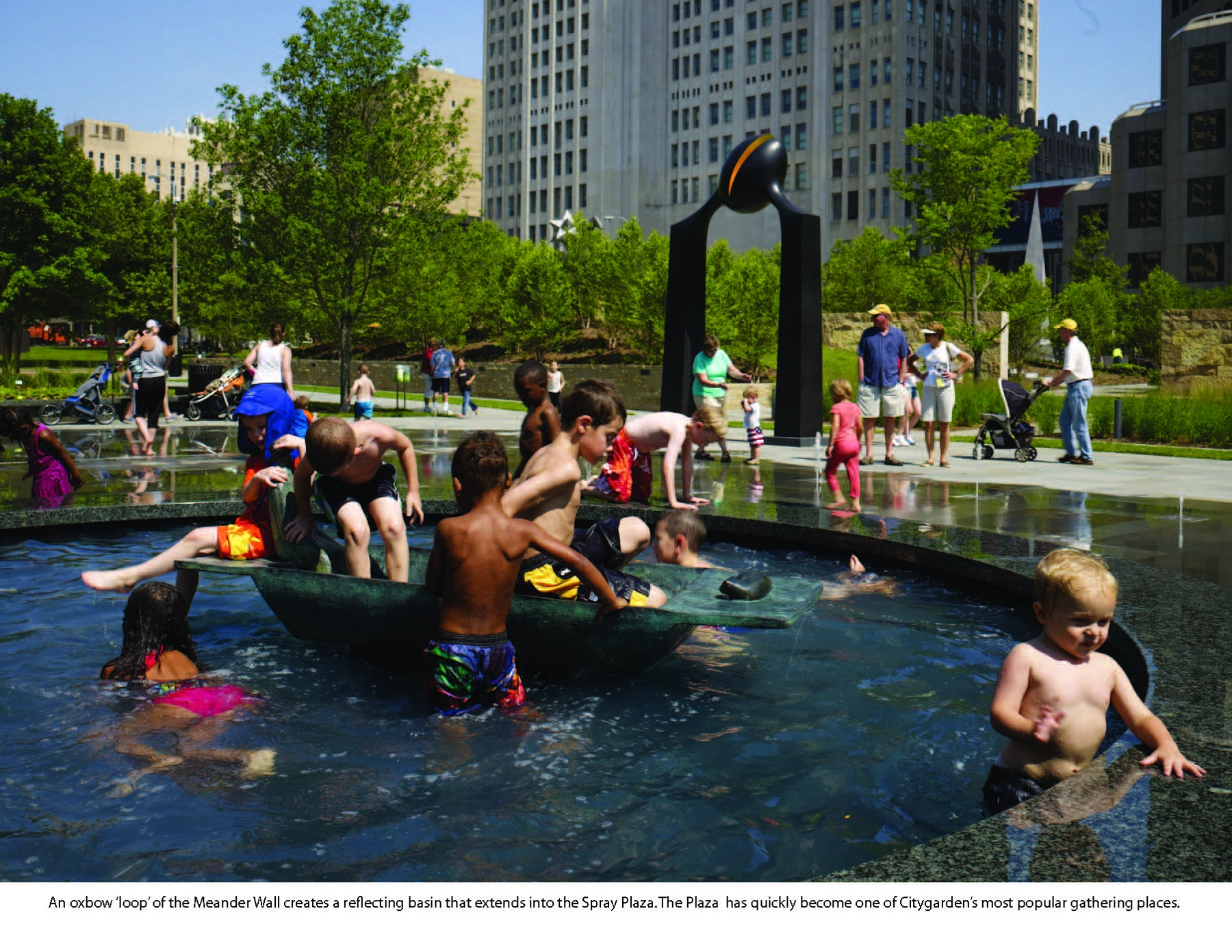
The influence of this project has gone way beyond its boundaries. St. Louis is serious about the public realm and there is real excitement and enthusiasm about this public space across the country. The success of this project gave the city confidence to extend to the Arch Competition. This place really works and provides evidence that design matters. The landscape architect performed a beautiful incorporation of the art in the landscape.
Awards Jury
-
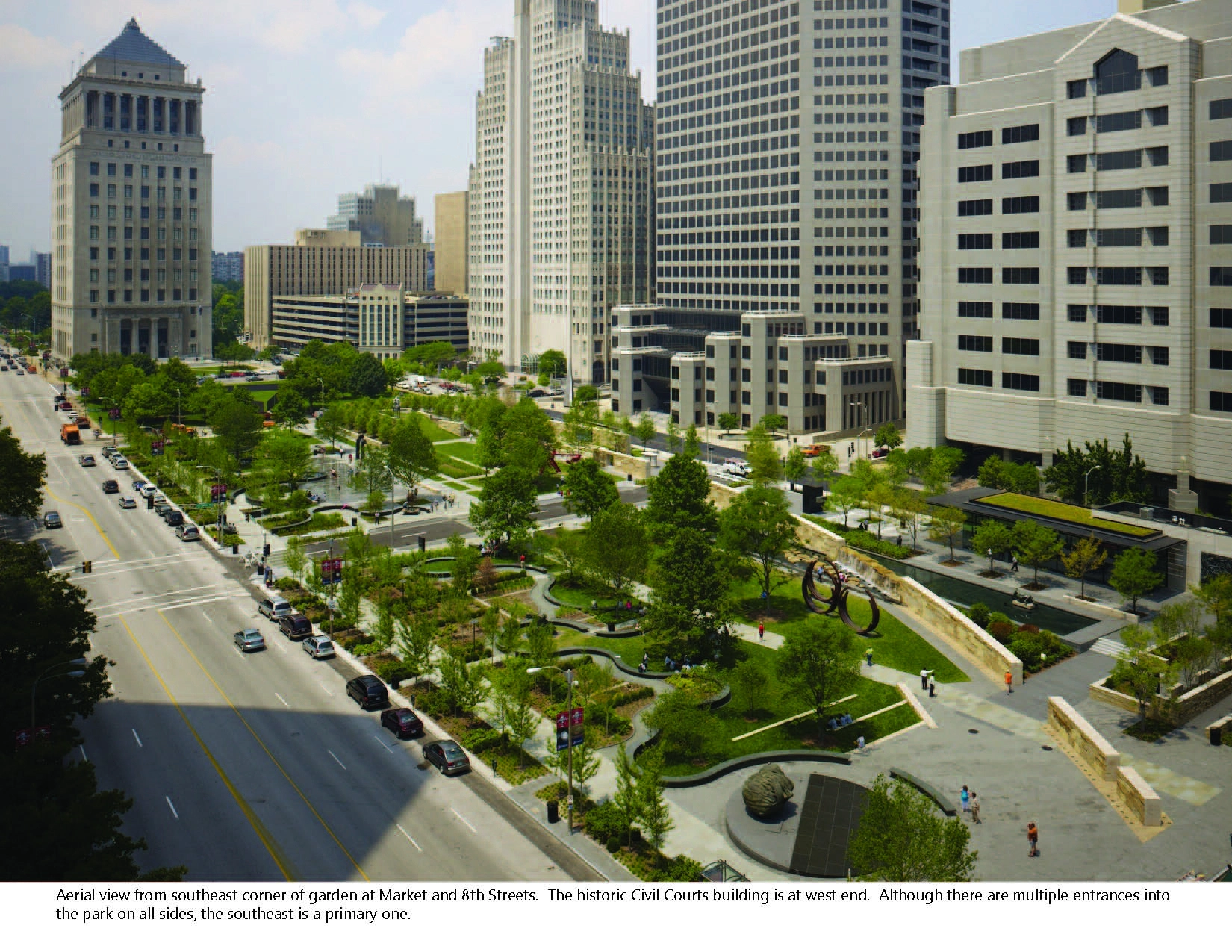
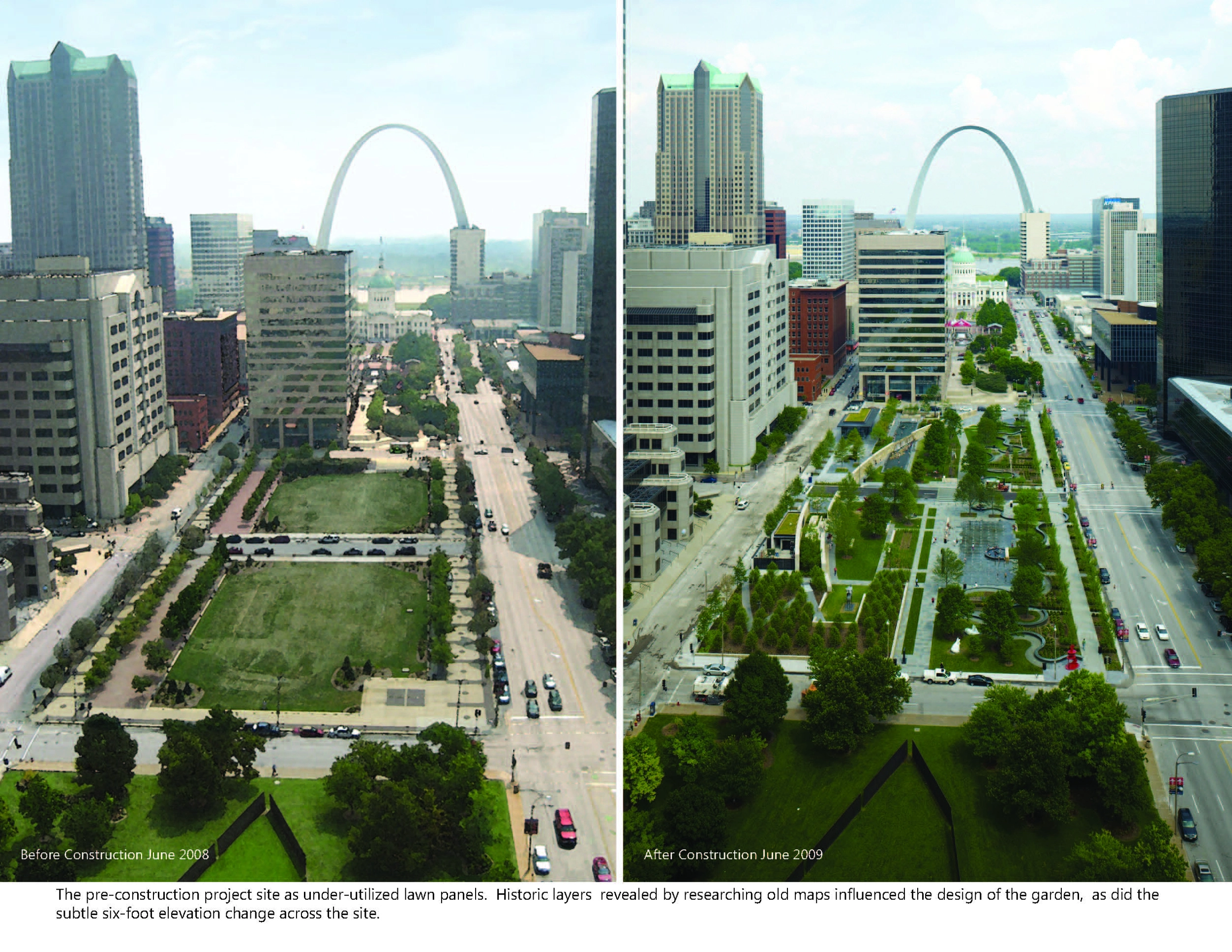
Citygarden is a three-acre public sculpture garden created on the Gateway Mall in downtown St. Louis. Sponsored by a private foundation, the garden has played a primary role in reinvigorating the city’s center. The design weaves innovative stormwater management strategies with abstractions of local geology, hydrology, and plant communities to create a multi-faceted public space that has become a magnet for locals and tourists alike.
-
The project began with clear direction from the clients: make an inviting and inspiring public place displaying twenty four contemporary sculptures; create diverse spaces and experiences; make it beautiful, engaging, and accessible year-round; and provide plenty of shade and water. Citygarden is free and open to the public, is not bound by perimeter fences or walls, has no gates, and contains no signs prohibiting the touching of sculpture. There are no handicap ramps. Every public place in the park is accessible by walks of less than 5% grade and lawns are reinforced for universal access.
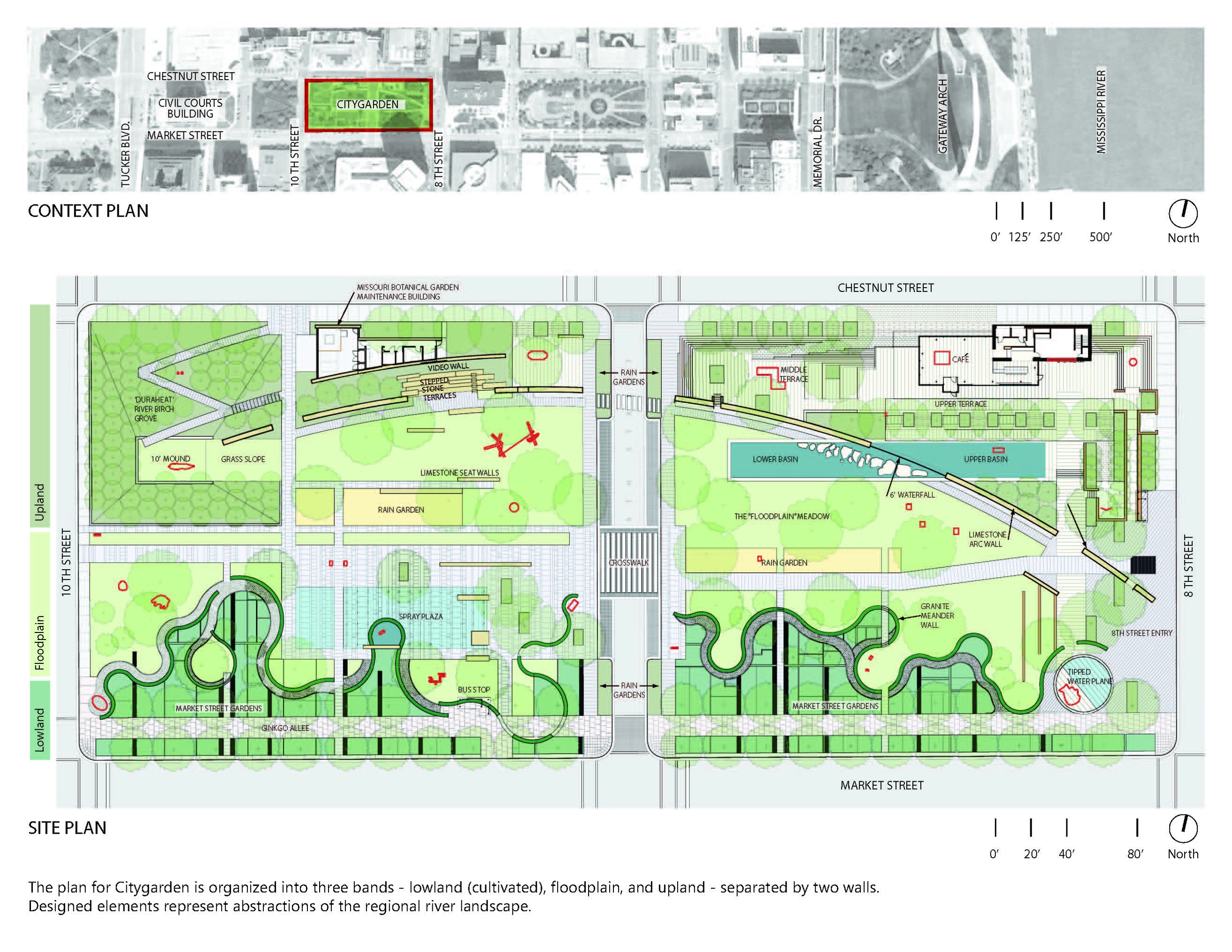
The design of Citygarden derives from the cultural and natural histories of St. Louis and its environs. The three-acre site is one of excavation in search of local stories. Acknowledging its position in the heart of the Gateway Mall, a few blocks west of the noble Arch and the Mississippi River, Citygarden is structured in three bands delineated by two walls—the arc wall and the meander wall. The northern band represents the high upland ground—the river bluffs that are so characteristic of the Mississippi and Missouri Rivers in this region. The middle band represents the low ground or floodplain. The southern band represents the cultivated river terraces. While the three precincts are interconnected, each possesses distinct characteristics.
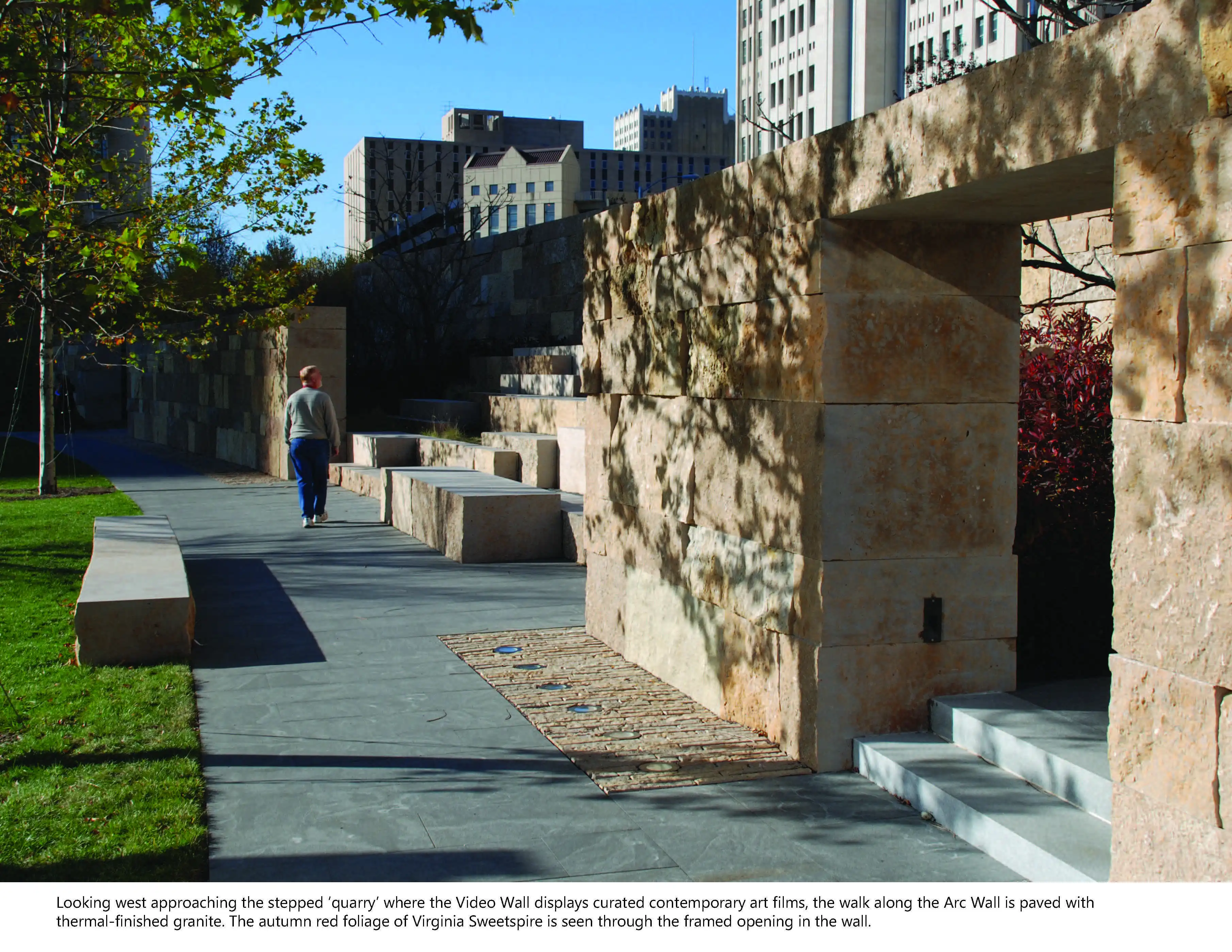
The northern band, parallel to Chestnut Street, contains the highest original elevation on the site—six and a half feet higher than the site’s lowest point. The design restructures this high ground into a series of urban terraces that rise from the corner of Chestnut and Eighth Streets to the café level. This series of outdoor rooms provide shaded platforms for specific sculptures, while also providing seating, dining, and prospects over the upper-level water basin to the rest of the sculpture garden. The plantings throughout these “uplands” are distinctly urban in nature—primarily as rows and groves of shade trees with simple planes of groundcover set amid panels of granite pavers. The landscape architects assisted the clients in selecting the architect for the café (and maintenance building) and guided the architect in siting the café and defining its architectural character. The café is conceived as a garden pavilion with a transparent connection to the café terrace that overlooks the garden below. Willow oaks, honey locust, scarlet oaks, and serviceberry create fine-textured arboreal canopies. The western block of the northern precinct is marked by a quarry-like stepped room of large limestone blocks, framing a 16-foot long outdoor video wall. The northwestern corner of the garden is sculpted as the highest ground—a 10-foot high mound planted with river birches and ferns and highlighted by the equestrian ‘Zenit’ at the peak of the mound.
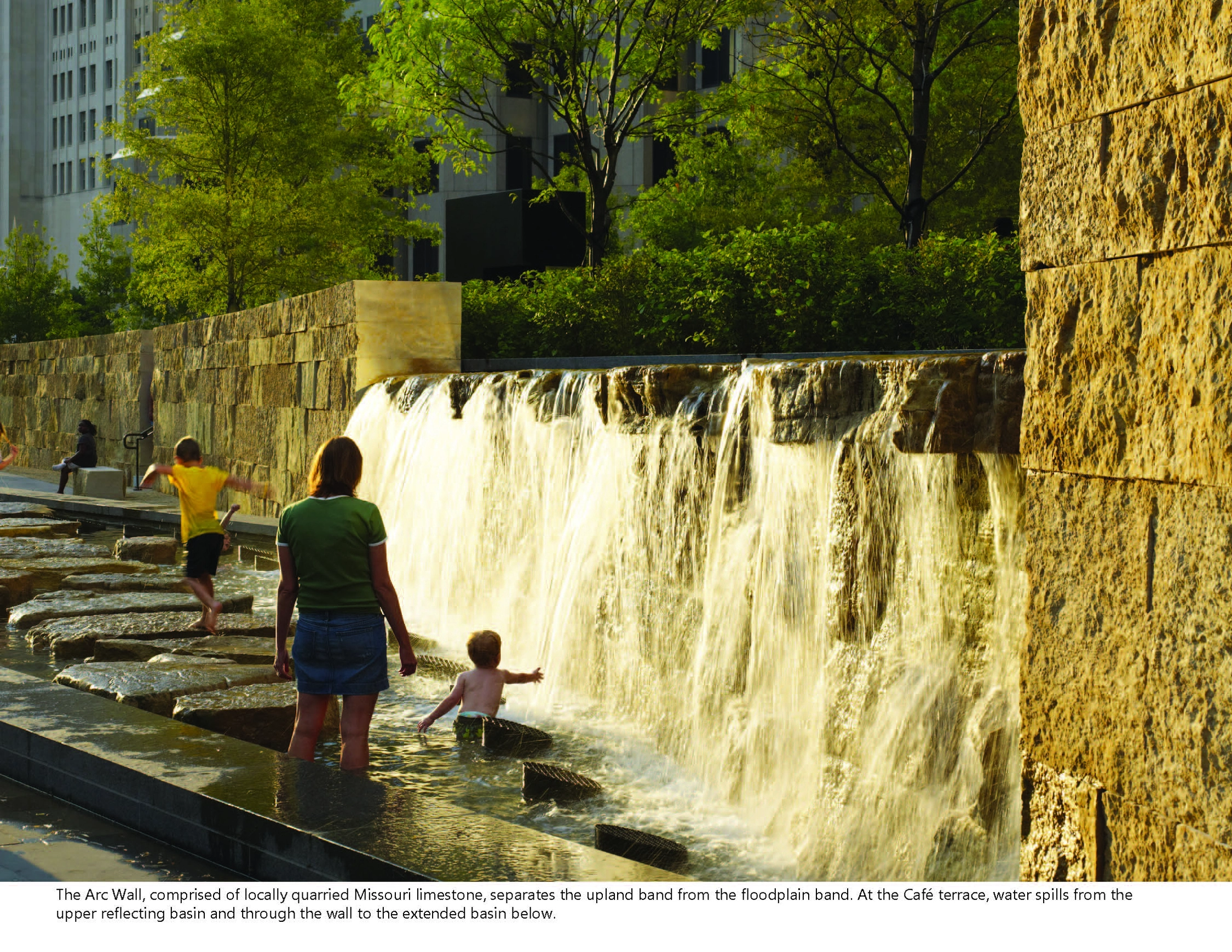
The most pronounced design gesture is a 550-foot long arcing wall constructed from 1200 locally quarried blocks of Missouri limestone. The arc wall defines the edge between the urban groves and the low ground of the grassy ‘floodplain’ and was designed to evoke the geologically expressive bends and bluffs of the Mississippi and Missouri Rivers. Its height varies from four to nine feet for most of its length but rises to 14 feet to frame the video art installation and form the back wall of the maintenance building. Several breaks in the wall allow pedestrian and vehicular access while providing sight lines through the park. At its most dramatic moment, this broad arc wall is interrupted by a 24-foot wide by 187-foot long water basin that seeps and cascades six feet from the Café terrace to the basin and floodplain below. At the base of the falls, stepping stone boulders continue the visual arc of the pathway at the base of the wall.
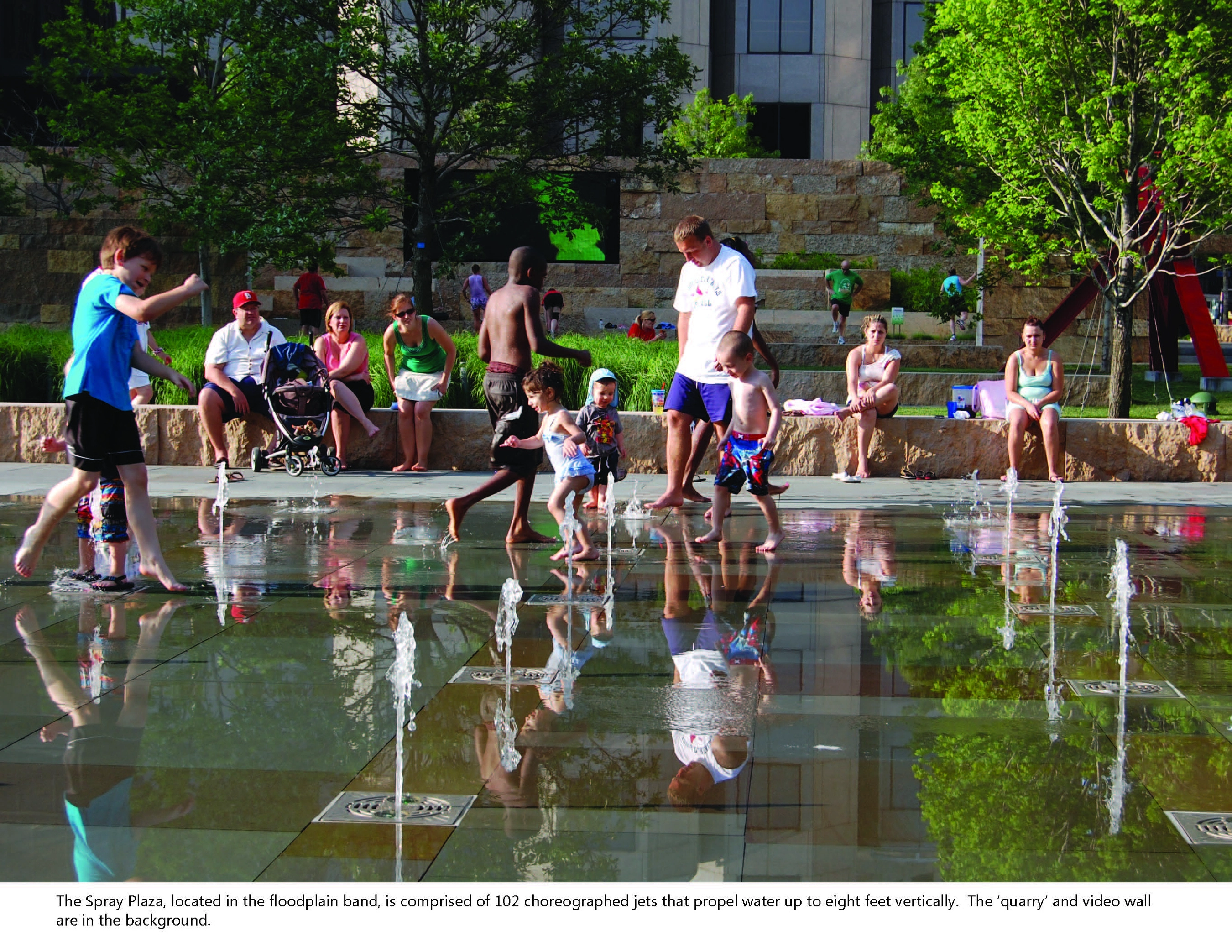
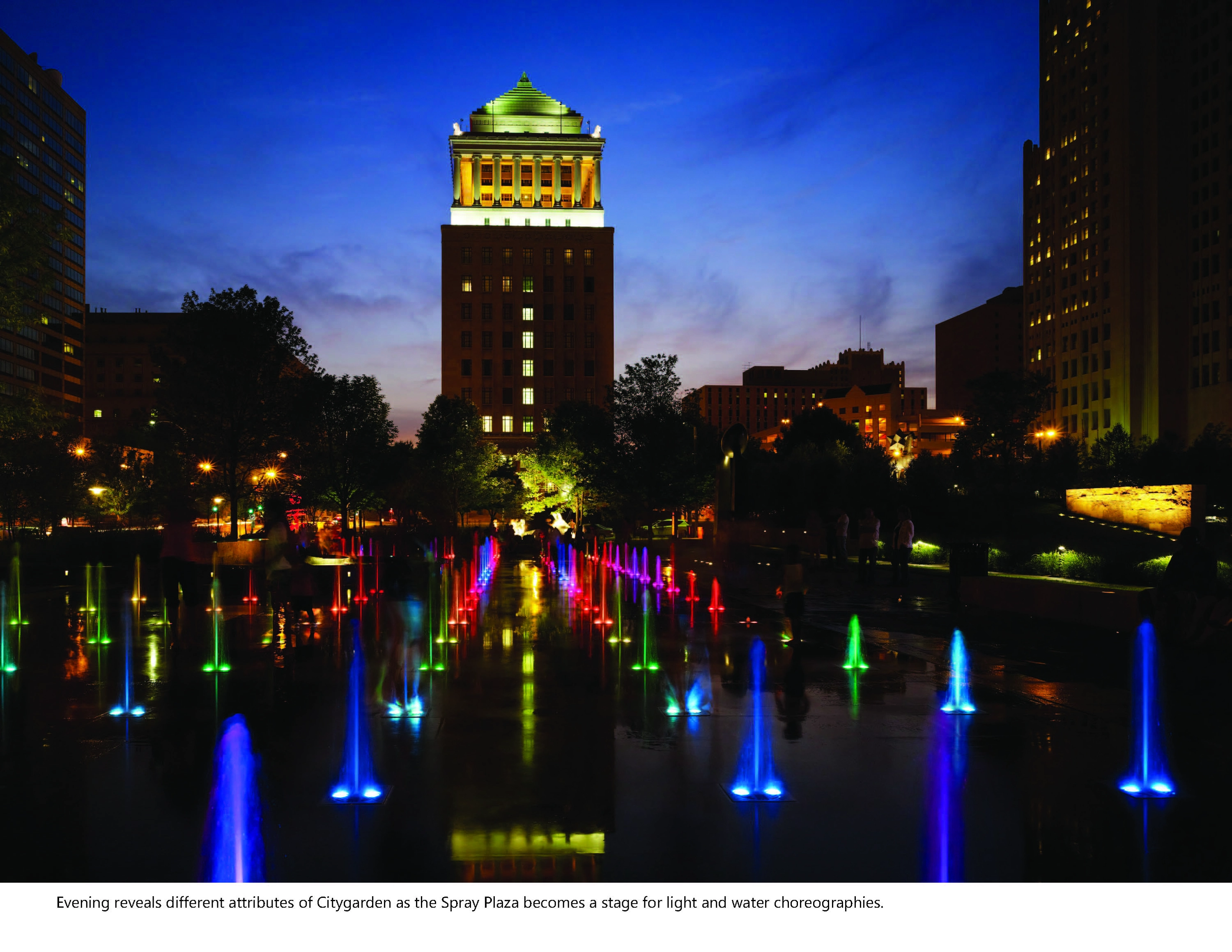
The middle ‘floodplain’ band is the heart of the park. It is punctuated by large native shade and specimen trees—swamp white oaks, Kentucky coffee trees, red and sugar maples, plane trees and black gums—and provides the venue for some of the garden’s largest sculptures. This lawn plane is bracketed by two paved urban plazas, each with expressive waterworks. The eastern edge, at the Market Street corner, introduces a subtle tilted water scrim that sheets gently from the base of the dramatic sculpture Eros. The glimpses into the park at this point reveal other monumental sculptures, their scale tempered by the magnitude of the arc wall and the specimen trees. Sun and shade strike a balance across the lawn here. Circulation is marked by two primary paths: the black granite path that parallels the base of the arc wall, and the central bluestone walk that literally traces mid-block alleyways that once serviced this site. Crossing Ninth Street westward along the route of these alleys brings people to the spray basin—a paved field of 102 choreographed vertical water jets. While there are multiple ways to enter the park from all sides, the middle ‘floodplain’ precinct offers a particularly open invitation from the corner of Eighth and Market Streets toward the center of the park.
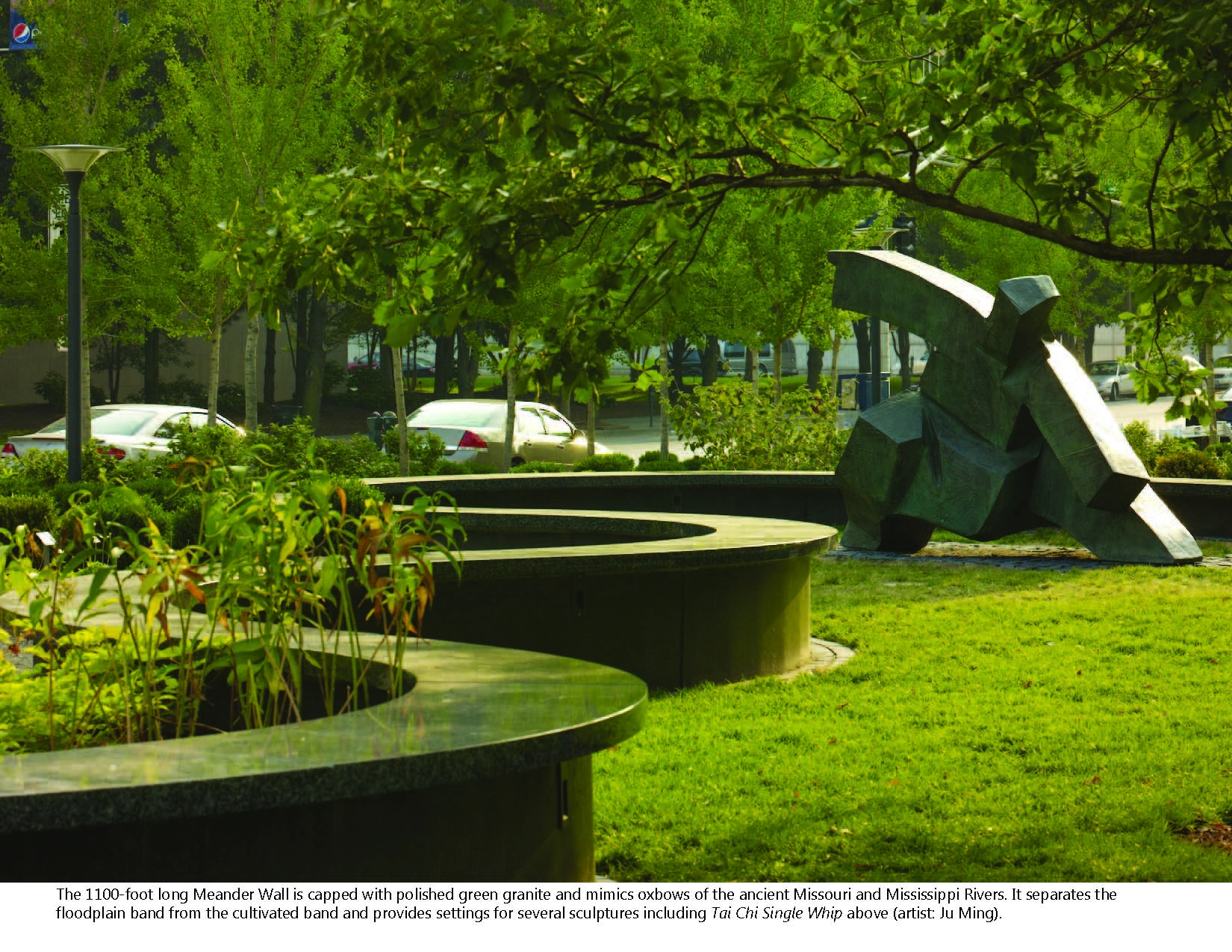
The southern band, representing the cultivated terraces that flank the rivers, is framed by Market Street on one side and the central ‘floodplain’ on the other. A banded series of perennial and shrub beds is contained by an 1,150-foot long meandering seat wall recalling agricultural patterns along the rivers’ bends and oxbows. This zone is characterized by a staccato allee of paired male (non-fruiting) Ginkgo trees with striated bands of horticultural gardens that run perpendicular from the allee and the street. These Market Street sun gardens are defined by pathways and low evergreen hedges that trace the previous property lines and foundations that underlay the site. The precise alignment of these plant beds echoes the 1916 Sanborn map depiction of the two city blocks.
In many instances these garden areas are slightly raised up – to 18” above the level of the central lawn panel— to provide more fertile and productive plant beds, but also to allow for seating. The inner edge of the Market Street gardens is prescribed by 1100 linear feet of green granite-topped meander wall. This nearly continuous seat wall sinuously loops through the garden in evocation of the striking patterns of regional river systems. Its various bends and concavities offer multiple smaller scale landscape spaces —the subtle stages for sculpture and people in conversation.
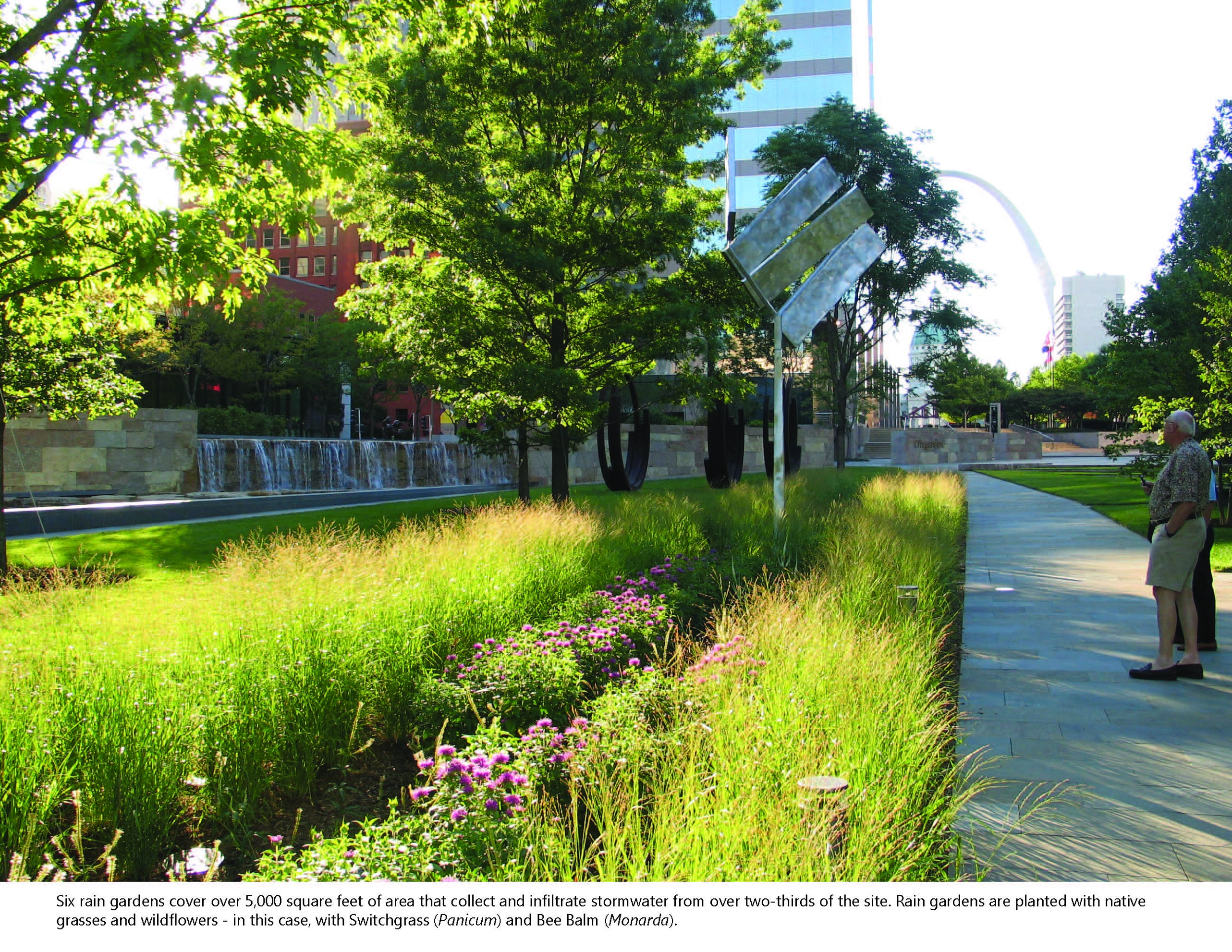
Water, stone, and sculpture characterize the stronger expressions of Citygarden’s firmness and delight. But the plants provide the gently animated framework that makes the greatest difference to the appreciation of the sculptures and their setting, as well as the everyday use of this as a park. Fifty percent of the site is shaded. The plant palette collectively devised by the designers, the foundation, and horticulturalists at the Missouri Botanic Garden, emphasizes Missouri native trees, shrubs, grasses, groundcovers, and wildflowers. Plant selections and planting designs emphasize the four distinct seasons and contribute to a sense of the park’s lushness. Great consideration has been given to insure that the long-term success of the plants will be achieved. Plant species and cultivars were selected for their tolerance of urban conditions. Most plant choices and their specific locations were determined by their relative hardiness and their particular tolerances for varying degrees of sun, shade, wetness and/or dryness. Fundamental to the planting and soil strategy, in both design and in technical detail, was the intent to use this project as a teaching opportunity. This will be an urban botanical garden of sorts, with plants and garden areas labeled, and with every intention of using the design to demonstrate sustainable garden practices in urban settings.
There are 235 trees, comprised of twenty different species. Of the 89 other species of plants, there are 1170 shrubs, 4194 perennials, native grasses and wildflowers, 8000 bulbs, 12,726 groundcovers and 32,000 square feet of lawn.
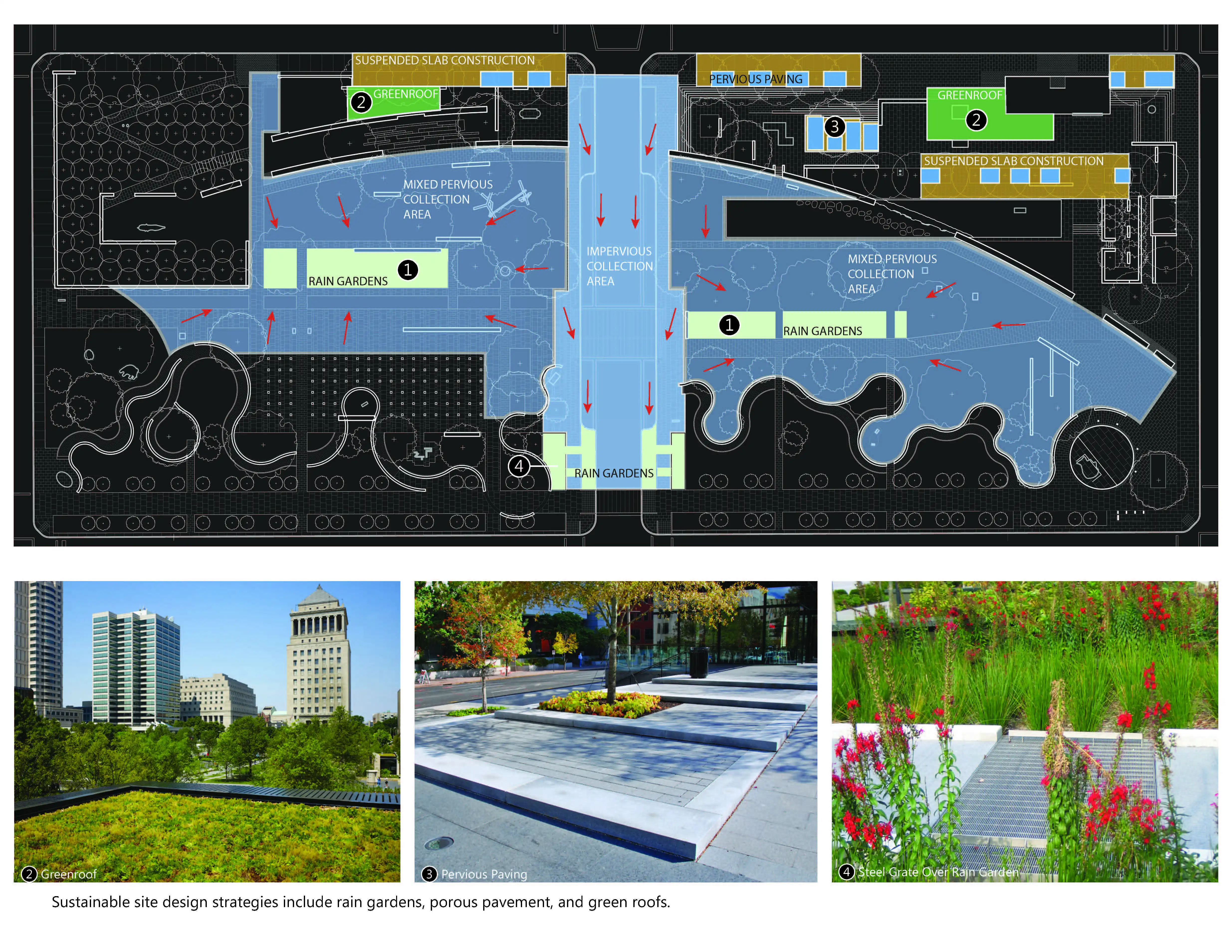
Citygarden employs multiple sustainable strategies including stormwater management, native planting, promotion of plant health, and reinvigoration of the social / economic health of a declining urban center. Two-thirds of the site’s stormwater drainage is managed within the boundaries of the garden. Nearly half of the surface area is permeable. More than 5000 square feet of rain gardens capture, retain, and infiltrate surface water flow. The roofs of the two buildings in the park – the café and the maintenance building - incorporate 1400 square feet of extensive green roof. Three different soil mixes were designed to replace the rubble-filled, over-compacted existing site soils. These soils provide a much healthier substrate for the various plant communities to thrive in. Trees planted within pavement zones are given generous room for trunk and root growth. Most significantly, several strategies were pursued to minimize compaction issues that are typical for urban trees. A slab and pier construction system was used in many of the terrace and street areas to allow unimpeded root growth. In areas where this system could not be used, structural soils were substituted.
-
Lead Designer: Nelson Byrd Woltz Landscape Architects
Principal in Charge: Warren T. Byrd, Jr., FASLA, CLARB;Senior Project Mangers: Sara C. Myhre, RLA, RA; Mary W. Wolf, RLA; Breck Gastinger;
Staff Designers: Paul Josey, Jeremy Jordan, ASLA
Client: The Gateway Foundation
Christy Fox, DirectorOwner’s Representative: Arcturis
Sara RungeArchitect for Terrace View Café & Maintenance Building: Studio│Durham Architects
Phil Durham, RA, Principal in Charge; Greg Worley; Darci ThomasStructural Engineer: Frontenac Engineering Group
Mohamed T. Al Harash, Structural EngineerCivil Engineer: Frontenac Engineering Group
Steve Miller, Civil EngineerMechanical, Electrical, Plumbing: Ross & Baruzzini
Paul E. Carmen, Sr. Electrical Designer; Phil PohlmanFountains: Hydro Dramatics
Anne Gunn; Kerry Friedman; Dan Heinlein; Shawn BoydSite Lighting: Fisher Marantz Stone
Charles Stone; Zack Zanolli; Rebecca Ho-DionSculpture Lighting: Randy Burkett Lighting Design
Randy Burkett; Susan JenningsSculpture Structural Engineer: Larson Engineering, Inc.
Ted Pruess; Marie Newman; Naseem Albori; Walter LewisSculpture Installation: Acme Erectors
Aron ClayVisual Communication: Bliss Collaborative
Pam Bliss; Kathleen RobertCommunication Strategy & Information Design: Act 3 Studio
Ben KaplanIrrigation: Irrigation Research Management
Steve Niehoff, Irrigation DesignerSoils: Jeffrey L. Bruce & Co. LLC
Jeffrey Bruce; David Stokes; Eric BeckerCost Estimating: Everest Estimating Services
Rich UllrichPlant Consultant: Missouri Botanical Garden
June Hutson; Jim Cocos
General Contractor: BSI Constructors, Inc.Paul McLeane; Doug Hawkins; Joseph Kaiser; Dan Kloeppel
Subcontractors
Cold Spring Granite; Daktronics; DKW Construction Co., Inc.; Earthworks; Engraphix Architectural Signage; Environmental Design/Instant Shade Tree; Franklin Mechanical, Inc.; Kaiser Electric; Kirkwood Masonry; Landesign; Leonard MasonryFeatured Products
Earthworks, Inc.
Arc wall, benches, Missouri Limestone-EW GoldHydro Dramatics
Fountain design and supplyBSI Constructors
General ContractorEnvironmental Design
Large TreeLanddesign LLC
Large tree installationCold Spring Granite
Meander wall coping, Lake Superior GraniteCrystal Fountains
Spray fountain heads and grates
Advertisement
Related Awards
Award of Excellence, General Design
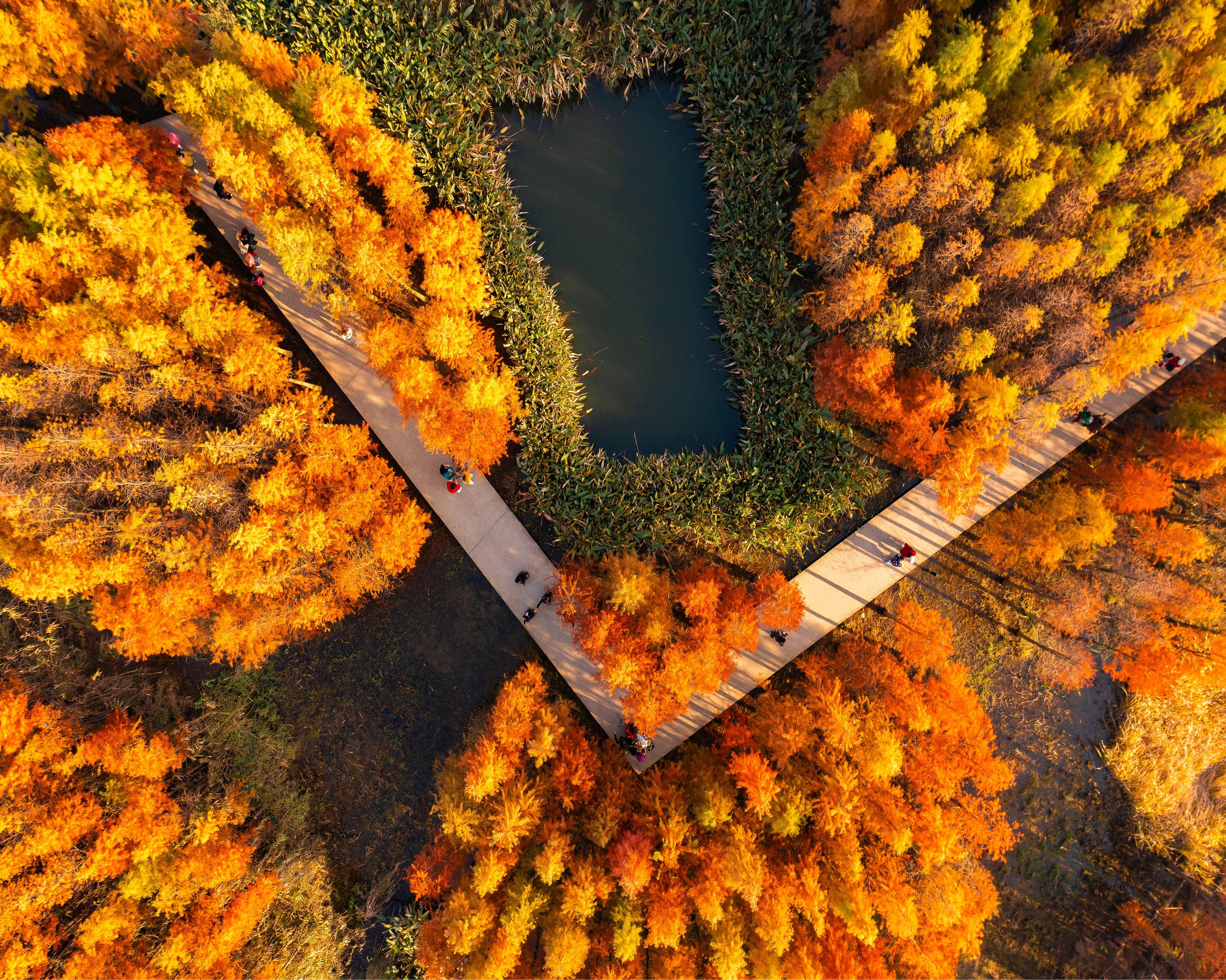
A Floating Forest: Fish Tail Park in Nanchang City
In Nanchang, within the Yangtze River floodplain, we revitalized a heavily degraded 126-acre landscape into a floating forest that manages stormwater, restores habitats, and provides diverse recreational spaces—all within a limited budget and a short timeline. This innovative urban nature model strengthens the district’s identity and spurs surrounding development. Fish Tail Park offers a scalable solution for flood-prone regions, seamlessly integrating flood resilience, ecological restoration