.webp?language=en-US)
-
Our project transforms the Continental Bridge into a dynamic connection between the Dallas downtown urban edge and new Trinity River Park. We reimagine the bridge as a layered experience that accentuates contextual datums intrinsic to the site. The project creates a living scaffold which synthesizes the energy and vivacity of the city with the rhythms, cycles, and seasons of the Trinity River.
-
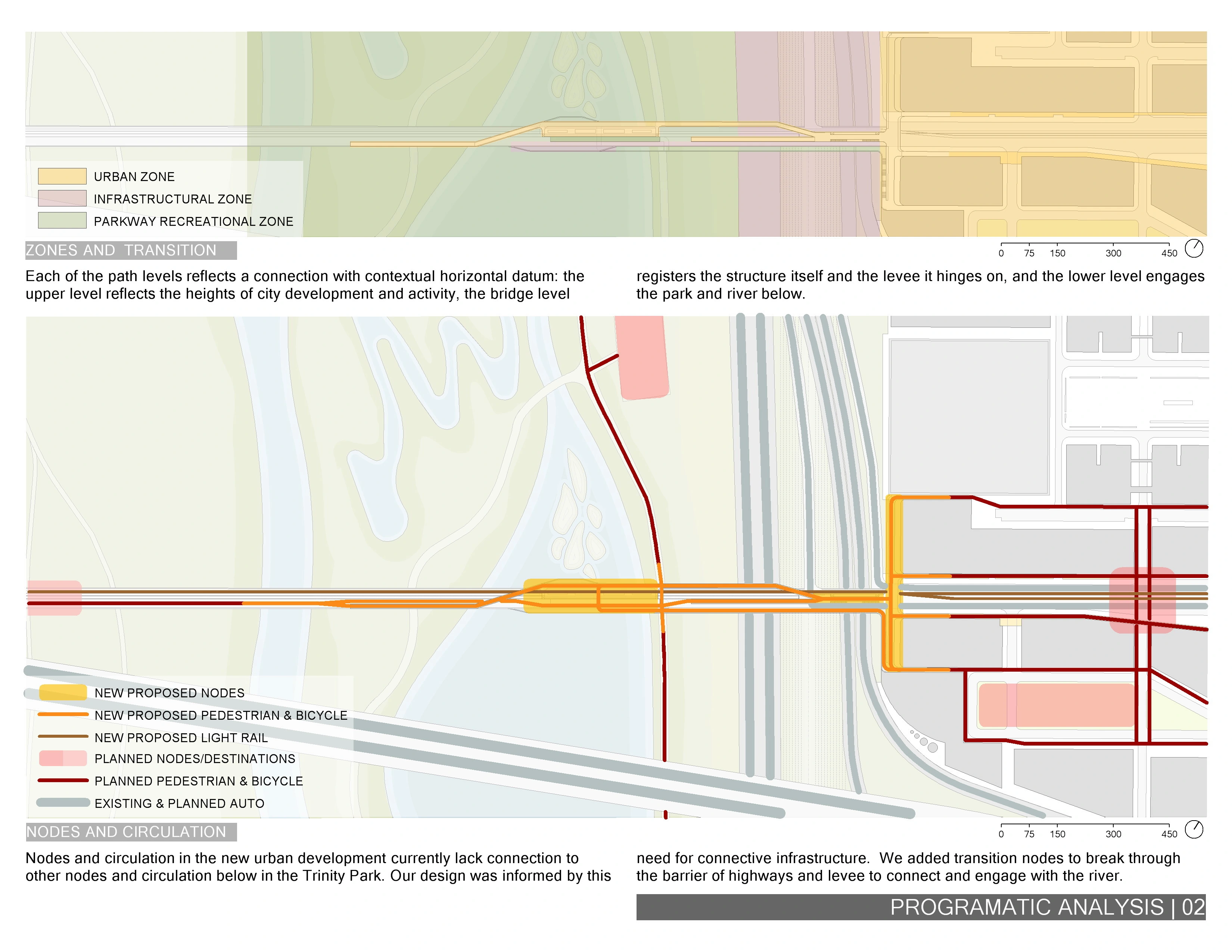
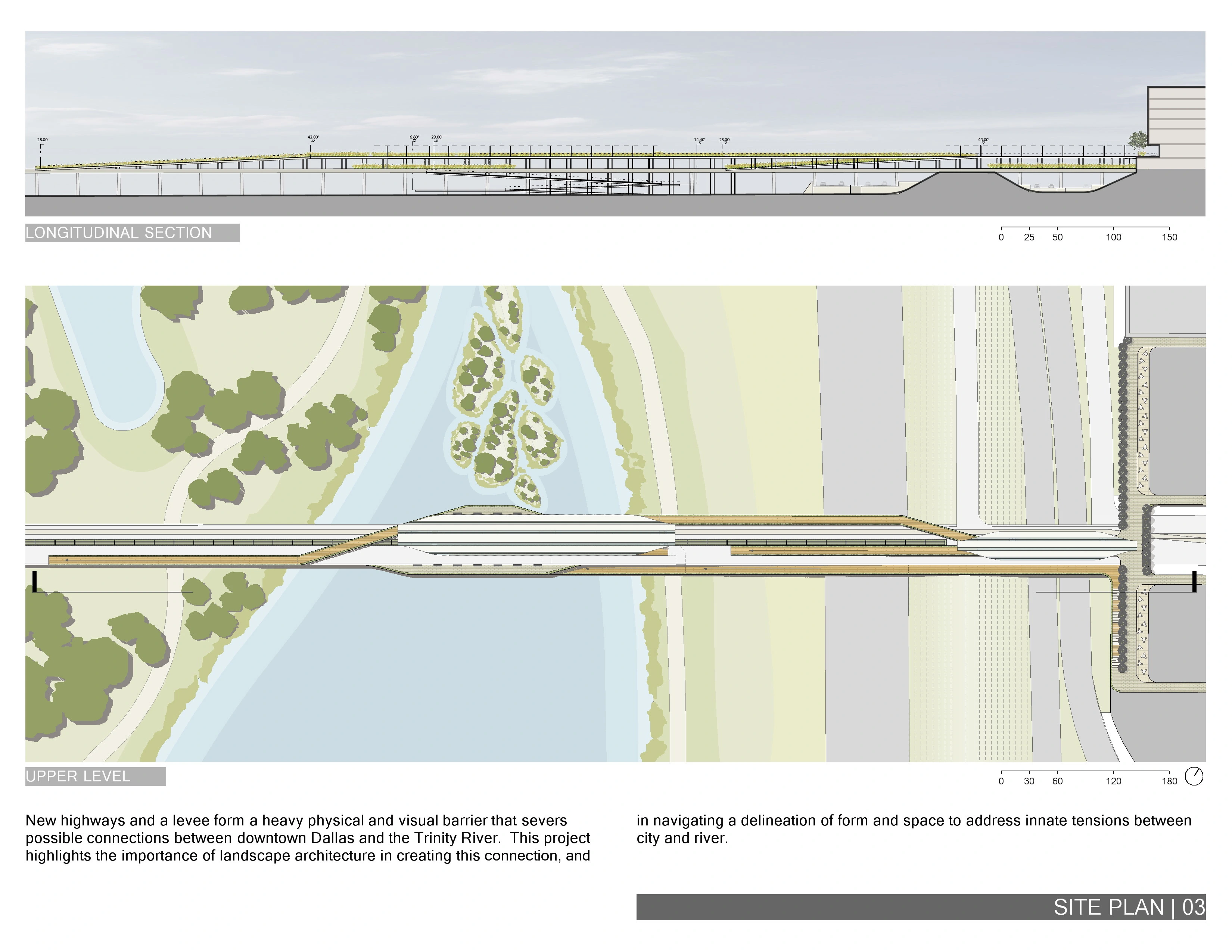
The construction of two Calatrava bridges in Dallas, Texas has led to the reprogramming of the section of Continental Avenue that spans the Trinity River Corridor. These efforts are coupled with the reengineering of the Trinity River as a series of flood control wetlands, lakes, and recreational spaces. New highways and a levee form a heavy physical and visual barrier that severs possible connections between downtown Dallas, and the Trinity River. This project highlights the importance of landscape architecture in forming this connection, and in navigating the delineation of form and space to address innate environmental tensions. The bridge becomes a comprehensive mechanism to reconcile disparate contextual parts.
The Dallas Edge
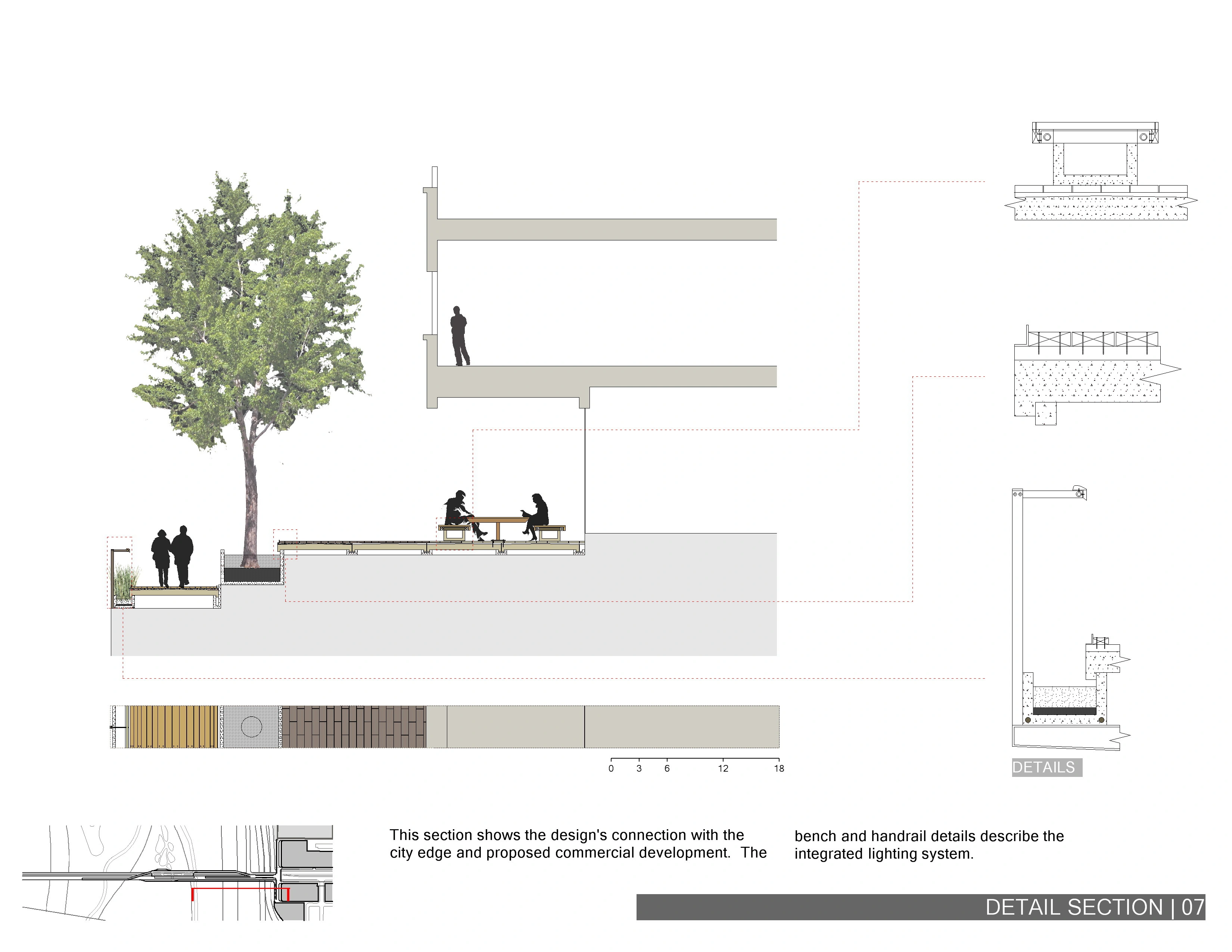
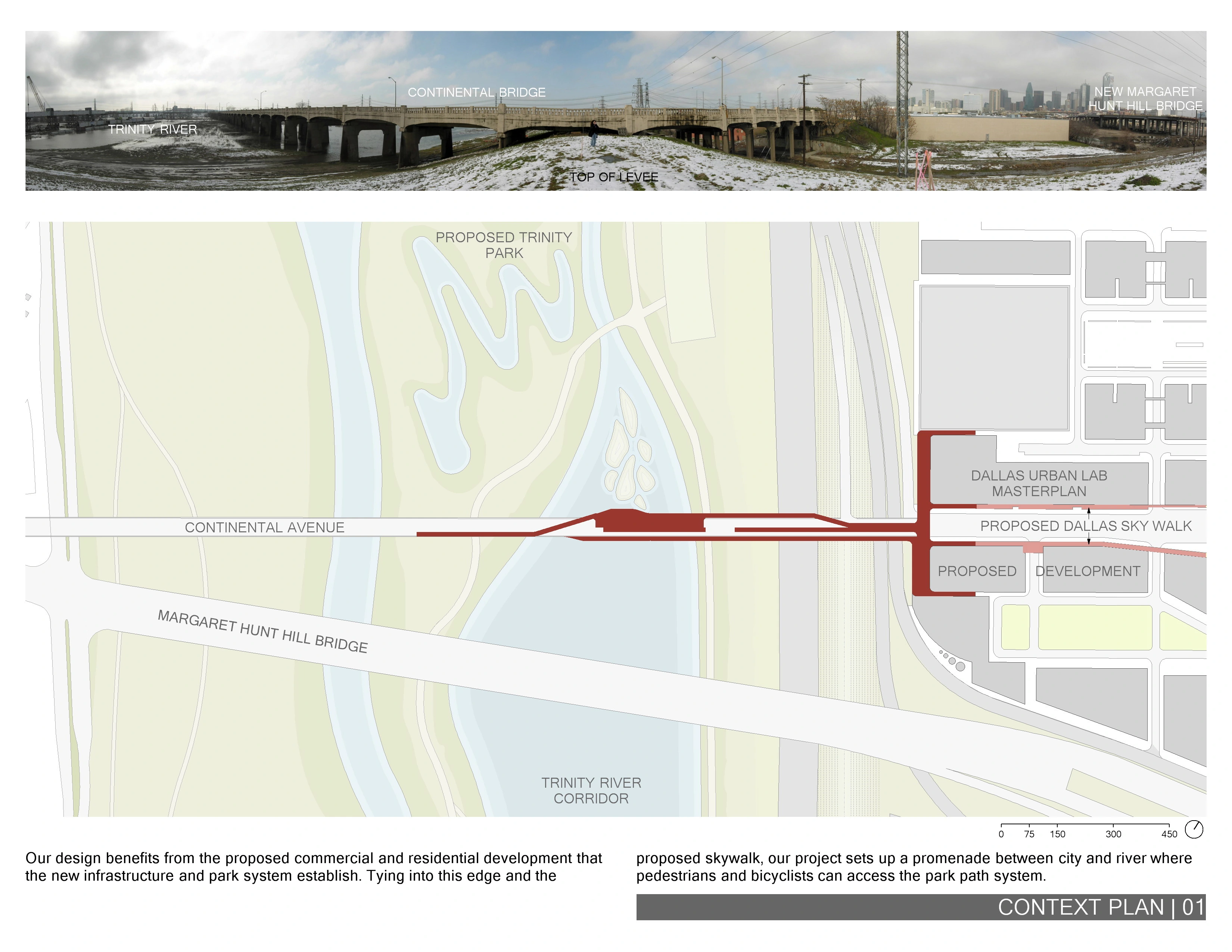
The city of Dallas is currently undertaking a large urban development effort with the Trinity River Corridor Project. The city plans to reclaim the river as a valued natural resource, to create an extensive greenway for recreational activity, and to develop neighborhood and business areas adjacent to the river. The Continental Avenue Bridge represents one of the few opportunities for visitors to access the new park space. Our design benefits from the proposed commercial and residential development that the new infrastructure and park system establish. Tying into this edge, and the proposed Dallas Skywalk, the project sets up a promenade between city and river, where pedestrians and bicyclists can access the park path system.
Movement and Program
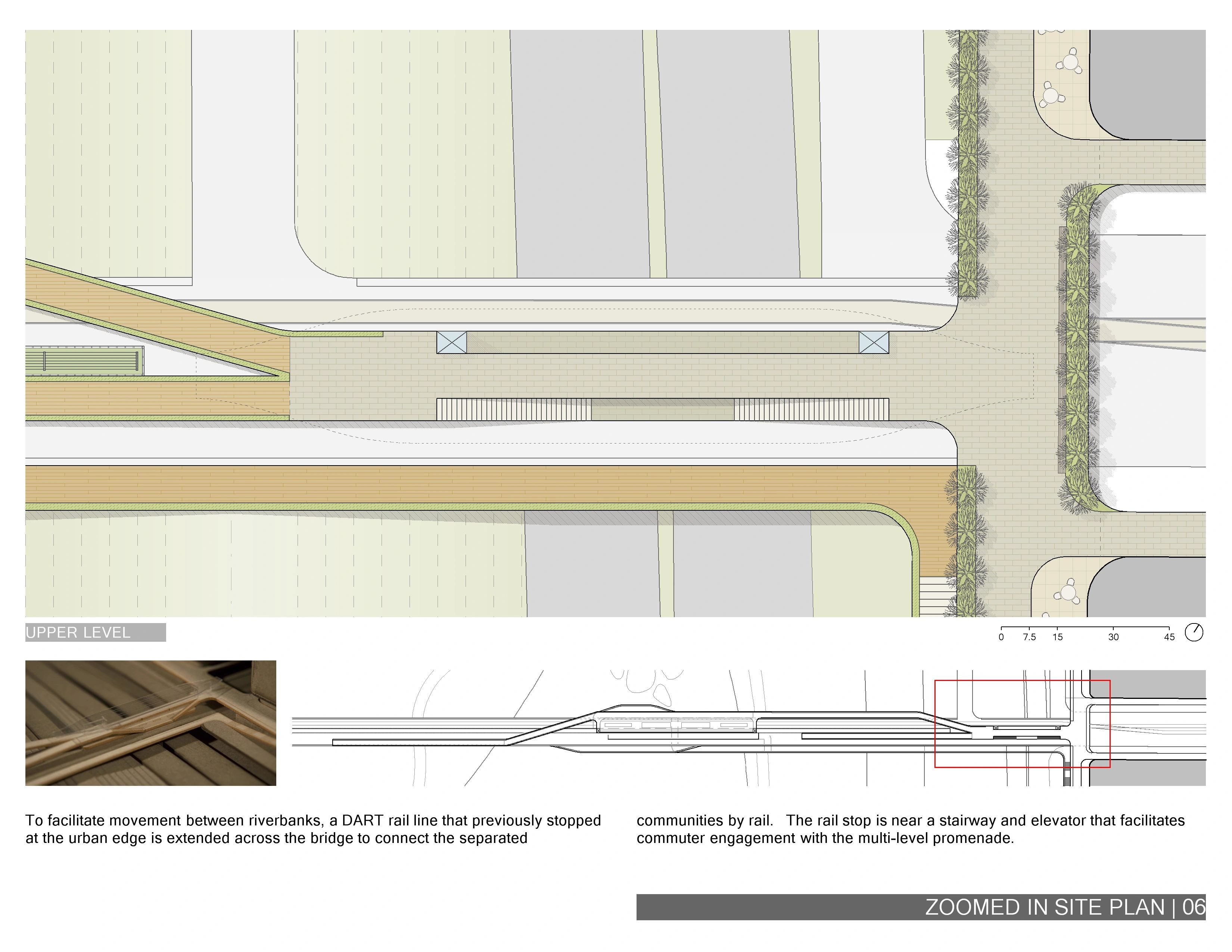
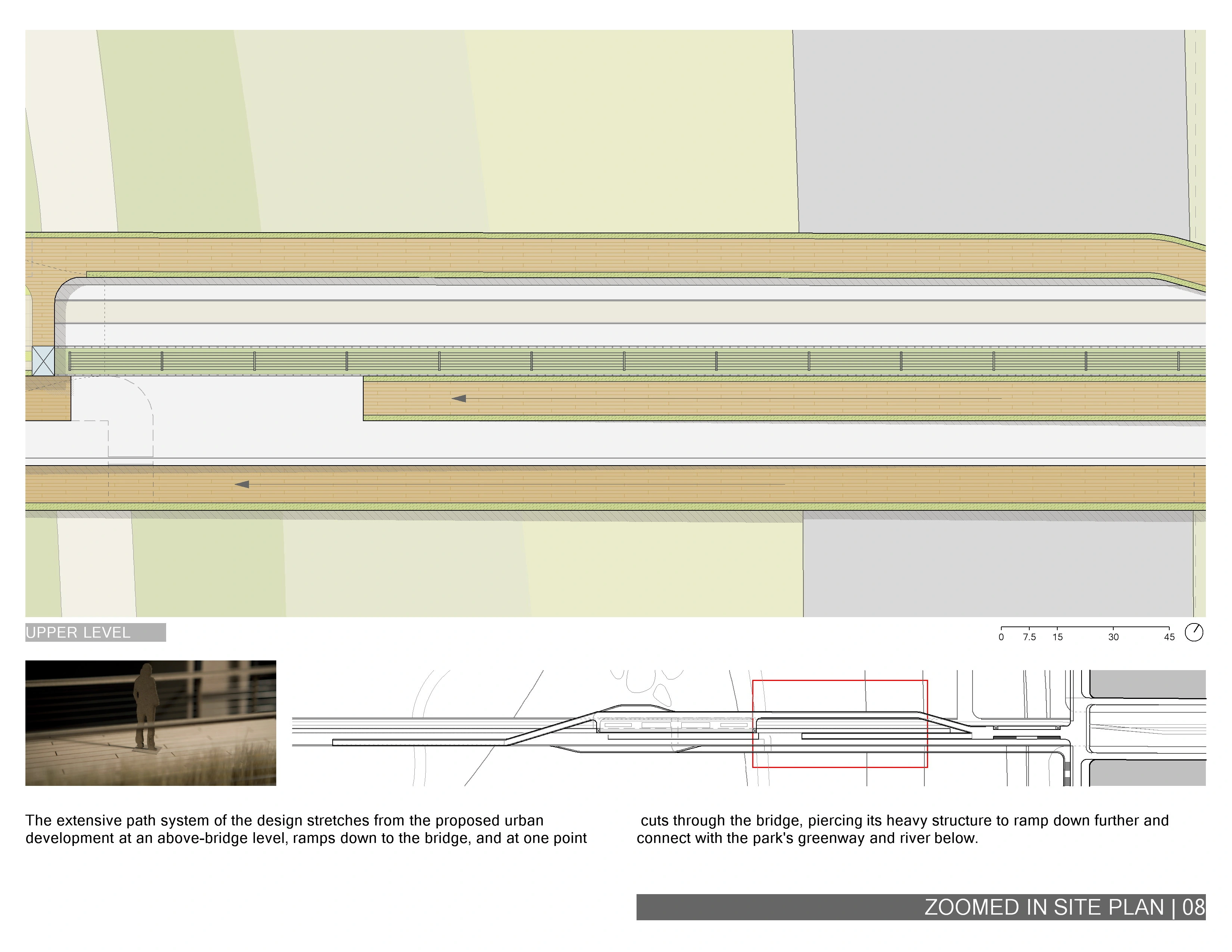
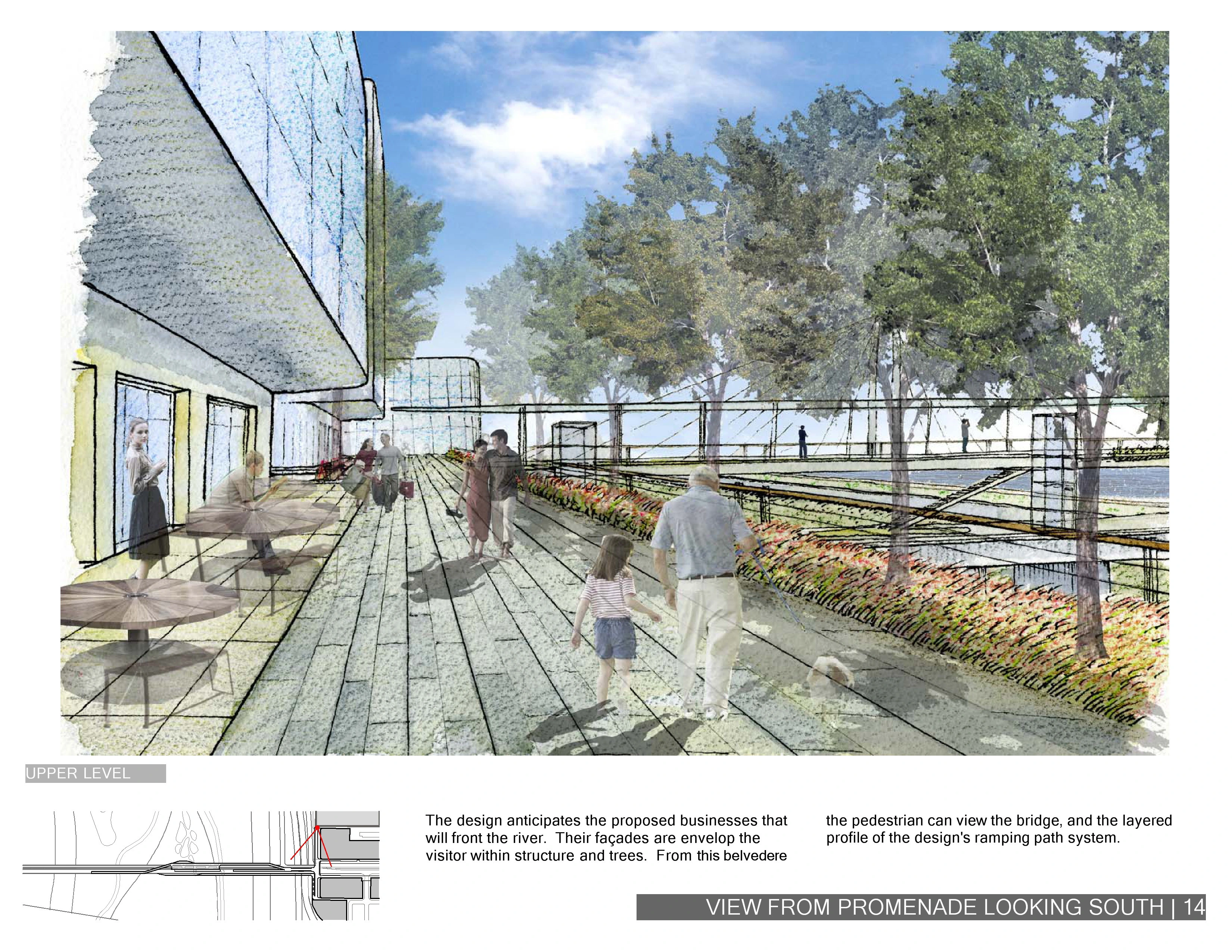
Our project organizes the movement of pedestrians, bicyclists, cars, trains, runoff and sunlight, and considers the ways in which these components interact. Removal of automobiles from the bridge recalibrates the space to create a pedestrian oriented experience. To facilitate movement between riverbanks, a DART rail line is extended across the bridge to connect the separated communities. The path system stretches from the proposed urban development at an above-bridge level, ramps down to the bridge, and connects with the park’s greenway. This change in path elevation, and the corresponding platforms, registers a gradient of city to park activity.
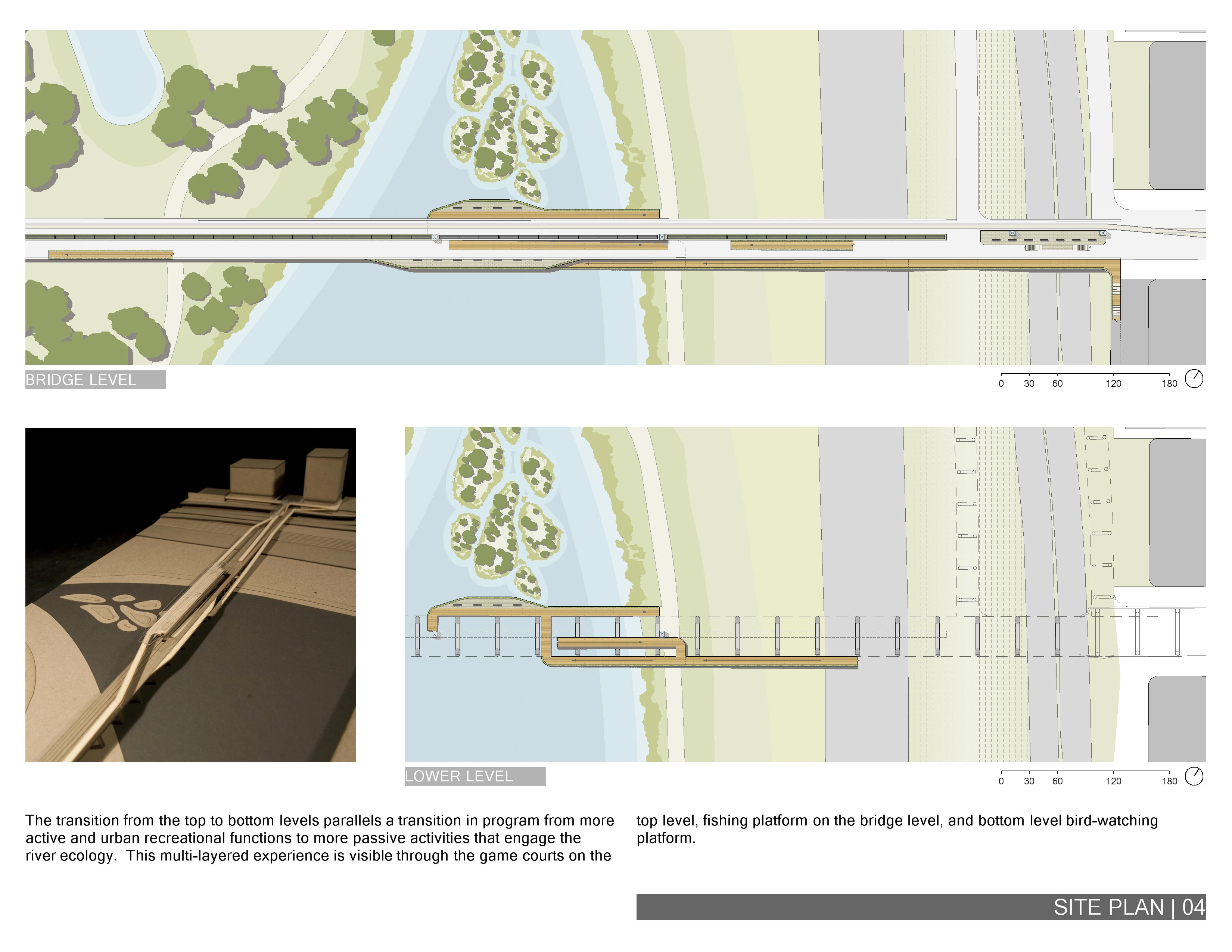
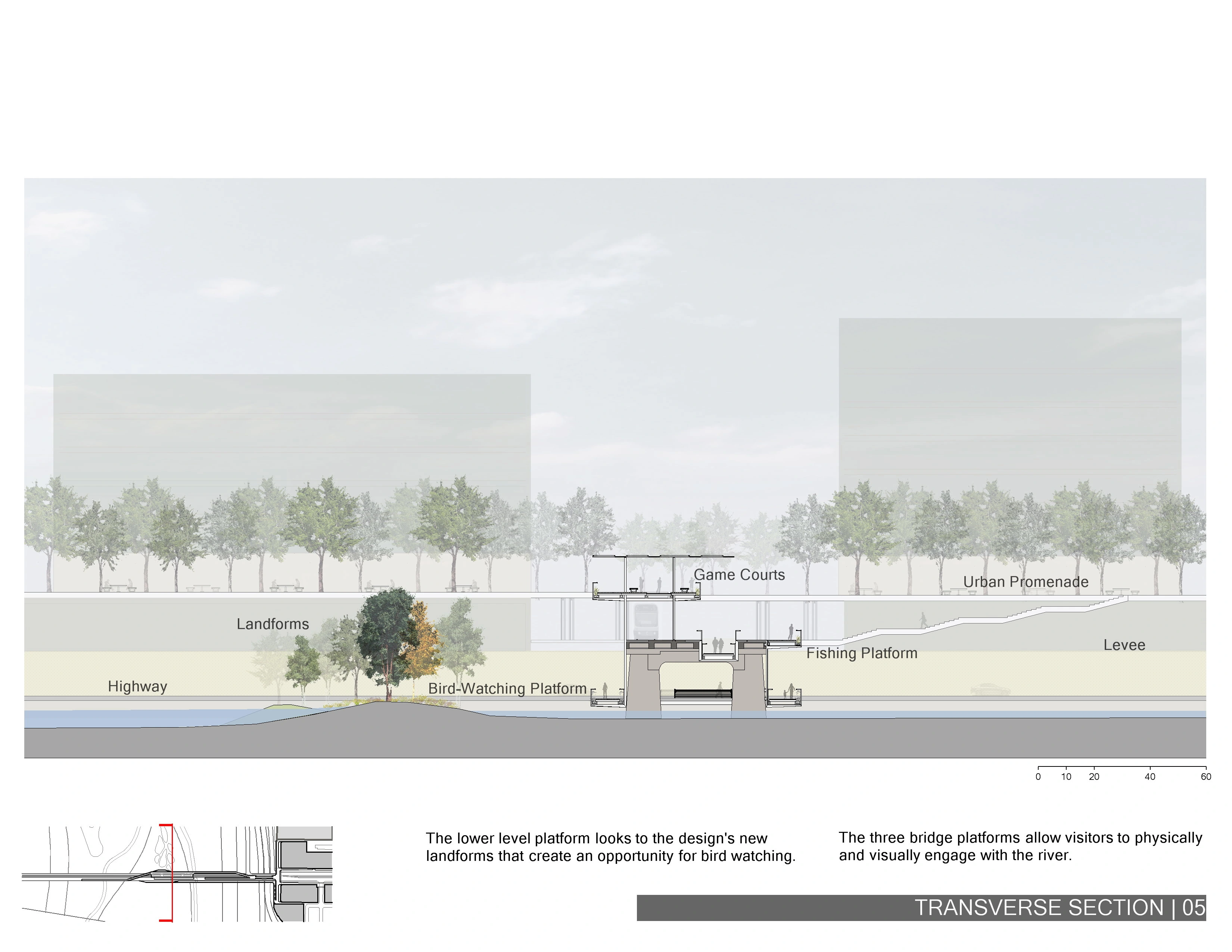
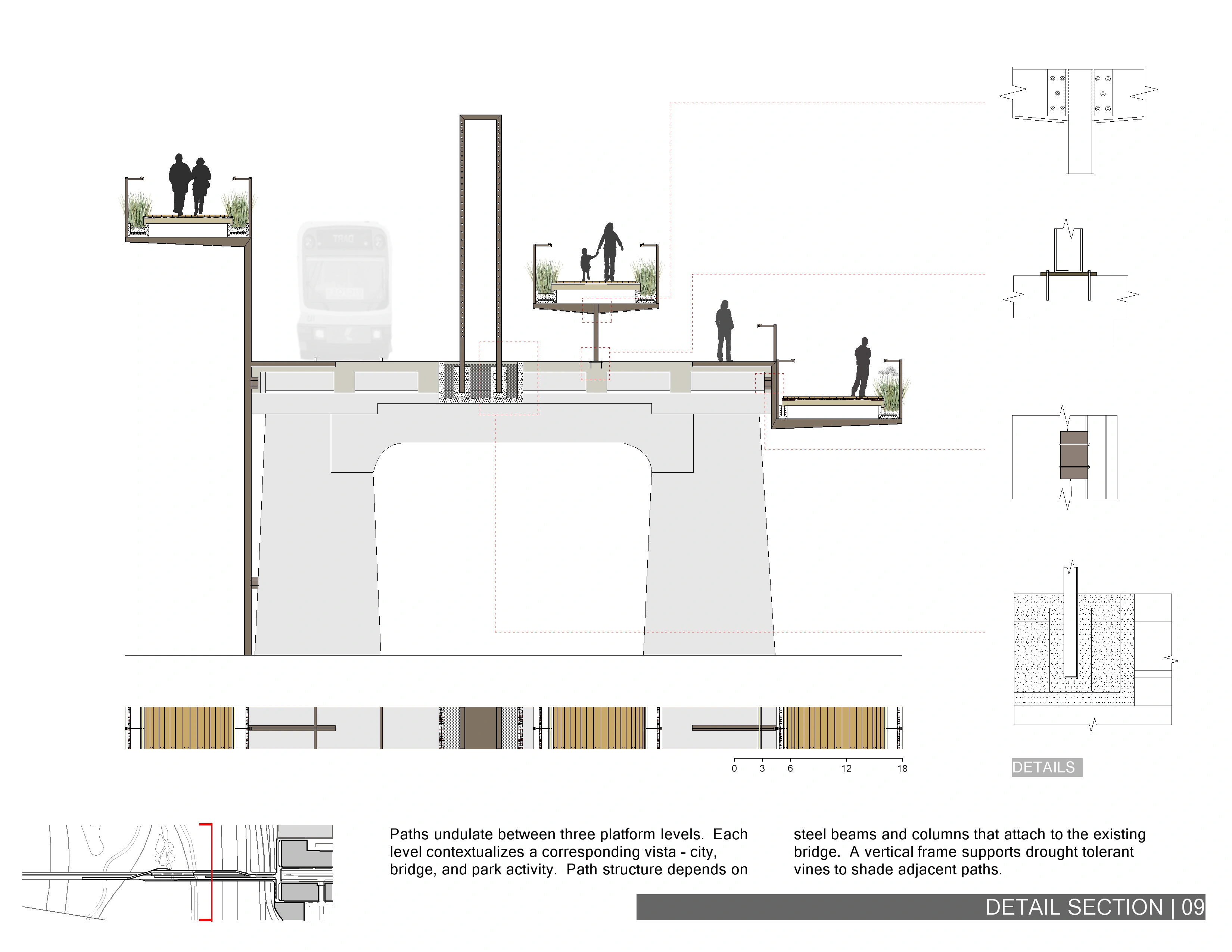
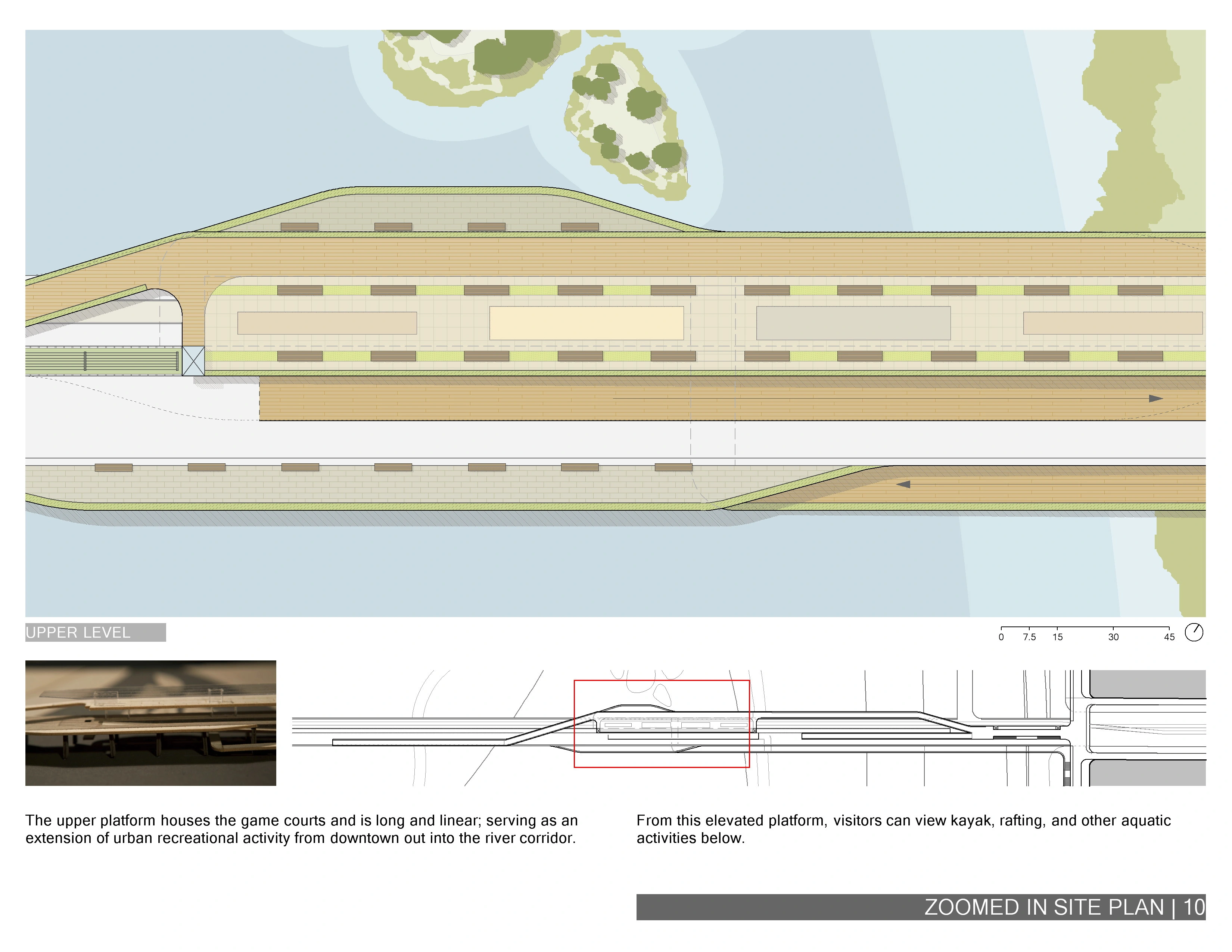
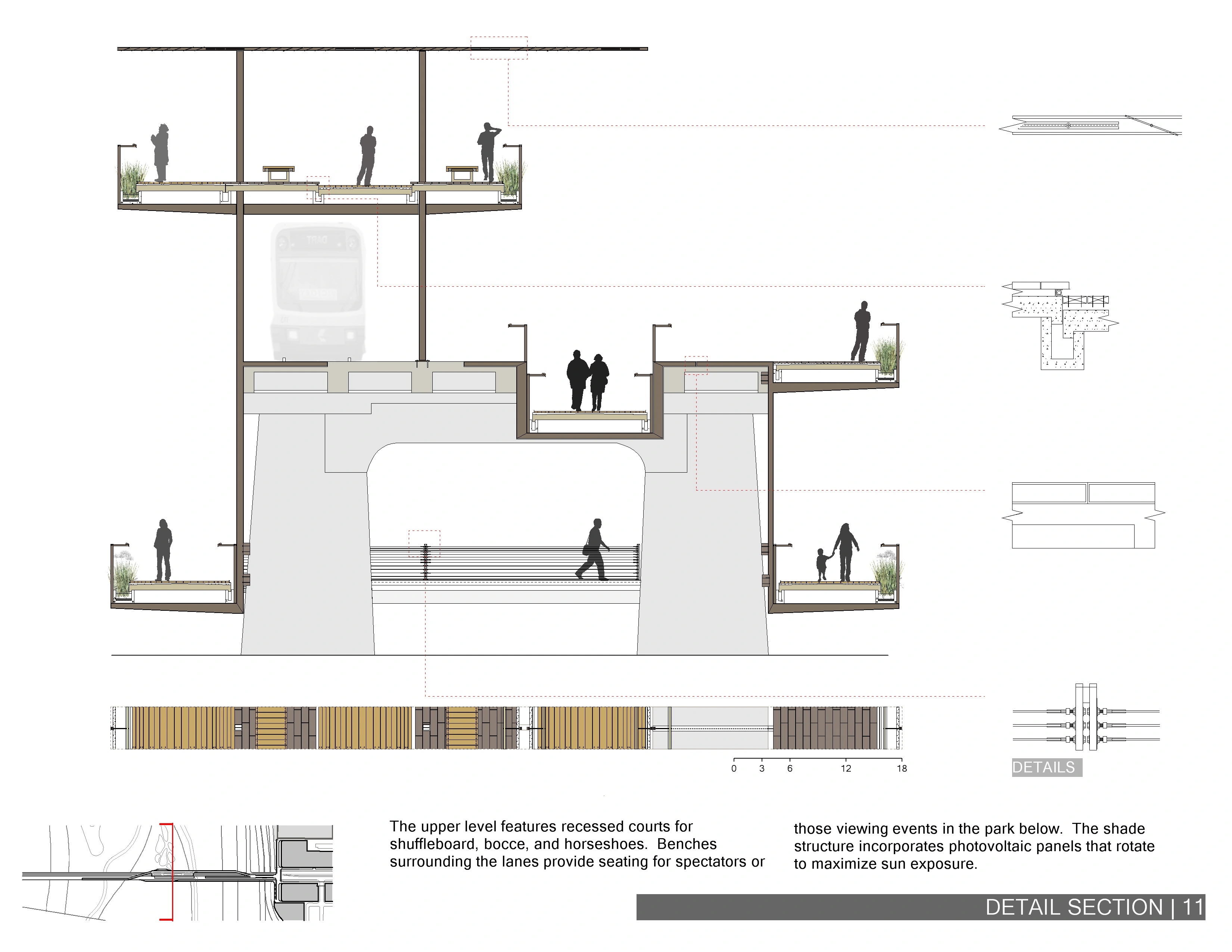
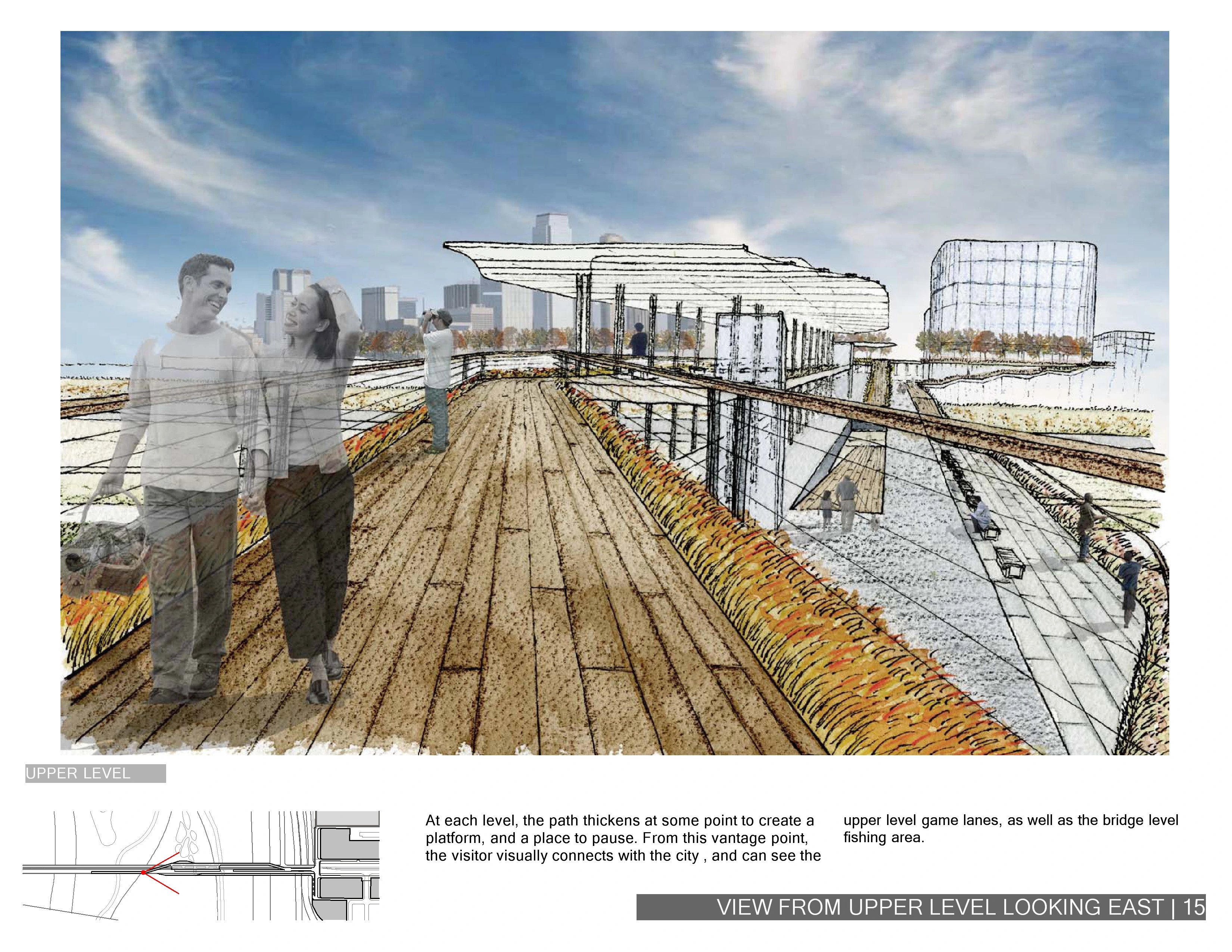
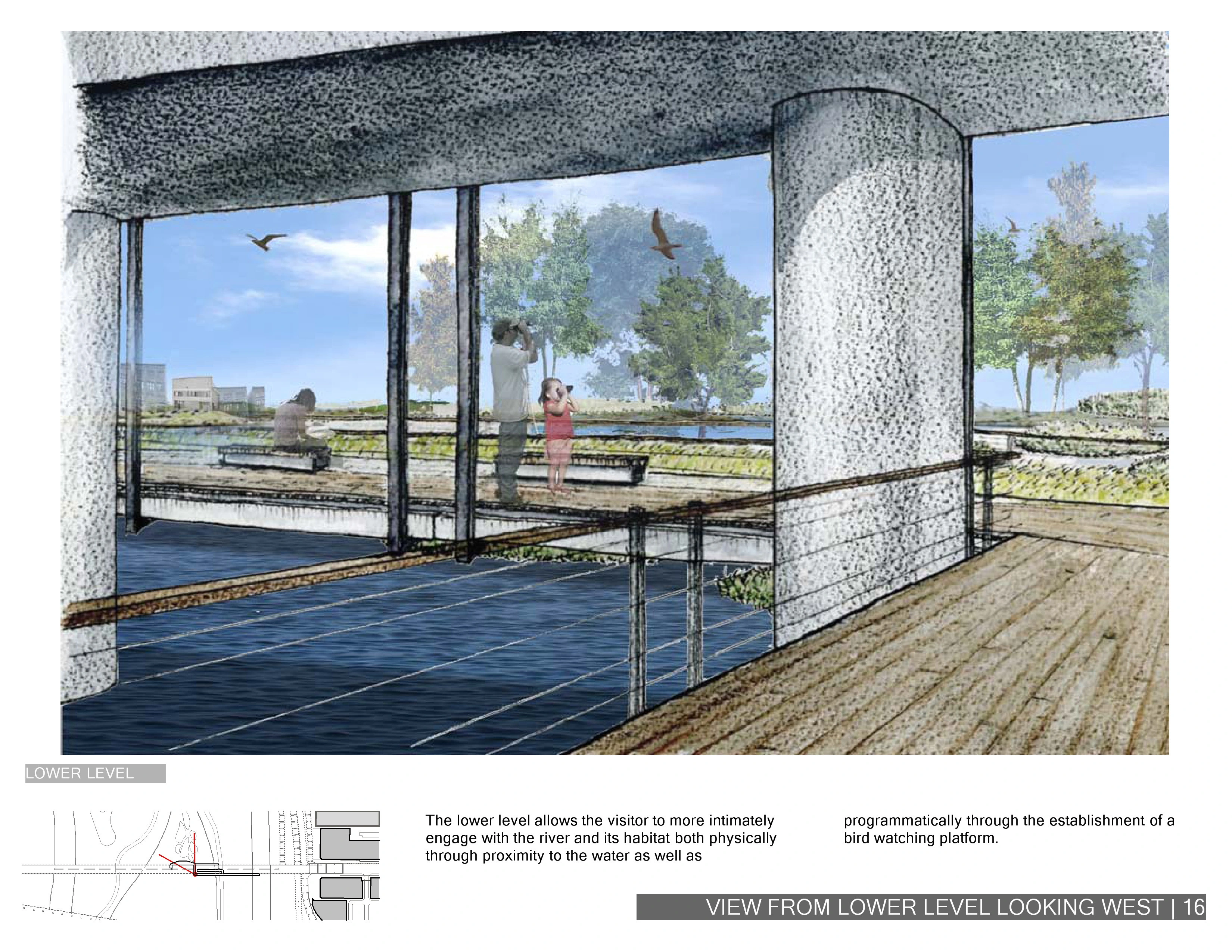
The design sets up the layered framework, but the user defines the path, experience, and tempo. Each level contextualizes a corresponding vista: city, bridge, and park. At each level, path transitions to platform to house the following programs: upper level – game boards and overlook, bridge level – fishing, lower level – bird watching, and park access. The upper level features recessed courts for shuffleboard, bocce, and horseshoes. Benches surrounding the lanes provide seating for spectators or those viewing events in the park below (Page 10). As the user moves between levels the transition parallels a gradient in program from more active and urban to activities that engage the river ecology (Page 04).
Designed Collection
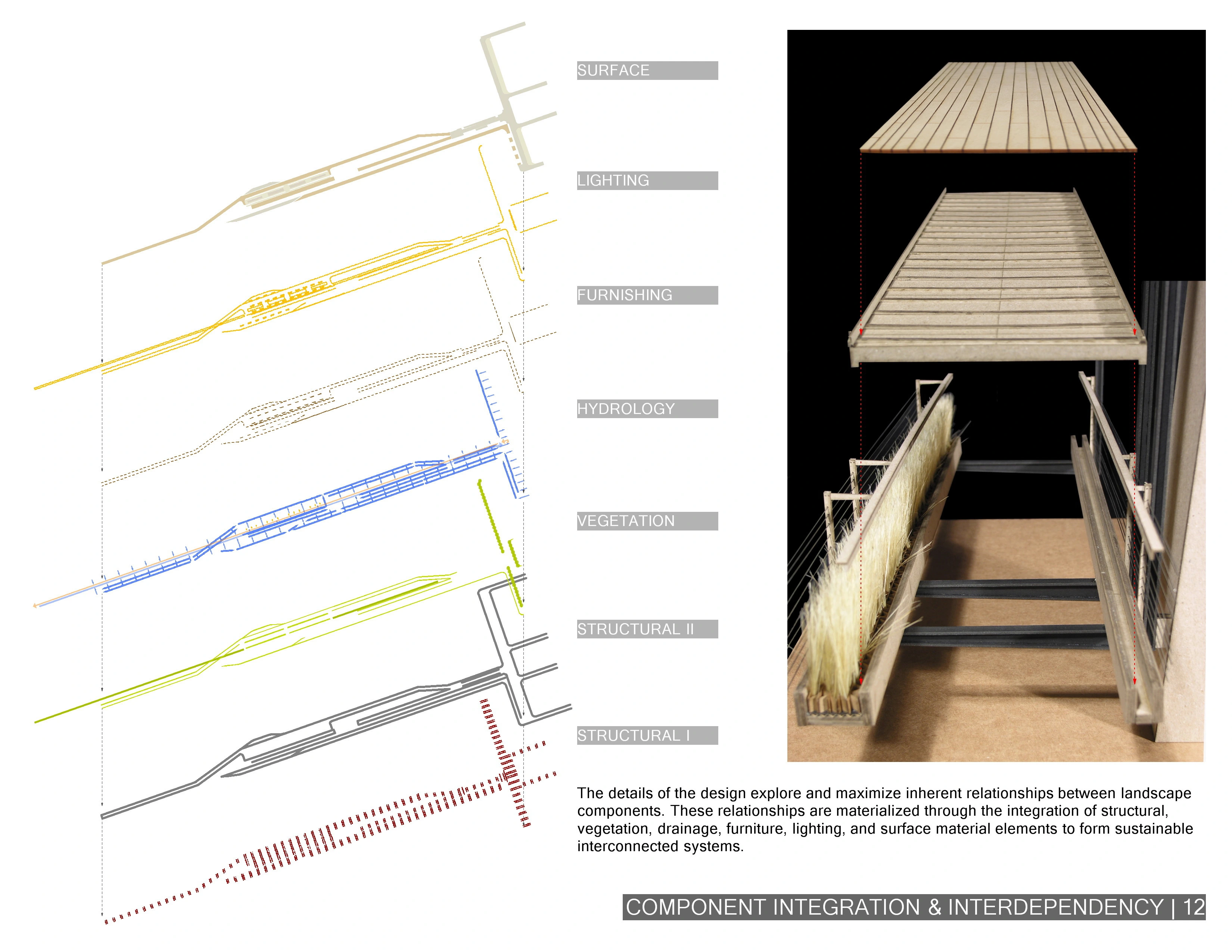
The details of the design study methods of collection, look at relationships between components, and reinforce the design’s overarching goal to form connections (Page 12). A water collection system begins with the path framework. The paths are supported by a modulated concrete beam, sleeper, and girder system that slopes to direct drainage; it collects water to support vegetation along the edges while excess water is stored in a cistern for reuse. Shade structures, positioned to partially cover the upper level platform and the train stop incorporate photovoltaic solar panels that rotate to maximize sun exposure time (Page 11). This energy is redirected to supplement the electricity needed to support the project’s lighting system (Pages 07 & 11). While structural, these energy-collecting components provide a feedback loop that supports the design and establishes a more sustainable footprint.
Dynamic Connections
The Continental Bridge moves through distinct elements and spaces. By repurposing the body of the bridge, our design builds a new dialogue between currently disparate elements. The landscape becomes structural and elevated, yet grounded in the human experience as visitors engage the river and its processes. The structure becomes a living scaffold; providing the armature for urban activity, energy, and vivacity to meld with the unique rhythms, cycles, and seasons of the Trinity River.
-
Advertisement
Related Awards
Award of Excellence, General Design
A Floating Forest: Fish Tail Park in Nanchang City
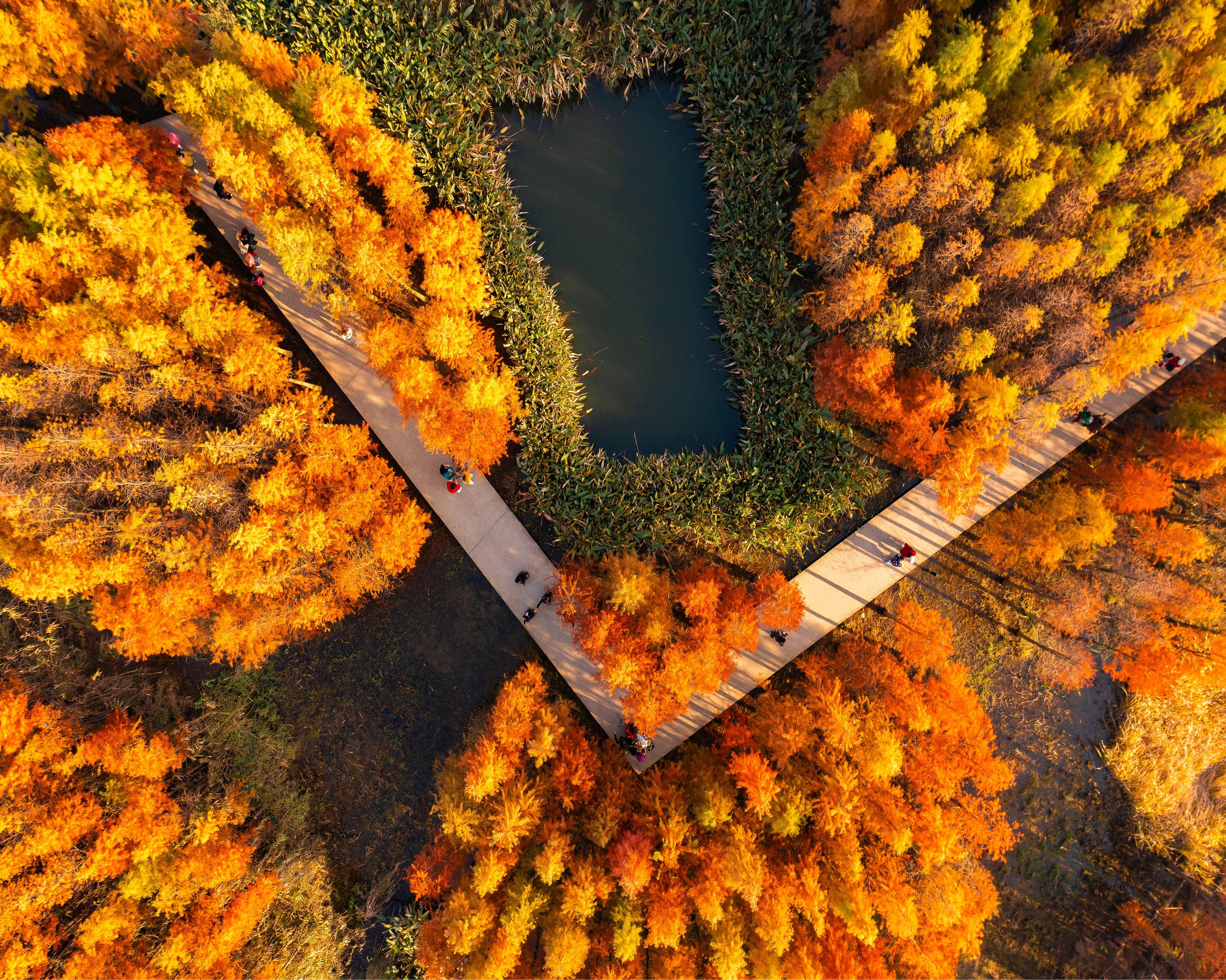
In Nanchang, within the Yangtze River floodplain, we revitalized a heavily degraded 126-acre landscape into a floating forest that manages stormwater, restores habitats, and provides diverse recreational spaces—all within a limited budget and a short timeline. This innovative urban nature model strengthens the district’s identity and spurs surrounding development. Fish Tail Park offers a scalable solution for flood-prone regions, seamlessly integrating flood resilience, ecological restoration