
.webp?language=en-US)




PGHSNAP: Neighborhood Data and Map Resource
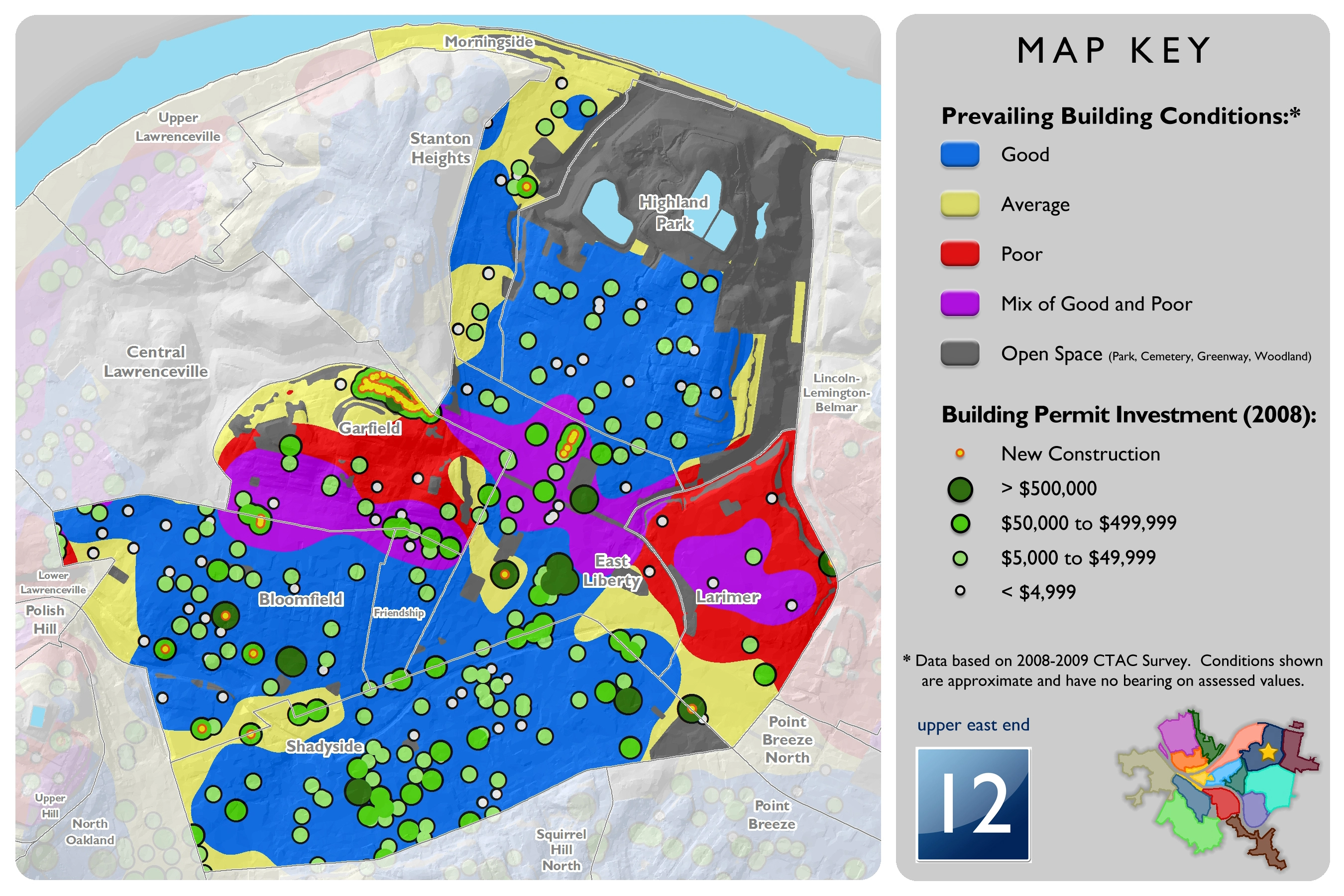
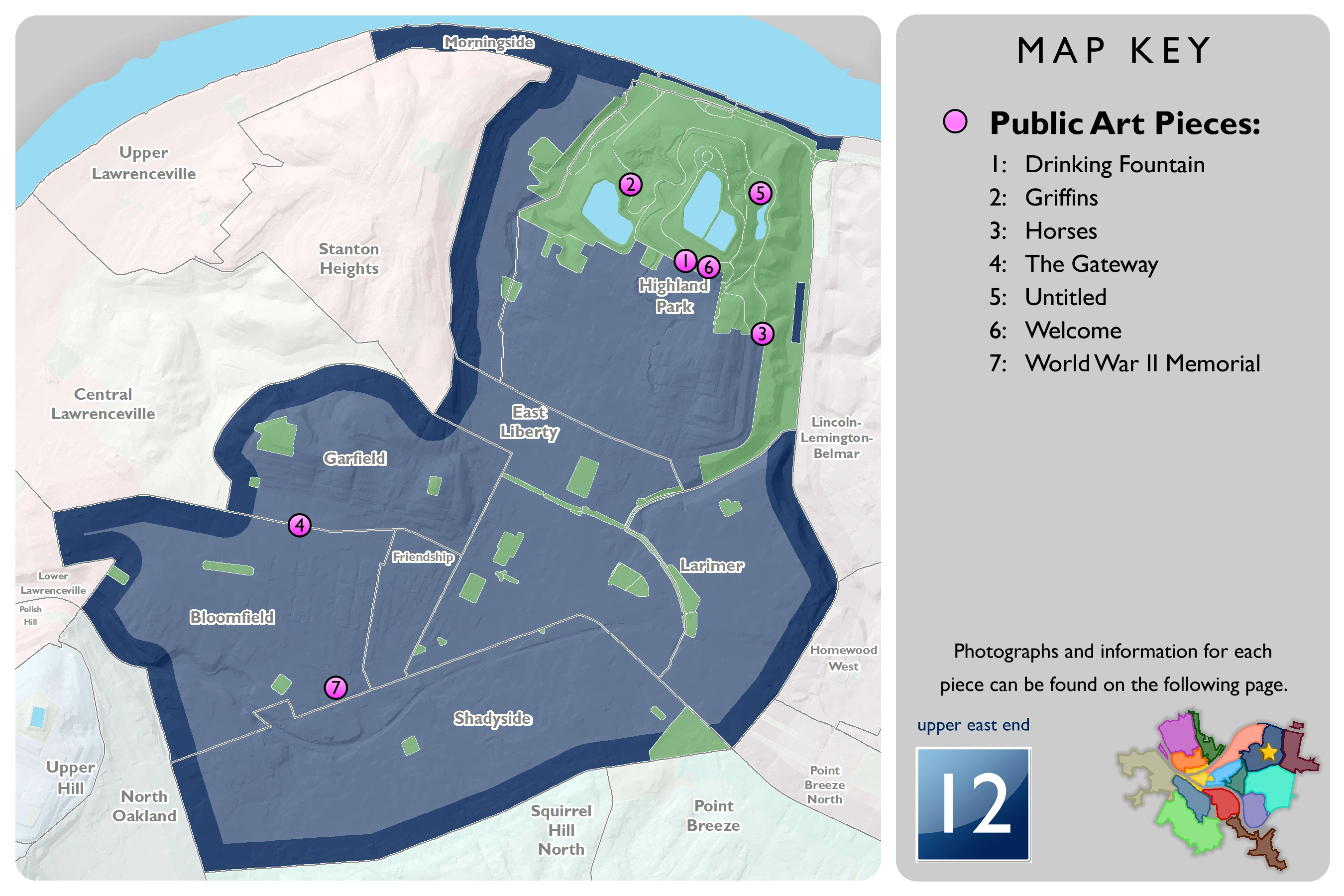
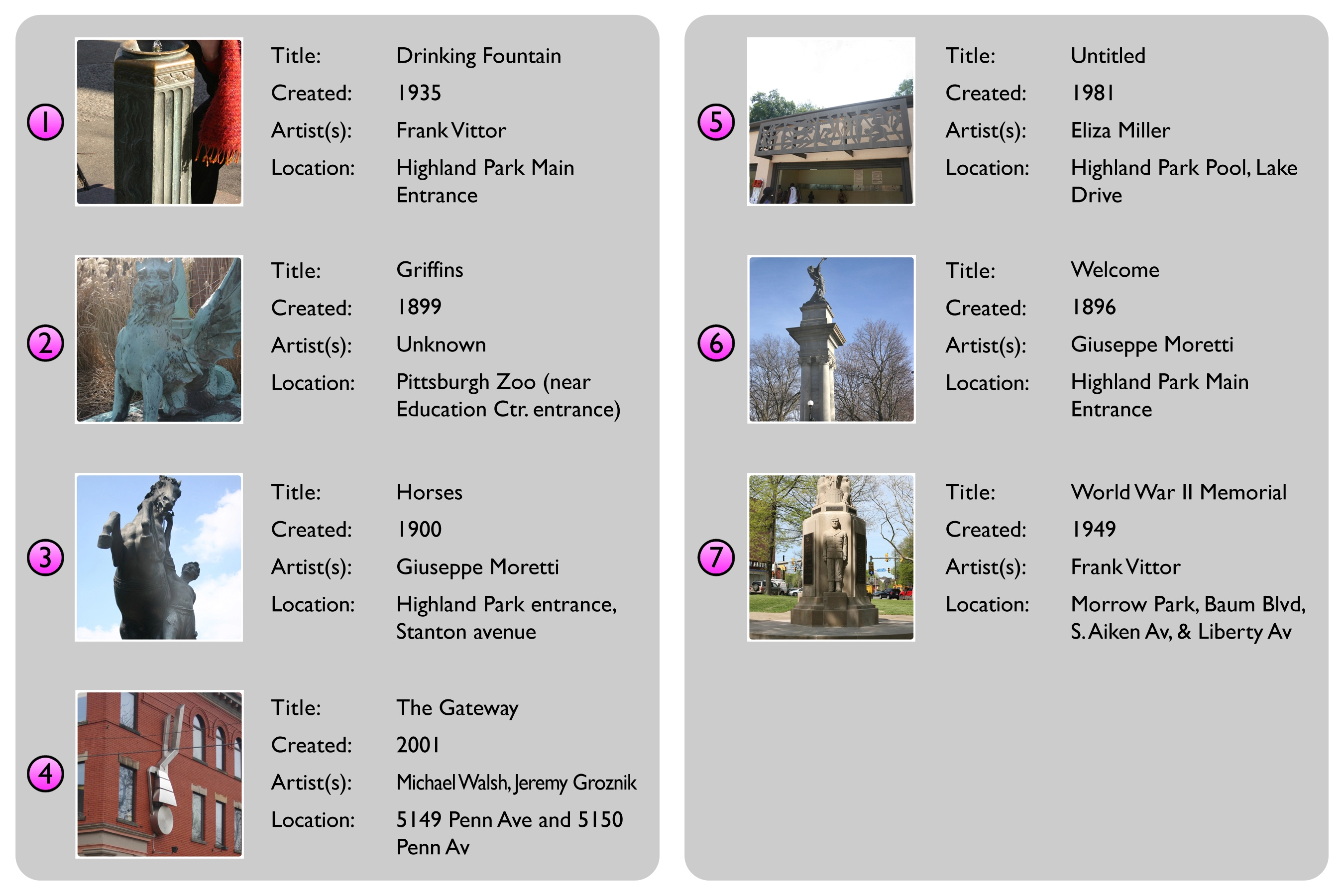
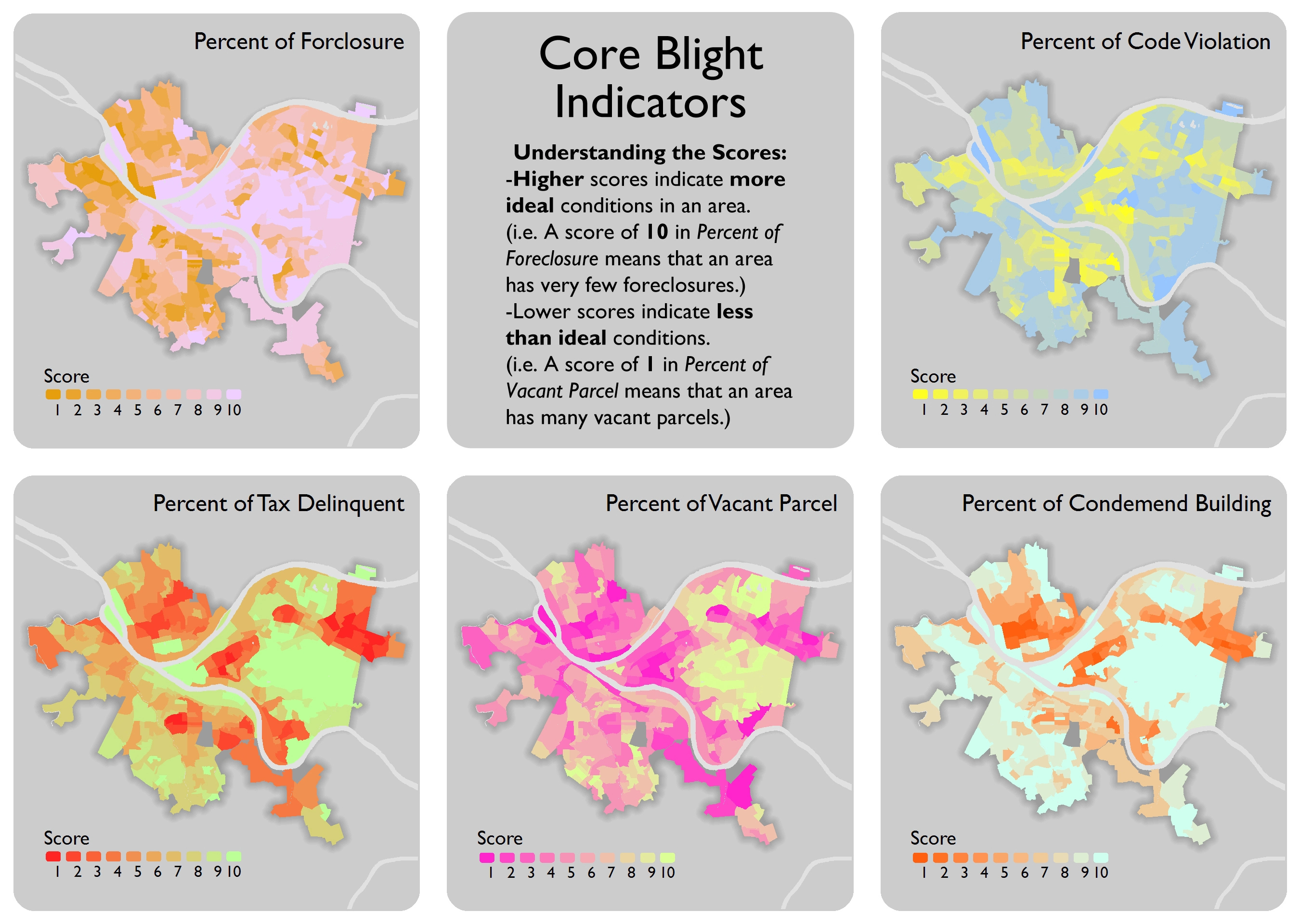
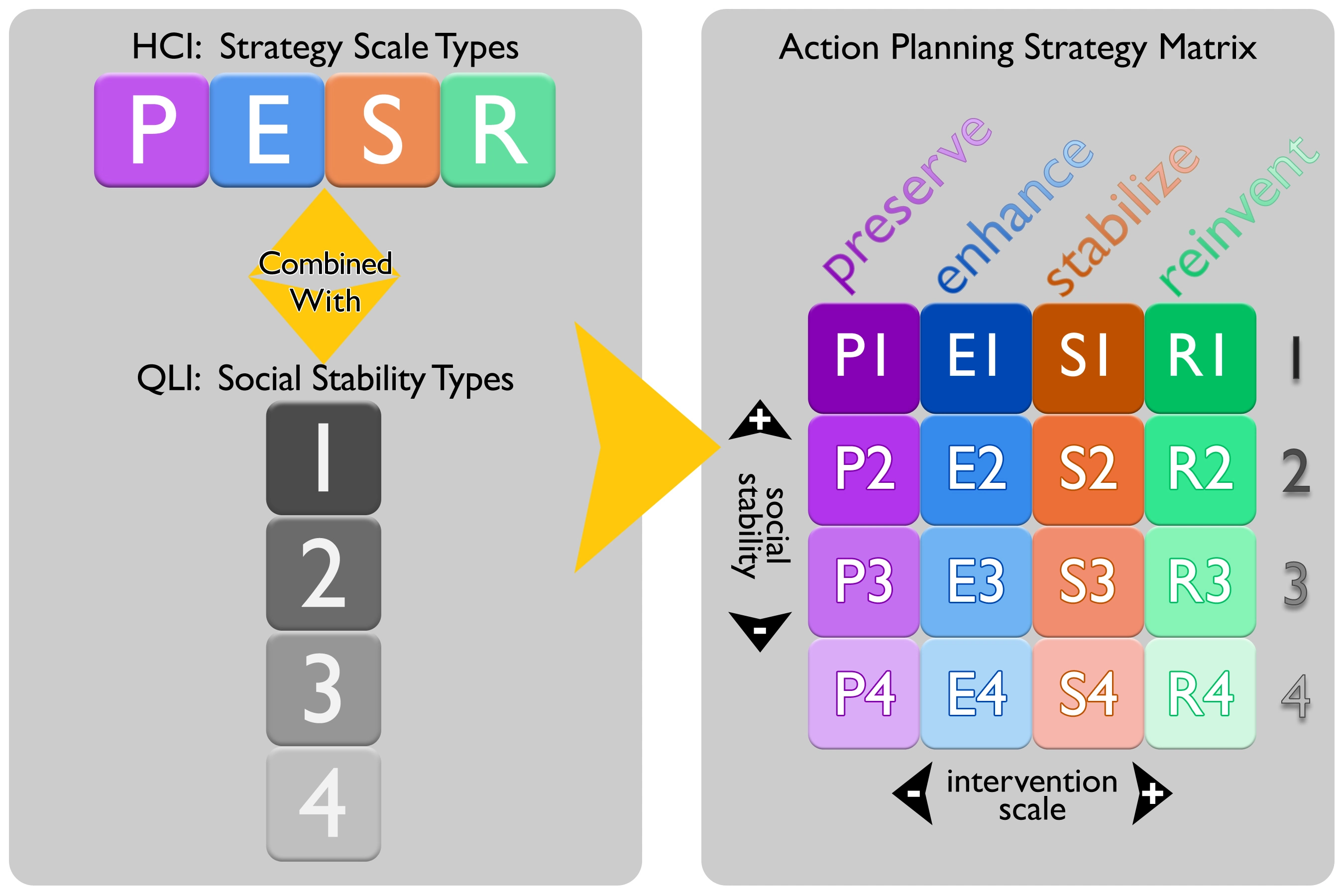
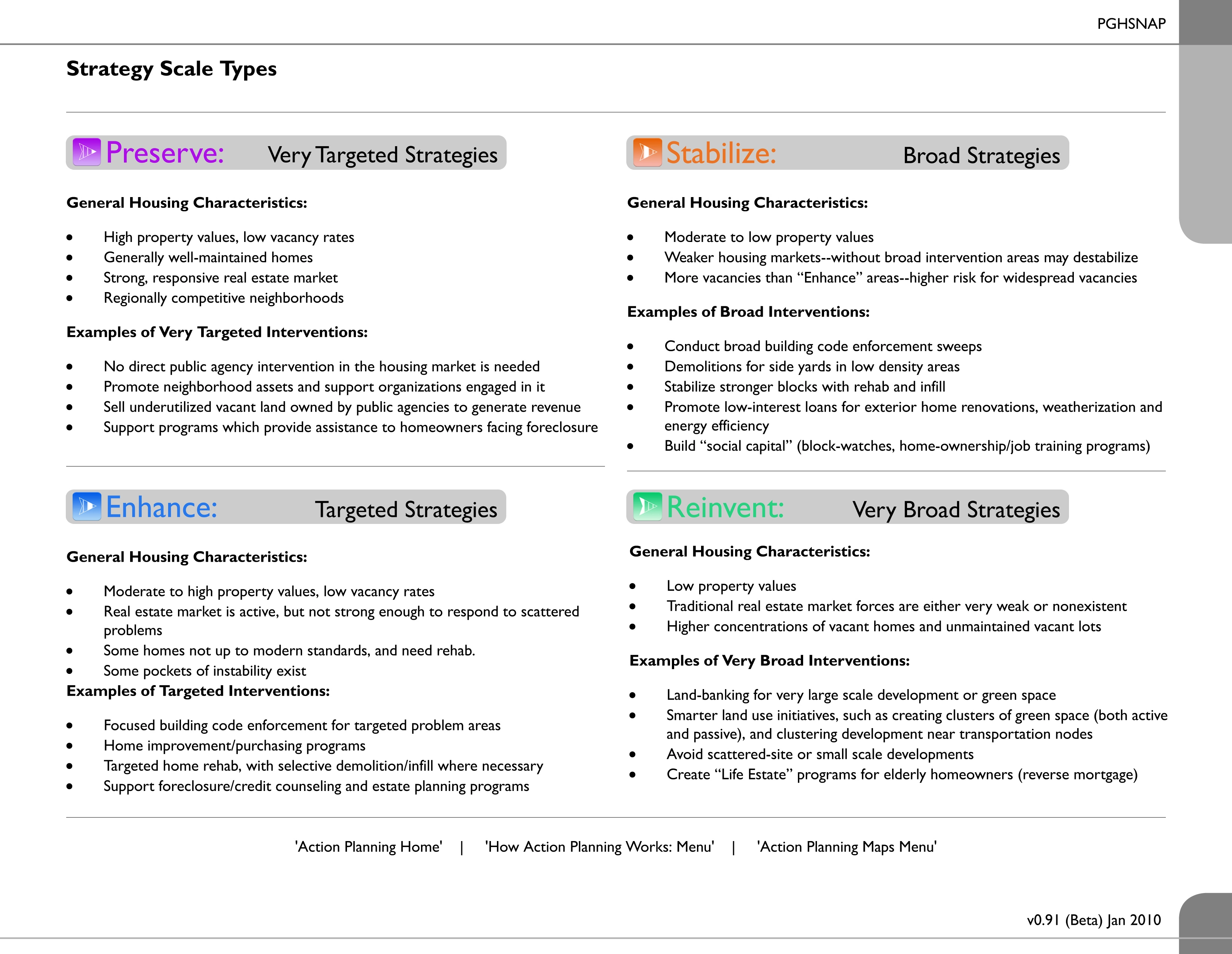
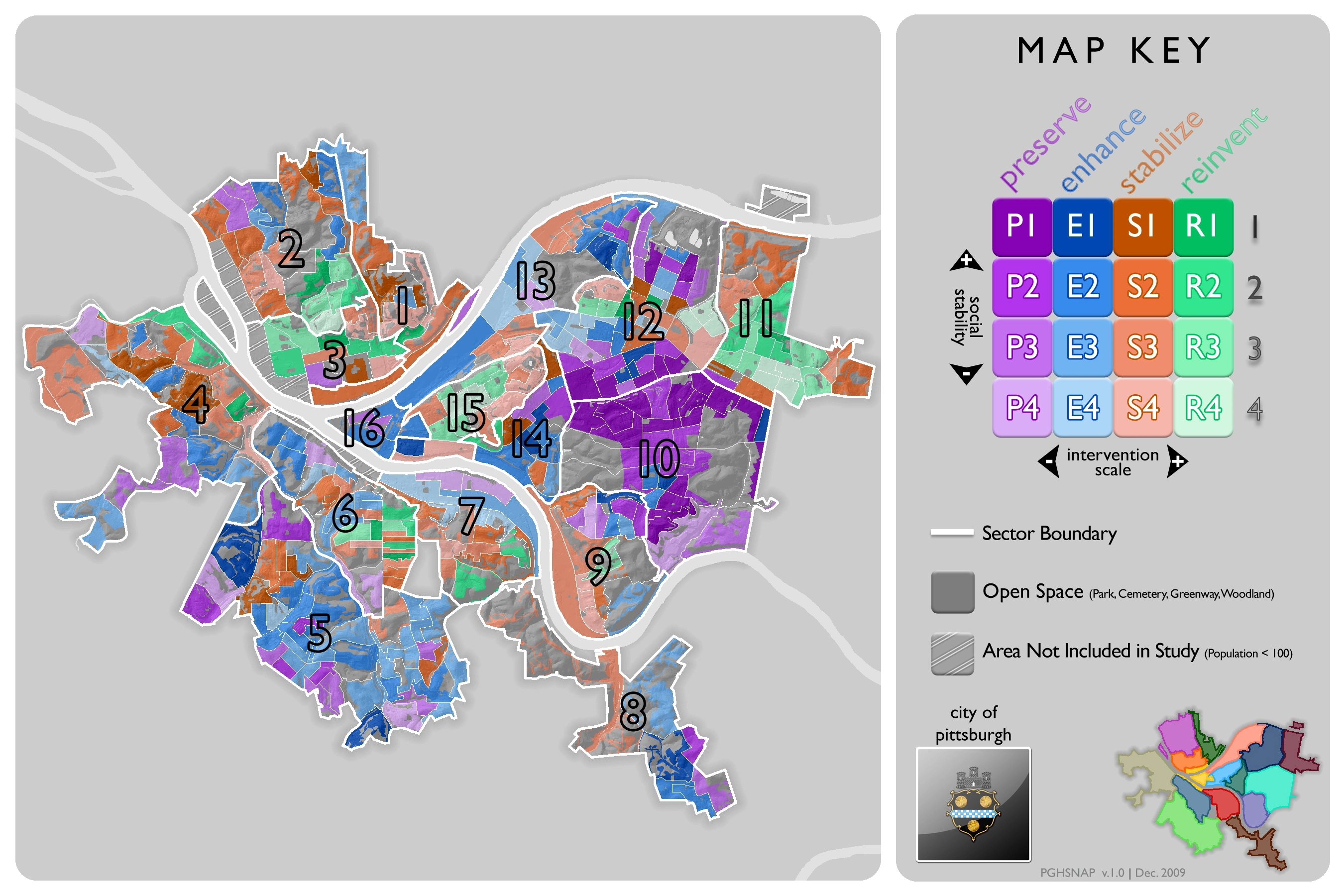
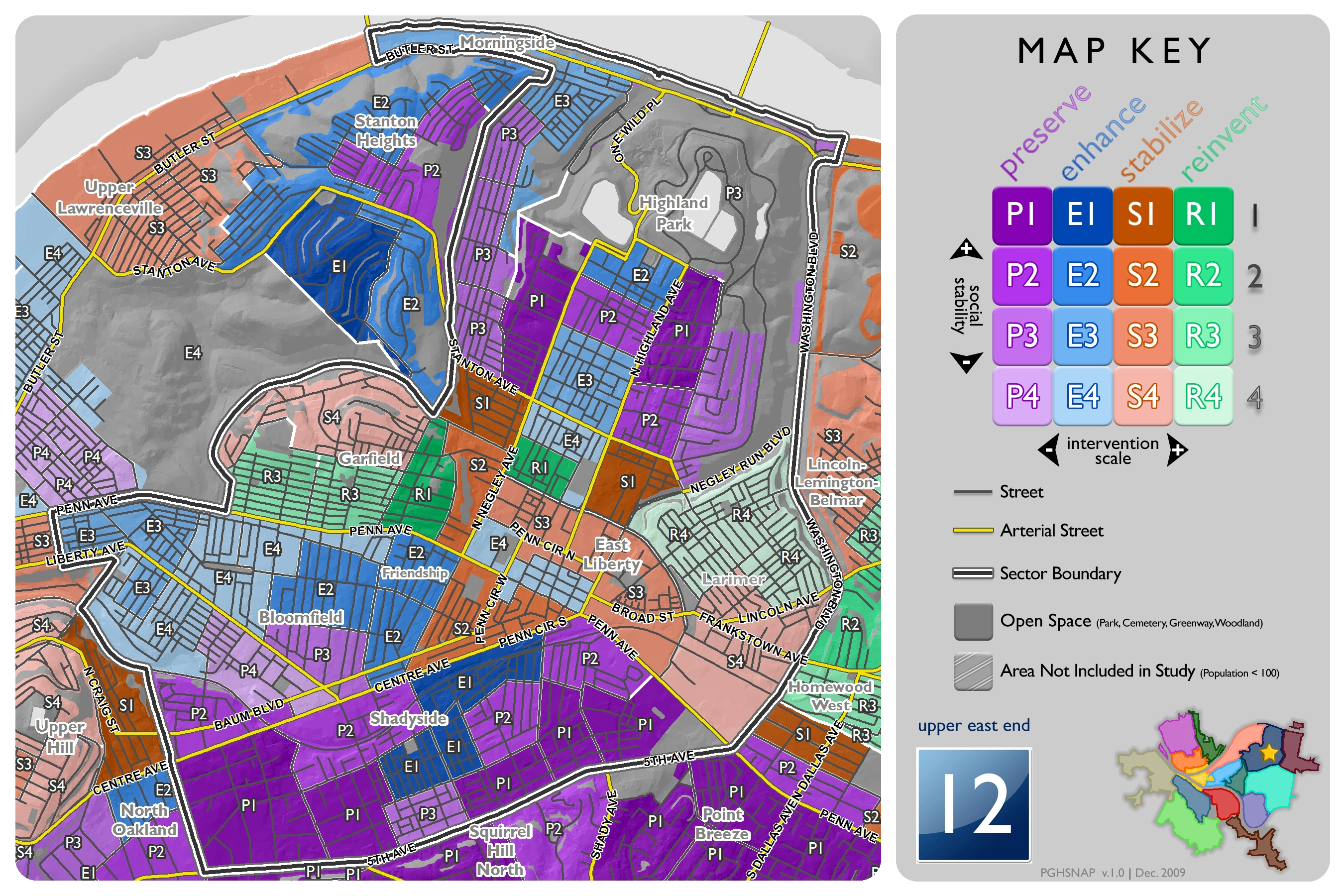
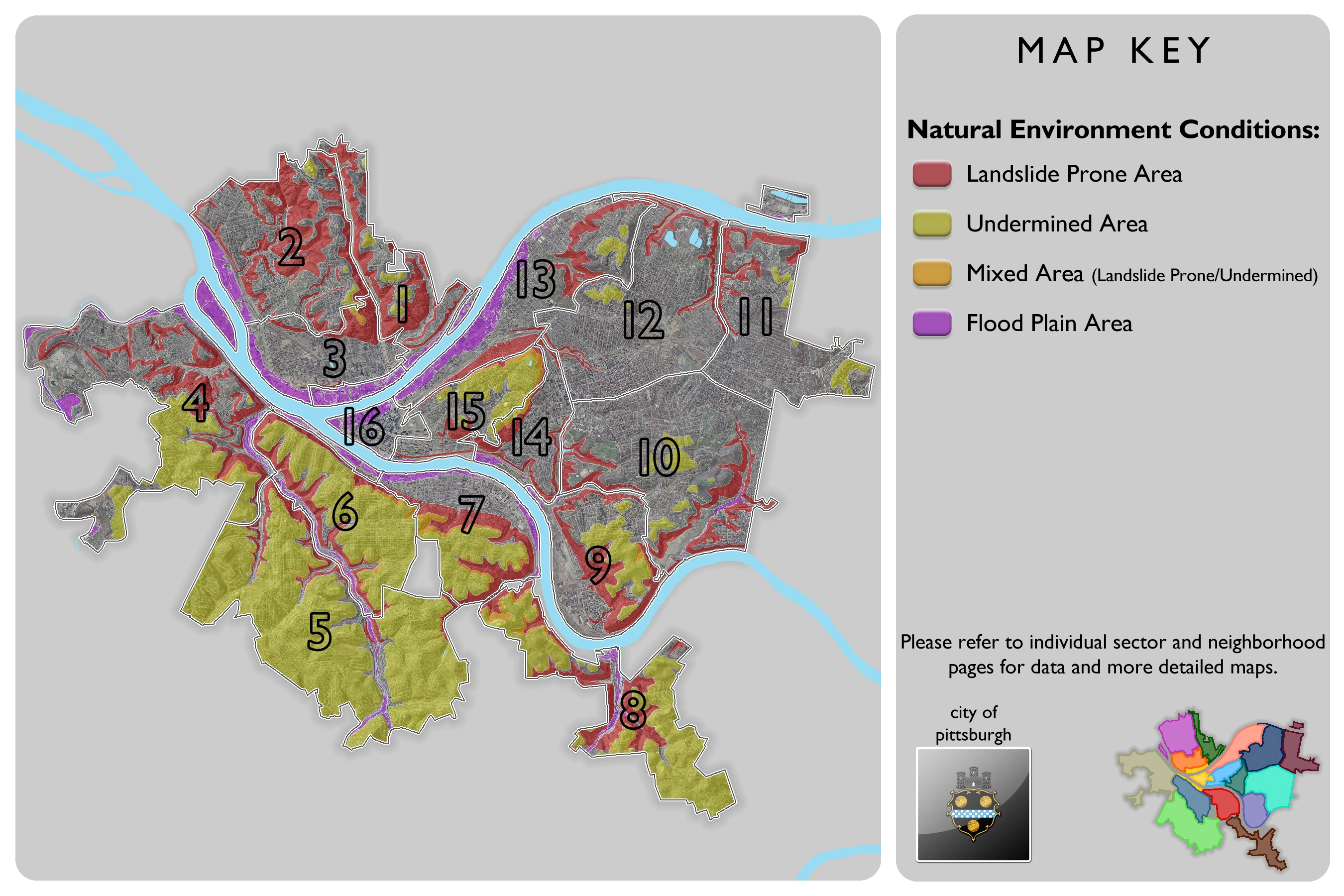
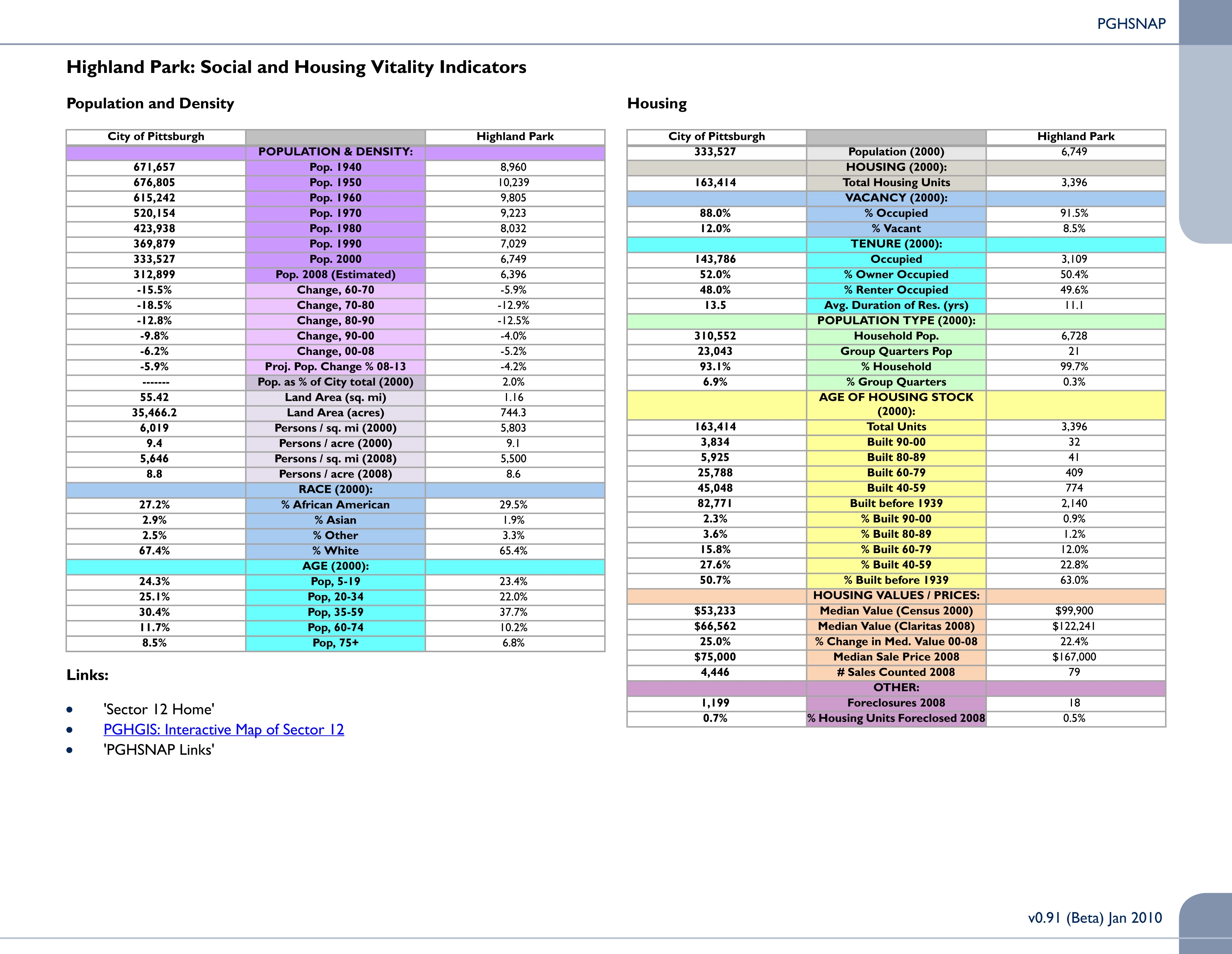
It is an impressive undertaking to make this type of geographic and mapping data available in a format that is user-defined yet doesn't require GIS equipment and capabilities. The interface is exceptionally clear and even inviting and fun to navigate. The commitment to maintain this resource as an annually updated database is yet more impressive. This is an important precedent that shows us how public agencies can catalyze advances in the work of the firms that work for them. Communication will be easier between landscape architects and client communities in Pittsburgh, because they can now share access to more of the information that guides planning and design decisions.
Awards Jury
-
PGHSNAP is a comprehensive data resource for the city of Pittsburgh, incorporating up-to-date information that makes planning and design projects more efficient and inclusive. PGHSNAP makes information open and accessible, and sets the framework for "PLANPGH," the city's first Comprehensive Plan. This project is award-worthy because it provides a valuable data resource to the public—making planning more transparent and creating a level data playing field for all stakeholders involved in community development and design.
-
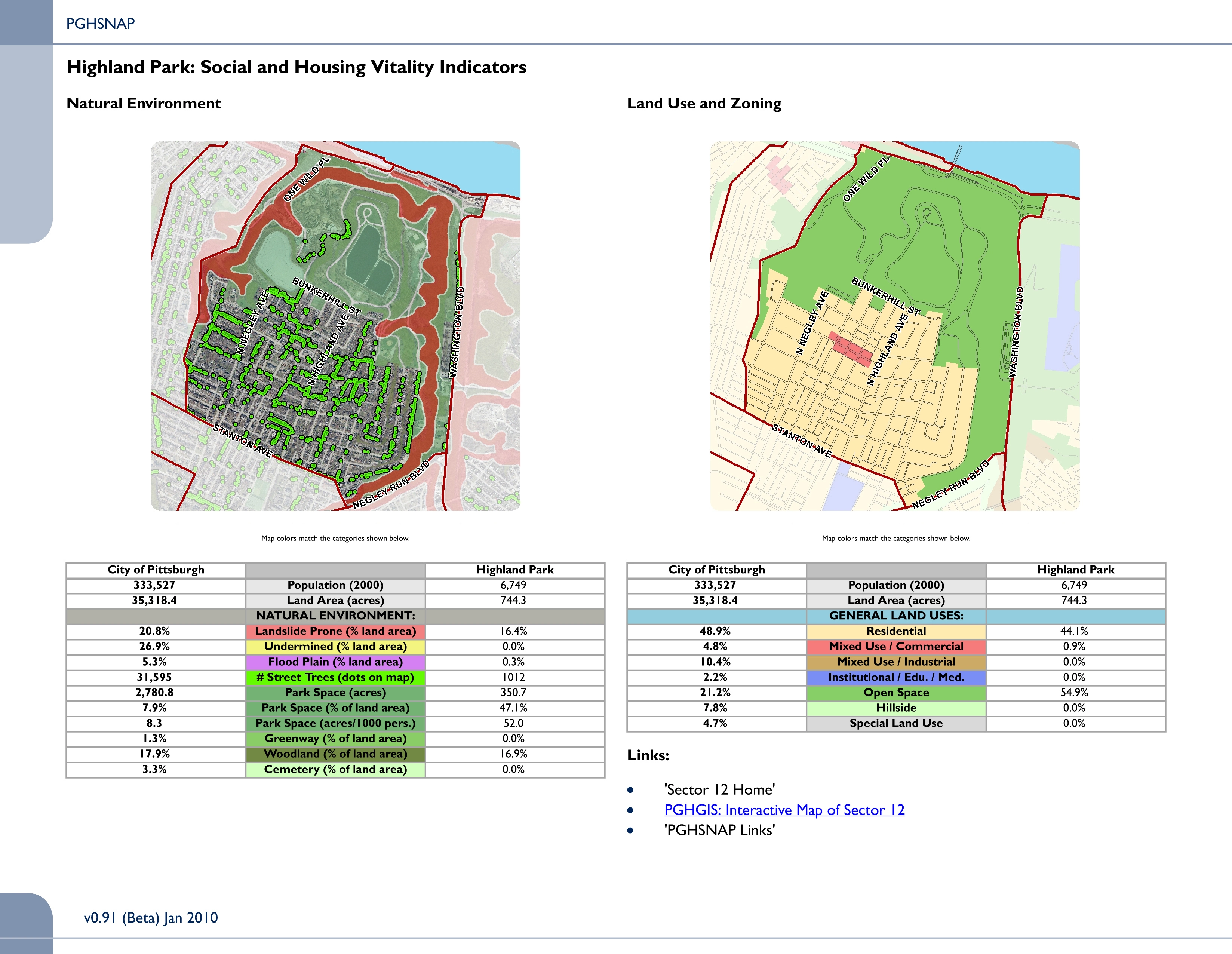
PGHSNAP was developed to help in the assessment of conditions in the city of Pittsburgh's 90 neighborhoods. It is an interactive online data and map center that provides timely and accessible data for design professionals, investors, community organizations, residents, advocacy organizations, etc. PGHSNAP solves the main problem that designers, development professionals, and the general public share when trying to access information about their neighborhoods—data is available, but often at differing geographies, units of analysis, and quality. PGHSNAP takes these data sources and aggregates them to neighborhood units that people in Pittsburgh understand and recognize, and organizes them geographically and thematically.
Free and uncomplicated access to critical data is central to PGHSNAP—it helps to assure that members of the public are able to find the information they need, and that professionals can make informed decisions and deliver quality materials to their clients.
PGHSNAP provides neighborhood stakeholders with the tools they need to strategize their investments and other community improvement activities. PGHSNAP helps designers and consultants to determine neighborhood context and needs, and helps them clearly articulate existing conditions, problems and potential solutions to their clients. Comprehensive, current data provides a firm foundation for making sound and feasible design and planning recommendations. PGHSNAP provides a spectrum of data analysis from the parcel level to neighborhood level, to city sectors (strategic groups of neighborhoods) to citywide data. This can save time and money for professionals—costly aggregation and cleaning of data can be avoided, and tracking down multiple data sources is eliminated. Project managers can spend more time on the actual project, rather than hunting for data.
PGHSNAP is comprised of two components that work together as a web-based application: PGHSNAP is an acronym that is derived from these components: Pittsburgh Sector/Neighborhood Asset Profiles and Action Planning.
- Sector/Neighborhood Asset Profiles—this component is
designed to be a snapshot of each neighborhood in the City of Pittsburgh,
and includes information such as demographic data, existing physical conditions,
transportation, and other amenities. This component features hundreds of
maps to accompany nearly 1,000 tables. PGHSNAP data is drawn from
the U.S. Census Bureau, Geographic Information Systems (GIS), and a variety
of city/county departments and agencies.
- Sector/Neighborhood Action Planning—this component is
intended to take the baseline data a step further. Data is aggregated and
analyzed, resulting in
four neighborhood typologies that address the physical conditions of the
housing stock in each neighborhood, combined with four typologies that address
the
social conditions of each neighborhood. Accompanying the typologies is a
general "strategy manual" to
assist neighborhood stakeholders, designers and investors in decision-making
processes. The project team developed two neighborhood indicator sets that
form the basis for PGHSNAP: the Housing Conditions Index (HCI) and Quality
of Life
Index (QLI).
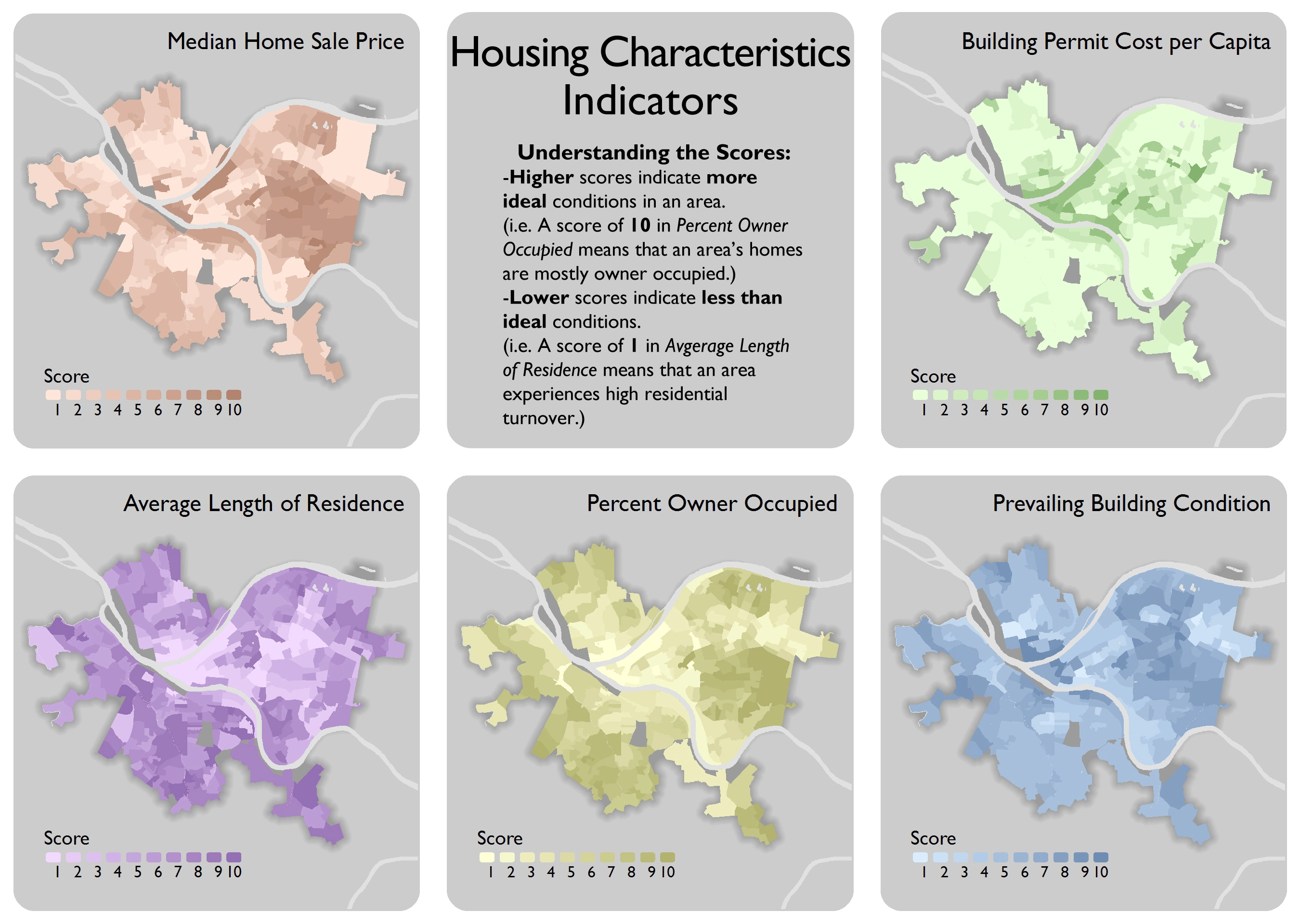
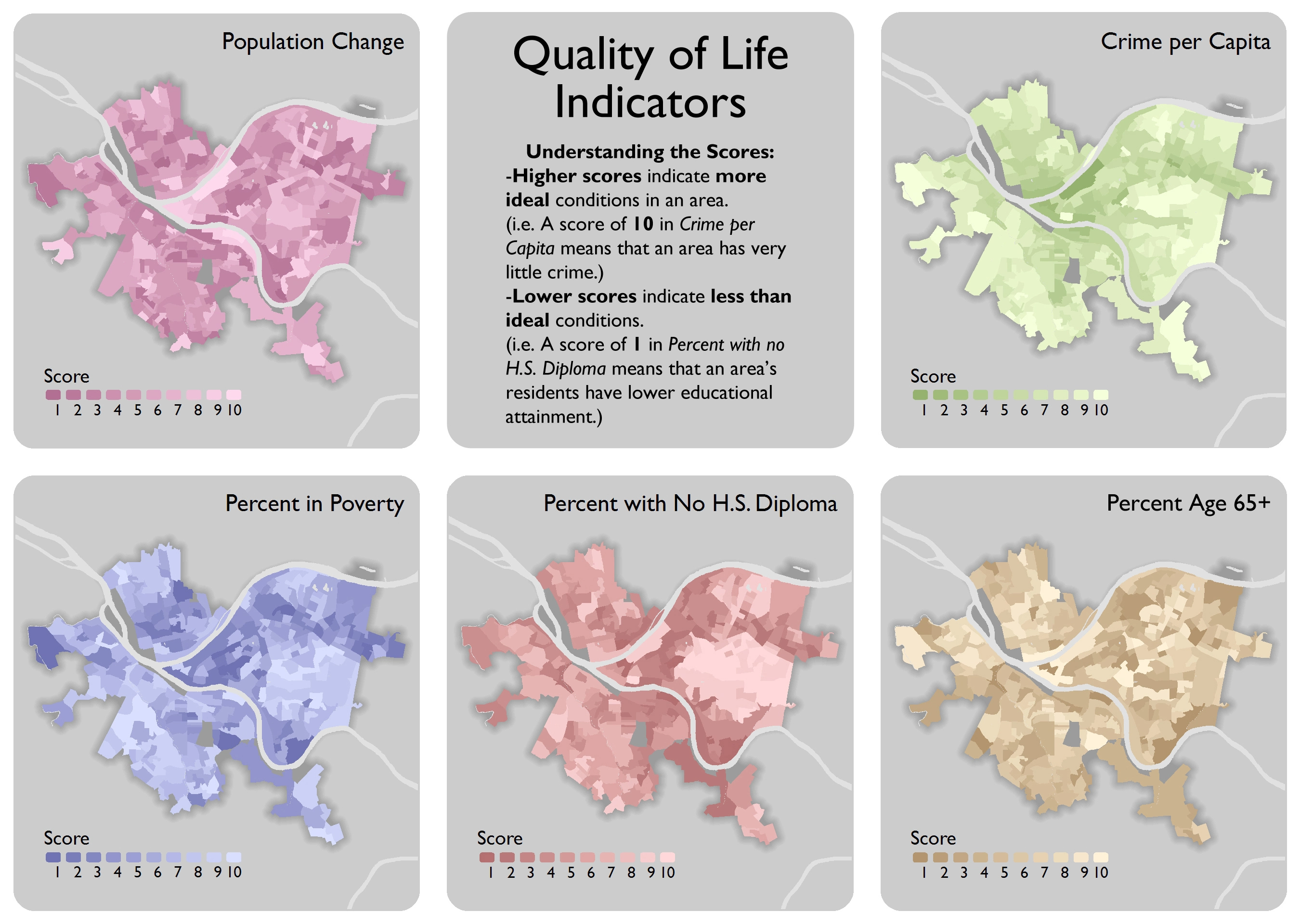
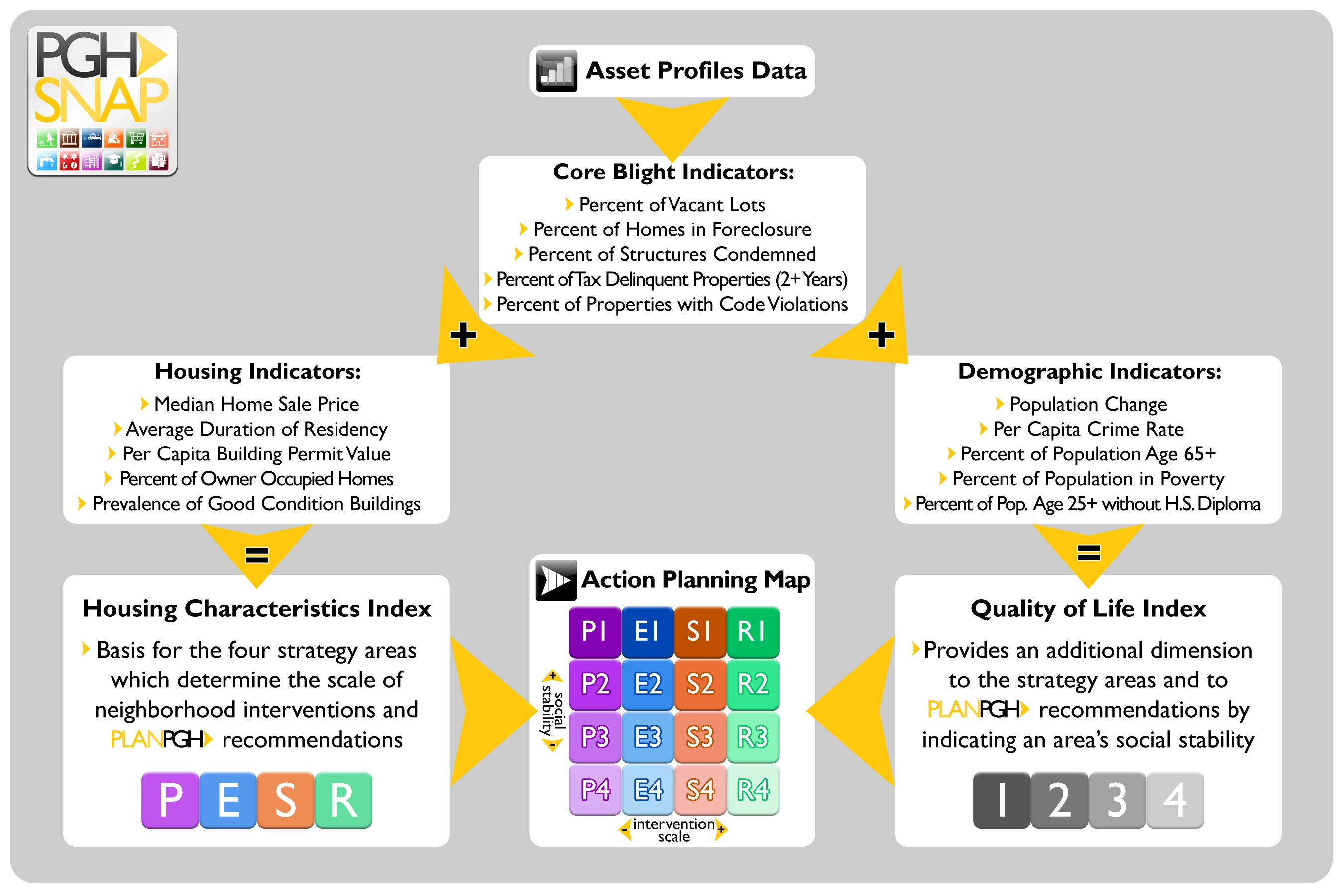
- The HCI consists of data relevant to housing conditions and trends (physical condition context).
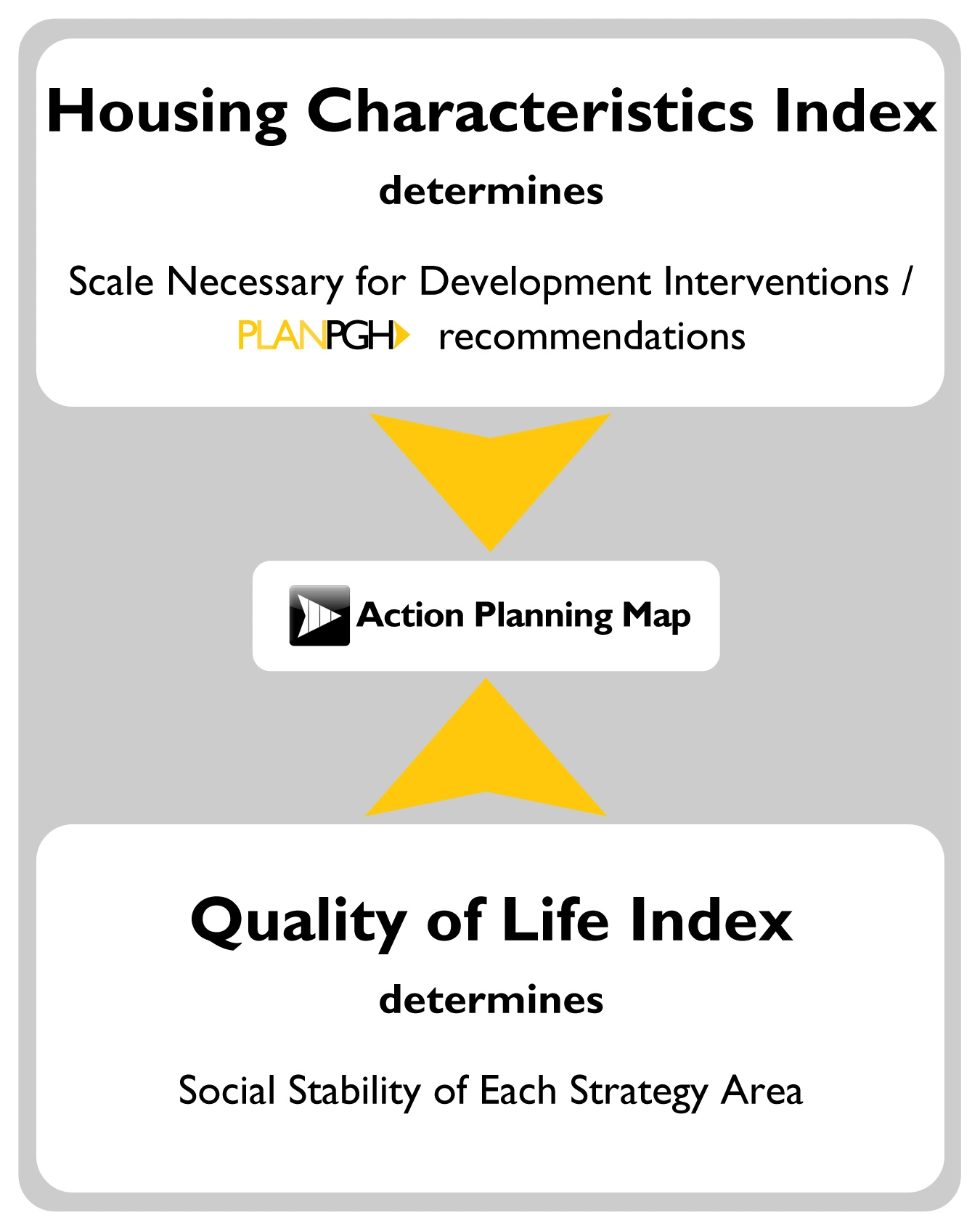
- The QLI consists of social/demographic conditions and trends. (social context). Together, they form the basis for an Action Planning strategy map and corresponding action items. A flowchart of the Action Planning data sets can be found in image 639-10, and further examples of the strategy typologies can be found in image 639-12.
The PGHSNAP project was created with user-friendly graphic design in mind. Each section of the project is color-coded to match geographic locations in the city, and all data sets within each section are organized thematically. Graphics, maps, and tables are all contemporary in their design, presenting a "friendly" face to what would otherwise be presented in dry, uninspiring tabular form.
PGHSNAP is currently active and available online. Users include design professionals, investors, community groups, government agencies, current and future residents, and universities. Design and planning consultants have applauded PGHSNAP for providing up-to-the-minute information upon which they can base project proposals and budget estimates. The Asset Profiles component is already serving as a valuable information resource for the public, and the Action Planning component has been used in applications for developing grant proposals at Pittsburgh's Urban Redevelopment Authority. It serves as the data platform for the upcoming Comprehensive Plan, saving consultant teams valuable time and considerable effort to "clean" data and assess baseline conditions. Once plan recommendations begin to emerge from the planning process, they will be entered into PGHSNAP, further refining the Action Planning maps and strategies.
Outreach was a critical component of making PGHSNAP a success. For the nearly two years it was in development, PGHSNAP was vetted with a number of community, foundation, and government partners. Prior to the public launch of the PGHSNAP tool on February 1, 2010, the project team held open house format information sessions attended by eighty key partners of the city. The project team also held focus groups and a two-day hands-on product testing and training session attended by a broad cross section of city stakeholders to assure that PGHSNAP met their data and mapping needs, and was easy to use. These sessions proved to be extremely valuable, allowing the project team to build a buzz about the public launch and assure a high-quality bug-free product. The response from our users has been overwhelmingly positive. Since the public launch of SNAP, over 4,000 users have logged into the site, with 900 doing so on the first day. The launch was covered by a wide variety of media outlets. Future outreach will include in-depth information sessions with community groups citywide, presentations to university students and faculty, and professional conferences.
PGHSNAP is intended to inform and complement ongoing community planning. It will serve as a foundation for future planning and design at all scales, from the parcel level to the neighborhood scale to "PLANPGH," the citywide Comprehensive Plan. It can only perform these functions if it is current. It is administered in such a way that it will be continually updated to reflect the most current data available. It will receive a major update yearly, and several minor updates throughout the year. There is a subscription service on the project website that allows users to be notified when updates are available.
The project may be viewed online at www.pghsnap.com.
- Sector/Neighborhood Asset Profiles—this component is
designed to be a snapshot of each neighborhood in the City of Pittsburgh,
and includes information such as demographic data, existing physical conditions,
transportation, and other amenities. This component features hundreds of
maps to accompany nearly 1,000 tables. PGHSNAP data is drawn from
the U.S. Census Bureau, Geographic Information Systems (GIS), and a variety
of city/county departments and agencies.
-
City of Pittsburgh, Department of City Planning
Noor Ismail, Director of City Planning
Joy Wright Abbott, ASLA, Assistant Director, Development and Design
Michael Homa, GIS Manager
Darin Palilla, GIS Analyst
Justin Miller, Neighborhood Planner
David White, GIS Analyst
Glen Claughton, LAN Administrator
Rebecca Reinhold, GIS Analyst
Richard Meritzer, Intern Coordinator
DCP Interns:
Tom Converso, Joseph Hollinger, Carolyn Mazzella, Katie McAuley, Haley Miller, Adam Nelson, J.R. Poole, Matt Stidle, Iris Whitworth, Heather Zanoni, Dillon Zeiler, Vanessa Alberts, Keith Dougall
Advertisement
Related Awards

Honor Award, Analysis & Planning
A Cultural Approach: The Fort Peck Tribes Hazard Mitigation Plan
In collaboration with the Fort Peck Assiniboine and Sioux Tribes, EPA, and FEMA, the Fort Peck Tribes Hazard Mitigation Plan (HMP) adopts a culturally responsive approach to hazard mitigation planning that features connection to place.