

.webp?language=en-US)

.webp?language=en-US)
Dynamism, Conservation, and Many Voices in an Historic Urban Landscape
by Rebecca Flemer, Affiliate ASLA
Alliance for Historic Landscape Preservation Annual Meeting Toronto, Ontario | May 22-25, 2024
In May, the Alliance for Historic Landscape Preservation (AHLP) held its annual conference in Toronto, focusing on the theme "Dynamism, Conservation, and Many Voices in an Historic Urban Landscape." This conference brought together professionals, academics, and community leaders to explore the city's dynamic history, its multicultural heritage, and its complex environmental and social challenges. The conference addressed pressing issues like affordable housing, climate change, and reconciliation with Indigenous peoples, using Toronto’s urban landscape as both a backdrop and a laboratory for learning.
Toronto, located on the north shore of Lake Ontario, has been home to Indigenous communities for thousands of years. The Don, Humber, and Rouge Rivers have long served as lifelines for the city's Indigenous peoples, and their presence remains a significant aspect of Toronto's cultural landscape. In addition to formal presentations and poster sessions, the AHLP conference featured site visits and tours around the city, making it an interactive experience for participants. The conference team included: Emma Abramowicz, Samantha Irvine, Brendan Stewart, Pauline Walters, and Hasan Hirji, with special assistance from Diana Roldan and Sean Blank, not to mention the Friends of Allan Gardens.
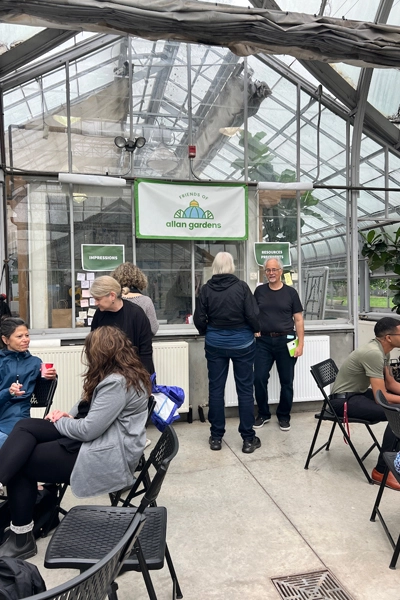
The event kicked off on May 22 with a board meeting at ERA Architects, a key sponsor of the conference. Later, attendees gathered for a welcome reception at the Allan Gardens Children’s Conservatory and Edible Garden. Established in the 1860s, Allan Gardens is a diverse and dynamic landscape that serves as a hub for local communities, offering green space, educational opportunities, and cultural programming.
Local Indigenous representative Donna Powless gave thanks to start the program. Michael McClelland of ERA Architects discussed "Growing with the City," an initiative by the Friends of Allan Gardens (FOAG) to foster ongoing community engagement and fundraising for Allan Gardens, a historic horticultural space. Steven Shuttle (ERA/FOAG) introduced the invited panel of three speakers, and the session covered the park’s significance as a place of beauty, abundance, and inclusivity. Panelists, including Lorraine Johnson, Michelle Reid, and Laura Dean, shared their thoughts on the future of Allan Gardens, envisioning it as a space for community engagement and environmental stewardship.
The following day, attendees reconvened at Massey College, a Canadian architectural treasure, where AHLP President Martin Holland, ASLA, welcomed the group. The morning sessions were dedicated to professional and academic presentations, including scholarship-supported projects. The abstracts are available here.
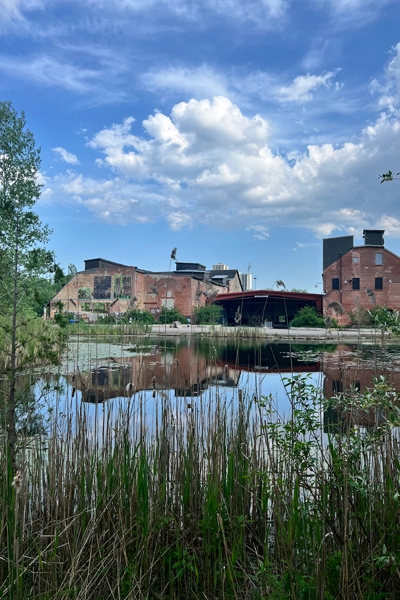
Afterward, the group embarked on a tour to Evergreen Brick Works, a former industrial site transformed into a hub for environmental innovation and public space. They strolled through Rosedale and into the Don River Valley, where they explored the Brick Works’ outdoor spaces and enjoyed a bagged lunch.
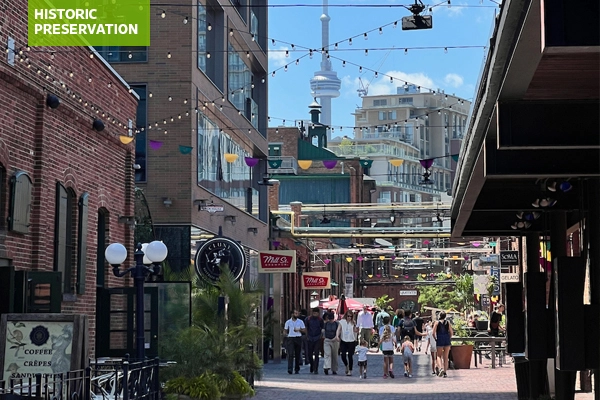
Friday's activities started with another round of presentations at Massey College, followed by a bus tour of Toronto’s downtown, with a stop at the historic Distillery District. The fully pedestrianized district blends culture and history, serving as a model for urban revitalization. In the afternoon, David Stonehouse of Toronto's Waterfront Secretariat and Emma Doedens of Heritage Planning led discussions on waterfront redevelopment, including the Corktown Common park, designed by Michael Van Valkenburgh Associates and an ASLA Award winner. This park exemplifies the city's efforts to balance nature and urban growth while addressing flood management and environmental restoration.
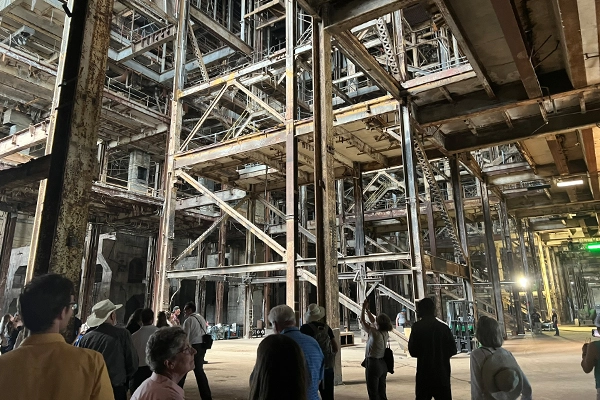
The group also visited the Port Lands, an 880-acre wetland undergoing extensive revitalization. Efforts to restore the natural landscape include creating a new river valley and managing water flow. The day concluded with a surprise visit to the Hearn Generating Station, a former coal power plant now serving as a film production site. ERA Principal Philip Evans led the tour, highlighting plans for the site's transformation into a multi-use community space.
On Friday evening, attendees gathered at Mezes Restaurant in Toronto’s Greek quarter for the conference’s closing dinner, a day earlier than usual to accommodate the "Toronto the Good" event on the final night. The evening was filled with camaraderie, great food, and anticipation for the next year’s conference in Indianapolis, scheduled for May 2025.
The final day of the conference began at Allan Gardens, where participants engaged in a dialogue with the Friends of Allan Gardens. The discussions focused on the park’s challenges and opportunities, with participants sharing their expertise to help shape the future of this historic urban green space. The workshop report can be found here.
Following the morning workshop, the group embarked on another bus tour, this time exploring Toronto’s housing landscapes over the past 100 years. They visited Cabbagetown, a neighborhood once home to 19th-century Irish immigrants, and Rosedale, a more affluent area. Despite the rainy weather, participants learned about the history and development of these neighborhoods, including the challenges of preserving their architectural and landscape heritage.
The tour continued through Leaside, the Toronto Botanical Garden, and the West Don Valley River area before arriving at Don Mills, a post-World War II neighborhood designed with modernist principles. Don Mills is noted for its ring road and mid-century modern housing, and the visit sparked discussions about the preservation of its original character in the face of ongoing development pressures.
The final stop on the tour was Thorncliffe Park, a high-density neighborhood developed in the 1950s. This "apartment-only city" is home to a predominantly South Asian community and faces challenges related to affordable housing. The tour was led by Graeme Stewart of ERA Architects, who introduced attendees to Sabina Ali, a community leader who has spearheaded efforts to create parks and public spaces for local families.
Regent Park, the last stop, began as Victorian townhouses and then evolved to public housing within modern towers. Its third generation, over the past two decades, is evident in a revitalization coupled with public-private partnerships, effectively an ‘essay’ on condominium development in Toronto. A new central district energy plant and aquatic center now complete the scene.
Later in the evening, the AHLP conference participants attended the "Toronto the Good" party, an annual event hosted by ERA Architects. Revived after several years to coincide with the conference, the party took place at Bentway Park, located under the Gardiner Expressway at the waterfront. Many AHLP attendees joined Toronto's city builders, artists, and creatives for a night of socializing and networking in this lively gathering.
On Sunday a bonus tour led by Michael McClellenad took a few lucky participants on a walk down Philosopher's Walk. At Queen's Park, Jane O’Brien Davis of the Canadian Network of Community Land Trusts discussed her master’s thesis on monuments and restorative justice, highlighting colonial monuments, public space use, and the colonial settler project. She stressed the opportunity to create spaces for counter-narratives.
As the conference drew to a close, participants reflected on the dynamic and evolving nature of Toronto’s urban landscape. The event highlighted the importance of engaging diverse voices in the preservation and stewardship of historic landscapes, emphasizing the need for inclusive, sustainable, and culturally sensitive approaches to urban development. Many thanks to ERA Architects and Quinn Evans for organizing a stellar conference!
Rebecca Flemer, Affiliate ASLA, serves as secretary of the Alliance for Historic Landscape Preservation (AHLP). She lives in Philadelphia where she works as an independent researcher and board member of several organizations involved with historic landscape preservation. Rebecca also serves as a volunteer leader for ASLA’s Historic Preservation Professional Practice Network (PPN).