

.webp?language=en-US)

.webp?language=en-US)
by CeCe Haydock, ASLA, PLA, SITES AP, LEED AP, WEDG
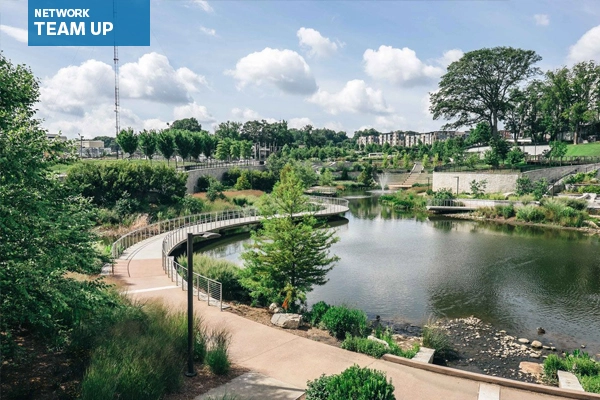
“Though the word beautification makes the concept sound merely cosmetic, it involves much more: clean water, clean air, clean roadsides, safe waste disposal, and preservation of valued old landmarks as well as great parks and wilderness areas.
To me…beautification means our total concern for the physical and human quality we pass on to our children and the future.”
– Lady Bird Johnson, "The Environmental First Lady"
With these word, Kevin Burke, FASLA, Design Director, Atlanta BeltLine, Brandon Hartz, ASLA, PLA, SITES AP, LEED AP, Design Director of Landscape Architecture for the General Services Administration (GSA), and I introduced the concept of the SITES v2 Rating System to members of the Standing Committee on Landscape and Environmental Design of the Transportation Research Board (TRB) on one early January 2024 day in Washington, D.C. There were approximately 30 landscape architects and engineers in the room, with many more virtually because of TRB’s large membership. Focusing on sustainability and the massive US transportation system, the presenters borrowed the words of Lady Bird Johnson, who advocated for both beauty and environmental function of roadways throughout the country.
The Standing Committee on Landscape and Environmental Design, comprised mostly of landscape architects, was one of many committees which convened in Washington for the annual TRB conference. During four days of presentations, panels, and internal meetings, approximately 10,000 transportation researchers and practitioners gathered to share diverse knowledge related to all sectors of transportation.
For the presentation “The Atlanta BeltLine: Railroad Corridor to Sustainable Link,” I introduced the SITES v2 Rating System and its relevance to transportation projects. In the SITES system, design is divided into major areas—soil and vegetation, water, materials, and human health and well-being—and is similar to LEED in concept and practice.
The SITES Scorecard, a useful tool for all projects pursuing certification, has ten sections with 18 prerequisites and 48 optional credits, as well as a bonus section for innovation and exemplary performance. A total of 200 points are offered from the credits; a certified level can be achieved with a minimum of 70 points, with Silver, Gold, and Platinum levels reached with a minimum of 85, 100, and 135 points respectively.
The Hempstead Plains Interpretive Center, located on the campus of Nassau Community College in New York, was a SITES pilot project. The construction footprint was skillfully contained to meet SITES' “Section 1: Site Context” requirements and to preserve 95% of the project’s existing native grassland; only a small section of the site was disturbed during construction.

Touting the benefits of the integrated design process during the TRB presentation, I made note of the on-site meetings, which included the owner, the contractor, the architect, and the landscape architect. Here, conflicts or problems were often encountered before expensive change orders were needed. Additional water, soil, human health and well-being credits contributed to Hempstead Plains being awarded two SITES stars as a pilot project.
Kevin Burke represented SITES from the client’s perspective as Design Director for the Atlanta BeltLine—a $5 billion, 25-year project that will one day circumnavigate the city with a pedestrian/bicycle multi-use path (and the right-of-way purchased by the BeltLine allows space for a possible light rail connector). Contiguous to the BeltLine trail are multiple parks, currently in construction. Kevin oversees all design including, SITES certification for trail sections and three parks: Historic Fourth Ward (H4W), Enota Park, and Boulevard Crossing. H4W was a SITES pilot project and resulted in a change in invasive plant requirements. Enota Park and Boulevard Crossing both completed the lengthy and thorough design reviews before the projects were built; construction will begin soon on Enota, and then the final SITES documents package will be presented to GBCI for certification.
Brandon Hartz addressed the value of SITES to federal government projects. Since 2016, the General Services Administration (GSA) has required that all its new facilities and major renovations be SITES certified. GSA is one of the largest and most diversified real estate organizations in the world and owns facilities on 150,000 acres of managed land in 2,200 communities nationwide. One of the many landscape requirements of the GSA facility design standards is that all capital construction projects with sufficient site work be SITES-certified at minimum Silver level. In 2022, GSA held an internal SITES training for GSA staff including architects, engineers, project executives, and project managers. The goal of the training was to get staff comfortable with the SITES framework, goals, and process.
Brandon also provided details on how GSA is leveraging funds from the Inflation Reduction Act of 2022, which allocated $3.4 billion for smart climate solutions. This focus on decarbonizing manufacturing markets in concrete, asphalt, steel, and flat glass dovetails with the agency’s existing emphasis on facility decarbonization utilizing cradle-to-grave performance standards.
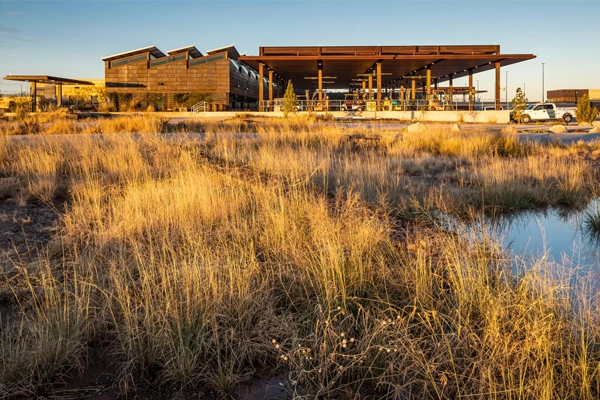
The Columbus, New Mexico, Land Point of Entry represents the power of the SITES vision on a transportation project. The design and construction increased the native Chihuahuan desert ecology; there is more native habitat after project delivery than existed before. The green infrastructure system mimics the natural desert ecology, earning points for SITES' “Section 3: Site Design – Water.” A smart soil and materials strategy were both employed, harvesting reusable material on the site, avoiding costs for hauling and disposal, reducing costs for new materials, and lowering the project’s carbon footprint. Finally, the integrated design review process, required under Section 2 of SITES, helped the design team focus on specific sustainable elements using a quantifiable yardstick and accountability lens.
While some of the landscape architects and engineers gathered for the TRB meeting had heard of SITES, none had actually used it on a transportation project. Those with a deeper knowledge of LEED were thus encouraged to learn of a parallel system for sustainable certification outside the building skin.
CeCe Haydock, ASLA, PLA, SITES AP, LEED AP, WEDG, is a licensed New York landscape architect WBE and has practiced in the public as well as the private sector. She is an officer for ASLA's Sustainable Design & Development Professional Practice Network (PPN), a trustee of the Planting Fields Arboretum State Historic Park in Oyster Bay, NY, a member of the International Council of the Preservation Society of Newport County, and a visiting lecturer at the New York Botanical Garden.