

.webp?language=en-US)

.webp?language=en-US)

by Dan Greenberg, ASLA
Check out Part 1 in case you missed last week's opening installment in this three-part series.
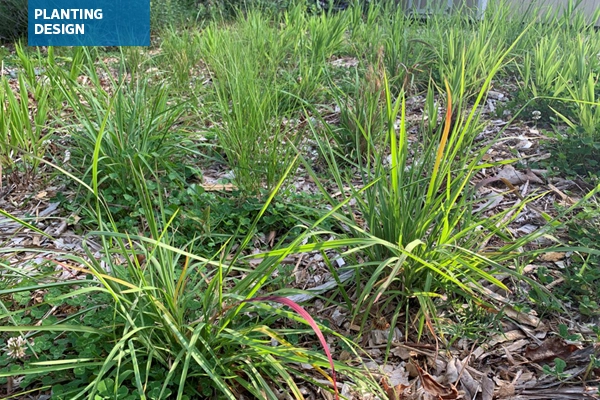
The winter was a difficult wait. I had planted 400 square feet of meadow grasses, and an additional 600 square feet of soil lie dormant under cardboard and wood chips. I felt a lot like I did years ago watching my baby daughter sleep—desperately wanting to enjoy her company, but knowing that her rest was best for everyone. My plugs were resting.
The wait wasn't long. Our winter was warm and wet, so signs of life appeared in late February. It was exciting to see bright green blades pushing through the stiffer stems of last year's growth! It was also startling, as vigorous weeds took advantage of the plugs' fertile soils. Chickweed, Bittercress, Henbit, and Deadnettle Lamium (clockwise from top left in the photos below) sprung from every planting hole.
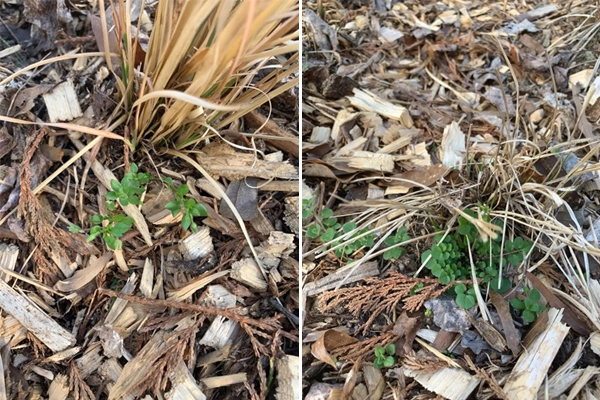
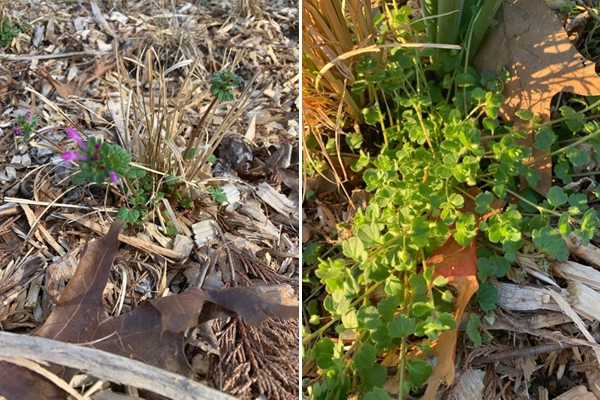
Again, I eschewed chemical treatments and pulled the weeds by hand.
In March the grasses appeared to have shed dormancy, and showed significant new growth. Chasmanthium in particular was vigorously emerging. I noticed that a few had been pulled out of the ground—likely by squirrels digging for acorns. Others showed similar signs of digging but managed to hold their ground and sprout. Upon inspection I learned that these tenacious grasses were properly planted. Conversely, every plug that the squirrels removed had their roots tightly bound; I hadn't fully teased them apart before planting them.
I continued weeding the fall plantings, waiting eagerly for mid-April (Raleigh's last frost date) to begin spring planting. With warm weather in the forecast, I gave in to my impatience a week early; the spring plugs arrived on April 4:
- Schizachyrium scoparium (Little Bluestem) – 4 trays
- Carex cherokeensis (Cherokee Sedge) – 2 trays
- Panicum virgatum (Switchgrass) – 3 trays
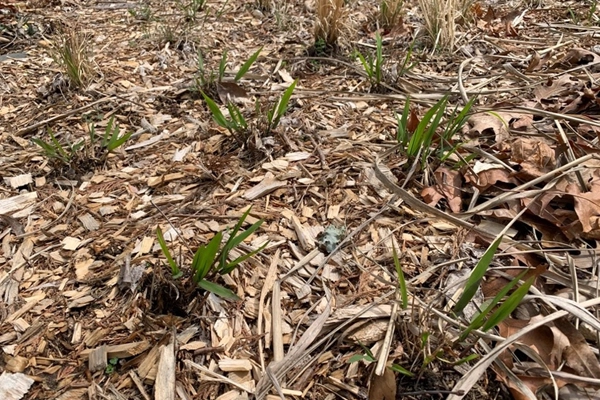
Note that I ordered plants as their original species, and not cloned cultivars; I did this to maximize the wildlife value of my meadow. While not as evident in grasses, the features that sell more plants (larger flowers, brighter colors, more erect stems, etc.) occasionally confuse the pollinators that depend on them. The clones also eliminate genetic variability, which encourages variety (in color, size, and texture) and flexibility to ward off environmental changes.
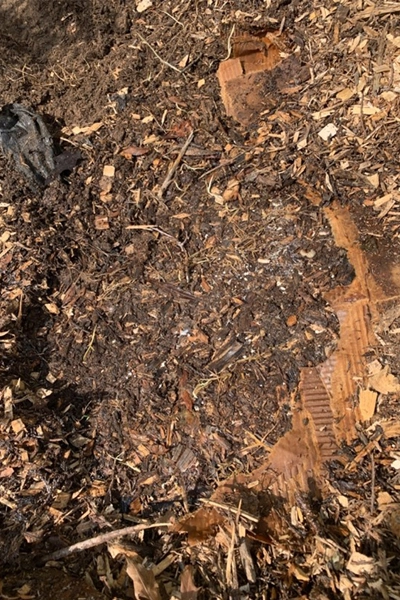
To begin planting I pulled back the wood chips. The cardboard was wet and easy to pull apart. The soil had a nice brown color with fewer Crabgrass and Bermuda runners, which were easier to remove. The additional weight, darkness, and moisture provided by the wood chips made a noticeable difference. One important lesson I learned is to fully remove the tape from the boxes; it does not break down with the rest of the cardboard. Some runners actually followed the tape to better soil pockets (I also noticed this with some old landscape fabric). Once the tape and runners were removed the soil was ready for plants.
I planted most of the Cherokee Sedge beneath two River Birch trees, as they are more shade tolerant than the other grasses. These plugs were incredibly satisfying to work with; their growth was bright and vigorous, and the roots easily pulled apart for rapid planting. Additional masses would be planted later around stepping stones.
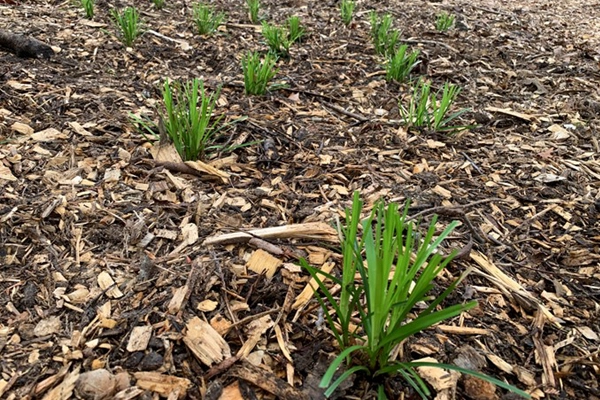
I massed Switchgrass at the lowest, sunniest corner of the meadow. Their taller height will provide some protection for the Sedges and a nice background when viewing the meadow from above. Its vigorous nature will also help fight off the adjacent lawn grasses and weeds. A few smaller pockets near the driveway offer some vertical interest without blocking sight lines.
Little Bluestem filled the remainder of the meadow, woven among the other grasses in colorful drifts. These plugs were a bit more challenging to work with, as their roots were tightly bound together. On April 14, I looked at my fully planted meadow!
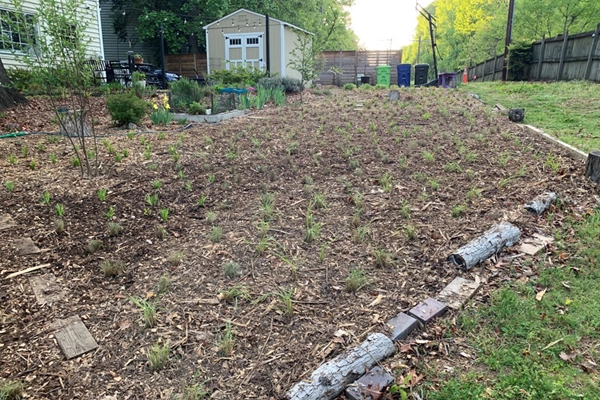
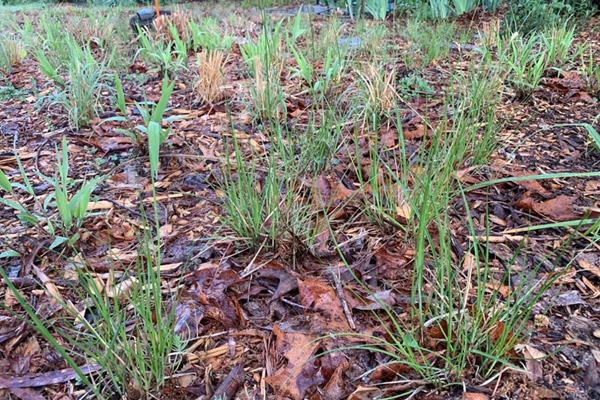
The upper meadow grasses pushed vigorous new growth, and by the end of April little of the old foliage remained. Chasmanthium quickly emerged with its wide blades. Andropogon and Bicknell Sedge joined shortly after. Weeds were surprisingly minimal. I let a few small patches of clover remain to add nitrogen to the soil.
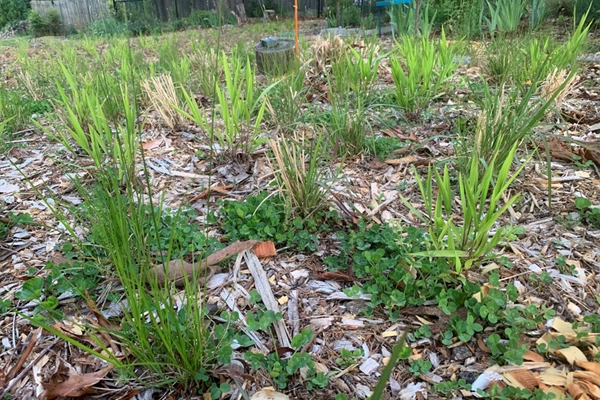
May showers accelerated the plants' growth, and a clear difference became visible between the fall-planted northern meadow and the spring-planted southern meadow. The former had developed their roots through the winter, and were now energizing top growth. The southern plants were splitting their resources to establish roots and foliage.
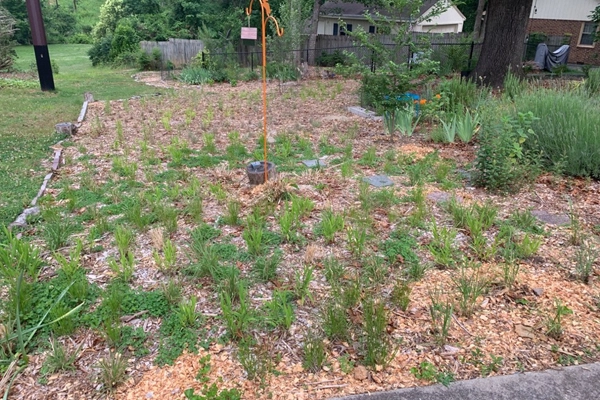
The arrival of June required a change in my approach. The newer plugs were struggling in the hotter weather, particularly the Little Bluestem and Switchgrass in more direct sunlight. I began deep and slow hand watering between rainy days, focusing on the newer plants.
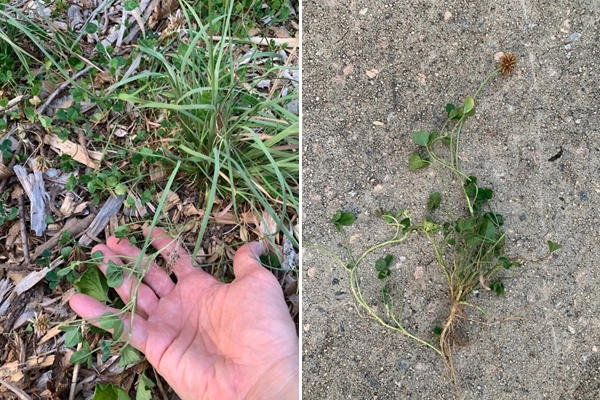
The larger plants had heavy weed pressure. Clover was taking advantage of my hospitality, rapidly spreading through the meadow. Removing a few of the plants helped me understand clover's structure and growth habits: stems creep from an established colony and develop roots when they encounter productive soil. It reminded me of an inchworm tiptoeing over obstacles using its front and back legs. In similar fashion, the clover ambled through the meadow, attaching roots to the plug soils, in some cases on multiple sides of a plug. Some healthier plants didn't seem too bothered, but many others were not so happy. I pulled the clover by hand, a tedious job at this point. But I was rewarded with a closer appreciation of the plants and frequent encounters with large earthworms building my soil.
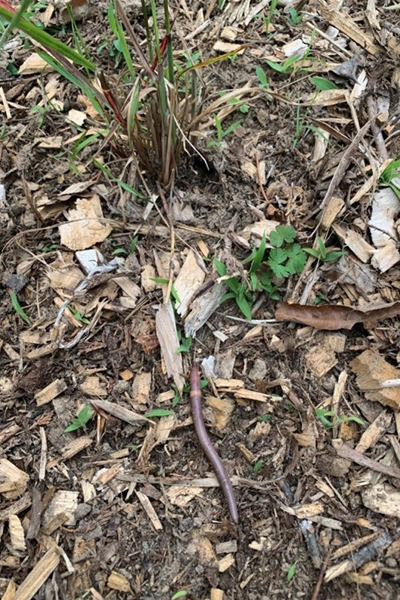
As the season shifted into summer the heat seemed to slow the clover's spread. I removed most of it, focusing on the plugged areas. A few stray patches remained around the edges of the meadow, which I decided to leave with a watchful eye. My summer attention would turn to crabgrass and Bermuda grass runners.
Standing back to look at these marvelous grasses, my spirits soared. They seemed more at home, crowns spreading and touching their neighbors. Shoots were more assertive and purposeful. And it felt like I was working with the plants instead of nursing them.
I thought about the differences between this meadow and my old turf lawn. So far my efforts in the meadow were likely a bit greater than they would have been maintaining the turf, but they have been strangely rewarding. I looked forward to weekend coffee and pulling weeds, appreciating each plant in the meantime. I focused on the hours in the moment, rather than rushing through a mundane task just to get it over with. And I knew that once these grasses became established these tasks would evolve from nursing to assisting. I liked that idea a lot.
The hotter summer months would bring more tasks. But for now, I'm OK taking a few moments to enjoy what is unfolding in my meadow!
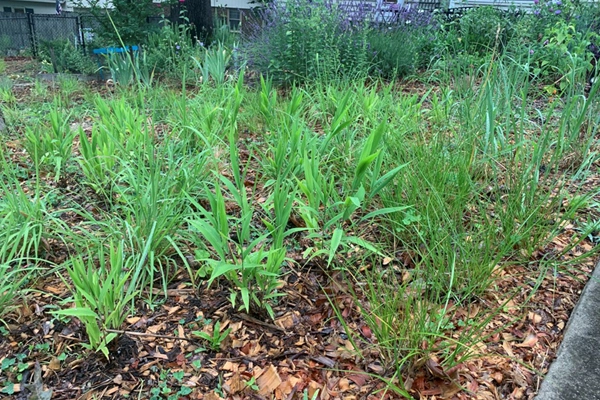
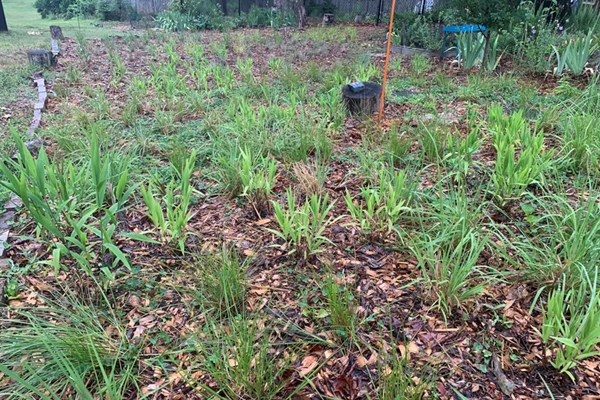
Stay tuned for Part 3, to appear here on The Field next week!
Dan Greenberg, ASLA, is a Senior Landscape Architect at Surface 678, working on parks, recreation, campus, and municipal projects in his native North Carolina. He holds a Master of Landscape Architecture from the University of Colorado at Denver that includes a year of foreign study in Helsinki, Finland. His travels have instilled a deep respect for the landscape and an appreciation for its powers to heal, restore, and inspire people. He is passionate about plants as green infrastructure and ecological keystones. Dan’s meadow project is a practical exploration of these ideas.