

.webp?language=en-US)
.webp?language=en-US)
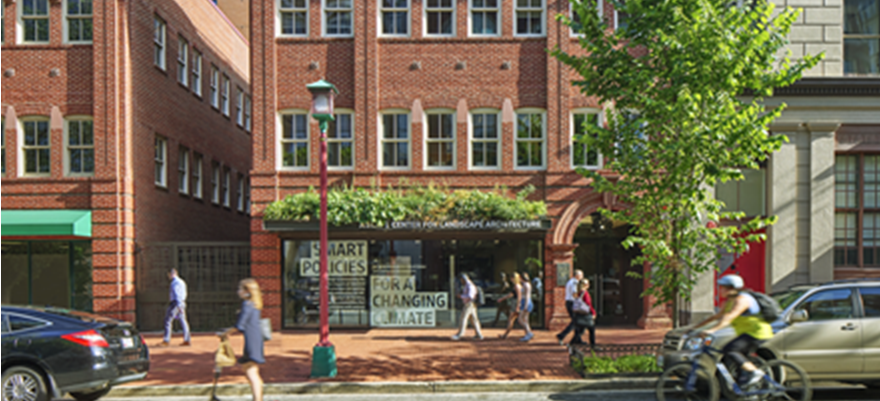
Voices of Women in Landscape Architecture: Angela Maroney, Yijun Zhang, and Julie Sajtar

ASLA is sharing the next set of profiles of women in the profession (see the previous installment right here). If you'd like to be featured, the call for submissions remains open, with profiles being shared on an ongoing basis.
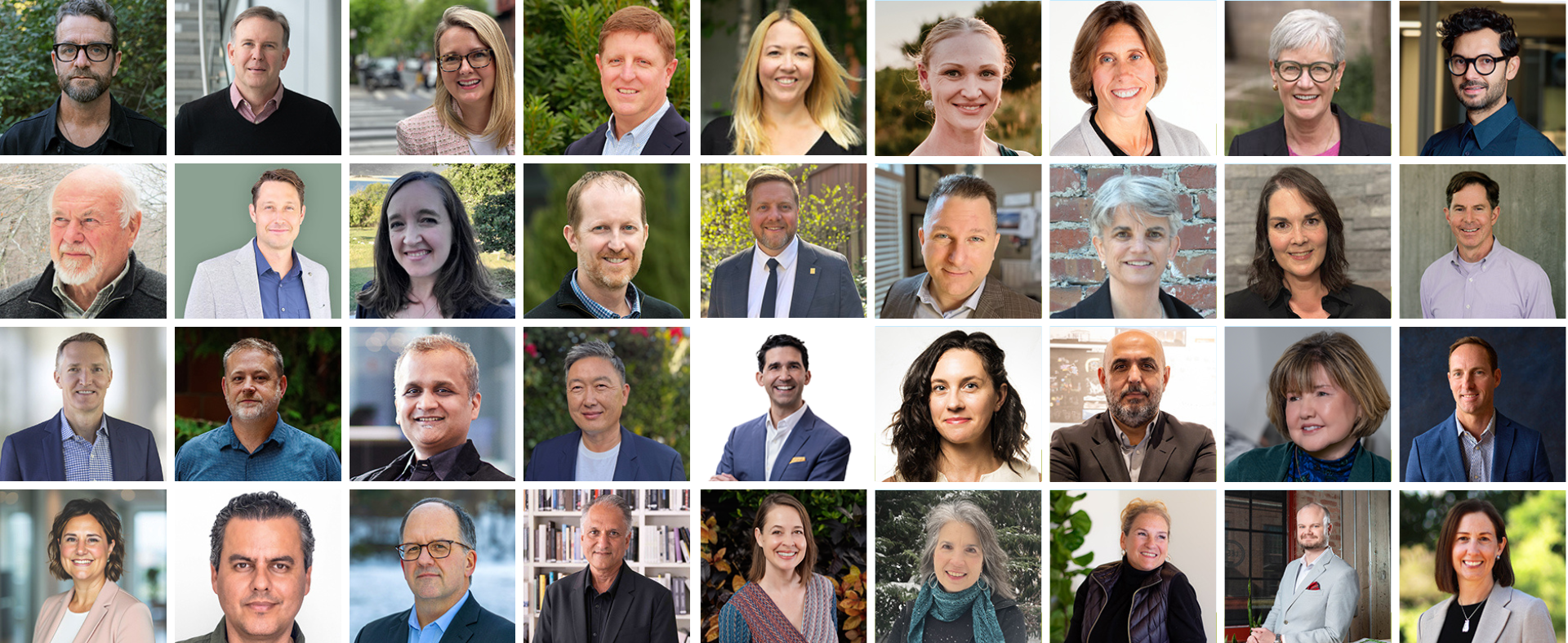
These profiles will appear on the ASLA Women in Landscape Architecture LinkedIn group, Facebook group, and here on The Field. This post includes: Angela Maroney, Yijun Zhang, Associate ASLA, and Julie Sajtar, ASLA, PLA.
Angela Maroney
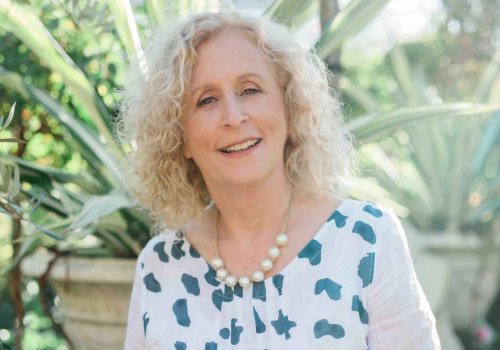
What inspired you to pursue a career in landscape architecture?
I was drawn to the intersection of nature, design, and real-world problem solving. Landscape architecture isn’t just about making something look beautiful—it’s about levels, drainage, access, microclimates, trees, materials, budgets, and people…and then pulling all of that into a place that feels effortless to live in.
I’ve also always loved that landscape is both creative and practical. You can sketch an idea in the morning and be on site that afternoon watching it take shape. Over the years—as a landscape architect and structural landscape contractor — I’ve seen how easily good intentions can unravel without clear process and documentation. That’s what eventually pulled me into teaching and mentoring: helping designers and contractors build gardens that are not only beautiful, but buildable, compliant, and commercially sound.
Who are the female role models who have influenced your career?
There are a few women I keep coming back to for different reasons:
Edna Walling—for her sense of place, restraint, and the way her gardens still feel human and timeless.
Women in practice who lead with both design and grit—the ones who can hold a design vision and handle the realities of construction, clients, and contracts without losing their humor.
Female educators and mentors—the people who quietly raise the bar by sharing knowledge generously and making the next generation stronger.
What advice do you have for other women pursuing a career in landscape architecture?
Get site time early. It builds confidence fast, and it makes your details sharper.
Know your numbers. Talent doesn’t pay superannuation—pricing and scope do.
Write everything down. Clear proposals, clear deliverables, clear boundaries. It’s not “being difficult”; it’s being professional.
Find your people. A mentor, a peer group, and a couple of trusted consultants you can lean on.
Back yourself. You don’t need to “earn the right” to take up space—you already belong here.
Can you share with us a project you are particularly proud of and why?
Sangoma Retreat, Bowen Mountain is a project I’m particularly proud of because I had the opportunity to design and construct a commercial landscape in the Australian bush—and that’s where landscape decisions really have to earn their keep. A retreat isn’t just about looking beautiful on opening day; it needs to perform for guests, staff, weather, and time, while still feeling calm and intentional.
The site came with plenty of real-world constraints: a sensitive bush setting, access and buildability considerations, durability under heavy use, and the need to balance a refined retreat experience with practical, compliant outcomes. What I love about this project is that the finished landscape feels effortless—but underneath that is careful thinking, clear documentation, and on-site problem-solving. It’s a reminder that the best landscapes aren’t just designed—they’re delivered, with the same care from concept through to construction.
What advice would you give your younger self?
Charge properly sooner! And don’t apologize for being clear. Put scope and deliverables in writing, every time. If something feels fuzzy at the start, it rarely gets clearer later.
I’d also tell myself to build systems earlier: templates, checklists, and a consistent process for consults, approvals, and documentation. Those are the things that give you breathing room and keep the work enjoyable.
And finally: keep learning, but stop waiting for permission. You and I don’t need to be the loudest in the room—we need to be the most prepared. Professional confidence comes from craft, repetition, and integrity. That’s what creates a career with longevity.
Yijun Zhang, Associate ASLA
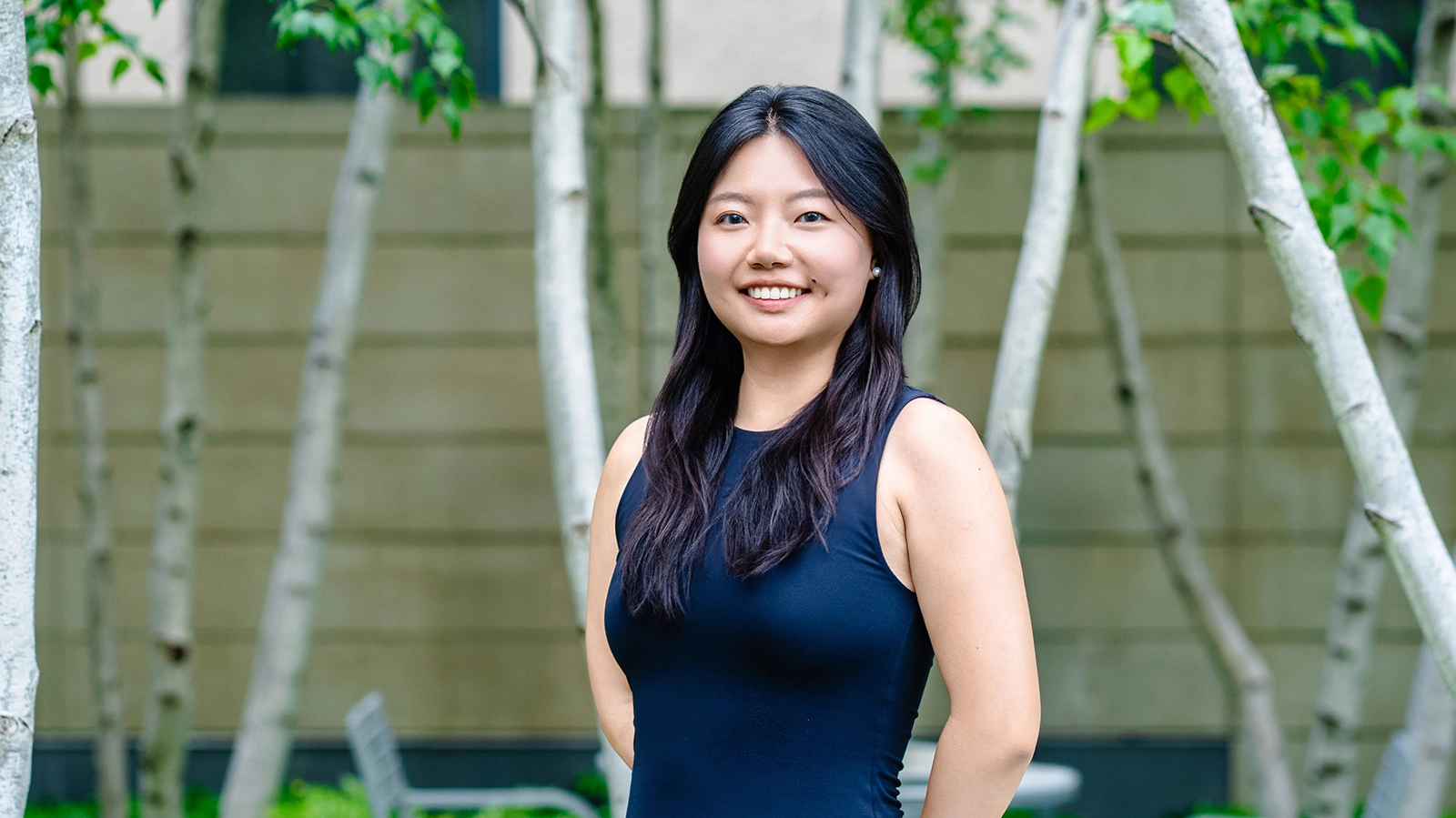
What inspired you to pursue a career in landscape architecture?
It begins almost like a cliché: an engineer father and a mother who loves plants. As a child, I spent days watching buildings rise on my father’s job sites, and I returned home to a balcony that shifted with every season. Landscape architecture felt like a natural synthesis of those worlds, which led me to study at Beijing Forestry University. Its meaning, however, deepened during the COVID pandemic. When indoor life shut down, a simple waterfront trail near my home—linking neighborhoods, farmland, and places to breathe and move—became a lifeline. That experience revealed the quiet power of public landscapes, not only as designed spaces but as essential infrastructure for resilience and well-being. It shaped my path forward, which I carried into graduate study at the University of Washington, and now into my work at MKSK, where I design parks, streetscapes, and campus environments that place people, health, and connection at the center.
Who are the female role models who have influenced your career?
I’ve been fortunate to be guided by many inspiring women throughout my career. At the University of Washington, professors such as Catherine De Almeida, ASLA, and Julie Parrett, ASLA, helped shape my design thinking and professional foundation. At MKSK, my mentor Brandi Zhang, PLA, continues to influence how I navigate practice, growth, and confidence as a young designer. Just as meaningful to me are my peers, friends who entered this field with the same passion and curiosity. Through long studio nights, deadlines, and moments of doubt, their perseverance and encouragement sustained me. Their quiet strength shows me that the most powerful role models are often the people working beside us every day. My friends Boya Zhou, Jieya Yu, Su Li, Yanrong Zheng, and Yueming Lin, Associate ASLA, along with many others, have been some of my greatest sources of support and inspiration.
What advice do you have for other women pursuing a career in landscape architecture?
Don’t wait for the perfect moment.
If there is something you want to do, begin from where you stand. When you feel uncertain, start anyway. Write a single word and the next will usually follow. When you are tired, make one small mark, and you may find the strength for another. Progress often comes quietly, step by step, long before we feel fully ready.
This is not about pushing yourself relentlessly. It is about trusting that desire itself has momentum. Once you take the first small move, even an imperfect one, the path forward begins to open. What matters is the courage to begin, not the perfection of the beginning.
Can you share with us a project you are particularly proud of and why?
Although I’ve worked on projects of many different scales over the past three years, the one I’m most proud of isn’t a large-scale or high-budget commission, but a small design-build installation created with my friends Yueming Lin, Qiuming Li, and Rodrigo Carrillo for Design Shine, an AIA Austin competition at the UMLAUF Sculpture Garden + Museum. With only $1,500 in funding and two months to deliver, we took responsibility for the full project lifecycle—from site visits and concept development to material research, fabrication, and on-site installation. From the very beginning, the process felt personal, collaborative, and deeply hands-on in a way that many professional projects rarely allow.
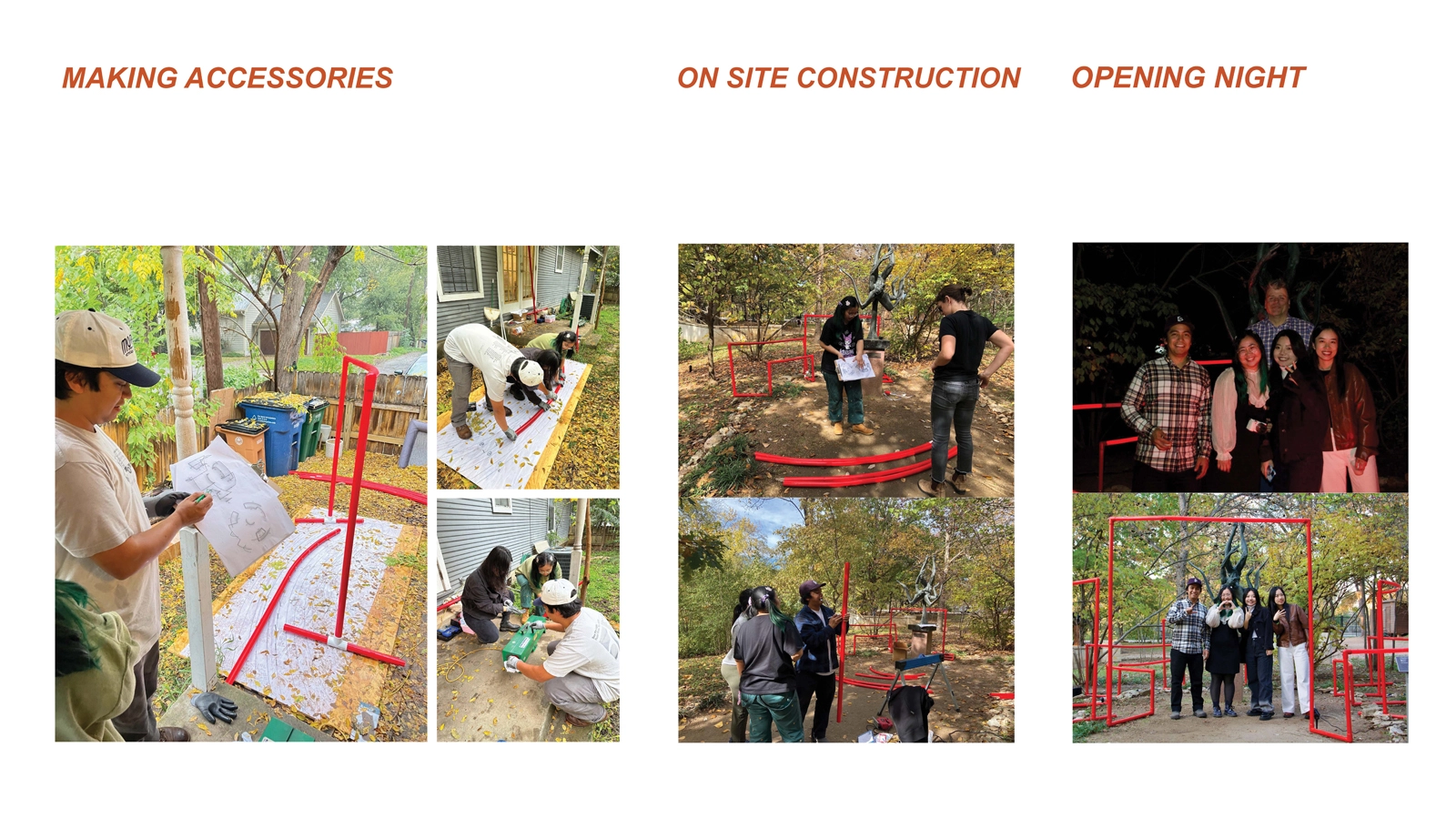
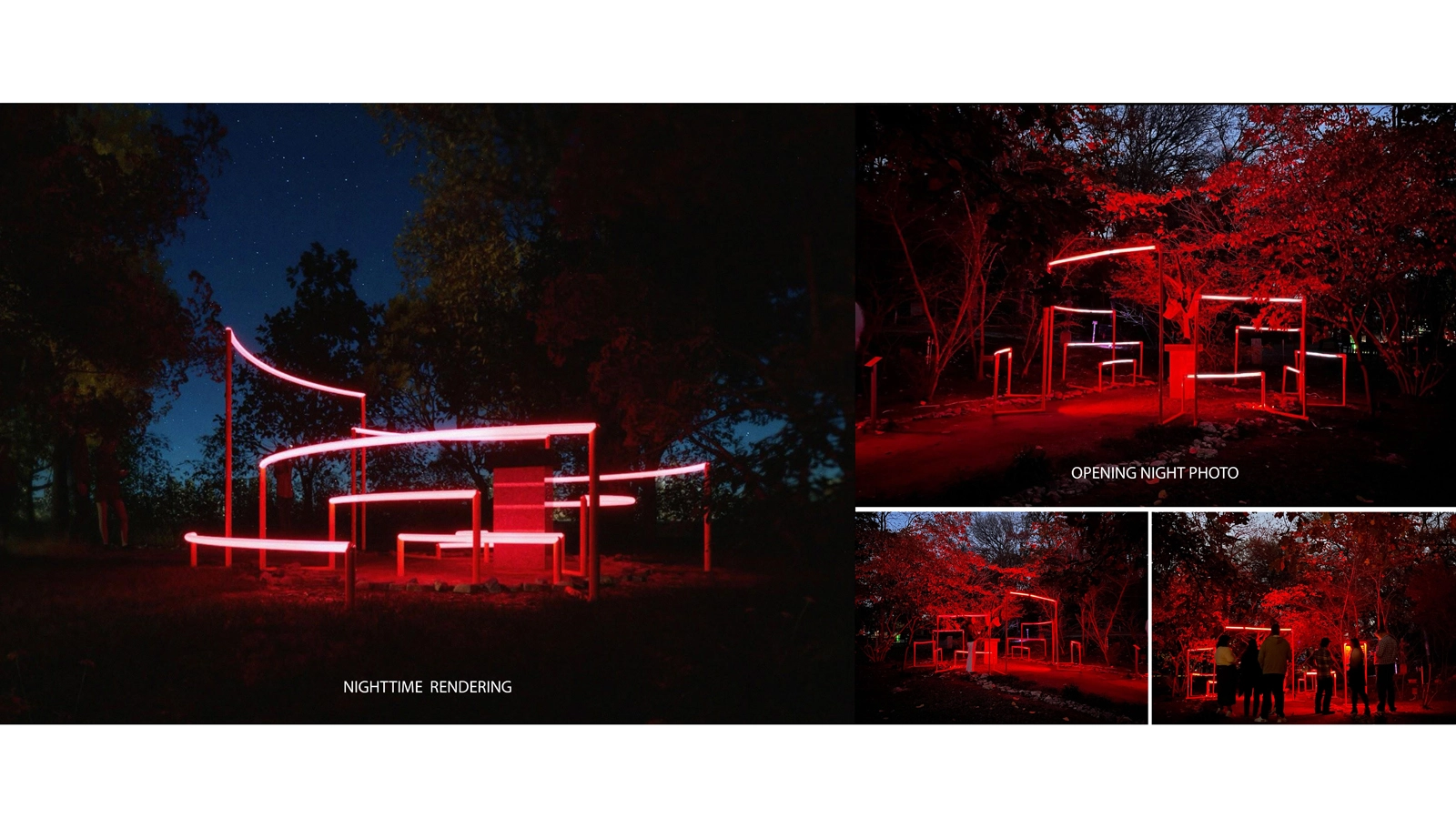
As landscape designers, we were instinctively drawn to a site-specific response. The sculpture Icarus by Charles Umlauf, situated at the heart of the garden, immediately captured our attention. Inspired by the labyrinth in the Icarus myth, we translated its form into a series of lighted arches that gently frame the sculpture, giving the installation its name, Labyrinth. Rather than enclosing space, the arches invite movement, curiosity, and exploration. During the day, they read as porous, concentric forms woven quietly into the landscape; at night, they glow as soft halos, symbolizing openness, fairness, and shared experience.
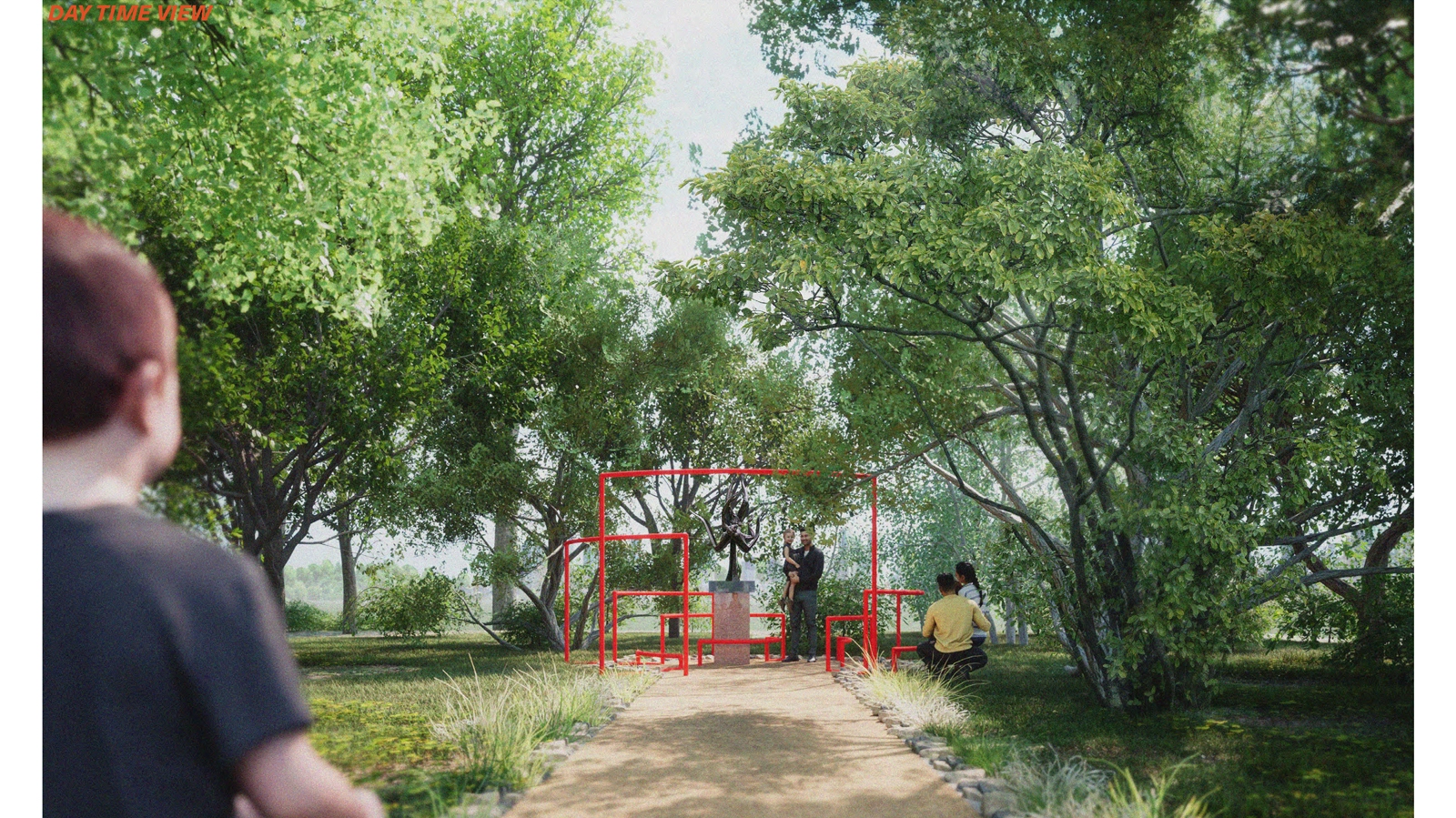
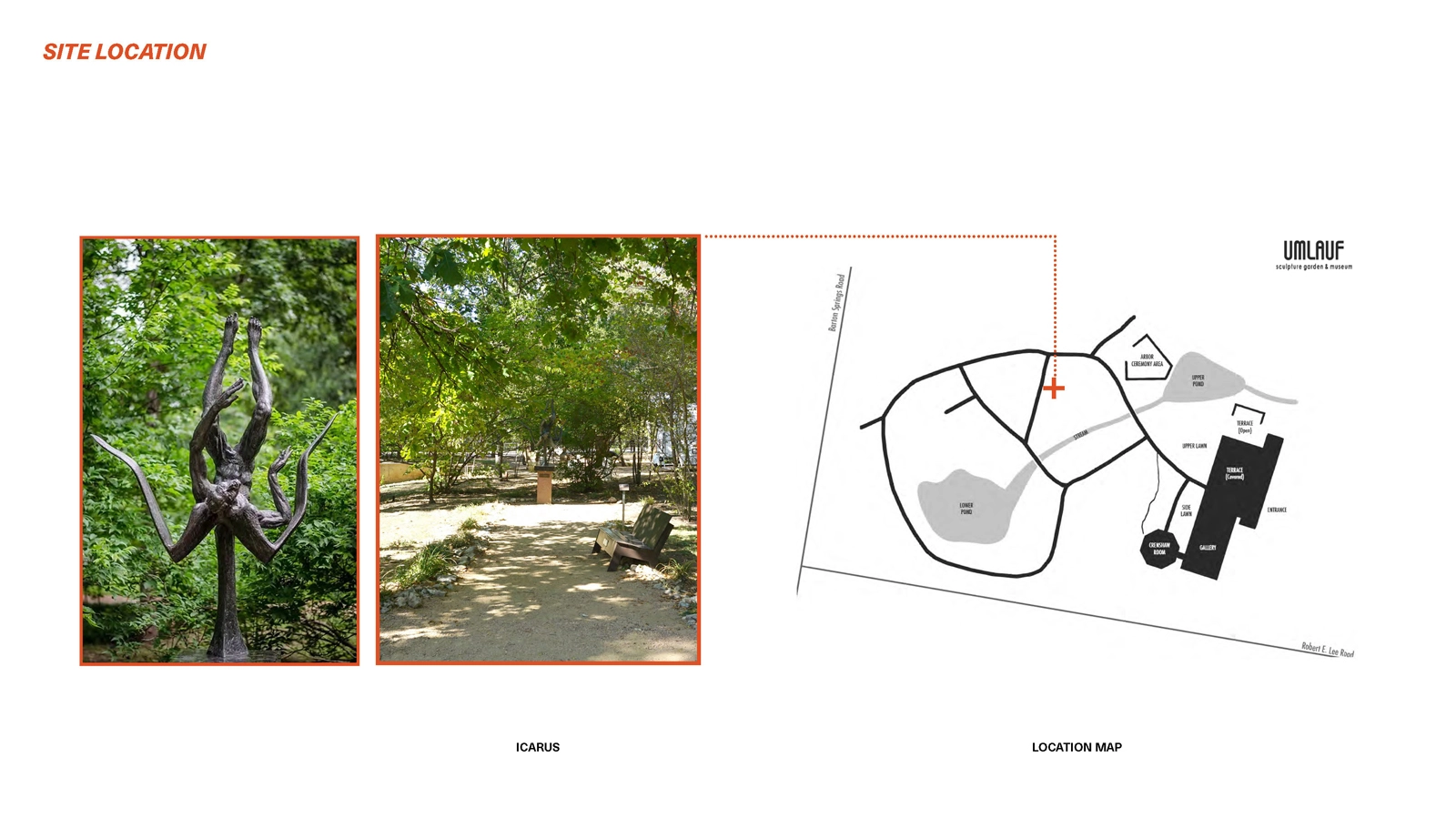
After advancing to the build phase, the project became an exercise in creativity under constraint. I took the lead on material selection and fabrication strategies, balancing cost, constructability, and sustainability. After extensive research, I proposed using recyclable PVC tubing with LED strips embedded inside, which kept the installation visually clean during the day and produced an even, diffused glow at night. When fabrication challenges arose, we reached out to local vendors and, through those conversations, secured additional sponsorship that allowed us to elevate the project beyond what our original budget could support.
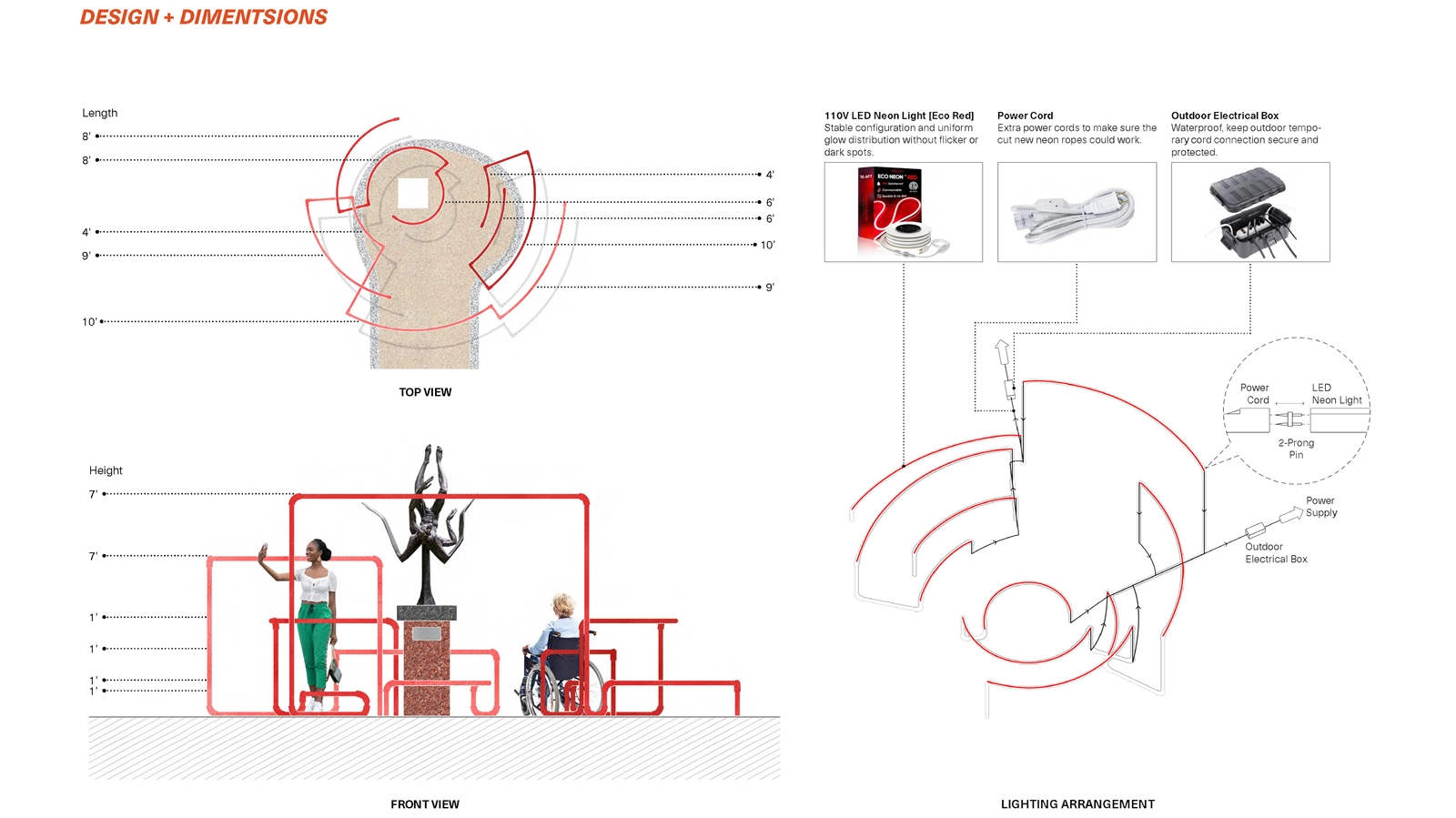
The installation stood through Austin’s winter winds and into the gentle breezes of spring, remaining in the garden for five months. When its time came to an end, we carefully dismantled the piece and delivered all PVC components, along with most lighting elements and wiring, to the Austin recycling center. On opening night, watching visitors of all ages move through the glowing arches was incredibly rewarding. Bringing a project from concept to construction and then thoughtfully to removal gave me a profound sense of fulfillment, and it remains one of the most meaningful experiences of my design career.
What advice would you give your younger self?
Don’t worry too much about choosing what’s “right.” Follow what brings you joy, and the road ahead will unfold naturally.
Julie Sajtar, ASLA, PLA

What inspired you to pursue a career in landscape architecture?
My path to landscape architecture began with a lifelong fascination for where art and the environment meet. Growing up in a river town near Chicago, I learned early on how natural landscapes can connect people and shape communities. Pursuing art in Los Angeles, I focused on soft-edge, California light and space painting, but soon found myself more intrigued by the materiality of light and space than what I could express with paint alone. I started creating art with aluminum foil, plastic, bottle caps, and scraps of thread—transforming my paintings into tiny, ephemeral objects that sometimes disappeared during the creative process.
Eventually, I realized I wanted a medium that let me fully engage with light, color, space, and their power to connect people to their surroundings. Landscape architecture became that medium—allowing me to combine my passion for art with a desire to create shared experiences and meaningful connections to the natural world, in ways that go beyond what could fit on a canvas.
Who are the female role models who have influenced your career?
Barbara Kendrick, my art professor in undergrad, was an early influencer in my career, both as a teacher and a creative force. She modeled female leadership through her strength and uncompromisingly direct feedback, pushing me to think more critically and honestly about my work. She showed me how to lead with conviction and give clear, constructive feedback based on real expertise.
Ann Weiland, my colleague and friend, is a dedicated horticulturalist and a dynamic force in the planting studio. We balance each other’s strengths and share responsibilities, consistently pushing each other to excel. Ann’s deep plant knowledge, meticulous attention to detail, strong work ethic, and unwavering determination truly set her apart. She brings strength in the face of adversity and always assumes positive intent, creating a supportive and uplifting environment. Her sense of fun and ability to bring levity to even the most stressful situations make her not just an ideal partner but a joy to work alongside.
What advice do you have for other women pursuing a career in landscape architecture?
My advice to women pursuing a career in landscape architecture is to be your authentic self and embrace the full range of your experiences—each one shapes your perspective and strengthens your design thinking. Have the determination and confidence to lead. And remember, humor can be a powerful tool; it helps build connections, ease challenges, and keep perspective. Design is life, so bring your individuality, leadership, and a sense of joy to everything you do.
Can you share with us a project you are particularly proud of and why?
My approach has evolved beyond focusing solely on individual projects; it is now centered on teaching, mentoring, and nurturing the growth of our team at Hoerr Schaudt. I am dedicated to fostering an environment where learning and professional development are at the forefront, and I take great pride in mentoring colleagues to help them realize their full potential. One of my proudest achievements is the development of our planting design studio and the exceptional team we have built over the past several years. Growing from just two members to a robust team of eight in seven years, our group’s growth is a testament to our shared commitment to collaboration, knowledge-sharing, and professional advancement. The most rewarding aspect for me is seeing the positive impact that our investment in mentorship has had—not just on individual projects, but across the entire office and in the field—enabling us to inspire each other and elevate the quality of our collective work.
That being said, I’ve been fortunate to work on the Greater Des Moines Botanic Garden, McGovern Centennial Gardens, and the Exploration Place Destination Playscape. These projects all place a high importance on the value of horticulture and the power of plants to bring landscapes to life and create immersive, resilient spaces that evolve over time.
What advice would you give your younger self?
Travel often and really immerse yourself in new environments—you’ll learn more than you expect. Stay open to spontaneous chances for growth, and don’t be afraid to take risks. Reach out to peers, mentors, and leaders who inspire you, and start building your network early. Nurture those relationships both inside and outside your organization; they’ll be vital as your career unfolds. And remember, don’t judge yourself too harshly—every experience shapes your perspective and your work.
Voices of Women in Landscape Architecture: Call for Submissions
Help us keep this series going—submit a profile!