

.webp?language=en-US)

.webp?language=en-US)

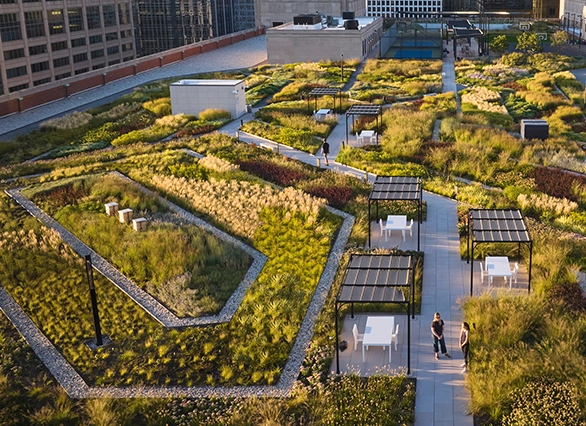

To Cut Your Emissions, Start with a Plan
By Jared Green
"We can get on a path to achieving zero emissions. We can set an example for our clients, contractors, and employees. And we can save money in the process," said Ronnie Siegel, ASLA, founder of Swire Siegel Landscape Architects, during a discussion organized by the ASLA Biodiversity and Climate Action Committee.
Siegel has authored a freely-available guide published by ASLA and the ASLA Fund: Towards Zero Emission Business Operations: A Landscape Architect’s Guide to Reducing the Climate Impacts of Offices.
The guide explains how organizations of all sizes -- from those run out of a home office to large companies -- can reduce their scope 1, 2, and 3 emissions. It served as the basis of discussion.
The first step is to create an inventory of your greenhouse gas emissions, explained Hussein Sayani, PhD, a senior project manager with Langan ESG and a climate scientist. "This is an account of the source of your emissions.
- Scope 1 emissions are "direct emissions caused by your business activities." This could include a gas-powered office furnace, boiler, or car.
- Scope 2 and 3 emissions are indirect emissions -- not emitted by an office but caused by its operations.
One example of scope 2 is emissions produced by the electricity purchased from a power company. Say that electricity comes from gas or coal. An office didn't create the emissions, but by purchasing that electricity, it's indirectly causing them.
Scope 3 is much broader and covers any emission created from products or services purchased by an organization. This includes everything from flights to visit clients to office waste, remodeling, and day-to-day supplies.
Organizations can use free or subscription software or hire a sustainability consultant to establish a baseline measure of their emissions and then create a plan to reduce their impacts.
The EPA Center for Corporate Climate Leadership offers a simple excel calculator. There are many tools out there, but "some of the good ones" cost, Sayani said.
He offered a few ways to reduce emissions by scope, which are also outlined in greater detail in Siegel's guide:
- Scope 1: Improve office energy efficiency; switch to electric furnaces and other appliances; transition to rooftop solar
- Scope 2: Either fully invest in rooftop solar or purchase renewable energy from your power company. If your power company doesn't offer a renewable option, purchase renewable energy credits (RECs).
- Scope 3: Reduce and recycle waste and cut back business travel and employee commuting by car. "Travel mindfully. Meet virtually whenever possible. Explore remote working options. Incentivize public transit with your employees."
Organizations should publish their emission reduction plans and performance data on their websites each year. This encourages accountability and helps establish climate leadership.
While growing as a company, Langan managed to cut emissions by 45 percent over a three year period, he said.
With the rise of remote work, many landscape architects, architects, planners work from a home office at least a few days per week. Many designers are also sole practitioners or work in small offices.
Siegel's effort to decarbonize her home office in California offers a model for these kinds of situations. After years of improvements, her home office is now carbon neutral.
Starting in the early 90s, Siegel started to think seriously about sustainability. She planted all native plants around her property, which have now grown into large shade-giving trees that cool her home and reduce energy use in the summer.
In the early 00s, she added a 600-square foot work space. It's heavily insulated and sited on the shady side of her garage. On the sun-exposed side, she planted more native shade trees.
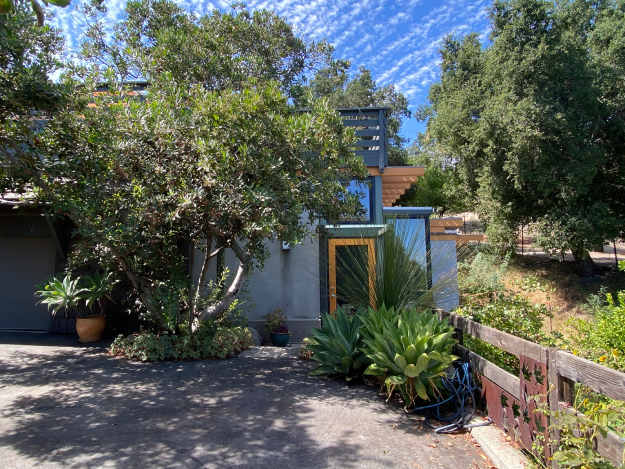
Over the years, Siegel has transitioned to renewable energy, installing 40 rooftop solar panels and then more to charge an electric vehicle. She also added electric heat pumps and water heaters, LED lights, and installed a white roof, which led to "huge energy savings."
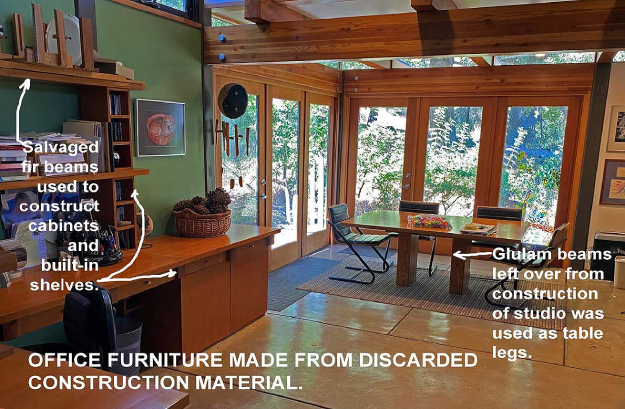
To cut her transportation emissions, found in Scope 3, she made a decision to only design local projects that she can get to in her leased electric vehicle. "I don't fly for work." Her office furniture is also made from discarded construction materials.
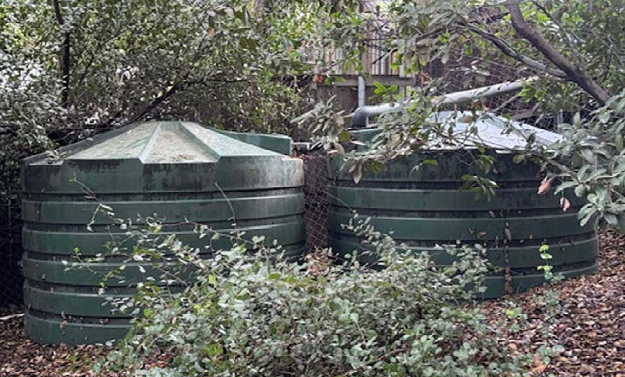
Siegel composts all her organic waste, which creates the "best fertilizer." And much of her home stormwater is captured in 5,000 gallon cisterns, which save energy from water conveyance. The fertilizer and water go to a home vegetable garden.

Larger landscape architecture firms also explained how they are making progress to reduce emissions.
OLIN, based in Philadelphia, Pennsylvania, created their own internal Climate Week as a learning exercise. They then started on their own climate action plan to reduce emissions from their offices and projects, said Julie Donofrio, associate and co-coordinator of OLIN Labs.
The ASLA Climate Action Plan inspired them to collect their own data. "This first year has been about benchmarking and figuring out where we are," Donofrio said.

They found their centrally-located, transit-oriented office is helping to reduce transportation emissions from employee commuting.
And they have tackled some low-hanging fruit:
- Switching to reusable kitchenware and greener office supplies
- Reducing shipping
- Improving recycling
- And creating new incentives for their staff to bike or take transit to work
They are now looking into electric heat pumps, too.
Looking at their past projects, they are using tools like Sasaki's Carbon Conscience and Climate Positive Design's Pathfinder to audit the carbon impacts of their design decisions. And the firm is now thinking through a new "go or no go" approach when deciding to work with clients. "We increasingly want to work with like-minded clients committed to socio-economic justice, low-impact development, and carbon reductions."
Sasaki, a large multidisciplinary firm, recently moved their primary office from Watertown to downtown Boston, Massachusetts.
"We purposefully chose a site with good transit access and no parking," explained Tamar Warburg, the firm's director of sustainability. Now, only 7 percent of staff commuting to the new office travel by car.
"We also chose an older loft building to renovate instead of launching a new building project." Low-carbon materials were used in the renovation, cutting embodied carbon emissions.
Sasaki replaced the mechanical systems and gas boilers with air source heat pumps, which are installed on the roof. They also now purchase 100 percent renewable energy -- not from the local utility but from community choice electricity. And to further reduce energy use, the office has operable windows.
On the roof next to the heat pumps is an employee-managed pollinator garden with bee hives that create Sasaki-branded honey.

One remaining major challenge is how to cut back on air travel. "We fly a great deal. It's a critical part of the work model."
Next Earth Day they plan on releasing a baseline of their travel emissions -- and the results of a workshop on "mindful travel."