

.webp?language=en-US)

.webp?language=en-US)
To Quell Ecological Grief, Expand Ecological Literacy
By Jessica Dune
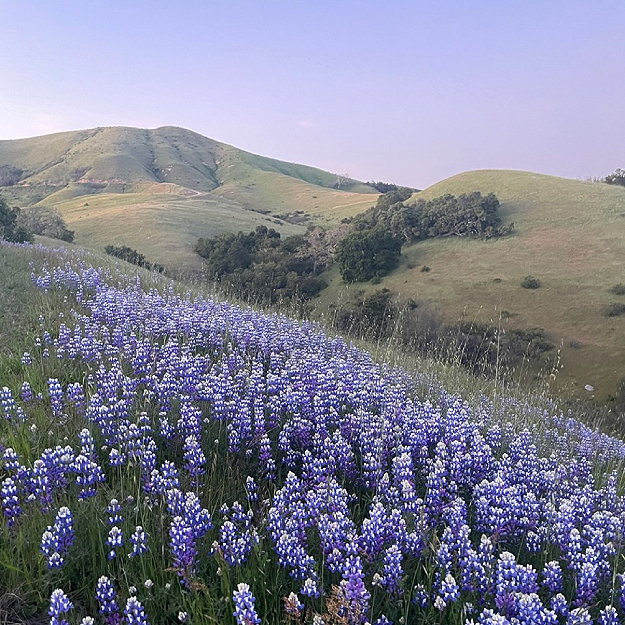
To practice landscape architecture on the Central Coast of California is to engage with some of the most beautiful landscapes on Earth. One may find themselves on a bluff in Big Sur in the morning breathing salt-sage-sequoia air as grey whales migrate below; then later arrive to a valley oak woodland site in the afternoon to walk in the wake of coyote and wild turkey through acres of poppy and sky lupine in full bloom. The abundance of awe that can arise in these breathtaking places may, in honest disclosure, be accompanied in tandem by a healthy share of ecological grief.
As early as the 1940’s, beloved conservationist Aldo Leopold described emotional pain associated with environmental loss and degradation. Ecological grief was more recently defined by Ashlee Cunsolo and Neville Ellis as “the grief felt in relation to experienced or anticipated ecological losses, including the loss of species, ecosystems and meaningful landscapes due to acute or chronic environmental change.”
Not surprisingly, this grief can be felt more intensely by people who work intimately with the land and who understand ecology enough to see layers of loss and degradation that may be go unnoticed by others. While we are poised to feel a sense of empowerment through enacting informed design that restores and protects life, many of us will encounter places that test our hope and even bring us to tears.
Sometimes we are charged to work in very degraded landscapes, or in places that are especially vulnerable to climate change consequences such as wildfire, flooding, and sea level rise. As we are increasingly faced with environmental loss – past, present and future – we must learn how to talk about and process the grief that comes with it. This grief can furthermore encompass feelings of sadness for the prevalence of human disconnection from the natural world -- the loss of relationship that once ensured our mutual flourishing.
As professional holders of the big picture, landscape architects are charged with leading a site into harmonious and healthy cohesion with the whole as it is developed. Forever exempt from indulging in the luxury of a picturesque view with any degree of blissful ignorance, it is under our ethic and standard of care to wholly see, understand, and respond to inherent imbalance, threat, and dysfunction that exists or that may occur in the landscape.
In this era of omnipresent habitat degradation, land abuse, and climate change, even the most beautiful and seemingly robust or rugged lands can carry a remarkable level of vulnerability or dysregulation just beyond the surface. When the landscape architect may be the only person on a design team who can perceive this, the burden of knowing can feel very isolating and heavy to carry alone.
For example, where others may see a spectacular hypothetical home site with 360-degree views atop a steep rise flanked with pretty white wildflowers and showy grasses billowing in the wind, the landscape architect may see a grossly deforested hillside with major erosion issues, barely held together by a scourge of invasive poison hemlock and highly flammable exotic pampas grass in what would be considered a non-defensible space by wildfire authorities as well as insurance companies.
Educating our clients and design teams throughout the design process to help expand ecological literacy, or eco-literacy, and to promote awareness of the basic dynamics of ecology at the site and macro scales can help ameliorate feelings of possible despair for how increasingly disconnected so many people have become from our natural world. Any professional who has grappled with degraded site constraints coupled with this normalized ignorance is faced with a challenge, and likely some heartache.
One might indeed encounter a client with wildland acreage sharing images of pampas grass with you as a favored plant on their Pinterest board, not realizing that it is exotic, destructive to biodiversity, and highly flammable. It can be depressing to realize that so many of today’s significant landowners in the U.S. have little interest in learning or practicing direct stewardship, holding ephemeral presence at best on multiple properties throughout a given year.
The land may be tended by many other hands, but less so, perhaps, with heart, with keen understanding, consistent observation, or devotional care. To get ahead of the modern detachment blues, one can be proactive from site analysis through construction by taking on the role as educator.
For a landscape architect to offer education, this need not be an overt or didactic effort. In my experience, the best way to get clients as well as building architects and contractors aligned with the underlying principles of ecology of a given site is to share knowledge and wisdom through genuine personal enthusiasm.
To begin, consider budgeting in the gifting of books to clients at the start of a project. In sharing accessible native plant, gardening, and landscape design books, bookmark a few pages of your favorite species or garden images to invite them into learning.
Even if they claim to have no interest in plants or gardening, you might be surprised how much this elemental invitation might mean. Passion can be contagious, and it’s never too late to claim any kind of fundamental fulfillment in a human life. As agrarian author Wendell Berry stated: “The care of the Earth is our most ancient and most worthy, and after all our most pleasing responsibility. To cherish what remains of it and to foster its renewal is our only hope.”
Furthermore, sharing books or resources about local history -- from indigenous through early colonial times -- can help expand one’s client and teams’ awareness of a longer view of time, in which their ownership of a given place is part of a much bigger story.
On the topic of scale, a site analysis presentation will benefit from at least one or two slides that identify the larger ecosystem a site belongs too – whether it be a Monterey cypress and pine forest, an oak woodland, a coastal terrace prairie, a redwood forest, a matrix of maritime chaparral, a dune, or other.
I have shared quotes from local artists and poets to help establish a wider sense of place. For a client developing a new home in the Monterey pine forest of Carmel-by-the-Sea, the words of poet Robinson Jeffers helped to establish affection for these trees as we began the arduous journey of designing around them: “The breath of morning hung in the pines, and this we felt was our home.”
Situating a client in the long view of both time and space can be a good antidote to the inherent self-interest of high-end residential development. Remind your client that while you are there to help them express themselves in the landscape and bring both beauty and comfort to outdoor living, that it is also your job to help their landscape blend both aesthetically and ecologically with the whole.
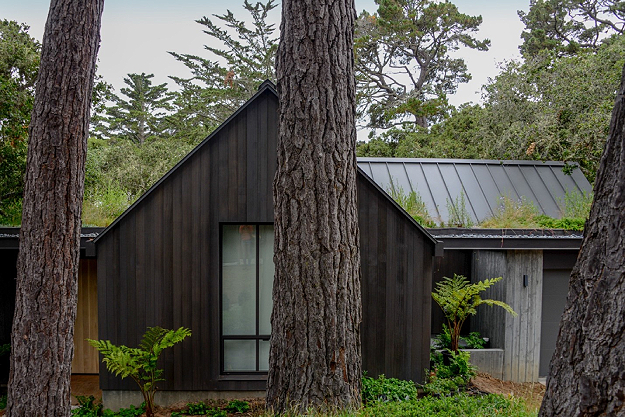
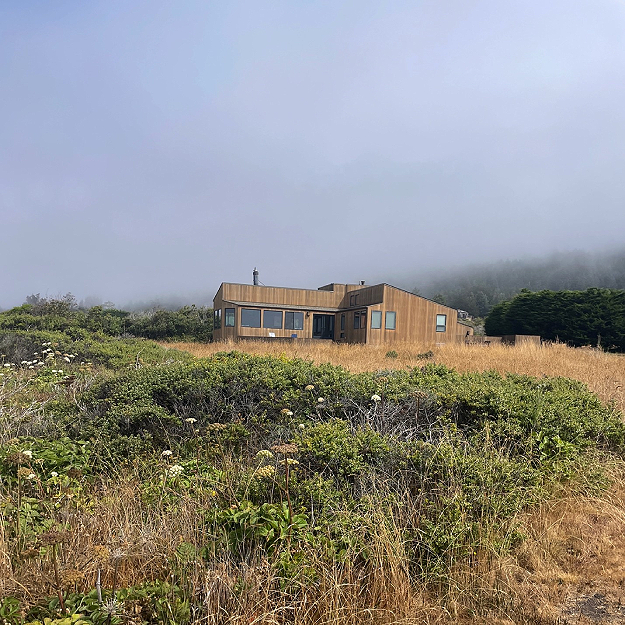
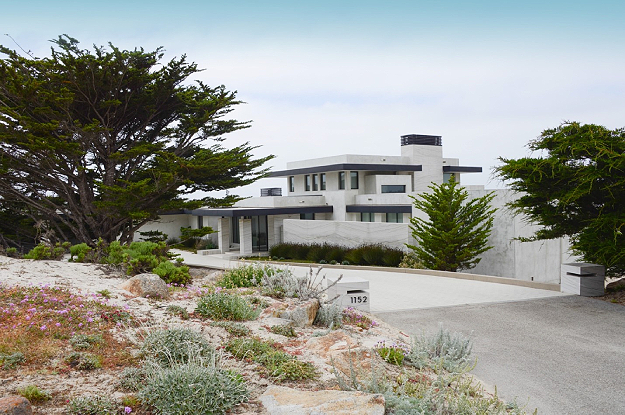
Using Sea Ranch in California as an example, I remind clients that their home ground can be beautiful without a single exotic ornamental plant, which in fact can look quite silly in many instances. Further, reminding them that -- whether they knowingly signed up for it or not -- they are stewards of the ecosystem, and it is in their hands to ensure that the next generation of trees are growing even as the elders topple in a storm. Decisively handing them a metaphorical baton as a temporary steward of the wider forest around them will hopefully give them a role to proudly step into.
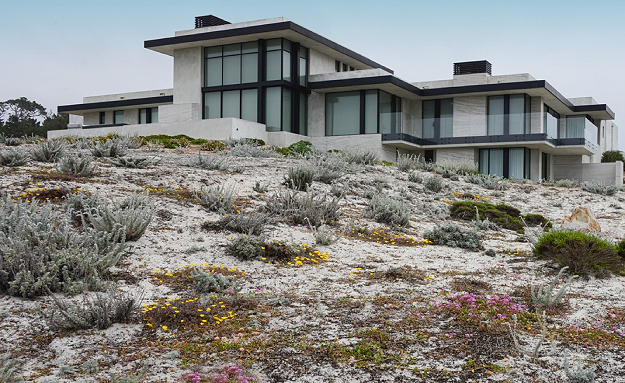
Reminding clients that they are not the only beings who live in their home place is yet another means to assuage ecological grief induced by disconnect and apathy. Describing the pollinators, birds, and other wildlife they cohabitate with and may wish to foster a niche for may be a stretch for some, but it is worth naming their names and showing their faces. I don’t know anyone who doesn’t wish to share a garden with hummingbirds, songbirds, or owls.
When it comes time to share your planting design, you will be armed with good reasons for choosing each plant. It’s easy to qualify fruit-bearing native shrubs like elderberry and toyon versus non-native ornamentals when they come with lovable bluebirds or cedar waxwings. You may wish to recommend nearby hikes or even a visit a botanical garden or nursery with your client to help expand their sensory awareness of the beauty of native and endemic plants, and the abundance of life they attract.
All of us professionals know that every landscape we design and help bring to life is only as enduring as its tending is. An early questionnaire can help identify who will actually be taking care of whatever landscape you design, so that it may be conceived of to be sustained as envisioned, no matter how plant-loving (or not) the people who own it may be.
It is possible to engage less-than ecologically educated clients and thereby curb an excess of blues by stepping lithely into the role of educator. This can be fun, lighthearted, sensual, and meaningful on both sides of the contract. One may consider extending their outreach to the wider community as well.
Speaking at local K-12 schools; proposing a field trip to engage youth in ecological restoration or tree planting; organizing a native plant garden tour; sharing wisdom through an op-ed in a local newspaper; or organizing a local neighborhood weed-pulling effort can also help expand connected awareness.
We owe it to the beautiful places we find ourselves working in to practice excellent ecological design that includes fostering greater eco-literacy, wonder, and more informed, impassioned care.
Jessica Dune, ASLA, is a licensed landscape architect immersed in the incredible biodiversity of the Monterey Bay Area. Experience in residential design, land use planning, and habitat restoration informs her current practice focus on interpretive and memorial landscapes. Educational illustrations Jessica has created to educate clients can be found in the Sonoma-Marin Saving Water Partnership’s Water Smart Gardens Maintenance Manual, prepared by Ann Baker Landscape Architecture (now Land Culture Studio).