

.webp?language=en-US)

.webp?language=en-US)
Theaster Gates: Building a New Commons
By Jared Green
Artist and builder Theaster Gates' projects on the Southside of Chicago are art pieces. But they are also "social services, community outreach initiatives, libraries, archives, business and human resource incubators, and historic preservation projects," explained author and critic Paul Goldberger.
Goldberger tried to define Gates' complex, multi-faceted building and landscape projects while introducing him at the National Building Museum in Washington, DC, where Gates was honored with the Vincent Scully Prize.
Gates' built projects total more than 60 buildings and landscapes saved from abandonment, preserved, and reimagined over the last two decades. They show the "power of preservation" -- of using the "past as a liberating force to embolden the present," Goldberger said.
Gates aims to redeem what has been left behind. "But he's not saving good pieces of architecture to turn them into condos. This is not gentrification," Goldberger said.
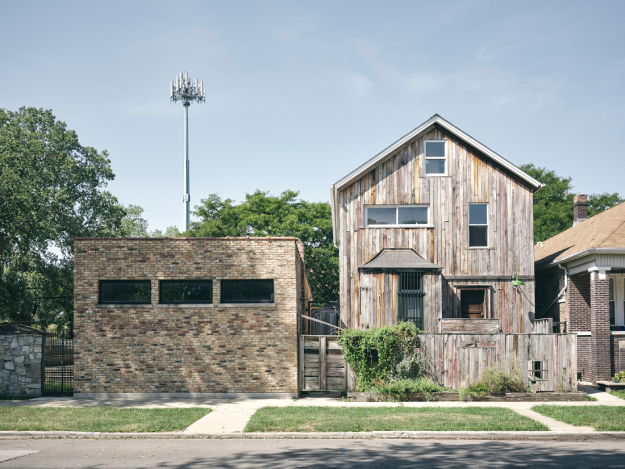
He is really more interested in "the people left behind" in places like the Southside. He wants to empower them by returning control of their spaces to them.
For Gates, revitalizing buildings and landscapes is a tool to achieve broader goals -- to restore community pride and create sustainable local livelihoods.
His work shows that "past and present must come together to create a meaningful future."
Gates then took to the stage, showing the deed to the first building he purchased in Chicago. He explained how his built projects started small, with just one abandoned building.
He then purchased another dilapidated building and then more, enough to shape the Grand Crossing neighborhood of the Southside. Together, the community and Gates' team have imbued these spaces with new meaning.
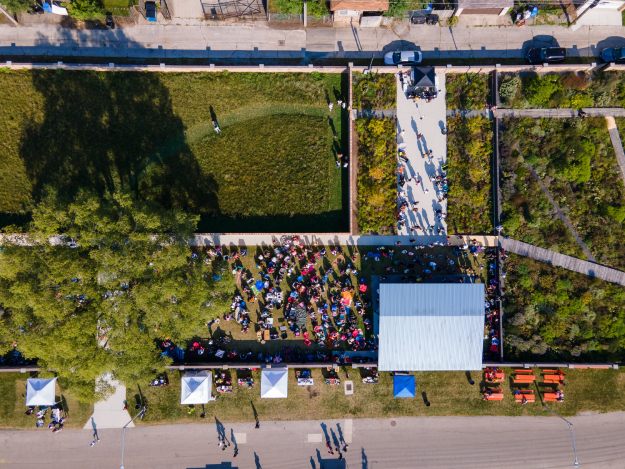
While he started with buildings, Gates eventually shifted into landscapes, creating Kenwood Gardens out of 13 abandoned lots, with landscape architecture firm site design group.
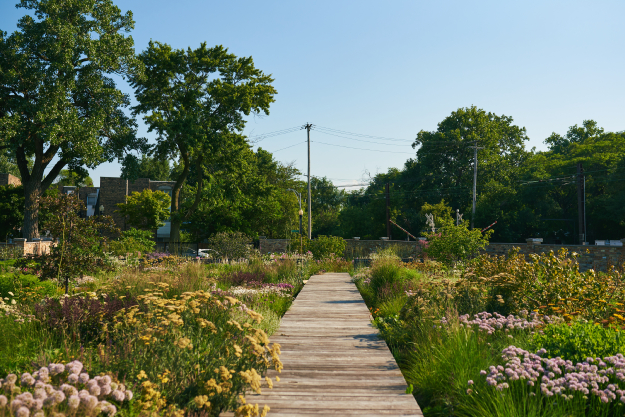
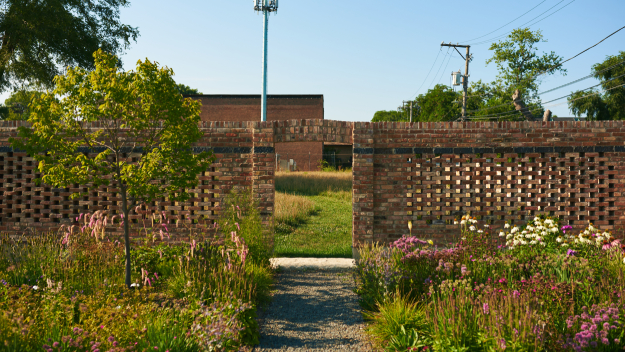
"It's the Versaille of the Southside," Gates said. Neighborhood parties with house music are "integenerational, intergender, and interracial."
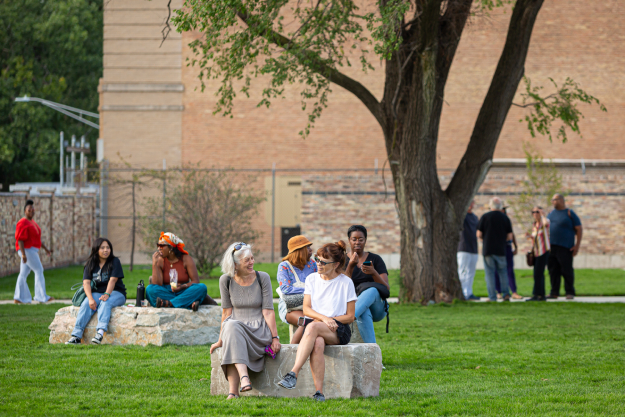
Gates half-joked that outsiders should stay away from these projects in Chicago.
"The community needs more time to recognize beauty. After years of generational trauma, they are finally thriving. But they are still afraid to build for each other, because something bad might happen," Gates said.
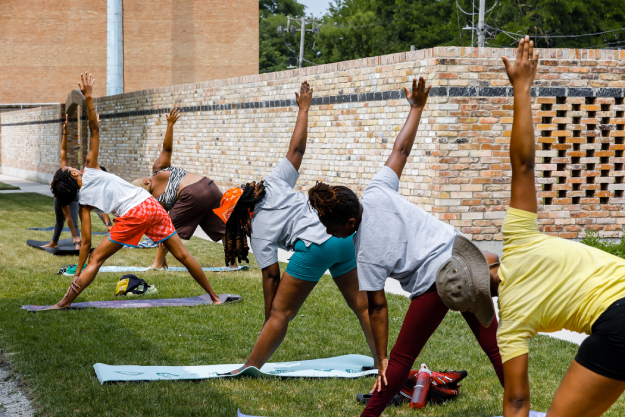
Together with the Grand Crossing community, Gates wants to transform more abandoned buildings and landscapes.
"It's an experiment. Buildings are not empty vessels. Can the building be the art work? Can the building be the monument?"
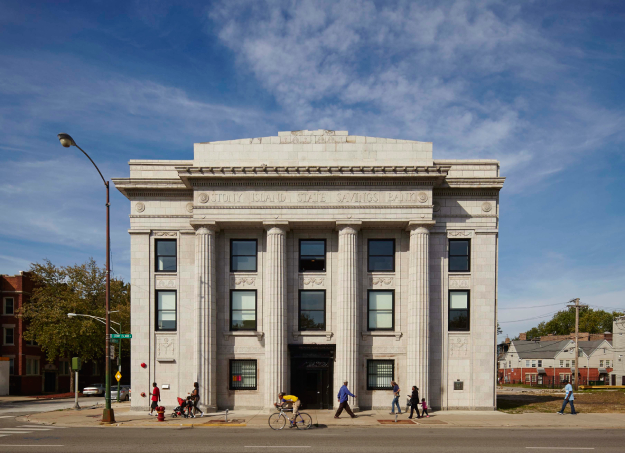
Gates thinks the answers are yes. "We can grow stories and cities and create spaces that are slightly more sacred."
In a Q&A discussion, Germane Barnes, principal and founder of Studio Barnes, and Jessica Bell Brown, curator and department head for contemporary art at the Baltimore Museum of Art, discussed how "building projects are a way to take back what spacialized racism has taken from us."
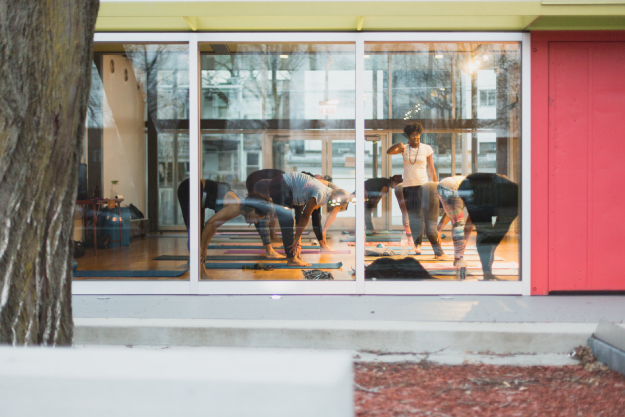
"There is a power to redefining space -- it's an act of resistance," Gates said.
And to redefine a neighborhood, Gates has challenged existing building code and zoning regimes.
"In Chicago, I have had to break some rules. Building codes and zoning laws are 50 years out of date. I want to expedite change and live in the truth of the needs of neighborhoods."
To further reconnect the community, he sees the need for "new zoning types and land uses."
In this regard, Gates takes inspiration from Frederick Law Olmsted, the founder of the profession of landscape architecture, who reshaped Chicago by imagining new land uses.
"Olmsted created a commons. He knew cities need great parks. This was pre-air conditioning and when the classes didn't mix. He saw that parks could be places that are adjacent and different. His idea of a commons proved true. These parks changed outcomes."
Gates' goal is to create a new commons on the Southside. "Being next to each other leads to new relationships. We can build with social relationships in mind."
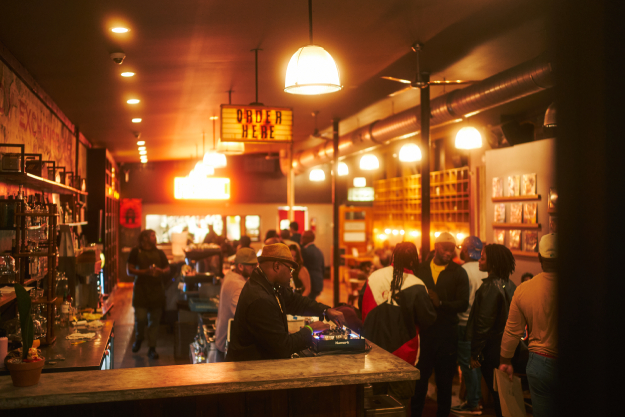
"The truth is people don't want to work, sing, pray, or succeed by themselves."
At the same time, Gates is determined that the Grand Crossing neighborhood benefit from the new commons he envisions. He wants them to take part in the rehabilitation and construction of projects, develop new skills, and earn fair wages.
His team salvaged bricks from a Catholic church. Instead of the usual quick demolition, Gates hired community members for two and a half years to take the church apart brick by brick.
Over the course of the deconstruction, "an informal team became a skilled labor force. From day and month workers, they became skilled laborers," Gates said. And those bricks were used in many projects over a span of eight years.
He thinks there are still inequalities in access to built environment jobs, but he hopes to use larger projects to build a pipeline for plumbers, drywall and wood workers. "We can create opportunities for people. We need Black people on job sites."