.webp?language=en-US)
.webp?language=en-US)
The Land Has More to Tell Us (Part I)
By Jared Green
Indigenous knowledge is rooted in land but also expansive, explained Alice Nash, associate professor of history at the University of Massachusetts Amherst, and a co-organizer of a recent symposium on Indigenous landscapes at Dumbarton Oaks. "The land tells us who we are, how to sustain ourselves, and envision the future." Grounded in land and its history, we can "center ourselves" and then look to "regeneration and healing."
The Indigenous worldview calls for an integrated approach — "all is related and connected." In contrast, western academia is about putting ideas into specific categories. "How do we parse Indigenous knowledge out?," asked Gabrielle Tayac, a historian and member of the Piscataway Nation, and the other co-organizer.
The symposium aimed to bring together Indigenous knowledge systems with academia, explained Thaisa Way, FASLA, director of the landscape and garden studies program at Dumbarton Oaks. This process enables Indigenous knowledge-keepers and scholars to "redesign connections" between these ways of understanding and "build community." The symposium itself was also the result of that inclusive approach: it was developed with an Indigenous Advisory Circle comprised of Indigenous leaders and academics.
Before starting the talks, Tayac grounded the discussion in the land of Dumbarton Oaks. The land is Anacostan (Nacotchtank) tribal land. It's the highest point in Washington, D.C. — a "site for visioning." It's defined by its unique landforms, plants, and animals. The land holds ancient trees, including a poplar. "I gave it a greeting."
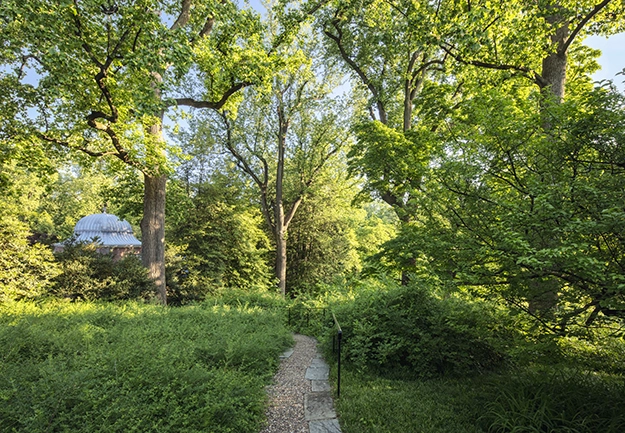
Dumbarton Oaks is near the homeland of the Piscataway, which spanned parts of Maryland, Virginia, Pennsylvania, and D.C. The word Piscataway means "where the waters blend," where life sources converge.
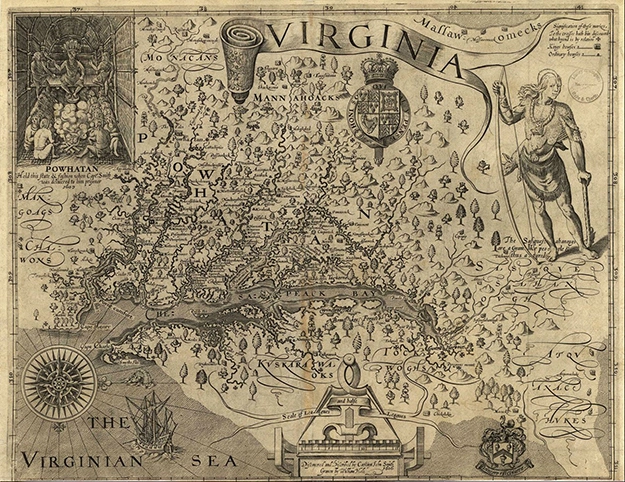
The names of territories matter. Emil’ Keme, a member of K’iche’ Maya Nation, and a professor at Emory University, explained how place names can either reflect Indigenous or colonial worldviews.
He has researched the Guna people, who have inhabited Panama for thousands of years. They now largely govern themselves in the Guna Yala region, which makes up the northeast coast of Panama and hundreds of small islands.
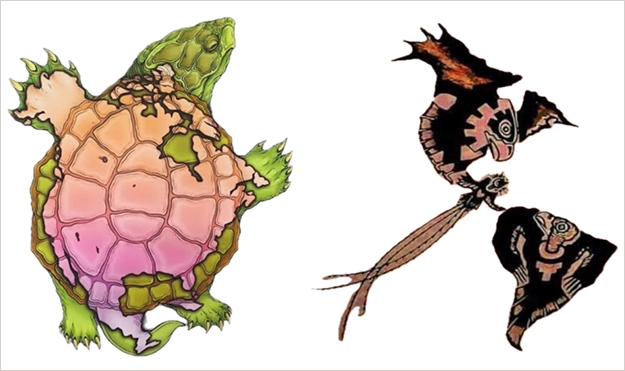
They call the Americas Abya Yala, a term more Indigenous groups across Central and South America are now using instead of Latin America or the Americas. Abya Yala better conveys the historical integration of northern and southern communities, the centuries of cultural flow and migration in both directions.
"More territory has been taken by maps than guns," Kere said. Using the term Abya Yala, and a map showing its vast interconnection across continents, is then a way to "refuse to acknowledge colonial borders and reclaim our hemisphere," Kere said. Breaking down colonial borders, at least through a shared worldview, can help create a new sense of solidarity among "communities facing transboundary struggles."
Sandy Grande, who is Quechua, and a professor at the University of Connecticut, said Quechua people are guided by Sumaq Kawsay, a worldview that brings together ideas about planetary connection, beauty, dignity, plentitude, balance, and harmony.
This worldview has been advanced by a political slogan: "Our people, our land, our people." It conveys that land is the basis of Quechua culture, which is about reciprocal exchange. This reciprocity occurs in natural, social, and cosmological contexts.
Grande explained that in contrast American universities were developed as part of a colonial, extractive system. Her goal is to weave Indigenous values into the university, creating a "new approach not set in settler colonialism." The University of Connecticut is exploring these ideas through a tribal educational initiative, which is resulting in more reciprocal relationships with Pequot and other tribal communities.
Preserving culture requires an intergenerational approach, explained Maria Montejo, a healer, member of the Mayan Popti', Xajla Community of Guatemala, and program manager with the Dodem Kanonhsa’ Indigenous Education and Cultural Facility in Toronto, Canada. She reflected on her grandparents, parents, elders, and spiritual leaders who helped her heal from intergenerational trauma and set her on a path of becoming a healer. And she emphasized that speaking Indigenous languages and practicing an Indigenous way of life is critical to maintaining culture and creating healing for current and future generations. "We have to practice our way of life — in life."
Montejo took the symposium attendees through a spiritual journey, explaining her community's understanding of how nature and people interconnect. She emphasized the holistic nature of these connections — the emotional, physical, and spiritual — and how a holistic approach to healing is then also required. "Integration is key to integrity."
In her people's worldview, the spirit of nature gives life to culture. "There is no utopia, but a balance of elements: air, water, fire, and earth. We are elemental beings." Becoming self-aware means understanding how these elements affect our emotional, mental, and physical health. She has been piloting "We Are Elemental," a K-12 educational program for Indigenous youth in Canada, which encourages greater connection to land and self.