

.webp?language=en-US)

.webp?language=en-US)
In a Seismic Shift, U.S. Army Corps of Engineers Elevates Nature-Based Solutions
By Jared Green
"This is tremendously encouraging," said Aida Curtis, FASLA, co-founder of Curtis + Rogers Design Studio.
In a new memo, the U.S. Army Corps of Engineers announced it will expand the use of nature-based solutions in its civil works projects.
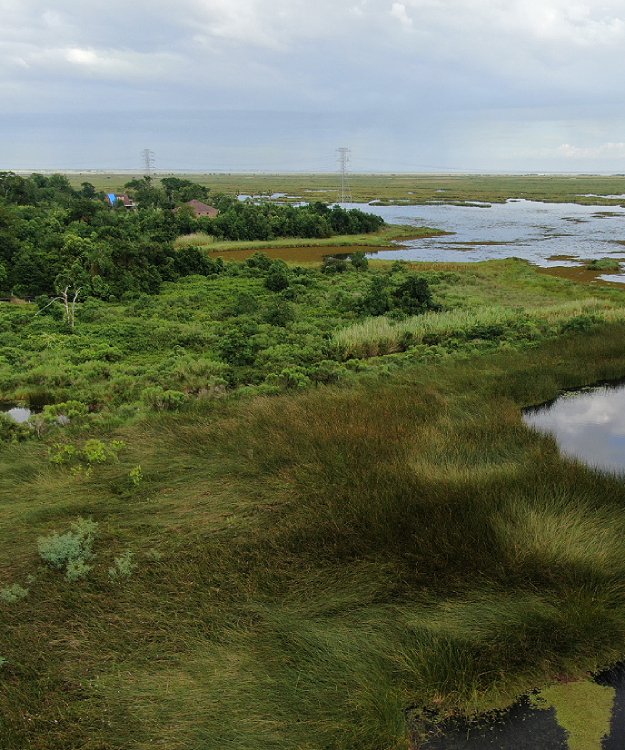
The Army Corps defines nature-based solutions as infrastructure that "uses, restores, or emulates natural ecological processes." These solutions can be created through design, engineering, and construction that "act in concert with natural processes."
Examples of these solutions include:
- Floodplains
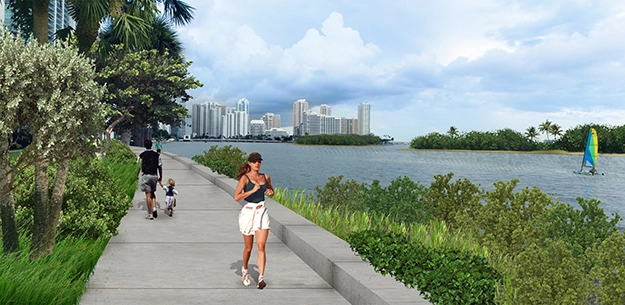
- Living shorelines
- Beaches
- Dunes
- Wetlands
- Reefs
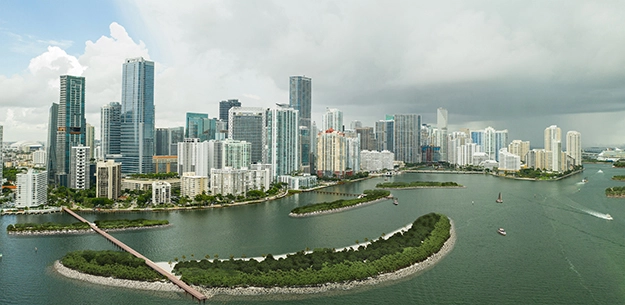
- Islands
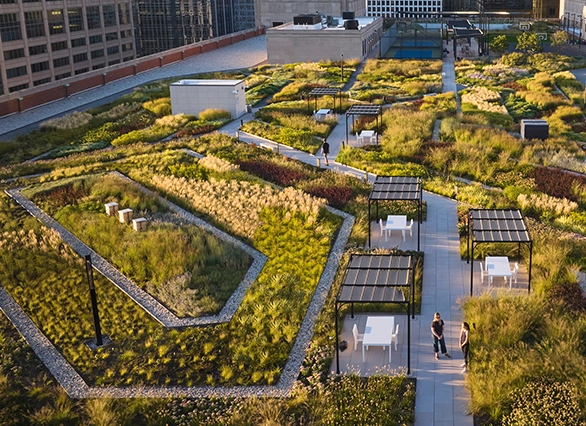
- Green roofs
- Tree canopies
- Rain gardens
- Bioswales
- Retention basins
- Permeable and pervious pavements
Now, when the Army Corps provides a final set of planning options -- what they call "alternatives" -- to communities, those alternatives must include "a fully nature-based solution alternative" if feasible. And that alternative needs to use the "same level of rigor and detail as the other solutions proposed.”
If a fully nature-based solution isn't possible, then effort needs to be made to integrate nature-based features with traditional grey or concrete solutions, creating a hybrid green-grey option.
“Nature-based solutions should be incorporated as much as possible in developing our resilient infrastructure, as they can produce significant benefits, including enhancing natural habitats, removing carbon from the atmosphere, making ecosystems more resilient, and lowering climate change risks for people," wrote Michael L. Connor, Assistant Secretary of the Army for Civil Works, in the memo.
The memo recognizes the many community, ecological, recreational, and economic benefits created through nature-based solutions, and how investment in this work can make federal dollars go farther. It also identifies many of the challenges that need to be overcome to scale them up.
The memo, along with a final rule on the agency's procedures -- which is expected in coming months -- will guide a new approach for the Army Corps.
ASLA and its members have advocated for a policy change like this by:
- Working with Cong. Reid Ribble (WI) during the 116th Congress to pass an amendment to the Water Resources Development Act (WRDA) -- the law that authorizes Army Corps projects and guidelines -- to “consider nature-based solutions in civil works projects.”
- Urging the Biden-Harris administration to call on the Corps to use nature-based solutions
- Providing congressional testimony requesting WRDA24 include increased use of nature-based solutions
- Submitting formal comments to the Army Corps for its Agency Specific Procedures (ASP) to call for increased nature-based solutions.
"Through our concerted advocacy efforts, we have demonstrated the value of nature-based solutions. And we have also clearly shown that landscape architects make them even better by designing them to provide greater health, economic, resilience, carbon, and biodiversity benefits," said Torey Carter-Conneen, ASLA CEO.
"I am confident this announcement will lead to significant new opportunities for landscape architects and the communities they serve."
"I see the memo as a call to action for landscape architects," said Curtis, who is also a leader of the ASLA Biodiversity and Climate Action Committee.
"Nature-based solutions require dealing with ecological, social, and economic aspects. That is all in our scope of work. We can lead and work with biologists, ecologists, and engineers -- whomever we need to bring into a project."
"This memo shows we have come a long way. This is a mandate to do things right."
“Coming from someone that started their career as a landscape architect at the Army Corps, this is huge," said Pamela Conrad, ASLA, founder of Climate Positive Design and ASLA's inaugural Biodiversity and Climate Action Fellow.
“Communities are healthier with more nature. By supporting more nature-based solutions in communities -- especially marginalized and underserved ones -- we can hope to see improved access to open space, recreation, and increased well-being."
"Nature also helps remediate climate pollution. By prioritizing nature, we support climate solutions that reduce risk to increasing disasters in our communities. So it’s definitely a good thing."
And the memo creates a “wonderful opportunity to increase landscape architects' expertise in federal projects. This is the moment to work even more closely with our civil engineering colleagues and increase collaboration between ASLA and the American Society of Civil Engineers.”
"So many disciplines will need to be involved in these nature-based solutions -- from ecologists to biologists, economists to cultural resource specialists. Landscape architects bring all these people together on a project; that is what we do," added Keith Bowers, FASLA, founder of Biohabitats, which has worked closely with the Army Corps for decades.
Landscape architects recognize that the Army Corps has been designing and implementing nature-based solutions for many years -- including floodplains, dunes, and wetlands -- but use of these solutions vary by regional district.
Curtis pointed out that a number of small-scale nature-based solutions have been implemented across districts to demonstrate their effectiveness. And there is a key benefit to this: "Small-scale solutions have a faster turn-around time."
But, she added, "given the climate crisis is so dire, our solutions can't only be small. In Miami, we are expecting one of the strongest hurricane seasons ever, and the heat index is already out the window. We need grand nature-based solutions to address these problems."
Bowers agreed that both small and large projects are needed, but highlighted some different reasons. "Small projects offer less risk. But some solutions work better at the larger scale and can then evolve on their own. For example, reconnecting floodplains, along with oyster reefs, are two solutions that provide more resilience benefits as they grow in scale. That is ecology 101."
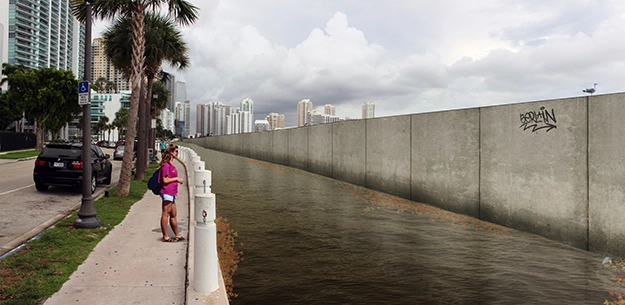
“As the Army Corps itself notes, 'there are challenges in implementing nature-based solutions and data gaps that require further research and analysis,'" Conrad said. "Those challenges include a lack of substantial testing and documentation that these solutions can stand the test of the increasing disasters we face -- for example, proof that a living shoreline berm/levee can withstand the same storm impact as a carbon intensive concrete seawall."
"We need more rigorous studies and testing to prove this. We also need more research and documentation that shows the cost effectiveness of these solutions, which is perfect timing for ASLA support of this year’s research study."
To help the Army Corps further evolve, landscape architects identified some next steps.
"We need to continue to advocate on an individual level to Army Corps districts. We need to entrench ourselves in what they are working on," Curtis said.
"We need to do much more education on the benefits of these solutions," she added. "We need to explain all the benefits to the public and decision makers.”
In Miami, Curtis has been a leading public advocate for a nature-based alternative to an Army Corps proposal for downtown Miami, which would build miles of concrete sea walls. “We haven’t totally eliminated a wall, but perhaps there will be a hybrid solution. The memo indicates there is now a new opportunity to revisit and improve those plans."
"The Army Corps is a big bureaucracy so this new approach will take time to implement," Bowers said.
In the near term, "there may be skepticism about nature-based solutions. They will need to be proven -- their longevity and ability to meet project goals. That will only happen with time, research, and application."
"The Army Corps recognizes the technical gaps -- and landscape architects can help address those. For example, landscape architects and educators in the Dredge Research Collaborative helped advance many nature-based solutions. And Biohabitats worked with the Army Corps on their National Large Wood Manual. More research opportunities will now come up."
"The Army Corps will also need to figure out a way to integrate the design, engineering, and construction processes for these solutions, which need to be customized by season, the time of the year they are constructed. That will impact how projects are scheduled."
And in some cases, Bowers thinks nature-based solutions will need to be combined with more traditional concrete or grey solutions, particularly in dense urban areas. That is something landscape architects can help the Army Corps with as well.
"Some nature-based solutions need space to thrive. They need solar radiation, water, and air. If we cram them into narrower urban confines, they will not survive from an ecological perspective."
Bowers hopes that in the future the Army Corps will also look more closely at the carbon footprint of their infrastructure and set a carbon neutrality goal. "The carbon aspect of grey infrastructure wasn't mentioned in the memo."
"There may be more policy changes required to prioritize nature and its benefits -- and advocacy will definitely help with that," Conrad said.
"While this memo encourages more nature, we need to make sure it's actually required. Then nature will stand up to other competing priorities."
The upcoming rule issued by the Army Corps is expected to further institutionalize the nature-based future landscape architects have pushed for. But more advocacy will be needed to spread the benefits of designing with nature across all the communities with which the Army Corps engages.