

.webp?language=en-US)
.webp?language=en-US)
Thaïsa Way, FASLA
on 10 Parks That Changed America
You were an expert adviser to PBS’s new show, 10 Parks That Changed America, which airs nationwide on April 12. The 10 parks the producers selected include, in chronological order: the squares of Savannah, Georgia; Fairmount Park in Philadelphia; Mt. Auburn Cemetery in Cambridge, Massachusetts; Central Park in New York City; Chicago’s Neighborhood Parks; The Riverwalk in San Antonio in Texas; Overton Park in Memphis, Tennessee; Freeway Park in Seattle, Washington; Gas Works Park in Seattle, Washington; and, finally, the High Line in New York City.
Looking at these 10 parks that changed America, what story do they tell? What are the through-lines from the 1700s to today?
It's a pretty concise story. It's the evolution of our use of public space; the evolving definitions of what the public realm is. The film starts with the squares of Savannah, Georgia, which were designed for an ideal town that was supposed to be based on equanimity and justice. Community life would be centered around public parks. We can move all the way through to Central Park in New York City, essentially the first public park. Then, you get into Gas Works Park and Freeway Park in Seattle, which use urban infrastructure to create new kinds of public realms. We could argue the High Line in New York City is yet another definition of the public realm -- the alternative use of former infrastructure for the public.
If you could identify just one park that you think has the most impactful legacy, which would you choose?
I hate that question! There's never one. But if you are making me, I would start with Savannah and its vision of an ideal town. Savannah is so important because those public squares came out of the founders' original ideas of equality for everyone. The public realm reflected that, at least until they introduced slavery decades after the founding of the city.
Advertisement
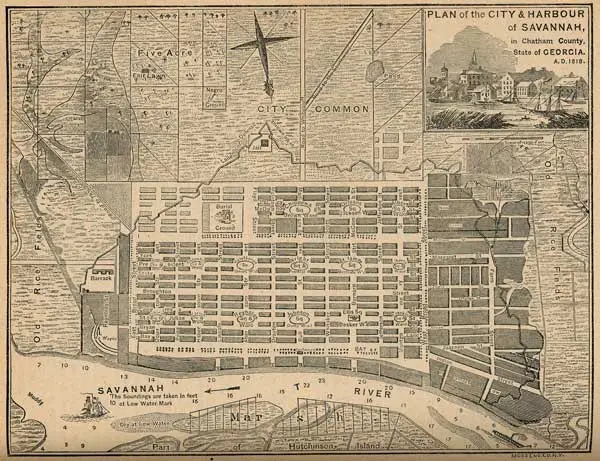
Before Savannah, those kinds of landscapes only belonged to the royalty or the rich. The idea that public squares would be at the center of a democratic, or seemingly democratic space, is really critical.
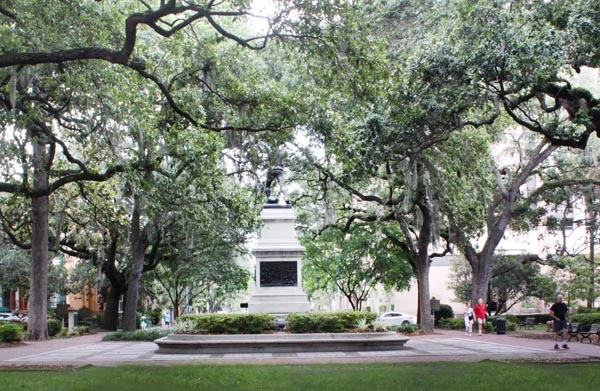
I like choosing Savannah because everybody else would choose Central Park. And, yes, Central Park is really important, but I argue for Savannah because it establishes a language about democratic space that is critical to this long story. Plus, it will annoy people.
There a number of parks you wanted to see included but just didn't make the cut. Which other parks did you really make a case for?
I tried really hard for the Lurie Garden for a very specific reason: it introduced the idea of a garden in the city, the garden as part of the public realm, which is different than a botanical garden or a park. Lurie Garden is why the High Line could come into existence the way that it did. Lurie Garden made us see the public realm differently.
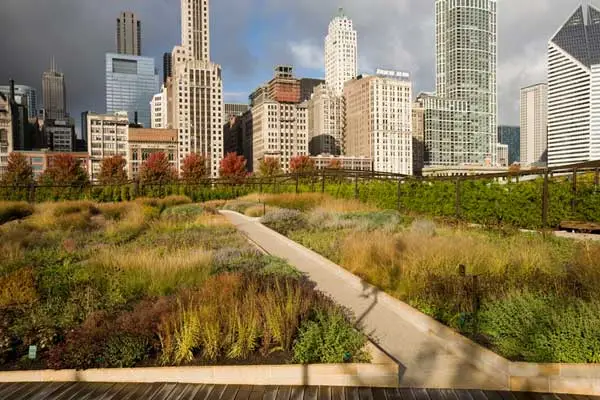
The other one I argued for was Nicollet Mall in Minneapolis, one of the adoptions of streets as public space or public park, which was another important move.
In your mind, which parks should have been cut?
The High Line didn't need to be included. It's the hottest thing in the market right now, but we've seen it. Other important parks made the High Line possible. Also, unfortunately, James Corner, ASLA, the landscape architect behind the project, didn't make the time for the interview, so we only heard from Diller, Scofidio + Renfro, the architects on the project.
I'm not convinced the Riverwalk in San Antonio, which has a wonderful and fascinating history, has had the same effect of some of the other parks featured.
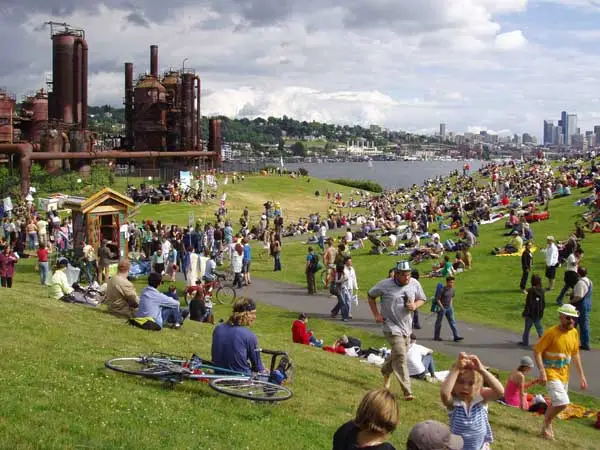
You must have lobbied for Gas Works Park given you teach landscape architecture at the University of Washington and your recent book, The Landscape Architecture of Richard Haag: From Modern Space to Urban Ecological Design. What was your argument for including Gas Works? Did you have to persuade people?
I lobbied for Seattle's Gas Works Park and also Freeway Park. All but one of the show's advisers mentioned both those parks, so that was more of a clincher than any of my arguments.
I lobbied for Gas Works Park because it changed the way we saw our toxic urban sites. Before Gas Works, we took toxic soil and dumped it into some poor neighborhood's landfill. After Gas Works Park, we decided we had to deal with it on site. We had to keep the memory of previous historical decisions in the landscape, such as industry, even if we may not love that history. That opened up the door to the way we deal with cities today. The way we think about cities and infrastructure today is a legacy of Gas Works. It's critically important, even internationally.
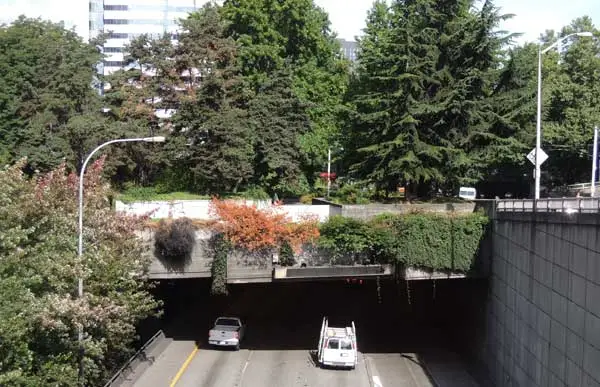
Freeway Park didn't have as big of an effect, but it was a whole new way of thinking about infrastructure. In the long run, it's going to have more impact, it has just taken longer to do that.
All the parks featured in the solved major social, public health, and environmental problems. Are today's parks solving our new, immense challenges -- climate change, biodiversity loss, inequality, and falling democratic participation?
For the most part, no. Europeans are pushing those boundaries more than we are for a whole number of reasons. One is, frankly, the immigration crisis.
There are individual projects that are beginning to do that but on the whole, but we are still too stuck in the idea that parks are about grass, trees, and masses of people. This is the Project for Public Spaces approach to parks, which is if there are a lot of people -- doesn't matter who -- then it's successful. What's needed is a re-evaluation of the public realm to serve immigrant and under-served communities and adapt to climate change.
We haven't addressed these challenges because landscape architects haven't been willing. There are a number of landscape architects who are talking about these issues. But our public realm is not invested in by the government, people, and patrons, so there are significant obstacles. Only some landscape architects are willing to truly go out on a limb and really argue for some of the dramatic things that we need to consider. That's the challenge ahead of us.
Frankly, the challenge also is in pedagogy -- it's a challenge for our universities. How do we prepare students to make that argument without making them irrelevant? You can't jump too far because then you just sound like you're barking up a tree. Landscape architects have to be able to deal with the reality and persuade civic governments to invest in public space. Sadly, that's a tough sell these days.
I was at a conference for the last two days in Italy, which was called Urban Landscape as Challenge. Two former heads of Italian Parliament were at this meeting. Both of them had design backgrounds. They were talking about the importance of the public realm and landscape architecture. I want to challenge you to think of a single politician who comes from a design background and spends their time arguing for the design of public realm in the States. What I'd love to do is train more of our landscape architecture students to consider going into politics. How's that for a challenge?
There's so many types of public space innovations featured in the show. They reflected cutting-edge thinking at their time. But through their success, they also created models that could be copied and even become commonplace. So, imagine 50 to 100 years in the future. What park innovation has not been created that will become mainstream in our distant future?
Okay, I do not have my silver ball, but here are a couple of ideas.
First, parks are going to become places of climate adaptation, like Mill Race Park by Michael Van Valkenburgh Associates, which can deal with floods, or they are going to be explicitly designed to provide shade. As the climate changes, we're going to have to deal with water retention and different biodiversity criteria, too. We've begun to address these issues, but we can't until we get more public investment. Landscape architects, ecologists, and climate change scientists are doing this, but their efforts are going to become more profound and challenging to the status quo.
Second, I don't know what it will look like, but the sharing economy will play a larger role in the public realm. All of these semi-capitalist, semi-sharing firms like Uber, Airbnb, and others, will engage public spaces. There could be virtual markets that become places where you come and display your wares, but in more of a bartering system. Streets are going to become public spaces for all kinds of commerce. I saw this sitting in Rome, where the streets have all sorts of pop-up stuff happening.
Third, we're going to see other definitions of public space and uses that grow from diversity and immigration. In the 19th century, there were lots of small city parks in New York City. One of the struggles for the New York City government was to get immigrants to use the parks the way they thought they should be used. Immigrants would come in and use it the way they wanted to use it. The city government would then come in and clean it up. We're going to see more spaces for immigrants and diverse communities, as well as displaced and homeless populations -- places made through their own vision of public space. It's going to look different. Every space isn't going to be for everyone. These places will not be about serving the most number of people. It's going to be about serving the locals in multiple ways. They might be places for alternative agriculture or other food production, or a place for communal cooking and eating.
We're going to see different kinds of public spaces that will continue the evolution we see in 10 Parks That Changed America, from Savannah to the High Line. Just as Savannah couldn't imagine the High Line or Gas Works Park, there are things now we can't imagine.
Thaisa Way, FASLA, is associate professor of landscape architecture at the University of Washington and author of The Landscape Architecture of Richard Haag: From Modern Space to Urban Ecological Design.