

.webp?language=en-US)
.webp?language=en-US)
Kevin Conger, ASLA
on the Benefits of Mini Parks
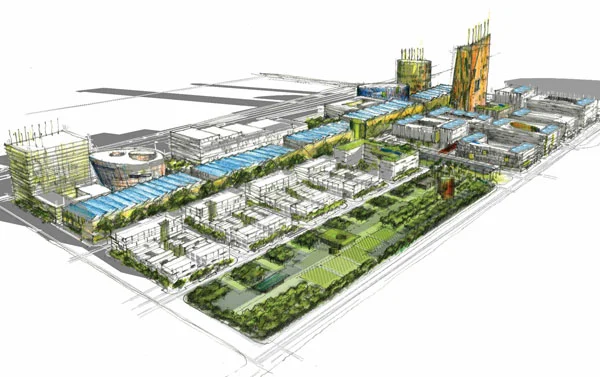
Repurposing more than 480 acres of an old naval base, the new Treasure Island redevelopment project will feature a 60-story tower and buildings housing 15,000 people, a mix of condos and affordable housing opportunities, bioswales of wetlands, some 300 acres of parks and public spaces, along with an integrated system to protect against sea level rise. The project was one of the select few identified as a "climate positive" model for sustainable urban development by the Clinton Climate Initiative. How will the project achieve climate positive standards?
The project is aiming for a 60 percent per capita reduction in emissions, which is 10 percent lower than experts have estimated is necessary to reduce emissions to stabilize global warming. What's interesting about the Clinton Climate Initiative is that they require you to have a rigorous system for measuring actual performance. They combine that with an adaptive, flexible strategy that in theory allows you to adjust strategies as these big projects are developed over time. In the case of Treasure Island, that will be two decades. You can measure and adjust the strategies as you move forward.
That's the big move, which says, Let's not just say we're going to do it, but let's set some metrics, measure, and if necessary, adjust as we go. It's a pretty big commitment for the partnership, which is between the city and the developers, to say we will enter into a kind of a partnership where we will allow for the agreement to change, or the commitments to change as we move forward, based on how it actually works.
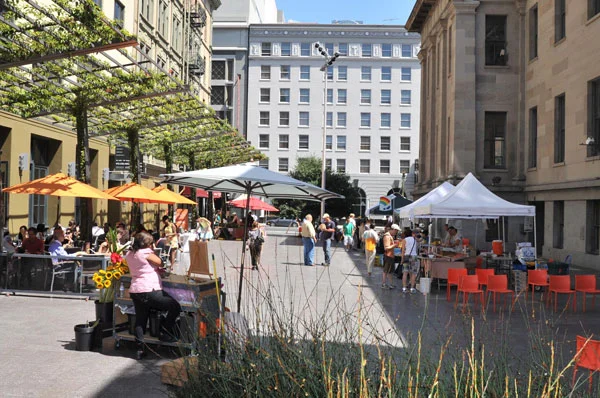
Your firm has also been working with the Yerba Buena Community District to create a new vision for the "next generation of public space" in this central part of San Francisco. The 10 year plan includes both large scale projects and short term design interventions. The goal is to promote street life and increase social interaction. What are the key problems facing the community? What are the central elements of the new plan and the many design proposals?
This part of San Francisco, within the South of Market district, is pretty large. It covers 11 miles of streetscape around the Moscone Convention Center. The SFMoMA and Yerba Buena Center for the Arts are located there. There are a lot of hotels that have come into this area. All of that redevelopment happened in '80s and '90s. Along with that, there has been quite a bit of housing, some of which was there before. There's a lot of senior and low-income housing, as well as just some older housing built after the earthquake. The area was largely light industry until the mid '80s, a lot of auto shops and service-oriented light industry you typically saw in inner cities. As the big redevelopment moves came in, it changed the land uses and use identities of the neighborhood but the public realm didn't change. All the roads are still too wide, the sidewalks are too narrow, there are very few street trees. The things you might typically associate with a mixed-use community where people live, work, and visit are missing.
We realized that the public realm needed to catch up with the new identity that was created through all these redevelopment efforts but that a big move in the public realm wasn't really what was needed, or even appropriate. A better strategy would be a lot of small moves that were more tactical and that incrementally could add up and make a big overall change in the community. What was interesting is that this was a community design initiative. It's a non-profit, community benefits district that the residents within this community approved to establish. There's a tax they impose upon themselves. That money goes to the benefit district and then back into their community. This public realm improvement plan was a community design initiative so we did a lot of community workshops to identify what is important to the people living there, what their values are, what their problems are, and what they wanted to do about it. Many of the ideas came directly from the community, and the goals were things that were obvious: We want it to be safer, look better, cleaner. We want to have wider sidewalks.
The project ended up being a long-term, 10-year plan that has about 36 projects, which can be implemented as funding and partnerships become available. For each of the projects, we generated a budget and a potential partnership model -- in terms of who the CBD might partner up with -- to generate the funds to do the project, and then a schedule for what the fundraising program and implementation might look like. They now have a big, flexible tool that allows them to prioritize and re-prioritize all of these projects over the years.
We just finished the plan in the summer. We've implemented two of the very small projects already, and we're now working at a couple of other ones that are going to get implemented in the next six months. In the meantime, fundraising is ongoing for some of the larger ones, including street closures and new plazas. The hope is that all the little things, all the small projects, can add up and lead to bigger change. It's less about remaking this district and more about adding onto it, building on the identity that's there. Through a more organic process of accrual and small scale change, the district can have a bigger change in the long term.
In Glendale, Arizona, a nine-acre organic farm and market plaza are being incorporated into the new 60-acre Bethany Central Business District. The farm will provide food for a central market and nearby restaurants. Edward Glaeser, a Harvard professor, however, recently came out against urban agriculture of this scale, arguing that these projects actually lower density. What do you see as the benefits of urban agriculture?
Urban agriculture can put the production of food closer to the place where it's consumed, reduce food miles, and cut the carbon footprint of food production. Given the way the big agricultural industries work, agriculture is not the most sustainable practice. By doing it on a more small scale, you have the opportunity to do it more intensively and more sustainably on a local basis. But I think there's a couple of other points in your question on density. Glendale is a very low density suburb outside of Phoenix. It's a first generation suburban subdivision that might have a density of four dwelling units per acre, and it's surrounded by cotton fields, which is a really unsustainable agricultural industry out in the desert. Cotton requires a lot of water.
On an 80-acre site, this project puts in about 250 or 300 dwelling units at a density of about 30 to the acre. It's not dense like New York City, but it's a huge density increase for this part of town. It puts in a lot of office space and open space, which is this farm. The project is the catalyst for an urban center in this growing suburban community. The hope is that doing something that incrementally increases density will become a kind of catalyst for more redevelopment. This is a huge step in the right direction compared to what's there.
The other point to make is that all open space is theoretically a reduction in density, but we all agree that open space - parks - is necessary. What the agricultural park at Glendale is trying to do, and the CBD is trying to do, is to say, Let's make the open space productive. We believe that we can hybridize the other open space functions: recreation, beauty, a place for people to socialize. We believe we can hybridize those into a purposeful landscape that is both ecological, in terms of its infrastructure, and productive, in terms of growing food for people. That's what we're really interested in: trying to get more value out of the open space we're creating. We're basically taking away from places where you could otherwise put buildings. It's more of a comprehensive strategy.
Advertisement
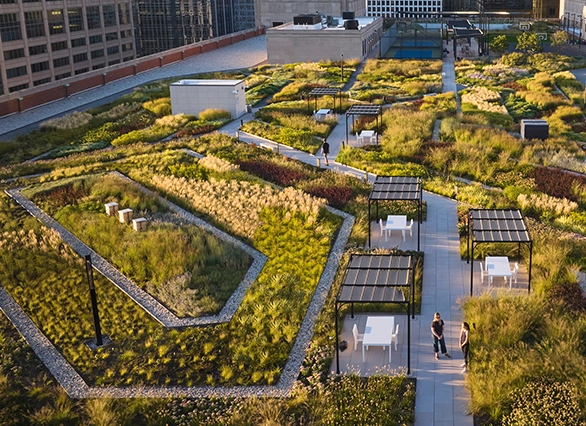
Through a series of trusses, set over an incredibly steep site, the new UCSF Institute of Regenerative Medicine building makes amazing use of a site thought to be "unbuildable." The building itself got a lot of attention, but many missed that it also includes a half-acre of wild flower and native grass-covered green roof terraces. CMG used an ecological approach mirroring coastal bluff systems. Can you talk about the design of the green roofs? Also, so far, how have the green roofs contributed to the actual research conducted in the building?
We did the concept through design development. Because it was a design-build project, they brought in a different build team. They had to bring in another landscape architect, which was the Guzzardo Partnership. So they did the detailed design and implementation and there's another person to credit here. The design, as it got built, obviously, evolved so it's not really the same as what we initially designed. We wanted to create an ecological green roof that was less controlled and allowed to change as a response to natural forces. We would start the landscape and then allow the ecological conditions of the roof to inform how the landscape evolved over time. We were looking at things like how does decomposition occur. For example, there's a fallen tree and the log begins to decompose. Other ecologies emerge out of that. We were interested in trying to initiate some of those processes and then stand back and just let those happen, and see what kind of landscape emerges out of that.
We thought there would be a compelling relationship between the sciences and landscape in that the researchers would appreciate watching the processes happening out in the landscape. As it turns out, probably through budget cuts and value engineering, it's a much more simplified landscape, where it's essentially big terraces that are hydro-seeded with mixes of native grasses and other types of plants with pathways and little patios and places for people to sit and stuff. It's actually quite beautiful.
A lot of the research labs have windows that look right out across these landscaped terraces. Those are probably of great value to the people in those buildings because they get to look at that space and also move out into these series of terraces associated with each of the lab pods. But the original idea that we had, and maybe you could argue it's still there, is to instill this appreciation for ecological processes using a low maintenance or non-maintained landscape. I think what's there is a little less poignant than what we had originally intended.
Mint Plaza in San Francisco, which recently won a smart growth award from the EPA, not only transformed an unused alley into a new public space, but also incorporates some smart green infrastructure. How do the systems function? How well do they perform in comparison with other types of green infrastructure?
The system that we developed deals with stormwater runoff. We developed the system with Sherwood Engineers, a civil engineering group in San Francisco. It's a large infiltration basin that sits under the plaza, captures all the runoff, and allows it to infiltrate into the ground before it goes into the storm drain system. We are fortunate to have a pretty sandy soil condition there so the infiltration rate is quite high. We're able to capture everything up to a five-year storm event before anything overtops and goes into the storm drain system. In the four years since the project has been built, I don't think that any water has discharged into the storm drain system yet. That's a big deal in this part of San Francisco because we have a combined sewer overflow system where the stormwater in a big event goes to the sewage treatment plant. Then, in a larger event, the stormwater quantity becomes more than the treatment plant can handle so stormwater, combined with sewage, is mixed and discharged in an untreated way, deep out into the ocean, which is just terrible.
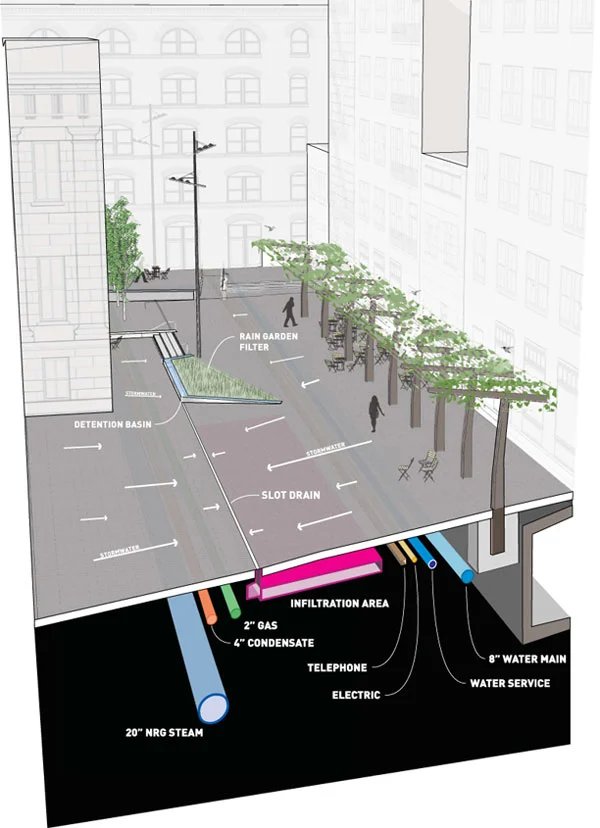
Systems like this are really important where we have old combined sewer overflow systems. It's a good example of how smaller individual infrastructure pieces can contribute to the bigger picture. It's why every little bit counts. We need to go after these things pretty aggressively as if they are required urban infrastructure like fire hydrants.
We were fortunate on a project like Mint Plaza. It's a big plaza so we're able to utilize a fairly large area under the plaza to treat the stormwater. We make a positive contribution but even the smaller streetscape stormwater projects really add up. I anticipate that we'll just see those as the norm in cities in the next 10 or 20 years.
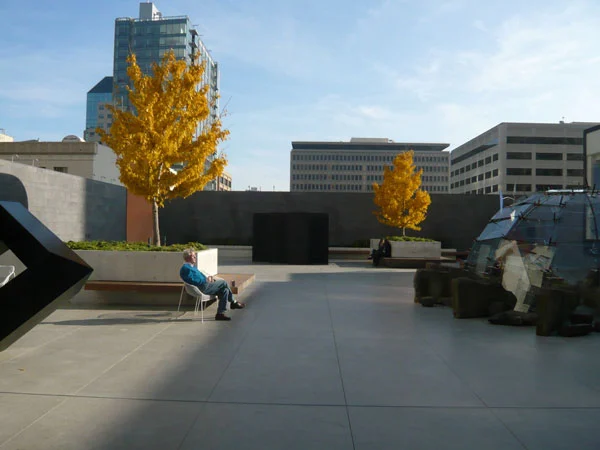
The SFMoMA Rooftop Sculpture Garden extends the exhibits outdoors and features garden walls and other natural elements. The garden also includes unique textural elements, like a lichen-covered wall. Why did you use lichen? On your website, you write: "By planting a lichen wall, we take a bullish position on improving air quality." Can you explain that story?
The sculpture garden was a competition we did with Jensen Architects. They invited us to join their team. When we were in the early stages of the competition, we realized that it's not a really big area, only about 16,000 square feet. Their program for art was pretty all consuming. What they really needed was a big outdoor gallery that would give them a lot of flexibility for putting sculptures and different types of art in there. They wanted as much flexibility as they possibly could get because they didn't want to limit what artists in the future could do. Their need was really for a big outdoor gallery, or a big box, that allowed them maximum flexibility.
But we really wanted it to be a garden. To us, a garden meant a few things. It meant that there was a increased connection between the people that would be visiting or using the space, the art, and the nature, the forces of nature. To us, that meant it should be about the passsage of time. A garden brings a sense of change and temporality. That was important to us. It should be about beauty and explore how to control or not control nature. Those are all the cultural aspects that make gardens so compelling and essential for our civilization.
The idea of lichen came about because lichen is very slow growing. We became interested in it because it's kind of the antithesis of the art world, where everything is very fast, immediate, and available to you right away, for the most part. We thought where everything is so fast, where you're so quick to consume it, we would do something that was really slow. It was essentially a slow garden. It would be something we would start but you would really have to wait for literally hundreds of years before it fully grew in. It was all about the potential of the lichen.
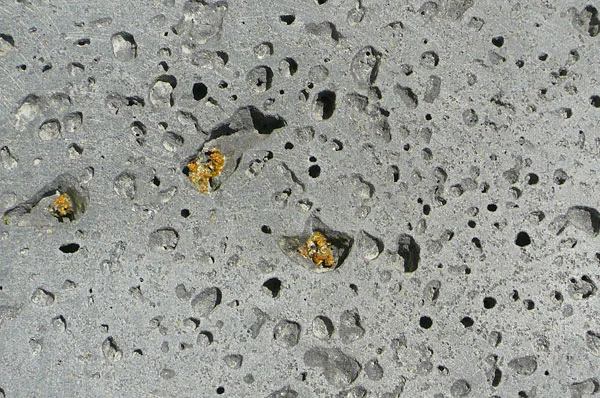
People were pretty excited about the idea of the lichen during the competition phase. We had done some Internet research and found someone who claimed they had propagated lichen, so it all seemed pretty straightforward. After we won the competition we came to realize that our Internet source was bogus, and in fact no one had actually propagated lichen before, so we had to admit that we didn’t know if it was possible or not. Fortunately, SFMOMA is a fantastic client, and they were still interested in the idea, so we commissioned a lichenologist named Tim Milliken and a researcher, Elise Brewster, to work with us to find a way to cultivate lichen. We collected samples and made hundreds of tests with different formulas applied to all different base materials and put under different sun and moisture conditions. After a year we finally got some tiny specs of life in some of the samples, and that was enough for SFMOMA to give us the green light.
On day one of the garden, we inoculated the walls with this organism. It's really one of the organisms that first colonizes places where nothing else is growing. As the lichen grows, it begins to gather a little bit of dirt, that then grows a little bit of moss, that then eventually gathers more dirt, that then, maybe a plant will colonize in there, so it's an early colonizer. We liked that idea of the slowness, the fact that you can't control it, you just have to kind of watch it. It's an experiment and conceptually interesting at the same time.
What's interesting is that lichen does not exist in cities for a couple of reasons. Things are power washed and always cleaned so the lichen is erased before it has a chance to really take hold, perhaps with the exception of places that are really neglected, and then you might see it take hold. Lichen also doesn't grow where there's poor air quality. In some cities, they map what they call lichen islands. They'll take lichen panels or stones that have lichen on them and put them on roofs of buildings and see over time if the lichen actually survives. So for our project, we are optimistic that the air quality will remain good enough that it's suitable for this lichen to grow long term. You have to be optimistic to be in this profession anyway, but the idea of planting something that may not be visible for a decade, and not really highly visible for 100 years, is a new level of optimism in garden design.
Your firm is also known for creating innovative urban spaces, like the Brainwash Plaza, a kind of parklet, and new parkmobiles that are part of the Yerba Buena street-life plan. Do you have any anecdotal evidence or even data on how these new types of mini parks are performing?
I don't have any data, but there's a lot of anecdotal evidence. San Francisco has a parklet program now. There are now probably 10 or 12 of these small parklets in the city. Most people really like them. The communities and the business owners that are sponsoring them in front of their businesses or properties like them. Of course, you know, not everybody likes them. Especially in the blog world, there's always to be plenty of people who hate things. Some say there's a sort of a risk by going too far with these short-term temporary landscapes, especially when they cost a lot. The argument is why not just spend that money and do it permanently or aggregate the money that you're going to spend on 10 little things and do one bigger thing? That's a risk, for sure, but I think what we've come to appreciate is that you need to do it at all scales and all levels.
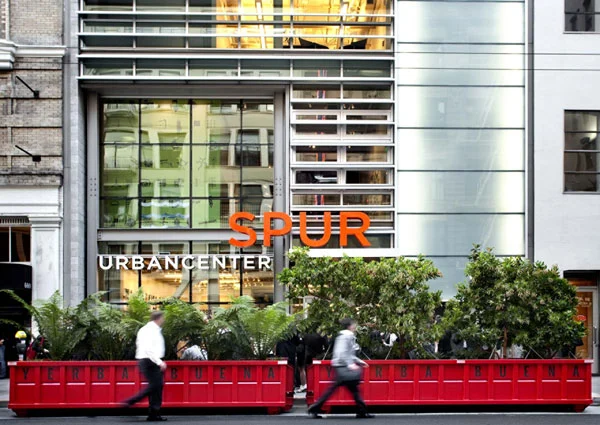
The smallest things, incrementally, add up, accrue, and begin to make a big change. We're definitely not advocating to replace the permanent, larger improvements with the temporary and small. We're just saying, let's do it all. The benefit of doing small and temporary things is that they can get approved really quickly. These are some of the things we've done in the Yerba Buena district, which is where the parkmobiles are. In fact, at the launch of the street-life plan at the SPUR Urban Center, which is in the district, we had an opening exhibition. As part of the exhibition, we installed a bench and attached it to the front of their building, facing the sidewalk. There's really very little seating in that block. It's about a 15-foot long bench that spans across their glass storefront building. We did it in a way where we could unbolt it and take it away. They didn't have to consider that much in terms of allowing us to do it because it was a very small commitment on their part. As soon as we put that bench in for the exhibition, people immediately started gathering on it, and now, in front of the SPUR Urban Center, there's people hanging out. Almost any time when you go by there during the day, there's people sitting on this bench. It's fantastic and they love it so they've decided to keep it as a permanent or, at least, semi-permanent thing. It just goes to show that the littlest things all make a difference. They all really add up.
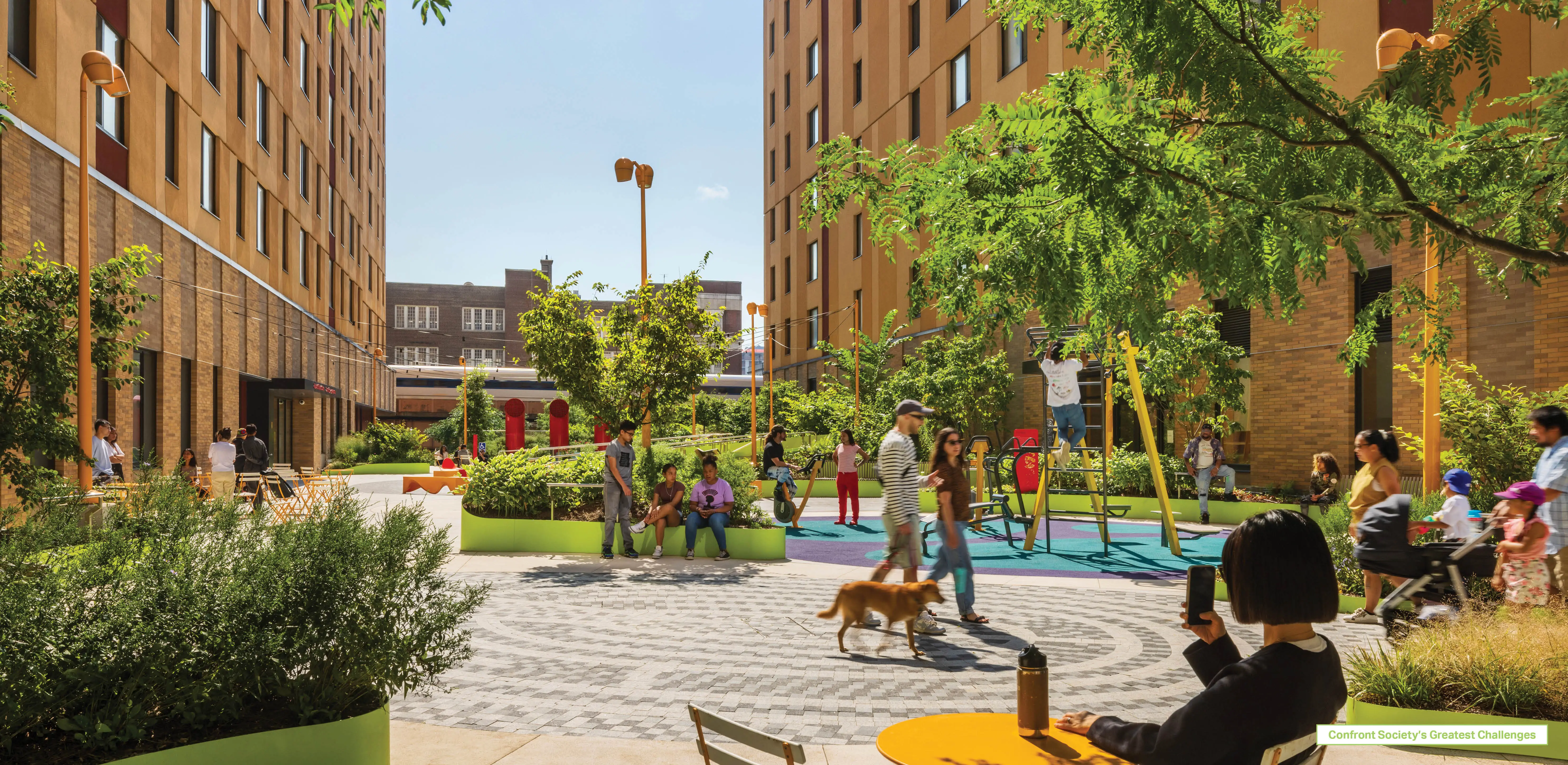
The Parkmobiles are trying to do that in a similar way. They're really low cost. They're basically custom dumpsters that cost, believe it or not, about 3,000 bucks built to your specs, so they're really economical. You still have to fill it up with dirt and plants. There are six of them. They move around the district every month or two. They show up in a new location. They're meant to be an amenity and an improvement in terms of creating a place to sit, fostering social interaction, creating some beauty on the street, but they're also trying to be sort of provocative at the same time by being fun, catchy, and getting people to talk about these issues. Instead of parking a car there, there's a bench with plants. Isn't that nice? Maybe we should be thinking about how much space parking is taking up in our communities and discussing whether that is the highest priority or the right allocation for that public space. Gee, there's other things that we could be doing with that public space, other than storing private cars there on the public right of way. To answer your question, we really believe the mini parks and parkmobiles are effective. They are causing change for the better.
Kevin Conger, ASLA, is one of the three founding partners of Conger Moss Guillard (CMG) Landscape Architecture, a San Francisco-based studio. Conger, who is president and CEO of CMG, has taught at the Rhode Island School of Design, University of California at Berkeley, and Boston Architectural College.
Interview conducted by Jared Green.