

.webp?language=en-US)
.webp?language=en-US)
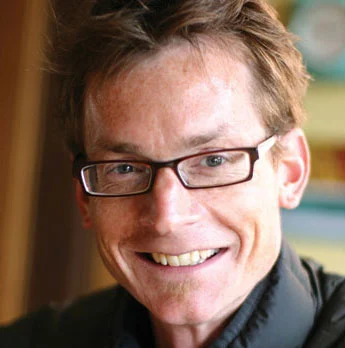
John Bela, ASLA
on User-generated Urbanism
What is the adaptive metropolis, the title of a conference you recently co-curated at UC Berkeley? Does this already exist, or is this an ideal to aspire to?
It’s an ideal to aspire to. The conference, which is organized by UC Berkeley and Rebar, looked at emerging practices in built environment disciplines such as open source design and public participation, new tools and instruments, new design approaches for flexible urbanism, and then some new ways of funding urban change such as crowdsourcing and crowd equity. We explored these emerging phenomena and then evaluated them according to a set of values we share with a lot of people in the built environment professions, such as livability, resilience, and social justice, social equity.
We ended up creating more questions than answers, but it’s the beginning of a dialogue. We’re carrying that dialogue forward with a new adaptive metropolis alliance, basically an association of practitioners who are doing this kind of work. We will continue the conversation in a more focused way with a series of salons and other events.
What is user-generated urbanism? How is this different from tactical urbanism and other buzzwords that have been floating out there? Can you provide some examples?
Tactical urbanism, DIY urbanism. There are a lot of buzzwords floating around out there. We came up with the term user-generated urbanism to capture the change happening in the built environment professions. In the same way that media and communication technologies have radically altered many industries, we feel like that same kind of change is occurring in planning and design, where the role of a designer is shifting from one who delivers the design products or services to one who’s more creating a platform, in some cases, for participation. The traditional authority of the designer has been deposed. Basically, the designer’s role is shifting to be one of a teacher, or cultivating platforms for participation. User-generated urbanism describes the synthesis of top-down and bottom-up practices engaged synergistically to cultivate greater participation. This synthesis help us achieve the goals we outline with the adaptive metropolis of resilience and social justice.
In 2005, you and your design partners designed to turn a parking space into a park for the day, launching Park(ing) Day, which nearly 10 years later is now a global movement. Amazingly, more than 1,000 parking spaces were transformed for Park(ing) Day just this year. Why do you think this idea spread? Has it translated into real changes in how cities address streets and public spaces?
The idea spread through the anachronism of the how-to manual we created for parking, which was a guerrilla art installation which enabled a one-off two hour design intervention. This one-off urban intervention became a global public participatory art and design project. This how-to manual, which is an example of open-source design, enabled the transformation from one-off thing into a meme. We intentionally created the code so anybody on the planet who has metered parking spaces can create one. Anyone can take the seed of the idea we created in San Francisco and recreate it in their own environment for their own purposes, their own values, their own kind of social and political agendas. It’s an interesting example of open source design.
We have attempted to guide or control the growth of the movement to avoid its over-commercialization. We have attempted to make it free, make it an act of generosity, as much as it has been about design firms or other businesses promoting their own business. There’s a fundamental value about making Park(ing) Day an act of human generosity. You’re setting up something for others to enjoy for free. That’s the ethos of the piece.
Advertisement
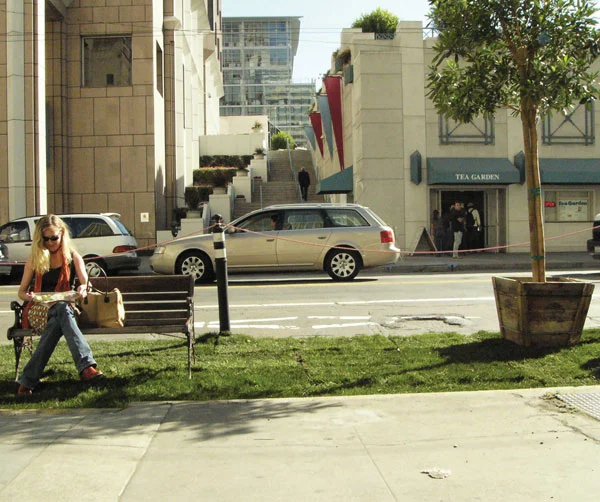
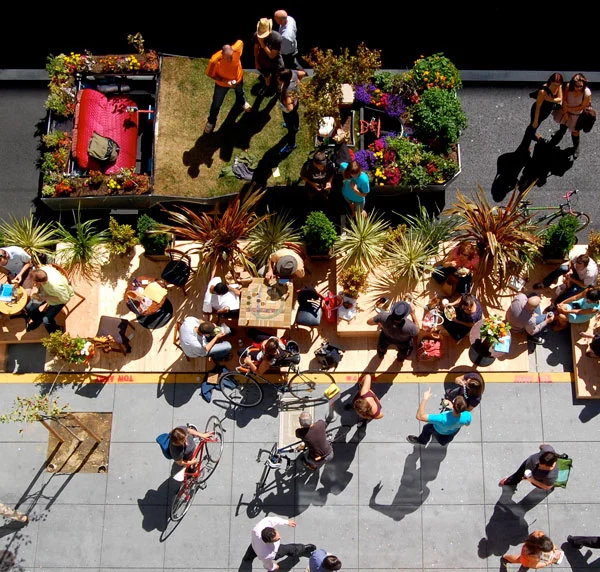
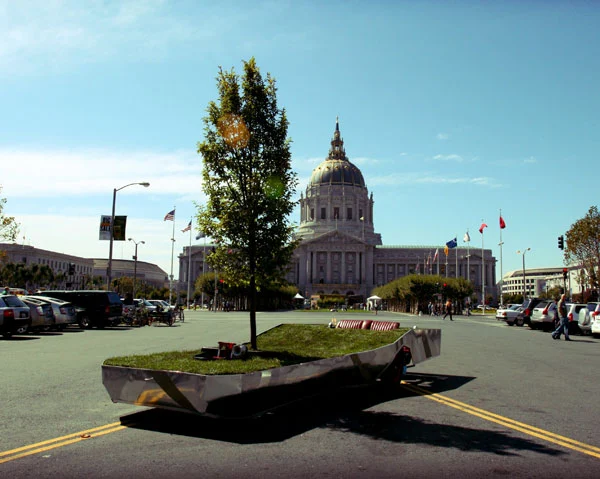
Has it translated into real changes in how cities address streets in public space? I think so. Park(ing) Day and other projects like that are examples of participatory design, what we call user-generated urbanism or tactual urbanism. Over the past decade, it has been fascinating to witness these projects being created and produced by not only artists and design activists, but now major city governments and planning entities in both the public and private sector around the world under the rubric of pilots and trials. The idea of a temporary urban intervention as a way to catalyze change and demonstrate new possibilities has really matured. It's now being used again across many sectors, translating into real changes. In San Francisco, Park(ing) Day have now been absorbed into public policy framework, what’s called the Pavement to Parks program, run by the San Francisco Planning Department, and the creation of the Parklet Program.
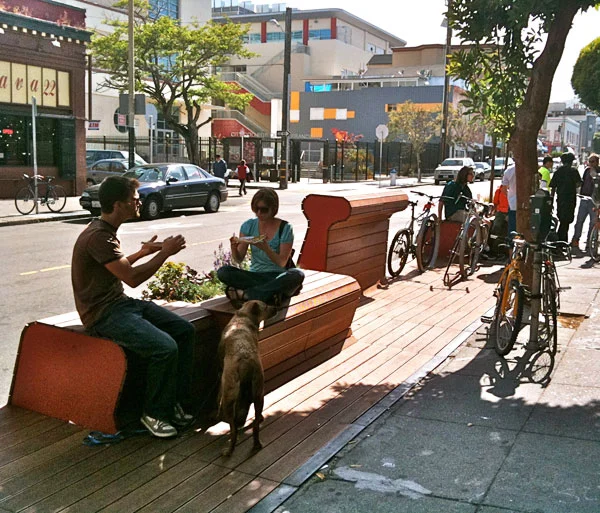
You were involved in some of the first parklets in San Francisco with your modular Walket system. You've said these are a cost-effective way of creating public space for cash-strapped cities. However, I’ve talked with some people who are concerned that the temporary nature of these parklets could undermine investment in long-term parks and plazas. Do you think there’s a real trade-off?
Yes, that’s a problem. If you look at a traditional sidewalk widening project in many cities, that’s a multimillion dollar, multi-year project. It results in a well-built, generous investment. It represents a generous investment in the civic realm, and investment in infrastructure of the U.S. We don’t have the same set of values around creating public and civic spaces as other kind of industrialized nations do. We’ve fallen behind in terms of investing in our public realm.
Tactical urbanism projects in the U.S. are an effort to improve the public realm through public participation. I agree that temporary is not always a great replacement for greater investment in public space, in the civic resources of cities. However, the parklet program is different from a more traditional sidewalk widening program. Parklets can created highly-nuanced city-scapes. They really do an interesting job of representing the values, interests, and aesthetic sensibilities of the project sponsors. They lend this kind of richness, an informality to places, in a way that top-down city-led projects don’t.
.webp?language=en-US)
You’re mobile parklet concept, Parkcycle, fascinated me. I love the idea of swarms of parks forming and reforming where needed. Was this just an idea, a concept to illustrate some sort of future? Or could you see Parkcycle actually being used? What was your motivation?
We actually created them. I collaborated with a group in Copenhagen called N55 and we actually built Parkcycle Swarm. We shipped it to Baku, Azerbaijan, in the context of a public art installation. We literally pedaled around these four mobile public parks and created a pedal-powered open source distribution system. The idea is you can deliver open space anywhere, when and where it's needed. Multiple users could could come together to create their own mini parks working together, aggregating together to form a larger open space. It’s conceptual, but it’s actually taken form with this Parkcycle Swarm.
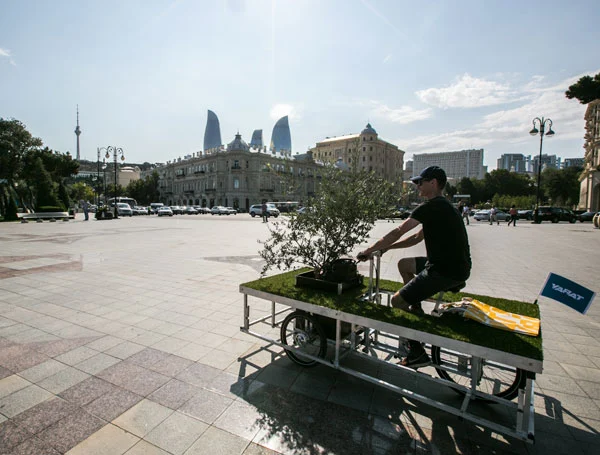
It’s fun, playful idea. It's also about demonstrating new possibilities for landscape in terms of mobility, flexibility, and adaptation. I don’t know exactly where it’s going to lead. It’s certainly not a replacement for other investments in public space, but it adds a new dimension which is flexible, playful, and fun.
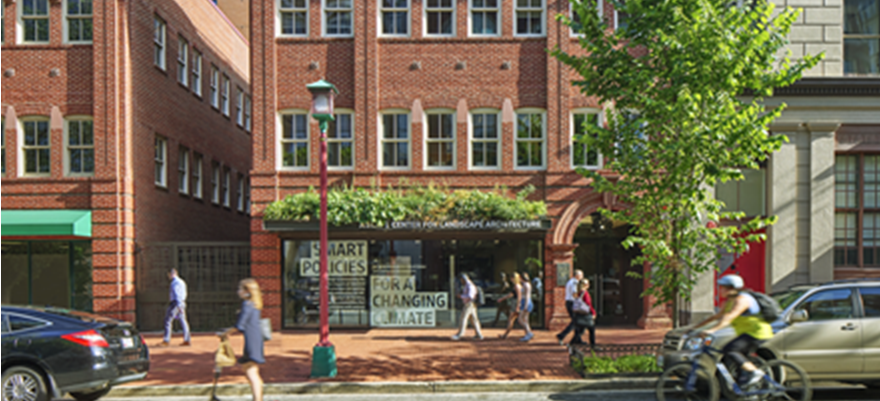
You’re are doing some interesting work on the East Coast with streetscape and public realm design guidelines for a 20 year revitalization effort in D.C.’s capitol riverfront area. How does this project reflect your ideas on the adaptive metropolis and user-generated urbanism?
We were brought onto a team led by AECOM to do the streetscape and public realm guidelines. Our role was to develop an early activation plan. In the case of many larger-scale developments, there’s a 10, 20, or 30 year time frame. There’s an increasing desire to take advantage of temporarily vacant spaces to insert new programs, to test spatial ideas, and to fulfill some unmet needs in the community prior to the full build-out of the project. The old approach was a project is complete when the last brick of the final streetscape or building is complete. The new approach is more iterative, where you test ideas and use temporary programs to inform your longer term strategic thinking. Increasingly, this is an approach that’s being used in both the public and private sector under the rubric of early activation, or phase-zero projects, or what we sometimes call interim use and cultural activation. It's a way of changing the way that people perceive a place prior to brick and mortar construction.
Lastly, please tell me about some other projects you aren’t working on but think are intriguing or inspiring. What projects excite you these days?
At the ASLA Annual Meeting, I went to a talk by Kate Orff, ASLA, at SCAPE Studio. I was surprised to hear how she is adopting some of the approaches we have at Rebar in terms of creating open source platforms for participation. Where our work diverted -- and what I found extraordinarily interesting -- was with her approach to the idea of distributed infrastructure and ecological infrastructure. She is exploring how we are going to solve the pressing environmental crises facing the globe today. Is it going to be through government-led top-down initiatives, or is there a role for user-generated or community-generated projects? Kate Orff’s work represented soft infrastructure versus hard infrastructure. She's exploring how smaller groups and community members in partnership with government can solve really pressing problems, which is a different way of thinking in comparison with 20 or 30 years ago.
I’m really interested in work I’ve seen in Europe recently, especially the Urban Play Project in Koge, which is southeast of Copenhagen. There, a real estate developer has formed partnership with the small town of Koge. They’re testing the idea of culture as a driver of development.
Some of the most radical work in urban planning today is where people are literally abandoning the idea of a master plan and looking at other approaches that are more participatory, inclusive, and iterative. These experiments acknowledge that circumstances change over time. You can’t always predict what a site, or a community, or an environment is going to look and feel like, what its needs will be 20 years from now. There’s this urge to build in adaptive capacity. That’s what we mean by the adaptive metropolis.
John Bela, ASLA, is a founding principal at Rebar. He is an urban designer and landscape architect focused on public space design. As Rebar, Bela created Park(ing) Day, The Panhandle Bandshell, The Civic Center Victory Garden, Parkcycle Swarm, and other projects. Bela teaches at the California College of Arts in San Francisco and University of California, Berkeley.
This interview was conducted by Jared Green at the 2013 ASLA Annual Meeting in Boston.