

.webp?language=en-US)

.webp?language=en-US)
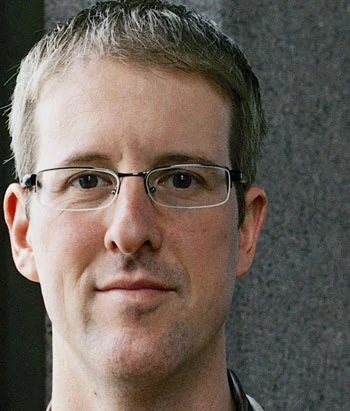
Jeff Speck, Hon. ASLA
Co-author of The Smart Growth Manual, on Sustainable Communities
What inspired you and your coauthors Andres Duany and Mike Lydon to write The Smart Growth Manual? Does this represent an effort to define or even codify smart growth practices?
Andres and I started working on this about 10 years ago and Mike joined us more recently to help us put it together. Unlike Suburban Nation, which was something I was inspired to do after hearing Andres speak, The Smart Growth Manual was Andres' idea. He realized, and I certainly agreed, that it was a term that was getting a lot of play. In 2000, we determined (and Andres, who tends to be right, determined) that it was the term that was going to win and become the dominant term, as it has.
He said, and I agreed, there are so many different ideas, concepts, approaches, designs being associated with this term and no one's doing a good job at truly codifying what constitutes smart growth. Furthermore, there were already thousands of pages about what smart growth is, but no one had tried to put it all together into a single easy-to-use resource. As we say in our introduction, the goal is not to be deep but to be broad, and provide a readable and useful way to fully define the term and to instruct people in how to practice smart growth, or to judge growth that purports to be smart.
There are sections on nature corridors, parks, urban street canopies and streetscapes -- work landscape architects do. Are landscape architects a target audience for your manual? How would you recommend they incorporate your recommendations into their projects?
It became clear to me when I was the Director of Design at the NEA and oversaw the Mayor's Institute on City Design, where we would bring together design professionals with mayors to solve mayor's urban design challenges...it became clear to me very quickly that there's no one profession that alone is determining the physical form of our cities. In fact, we would invite eight experts to each institute, including architects, starchitects (because there's two different types of architects), planners, urban designers, landscape architects, preservationists, developers, transportation engineers, and economists to just about every session.
Landscape architects are a big part of the audience, but really everyone who deals with the making and remaking of cities will hopefully find some use in the book. Landscape architects, like many professionals, have a name that says one thing, but they often do more than just that one thing. There are lots of landscape architects who are in effect planners or urban designers, but are accredited as landscape architects.
There are aspects of the manual that pertain directly to landscape architecture in the strictest sense, but given that so many landscape architects effectively practice planning and urban design, there's a lot more information that'll be useful to people who call themselves landscape architects, but do more than just deal with the green stuff.
UN-Habitat's recent State of the Cities report discusses the rise of mega regions, municipal regions of more than 100 million people. The difference between regions and cities is fading with increased population growth. What does this mean for smart growth?
It's a real challenge in America because we do not govern ourselves at the scale at which we live. This is why at the NEA I worked with the E.P.A. to create the Governor's Institute on Community Design, which deals directly with state leadership so that as a nation we can make the right decisions regarding regional policy-making and practices. Most Americans inhabit multiple jurisdictions. When I lived in Florida, I would wake up in Miami Beach, go to work in Miami, go to the gym in Coral Gables and then go back to Miami Beach and that's a typical experience among Americans, who would all benefit from regional planning but often don't because there's no jurisdiction that truly embodies the region.
Advertisement
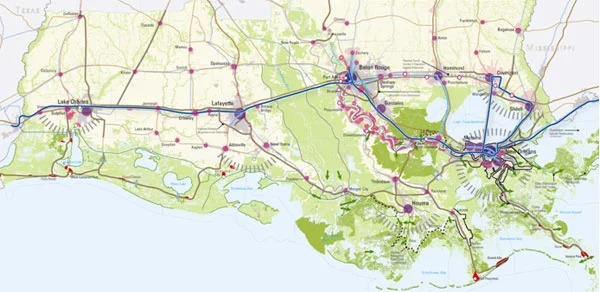
Very few governmental entities align with the metropolis and so regional planning has historically been the type of planning which has been practiced with the least skill or effectiveness. It's also the most important scale of planning. So the book is like the Charter of New Urbanism in that it ranges from the scale of the region to the scale of the building in that order, and the first full section of the book includes regional principles and practices, and the entire second chapter lays out the steps for creating a regional plan for a metropolis.
The problem with so many new urbanism projects, many of which I've worked on and I'm very proud of, is that they exist within regions that are totally unplanned, and therefore don't have impacts on transportation patterns and quality of life that they could have if a more regional approach was taken. I mean to say they don't help as much as they could.
The Smart Growth Manual encourages the development of different types of plans at a variety of scales. At the regional level players are encouraged to map green areas, development priorities, districts, and corridors and integrate these with transportation, energy and water plans. How can planners implement these complex intersecting plans yet still leave room for adaptation? How can you plan for regional economic, environmental, and social diversity?
In terms of allowing for adaptation and addressing the fear of planning too much: certainly, at the regional scale, we have no examples in America of planning too much. I think anyone who studies the subject with any seriousness would agree that one need have no fear of losing flexibility in our regional structures given regional planning is generally not practiced effectively in the U.S. Secondly, what we've learned, and this is often the cry one hears from architects and landscape architects when dealing with issues of planning and coding, is this fear of loss of choice and loss of variety is exactly what happens in the absence of regulation. People think that in the absence of regulation every building is going to be a Frank Gehry masterpiece and every landscape a Laurie Olin garden when, in fact, what happens in the absence of regulation is the dreck of the auto zone.
We have a thoroughly established and extremely monolithic system that creates the same big box sprawlscape across the entire country whenever there's an absence of regulation. Therefore, more planning at the regional scale could only do good.
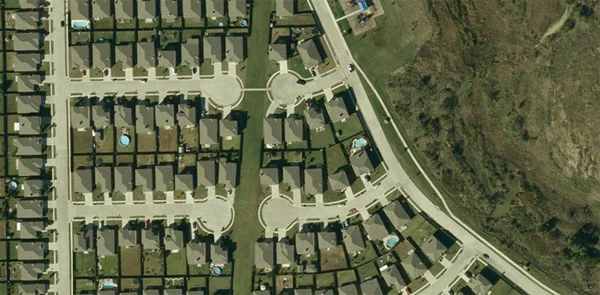
In terms of diversity, again, it is precisely the absence of planning that causes diversity to disappear. What we see in conventional practice is a development community completely split into developers who only do multifamily housing and developers who only do single family housing -- some developers seem to do one house over and over again. There are developers who only strip centers, developers who only do big boxes. There are vast areas of single use featuring no diversity at all and an enforced economic segregation between housing plots of different incomes.
One thing that proper neighborhood planning -- as outlined in the new manual and also promoted by the new urbanists -- does is insist on a full range of housing types and tenures within every neighborhood integrated with places to work, shop, learn and play. That is the sort of diversity that, due to the hegemony of the sprawl model, is utterly lacking in conventional development. That is, unless smart growth has had an influence.
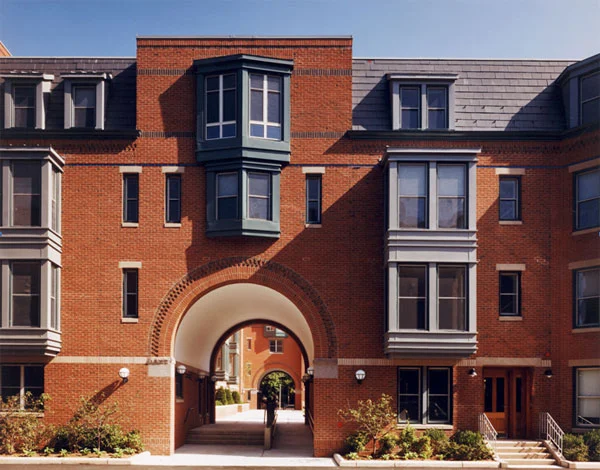
A new EPA report concludes that smart growth is taking hold in many U.S. cities. The report says "there has been a dramatic increase in the share of new construction built in central cities and older suburbs. In roughly half of the metropolitan areas examined, urban core communities dramatically increased their share of new residential building permits." In addition to new urban housing, what indicators do you look for as signs that smart growth is expanding?
I'd say it's less of an indicator than it is a cause, but the price the gas and the now never-ending escalation in fossil fuel prices will continue to be a major determinant in where people choose to live, simply for economic reasons. The old formula of drive-till-you-qualify, where people would move further and further away from the center city in order to get one more bathroom or a bigger garage, has proven to be a false promise. Now, many Americans are paying more for transportation than they do for housing. All that has been accomplished by these people in California's Central Valley, who moved further and further out in order to get a bigger house, is that they're now finding housing and transportation cumulatively to be too expensive. It's these vast tracks of ex- urban houses that have been the hardest hit by repossessions in the current popped bubble.
We're also approaching an era of peak oil. We don't have to run out of oil, but just have to start demanding it at a greater volume than it's available. As is discussed in many books like The Long Emergency, our economic story is going to completely change. Those people who are dependent on cars to live their lives will find themselves much more burdened by this new economy than those who live in places where walking and transit are a viable alternative. Secondarily, what you see happening is people making a lifestyle choice, or I would say a quality of life choice, to enjoy all the benefits that the city offers.
You also have a demographic shift where fewer and fewer households include parents with children. There's this geographic shift among childless millennials, Gen Y and Gen X, but pre-family households, and then empty nesters, who have much more desire for the city, because cities almost universally have inferior school systems. Cities, of course, need to focus on schools first to broaden the demographic appeal. But what we're seeing is the realization -- and, perhaps, this is even a cultural shift -- that city life has a lot of value. The kids in my generation grew up watching "The Brady Bunch" and "Happy Days" while kids in the current generation grew up watching "Seinfeld" and "Friends." The model for what's cool has shifted from the suburbs back to the city.
I do want to bring up the issues raised by Green Metropolis, a book I really enjoyed. What I find most interesting is that smart growth is the one sustainable option that you can choose that is not actually a sacrifice -- it makes your life better -- unlike all of the gizmo green gadgets that are being thrown our way. You can be a bit more sustainable if you have high fly ash drywall, bamboo flooring, a solar collector or hot water heater, or super-insulate your house. (By the way, all of which I have done.) But as David Owen says in his book, sustainability is not about stuff, it's about systems. Houses and buildings are really not systems; neighborhoods and cities are systems.
As far as I'm concerned, the changes we are making to individual buildings are like moving deck chairs on the Titanic. We can change them all we want but it's only when we fundamentally begin to address the organizational structure of our communities that we can really have an impact. Just to elaborate slightly, you can change all the light bulbs in your house from incandescent to compact fluorescent, but if you can live with one less car because you live in a walkable urban environment -- or even a well- organized, walkable suburban environment -- that has 50 times the impact. It makes changing your light bulbs statistically insignificant. The real flaw in this sustainability discussion, as David Owen points out, is that it's focused on, "What can I buy and add to what I've already got, to become more sustainable?" When the real question is, "Where can I locate to be more sustainable?"
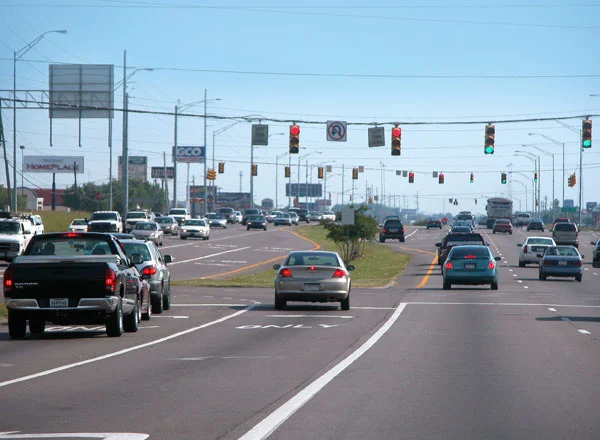
Smart growth asks people to make real changes that do impact the quality of their life, but in an almost universally positive way. It’s a choice that a lot of Americans are making because they realize that it's a better way to live. If the schools were decent, it would be a choice that many, many more people would make.
In a recent study, the University of Maryland concludes that Maryland's 10 year program of fighting sprawl has largely failed. The Washington Post says this is because the smart growth "laws had no teeth to force local governments to comply and builders had no incentive to redevelop older neighborhoods." What do you see is the greatest obstacle to putting smart growth into practice in more places?
Maryland and Governor Glendening were at the cutting edge of smart growth when no one else was even talking about it. And so their programs were necessarily first steps forward. Also, their programs were necessarily limited in their impact because of the environment that they were working in. However, they were very important in showing people what sort of directions were necessary. I'm confident that when we look back 30 years from now, we'll see how important that work was in starting a trend towards more effective practices nationaly. To that I would add that I am aware of a lot of programs in Maryland and Virginia that have had significant impacts. For example, there is Montgomery County's affordable housing policy and the Piedmont Environmental Council's farmland preservation efforts. A lot of policies in Maryland and in the D.C. region have preserved a lot of land and provided housing diversity that stemmed from the work done in Maryland government in the '90s.
But the big obstacle is really cheap gas. More to the point, and this is a much longer discussion, we as a nation do not allow market economics to function properly in the pricing of automotive transportation. If drivers were to truly pay the direct costs associated with the use of their roadways, gas would be closer to $10 a gallon. Driving is subsidized from a variety of sources, but principally through general tax revenue that pays for roads and the other costs associated with driving that are born not by drivers but society as a whole. If the price of driving caused drivers to pay the true cost of driving, we would see consumers and businesses start to make the right transportation choices.
Your book offers some detailed recommendations at the neighborhood, site, and building levels. For instance, in one section, you suggest street tree planting approaches. You write, "In less urban areas, trees should be located between the roadway and the sidewalk in a continuous planter from 5 to 15 feet wide." What kind of research went into these recommendations? Also, what is the right balance between plugging into defined design templates and taking a flexible, adaptable design approach?
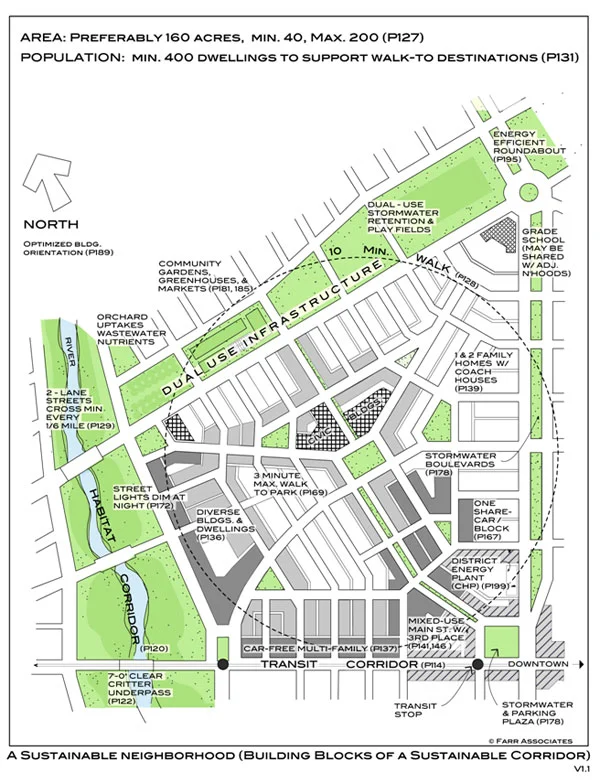
The research that went into this book was decades of studying existing places that work. What distinguishes smart growth as it is currently understood from a broad range of alternative solutions that may be sustainable -- and, in fact, some of which may be more sustainable -- is that it's based on examples that work and have been demonstrated to work a thousand times over. This is a discussion that pertains to new urbanism as well as the smart growth movement, but more specifically to the focus on the traditionally organized neighborhood as the central building block to healthy growth. As we say in the book, there may be other new untested ideas that are more sustainable than the traditional neighborhood, but we can't have confidence in their success in the same way that we can have confidence in this fundamental design approach that for millennia has proved itself to be sustainable. It's only in the past 50 years, with the demise of the neighborhood model and its replacement with the sprawl model, that we've become an unsustainable species. The research that supports the book is the work of hundreds of generations of successful sustainable neighborhoods.
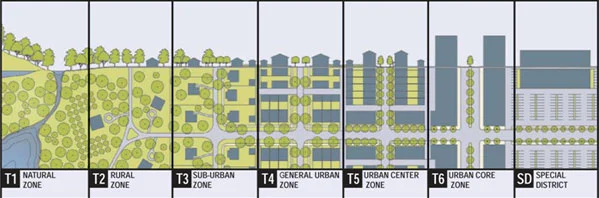
In terms of an adaptable, flexible approach, the tool that we use to allow appropriate flexibility, that your readers are probably familiar with, is the urban to rural transect. You'll notice that question your question began with the phrase, "In less urban areas." Every aspect of design in The Smart Growth Manual is modulated by a location's position on the continuum from the most rural areas to the most urban areas. There is no one appropriate design solution for any design challenge, but rather one needs to properly understand the location of the site in that continuum before heading towards a design solution. Many of the less successful projects of the last 50 years have been the outcome of a confusion between the urban and the rural. Most of the least successful parts of contemporary American cities resulted from the imposition of rural -- but in more cases suburban -- design templates on an urban environment. I think that good designers, who understand the distinction between the urban and suburban, and who are capable of building great buildings and landscapes within properly organized neighborhoods, will find the prescriptions of the Manual liberating, not constricting. The goal is to create more places where good design can actually matter.
Jeff Speck, AICP, CNU, LEED-AP, Hon. ASLA, is co-author of The Smart Growth Manual. He is also founder of the design consultancy Speck & Associates. Previously, he was the director of town planning at Duany Plater-Zyberk & Company (DPZ) and director of design at the National Endownment for the Arts. Speck is also co-author of Suburban Nation, The Rise of Sprawl and the Decline of the American Dream.
Interview conducted by Jared Green.