

.webp?language=en-US)

.webp?language=en-US)
James F. Palmer, FASLA
on Scenic Beauty
It has been 50 years since the White House Conference on Natural Beauty took a hard look at the state of scenic America. What has happened to this country's scenic assets since then?
Many of the most egregious activities are better hidden than they were 50 years ago. I am thinking of junk yards and dumps. Plus, many places now prohibit or restrict large signs and billboards. The public is much more likely to assert their right to pleasing visual surroundings, something that was less likely to happen 50 years ago. However, I am always surprised by how little organized support there is for protecting scenic quality.
The national park and environment movements both began to protect scenery, particularly the most spectacular scenery, but the environmental movement has moved their attention elsewhere in the past few decades.
The national park movement began with the establishment of Yellowstone National Park in 1872. The Organic Act, which established the National Park Service (NPS), was passed in 1916. The purpose was to “conserve the scenery and the natural and historic objects and the wild life therein and to provide for the enjoyment of the same in such manner and by such means as will leave them unimpaired for the enjoyment of future generations.” The NPS created coffee table books to popularize remote parks. This technique was latter used by the Sierra Club and others to protect the scenic environment; think building support for the Wilderness Act and establishing Redwoods National Park in the 1960s.
The American environmental movement began with the founding of the Sierra Club by John Muir in 1892. An iconic achievement of the environmental movement was the passage of the National Environmental Policy Act of 1969, which directs the federal government to “assure for all Americans safe, healthful, productive, and aesthetically and culturally pleasing surroundings.”
Loss of scenery was used to advance both movements. However, the environmental movement today seems to largely ignore the importance of scenery to the vast majority of the public, unless they can use it for fundraising. While the environmental movement is still healthy, it's less focused on protecting visual quality and more focused about climate change and biodiversity. I think we would have greater success addressing these issues if environmentalists recognized and responded to the public’s concerns about the scenic effects of the “solutions” being proposed, rather than dismissing them as unimportant.
You measure scenic quality. How is this done? What makes one place more scenic than another?
Scenery appreciation is a human perception. It can be measured by sampling people and asking them to evaluate scenes or simulations. Sample surveys of the public are a way to directly measure their appreciation. This approach is sufficiently effective that Western democracies commonly used polling to inform all sorts of government policies.
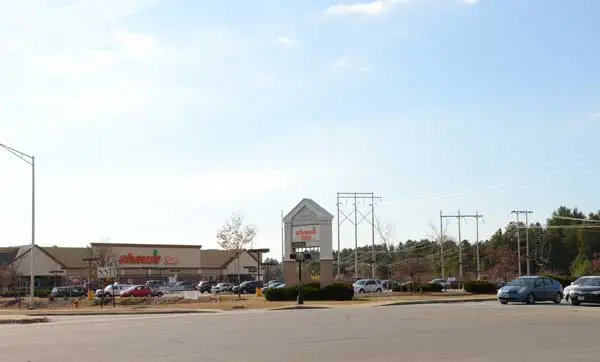
The landscape also has intrinsic qualities, such as topographic relief and land cover. These qualities can be used to predict visual quality. For example, this first image below is a landscape most Americans would agree is not scenic: an open field of asphalt visually enclosed by a shopping center, transmission lines, and trees.
Advertisement
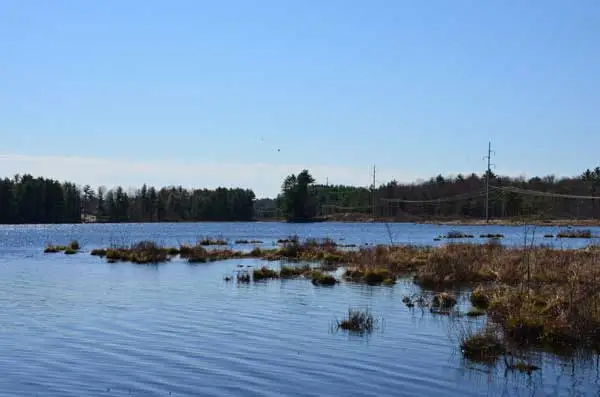
This second image is obviously scenic, but the composition is actually similar to the first image. Here, there is an expanse of open water in the foreground, backed by natural woods and transmission structures.
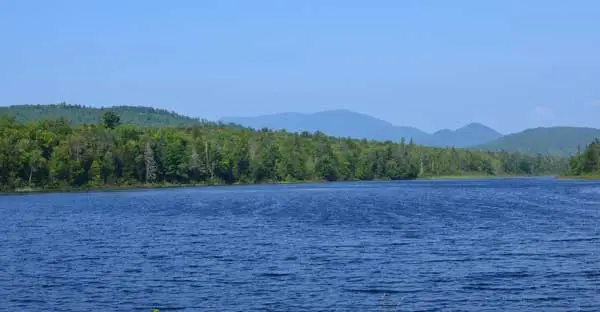
This next image would be considered even more scenic by many people: open water backed by forested mountains.
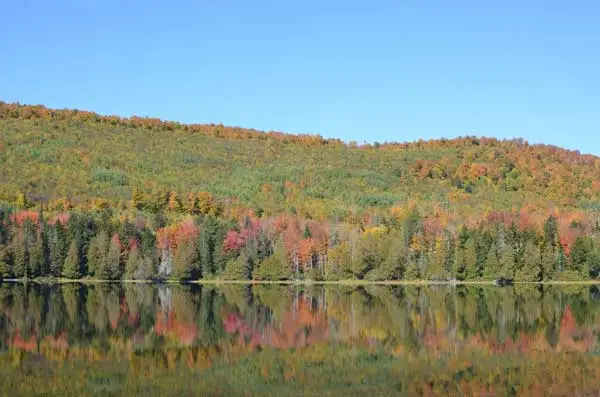
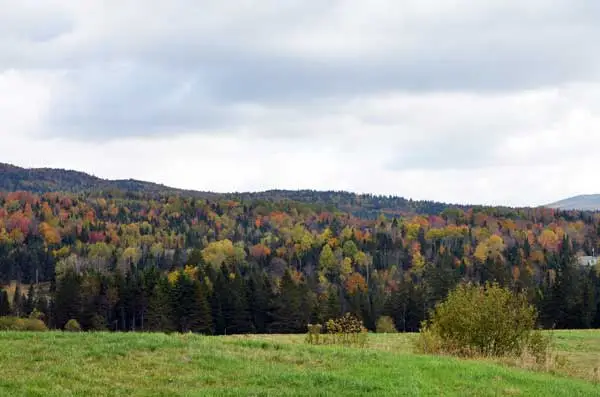
In another example: these images have a similar composition, except the first image below has an pasture backed by a forested hill in fall color, while the second has a lake backed by a forested hill in fall color. They are both quite scenic, but water gives the view an extra boost.
You evaluate the negative impacts on scenic quality and how to mitigate those. What impacts on scenic beauty are you most often called in to deal with? What are the best ways to limit their impacts?
Now my work mostly deals with energy projects: wind, solar, and transmission lines. The most common ways to mitigate the visual impact of these projects are to hide them from view or reduce their visible contrast with the surroundings. This mostly involves contrasts in color, but also shape and texture. This is difficult to do with wind, so governments are exploring other ways to mitigate their impact on scenic assets, like fixing a blight somewhere else, or concentrating development in one area in return for protecting another area.
I cringe when I hear opposition groups call for less government, since only pro-active government planning will protect some landscapes as we fight to mitigate the worst impacts on scenery. Government planning is also needed to counteract the effects of climate change, but a great nation should be able to accomplish both goals.
What do you think of the new generation of digital billboards along highways?
They are terrible, but I am particularly worried about safety. They keep changing! Once, a glance gave you the message. Now there is a whole story to be followed. They are an attractive nuisance and should be banned from all roadways.
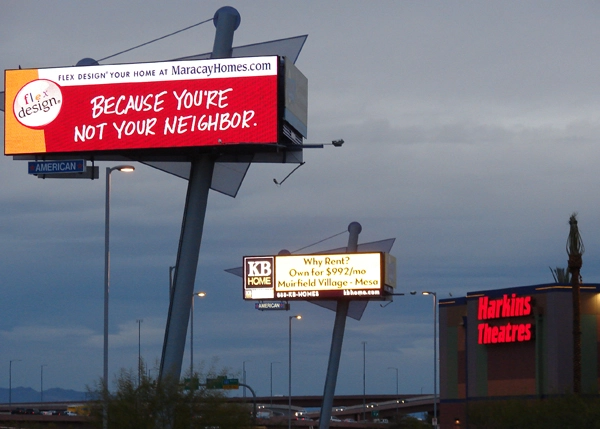
They offer the same potential for visual blight that billboards did originally. While one sign informing residents about community events may be acceptable, the cacophony of "free speech" simply destroys the sense of place valued by residents. There needs to be reasonable limits.
Nearly a decade ago you published a study on how to best reduce the negative impacts of clear-cutting on the natural beauty of forests. What were your main findings?
The White Mountain National Forest was interested in how size, intensity, and pattern of clear cut harvesting affected scenic value. A national forest is given an annual harvest target. The question is how best to meet that target: one very large clear cut, several modest clear cuts, many very small clear cuts, or selectively removing trees and not clear-cutting. It is important to understand that clear-cuts can be desirable because they create habitat that is important to wildlife that we value, like deer.
The study found that the most scenic views were those without any visibly-harvested areas. Scenic value took a big hit when they harvested 3 percent of the visible forest over a 25 year period. The next 3 percent further reduced scenic value, but not as much as that first 3 percent. Each additional increment of harvest intensity further reduces scenic value, until the point where 15 percent of the forest has been harvested—that was the sustainable-yield threshold.
As expected, large clear cuts reduce scenic quality, but the smallest clear cuts were almost as bad. It seems that 10 to 14 acres were the best sized openings for a given intensity of harvesting.
In another study, you examined residents' perceptions of scenic quality in a town in Cape Cod, Massachusetts, finding that "more than half of the variation in scenic perceptions can be explained by spatial landscape metrics." In layman's terms, what does this mean?
Relatively simple landscape metrics of intrinsic attributes typically explain about half of our scenic perception. The presence of water almost always enhances scenic value. And natural-appearing areas, sometimes called “green space,” are generally preferred. People seem to prefer the interplay of land cover types—an open pasture bounded by a forested hill or a residential development integrated with a system of open spaces. This interplay is measured as edge density. Much of the variation in scenic value that is unexplained appears to relate to more social or personal factors.
The Cape Cod studies are interesting because they considered landscape perceptions of local residents over 20 years. One of the key findings was that though there were significant changes in the landscape and the population during this period, their perceptions of what made a scenic or not so scenic landscape remained pretty stable.
You have also said "it's time to renew investigations of the link between visual landscape perceptions and our sense of well-being." Where is this research today and where would you like it to go?
The visible landscape is linked to our perceptions of how well we think things are going. Landscape is the stage upon which we act out our lives. How our landscape looks informs us about what is appropriate to do in a particular place and time. For instance a street littered with trash and graffiti on the buildings might be considered as unsafe. When the trash and graffiti are removed and maybe some street plants are introduced, it is perceived as a place that is safer and being cared for.
Landscape also informs us of what is reasonably possible in the future. This is why the community visioning work of many landscape architecture firms and university programs is so important. Examples of organizations involved in this work are the Orton Family Foundation, the Dunn Foundation, and Scenic America.
My professional practice is primarily focused on scenic impact assessment, particularly of renewable energy projects. Here in New England, many people are upset by the introduction of commercial renewable energy projects into the rural landscape. But global climate change is going to have significant effects on this landscape, and many residents see commercial renewable energy projects as a positive change. All we really know right now is that they are often very visible.
It would be very helpful to decision makers if there was more scientific research about the general contribution of scenery or visual surroundings to the experience of all sorts of activities—commuting to work, casually looking out a window, as well as recreation activities like kayaking, hiking, or camping.
James F. Palmer, PhD, PLA, FASLA, is the owner of Scenic Quality Consultants and senior landscape architect with T. J. Boyle Associates, both in Burlington, Vermont. He is professor emeritus at SUNY College of Environmental Science and Forestry. Explore his research.
Interview conducted by Jared Green at the ASLA 2015 Annual Meeting in Chicago.