

.webp?language=en-US)
.webp?language=en-US)
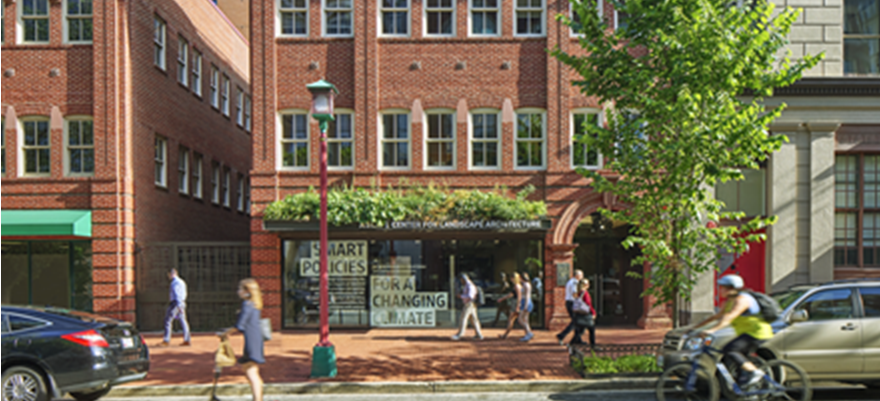
Deb Guenther, FASLA
on Designing with Equity

Equity is increasingly being seen as central to landscape architects' climate action work. How do you define equity in your planning and design work? And what about terms like climate equity and climate justice?
We spend time discussing equity for each project, even if the project doesn't explicitly have equity goals. It's different for each community. We focus on understanding the historical injustices that have happened over time and how those show up in day-to-day lives today. Disproportionate underinvestments in communities have impacts. We try to understand how those show up in power dynamics of not only race and gender but also income and class. We want to be able to understand the power dynamics before we come in the room.
Climate injustices have disproportionately affected communities of color. Often these communities have been redlined, are lower lying, and experience more flooding, or have less trees and experience more intense summer heat. These communities often don't have the infrastructure to prevent flooding.
Your Landscape Architecture Foundation Leadership and Innovation Fellowship focused on how to build trust with communities, specifically how to establish a greater sense of kinship between landscape architects and community leaders. What were your key findings? And why is trust so central to making climate action work effective?
We need to build trust with communities to be able to do effective work and learn with community members. I think the big takeaway for me from the fellowship was that I was just catching up to a lot of the things that Black, Indigenous, and People of Color have known for a long time.
People with the lived experience in the community are the greatest resource for finding the solutions. We can't do work that is meaningful to communities without first investing time. So all of that comes back to: how can we build a design process that is more relational and less transactional? How do we do the pre-design work that leads to greater trust?
Community design centers are ready to do this long-term, place-based work. Partnering with a community over time is a different exercise with different results than coming in and out of a community. Staying with a community builds understanding. I have also heard about flood control districts and park districts that are starting to band together regionally because they know they can't address all the climate adaptation needs individually as agencies. So we need to take a broader or regional view, and at the same time, look at what community leaders know about their specific neighborhoods. It's a back and forth, regional and local.
We can't move climate justice work forward and do our best work without building trust first. Climate work is so urgent that we have to go slow to go fast. We have to take the time to build the trust in order to be able to move quickly enough to respond to climate in effective way.
You're a partner at Mithun, a mission-driven integrated design firm that began in Seattle, Washington, and later expanded to offices in San Francisco and Los Angeles. In Washington State and elsewhere, Mithun is partnering with tribes on a range of planning and design projects. What have you learned working with tribes and their approaches to long-term sustainability and resilience? And what are some examples of how their ethos has been translated into landscape architecture projects with your firm?
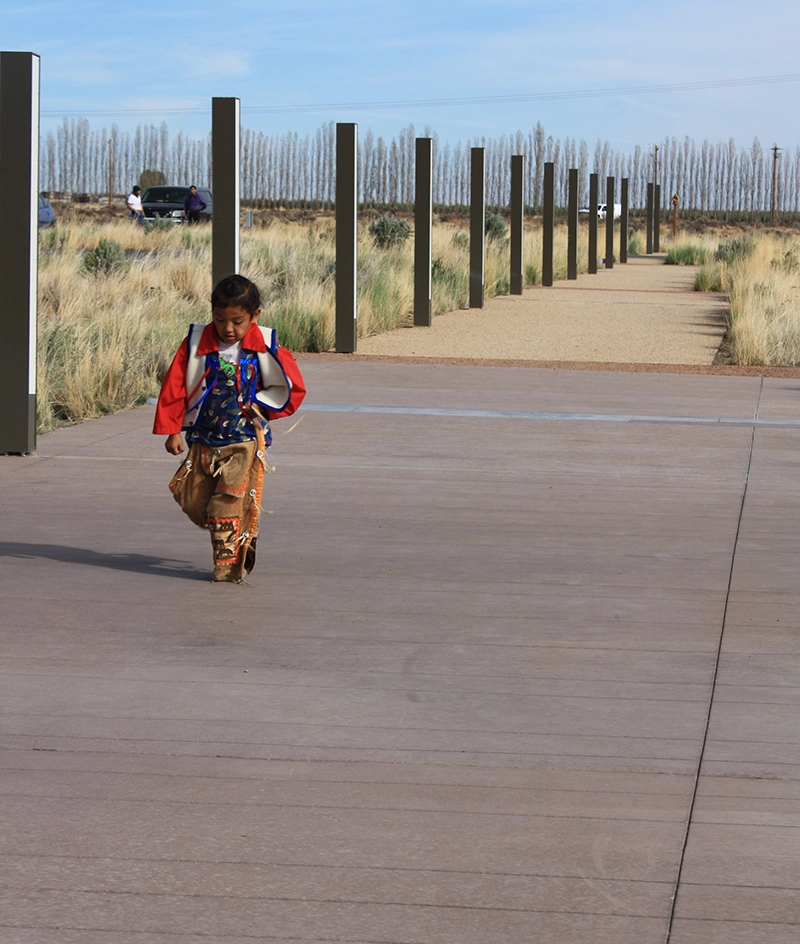
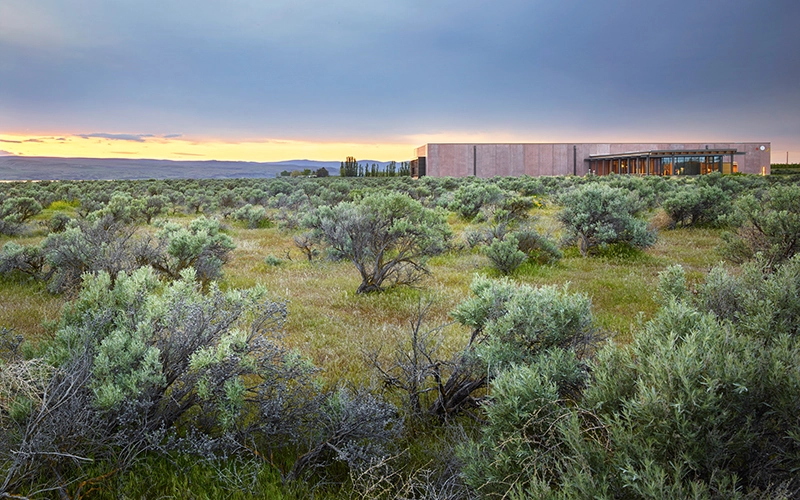
We are so grateful for the relationships we have with First Nations. Twenty years ago we were learning about co-design and co-creation through our engagements with First Nations. We were going to their events. We were having meals with the elders. We were getting to know sites together by sleeping overnight in the sagebrush steppe in eastern Washington while working with the Wanapum on their Heritage Center. We were invited to share in some very special ceremonies. We were getting to know each other and each other's culture in a deeper way.
Advertisement
We also learned about holding the capacity for difficult conversations. As facilitators of these conversations, we've learned a lot over the years about how to allow those uncomfortable conversations to happen, how we can have those together in a room and still walk out together at the end and be better for it. That's a big lesson learned over the years.
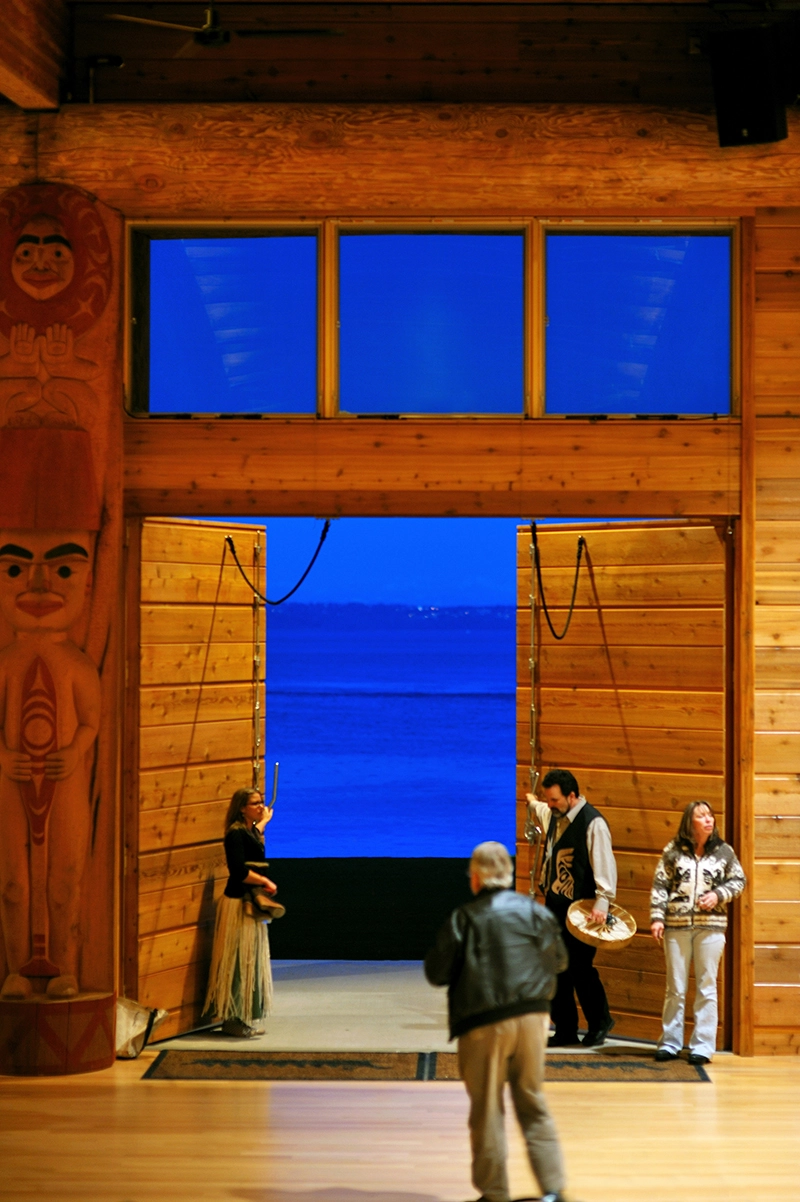
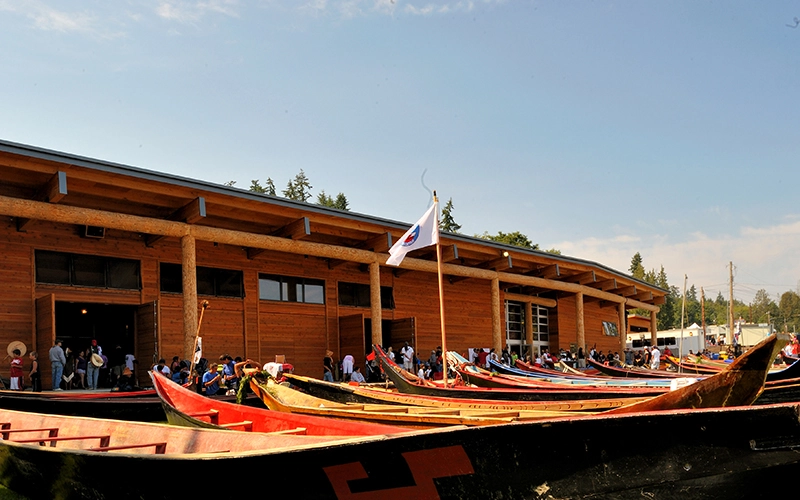
The importance of investing in youth is another area where we've learned so much from First Nations. The canoe journey is a multi-tribal event that happens every other year among many of the tribes in the Pacific Northwest. Youth are reclaiming their connection to traditional lifeways through a canoe journey where they travel to a hosting tribe. They come together for a major gathering at the end. Preparing for these journeys influences many youth. And it had a direct result creating the House of Awakened Culture that we designed with the Suquamish tribe. They built that project in anticipation of hosting a Canoe Journey. Now they can also host future canoe journeys and larger gatherings as a tribe.
The Sea2City Design Challenge in Vancouver, Canada led to an exciting re-imagining of False Creek, a central inlet in the city. Mithun worked with representatives and cultural advisors from Host Nations, including the Musqueam, Squamish, and Tsleil-Waututh, and the community to envision a decolonized approach to coastal climate adaptation planning. What do decolonized landscapes look like? And how did you leverage traditional tribal communications forms, including spoken word and storytelling, to envision this decolonization process?
We went directly to the Host Nation cultural advisors, Tsleil-Waututh Nation knowledge keeper Charlene (Char) Aleck, and Squamish artist Cory Douglas and asked: what does a decolonized landscape look like to you? They wanted to imagine a place where they feel like they belonged. Right now, the way the False Creek area is set up, there aren't many places where they feel they belong.
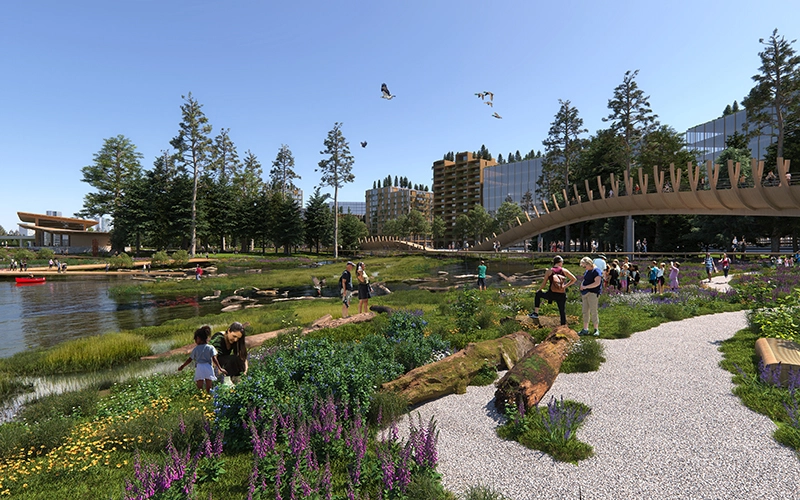
One of the places on seawall promenade that resonated with Cory was this cluster of cedar trees peeking out of the asphalt. So we built on the idea of the cedars, harvesting plants and food for cultural uses, being able to be in a place where land and water is nourishing. Those are the ways of belonging they were speaking to.
A significant moment in this project is when went on a boat ride up and down False Creek with Char and Cory and the team. During that boat ride, we heard from Char about reciprocity and exchange, what is given and what is taken, and how that all influences their cultural outlook on what it means to have a place they belong in. Afterwards, we threw out all of our design work and started again with this idea of going back to the historic natural shoreline. We have to go back to where things were taken. Not only does that make sense from a sea level rise protections, flooding, contamination standpoint, but it also makes sense from a reciprocity standpoint. Decolonized landscapes are about finding the ways to ensure people feel like they belong.
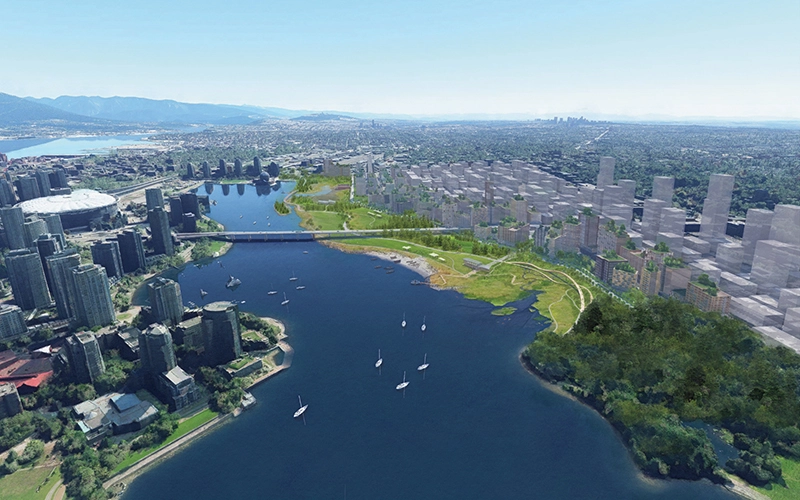
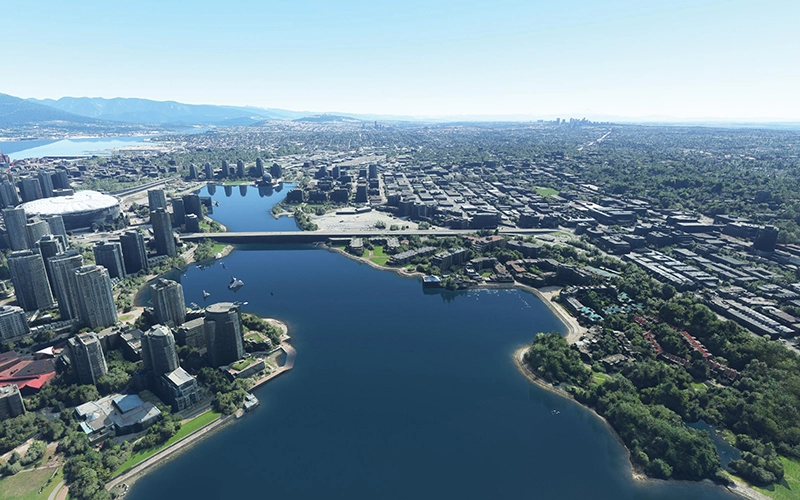
It is interesting to think that our next experiences as landscape architects may be about deconstruction rather than construction. The return to the historic shoreline is predicated on buildings that are aging out. Instead of replacing buildings that have aged out, we can rezone upland areas that can take more development and not displace people or businesses. We can plan for the gradual movement of people and businesses and housing up slope. This is a way of building in protections against sea level rise and allowing for marine life to flourish. It's also a way to clean a contaminated waterway over time.
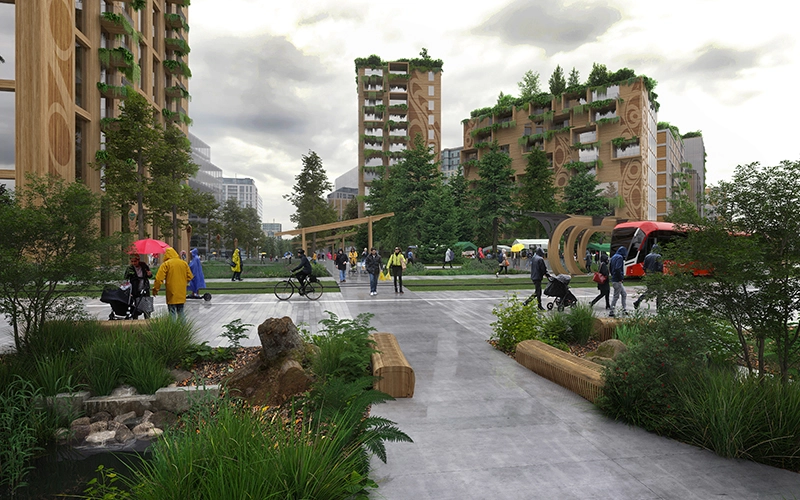
As part of Bay Area Resilient by Design Challenge, Mithun led an interdisciplinary team of ecological, design, planning, economic, and social justice organizations to create ouR-HOME, a comprehensive planning effort in Richmond, California, a low-income community that has experienced a range of environmental injustices and is facing significant sea level rise and flooding impacts. The Resilient by Design effort sought to envision what structural equity looks like, how to protect the community from gentrification and displacement, and create new wealth, while also using nature to increase resilience to future climate impacts. It's a great example of equity-based climate adaptation work. How did those ideas came together and how they are being pursued in projects that have evolved from the planning effort?
This is a very special project and place with a lot of wonderful people. There's such a strong environmental justice history in North Richmond. This community has had to build their sense of self-determination because they were ignored, redlined, and subject to disinvestment. So there are multiple generations of community leaders, like Whitney Dotson, Cynthia Jordan, Dr. Henry Clark, Annie King-Meredith, Princess Robinson who have led and are leading significant change. They are working in so many ways to advance locally-driven solutions. The Bay Area tends to approach things regionally. A lot of Resilient by Design was happening at the regional level. But that wasn't going create change in North Richmond because of its history.
As part of the shoreline collaboration plan, we're now working on what the governance strategy can be with the community. The goal is to evaluate how to connect immediate benefits from the work they're doing on nature-based solutions. We're designing a living levee there that will allow marine life to transition and protect the wastewater district facility that serves the entire West Contra Costa County. We're also co-designed with a community advisory group a five-mile strategy of collaboration between property owners that would protect a much larger swath of the neighborhood and other infrastructure.
Some of those direct benefits are building up community knowledge through a co-design process, workforce development, and land trust that guards against gentrification. And there are projects that will provide more access to the shoreline through trails and destinations, like interpretive centers and overlooks. A lot of the residents that were involved in the co-design process during Resilient by Design have remained involved as champions of various projects. Folks really grabbed on to the pieces they were interested in and shepherded those forward.
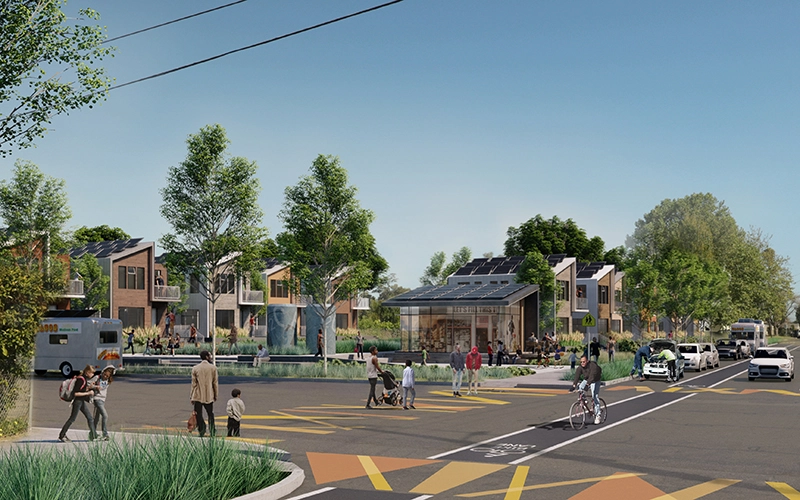
In the co-design process as part of Resilient by Design, we had public agency folks in the room with community residents, business leaders, various nonprofit organizations. They all knew each other before Resilient by Design. But they knew each other in the context of presenting information to each other, not really working shoulder to shoulder. During the process we conducted, they were working shoulder to shoulder to solve issues, having more casual dialogue. This is the main thing we heard at the end of the process -- that resident advisors wanted this kind of work to continue.
What we noticed is that there is cyclical process with funding, right? There wasn't a convener that could keep the group going until West Contra Costa County Wastewater District stepped up to do their work on the levee. They were able to bring a similar group together again. As designers, we need to think about how we keep shoulder-to-shoulder dialogue going with communities, even when there isn't a project driving it. So many relevant projects come out of those kinds of processes.
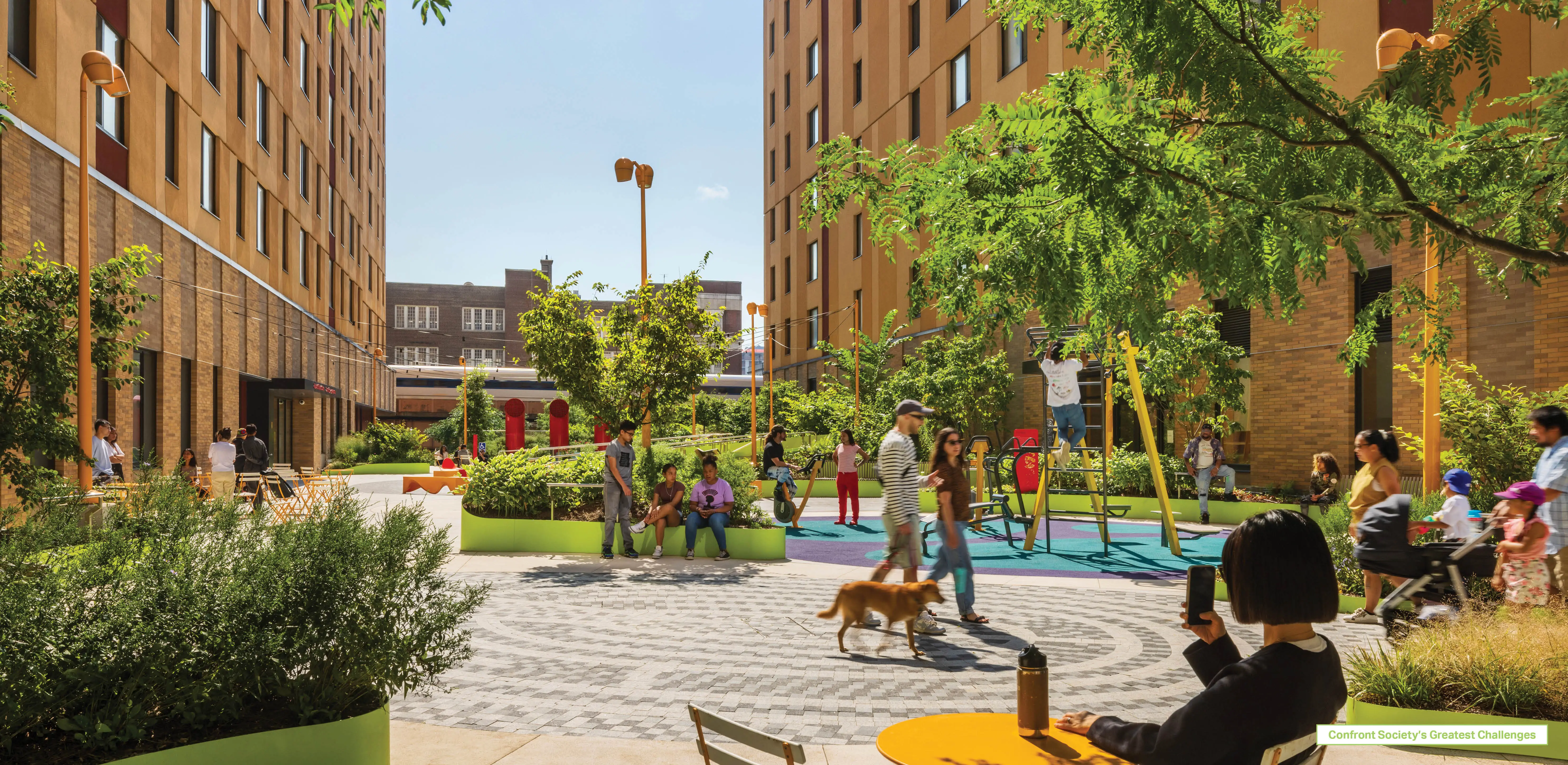
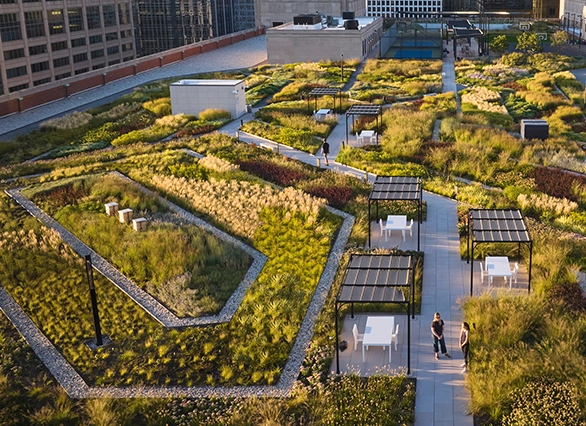
Mithun states that it uses affordable housing developments to create "active social hubs," and it leverages its "integrated design approach" as a vehicle for social equity. Your firm's landscape architects are often involved in these projects, weaving in green spaces, play areas, rooftop gardens, pedestrian bicycle access, and public art. A few projects -- the Liberty Bank Building in Seattle, Washington, and Casa Adelante at 2060 Folsom in San Francisco -- seems to highlight the value of landscape architects in these projects. Can you talk about how landscape architects on your team are shaping these projects?
Common space in affordable housing projects is such highly valued space. You can imagine when the goal is to house people, every square foot is going to be carefully scrutinized. At the beginning of these projects, the landscape architect's role at Mithun is to do that massaging, that working back and forth between the indoor and the outdoor space, to not only program the shared spaces outside but also the spaces inside.
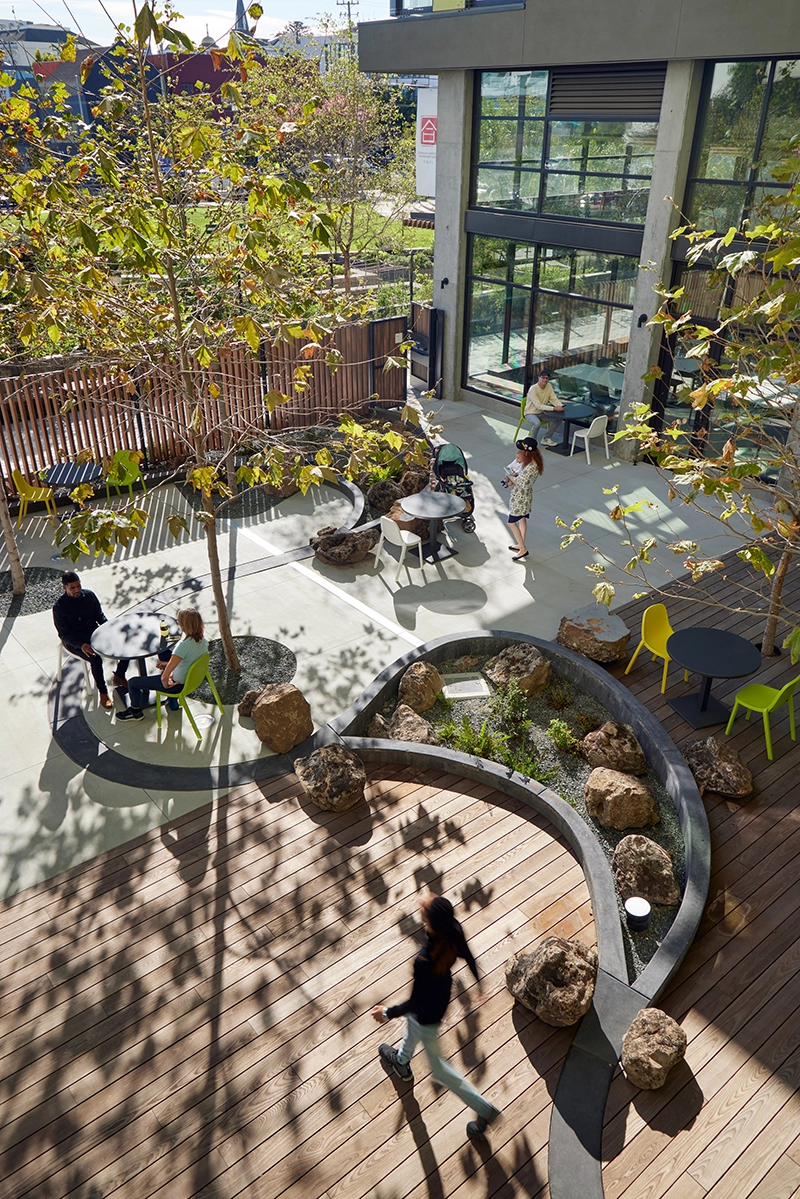
We look at those adjacencies where people can run into each other naturally, where are they going to get their mail, where are they going to for daily life experiences. Running into each other causes people to know their neighbors and builds a stronger sense of community.
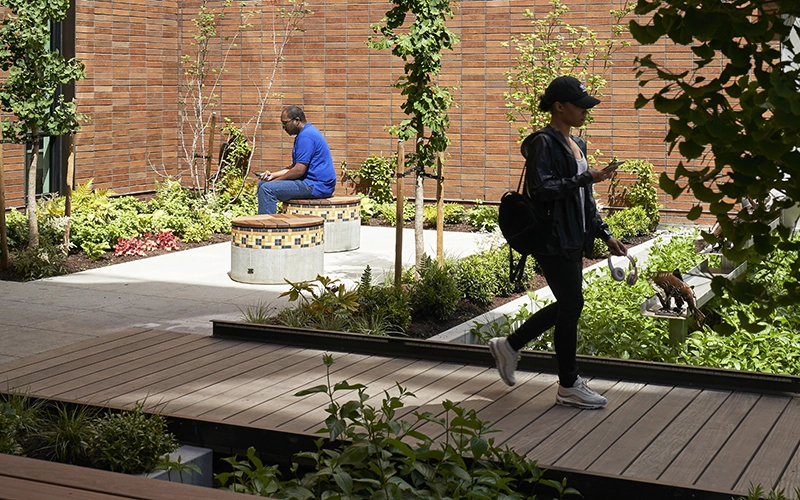
Those are the two areas where we're shaping these projects the most. The first is being present at the beginning to do that shaping of how the common space is tied to the lifeways of the residents. And second, it's figuring out how those adjacencies are built into the framework of the design. All the other stuff is gravy if you get the adjacencies right.
Mithun has invested in being a responsible design firm. It has offset all its emissions since 2004, offers bike parking at its offices, and finances employees' home energy efficiency retrofits. It donates pro-bono design services, raises funds for local community groups, and its leaders are involved in the boards of civic organizations. How does Mithun plan to further evolve to address the climate crisis?
We are looking at the North Richmond work and thinking about how can we work geographically like that in other areas and build long-term relationships. We've been there now for seven years continuously and built a more relational way of working. Ultimately, we feel that is the most equitable way to work, because we have that deeper understanding and a shared sense of reciprocity.
We're participating in conversations happening in communities that we're a part of. And then we bring those ideas to our projects. We're tying ideas together and building momentum. This is just how we live as a community, right?
We never want to underestimate the value of social resilience. The greatest predictor of survival in a crisis is how well you know your neighbors, your community. In a climate justice context, we want to model what we think is valuable for all communities. We want to design places where people can get to know each other, where they can practice adaptation together, and therefore be better prepared to work together when they need to respond to climate impacts.
Deb Guenther, FASLA, LEED AP, SITES AP, is a partner and landscape architect at Mithun, based in Seattle, Washington. She was a Landscape Architecture Foundation (LAF) Leadership and Innovation Fellow from 2021-2022 and was awarded the President's Medal by the American Society of Landscape Architect in 2010.