

.webp?language=en-US)

.webp?language=en-US)
Clare Cooper Marcus, Hon. ASLA
on the Healing Power of Nature
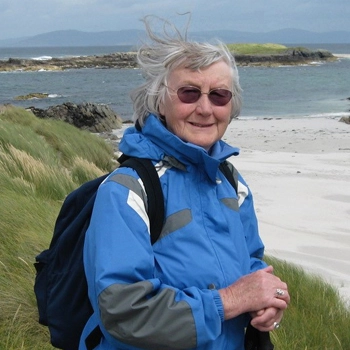
In your book Therapeutic Landscapes: An Evidence-Based Approach to Designing Healing Gardens and Restorative Outdoor Spaces, co-authored with Naomi Sachs, ASLA, you argue we’re returning to the wisdom of the ancient Greeks, who understood the healing power of nature and mind-body connection. Why has it taken so long to rediscover these essential understandings?
While the understanding was not entirely lost, the medical world needed proof. They were not interested in aesthetic arguments that gardens are “nice” and people appreciate “green views.” Those didn’t cut it.
The whole start of the healing gardens and therapeutic landscapes movements was Roger Ulrich's famous study, The View from the Window, published in 1984 in the prestigious magazine Science. With access to medical records of people recovering from gall bladder surgery – some with a view to trees, some who could only see a brick wall – data showed that those with a view to trees called the nurse less often, asked for fewer high-dose pain killers, and went home a little sooner than those who viewed a wall. This study offered proof of the benefits of nature, using empirical data the medical world could understand and appreciate. Healthcare facilities took note and said, essentially: “Oh, I see. Trees outside windows and gardens around a hospital are not just cosmetic niceties, they can also affect the bottom line!”
There’s now an understanding that access to nature, sunlight, fresh air, and interactions with nature can reduce healthcare costs and patient recovery times. What has driven the explosive growth in therapeutic landscapes in hospitals and other care facilities? Has it been the financial benefits? Or are there other reasons?
There are certainly studies now that show if people have certain conditions and then have access to nature, they may call for fewer pain killers. That’s certainly significant. Studies of Alzheimer’s facilities where residents have access to a garden have shown that there is less need to prescribe drugs to reduce agitation or deal with insomnia.
Yes, the financial benefits have been important in encouraging the growth of therapeutic landscapes. But marketing is also important. It would be rare to find a senior retirement facility or hospice where a garden is not an attractive element, appealing to family members or to prospective staff.
Many hospitals are now providing gardens and that is good. However, in their marketing, some use the term “healing garden” as a buzz word. Sadly, in some cases I see in the trade magazines, there’s a photo of a chaise lounge on a roof with two potted plants, and it’s labeled a “ healing garden.” Some of us in the field are beginning to say perhaps there’s a need for a certification of healing gardens, although, just how that would work is very complicated.
There’s also been important recent research on the significance of access to outdoor space for the staff. Hospital staff work long shifts often under very stressful circumstances. Here’s a shocking number: more than a quarter of a million avoidable deaths occur in U.S. hospitals every year due to medical errors. This is just a speculative question, but could access to nature for hospital staff on their break times result in lowering stress and result in fewer medical errors? I doubt this could ever be proved as there are too many variables. But there is research where staff are saying, “Oh, yes, we want to have access to gardens.”
Hospital staff typically have window-less break rooms with no outdoor access. Also, did you know that the average lunch break for a nurse in an American hospital is just 38 minutes? So, even if there is a garden, and it’s at a distance, they’re not going to go there because they don’t have time. A trend now at hospitals who are aware of this is to put smaller gardens close to break rooms, so that staff can at least get outside for 10 or 15 minutes. That's very important. Research has shown that that is long enough for a significant reduction in levels of stress.
Advertisement
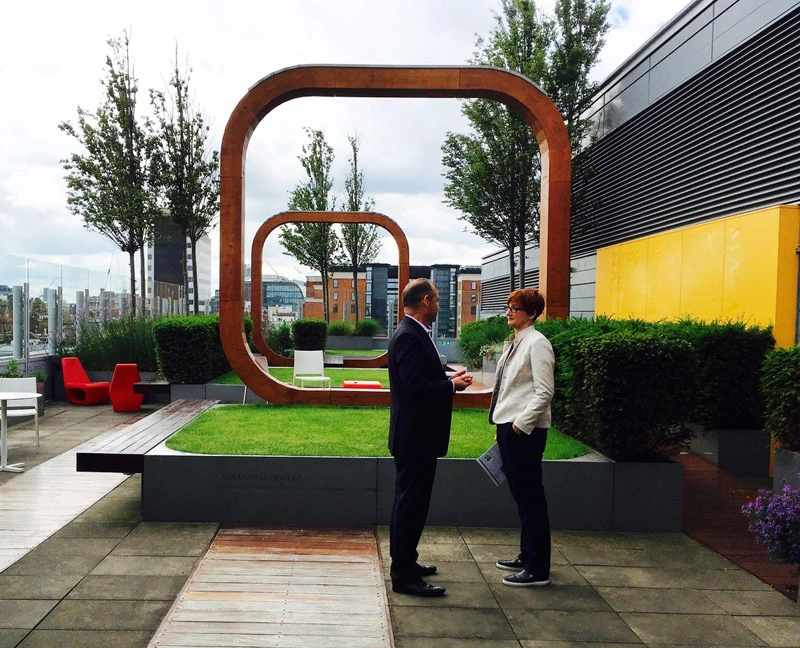
What are the key elements of a well-designed therapeutic landscape? What separates a great one from an okay one? Can you provide a few examples?
Oh – where to begin! It’s not rocket science, and some might argue its not vastly different from just a beautiful, well-designed garden. But there are many elements that are critical and are over-looked by even the most experienced landscape architects. First, it needs to be predominantly green; I would say about 70 percent green 30 percent hardscape. If it flips the other way, you’ve got a plaza; you don’t have a garden. The garden needs to be green, lush, and have all-season vegetation to the extent that it's possible, depending on the location. It needs to be colorful and appeal to all the senses – smell, sound, touch, even taste – not just the visual.
The garden should serve the most vulnerable users. So, if this is, say, an acute care hospital, the most vulnerable users might be someone pulling an I.V. pole or using crutches. Pathway surfaces, non-glare elements, universal design – all are critical. A user may be someone who’s so weak they can only walk from the entry to the first bench. A person who is frail needs upright seating with arms and a back to help them get up – no slumped seating in the ubiquitous Adirondack chair!
A successful garden needs to be easily accessible and visible from a well-used interior space – foyer or waiting area in a hospital, day room or dining area in a senior facility. There should be a hierarchy of pathways for people to exercise who have varying degrees of energy. There must be adequate shade in an entry patio or under trees or a shade structure -- an obvious thing but often overlooked. A lot of people are on medications -- chemo, HIV-AID medication, psychiatric drugs -- where they have to stay out of the sun. If there’s no shade, people aren't going to go out there. We are seeing more and more patient-specific gardens – for those with cancer, PTSD, dementia, mental health problems, children with disabilities. In those cases it is critical that the designer works with the clinical staff and the maintenance staff in a participatory process.
So what separates a great one from a merely decent one? If the garden just had some greenery, paths, and a few benches, it wouldn’t be really therapeutic. Here are a few very good examples, in no particular order:
The Olson Family Garden at St. Louis Children’s Hospital is an 8,000-square-foot roof garden on the eighth floor. It has lush planting, fairly large trees, and winding paths where children love to run, disappear, and appear again. There are five different water features. It has elements that intrigue children without turning it into a playground: stepping stones across water, telescopes so you can look out over St. Louis, cubby windows, a kaleidoscope, a sundial. It also appeals to adults and care givers with many semi-private places and a variety of moveable seating. It’s used by everybody and is well publicized within the hospital. The garden was designed by Herb Schaal, FASLA, with AECOM. It cost $1.9 million and was paid for by a local philanthropic family, who also gave an endowment for maintenance, so it always looks beautiful.
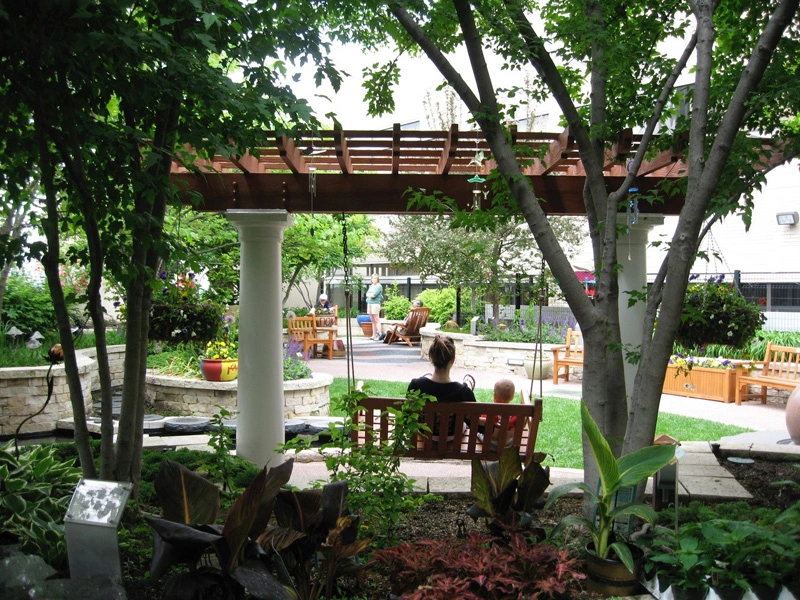
Another great example is the garden of the Oregon Burn Unit in Portland, Oregon, designed by landscape architect Brian Bainnson, ASLA, Quatrefoil. The reason this one works so well is Bainnson worked closely with the clinical staff at the Burn Unit to find out what patients and staff would need outdoors. He incorporated lush, beautiful, all-season planting.
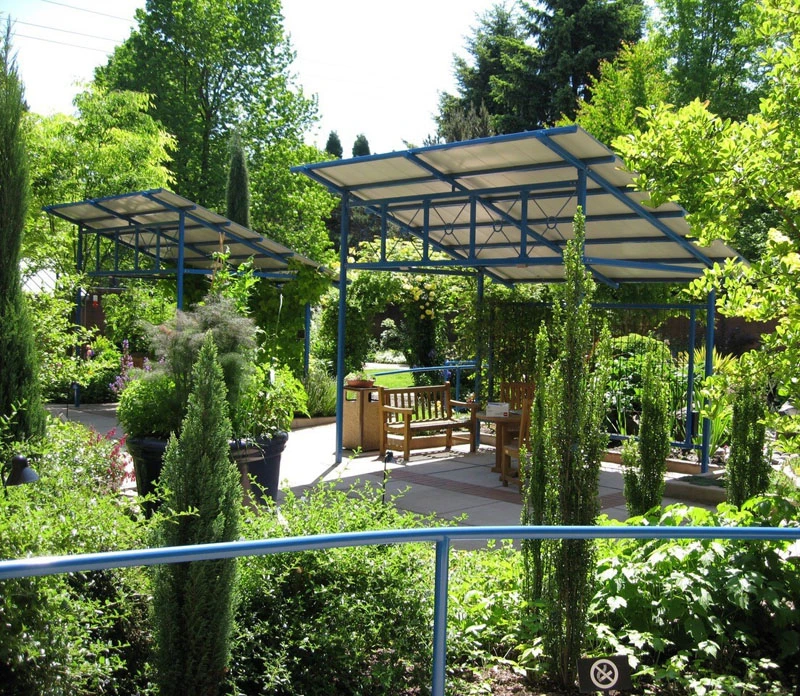
A third example is the Living Garden at The Family Life Center in Grand Rapids, Michigan, an Alzheimer’s care center designed by landscape architect Martha Tyson, ASLA, who understood the literature on Alzheimer’s and dementia. She worked with the staff. The garden completely recognizes the main issue of these patients, which is lack of spatial cognition. I has a simple figure-eight path with destination points, so patients can't get lost. There's one exit and entry to the garden. No plants are toxic.
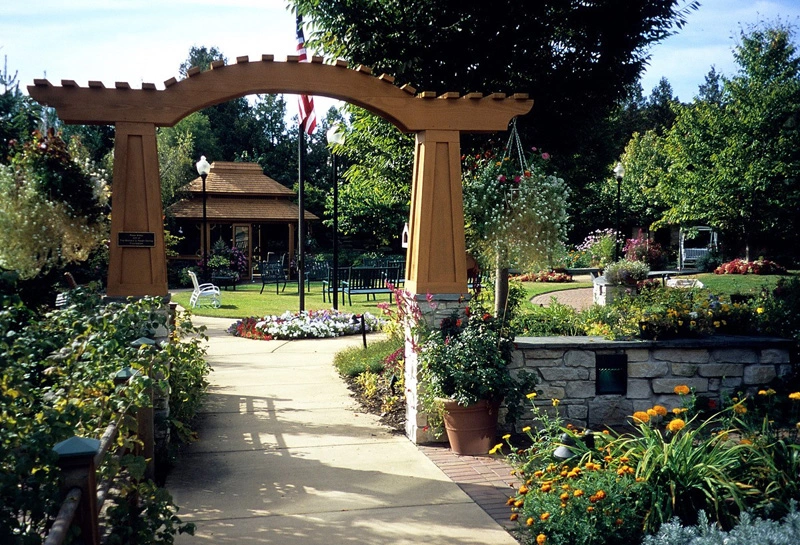
In Japan and South Korea, there are efforts to expand the use of forest bathing to improve health and well-being and also to fight addiction to new technologies. South Korea is creating a network of national forest healing centers. What do you see as the value of forest bathing? What will it take for this practice to take off in the U.S.?
The evidence from research in Japan is that breathing the air in these forests, particularly those of Hinoki cypress, lowers stress levels, blood pressure, and pulse rates. I think it has definite value, but we also know that walking in any kind of forest or non-urban green area has positive effects on health.
We’re really at a stage of infancy in this work in the U.S., but I do see a lot of media attention.
It's funny, but the U.S. is often at the forefront with technological innovations, but rarely with social innovations – at least involving nature and play environments. Forest kindergartens have been popular in Germany and Denmark for decades; they are just catching on here. Adventure playgrounds have been around in western Europe since the 1940s; there have never been more than two or three in the U.S. (one is in Berkeley!). The Netherlands spearheaded the notion of the woonerf , or a street shared equally by vehicles and pedestrians; the idea spread across the developed world. But hardly at all in this country, largely, I would guess, because of resistance from transportation engineers.
However, in the realm of healing gardens in healthcare, the U.S. is at the forefront. It’s sad to see that in my own country of origin – Britain – famous for its gardens, those within hospitals are often poor or non-existent.
In a recent study, the Nature Conservancy estimates that, despite all the high-profile tree-planting campaigns, Americans city currently lose around 4 million trees a year. But just planting more trees in cities could reduce healthcare costs by decreasing the impact of air pollution, namely ozone and particulate matter. Other studies have found correlations between lifespan, sense of well-being, and proximity to trees. Unfortunately, however, even most arborists aren’t familiar with many of the health benefits of trees. Why aren’t the health benefits more widely understood?
Yes – there is a lot of valid research linking trees and health. Like so much material in this field of health and design, the studies produced in academic or semi-academic journals don’t filter out to people in practice. This is why it isn’t well-understood by people out in the field running tree planting programs in cities. I would not expect the people pruning trees in the street to know this. But the people in charge of trees for the city should.
There just needs to be more coverage of this information transferred from academic writing into more popular writing and hence the need for journalists and new messengers rather than new messages.
Some innovative doctors are now prescribing time in the park for a variety of conditions, testing to see if exposure to nature or a particular exercise in nature helps. What will it take for the mainstream medical profession to buy into this approach? What will it take for parks to be considered an essential part of our healthcare system by healthcare providers and insurers?
I see more and more references to the idea of providing prescriptions for people to go to parks. I believe in Washington, D.C. doctors can be provided with a list of available parks, so they can give those to their patients. For it to catch on, it will take a while, as with forest bathing and these other innovative things. It’s going to be some time before there’s research to show to the medical profession -- proof that prescribing time in the park for someone with condition X improves that condition. But parks and their links to health have long been part of the landscape architecture profession going back to Olmsted.
Some hospitals being built or rebuilt are not only putting therapeutic gardens within the hospital confines but also putting a park or garden at the entry that is open to the general public. They’re providing green space for the city as a whole within their site.
Some examples include University Hospitals’ Schneider Healing Garden, Cleveland, Ohio; and Good Samaritan Medical Center’s Stenzel Healing Garden in Portland, Oregon.
Some re-built hospitals are specifically orienting patient rooms towards an adjacent park. These include The Royal Children’s Hospital in Melbourne, Australia, and Alder Hey Children’s Hospital in Liverpool, England.
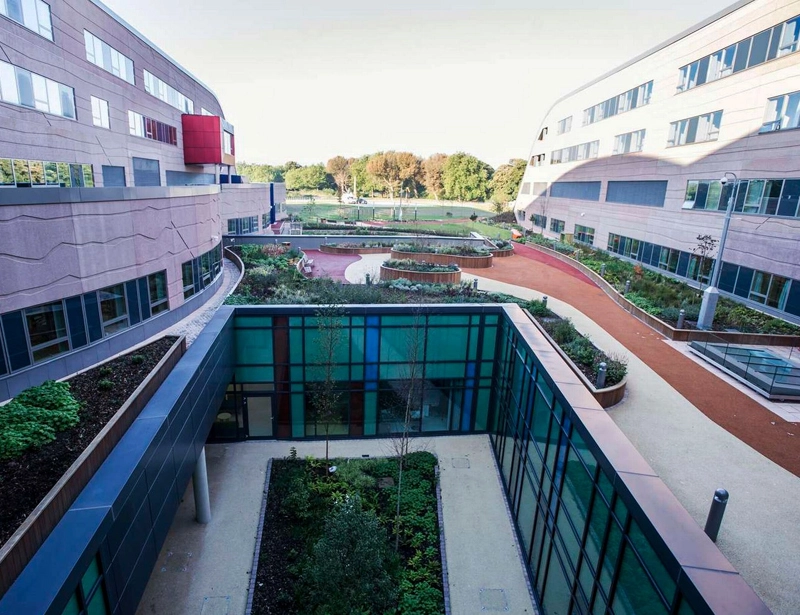
This will continue as more hospitals recognize how important access to greenery is. Providing green space within the hospital or adjacent is relatively inexpensive compared with the cost of a new MRI machine.
Lastly, to recover from your own serious illness, you immersed yourself in nature for six months in the remote Scottish island Iona and then you wrote a book about it. You said nature there mirrored your soul and had a profound healing effect. Can you talk about that experience? How can we find those magical places? And how do you know you’ve found yours?
I found mine by serendipity and intuition. I don’t think you can go out and search for such a place or know that it has certain characteristics. When you find this place, it’s probably not your home, probably somewhere you found by chance. It may be somewhere a little different, a little distant, maybe a place you go now on weekends or maybe once a year.
In the mid-80s I went to live with my children at Findhorn, an innovative intentional community in Scotland from the 60s that still exists and flourishes today. They own a retreat house on the island of Iona on the other side of Scotland, and, once I had been there, I knew that island was my healing place.
After two diagnoses of cancer shortly after retirement from academia, I went on retreat and lived alone there for six months and began to write. I now go back every year and have done so for 18 consecutive years.
All I can say is, when you find such a place, it feels as though you have come home. Not home as in a house. Home as something much deeper on a spiritual, psychological level, a place that resonates with something deep inside you.
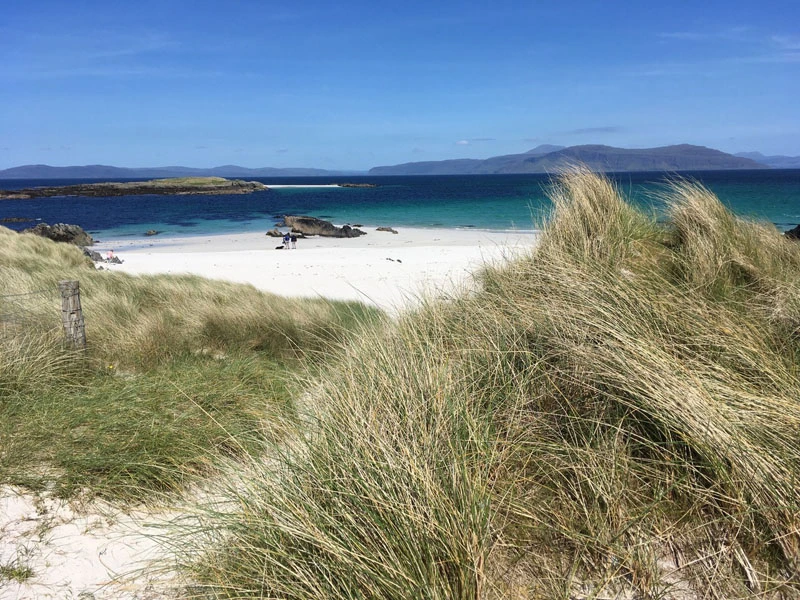
I’ve met people who’ve come to Iona for the first time and stepping ashore they find themselves in tears. For other people, it feels like they have at last come home, yet they have absolutely no familial roots with Scotland or Britain. There is no logical reason; its not an issue of logic or reason. It occurs to numbers of visitors to this island, but that doesn’t mean to say you have to go to this particular place. You might find your place through a dream, or coming by chance across a mention in a book, or some other unexpected event.
Follow your heart; it knows. No one can give you a formula.
Clare Cooper Marcus is Professor Emerita of Architecture and Landscape Architecture at University of California, Berkeley. Most recently, she is the author of Therapeutic Landscapes: An Evidence-Based Approach to Designing Healing Gardens and Restorative Outdoor Spaces, co-authored with Naomi Sachs, ASLA; and Iona Dreaming: The Healing Power of Place.
This interview was conducted by Jared Green at the ASLA 2017 Annual Meeting in Los Angeles.