

.webp?language=en-US)

The Power of Measurable Outcomes in Proving Economic Value: A Collection of Resources & Tools
by CeCe Haydock, ASLA, PLA, SITES AP, LEED AP, WEDG
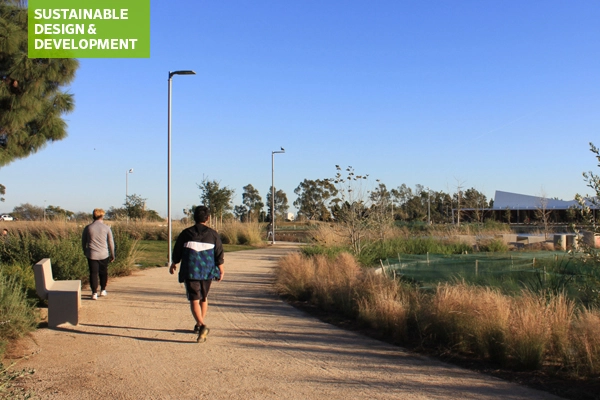
Let Your Clients Know: Financial Savings of SITES Certification
When discussing the value of SITES® certification, the conversation often focuses on its environmental and social benefits: healthier landscapes, better stormwater management, and improved biodiversity. While these benefits are well documented and increasingly recognized, many clients want to understand the financial case. After all, sustainable projects must not only improve ecosystems but also demonstrate long-term economic efficiency. Fortunately, years of research, case studies, and performance metrics make it clear that SITES is not just good for the planet—it’s also good for the bottom line.
The Economics of Performance-Based Landscapes
The Landscape Architecture Foundation's Landscape Performance Series Case Study Briefs is a searchable database of over 200 exemplary built projects with quantified environmental, financial, economic, and social benefits. Note: one can also view SITES projects (see the ‘Tags’ search dropdown).
Additionally, the American Society of Landscape Architects provides various research and case studies to demonstrate economic benefits. For example, in a recent study, nature-based solutions can be constructed for 5-30% less and maintained for 25% less than conventional gray infrastructure. The Landscape Performance + Metrics Primer highlights the power of measurable outcomes in proving financial value. For example, landscapes designed with sustainability in mind can reduce irrigation needs, lower maintenance costs, and extend the lifespan of infrastructure. By tracking metrics such as water savings, energy reductions, and avoided costs, landscape architects can present clients with quantifiable evidence that sustainable strategies pay for themselves over time.
This aligns with broader sustainability performance frameworks such as the ISEAL Alliance report "Performance Metrics for Key Sustainability Issues," which demonstrates how rigorous measurement and verification of outcomes lead to stronger financial returns. Clients who invest in SITES projects are not simply “spending green”—they are making data-driven investments that deliver measurable payback.
Case Studies That Prove the Value
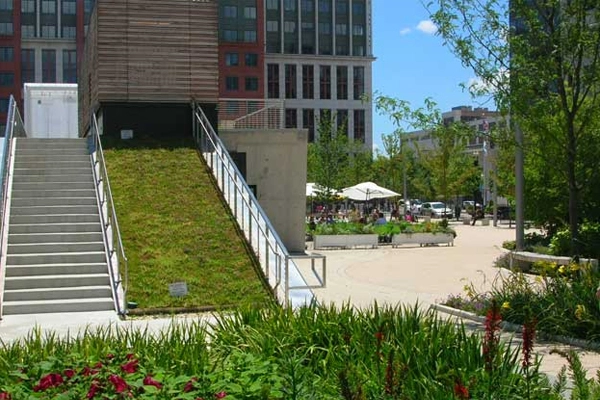
Washington Canal Park: A Model of Savings
The Washington Canal Park, one of the first SITES-certified pilot projects, shows how stormwater capture systems can translate into cost savings. By reducing potable water use and filtering pollutants before they reach city systems, the park avoids significant treatment costs. In addition, the design has lowered maintenance needs compared to conventional parks, providing annual operational savings that compound over time.
Magic Johnson Park: Tackling Water Loss
In Los Angeles, where water scarcity is both an environmental and financial issue, Magic Johnson Park demonstrates the economic power of green infrastructure. The park helps recapture stormwater that would otherwise be lost, preventing costly flooding while reducing the need for expensive imported water. With the region losing over 100 billion gallons of water annually, the project highlights how SITES strategies can directly offset major municipal expenses. (Learn more on the upcoming Greenbuild tour, Equity and Infrastructure: Earvin "Magic" Johnson Park, on November 3.)
Dell Medical District: Energy and Health Efficiency
At the University of Texas, the Dell Medical District shows how sustainable landscapes can lower energy demand by reducing urban heat island effects. Shaded pedestrian corridors and green infrastructure not only improve comfort but also cut cooling costs for adjacent buildings. The project underscores that SITES investments go beyond landscape budgets—they influence broader operational expenses in healthcare and education facilities.
EPA Region 7 Headquarters: Cost Comparisons in Action
The EPA Region 7 Headquarters provides a compelling cost-benefit comparison. The project integrated rain gardens, permeable paving, and native plantings that significantly reduced stormwater runoff. Compared to conventional design approaches, these strategies yielded lifecycle savings that outweighed the initial investments. This case study proves that upfront SITES-oriented spending leads to long-term reductions in both infrastructure costs and regulatory compliance expenses.
The Power of Tools and Calculators
Clients may still ask: “How does this apply to my project?” Fortunately, resources such as the GSI Impact Calculator allow stakeholders to model the economic value of green infrastructure. From avoided stormwater fees to reduced flood damage, these calculators put dollar values on sustainable design strategies, making the financial case tangible.
Similarly, the San Francisco green roofs study demonstrates the cost-saving potential of vegetation in reducing energy demand, extending roof life, and cutting stormwater runoff charges. When presented with such quantified data, clients can see how SITES-related investments outperform conventional alternatives over time.
Another example: a green roof that the U.S. General Services Administration studied was found to have paid for itself in about six years, with a 224% return on investment with its extended life, stormwater benefits, and energy savings.
Selling the Financial Case to Clients
The SITES in 10 presentation, SITES Client Deck, and SITES resources library provide ready-to-use visuals and metrics that help landscape architects communicate the financial upside of certification. The key is to connect sustainable strategies to specific line items that clients already care about:
- Water costs – Reducing irrigation through native plantings, rainwater harvesting, and stormwater reuse.
- Maintenance budgets – Cutting mowing, chemical use, and replacement costs.
- Energy bills – Lowering building heating and cooling loads through shading and evapotranspiration.
- Regulatory fees – Meeting stormwater and environmental compliance standards more affordably.
- Risk reduction – Avoiding flood damage and liability through resilient design.
When clients see these numbers clearly presented, SITES becomes not a “nice to have” but a smart business decision.
Conclusion: SITES as a Financial Investment
The environmental arguments for SITES are already persuasive. But for many clients, the real breakthrough comes when sustainability is framed in financial terms. As case studies and tools consistently show, SITES-certified projects can reduce long-term costs, improve infrastructure efficiency and resilience, and deliver a strong return on investment. And this doesn’t take into account the many other benefits, such as positive health impacts, reduced carbon emissions, and enhanced biodiversity.
By equipping clients with metrics, calculators, and proven examples, landscape architects can make the economic case just as compelling as the ecological one.
In short: SITES doesn’t just save resources—it saves money.
For those attending the ASLA Conference on Landscape Architecture who would like to learn more about SITES, be sure to add the Sustainable Design & Development Professional Practice Network (PPN) Meeting to your schedule and take advantage of the education sessions offering SITES-specific continuing education hours to maintain your SITES Accredited Professional (AP) credential.
Thank you to Danielle Pieranunzi, SITES AP, LEED AP BD+C, Hon. ASLA, SITES Director at the U.S. Green Business Council and Green Business Certification Inc., for her input on this post.
CeCe Haydock, ASLA, PLA, SITES AP, LEED AP, WEDG, is a licensed New York landscape architect WBE and has practiced in the public as well as the private sector. She is an officer for ASLA’s Sustainable Design & Development Professional Practice Network (PPN), a trustee of the Planting Fields Arboretum State Historic Park in Oyster Bay, NY, a member of the International Council of the Preservation Society of Newport County, and a visiting lecturer at the New York Botanical Garden.