

.webp?language=en-US)



25 Years of the Historic American Landscapes Survey (HALS)
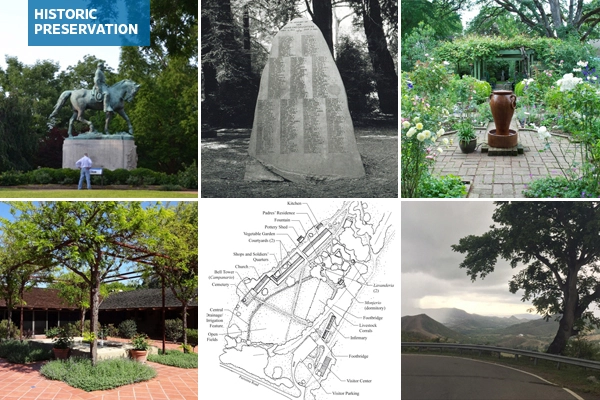
2025 marks 25 years of the Historic American Landscapes Survey (HALS). In celebration of this milestone, we are highlighting the history of the program, which has been supported within ASLA by the Historic Preservation Professional Practice Network (PPN) and the PPN's HALS Subcommittee and HALS Chapter Liaisons Network.
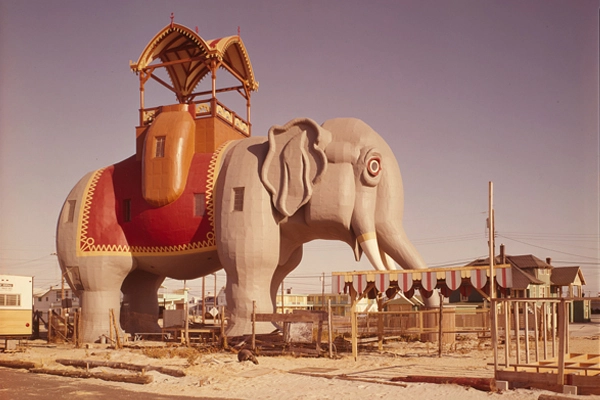
Before we dive into the history, a note on the present: the 2025 HALS Challenge competition is open through July 31, and the HALS Subcommittee and HALS Chapter Liaisons Network are hosting a free webinar on June 2 on Landscapes of Roadside America, this year's HALS Challenge theme.
Pre-2000 Cultural landscape documentation initially appeared in the Historic American Buildings Survey (HABS) in the 1930s through the Historic American Landscape and Garden Project. The designation of historic preservation liaisons in ASLA chapters began long before HALS was established. The ASLA Historic Preservation Committee (now the Historic Preservation PPN), formed in the 1970s and chaired by Thomas J. Kane, FASLA, recognized the need to provide outreach and continuing education to colleagues about landscape preservation.
2000 National Park Service Director Robert Stanton establishes the Historic American Landscapes Survey (HALS) as a permanent federal program. A joint presentation by ASLA, the National Park Service, and the Library of Congress takes place at the ASLA Annual Meeting in St. Louis and the tripartite cooperation to develop HALS is announced.
2001 A Memorandum of Understanding is signed by ASLA, National Park Service, and Library of Congress to cooperatively develop the HALS program. The ASLA HALS Subcommittee begins to develop materials to market and raise awareness of HALS.
2001-2005 The HALS Guidelines for Historical Reports are developed, in part through a series of documentation guidelines workshops and symposia. In 2005, Paul Dolinsky is appointed Chief of HALS.
2006 A HALS Supplement is published with the Summer 2006 Historic Preservation PPN newsletter, including the following reports:
HALS Takes Root at the Birthplace of Conservation
by Christina Marts, ASLA
A HALS survey of Peavey Plaza, Minneapolis, Minnesota
by Jean Garbarini, ASLA
Remembering Denver’s Skyline Park
by Ann Mullins, FASLA
Georgia’s Historic Landscape Initiative
by James Cothran, FASLA
Institutionalizing HALS in Utah
by Susan Crook, ASLA
HALS – Northern California Chapter Report
by Chris Pattillo, FASLA
HALS in Wisconsin: Jensen And Wright, And The Kickapoo Too
by Arnold R. Alanen, PhD
2008 After leading the ASLA Historic Preservation PPN, David Driapsa, FASLA, served as the second ASLA National Coordinator of HALS (2008-2014), informing ASLA membership of the importance of recording our nation's landscape heritage, leading the growing nationwide network of HALS Liaisons, and inspiring historic landscape documentation, leading to the increasing member contributions to the Library of Congress' HALS Collection.2010
Christine “Chris” Pattillo, FASLA, founder of PGAdesign, initiates the first HALS Challenge for the tenth anniversary of HALS, focused on theme parks and the cultural landscapes of childhood. Chris goes on to serve as the historian, delineator, and/or project manager for 50+ HALS documentation projects.A HALS Documentation Techniques and Standards session is held at local historic landscapes as part of the 2010 ASLA Annual Meeting in Washington, DC.
From the Historic Preservation PPN's Winter 2010 newsletter:
HALS at 10 Years !!!!!!!!!! (Those are Upside-down Candles)
by Carol Yetken, ASLA, and David Driapsa, FASLA
This newsletter is dedicated to a celebration of the progress made in the first decade of HALS efforts co-sponsored and championed by ASLA in partnership with the National Park Service (NPS). This issue commemorates the challenges and successes experienced in these formative years by the ASLA Historic Preservation Professional Practice Network, the ASLA HALS Subcommittee, the ASLA HALS Liaisons Network, and members who dedicate personal and professional interest, time, and leadership to advance the state of the art of historic landscape preservation.
Our first 10 years saw efforts to inform ASLA membership of the importance of recording our landscape heritage and to garner support and contributions for landscape documentation. The infrastructure at the Library of Congress and the National Park Service has been set up and modest funds have been allocated to support staffing positions. Contributions to HALS can now be seen on the Library of Congress website, the depository of the documentation alongside the more well-known Historic American Buildings Survey (HABS) and Historic American Engineering Record (HAER) documents. ASLA established the HALS Liaison Network which includes representation from each ASLA Chapter.
It would be most appropriate to acknowledge and extend profound thanks to a number of industrious individuals whose work led to the establishment of HALS. These include Patricia O’Donnell, FASLA; Charles Birnbaum, FASLA; and Noel Vernon, ASLA, in the early years. Susan Crook, ASLA, (Utah) led the national implementation of HALS, spearheaded establishment of the HALS Liaison Network, and served as our first HALS Liaison Coordinator. Susan mentored members and formulated recommendations for actions to take, which has constructed the solid foundation of HALS within ASLA. Our immediate past PPN chair, Chris Pattillo, ASLA, (Northern California), enthusiastically led the Historic Preservation PPN for two years and took to heart the HALS efforts. Her documentations on a number of historic sites from her region have proven to be excellent examples. Additionally, her enthusiasm within our organization helped launch the Theme Park Challenge.
A great overview of HALS efforts is featured in the articles in this newsletter. The introductory article asks, “What is Historic Landscape Preservation?” Then, “Arizona HALS Efforts” are reported by Helen Walthier, Assoc. ASLA. Dr. Charles Leider, FASLA, follows with an account of “The Oklahoma Experience” in HALS. David Driapsa, ASLA, describes “HALS in Florida,” and James Cothran, FASLA, writes of “Georgia's Historic Landscape Initiative.” Carrie Mardorf wraps up this issue with closing comments that brings it all together in “HALS: Making a Difference Across the Nation,” with contributions by HALS Liaisons Chris Pattillo, ASLA, (Northern California); Noel Vernon, ASLA, (Southern California); and Jenn Thomas, Assoc. ASLA, (Colorado).
We invite and encourage everyone to take a look and more importantly, join in these efforts.
2011 The ASLA Northern California Chapter’s HALS subcommittee started the HALS Heroes initiative.
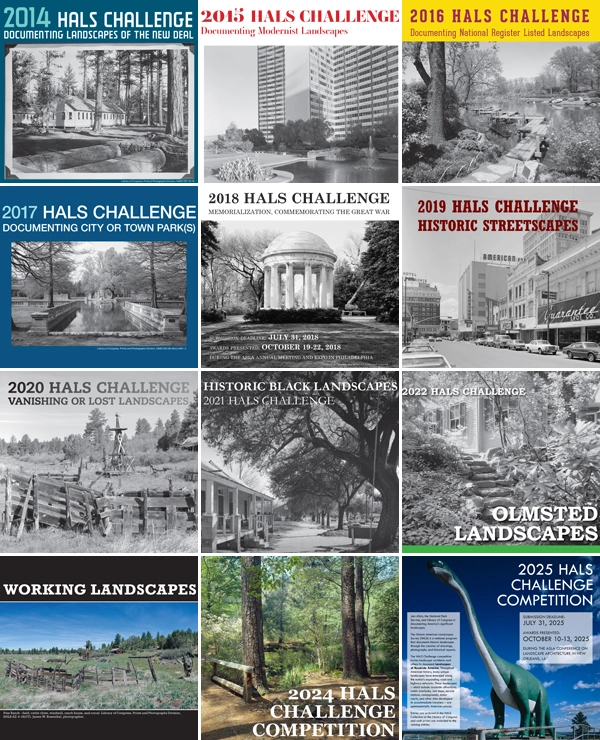
2014 A new page is added to ASLA’s HALS website with the full list of documented HALS sites, a map, and links to the documentation on the Library of Congress’ website. At that time, there were 466 HALS sites on the list. As of May 2025, there are 1,063 surveys in the HALS collection.
The 2014 HALS Challenge, Documenting Landscapes of the New Deal, resulted in the donation of 47 impressive HALS short format historical reports and 6 drawing sheets and 4 sets of large format photographs to the HALS collection—the most donations ever from a HALS Challenge.
2019
Paul D. Dolinsky retires after an almost 40-year career with the National Park Service Heritage Documentation Programs, where he served as Chief of the Historic American Buildings Survey from 1994 to 2005, Chief of the Historic American Landscapes Survey from 2005 to 2019, and Acting Chief of Heritage Documentation Programs from 2018 to 2019.2021 For the 12th HALS Challenge competition, the theme was Historic Black Landscapes. To promote the HALS Challenge and showcase historic black landscapes that have already been documented for HALS, a webinar was hosted and additional posts were written for ASLA's The Field blog leading up to the July 31 deadline:
HALS Challenge Webinar: Acknowledging Historic Black Landscapes
Elizabeth J. Kennedy, FASLA, NYCOBA-NOMA, Andrea Roberts, Ph.D., Joseph Disponzio, Ph.D., and Christopher Stevens, ASLA
The Smokey Hollow Community Historic American Landscapes Survey
by David J Driapsa, FASLA
Allensworth: A Town Built by and for African Americans
by Chris Pattillo, FASLA
Poetry and Song in the Landscape
by Chris Stevens, ASLA
Daughters of Zion Cemetery: Grassroots Preservation How-To
by Liz Sargent, FASLA, Edwina St. Rose, and Bernadette Whitsett-Hammond
Buffalo Soldiers on the Southwest Border
by Helen Erickson, ASLA
Dearfield, Colorado: Homesteading and the Dream of Black Independence Through Agriculture
by Kevin M. Lyles, PLA, ASLA, and Robert Brunswig, PhD
2024 Representatives from ASLA, the National Park Service, and the Library of Congress met at the ASLA Center for Landscape Architecture to review each organization's responsibilities, improvements to consider, and what has changed since the 2010 tripartite agreement was put in place.2025 The 2025 HALS Challenge competition is open through July 31, and the HALS Subcommittee and HALS Chapter Liaisons Network are hosting a free webinar on June 2 on Landscapes of Roadside America, this year's HALS Challenge theme.
Support for HALS has involved a constellation's worth of ASLA members and allied professionals and organizations, including the National Center for Preservation Technology and Training, National Trust for Historic Preservation, Alliance for Historic Landscape Preservation, Olmsted Network (formerly the National Association for Olmsted Parks), and the Garden Club of America.
We thank everyone who has dedicated their time, effort, and expertise to HALS over the past 25 years, and all those who continue to do so—thank you!