

.webp?language=en-US)

Celebrating World Landscape Architecture Month 2025
by Arnaldo D. Cardona, ASLA

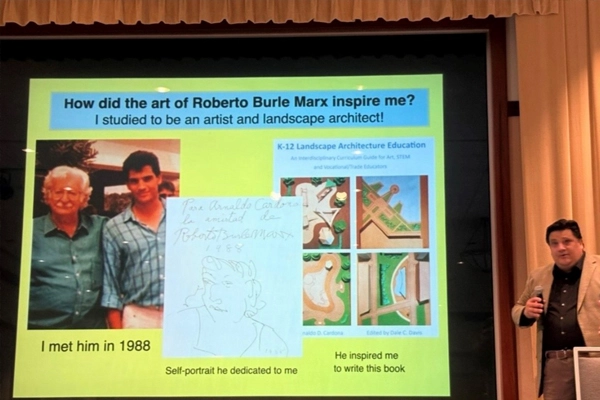
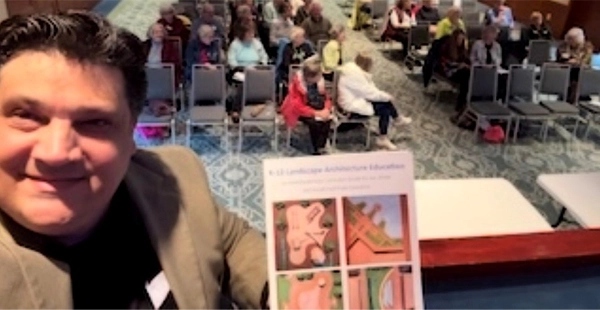
Earlier this month, I had the opportunity to speak at a meeting of the Richmond Horticultural Association in Virginia, at the Lewis Ginter Botanical Garden in Richmond. I was so glad that this organization invited me to help celebrate World Landscape Architecture Month. In this way, horticulturists, plant lovers, and other members of the green professions could join the celebration. I shared a presentation about an artist and horticulturist known worldwide known for his contribution to landscape architecture, Roberto Burle Marx. I decided to share his landscape work because he inspired me to pursue degrees in visual arts and landscape architecture, and also to publish my book, K-12 Landscape Architecture Education: An Interdisciplinary Curriculum Guide for Art, STEM and Vocational/Trade Educators.
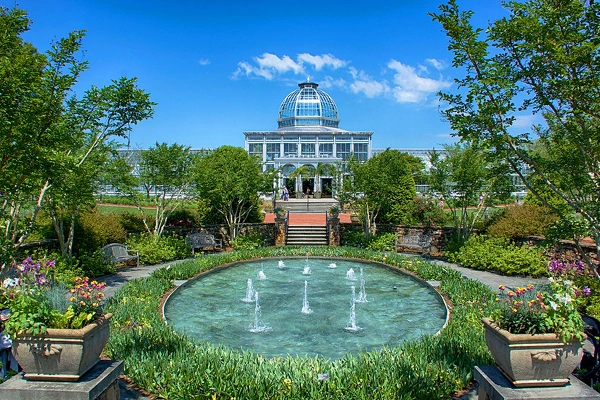
I started the presentation by showing the work of Richmond’s own Charles F. Gillette (1886-1969), with samples of the parterres, classical fountains, and gardens that he designed. Then I presented drawings, paintings, mosaics, and sculptures designed by Roberto Burle Marx. Next, I presented samples of his work highlighting how his planting plans were works of art by themselves. I also presented some of Burle Marx’s work in the United States, like the Cascade Garden at Longwood Gardens (1989-1993) in Pennsylvania, Miami’s Biscayne Boulevard (1988-2004), and a 2019 exhibition in the New York Botanical Garden.
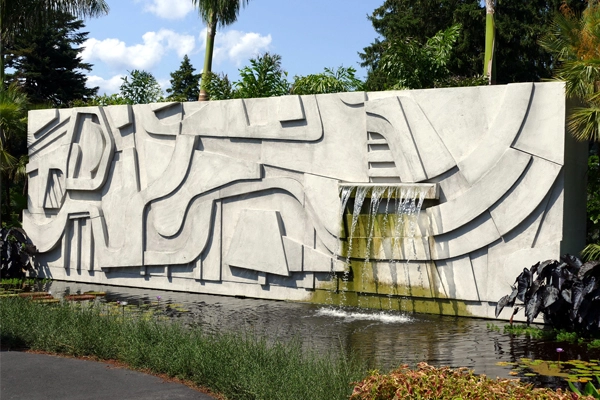
I titled my presentation “Land as Canvas”: The Artful Gardens of Roberto Burle Marx. I concluded by showing a habitat restoration project I designed for the Creation Care Garden that members of the Holy Comforter Church in Richmond are currently working on. The concept is to design a garden exclusively with native plants to attract pollinators and native fauna. The audience’s reaction was so rewarding! Many shared how much they learned about what landscape architects have to consider when designing a landscape project.
Also during World Landscape Architecture Month, I was invited to present to the Institute of Landscape Architects of Puerto Rico (of which am also a member). For this presentation, I also highlighted the work of Roberto Burle Marx, but this time from the humanistic geography point of view originated by Yi-Fu Tuan (1974) in which the special love for peculiar places, or topophilia, is present in Burle Marx’s work, and how the emotional aspect is present in most of his work beyond the constructive aspects.
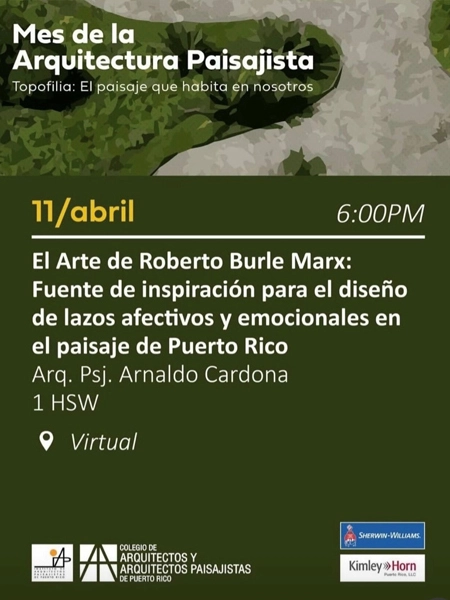
My intention was to inspire landscape architects in Puerto Rico to keep designing landscapes that, more than pieces of construction or installations that follow functional purposes, evoke our senses and emotions, creating humanistic landscapes for people to love.
But why Burle Marx? What made me highlight his work? While finishing my landscape architecture degree at City College of New York there was an exhibition of Burle Marx's work called “The Unnatural Art of the Garden," at the Museum of Modern Art in New York City. I was glad to see that they included as part of the exhibition one of my favorite projects, the roof garden at the Safra Bank in Brazil, and also the Copacabana beachfront in Rio de Janeiro. In this project Burle Marx used pavers for a huge mosaic composition of playful shapes. It is like looking at art installed on the land, a marriage between natural materials and human functions melted into the landscape. It was Burle Marx who made me want to pursue a degree in art in addition to landscape architecture. He also made me look at landscape architecture as a true art discipline.
When starting my Master’s in the Art & Art Education program at Teachers College, Columbia University, I took the course, "Elements of Landscape Architecture." As part of this course, I did a presentation contrasting the work of Luis Barragan with Roberto Burle Marx. This gave me the opportunity to further research Burle Marx’s work, which I found to be dramatic and eloquent. It helped me realize how art and the built environment can be integrated to create dynamic landscapes.
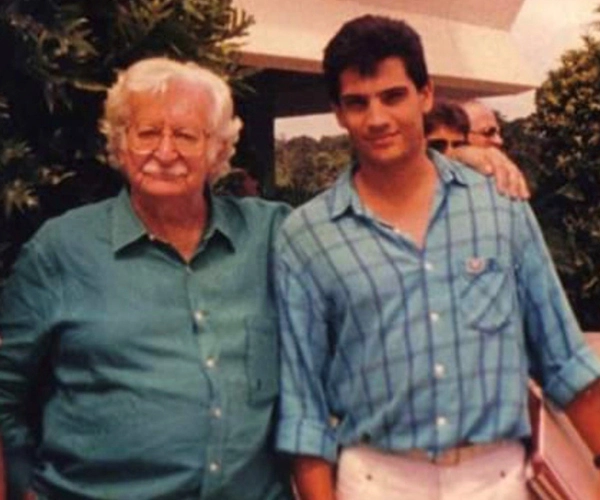
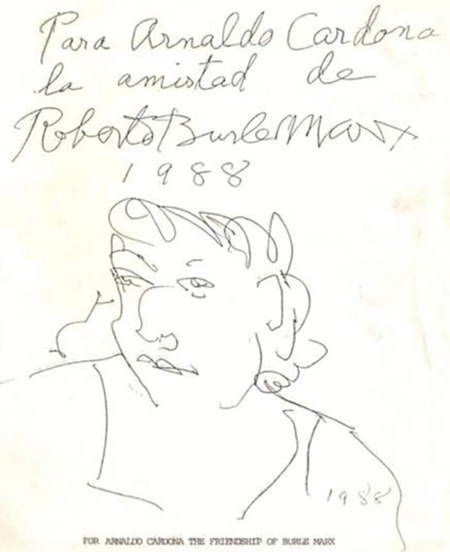
When I met Burle Marx in 1988, he was so kind as to dedicate an auto portrait to me, which I cherish immensely. Burle Marx died in 1994; however, he will always live in me, every time I design a garden. Let’s keep celebrating World Landscape Architecture Month to keep gaining visibility for landscape architecture in communities worldwide!
For more on Roberto Burle Marx:
Eliovson, S., (1991). The Gardens of Roberto Burle Marx. Oregon: Saga Press, Inc./Timber Press, Inc.
Adams, W. Howard, (1991). Roberto Burle Marx: The Unnatural Art of the Garden. New York: Museum of Modern Art.
Montero, M., (2001). Roberto Burle Marx: The Lyrical Landscape. Los Angeles: University of California Press.
Brey, Jared, (2025). "Burle Marx, Reconstructed." Landscape Architecture Magazine.
Borges Ferreira, Diogo, (2025). "Lessons from Roberto Burle Marx: How to Design Resilient Urban Landscapes." The Dirt.
Arnaldo D. Cardona, ASLA, IAPPPR, MS Ed., has been a member of the American Society of Landscape Architects (ASLA) since 2005. He served as a member of the ASLA’s Committee on Education and as chair of the subcommittee on K-12 Education. He is also the author of the book K-12 Landscape Architecture Education: An Interdisciplinary Curriculum Guide for Art, STEM and Vocational/Trade Educators. Mr. Cardona holds degrees and licenses in education and has taught courses and studios in landscape architecture, curriculum design, critical thinking, assessment in special education, and seminar courses, and has worked as a Student Supervisor of Art Education candidates at college level. Through this article he hopes to motivate other ASLA members to become advocates for career discovery initiatives and K-12 education in landscape architecture.