

.webp?language=en-US)

by Lee Parks, International ASLA
International landscape practice in China has been facing multiple challenges due to slowing economic growth. The downturn has allowed time to reflect on decades of rapid growth and urbanization and the impacts this has had on environmental quality, nature and biodiversity, and the physical and mental wellbeing of society.
The 11th Shanghai Landscape Forum theme of Wellness explored multiple roles of landscape architecture to create high-quality environments for human wellbeing, nature, and biodiversity. Speakers addressed issues such as social equity and inclusion, community gardens and engagement, urban biodiversity, interdisciplinary design, children’s play, nature deprivation, tactical design for health, and planting with purpose. Experiences and research from the United States, Australia, and Europe was shared from guest speakers to highlight explorations of wellness in landscape architecture from practitioners and academics and through community participation during design.
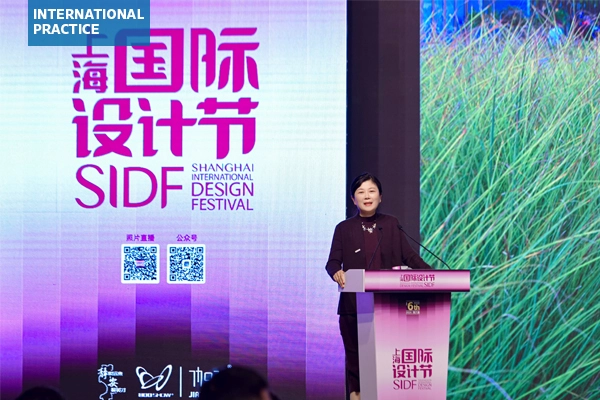
Opening Remarks
Dou Zhang, FASLA, PLA, LEED AP BD+C, SITES AP, Director of Sasaki's Shanghai Office
Ms. Zhang opened the forum to encourage the landscape community in Shanghai to maintain a commitment to designing for wellbeing in landscape and highlighted the Shanghai Landscape Forum's mission. She reflected on recent media interest in the lawn seating terraces created as part of Sasaki’s Runway Park in Shanghai to highlight how landscapes can be important vehicles for natural and social healing. Ms. Zhang then reflected on a survey of health conditions of urban dwellers which highlighted the increase in depression in China, second only to cardiovascular disease, hence the importance of the forum topic to explore wellness through our professional work.
Guest Speakers
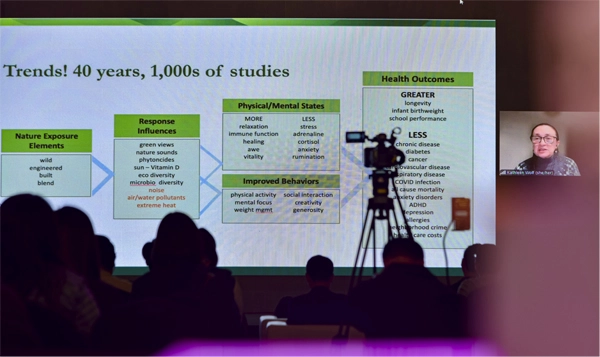
Dr. Kathleen Wolf, PhD, Research Social Scientist at the College of the Environment, University of Washington (Seattle, WA)
Having practiced professionally as a landscape architect and as an environmental planner, Dr. Wolf highlighted research exploring the science behind the human dimensions of urban ecosystems. She presented "The Design Challenge: Nature for Human Health" to emphasize the importance of good design for natural spaces. Dr. Wolf referred to "Urban Trees and Human Health: A Scoping Review" and the online resource Green Cities: Good Health for more research on urban trees.
Jon Hazelwood, Principal, Sector Lead – Public Realm, Hassell
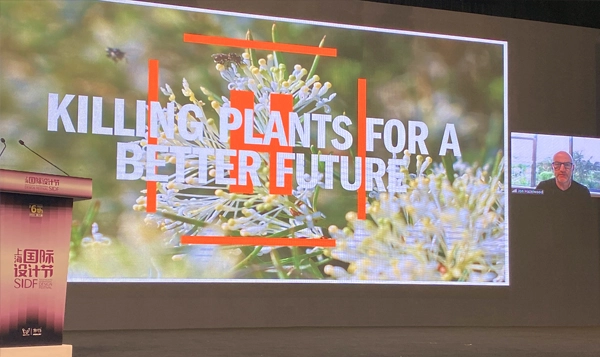
One of Hassell’s most experienced public realm and landscape architecture professionals, Mr. Hazelwood shared his insights on how urban biodiversity is in decline due to ‘set and forget’ mono-cultural landscapes. He emphasized the positive relationship between biodiversity and human wellbeing and how greening of cities is often confined to particular natural areas, such as waterfronts, woodland restoration, and larger parks.
Rather than stick to these limited areas, the value of enhancing all urban typologies, such as private gardens, street verges, parks, and roofs, for positive contributions to biodiversity and human connections to nature to support wellbeing and health was emphasized. To illustrate his theme of ‘Killing Plants for a Better Future,’ he shared the trials of prototyping natural planting in the city. Mr. Hazelwood also discussed the realities, challenges, and lessons learned from Laak Boorndap, the new 18,000-square-meter urban garden at the Melbourne Arts Precinct.
Wenxin Deng, Senior Landscape Designer, and Jialin Wu, Landscape Designer, SWA – Wellbeing: Inclusion & Equity
Ms. Deng and Ms. Wu focused on equity and inclusion by exploring inclusive spatial typologies and equitable connectivity. The presentation highlighted "spaces of support" as essential to well-being, focusing on flexibility, user autonomy, and pluralism. This extends to marginalized communities and ecological networks, advocating biocentric design principles and multi-species equity, envisioning resilient urban ecosystems that foster coexistence and vitality. An example of transforming the Changchun Tractor Factory from industrial relic to a vibrant public open space was shown as an example of creating more inclusive spaces for wellbeing.
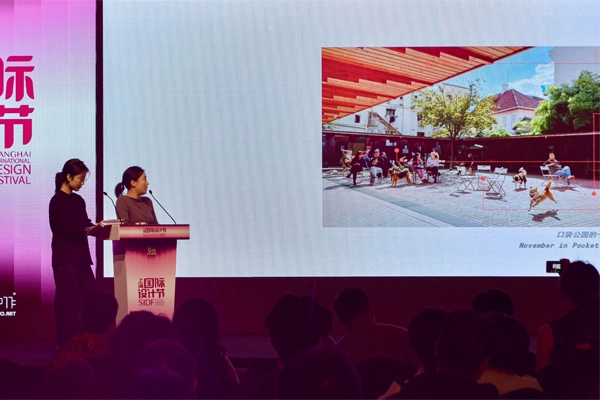
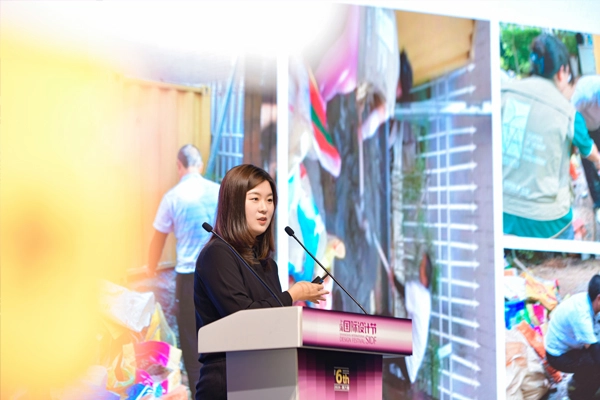
Yuda Huo and Meikang Li, Studio at Shenzhen Technology University – Enhancing the Wellbeing of Local Communities through Design Education Practice: A Story of the Community Garden
The Community Garden Studio at Shenzhen Technology University in Pingshan District, Shenzhen, demonstrated wellbeing through community engagement and participatory design. The educational institution played a central role in facilitating public participation and providing design services for the development of community gardens which increased physical activity, yielding positive benefits on both physical and mental health. The presentation offered new insights on how universities can be instrumental in driving community engagement and supporting sustainable urban development.
Stay tuned for the more from the 11th Shanghai Landscape Forum, to be published here on The Field next week!
Lee Parks, International ASLA, CMLI, is a British landscape architect, Executive Director at AECOM, and co-founder of the Shanghai Landscape Forum, based in Shanghai. Lee is a Teaching Fellow at Shanghai Jiaotong University, and his practice and research focuses on ecological landscape planning, green infrastructure, nature-based solutions, and ecological planting design. Lee also serves on the leadership team for ASLA's International Practice Professional Practice Network (PPN).