

.webp?language=en-US)
by Lee Parks, International ASLA
Last week's post, The 11th Shanghai Landscape Forum: Wellness, covered the first half of presentations that took place in Shanghai last December; today's post continues with the rest of the forum's guest speakers and roundtables.
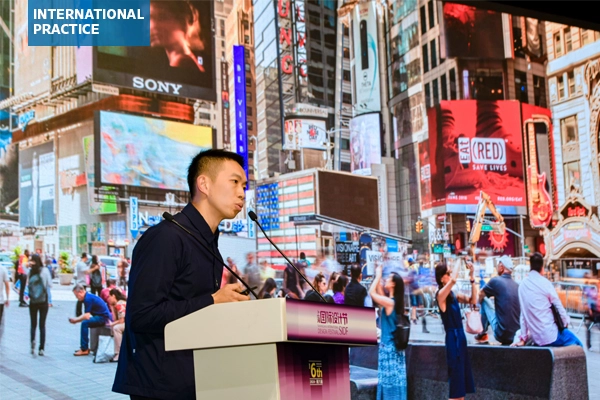
Cheng Gong, Snøhetta – Putting Landscape at the Forefront: Designing for Wellbeing in an Interdisciplinary Way
Focusing on regenerative design, Mr. Gong enthused that landscape design be a tool and an attitude first. Landscape design should integrate with all other design disciplines, to enable us to rebuild our relationship with nature. A fast-paced, highly visual presentation emphasized that landscape design be prioritized at the start of any regenerative design process. This was demonstrated through a range of examples of wellbeing for people, for nature, for culture, for the workplace, and for the environment. He showcased Snøhetta’s recent work for the Shanghai Opera House in Pudong overlooking the Expo Culture Park and Huangpu River.
Huicheng Zhong, ASLA, LEED AP ND, Founding Partner, Atelier Scale – Small Wellbeing, Great Kindness
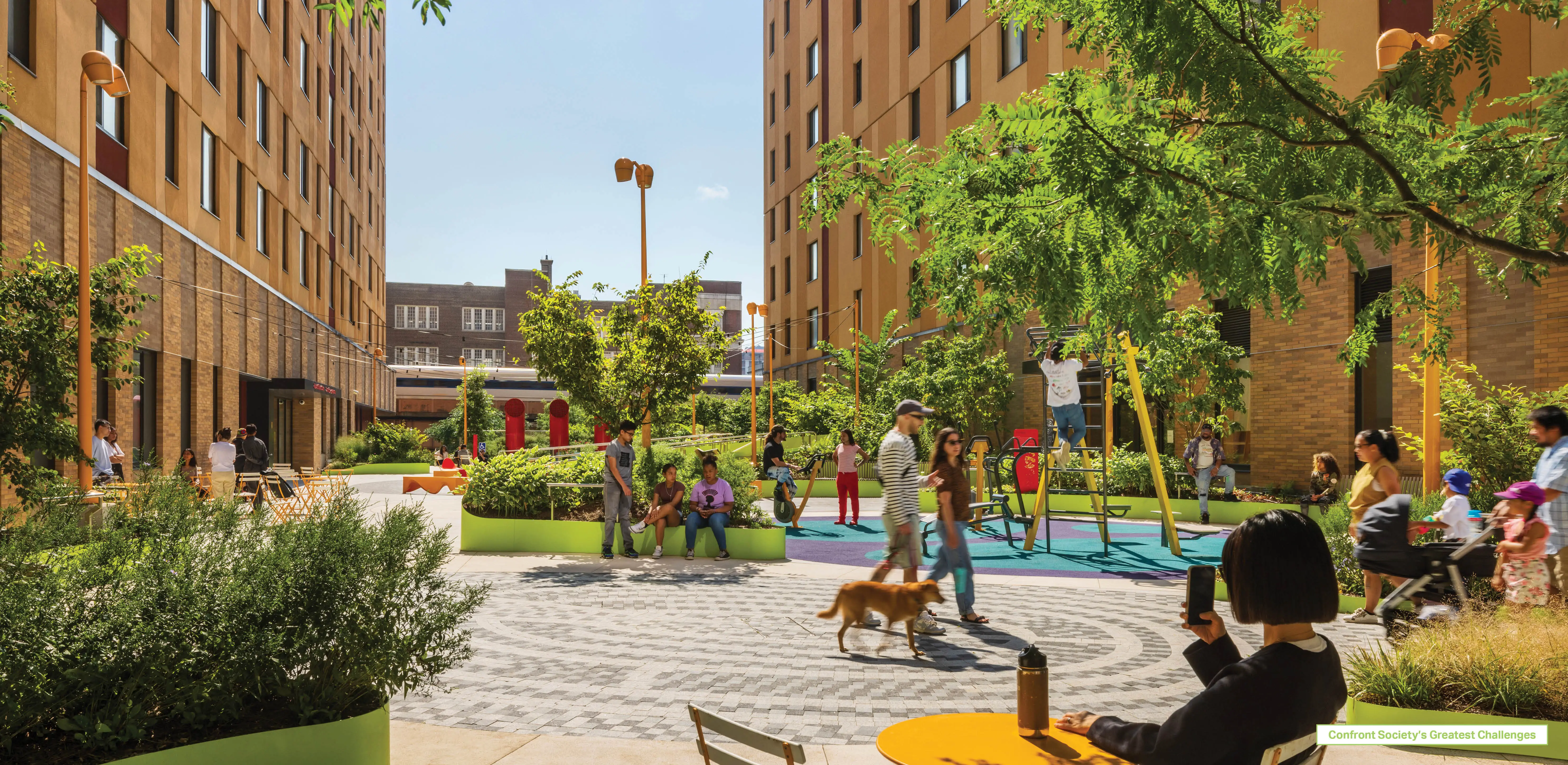
With development focus in China shifting from building large parks in new urban areas to renovating smaller community parks in older neighborhoods, Huicheng Zhong discussed how China's urban development is transitioning from extensive growth to refined operation. While large parks are often the focus of urban planning, small parks play an equally essential role in improving public wellbeing, particularly in high-density areas, using the renovation of the western section of Shanghai Xuhui Midtown Green Corridor as an example. The talk explored smaller but significant issues that deserve more attention in urban renewal, particularly in relation to children’s play and more inclusive playspace design, places for families, and pet-friendly spaces.
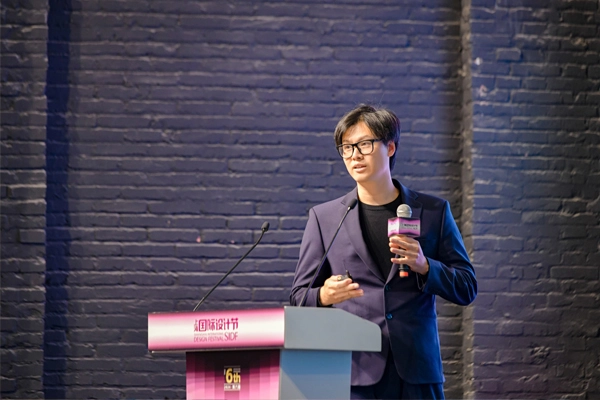
Qi Wang, Sasaki – Focusing on Manipulated Wellness
Mr. Wang looked at wellness from different perspectives: wellness as a science, as a culture, and as a scenario. He highlighted that human health is inextricably linked to the health of the planet, citing examples such as Frederick Law Olmsted’s design of Central Park, which created an idyllic English pastoral landscape contrasting with Manhattan's original wetland landscape. However, years later, with the advancement of ecology, people have recognized the significant environmental and health value of wetland landscapes, as well as the ecological cost associated with elements of English landscapes, like lawns. Mr. Wang shared an article published in 2009 by National Geographic, "Before New York."
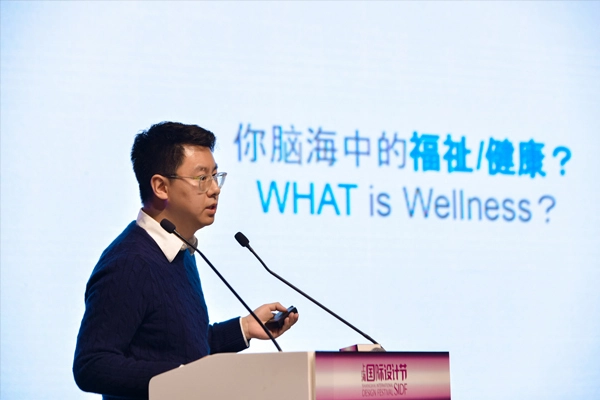
Steven Yu, Associate Director, and Star Hu, Associate Director, AECOM – Exploration of Biophilic Landscape Practices in High-Density Urban Space
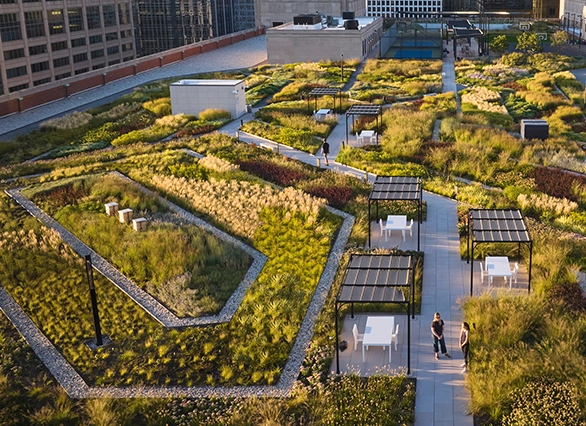
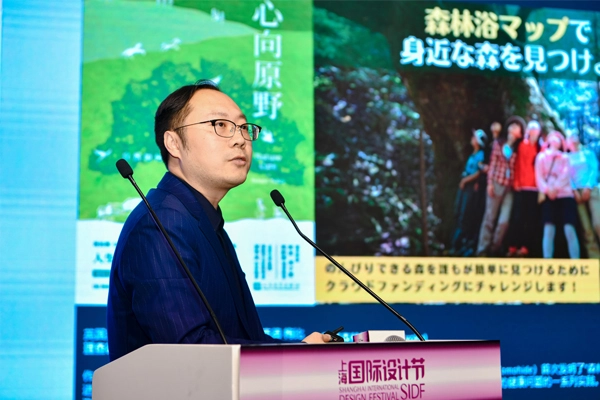
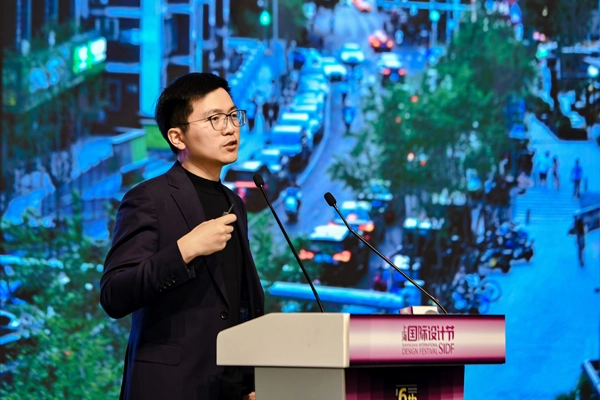
Mr. Yu and Mr. Hu explored the background of biophilic design, nature-based solutions, and sustainable design, all in terms of impacts on wellbeing. This included a review of how Chinese scholars have long considered nature throughout Chinese history as more beautiful than architecture and how architecture was traditionally integrated in harmony with nature. They reflected on introducing nature into cities and how AECOM’s work has positively impacted communities in southern and northern China, such as the Liangma River corridor in Beijing, a transformative green-blue corridor in the heart of the Chinese capital city.
Roundtable Discussions Moderator: Xiwei Wu, Associate, ASPECT Studios
Following the forum presentations, a roundtable discussion included panelists Zhang Lu, Partner and Design Director at HID; Yu Chang, Executive Director and Chief Designer at MYP; Cai Shengjun, Market Transformation & Development Department Specialist at the U.S. Green Building Council (USGBC) and Green Business Certification Inc. (GBCI); and Dong Cheng, contemporary sculptor, co-founder of MoYi Art, and Deputy Secretary-General of the Shanghai International Design Festival Committee.
The panelists discussed inclusive design, biodiversity, policies, and integrated design for green cities, and explored diverse approaches to wellbeing in design and how landscape design can create greater value across social, environmental, and cultural dimensions.

Closing Statement
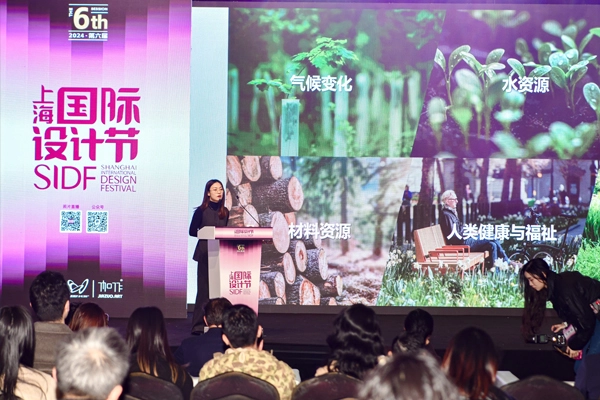
The 11th Shanghai Landscape Forum theme of Wellness explored the diverse role of landscape architecture to create high-quality environments for human wellbeing, nature, and biodiversity. As part of the closing statement, Lee Parks, International ASLA, concluded the forum by encouraging the audience to stay focused on wellness. Despite the slowing economy, the transition from rapid growth to refined operation, along with the shift to urban regeneration and increasing concerns for citizens' wellbeing and for increasing opportunities for biodiversity offer multiple opportunities for landscape architects in China to contribute to enhanced quality of life.
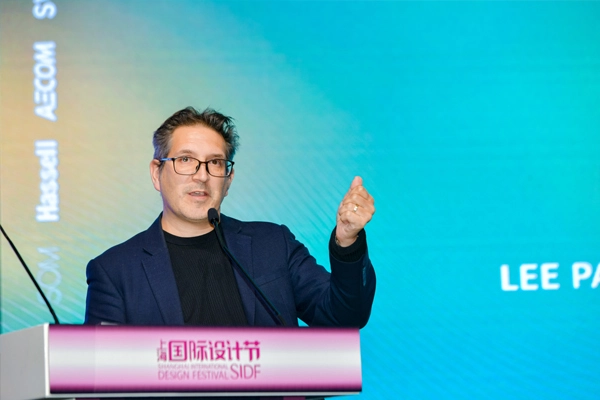
Lee Parks, International ASLA, CMLI, is a British landscape architect, Executive Director at AECOM, and co-founder of the Shanghai Landscape Forum, based in Shanghai. Lee is a Teaching Fellow at Shanghai Jiaotong University, and his practice and research focuses on ecological landscape planning, green infrastructure, nature-based solutions, and ecological planting design. Lee also serves on the leadership team for ASLA's International Practice Professional Practice Network (PPN).