

.webp?language=en-US)


Floating Air Connectivity Through Sustainable Design
by Anhad Viswanath, Associate ASLA
This post is about a conceptual, unbuilt independent project I worked on over the past couple of months. After graduating from Michigan State University's landscape architecture program, I am taking some time to upskill on software, partly through projects like this one, where I get to apply my software skills and explore my interests in airport design and planning.
Introduction
Air connectivity is a gateway to splendid new horizons and experiences. From the day we have started flying, travelling by air has helped bring people and countries closer and foster effective connectivity domestically and internationally.
With the aviation industry progressing, floating air connectivity has been a nascent phenomenon that is beginning to transform the way we access air transportation. Rising sea levels globally and the challenges that land scarcity and urbanization bring to urban areas have led designers and planners to consider floating airports and other innovative and sustainable design solutions to help cope with these challenges.
The relevance and need for floating airports
In 1927, Edward Armstrong had an idea to create seadromes to establish transoceanic air service. The idea sparked the concept of having airports situated on water to enhance efficient air connectivity across oceans. Today, floating airports, like floating gardens and wetlands, are becoming a need to help deal with land scarcity and rising sea levels. According to CNN Travel, land is in short supply in and around cities with a high demand for air connectivity, and airports require a lot of space. Floating airports are becoming more intriguing in the context of rising sea levels and bringing the built environment closer to the marine environment.
Applying the principles of landscape architecture with a touch of interior design to craft a floating design proposal on the Markermeer Lake in the Netherlands
When exploring the concept of floating airports, I was inspired to take on an independent unbuilt design project that would allow me to apply my skills and expertise as a young landscape designer and aspiring planner. Growing up in the Netherlands allowed me to observe floating developments early on and their role in alleviating challenges associated with rising sea levels. I was keen to now bring in my expertise to design a floating airport in the Netherlands that would help address these issues.
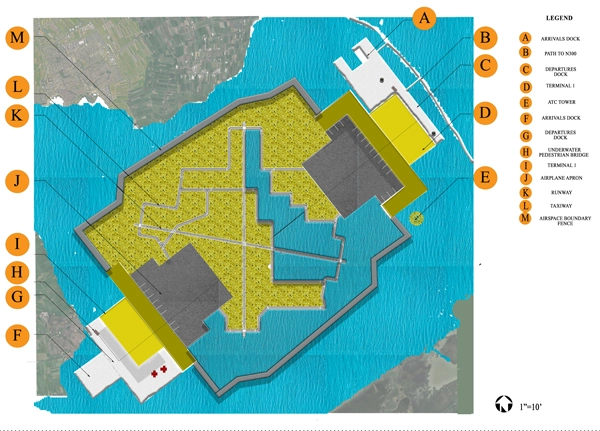
The project site is the Markermeer, a lake located north of Amsterdam and Volendam. This lake was chosen for its size (270 square miles)—large enough to accommodate an airport—and because this area experiences high sea tides. The aim of the design is to help alleviate the possibility of flooding caused by the tides and reduce air traffic to Amsterdam Schiphol Airport. In turn, the airport also provides a gateway to the Wadden Islands in northern Holland.
Establishing harmony between nature and the built spaces and energy efficiency
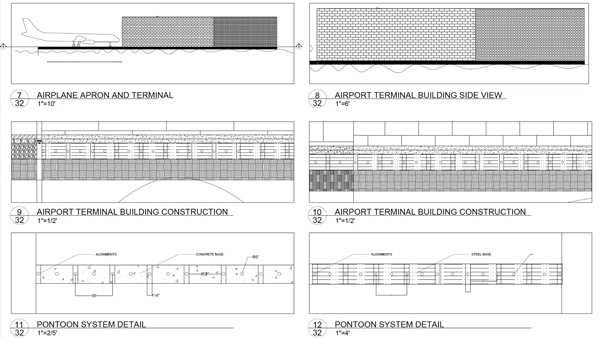
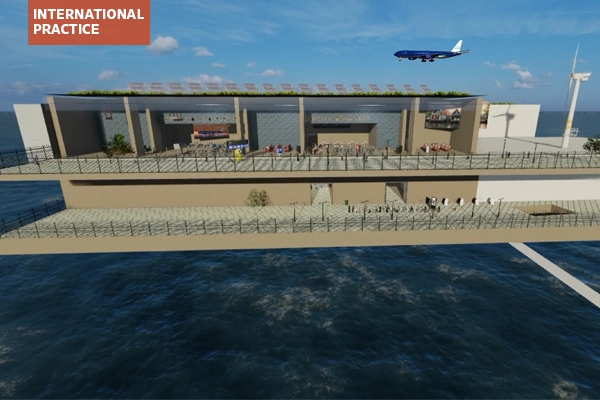
The airport's terminal buildings are placed on a pontoon system that provides strength and flexibility with the tides. As a child, I often wondered how floating buildings could sit on the water’s surface. In India, I recall observing the Taj Lake Palace during a vacation to Udaipur, Rajasthan, and how it is placed on the lake harmoniously. Learning about the pontoon system and how buildings and built surfaces can be placed on water and ‘float’ led to a more thoughtful and interesting perspective. The inclusion of a wind turbine and solar panels will help generate electricity for the airport and enhance the efficiency of the airport’s functionality and vitality.
Have you ever dreamed of departing or arriving at a terminal building overlooking ecological reserves? Terminal 1 (see the header image at the start of the post) is located just behind Trintlelland Island and beside Marker Wadden Island. Its placement within the vicinity of two wonderful nature preserves would help foster ecological integration between the floating land and built spaces and renewable energy systems.
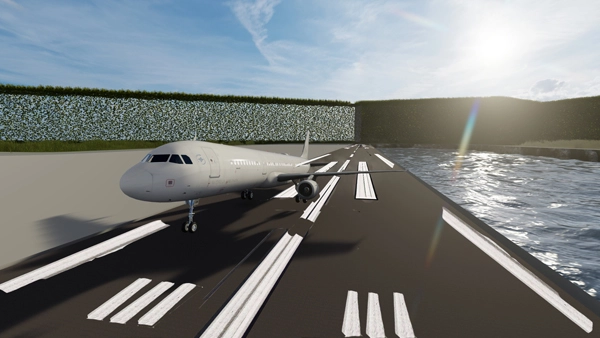
The airspace fence will have vegetative covering to absorb higher tides and provide protection from them. The runways and taxiways would be bordered with some stone covering and rocks to alleviate erosion.
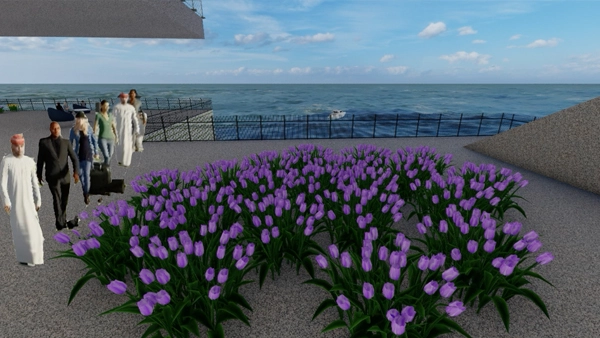
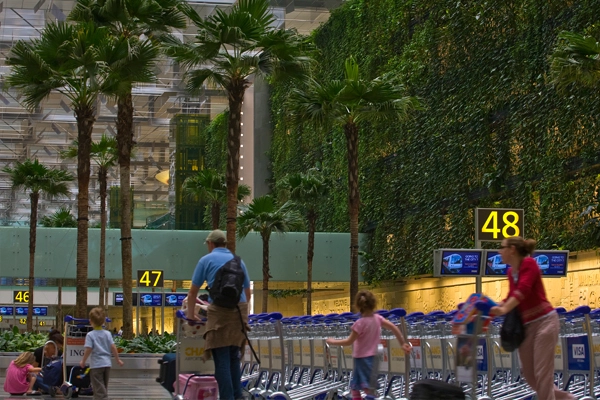
Airport landscape design and vegetation has been a very intriguing aspect of the passenger experience, as seen in airports like Singapore’s Changi Airport. The airport entrances will include tulips to represent the role of tulips in the Dutch landscape and culture. In turn, their beauty will harmonize the passenger transit experience, helping passengers, who may feel nervous when travelling by air, feel more relaxed, and provide a beautiful transit experience from the terminal to the aircraft.
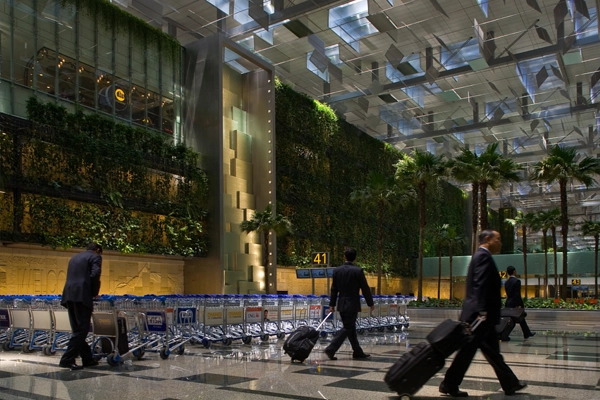
Biophilic Interiors and exteriors and place-making that represent Dutch heritage
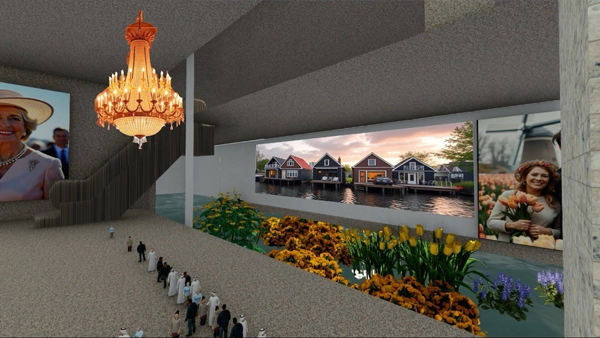
Imagine disembarking from your international flight and heading towards a passport control booth in front of a small canal edged with fragrant Dutch flora and fauna, welcoming you to the Netherlands. In turn, passengers will know that they have indeed made it to the Netherlands—contrary to the sense one gets from landing in an airport characterized by junkspace, with a lack of identity or allusion to context. Markermeer International Airport brings together global aviation needs with Dutch traditions with iconic flowers, symbolizing the Netherlands’ rich horticultural heritage.
I recall the international flights I have taken so far in my life and how the airport could be a place celebrating the culture and charm of the destination through cultural artifacts. This aspect of place-making in design is really effective in elevating the feeling of the place’s ambience and character.
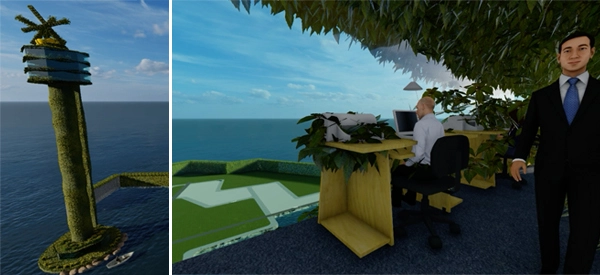
The air traffic control tower is wrapped with lushly planted green walls that will help to absorb water and also function as the airport’s powerhouse for rainwater harvesting. Through transpiration and photosynthesis, the tower will streamline natural water filtration and preserve the biodiversity and marine life of the Markermeer. The plant-filled interiors will also enhance the employees’ experience and help them destress after the busiest periods of air traffic. The tower has two small windmills on the roof to generate power for the tower; they are placed on supports that resemble clogs, the traditional Dutch shoes.
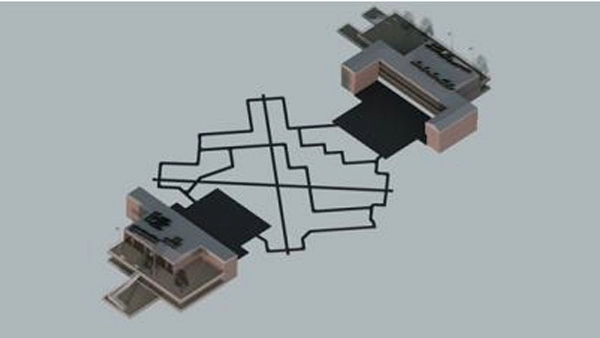
The intersecting runways resemble the blades of a windmill, and the terminal buildings resemble the docks. Windmills represent resilience and innovation, enhancing the character of the design. It can be argued that intersecting runways are not usually recommended for floating airports. Yet, they can still be a great help for pilots and air traffic control personnel to decide which runway to use based on wind speed and sea tides.
Water and underwater connectivity
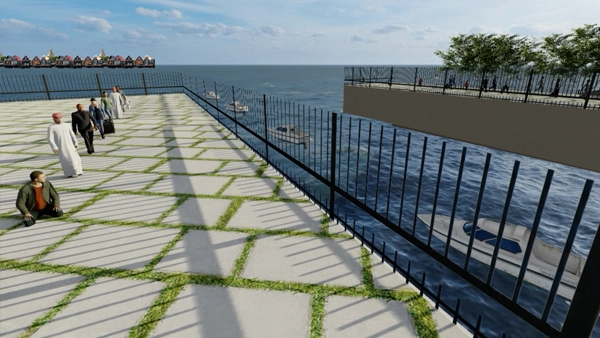
Transportation to and from the airport to the nearest cities will include electric boat ferries that will provide a scenic transit experience for passengers. Terminal 2 sits beside the city of Volendam, which has a boat station, so there will be direct transit to Volendam from Terminal 2. The boat transit system will streamline sustainable, cost effective, and efficient transportation from the airport.
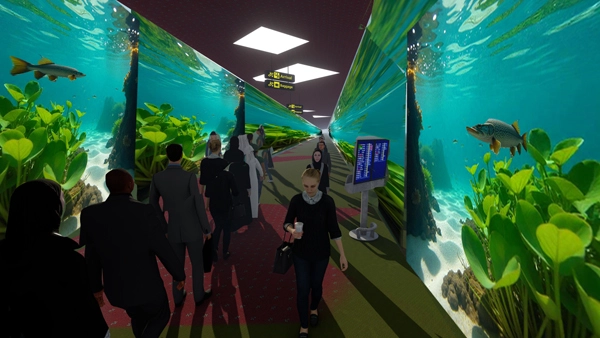
To transfer from Terminal 1 to Terminal 2, an underwater pedestrian bridge will connect the arrivals platform in each terminal. The transit bridge will allow passengers to enjoy the underwater marine life of the Markemeer as they head to the terminal. The underwater bridge, similar to the ones we see at the Universal Studios and other amusement parks, could also serve as a tourist attraction in and of itself.
Insights for future floating airports
I hope to develop this design project further in the coming months. Some ideas to expand the proposal include the addition of hotels, possibly underwater.
Some key takeaways from the design process are:
- Harmonizing the built structures and components with the environment (water in this case) offers opportunities to enhance the travel experience. What are your thoughts about the idea of constructing underwater hotels, given our space constraints?
- Exploring the role of pontoon systems introduced me to a great way to ensure design flexibility. What could be some ways in which we can implement these at existing floating airports, such as Kansai International Airport in Japan?
- The Markermeer lake has also been an attractive site for land reclamation. Do you think floating reefs in the airport design could contribute to protecting biodiversity?
Anhad Viswanath, Associate ASLA, is a Michigan State University landscape architecture program graduate, originally from India. I chose landscape architecture because the field offers interesting avenues for design, art, the environment, and society, which are my interest points. I spent seven years of my childhood in the Netherlands. During my time there, I witnessed landscape architects and agriculturists employing interesting means, such as marshes, dikes, and adding volumes of sand to land near the seashores, to protect the land from flood related events. I saw how the profession is very important in helping the country’s landscape become and remain resilient and regenerative, especially as the country is situated slightly below sea level. I would like to specialize in landscape and urban design where I can design gardens, parks, playgrounds and urban spaces that can encourage people to embrace the natural environment and improve the lives of communities. My capstone project in my graduating semester allowed me to explore adaptive reuse and eventually discover my passion for reimagining airfields and underutilized developed land as a part of sustainable design.