

.webp?language=en-US)
by Lee Parks, International ASLA
In 2021, the Shanghai Jiaotong University (SJTU) School of Design launched a professional, international master’s program in landscape architecture (MLA), creating practice-oriented academic positions and emphasizing design studio teaching and talent development.
“Landscape Planning and Design in Metropolitan Areas" is the core course of the MLA program, led by Wang Ling, the head of the Landscape Architecture Department at SJTU's School of Design. It is also one of the "Jiao Tong Global Virtual Classrooms" at SJTU, a new model of international cooperation in blending online and offline teaching and working together with partner universities to fully realize cross-regional and cross-cultural exchange. Through collaboration with the Royal Melbourne Institute of Technology (RMIT) in Australia, they launched an international joint design studio in 2023.
2023 – The Greenline
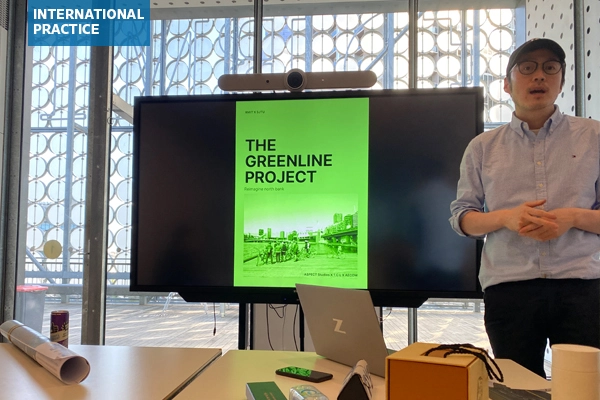
The 2023 joint international studio enabled SJTU students to work together with RMIT for an intense four-day collaboration. With four months to plan, and hosted over four days, four teams competed on one of the most significant landscape projects ever undertaken in Australia: the City of Melbourne’s Greenline Project on the north bank of the Yarra River, creating four visions for the key zones of the project. A critical cultural preparation prior to commencing the studio was led by Lee Parks, Teaching Fellow at Shanghai Jiaotong University, to prepare Chinese students to understand the importance of embedding Reconciliation and Indigenous content into their work through acknowledgement of the Aboriginal and Torres Strait Islander people.
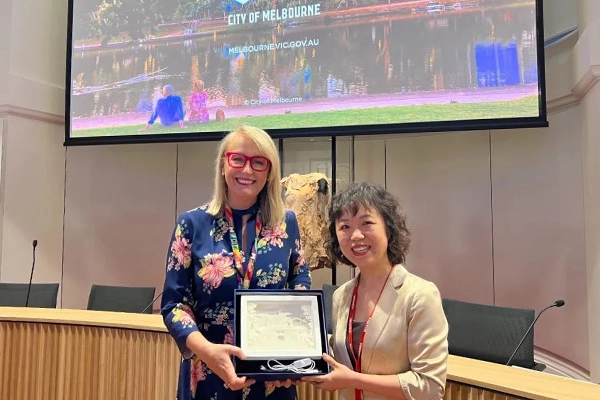
The workshop was organized, facilitated, and led by Ethan Zhang, Senior Landscape Architect at ASPECT Studios in Melbourne. 19 students from RMIT were joined by 11 counterparts from SJTU in Melbourne, meeting Lord Mayor Sally Capp and having their studio time supported by Ethan Zhang, professor Wang Ling from SJTU, Lee Parks from AECOM, and Sean Song from TCL.
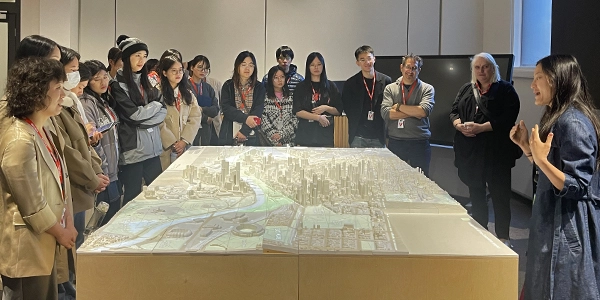
Ethan Zhang said, “Four months of course preparation, four days of intense collaboration, four groups of talented people, and four big visions for future Melbourne—this was a celebration of the power of landscape architecture through international collaboration.”
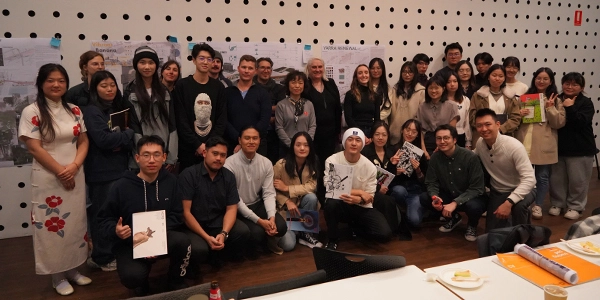
2024 – Reimagining West Bund
The success of the joint international studio inspired more ambitious plans for 2024. Seven months of planning and preparation enabled three universities to convene in Shanghai in October. Based on the model jointly developed by SJTU and RMIT to bring together academic teaching with practitioners from renowned landscape design studios and real clients in an international student design workshop, the two universities, supported by students from TU Berlin, organized this year's workshop, entitled “Palimpsest Landscape.”
This initiative offers students an outstanding learning experience that goes beyond the possibilities of traditional design studios. The international collaborative studio is closely connected to local stakeholders, challenges, and real-world planning tasks, giving students the opportunity to actively network, travel, and collaborate with locals. This almost immersive experience not only promotes immersion in the local environment, but also encourages students to appreciate cultural differences and view challenges from a global perspective. This provides a valuable foundation for creative and intercultural learning.
Language barriers and cultural differences are overcome with the help of the quasi-universal language of design. Despite the truly global distances of around 8,000 km between the cities of Melbourne, Shanghai, and Berlin, the principles of work/design processes, rapid brainstorming, collaboration, compromise, and understanding of priorities are similar worldwide and have been shown to work well. Recognizable differences in the understanding of design and the respective different conditions of design production are an important learning opportunity for students and teachers and help them to think outside the box, broaden their horizons, and gain an understanding of international cooperation.
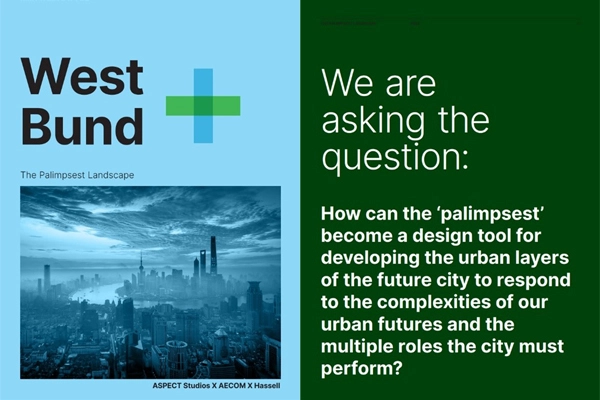
The 2024 studio was supported by the Shanghai West Bund Development Group Co., Ltd. (“West Bund” for short). West Bund, which forms part of Shanghai’s Xuhui waterfront area, is pursuing high-quality development of the waterfront area and strives to build an extraordinary waterfront. The project site is located on the intersection of Shanghai’s ‘Blue’ and ‘Green’ corridors; hence the studio was positioned as a vision for “West Bund +” encouraging students to consider globally significant issues of climate change and biodiversity loss, metropolitan and district scale planning and design, whilst also responding to the unique local site-specific issues of connectivity, land use, urban renewal, and industrial heritage.
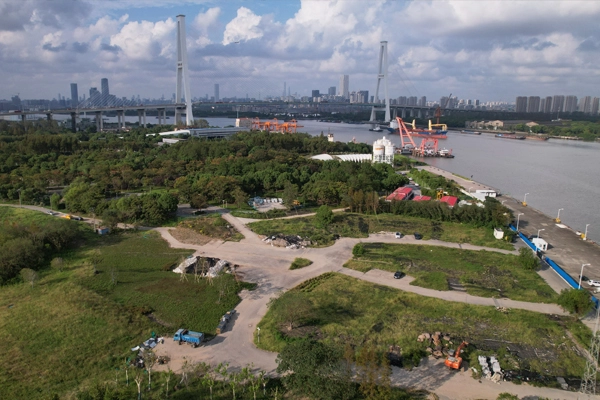
Alice Lewis, Program Manager of the MLA program at RMIT, ensured a balanced mix from the 28 students of SJTU, 10 students from RMIT, and 5 from TU Berlin to form 7 groups each with 6-7 students per group. After a site tour on day one, the groups had only 3 days remaining to form effective teams, undertake analysis, strategize design goals and visions, and then execute concepts, site plans, and associated illustrations.
The deliverables included an A0-size display board and a 10-minute presentation by each group to a jury. Concepts ranged from ‘Glitchy Landscapes’ to ‘Riverside Forests’ and ‘Seedscapes,’ exploring a wide range of topics to address climate change, biodiversity loss, health and well-being, agricultural heritage, and connectivity.
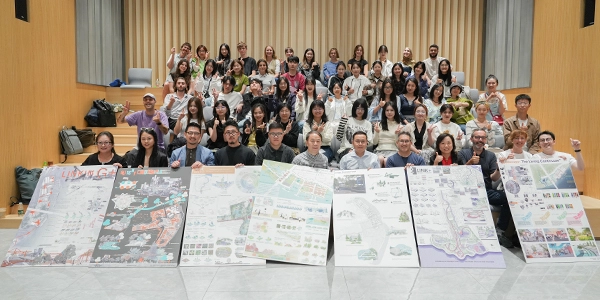
Enabling students from Melbourne, Berlin, and Shanghai to collaborate on an immersive real-life project generated inspiring ideas and innovative concepts that impressed practitioners and representatives from the West Bund Group.
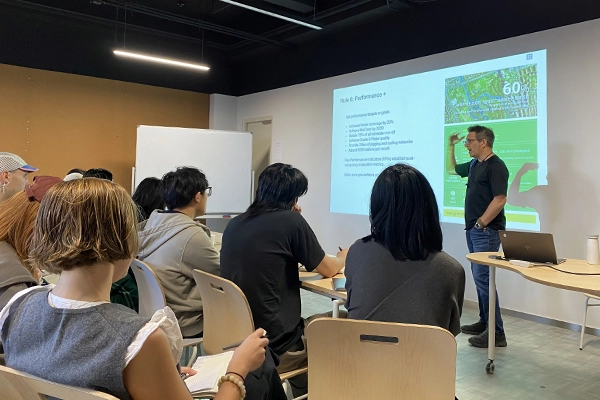
Unlike other visiting schools or traveling studios, this international joint studio is truly integrated with the local community. Students meet, travel, and work with locals, in what could be described as an “Airbnb studio.” Rather than just coming in briefly as outsiders, students are encouraged to immerse themselves in the local environment, embrace cultural differences, and explore and investigate issues through a global lens.
Norman Harzer, Lecturer at TU Berlin's Institute of Landscape Architecture and Environmental Planning, gave a closing speech. He commented: “I am thrilled with how Shanghai has presented itself to us and how committed the students have been in combining their respective experiences and cultural backgrounds. This was also evident in their concepts and designs, which were particularly inspired and innovative in their approach to the task. The students really enjoyed the whole experience.”
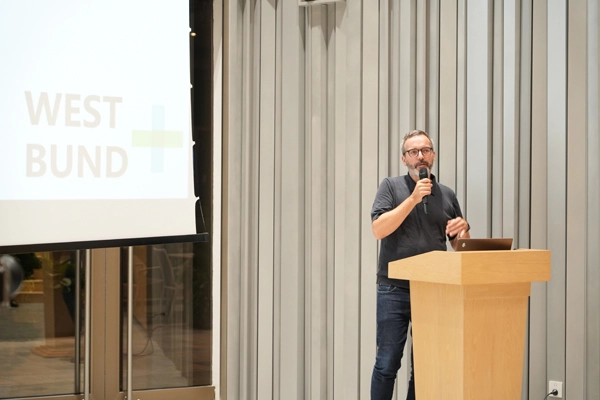
While teaching design is clearly the focus of the studio, design itself can often be quite subjective. The studio highlights the working/design processes, rapid ideation, multi-cultural collaboration, making compromises, and understanding priorities and delivering outcomes that inspire. The studio also reflects the deep collaboration between the universities, the design industry, and the local development authorities.
“In today’s global economy, the ability to work in an international context is becoming increasingly essential for all designers,” says Ethan Zhang, Senior Landscape Architect at ASPECT Studios. “This studio pushes students out of their comfort zones, teaching them how to communicate and collaborate with people from different backgrounds, build global networks, and work on projects that exist outside their own cultural and environmental contexts.” International students experiencing Shanghai for the first time quickly acclimatized to the cultural context of China’s fast paced digital lifestyle where daily life essentials such as food and transport are typically acquired using smartphone apps.
https://www.youtube.com/watch?v=mXsLt9ffkTc
Looking ahead to 2025, the studio concluded with discussions for a future international joint studio in Berlin, giving students from Melbourne and Shanghai the chance to plan and design in a European environmental and cultural context.
Lee Parks, International ASLA, is a British landscape architect, Executive Director at AECOM, and co-founder of the Shanghai Landscape Forum, based in Shanghai. Lee is a Teaching Fellow at Shanghai Jiaotong University, and his practice and research focuses on ecological landscape planning, green infrastructure, nature-based solutions, and ecological planting design.