

.webp?language=en-US)


PPN Zoom Book Club: The Nature of Inclusive Play
by Katherine Lewis Mitchell, ASLA, PLA, CPSI
The ASLA Children’s Outdoor Environments Professional Practice Network (PPN) is pleased to share a summary of the PPN’s sixth Zoom Book Club. Hosted on September 26, 2024, attendees were treated to not one, but two amazing authors who co-wrote The Nature of Inclusive Play: A Guide for Designers, Educators and Therapists, published in 2023 by Routledge. This guide is written to promote equitable play for all children, offering readers a comprehensive foundation in the vital role of play for mental and physical development. It explores how to create fair and inclusive play opportunities, ensuring every child has access to meaningful play experiences. Through nine detailed case studies, readers gain insight into real-world examples and practical strategies for designing outdoor spaces that prioritize inclusivity and accessibility for all.
Co-author Amy Wagenfeld, Affil. ASLA, PhD, OTR/L, SCEM, CAPS, EDAC, FAOTA, is an accomplished occupational therapist, educator, researcher, and author. She has great design perspective, as she regularly provides therapeutic and universal design consultation on an international level through her organization, Amy Wagenfeld | Design. Amy has won many awards and is recognized for her contributions not only to occupational therapy but also the landscape architecture industry.
Chad Kennedy, ASLA, PLA, CPSI, is an award-winning landscape architect at Westwood where he serves as a director and mentor. Chad previously worked with the Center for Persons with Disabilities where he built a strong foundation and understanding about what inclusivity really means. He demonstrates this daily through the work he guides both in healthcare and recreational design that are shining examples of the principles discussed in The Nature of Inclusive Play. Chad has also written many articles and presents regularly on the topic of socially inclusive and sensory integrated spaces. His work extends as far as Uganda, where one of the case studies highlights a standout example of creating an outdoor play environment that is both fair and equitable, serving the diverse needs of all its users.
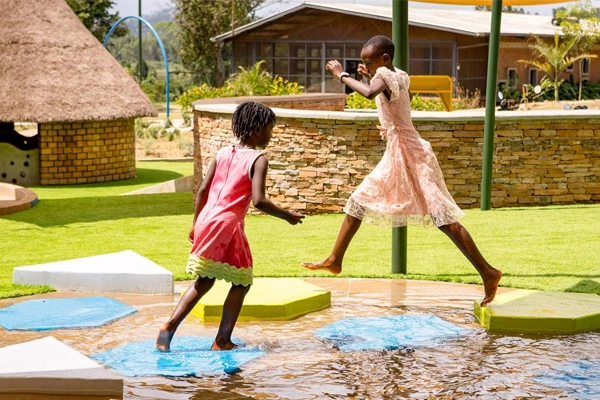
The book club attendees were treated to an inciteful discussion facilitated by COE PPN leader Lisa Casey, ASLA, PLA, LEED AP BD-C. Amy and Chad shared insights into their writing process, explaining how the concept for this work emerged after years of discussion and a shared recognition of a gap in existing literature. Their goal was to create a resource specifically for designers and therapists—one that is both educational and immediately applicable in practice. They spoke to the importance of the exhaustive research that was put into practice as they crafted this book, with Amy highlighting several articles and a white paper from the STAR Institute that she felt were paramount in providing information to those who were interested in diving deeper.
Chad and Amy went on to discuss the selection of specific categories included in the text, focusing on:
- risky,
- social and dramatic,
- intergenerational,
- sensory,
- loose parts, and
- nature play.
Chad explained that these types of play are crucial for childhood development and are directly related to play environments. The selection was based on their potential impact and relevance to outdoor play spaces, considering the book's length constraints. The goal was to make these concepts more understandable and applicable in practice. Amy added that their process involved reviewing evidence and research to translate these play types into practical applications.
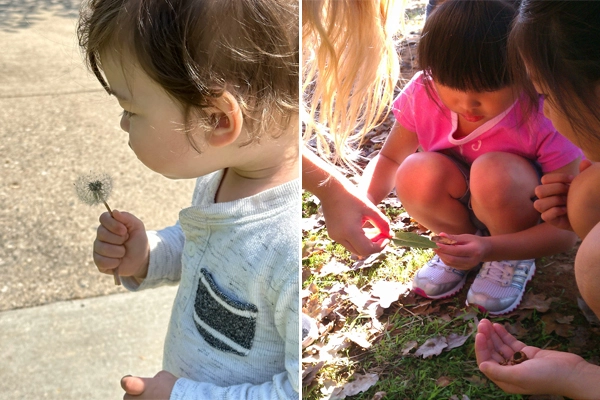
The talk continued with a quote from the text: “All children must be provided with the best possible resources to grow, thrive, and become their best selves.” Lisa goes on to mention the pragmatic approach within the book that also acknowledges tradeoffs within constrained budgets. Chad explained that this is one of the most difficult aspects of designing inclusive play spaces. He urged a focus on providing as much diversity within a play space as possible to work towards a space that is as diverse as the people using it.
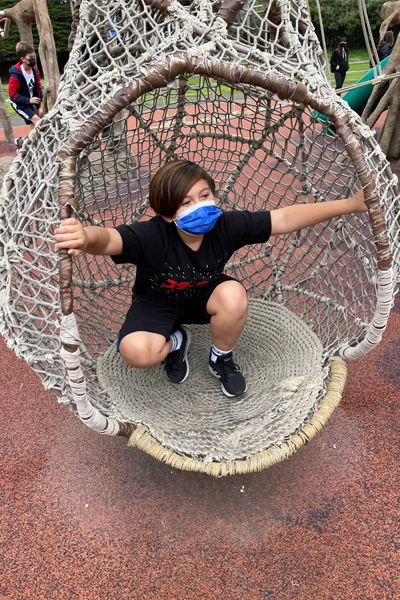
Amy discussed the importance of creating cozy spaces for children, emphasizing how essential it is for a child to have a designated area where they can find refuge and respite. These spaces play a critical role in helping children self-regulate when they feel overwhelmed. She highlighted that such spaces are particularly valuable in outdoor play environments. Together with Chad, Amy explored the most effective ways to design and position these spaces, underlining the key principles behind their placement and use.
The discussion moved to an almost controversial topic of minimum standards set by ADA regulations not being enough. Chad challenged attendees to think harder and deeper—to think about the real intention of the standards, including providing spaces for everyone. From this stems the development of the term Inclusive+, which incorporates the concepts of socially inclusive and sensory integrated playgrounds. The term goes beyond just considering mobility and focusing on all types of disabilities, including invisible disabilities, which vastly outnumber those with only mobility constraints. Inclusive+ pushes the envelope, bringing to the forefront what we all one day hope will be public policy.
The discussion transitioned into sensory systems and balancing sensory input needs for different users. While we are all familiar with the typical five senses, Amy explained that there are eight sensory systems: five basic external senses plus three internal senses. The discussion focused on addressing diverse sensory needs in spaces, particularly for children with varying sensory tolerances. Amy explained the concept using the analogy of glasses: those with low sensory tolerance have an overflowing glass, overwhelmed by sensory input, while those with high sensory tolerance have an empty glass, seeking more input. Most people fall in between. Designing spaces to address these needs involves creating areas with reduced sensory input for those with low tolerance and multisensory experiences for those seeking more. Transition spaces are crucial for moving between high and low sensory areas, providing predictability and safety. Examples include careful placement of musical instruments and fragrant plants to avoid overwhelming individuals. The goal is to balance sensory experiences without overwhelming users with sensory input.
Chad and Amy shared the successes they have had over the years through the collaborative efforts between their disciplines. Designers were urged to advocate for the inclusion of an occupational therapist during the design process.
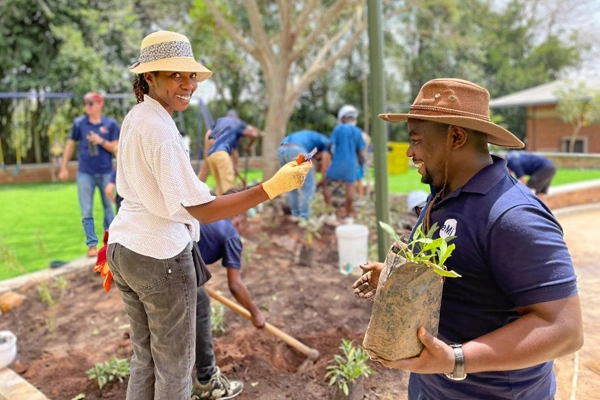
The discussion ended with each author sharing an impactful case study. Chad shared the GEM Foundation project in Uganda as a keystone example of Inclusive+ design but also because of the impact the playground has had on the region where childhood play is not valued. Amy shared a project she is working on with the Nature and Health Alliance through a REI Cooperative Action Fund grant. Amy, along with colleague Dr. Wes Tate, are working to create a learning network of case studies and a database of resources featuring therapeutic outdoor programs and projects.
The Nature of Inclusive Play: A Guide for Designers, Educators, and Therapists is an essential read that I wholeheartedly recommend. The thoughtfulness and attention to detail behind this comprehensive guide make it an invaluable resource. Its depth and clarity truly set it apart, offering critical insights for anyone involved in creating inclusive play environments.
For those interested in learning more about the GEM Foundation project, I urge you to visit:
The Gem Foundation Uganda on Instagram
For those interested in exploring the Nature and Health Alliance project, please visit:
The Learning Network | Nature and Health Alliance
Additional reading:
Bodison, S. C., & Parham, L. D. (2018). Specific sensory techniques and sensory environmental modifications for children and youth with sensory integration difficulties: A systematic review. American Journal of Occupational Therapy, 72(1), 7201190040p1–7201190040p11.
Brown, D. M., Ross, T., Leo, J., Buliung, R. N., Shirazipour, C. H., Latimer-Cheung, A. E., & Arbour-Nicitopoulos, K. P. (2021). A scoping review of evidence-informed recommendations for designing inclusive playgrounds. Frontiers in Rehabilitation Sciences, 2, Article 664595.
Moore, A., Lynch, H., & Boyle, B. (2022). Can universal design support outdoor play, social participation, and inclusion in public playgrounds? A scoping review. Disability and Rehabilitation, 44(13), 3304–3325.
STAR Institute. (n.d.). Your 8 senses.
For recaps of the PPN’s previous Zoom Book Clubs:
- May 2024: Balanced and Barefoot: How Unrestricted Outdoor Play Makes for Strong, Confident, and Capable Children by Angela Hanscom
- January 2024: Nature Swagger: Stories and Visions of Black Joy in the Outdoors by Rue Mapp
- October 2023: Naturally Inclusive: Engaging Children of All Abilities Outdoors by Ruth Wilson, PhD
- May 2023: Schools That Heal: Design with Mental Health in Mind by Claire Latané, FASLA, MLA, SITES AP
- January 2023: Letting Play Bloom: Designing Nature-Based Risky Play for Children by Lolly Tai, PhD, RLA, FASLA
Katherine Lewis Mitchell, ASLA, PLA, CPSI, is a Project Manager at Westwood. Kat is a Certified Playground Safety Inspector and is an officer and past co-chair of ASLA's Children's Outdoor Environments Professional Practice Network (PPN).