

.webp?language=en-US)


by David Cutter, FASLA
The Society for College and University Planning (SCUP) Excellence Awards Program provides an opportunity to recognize some of the best contemporary works of landscape architecture, planning, and architecture associated with institutions of higher education. I was one of five jurors that reviewed 120 entries representing 103 institutions mostly in the United States, but with a significant number of international projects. While the project type was dominated by architecture submissions, we reviewed 19 landscape architecture and 29 planning projects as part of this year’s program. As anyone who has participated in a competition jury can appreciate, the process of reaching consensus is both tedious and inspiring; however, we unanimously agreed that the highest honor, our Jury’s Choice award, would go to a project in the landscape architecture category (more on that later).
Once we had come to consensus on the 15 projects to recognize this year, we spent time as the jury reflecting on some common principles of excellence that distinguished a winning project, and themes we saw represented in many of the projects submitted. Projects selected for recognition exhibited many of these characteristics:
- Compelling story: depth of thinking, process, and meaning
- Connection to strategic planning, institutional, and academic goals
- Connections to local culture and place
- Strong indoor-outdoor relationship and mixing of uses/functions
- Meaningful commitment to social justice, inclusion, and diversity
- Addressed the wellness and health of students and staff
- Creative communication, engagement, and outreach tools
I will share just a couple of winning projects in this post in hopes that it will inspire you to:
- visit SCUP’s website to see all the winning projects and
- consider submitting your project for the 2025 SCUP Excellence Awards program.
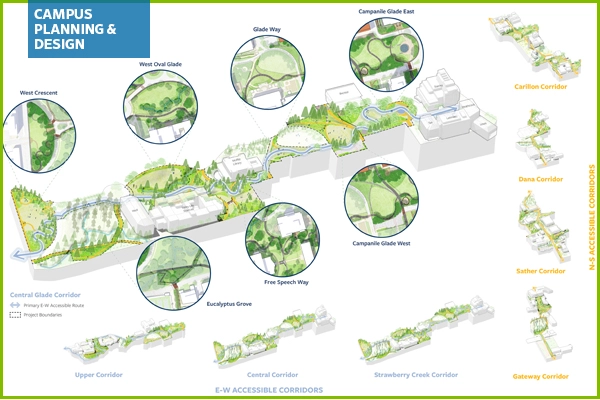
The Jury’s Choice award went to the UC Berkeley Accessible Paths and Places Master Plan by Sasaki. This truly comprehensive accessibility plan utilized an inclusive planning process and sets a new standard for addressing accessibility on their 178-acre campus with 250 feet of grade change. The project evolved from the university’s ADA Transition Plan, which cataloged 42,000 accessibility barriers across campus. The vision, which develops design solutions at site and campus-wide scales, extends ADA compliance to encompass human-centered design practices that address an individual’s unique experiences and sensory responses in the built environment. For example, the sound of running water or bells and the scent of eucalyptus or pine help orient the user and ground them in place. A diverse selection of projects was developed to the conceptual design level with the goal of making it easy to integrate accessibility improvements into all capital projects. This novel project advances UC Berkeley’s legacy of disability rights advocacy and provides a precedent for institutions in addressing accessibility.
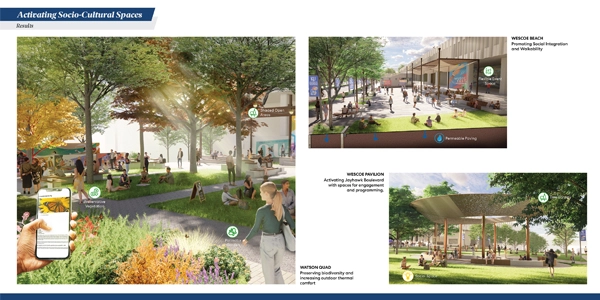
A couple campus master plans recognized by the jury checked all the boxes of the characteristics of a winning submittal. The University of Kansas (A Resilient Campus) led by Perkins & Will, and Georgia Institute of Technology’s Comprehensive Campus Plan led by NBBJ provide innovative models of student and community engagement and communication (apps, dashboards and interactive websites, GIS-based analysis and living plan, graphic novel illustrations). While their development needs were quite different (an excess of square footage and deferred maintenance vs. projected 26% growth in enrollment) they both used a data-driven process to guide campus development. Both projects prioritized a student-first experience, community well-being, ecological stewardship/resiliency, and a transformative campus. The University of Kansas plan did an especially thorough job of addressing site ecology, analyzing their carbon and ecological footprint, and developing policies and budgets that support sustainability.
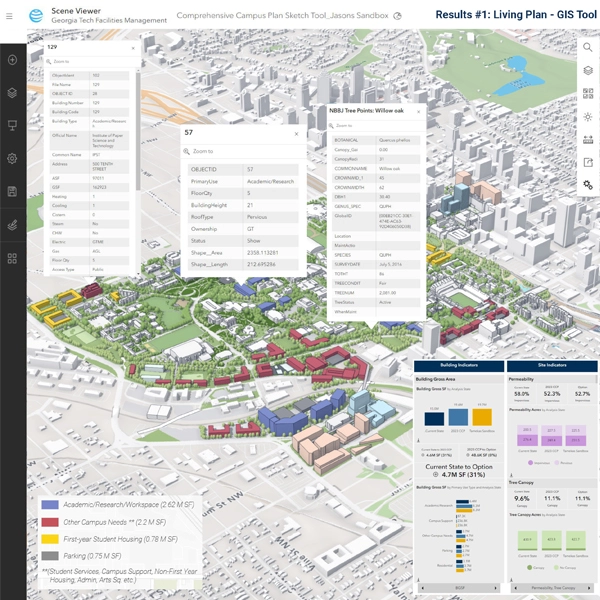
Notable in Georgia Tech’s Campus Plan is the development of a “living plan” that gives staff a GIS-based digital model of the campus that can be used to adjust planning scenarios and measure in real-time the impacts of change.
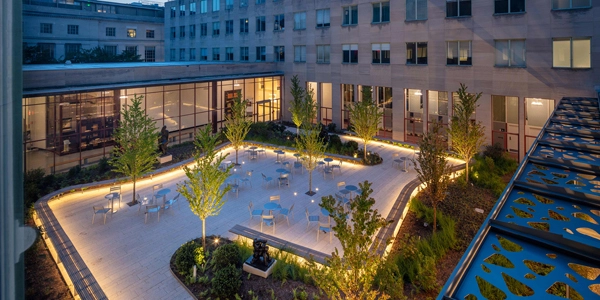
At the other extreme of scale, the Honor Award for Landscape Architecture General Design went to the 600-square-foot MIT Hayden Library Lipchitz Courtyard submitted by STIMSON for Massachusetts Institute of Technology. This simple but elegant design and detailing create a gem of a space within the 1951 modernist library that belies the sophisticated technical challenges of the site. The original courtyard was sunken, barren, poorly lit, lacked shade and areas of respite, and was located on a leaking roof deck over existing central library storage. The courtyard also contained 3 sculptures by Jacque Lipschitz on the university’s public art tour which were sensitively integrated into a barrier-free, inclusive learning and gathering space with lush plantings, curving wood benches and gentle berms as their background. The existing structural system had to be maintained, so trees were located on top of existing structural columns, while grade was raised with lightweight foam interspersed with deeper soil tree trenches. The complex technical section was a collaboration among the project landscape architects, architects, structural engineers, and soil scientists, to enable the greatest volume of soil for lush plantings. Plants were selected to create a microenvironment that extends the use of this outdoor space and provides year-round interest that can be appreciated up close or from inside the library.
As illustrated by these projects and all the SCUP Excellence Awards, the American campus provides a cutting-edge snapshot of how the design profession and landscape architects in particular are addressing critical contemporary issues—environmental stewardship, social and equity concerns, human health and well-being. The contributions of landscape architects are evident in projects of all categories, from grounding the building in the history and ecology of its context to reinventing and redefining the campus character and identity through its landscape.
David Cutter, FASLA, SITES AP, is the University Landscape Architect for Cornell University, renowned for its spectacular landscape, diverse architecture and sustainability ethos. He is licensed in New York, and a SITES AP with 30 years’ experience in planning, design, and management. Prior to joining Cornell, he worked as a consulting landscape architect and an environmental scientist with the Environmental Protection Agency in Philadelphia, and as a county planner, national scenic byway landscape architect, and community planner for the Army in upstate New York. While his primary duties revolve around campus planning, design and stewardship, working for a leading university has rekindled his interest in education and the nexus between academic and professional practice. He embraces the premise of the campus landscape as a living classroom and is always open to opportunities to collaborate with instructors, students and researchers to incorporate real sites, issues and research into the student experience. David has also been an active advocate for the profession, serving as a leader, mentor, and volunteer in the American Society of Landscape Architects at the state and national level, and a founding member of the Association of University Landscape Architects.