

.webp?language=en-US)


Cultural Challenges for Landscape Architects in 21st Century North Africa
by Edward Flaherty, ASLA
Regarding international work, have you heard of seagull landscape architects—they fly in from the US, make a mess here and there, then before the damage dries, they fly back home? The following post is not about that. This is about expatriate American landscape architects who really work and live abroad while doing international projects.
The Challenge
As every project is different, so is every landscape, every country, and every culture.
What do you imagine life would be like if you were sent to a strange country for the duration of the project planning, the design, the construction, or the settling in/starting up of operations?
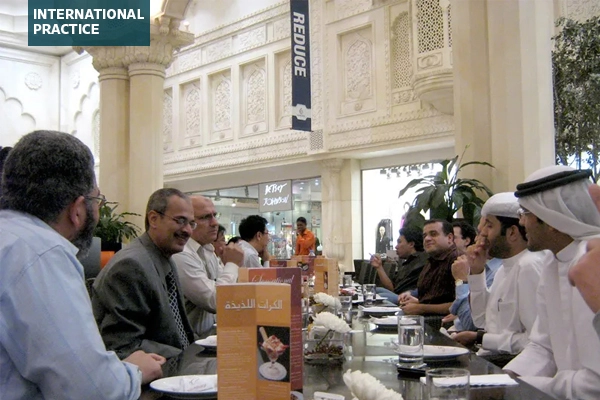
In the 21st century there are often large urban or large hospitality destination projects. Sometimes an American landscape architect may be part of a huge multidisciplinary, multicultural team, as shown in image above.
Other times the American landscape architect may be on the front-end in a strange country gathering site and regional information regarding project feasibility. Such was American landscape architect Cory Jordison’s situation, as explained to me when he was recently in Tangier for six months of information gathering. Read his story and ask yourself: how would you have responded? How would you have handled it? What would you have done?
Before Cory tells his story, please note: language regularly becomes the primary purveyor of cross-cultural disasters. And though English has become the international language of business, there are plenty of linguistic toe stubs and crevasses—misunderstandings on the surface and underneath. On site in a foreign country, the American landscape architect will find in all cases English is rarely the first, but more often second or third language spoken…plus dozens of varieties of Pidgin English. Miscommunications can be impossible to avoid.
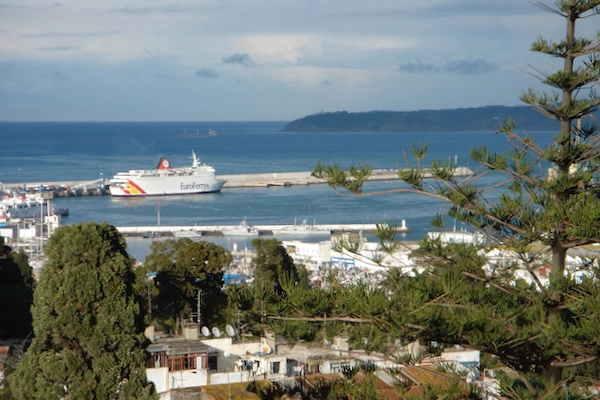
What Happened in Tangier?
All names have been changed to protect the innocent. What follows is a summary of what “Cory” shared about his time in Tangier. These conversations have been edited and condensed.
My boss set up an apartment for me and gave me two contact names. Data collection was first on my to-do list. My information gathering was for an international non-governmental organization via UNESCO to assess the relationship of open space access to medina population density in order to demonstrate how the lack of urban access to green space is a negative factor in quality of life. That was based upon S. B. Sutton’s analysis of Olmsted’s pre-1850s writings and studies—before Central Park.
One of my contacts, Steve, lived in the apartment next to mine. I went to him first because he was in town and, according to my boss, knew his way around. After I finished explaining my task in Tangier, he pursed his lips and said, “You want aerial photos, maps, and data about Tangier?”
He continued, “Let me tell you some history. In the 1970s, there was an attempt to assassinate King Mohamed V. Moroccan Air Force jets tried to shoot down the king’s plane. It all happened in the skies above Tangier and the pilots were Tangier natives. To this day, any government information from this area is heavily protected. My best sources are on a larger regional and national scale. Try David, a retired Peace Corps volunteer and 20-year resident in the kasbah. He’s helpful and always has something going on with municipal planners and engineers.”
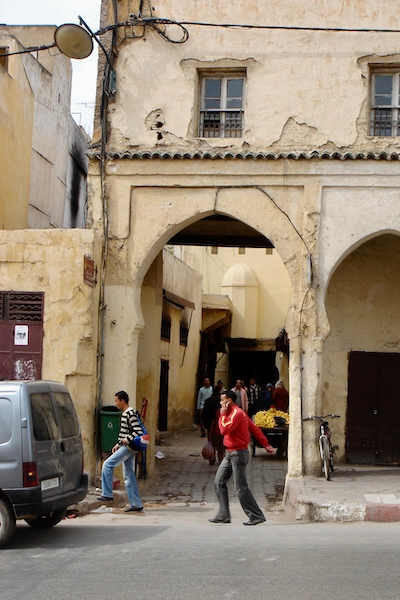
On my tourist map of the Tangier kasbah, Steve showed me approximately where David lived. But getting there was filled with strangeness—walking through darkly twisting and turning, narrow pedestrian-only ways. It felt like Peter Lorre’s 1930s movie Algiers.
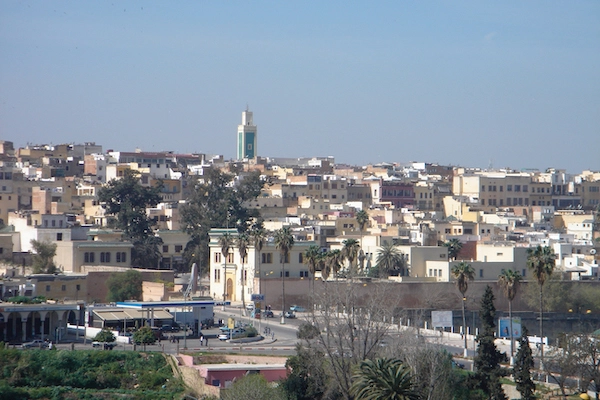
I found David’s riad and he agreed to help. He said he would call me when he had something. A few days later, he told me to meet him in front of my apartment to go to the Tangier Municipality with him to meet Muhendis Abdulwahab. I learned Muhendis Abdulwahab was the Chief Civil Engineer. He received us warmly, had tea served, and we talked for an hour. He had worked with David many times before and agreed to see if he could assist me.
The following week, I returned to the Tangier Municipality for a follow-up meeting with Muhendis Abdulwahab. He was out. An assistant met me instead and I asked if Muhendis Abdulwahab had found anything for me. He said there was nothing.
The whole exchange was strained—like every other word fell through a different cross-cultural gap. I asked when I could see Muhendis Abdulwahab. The assistant gave me a phone number and told me to call next week—I was getting a strange feeling, as if I was speaking through a dense fog.
Amidst a flurry of inshallahs, I quickly found myself out on the street, still in a major cross-cultural haze. All I knew is that I had nothing but the thinnest of hope and a phone number. I grabbed the first taxi home and emailed my boss about my stymied status.
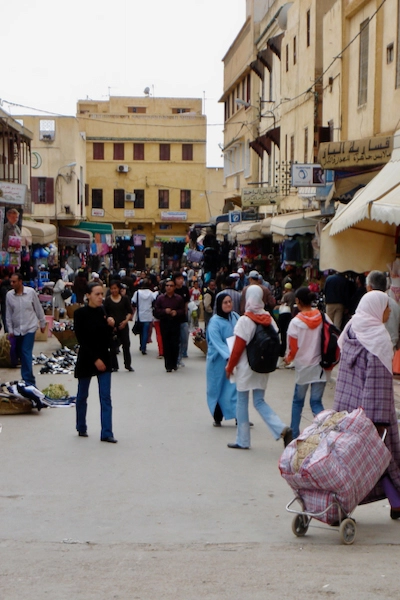
The next week, I called the telephone number at the Tangier Municipality—I didn’t recognize the voice. No English. My high school French didn’t work. My limited Arabic got no response. It was a dead-end phone call. I had nothing.
I called David. He said it sounded to him like a blind tunnel with no exit—a cross-cultural thing that essentially meant that for some reason Muhendis Abdulwahab was not going to help—even though nobody would use those exact words. David apologized.
I dug out my boss’ second contact, Rick, the Peace Corps Morocco Director in the capital city Rabat. I explained my situation. He told me once the Chief Engineer says no, no political pressure except from the Royal Family will change his mind.
He asked me if I had met Steve. After some to-ing and fro-ing I realized that Rick was talking about my next door neighbor. He said Steve was my best chance. And that was the end of our conversation. In my mind, I said, “been there, done that.” The maps and population data part of my study might not happen. Cross-cultural stuff had fogged over the whole effort and I saw no path forward.
I started to write an email to my boss: “The maps and data gathering have faltered. The Tangier Municipality has not shared anything. Sounds like an unresolvable cross-cultural thing. Big time disappointment. Tried all your contacts without result.”
I was not happy with my failure to get maps and data. I was sure there had to be another way. I decided not to send the email. There had to be some collegiality amongst professionals. I decided to go find out for myself what was going on at the Municipality office of Muhendis Abdulwahab.
The next morning, I headed to the Municipality and asked the secretary if I could see the Chief Engineer. At the same moment, Muhendis Abdulwahab walked in. He vigorously shook my hand and asked how I was, while leading me into his office, with expansive windows overlooking the Bay of Tangier. On the wall behind his desk were a civil engineer’s map of greater Tangier along with enlarged black and white photos of old Tangier.
The secretary came in with coffees and a large binder. The Muhendis, instead of taking the binder to share with me, told his secretary to put 'Mr. Cory’s dossier' on his desk. We sat and sipped coffee as the Muhendis asked me how my study was progressing. I was about to begin my story and plead for assistance when his secretary, in a frenzy, interrupted to announce a special visitor outside. Abdulwahab excused himself to me many times and left in a hurry.
My mind raced. What could be in the dossier on the Muhendis’ desk? I didn’t have to think twice. I opened the dossier, looking for files, copies of Tangier maps, and population data. But I couldn’t figure out what I was seeing.
Then I heard Abdulwahab’s maddened voice as the office door slammed open, “What are you doing at my desk? Stealing information? Spying?” In seconds there were three military guards in the room. Abdulwahab asked for my passport, which I did not have, and I was then detained in the downstairs conference room.
Of course, my mind could not stop racing. An hour passed before Abdulwahab, with David now, unlocked the conference room and entered. David told me that Abdulwahab had made charges of attempted theft against me and if my papers were not in order, spying would be added. I asked David to explain I was doing a UNESCO project.
David said, “I told him that, but it is your word against the Chief Engineer's and you are in trouble. He will, however, be understanding and let you make a phone call to retrieve your passport which better be in order and valid. Otherwise, you will spend tonight in jail and who knows after that.”
I had a number for Steve and fortunately he was at his apartment. I told him what had happened and where to find my passport. He said he would bring it right over. The next two hours were the longest of my life. Then Steve arrived in his diplomatic best. He was searched by the guards before he was allowed to speak. Steve carried his own dossier binder—first he pulled out my passport, which confirmed I was on a UNESCO project and that I had a valid visa. He handed it to the Chief Engineer.
As Abdulwahab scoured my passport, Steve spoke Darija Arabic, the local dialect, to him. As best I could understand, Steve said I was working with him on a landscape project, as he brought out of his binder an oversized document with a lot of florid Arabic writing and a large red wax seal. The document confirmed permission had been granted for Steve and his staff to collect photos, maps, and information of the landscape in the Tangier-Tetouan Region.
Abdulwahab looked at me sternly and said that I was fortunate to have that sealed letter, because my unlawful searching of documents on his desk was normally inexcusable. He said I should not expect any further help from him or his department beyond my being freed from any charges. The Chief Engineer made it clear that it would be in my best interest to leave Morocco at my earliest convenience.
The Lesson
What would you have done? How would you have handled this information gathering task?
What does all the above mean to you, a prospective first time American expatriate landscape architect on foreign ground for a new project?
Check your American cultural baggage and jargon at passport control because that baggage may get you not only misunderstood, but into deep trouble. Learn how to do your work, how to manage your daily life, and how to live without your mobile phone—this cultural tether can be a handicap, preventing you from perceiving important, on the ground environmental and cultural clues toward finding your way out of cross-cultural fog. Better still, you should be able to operate both ways—digital and analog.
Long term expatriate international projects on the ground are always face to face. Details are what make an excellent project. And details are what you learn on the ground. And Cory? Cory’s American ‘can-do’ outlook got in the way. What happened to him? He failed to complete his task, and he never ventured onto another expatriate project; but he did successfully pursue a local and regional landscape architecture career in the US.
By the time an international RFP is issued, the cultural structure, political framing, and financing have already been set. If you have never lived in the country, your primary “cultural” source will likely be online research—and there are a multitude of sources. Choose carefully.
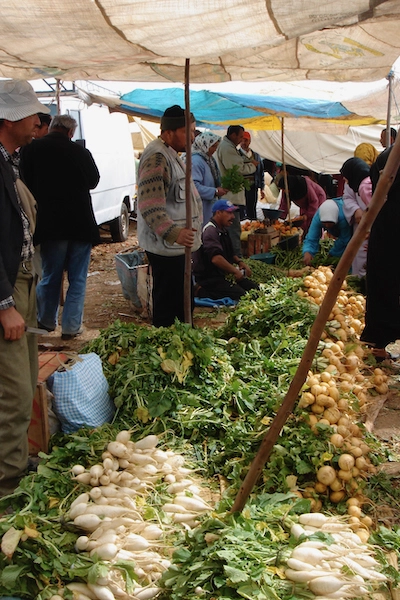
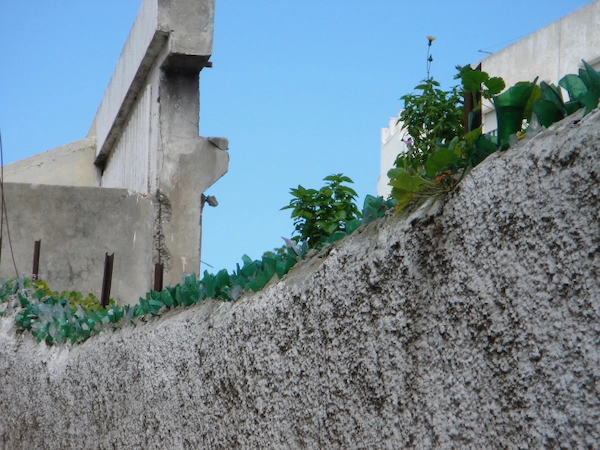
Now, I must point out that I hold an MSc in Geographic Information Science—I am not a luddite. But…listen carefully. In the photos I have included in this article you can see clearly Moroccan day to day social and cultural realities. These are not images that necessarily attract the many “bucket list” tourists. But they are everyday life.
It is not possible to learn a foreign culture second-hand. Even if you live there for decades, you may never feel culturally comfortable. Culture is evanescent, always changing, even though it has deep roots. These are challenges you undertake with a new project in a foreign country and culture. There is no magic formula, no universally agreed upon recipe. Eyes open. Ears open. Head on a swivel. Cross your fingers. Say your prayers. Do your job. Remember Cory’s example.
Foreign work? Some like it. Some don’t. Recommendation? Don’t jump into the water unless you know how deep it is. I’ve been swimming in those expatriate, cross-cultural waters for over 50 years, still living and breathing landscape architecture, offering my own two cents worth.
Edward Flaherty, ASLA, is an award winner and international conference speaker, an ASLA Emeritus, and works in private sector practice with five decades of experience in Europe, North Africa, and the Middle East. He is an ASLA International Professional Practice Network (PPN) member and is licensed in California and Florida.