

.webp?language=en-US)

by Roger Grant, PLA, ASLA
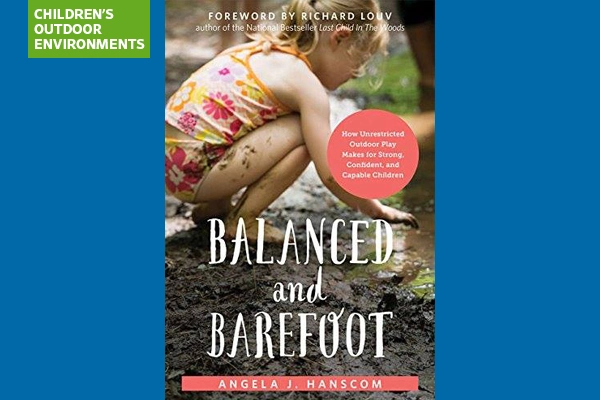
The ASLA Children’s Outdoor Environments Professional Practice Network (PPN) is pleased to share a recap of its fifth Zoom book club meeting. Hosted on May 7, 2024, attendees eagerly welcomed Angela Hanscom, occupational therapist and author of Barefoot and Balanced: How Unrestricted Outdoor Play Makes for Strong, Confident, and Capable Children, published in 2016 by New Harbinger Publications, Inc. This book is intended for parents, but it is a valuable tool for landscape architects, pediatric therapists, and related professionals who are allied in the common goal of improving the lives of children through play. We are thankful to Ms. Hanscom for speaking with us about her book as well as her organization dedicated to this mission.
The book and our conversation began with what inspired Ms. Hanscom’s approach to the subject of play. Nearly 20 years ago when working as a pediatric occupational therapist in hospitals and clinics and being a new mother engaged in local mom groups, Ms. Hanscom observed a trend professionally and personally of children struggling with “poor attention skills, controlling emotions, balance, decreased strength and endurance, increased aggression, and weakened immune systems.” In her book, Ms. Hanscom describes childhood development in an engaging and understandable way that helps bridge the gap between the pediatric occupational therapy world and that of everyday parents struggling to make sense of their child’s issues, such as those mentioned above. She details fundamental changes in technology and culture that have resulted in an alarming rise in developmental delays and an increase in children receiving occupational (and other) therapy. She then identifies the solution she came to after years of research and personal experience—“active free play, ideally outdoors”—through what would become the highly regarded TimberNook program.
To build her case that unstructured outdoor play is beneficial to address many of the problems children face today, Ms. Hanscom describes the all-important sensory components of childhood development. From motor skills to postural control to core strength and endurance, she emphasizes that “children thrive by challenging their bodies.” Her description of the senses is expanded from the five traditional senses to include proprioception as “the ability to sense what different parts of your body are doing without even looking at them” and the vestibular sense as “awareness of where your body is in space.”
In our conversation, Ms. Hanscom described the importance of developing proprioception through heavy resistance work like pushing and pulling and digging as a means of calibrating the body to exert the right amount of force in given situations. An underdeveloped sense of proprioception is reflected by an inability to regulate force and a tendency for clumsiness. This can lead to personal injury through falls as well as poor socialization such as when a child creates unintended conflict on the playground during a game of tag by using an inappropriate amount of force.
She explained the vestibular sense as the unifying sense for movement, “also known as our balance sense.” We can experience vestibular movement through spinning, rolling, climbing, and rocking, to name a few.
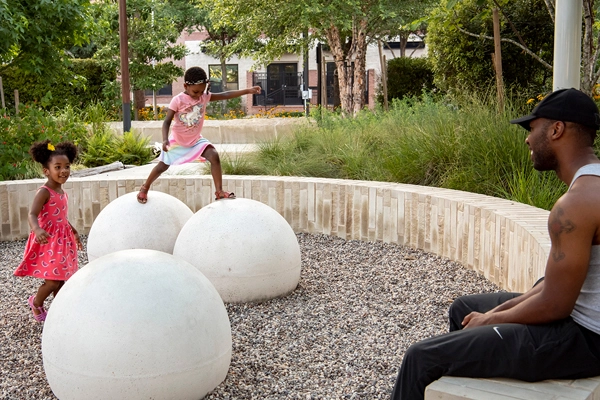
Ms. Hanscom discussed the critical need for children to have frequent opportunities to move their bodies, which activates the brain and builds coordination and body awareness. In our discussion, she explained how children average up to 9 hours a day of sitting, which affects the muscles and body and therefore reduces available opportunities for vigorous movements to support the proprioceptive and vestibular senses. Beyond the scope of the book, she also shared that occupational therapists advocate for people of all ages to continue moving to promote general health and wellness.
Barefoot and Balanced also offers a synopsis of the status of play and that our highly complex and busy lives are often at odds with the more open-ended and unprogrammed nature that helps shape healthy child development. She explains the problems with indoor and highly designed spaces as well as the limited and regulated outdoor experiences children have at school and in organized sports. This argument then makes a convincing and well documented, and enlightening case for free outdoor play as a missing element, critical to improving children’s lives. The following are thoughts that Ms. Hanscom shared with us during our time together.
American society does not dedicate enough time in children’s lives for nurturing important developmental skills. Children are spending more time indoors and have observed deficiencies in balance and self-regulation. These skills can be improved by spending unstructured time in nature. Ms. Hanscom doesn’t necessarily advocate for full immersion in pristine environments, but she offers that more natural environments are more therapeutic and beneficial to all aspects of development. From her early work bringing her therapy background to outdoor-based day camps through its evolution to the TimberNook outdoor program, Ms. Hanscom has learned that children prefer the authenticity of the woods and its natural materials, but they may be more engaged and inspired to developmentally beneficial play if cues are provided. With all of this in and through minor staging, she and other TimberNook providers set the foundation for promoting creative nature play.
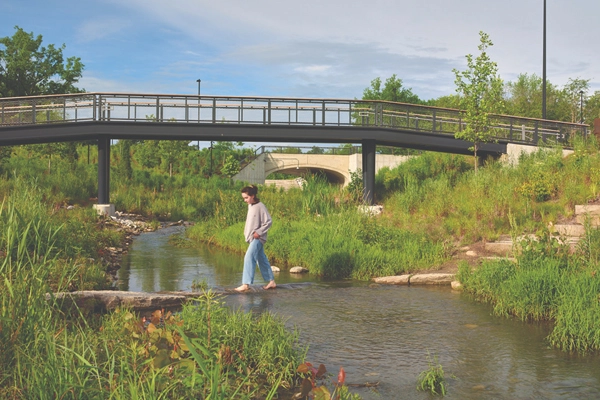
As a predominantly landscape architectural audience, some of the most valuable insights of our meeting was learning that reducing adults’ presence helps stimulate creative and independent play and that “vignettes” of natural space do not enrich the senses as well as larger, deeper spaces do. What Ms. Hanscom recommends is eliminating hazards (i.e., poison ivy, broken class) allowing for (beneficial) risk (jumping, climbing), and as the book title implies, the opportunity for children to play in bare feet, which is rarely a consideration in design. As Ms. Hanscom puts it, modern kids are made to think they should be wearing shoes. Thanks to her incredible and tireless efforts to improve childhood development, we may see more children both balanced and barefoot.
We are thankful to Ms. Hanscom for speaking with us and sharing her experience and wisdom regarding children’ s development in the outdoors, and for those who joined us for this event. Please consider the brief overview of Ms. Hanscom’s work and her book, Barefoot and Balanced: How Unrestricted Outdoor Play Makes for Strong, Confident, and Capable Children, as an introduction and recommendation to read the book in its entirety. For more information on the TimberNook program, please visit timbernook.com.
For recaps of the PPN’s previous Zoom Book Clubs:
- January 2024: Nature Swagger: Stories and Visions of Black Joy in the Outdoors by Rue Mapp
- October 2023: Naturally Inclusive: Engaging Children of All Abilities Outdoors by Ruth Wilson, PhD
- May 2023: Schools That Heal: Design with Mental Health in Mind by Claire Latané, FASLA, MLA, SITES AP
- January 2023: Letting Play Bloom: Designing Nature-Based Risky Play for Children by Lolly Tai, PhD, RLA, FASLA
Roger Grant, PLA, ASLA, is a landscape architect and consulting arborist in the sprawling North Atlanta suburbs. He has been practicing for 18 years, working on a wide variety of public and private developments. A father of four, he is passionate about the design and function of children’s outdoor spaces and cognizant of the need for creative and engaging playscapes that can compete with modern devices for children’s attention and entertainment. Roger is co-chair of ASLA’s Children’s Outdoor Environments Professional Practice Network (PPN).