
.webp?language=en-US)
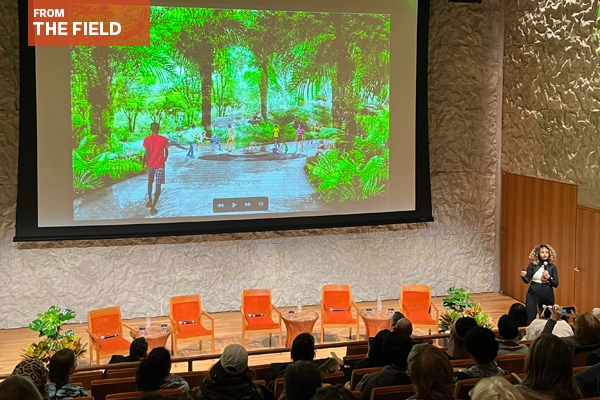
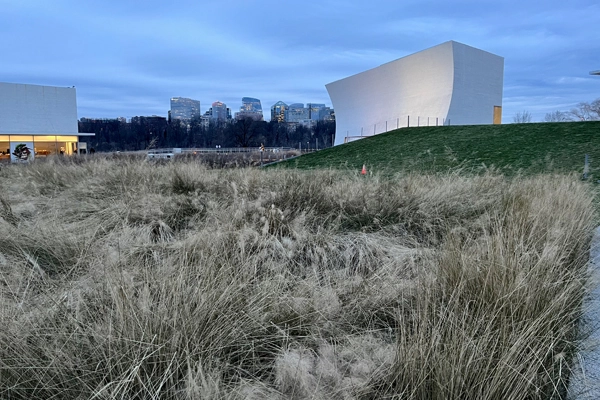
Over the last two weeks, the Kennedy Center hosted their second festival exploring art, nature, and the environment. This year's theme: REACH to FOREST. Event curator Alicia Adams described the goal for the event as: "We hope that by rekindling the relationships between artists and scientists—as well as between humans, forests, trees, and wildlife—we can spark creative solutions for our future. We are living in a time when every seemingly insignificant choice we make as human beings may ultimately prove critical to our environment, our planet, and to our very survival."
One of REACH to FOREST's many programs was a multidisciplinary panel on March 1, We Are Connected Through Trees: New Frontiers of Biophilia, that brought together a landscape architect, artist, activist, and scientist for an expansive conversation on access to nature, and the many forms that may take, as a central facet of wellbeing.
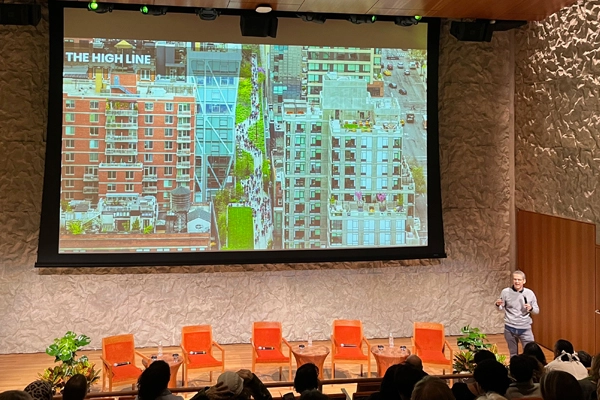
Anjan Chatterjee, Professor at the University of Pennsylvania's Center for Cognitive Neuroscience, kicked things off by going back to our species' origins—to the Pleistocene era and the millions of years during which our brains evolved amidst an environment that looked very different from the cities where most of us live now, resulting in our current predicament of an old brain coming to terms with a new environment.
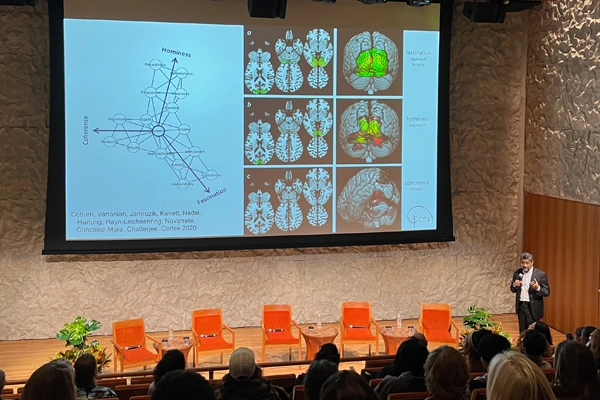
Chatterjee's approach to biophilia and verifying the why and how behind our affinity for nature is to assess our relationship to our surroundings through three facets: coherence, hominess, and fascination. Looking at the brain's response to these three components, he has found that we like having a bit of order in nature, and we also want some nature in our built environments. The theme of breaking down the barrier (or if we should even think of there being a barrier at all) between nature, ourselves, and our built environments continued in the following presentations.
Ana Ka’ahanui, Forest Therapy Guide and Co-Founder of Capital Nature, has worked at the U.S. Green Building Council for more than 20 years. One of her favorite tasks is giving tours of USGBC's LEED Platinum office and talking about its biophilic design, from water features to art depicting nature. In 2020, she became a forest bathing guide through the Association of Nature and Forest Therapy Guides and Programs, and with the nonprofit Capital Nature she works to connect people to the unique nature opportunities in the DC area.
Ka’ahanui's two favorite words: wonder and joy. Forest bathing is a way to find both, often close to home, through the mindful experience of the environment, using all your senses.
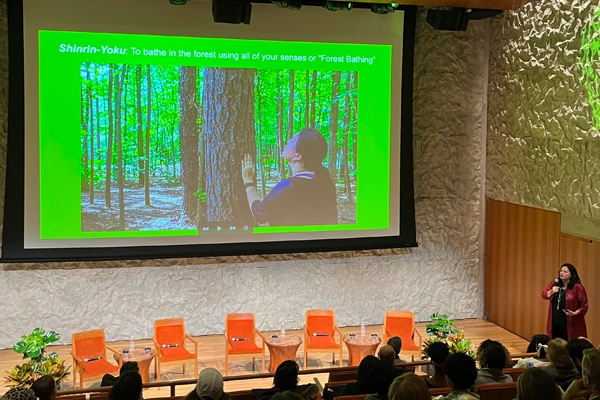
For one forest bathing session with Georgetown University students, they spent time in a wooded area just 10 minutes from campus that most of the students had no idea was right there. Other transformative events have been with Ward 8 Woods, a nonprofit that works to restore and enhance the environment and residents' connection to it in the Ward 8 section of Washington, DC.
Ka’ahanui also shared a few reading recommendations:
- City of Trees: The Complete Field Guide to the Trees of Washington, D.C., The Joy of Forest Bathing: Reconnect with Wild Places & Rejuvenate Your Life, and author Melanie Choukas-Bradley's website
- Casey Trees Species Guide for the DC metro area
- The Hidden Life of Trees, Peter Wohlleben
- Healing Trees: A Pocket Guide to Forest Bathing Hardcover, Ben Page
- The Nature Fix: Why Nature Makes Us Happier, Healthier, and More Creative and author Florence Williams' website
- Around the World in 80 Trees, Jonathan Drori
- Finding the Mother Tree: Discovering the Wisdom of the Forest, Suzanne Simard
Artist Precious Okoyomon began with her poem "The World Is Breaking in Flowers the Breath of Things" and then shared some of her living art installations, which often incorporate soil, water, and plants. On the roof of the Aspen Art Museum, Okoyomon created an installation that changed with each season. She worked with local seed banks, community gardens, and schools to source materials and also to donate plants so they would live on in the community afterwards.
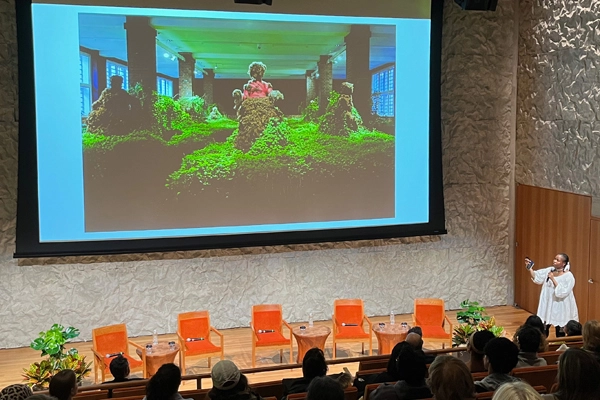
Okoyomon looks at the whole life cycle of her art, including the afterlife of an installation. She often uses invasives like kudzu, and then burns it at the end—the ash is then incorporated into the next project.
At MMK in Frankfurt, Germany, kudzu was never trimmed over the course of the exhibition so that Okoyomon's sculptures were eventually swallowed up by the fast-growing greenery. Her art installations often evolve; the end state is very different from the starting point—an art practice that resonates with the work of landscape architects.
Sara Zewde, Founding Principal of Studio Zewde and Assistant Professor at the Harvard University Graduate School of Design, is interested in landscape architecture as a way to understand humans' relationship to ecologies and complex systems, an interest sparked by Hurricane Katrina and its aftermath, events shaped by the complicated history of human settlement on the land.
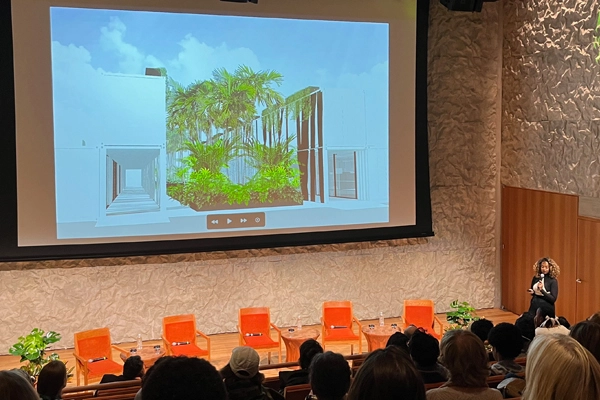
Zewde emphasized how the plunder of nature, both literal and metaphorical, is widespread and ongoing. We use nature to understand ourselves—nature helps us narrate our own stories to ourselves; we are defined in relation to nature.
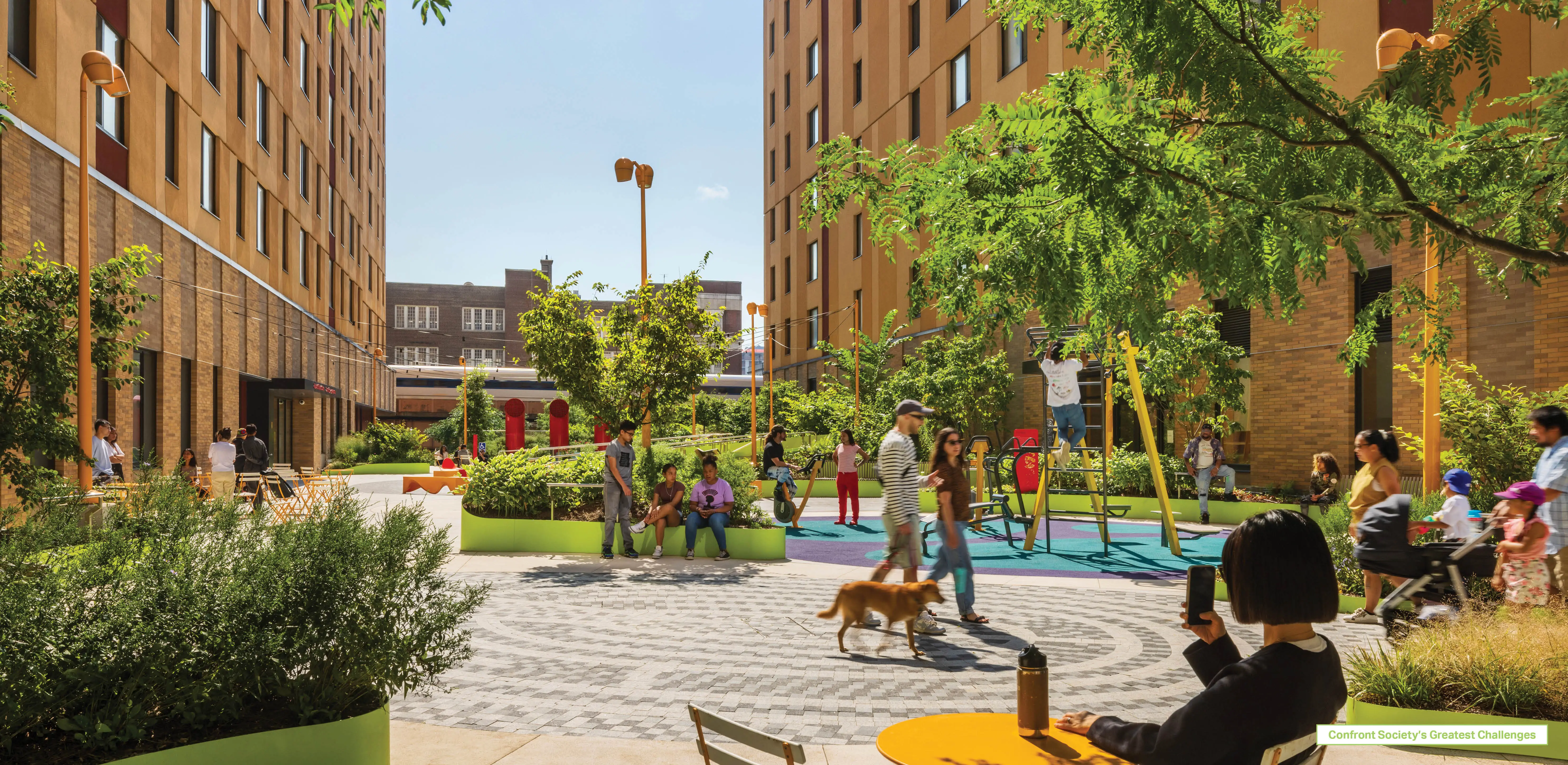
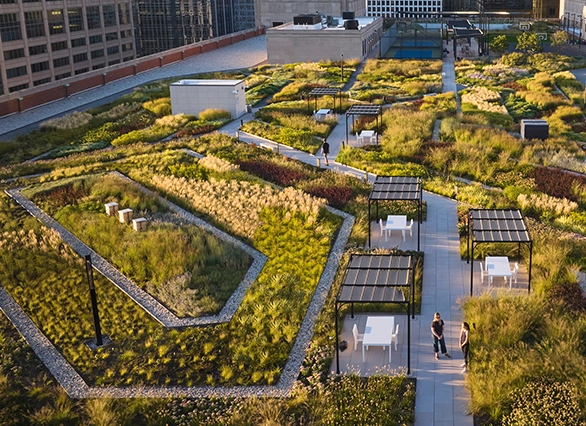
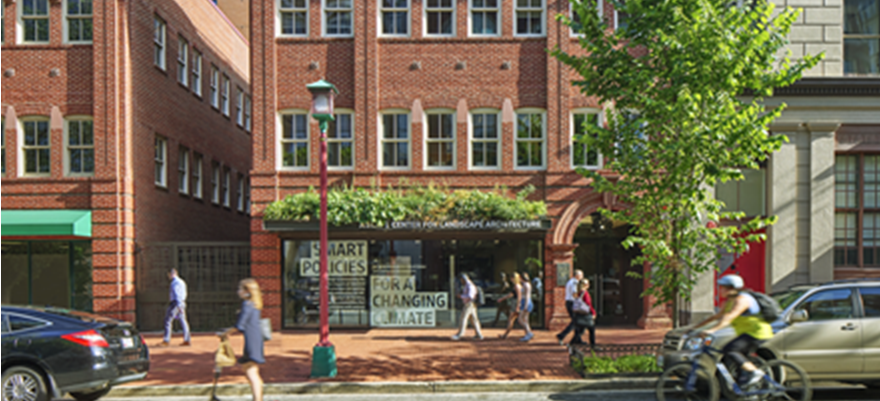
The projects shown aimed to integrate landscape into daily life, from plant-filled retail to expanding the urban canopy to reduce urban heat islands and make cities more livable.
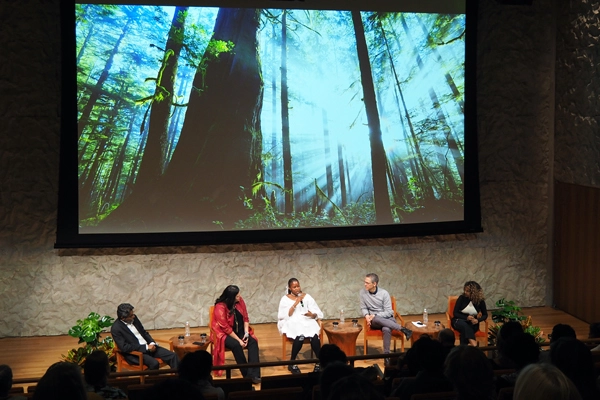
The Q&A that followed was as wide-ranging as the presentations, but I will conclude with just two remarks from the panelists in closing.
Chatterjee, the neuroscientist, mentioned that he finds some reassurance in the fact that there have been five mass extinctions already—and yet, here we are. Things have regenerated in the past and we may hope, with enough effort, they may do so again.
And finally, Okoyomon shared: "We are malleable, expandable, continuously." May we all apply science, art, and every other tool available to find that resilience in ourselves to continue working toward a biophilic future.