

.webp?language=en-US)


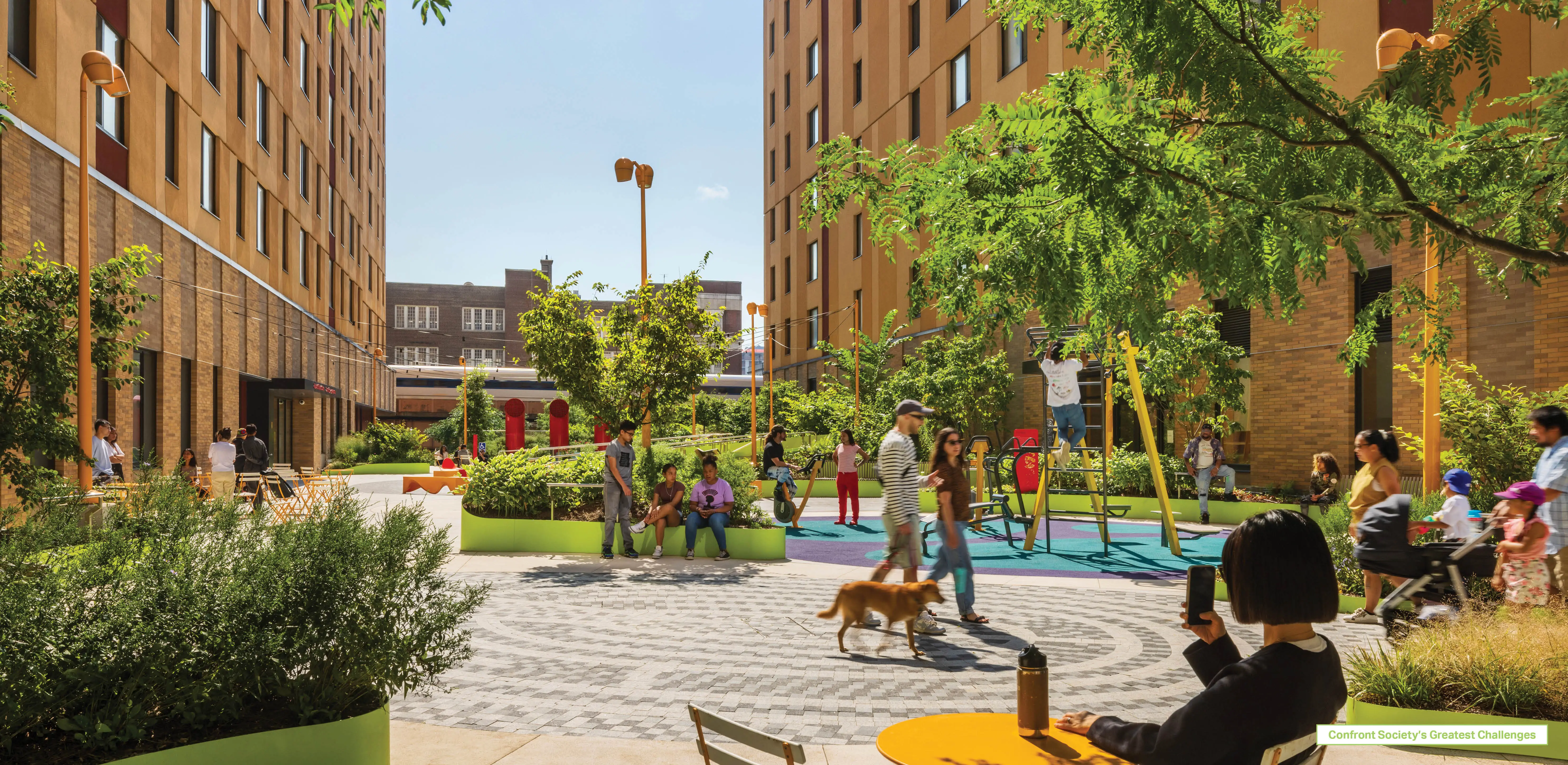
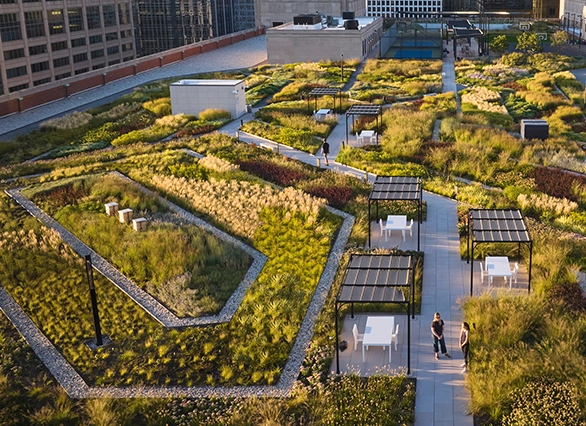
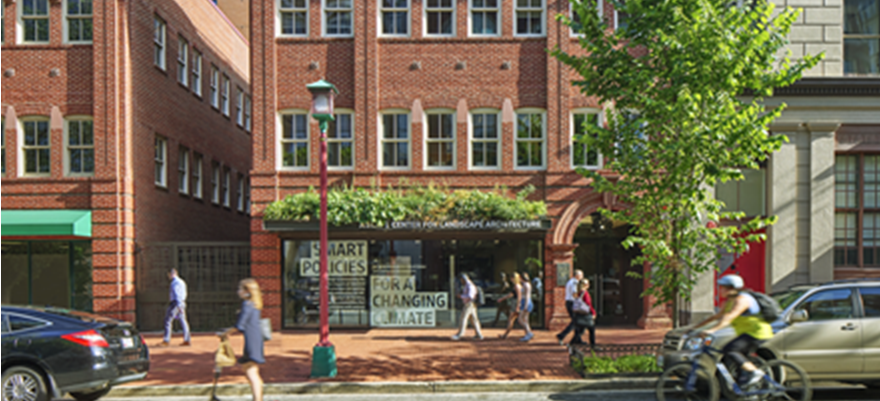
Landscape architects need to become urban planners and work "upstream" in policy and regulatory processes to ensure public space leads urban placemaking efforts. That is the argument Michael Grove, ASLA, chair of landscape architecture, civil engineering, and ecology at Sasaki; Brian Jeneck, ASLA, director of planning at HOK; and Michael Johnson, ASLA, principal at SmithGroup made at the ASLA 2019 Conference on Landscape Architecture in Washington, D.C.
Grove linked the current misalignment between public space and private development to the long history of "decoupling policy making and placemaking." Urban planners have led in the policy and regulatory-making realm while landscape architects have proven expertise in placemaking.
Landscape architects can instead lead and participate in urban policy-making through "upstream urbanism" while prioritizing public spaces as the dominant placemaking strategy in cities.
To illustrate the importance of this approach, Jeneck discussed the typical block structure of San Francisco, which is 360 feet by 360 feet, as it relates to floor area ration (FAR), or the amount of building area in relation to the size of a lot.
A four-story building occupying 50 percent of the site would have a floor area ratio of 2, which Jeneck notes is on the low end for urban development. Assuming the lot is the entire block, the dimensions of this building would be 180 feet by 360 feet, a footprint with an impractical amount of interior space.
This undesirable set of dimensions for a building can result in design teams creating assemblages of towers, which to achieve the same FAR could take up 70 percent of the site, greatly limiting public space. Developments like this happen because policy makers haven't accounted for public space corridors and connections from the beginning.
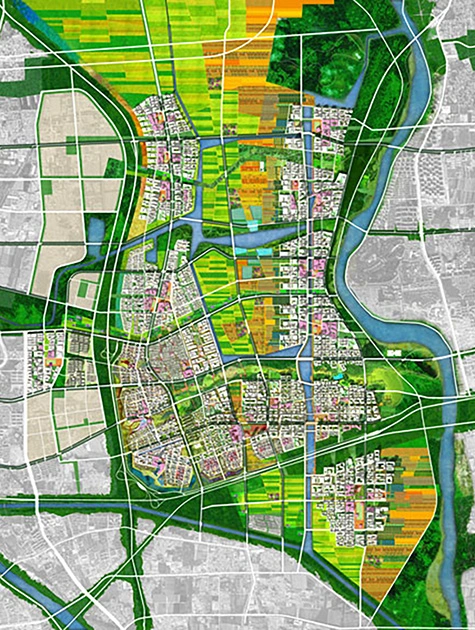
The speakers set out five scales in which urban design takes place: regional plans, city general plans, city area plans, city-specific plans, and project plans.
Landscape architects are intimately familiar with the project scale, but need to shift up in scale towards the regional plan, affecting policy that begins to shape the form of the city.
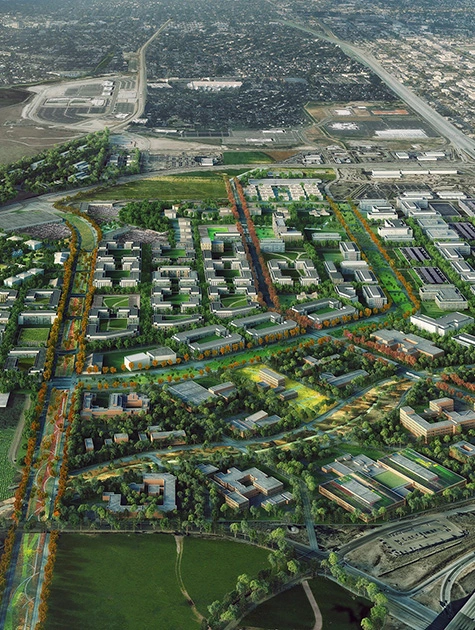
Scaling up gives landscape architects a larger role in designing the broader framework in which smaller urban, area, and project plans must exist, a crucial role the profession is currently lacking.
According to Johnson, landscape architects' ability to work with complex systems makes them a natural choice for managing the goals that must be met at each scale.
He gives the example of a set of scalar jumps, 1, 10, and 100. 1 is the site scale, the place landscape architects are currently most comfortable, 10 is the city scale, and 100 is governance and public policy.
All presenters looked at lessons from past planning movements in order to inform what a future landscape architect-led planning framework could look like.
They traced the history of Ebenezer Howard's Garden City and the influence of Frederick Law Olmsted and Daniel Burnham on the City Beautiful Movement. While the Garden City and the City Beautiful movements were highly influential, they were also ensnared in class politics, giving them a green veneer without truly being equitable.
Cities account for 3 percent of our land area, but 80 percent of global greenhouse gas emissions. Getting the next generation of urban planning and design right is imperative.