

.webp?language=en-US)


In Boston's Leading Hospitals, Nature Is Part of the Therapy
By Jared Green
In the 1980s, Roger Ulrich discovered hospital patients recover faster and request less pain medication when they have views of nature. Spaulding Rehabilitation Hospital, built on a former brownfield in Charleston's Navy Yard, and MGH's Yawkey Outpatient Center, both in Boston, seem to be guided by this essential finding.
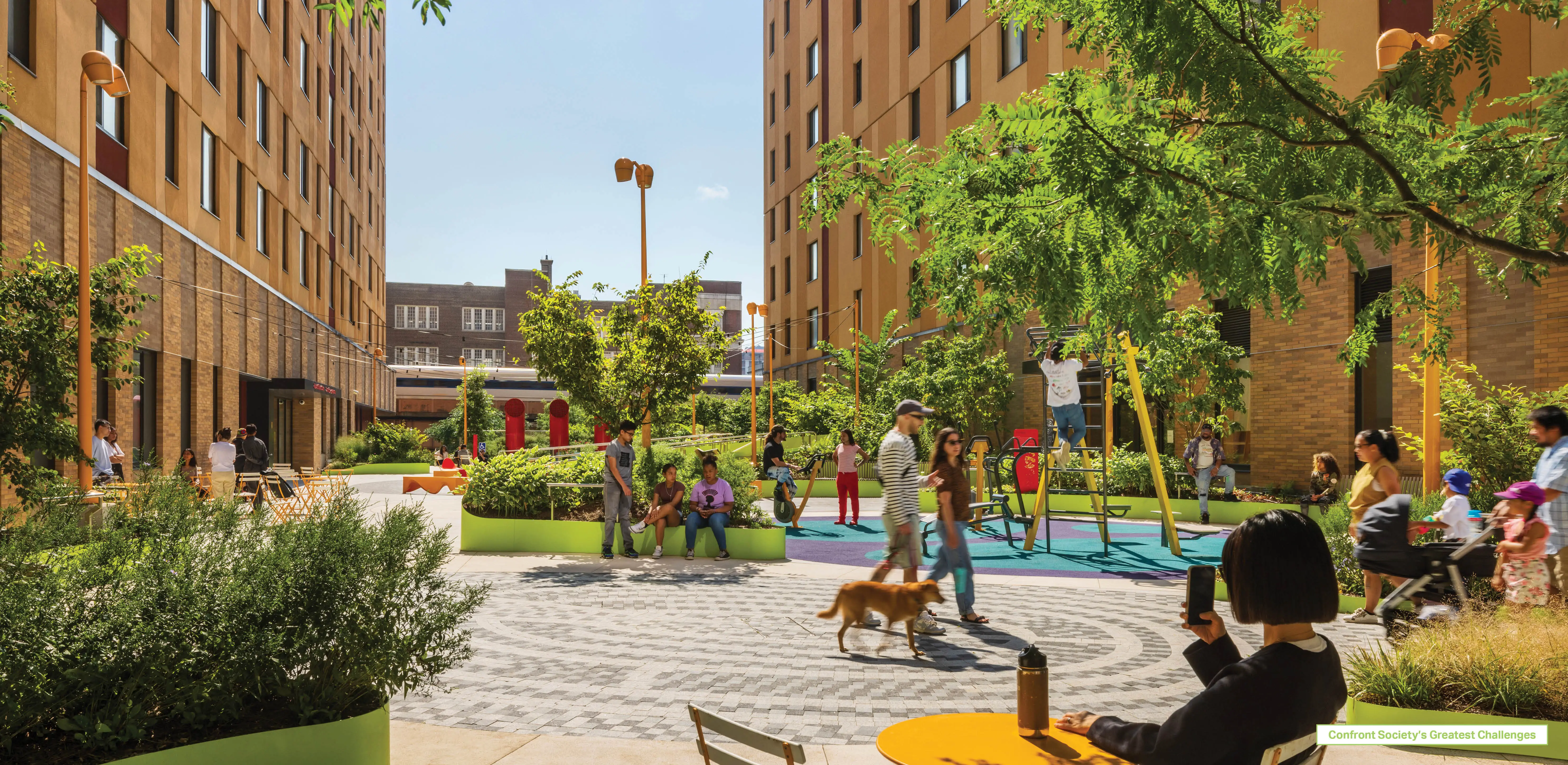
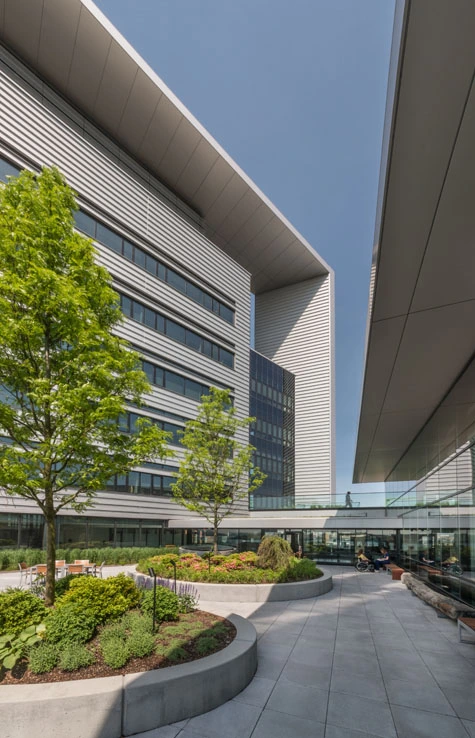
At Spaulding, patients recovering from traumatic injury are rejuvenated by good medical care, but also sunlight, garden terraces, and views of the surrounding Charles, Mystic, and Chelsea Rivers. The hospital landscape is a multi-functional therapeutic space where therapists aid patients in the air and sun. In a tour of the 132-bed facility at the 2017 Greenbuild, Jeffrey Keilman, an architect with Perkins + Will and Sean Sanger, ASLA, principal at landscape architecture firm Copley Wolff Design Group explained how the facility heals, but is also one of the most sustainable and resilient hospitals in the country.
Spaulding picked this brownfield site in part because rehabilitating it would help tell the story of resilience to its patients. If a toxic place can become a place of healing, then a broken person can return to health stronger as well.
The LEED Gold-certified hospital -- designed by Perkins + Will, with Copley Wolff Design Group and Hoerr Schaudt Landscape Architects -- has all the usual green building features, but its the extra, humane elements that make it something special -- the custom-made sinks so that a patient in a wheel chair can more easily wash their hands; the tall wall of windows in the main rehabilitation room that offer views of the river; the light and views every patient enjoys from their rooms; the garden terraces with horticultural therapy spaces, as well as the gardens just for staff; and the multi-functional therapeutic landscape.
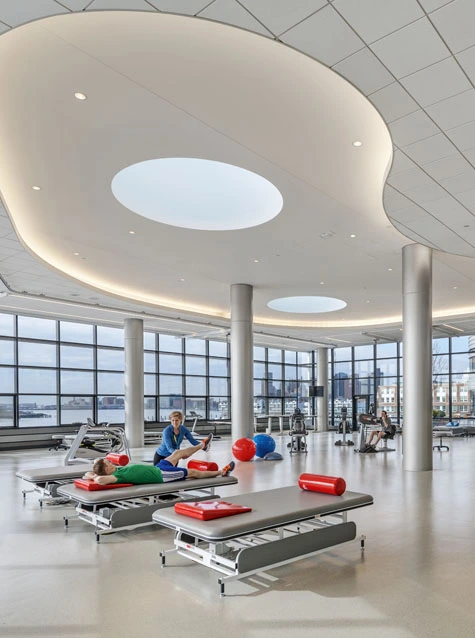
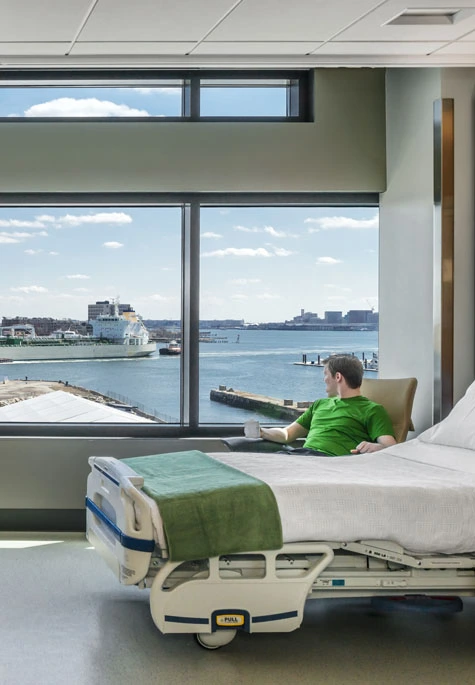
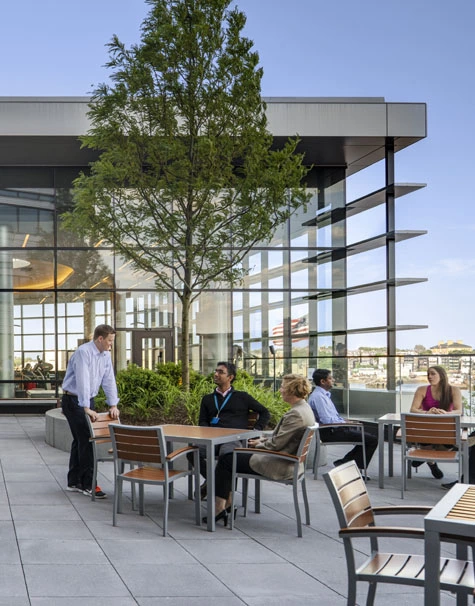
The landscape -- which was ingeniously designed by Copley Wolff Design Group to significantly reduce the impact of flooding in a 500-year storm event -- is both for patients and the public. Like the building, the landscape has small but thoughtful features that exemplify patient-centered design.
For example, there are small brass sculptures of animals spread throughout. While these can be enjoyed by visitors and the public, they are really there for patients recovering from traumatic brain injuries who search for them in scavenger hunts in order to rebuild cognitive abilities and memory.
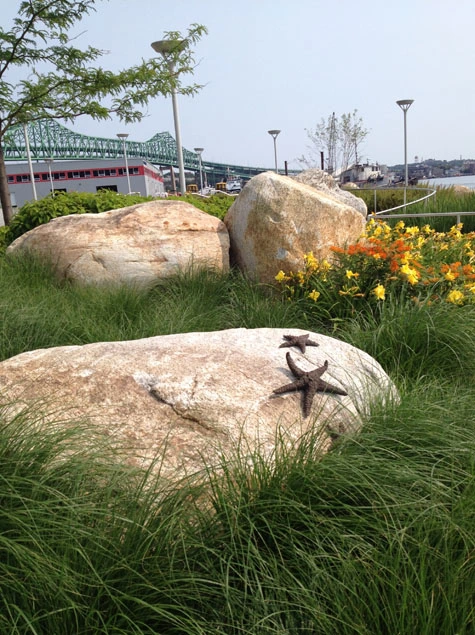
A multi-functional space for physical therapy was designed for "active use." Patients and caregivers didn't just want "a space for respite and solitude. They wanted a space for activity, so they can get mentally and physically ready to re-enter society," explained Sanger.
The space offers a "beginner's walk," with a slight grade and handrails. Throughout, there are benches, so patients can take a break.
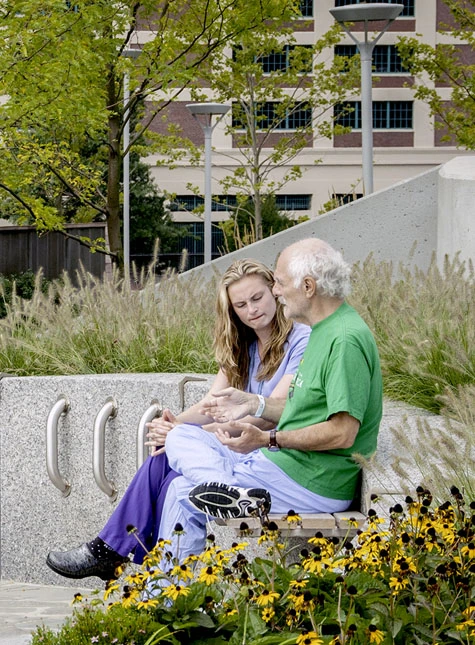
Sculptural rock forms on poles are actually therapeutic tools for building upper body strength.
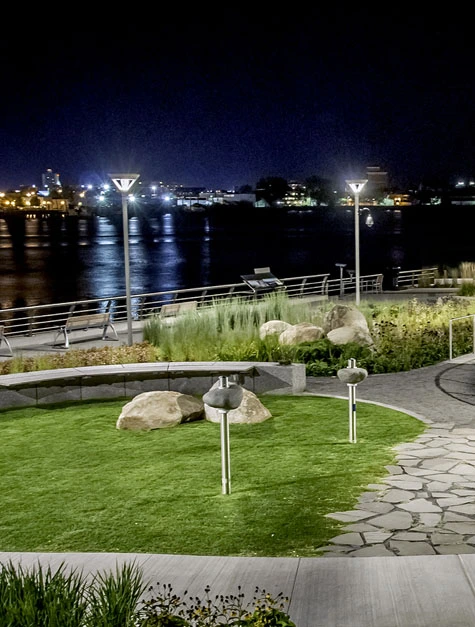
Amid the gardens, there is also a ramp for teaching patients how to use a wheelchair.
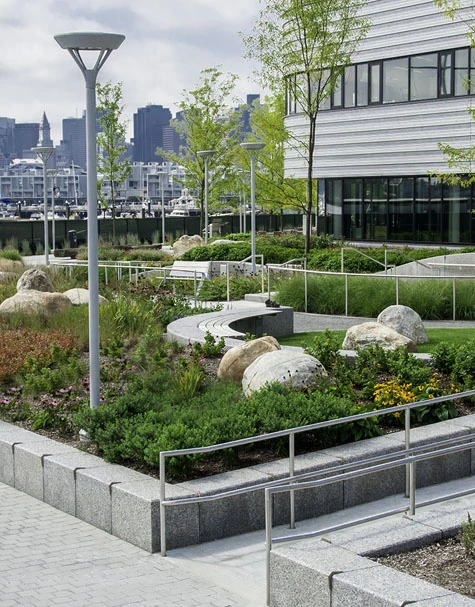
In warmer months, the hospital puts recumbent bikes on the waterfront harbor walk. Rails along the walk were specially designed so people in wheelchairs can use them to pull themselves up.
Our tour then moved over to MGH's Yawkey Outpatient Center, where cancer and other patients are treated in downtown Boston in a maze of co-joined buildings. Here was a therapeutic landscape that feels like the opposite of the one at Spaulding: a small but impactful place of respite and restoration.
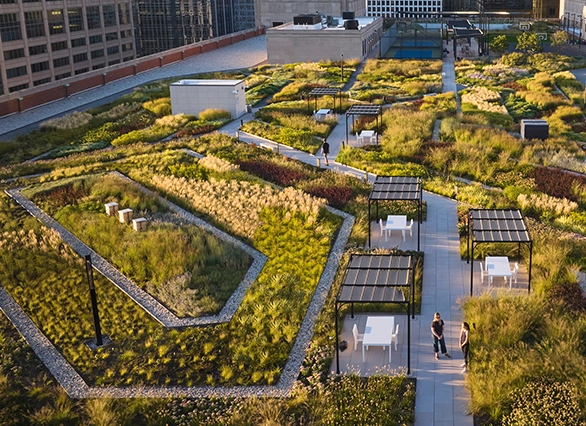
As you enter the roof garden, which was added later after the building had been built, the broad trees and gorgeous views of the Charles River momentarily awe. The space is a welcome surprise in the midst of the vast hospital complex.
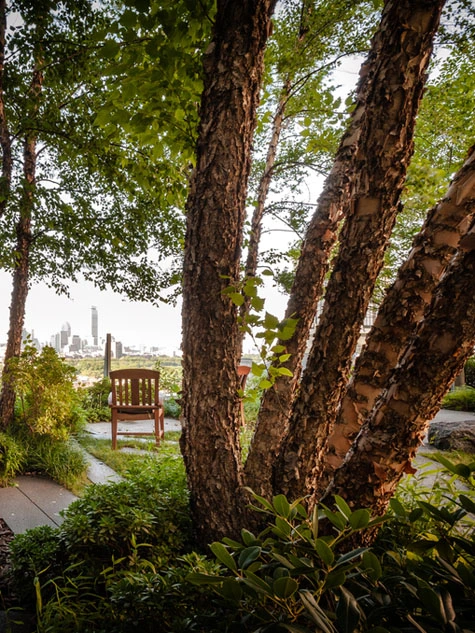
Designed by Robert Adams, ASLA, principal at Halvorson Design Group, the garden is well-loved by adults and children undergoing cancer treatment.
The enclosed entry pavilion, with expansive glass windows, is open year round. Cancer patients often have a terrible, metallic taste in their mouth, so any metal fittings were painted over so as to not remind them. A journal is available for patients to write in. A giant urn is filled with rocks. Patients take the rocks to keep as touchstones; and survivors often bring back stones from their journeys, replenishing the urn, which has a "most sacred" duty, Adams said.
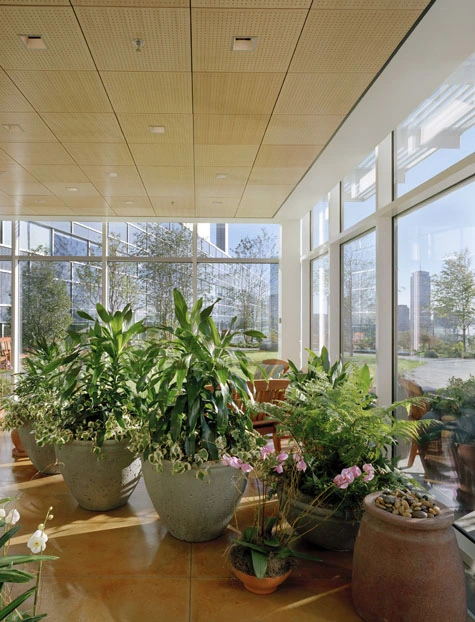
And the garden itself, with its simple shade-covered walking loop, benches facing the river, and sculptures, is open in warm months. "You'll often see patients with their IV in tow walking the loop."
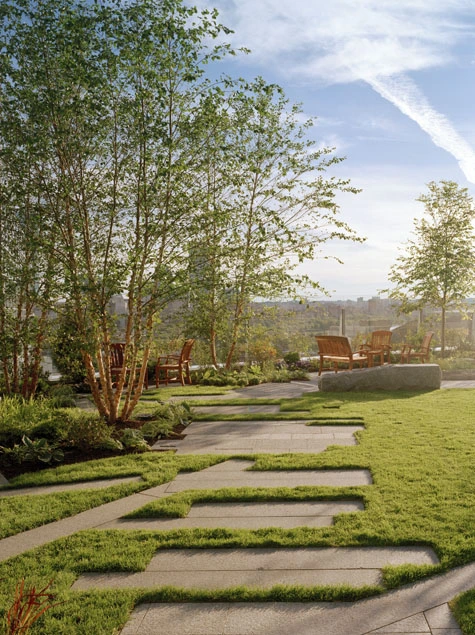

For Adams, the only wrinkle is the garden has become so popular staff can no longer easily access. Before, staff were eating lunch there and visiting often. This is a sign that "staff need open spaces, too." As author Clare Cooper Marcus described in a recent interview, over-worked and stressed doctors and nurses means more deadly medical errors. Just a 15-minute break for these critical workers outdoors can help boost their cognition and lower stress.
Why aren't more hospitals creating restorative spaces not only for patients but also for their staff? Spaulding and Yawkey, two of the best hospitals in the country, offer models for how to bring nature into healthcare environments that other facilities can learn from.