

.webp?language=en-US)

.webp?language=en-US)
Climate & Biodiversity Action Network Events
The ASLA Climate & Biodiversity Action Committee and the ASLA Climate & Biodiversity Action Network, which is comprised of Chapter Climate and Biodiversity Action Chairs, have organized regional and chapter conferences, meetings, and webinars. Explore upcoming and past events.
Advertisement
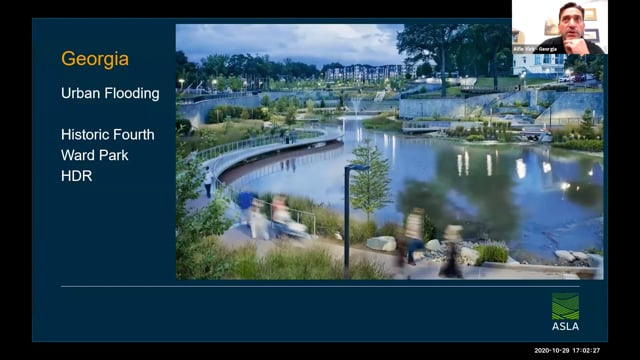
Southeast Coast Regional Climate Action Event
ASLA kicked off these regional events with the Southeast Coast states, including North and South Carolina, Georgia, and Florida. During the webinar, presenters defined particular local issues, shared examples of built and planned projects, and discussed policies, regulations and organizations making a difference in their states and local jurisdictions. Key issues in this region include sea level rise, coastal and inland flooding, urban heat island impacts, hurricanes, and saltwater intrusion.
Edited transcript of the webinar | Outline of issues and solutions identified in each state
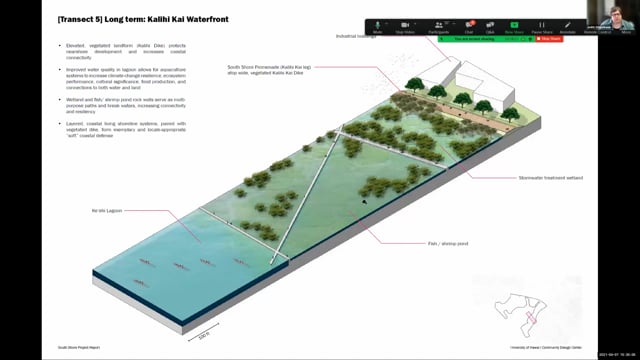
Southern Pacific Coast Regional Climate Action Event
This region, which includes Hawaii and Southern California, initiated action with a webinar presentation and conversation about the importance of policy in addressing the climate crisis. They discussed how landscape architects can be involved in making and using policy to enact change and how the chapters are advocating for the role of landscape architects in affecting change. The presentation included a description of Pathfinder, a tool for designing carbon positive projects. The discussion featured case studies that are building resilience within communities vulnerable to wildfire, sea level rise, coastal erosion, and other climate change issues. The California Southern Chapter has followed with a series of monthly speakers that present how scientists and landscape architects work together on issues that include drought, wildfires, sea level rise, and carbon sequestration.
Resources identified during the webinar | Landscape Architecture and the Science of Climate Change event series, Department of Landscape Architecture at Cal Poly Pomona
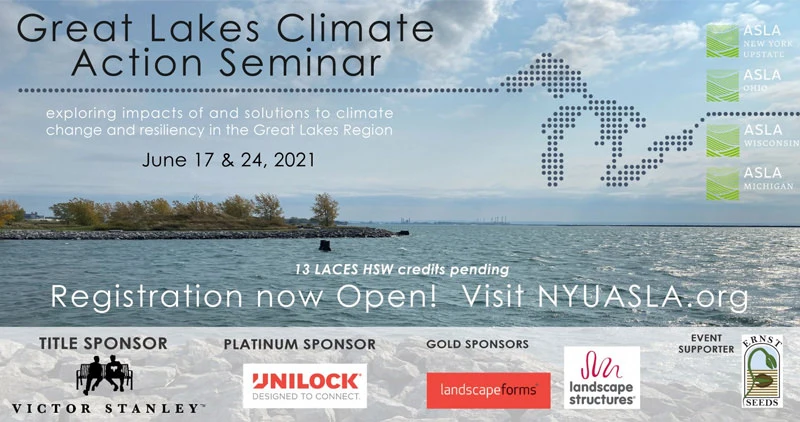
The Great Lakes Region, including Michigan, Wisconsin, Ohio, and Upstate New York, held a two-day Climate Action Seminar that featured the ways that university researchers are working with landscape architects to address climate change impacts. Major issues in this region include rising water levels of the Great Lakes, resulting inland flooding, and the impacts of extreme weather events on coastal erosion and infrastructure. Solutions include design, installation, and monitoring to learn how to move forward based on the effectiveness of various measures.
Northern Pacific Coast Regional Climate Action Event
The Northern Pacific Coast, including Alaska, Washington, and Oregon, held a regional webinar focusing on climate justice. The presenters discussed the challenges that impact communities unevenly – droughts, heatwaves, and wildfires; sea level rise, inland flooding and coastal erosion; receding glaciers; and melting permafrost. Speakers explored approaches to building resilience for Pacific Coast residents, with an emphasis on frontline communities, including indigenous, low-income, and unhoused people, who are the most impacted by these changes.